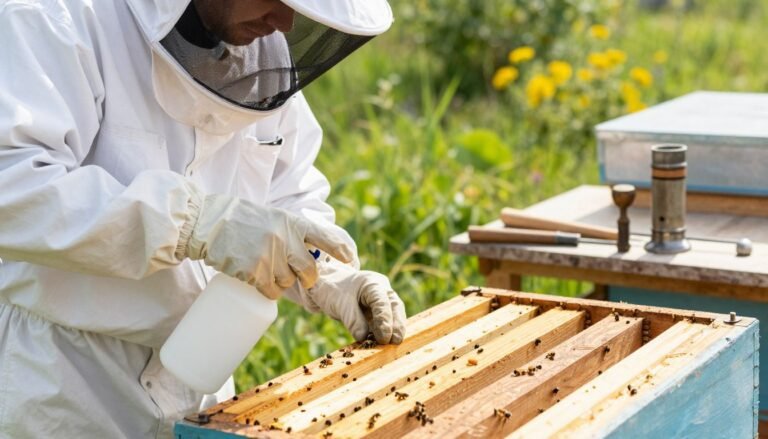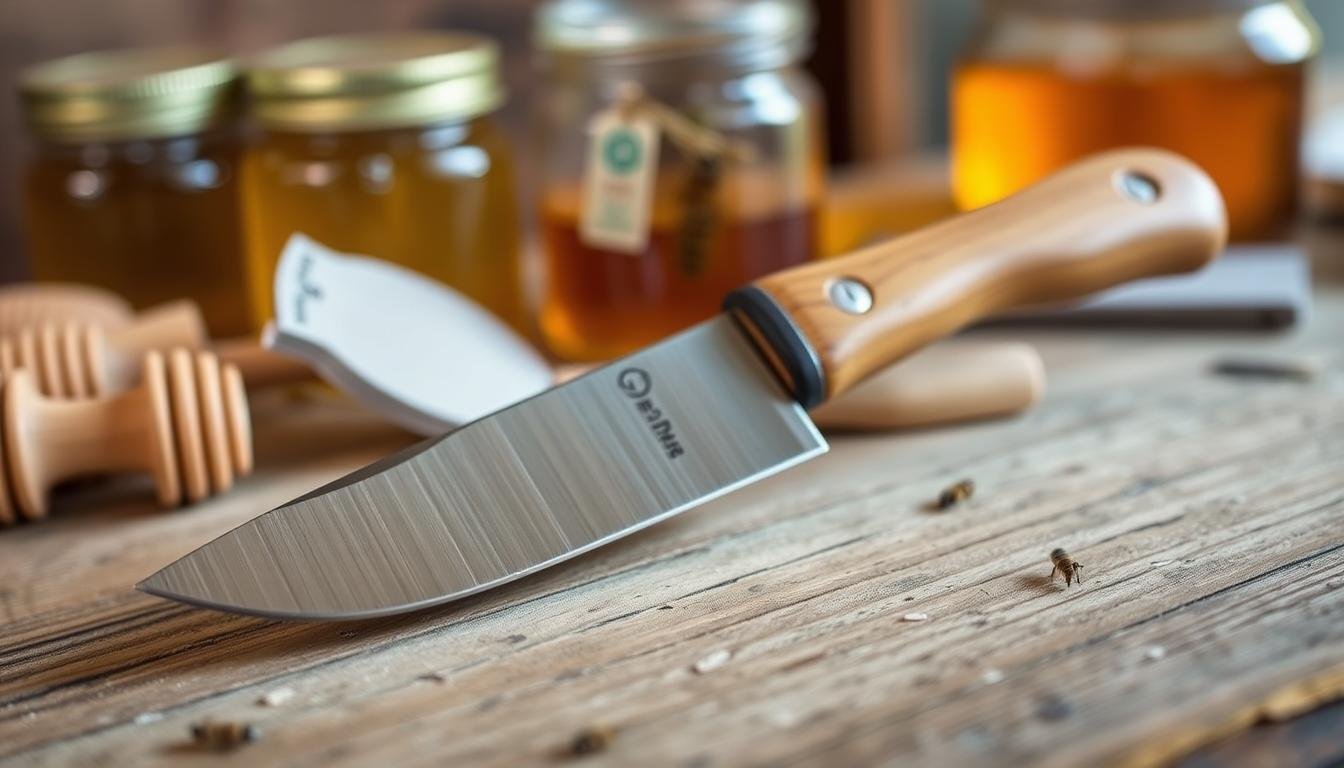
Starting right matters. Choosing the right uncapping knife can make your first honey harvest smooth and efficient. New beekeepers need a reliable tool that offers control and gentle handling of comb.
The 16-inch WEICHUAN model is often recommended. Its stainless steel blade removes wax covers cleanly and helps prevent damage to delicate honeycomb.
Many pros suggest beginning with a standard knife before moving on to electric options. A proper first knife helps you learn technique and keeps extraction tidy.
Pick a blade that balances comfort and precision. That choice will shape whether your harvest feels rewarding or frustrating.
Key Takeaways
- Choose a reliable uncapping knife to protect comb and speed extraction.
- The 16-inch WEICHUAN model is a solid entry-level stainless steel option.
- Start with a standard knife to build skill before upgrading to electric tools.
- Comfort and blade control matter for clean, efficient honey harvesting.
- A thoughtful first purchase helps new beekeepers avoid common mistakes.
Understanding the Role of Uncapping Knives
Removing the wax layer that seals honey cells is the key step before extraction. This thin seal, or cappings, keeps honey protected while bees ripen it. Removing cappings exposes the honey so it can flow out during spinning or pressing.
Good technique preserves the comb. If you cut too deep or press the comb, bees must rebuild wax on the frame. That costs time and resources in your hive.
The Purpose of Wax Removal
Wax removal prepares each frame for efficient extraction. Cleanly cleared cells let honey drain freely, which increases yield.
Why New Beekeepers Need Specialized Tools
Specialized tools give control and reduce damage to the honeycomb. Working with the right tool helps you avoid crushed cells and uneven frames.
- Protects comb structure and reduces repair work for bees.
- Improves honey flow and speeds the extraction process.
- Allows precise work on delicate or older frames.
| Task | Goal | Benefit |
|---|---|---|
| Remove cappings | Expose cells | Maximize honey yield |
| Work gently | Preserve comb | Less rebuild time for bees |
| Use correct tool | Precision cutting | Faster, cleaner extraction |
For a quick guide to tools and accessories, see beekeeping equipment. Choosing suitable gear helps you harvest with confidence and care.
The Best Uncapping Knife for Beginners
Certain legacy tools deliver consistent results year after year in the honey room.
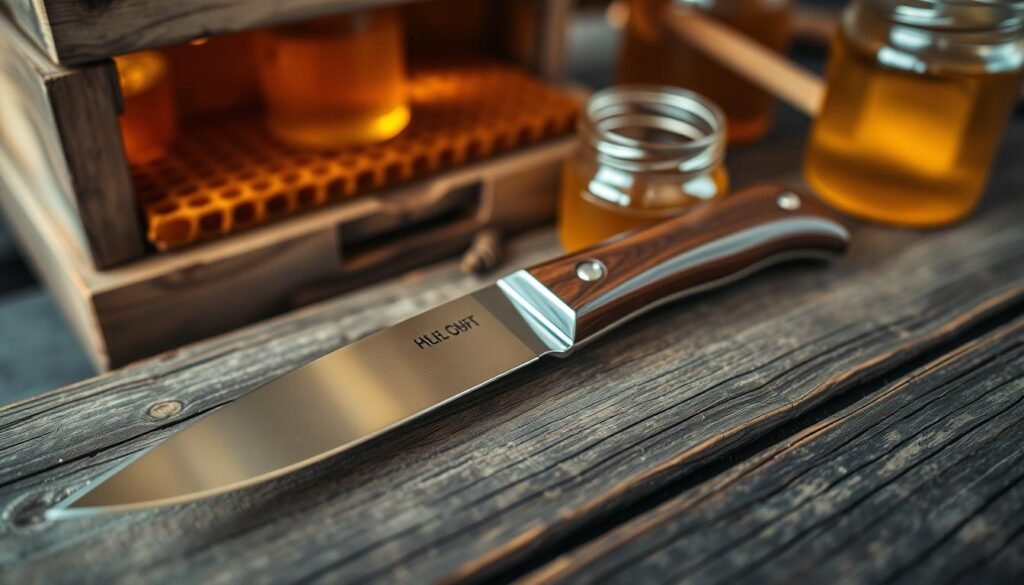
The Pierce Uncapping Knife was patented in 1941 and remains a durable choice. Its solid build suits long seasons and repeated use.
The Honbay uncapping fork uses 18 stainless steel tines to lift cappings gently. Those tines clear wax without crushing the underlying honeycomb.
Many new beekeepers gain skill with a manual blade. A hand tool gives clear tactile feedback, so you learn pressure control on each frame.
- Consider weight and balance for comfort during long sessions.
- Start with a simple serrated blade to master technique before upgrading.
- Choose models that are easy to clean to protect honey quality.
| Model | Type | Key Feature | Best Use |
|---|---|---|---|
| Pierce | Manual blade | Durable, long-lasting | High-volume extraction |
| Honbay Fork | Fork, 18 tines | Gentle on comb | Delicate or older frames |
| Serrated Knife | Manual serrated | Good tactile feedback | Learning technique |
Evaluating Electric Heated Options
Heated electric models offer a controlled way to clear wax cappings without tearing comb. An electric uncapping knife melts the seal so you glide over the frame and expose honey without heavy scraping.
Thermostat Control Benefits
A sealed thermostat gives precise temperature control. That stability prevents the blade from overheating and reduces the risk of burning wax or degrading honey quality.
For example, the BeeCastle electric knife heats between 280°F and 320°F, a useful range for smooth cuts through cappings while protecting honeycomb.
“Consistent temperature means predictable results and less damage to frames.”
Managing Heat-Up Times
Plan for a brief warm-up; some electric uncapping tools can take several minutes to reach working temperature.
Most models include an 8-foot cord to give flexibility near the extractor and often ship with a scraper in the box to keep the blade clean.
- Electric uncapping improves efficiency and reduces manual time on each frame.
- Check that the handle stays cool to protect your hand during long sessions.
- Read the product box for cord length, scraper, and thermostat specs before you buy.
For a focused review of heated models, see this guide on heated uncapping options.
Benefits of Manual Serrated Blades
A serrated manual blade lets you cut cappings with precise, controlled strokes. This approach is simple and reliable, and it works without electricity. That makes the tool useful when power is limited or you need a quick backup.
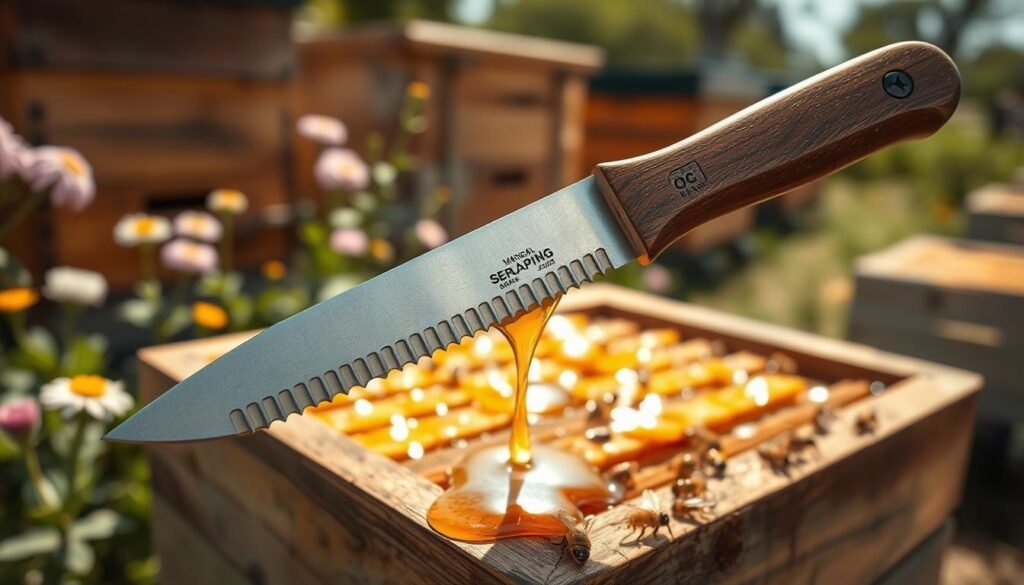
Using a serrated motion lets you work across frames with a steady back-and-forth action. Many beekeepers find this more precise than a straight blade because it follows the surface of the wax without gouging the comb.
Manual serrated blades are affordable and easy to maintain. They reduce the risk of overheating honey since no heat is used. That helps preserve natural flavor and quality during processing.
A well-designed handle improves grip and lowers hand fatigue during long sessions. Experienced keepers often keep a serrated hand tool as a backup to electric options.
- Reliable without power
- Precise back-and-forth cutting
- Safer for honey quality
For more on the serrated edge advantage, see this short FAQ on serrated edge benefits.
Why Blade Material and Shape Matter
Choosing the right metal and profile for the cutting edge affects speed and care during harvest. A well-made tool reduces effort and protects the frame and honeycomb.
Stainless Steel Durability
High-grade 304 stainless steel resists corrosion and holds an edge. That means less sharpening and more consistent performance season after season.
The blade length matters too. A blade of 10 to 12 inches lets you span most frames and saves time by cutting in one pass.
Edge shape changes how the tool moves through wax. A serrated profile bites and controls the cut. A flat edge glides and can give a smoother finish without tearing the comb.
- Handle: A quality wood handle gives a natural grip and lowers fatigue during long sessions.
- Care: Clean and dry the blade after use to prevent rust and preserve honey quality.
- Reach: A well-shaped blade reaches corners so you don’t leave honey behind.
Ergonomics and Handle Comfort
Good ergonomics let you work frame after frame with less fatigue and more precision.
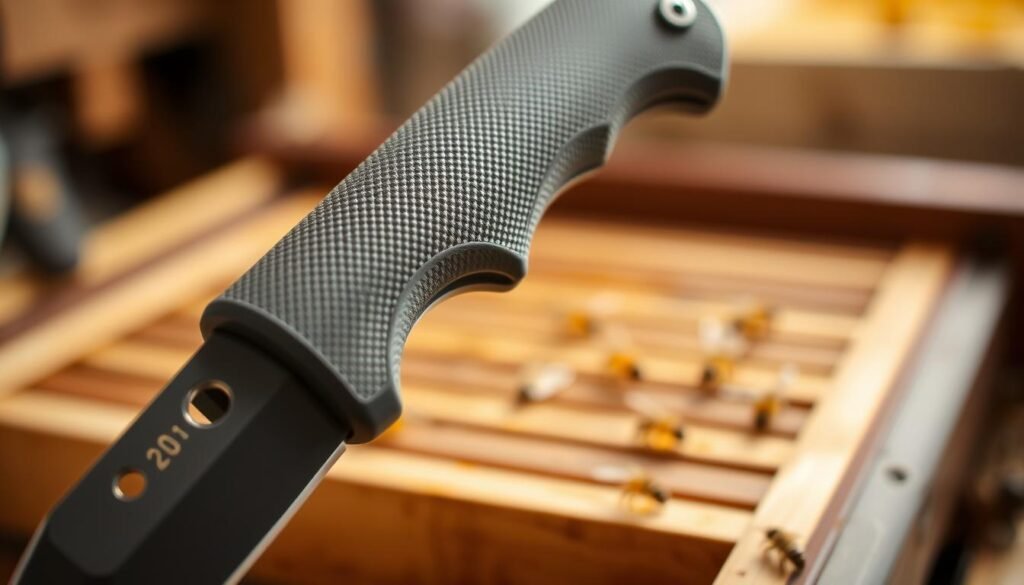
A comfortable handle prevents wrist strain. Polished wood grips feel warm and reduce slippage during long sessions.
Proper balance in the tool gives clear control over the blade so you make precise cuts and protect the frame.
Test how a handle fits in your hand before you buy. A slightly longer grip often gives better leverage on deep frames.
Pick knives that feel steady and natural. Comfort makes extraction more enjoyable and less taxing on your hands.
For details on stainless options and grip design, see stainless-steel manual models.
Comparing Steam and Electric Systems
Steam systems heat a blade indirectly, using vapor to melt cappings with steady, even warmth. A steam knife delivers very consistent temperatures, which suits large, continuous runs in commercial extraction.
Electric uncapping knife models are simpler to set up and often favored by backyard beekeepers. The SunVara electric uncapping knife keeps a steady 140–160°C, hot enough to melt wax without harming honey quality.
Both steam and electric uncapping methods use heat to speed removal of wax and free honey from frames. That shared principle raises efficiency and cuts the time spent on each frame.
- Steam knife: very consistent heat, needs hoses and a generator; manage pressure carefully.
- Electric uncapping: easier setup, thermostat control offers precise heat adjustments.
- Keep a scraper close to clear excess wax and keep the blade clean between passes.
| System | Best Use | Control | Setup |
|---|---|---|---|
| Steam knife | High-volume commercial runs | Very consistent via steam | Steam generator, hoses, more prep |
| Electric uncapping knife | Backyard or small-scale | Thermostat offers adjustable control | Simple plug-in, quick start |
| Hybrid workflow | Mixed operations | Balance speed and quality | Use electric tools with steam where needed |
For shopping options and specs, see shop honey uncappers.
Essential Safety Practices for New Beekeepers
Safety should lead every step in the honey room, especially when tools reach high temperatures. Heated blades and moving parts can cause serious injury if you rush or lose focus.
Preventing Accidental Burns
Keep hot equipment secure. Place your uncapping tool on a stable rack or heat-proof mat when idle to avoid slips and accidental contact.
Practice on empty frames until your stroke and pressure are consistent. That builds control and lowers the chance of gouging wax or dropping a frame.
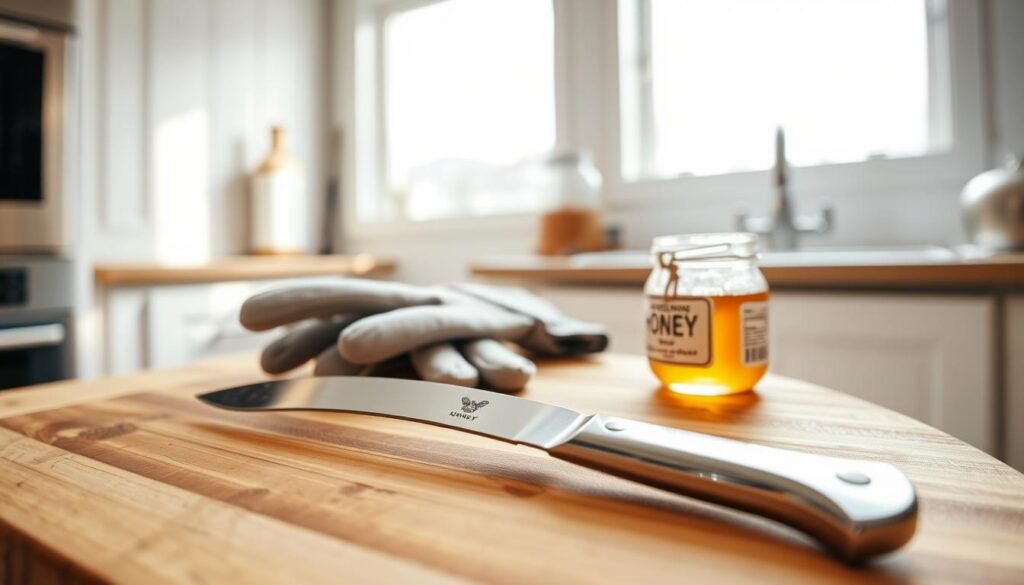
- Wear heat-resistant gloves to shield hands during long runs.
- Work in bright, uncluttered space to maintain focus and reduce mistakes.
- Inspect cords, handles, and blades before use; replace worn equipment promptly.
“A few extra seconds to set up safely prevents hours of lost time and injury.”
For a targeted gear overview, see our uncapping equipment guide. Build good habits now and every harvest will feel safer and more efficient.
Maintaining Your Equipment for Longevity
A simple after-harvest routine will extend the life of your knife and keep frames ready for the next run.
Clean the blade after every harvest with warm water and mild soap. Remove all traces of honey and wax so sticky residue does not harden and invite corrosion.
Use a scraper to clear stubborn buildup before washing. This saves time and keeps the edge sharper, which reduces the need to resharpen or replace the blade within a year.
Store equipment in a dry, cool spot to prevent rust on stainless steel. Good storage protects honey quality and makes setup faster when the season returns.
If you use a heated knife, check cords and connections regularly. Ensure there is no fray or corrosion so heat control stays reliable and safe.
- Wipe tools between frames to limit wax transfer.
- Inspect handles and seals each season for wear.
- Take a few extra minutes now to save time and money later.
Final Recommendations for Your First Harvest
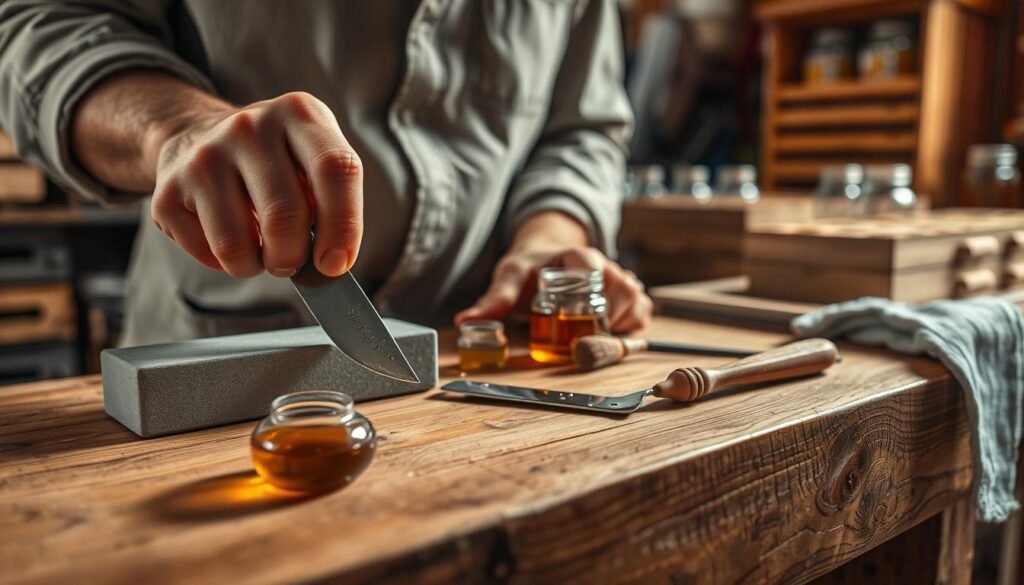
A thoughtful tool choice and tidy workflow make the first extraction far less stressful. Start with a reliable 10–12 inch stainless steel knife that balances control and durability. Match blade length and handle comfort to the number of frames you will process each year.
If you opt for an electric uncapping knife, choose a product with a sealed thermostat to keep temperature steady during heated uncapping. Keep a scraper nearby to manage wax and cappings, and route the cord away from your hand to prevent trips or tugs.
Work clean, move steadily, and protect the comb and honey quality. For a practical setup and step-by-step tips, see this guide to uncapping frames. Follow these pointers and your first harvest will be efficient and rewarding.