Introducing a new queen into an established hive is a delicate task that shapes colony health and productivity.
Using a reliable queen introduction cage helps the new queen acclimate safely while workers smell and accept her. This controlled approach reduces fighting and loss during the critical first days.
A well-designed cage holds the queen and provides food so she can be cared for without immediate release. Professional beekeepers use this method to protect the colony and keep brood rearing steady through the active season.
Follow a structured plan when placing the device in the brood nest and monitor worker behavior. For detailed steps and care tips, see this resource on queen introduction.
Key Takeaways
- Use a timed-release cage to let the colony adapt gradually.
- Place the device in the center of the brood nest for best results.
- Monitor worker behavior to judge acceptance before release.
- Provide water and keep the cage dark if queens wait before introduction.
- Professional methods reduce risk and support hive stability.
Why the Best Queen Cages for Introduction Are Essential for Hive Health
Keeping a new queen enclosed briefly lets the colony learn her pheromone signature while she begins laying. This slow approach gives worker bees time to accept the scent signals that define her role.
A quality introduction cage protects the queen from attack and reduces stress on the rest of the hive. Workers can feed and groom her through the mesh while she remains safe.
- Protects the queen during the vulnerable acclimation period.
- Allows laying to start so brood patterns stay steady and the colony remains productive.
- Reduces the risk of worker aggression and sudden loss during direct introduction attempts.
For practical steps and research-backed tips on managing a smooth transfer, consult this queen management guide.
Key Features and Design Specifications
Practical dimensions and durable materials ensure reliable performance when placing a cage on an active brood frame.
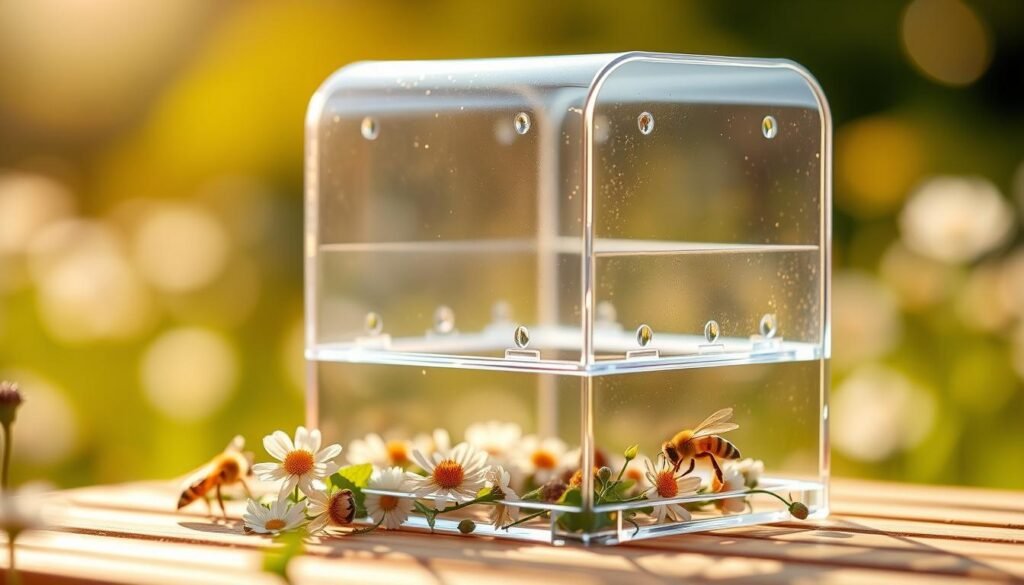
The wire mesh cage measures 4” long x 5” wide, giving ample room for movement while sitting on the comb. This size helps the enclosed queen lay eggs in empty cells without undue restriction.
Material and Mesh Quality
The mesh is engineered to balance protection with access. Workers can feed and groom through the wire while the confined queen keeps safe from aggression.
- Mesh density: Allows egg laying and contact with nectar and emerging brood.
- Durability: Corrosion-resistant wire holds shape across seasons.
- Health access: Queen can reach food and developing brood to maintain condition.
Available Color Options
The design includes a push-in mechanism and labeled push pins to attach the device securely to comb. The push feature makes placement quick and repeatable during inspections.
| Specification | Details | Benefit |
|---|---|---|
| Dimensions | 4” x 5” | Fits standard brood frames; space for movement |
| Attachment | Push-in pins | Easy, secure mount to comb |
| Colors | White, red, blue, green, yellow | Quick visual ID in the apiary and online store selection |
| Mesh function | Wire mesh allowing egg laying | Supports brood continuity and care |
Find product options and buy directly from our equipment store to match color coding and stock needs.
How to Properly Install Your Queen Introduction Cage
Mounting the introduction cage over active brood helps young bees meet and accept her scent.
Select a strong brood frame with a mix of open comb and capped cells that are due to emerge. This brings freshly hatched nurses into immediate contact with the caged animal and its pheromone.
Use the included push pins to secure the device directly onto the frame. Push firmly so the cage stays put during inspections and hive activity.
Optimizing Brood Frame Placement
Place the cage over open comb and adjacent capped brood about to hatch. The emerging bees will accept the new individual and help feed her eggs.
- Secure the cage using push pins so it sits flush on the frame.
- Position the cage where nurse bees can cluster underneath and access the animal through the mesh.
- Leave the animal confined for 4 days to allow pheromone spread and colony acceptance, then remove the cage to release.
For step-by-step tactics on timed releases and handling, see a detailed guide on queen introduction. For broader hive placement and setup tips consult this beehive installation guide and a small-scale apiary planning resource.
Conclusion
A controlled transfer routine reduces stress on workers and improves the new individual’s chances. Use a solid introduction cage and follow a short confinement period to let the hive adapt.
Follow the recommended 4-day hold to boost acceptance and keep brood patterns steady. A proper cage helps the colony smell and care for the newcomer while she settles in.
, If you need step-by-step help, see this queen introduction guide and these introducing a queen tips.
Visit our online store to secure the right cage and supplies. Free USA shipping applies to most orders over $100, making it easy to stock up and protect your investment.
FAQ
What type of introduction cage should I use when adding a new queen to a hive?
Choose a solid, well-ventilated introduction tool that protects the queen while allowing worker access to her pheromones. Look for cages made from durable plastic or wood with fine mesh or screened vents to prevent direct contact but permit feeding and scent transfer. Select a design that fits standard frames or can be suspended inside the brood nest.
How long should a queen remain confined in the introduction device?
Keep the queen confined usually seven to ten days. This gives the colony time to accept her scent, reduces rejection and fighting, and often lets any introduced queen release pheromones gradually. Monitor brood and worker behavior; if aggression persists, extend confinement slightly or re-evaluate the introduction method.
Where in the hive do I place the introduction unit for best results?
Position the introduction unit near open brood in the center of the hive to maximize exposure to nursing bees. Attach it to a brood frame or tuck it between frames so workers can easily tend to the device. Avoid placement near the outer frames or the hive entrance, which decreases interaction with nurse bees.
Can I feed the colony while the queen is in the introduction cage?
Yes. Provide pollen or sugar syrup as needed to ensure strong feeding activity around the cage. Feeding supports nurse bee activity and speeds pheromone distribution. Use feeders that won’t flood the frames or force excessive movement away from the introduction site.
How do I check if the colony has accepted the new queen?
Acceptance signs include calm worker behavior near the cage, care of the queen by workers, and later seeing eggs and young larvae after the queen is released. Inspect discreetly; avoid removing the queen too often. If you find aggression, dead workers, or missing queen after release, the introduction may have failed.
Are there introduction devices that help with emergency or queenless situations?
Yes. Some introduction units include push-in candy or removable plugs that allow staged release, helpful in emergency requeening or when a colony is queenless. Choose a model that balances secure confinement with easy release when acceptance is confirmed.
How important is material and mesh quality in an introduction unit?
Material and mesh affect durability, ventilation, and pheromone exchange. High-quality plastic or untreated hardwood paired with fine galvanized or stainless mesh resists weather and hive wear. Avoid materials that trap moisture or corrode, as that can stress the colony and reduce successful introductions.
Can color or visibility affect the introduction outcome?
Color and visibility have minor impact compared to placement and timing, but neutral tones blend with the hive and reduce disturbance when handling. Choose an introduction unit with a finish that won’t flake or emit odors that could repel workers.
What preparations should I make before introducing a new queen?
Ensure the target colony is healthy, with open brood and adequate nurse bees. Remove any existing queen or confirm queenlessness, reduce robbing risk by working in calm weather, and have all tools and feeders ready. Introducing during mid-morning when foraging is active improves chances of acceptance.
Where can I buy reliable introduction equipment and replacement parts?
Purchase from reputable beekeeping suppliers such as Mann Lake, Betterbee, or local apiary stores. These vendors offer tested introduction devices, replacement push-in plugs, and accessories like feeder adapters and frame-friendly mounts. Buying branded products ensures consistent fit and material quality.