
Producing clear, market-ready liquid gold starts with proper filtration. A reliable mesh filter removes wax, bee parts, and debris while preserving flavor and pollen. For small-scale runs, the Blythewood Bee Company cone-shaped mesh that fits a 5-gallon bucket is an affordable choice at $9.95.
If your site shows a page blocked extension notice, try disabling extensions or check browser settings and your account. Many users find a blocked extension blocked by security tools triggers the interruption.
We pride ourselves on fast shipping and clear reviews. Explore equipment options and filtration tips in our gear guide or learn how hive choices affect processing needs via a beekeeping primer.
Key Takeaways
- Use a proper mesh to remove debris while keeping pollen intact.
- If you see a page blocked message, try disabling extensions to regain access.
- Blythewood’s cone fits standard 5-gallon buckets and costs $9.95.
- Fast shipping and transparent reviews help you choose the right tool.
- Refer to a bucket filter guide and hive selection resource for matching gear: bucket filter guide, hive choice primer.
Why You Need the Best Honey Strainer for Raw Honey
A stainless steel filtering tool prevents rust and keeps jars clean during harvest. The Foxhound Bee Company double stainless steel strainer set ($24.99) fits a standard 5-gallon bucket and speeds processing.
Using a steel honey strainer preserves pollen and removes wax and debris without leaching flavors. This tool is dishwasher safe and built to last, so frequent processing does not wear it out.
If a page blocked extension appears while viewing a product description, try disabling extensions to regain access and complete checkout. Often an extension blocked by the browser prevents account actions and stops purchases.
- Durable material: stainless steel resists corrosion.
- Bucket compatibility: fits common 5-gallon containers.
- Easy care: dishwasher safe and simple to inspect.
Read a practical guide on how to strain product debris in this straining how-to, and learn packaging tips at our labeling and packaging resource. Reviews and fast shipping help you pick the right tool for efficient beekeeping.
Comparing Stainless Steel and Mesh Straining Solutions
A solid filtration setup determines the clarity and shelf appeal of every jar you bottle.
Double nesting systems pair a coarse cage with a finer insert. The coarse element catches cappings and large debris. The fine layer removes smaller particulates while leaving enzymes intact.
The Benefits of Double Nesting Systems
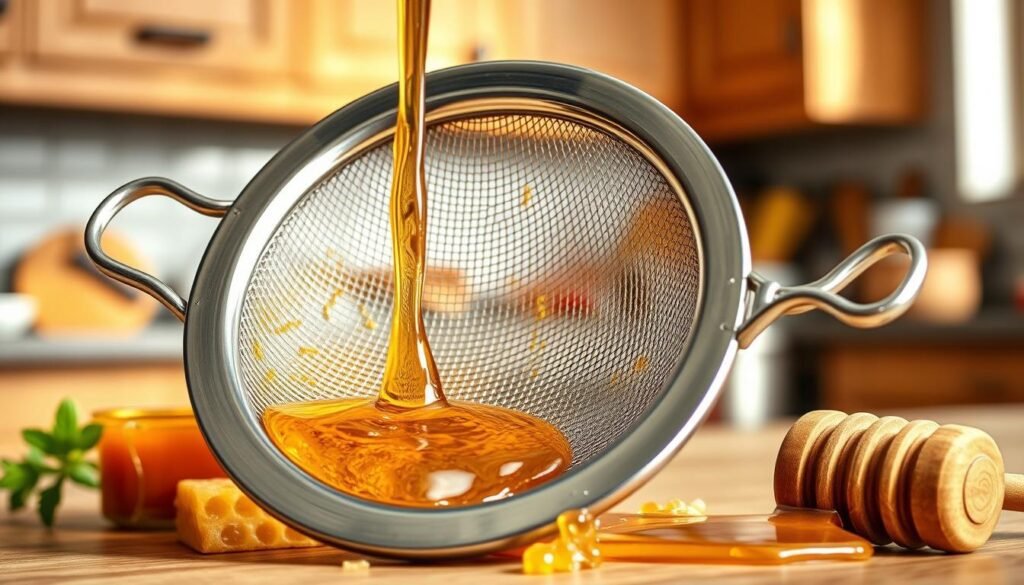
The HillCo, LLC stainless steel honey strainer costs $32.59 and sits on top of a 5-gallon bucket. Its double design speeds processing and adds stability during pours.
- Coarse filter: 1875 micron removes bulk waste.
- Fine filter: 650 micron captures finer particles and preserves natural enzymes.
- Durability: steel construction withstands repeated use and shipping.
Understanding Micron Sizes for Purity
Micron ratings matter. The 1875 and 650 micron pair keeps jars clear while retaining pollen and flavor compounds. Customers note this design in positive reviews.
If you hit a page blocked extension while viewing a product description, try disabling extensions so technical specs display. A blocked extension often hides shipping or fitting details, so disabling extensions restores access.
| Feature | Coarse | Fine |
|---|---|---|
| Micron size | 1875 µm | 650 µm |
| Role | Remove large debris | Capture small particles |
| Fits | Top of a 5-gallon bucket | |
| Price | $32.59 (HillCo, LLC) | |
Learn more about materials and setup in our material guide.
Essential Tips for Efficient Honey Harvesting and Bottling
Speed and care during extraction make the difference between a messy harvest and a smooth bottling run. Plan your setup before you begin. That simple step saves time and reduces spill risk.
Preparing Your Honey for a Smoother Flow
Warming your product slightly before filtration helps it pass through the mesh quickly. Gentle warming reduces viscosity and prevents the filter from clogging. Keep temperatures low enough to protect enzymes and flavor.
- Heat gently: warm jars or a water bath to ease flow through a stainless steel honey strainer.
- Double up: when harvesting more than 30 frames, use two sets of strainers to halve processing time.
- Secure placement: set the mesh on top of a 5-gallon bucket to avoid spills during bottling.
- Maintain gear: clean and dry your stainless steel between runs to keep every batch free of debris.
For step-by-step processing and storage tips, see our guide to how to process honey and the extractor advice on how to extract and store product efficiently.
Conclusion
Selecting the right stainless steel or mesh filter completes a careful harvesting and bottling plan. A quality strainer preserves texture and enzymes while speeding processing. Use proven products and setup tips to reduce spills and keep jars clear.
Fast shipping and reliable service matter when you prep for season. Check a side-by-side comparison of available options to match scale and flow, and explore hive innovations that simplify frame-by-frame harvesting and handling in the field via compare strainers and laser-cut hive frames. Positive reviews reflect gear that works when it counts.
Thank you for trusting our products and guidance; we look forward to supporting your success this season.