
Choosing the right tool can make hive work quicker and kinder to your colony. The Flexzion Bee Brush uses natural pig bristles to move bees with minimal agitation. Its light wooden handle helps with steady handling while you lift frames or check pollen and honey stores.
Good equipment saves time and stress. A well-designed brush or horsehair option reduces defensive behavior and protects fragile brood. Regular cleaning with warm water and mild soap keeps bristles reliable and extends the life of your tools.
Practical handling matters. Lightweight gear lowers arm fatigue during long tasks and improves overall efficiency during an inspection. Learn more about suitable picks and how they compare on this guide to top hive brushes and in resources for active beekeepers.
Key Takeaways
- Natural pig or horsehair bristles move bees without harm.
- Lightweight wooden handles reduce fatigue and aid precision.
- Cleaning and care preserve bristle effectiveness and life.
- Right design choices improve handling during frame checks.
- Quality tools help beekeepers protect the colony and save time.
Why Gentle Inspection Tools Matter for Your Colony
Careful tools reduce stress on the colony during each frame check. The Langstroth hive is common because it lets beekeepers manage frames modularly. That design makes routine hive inspections quicker and less disruptive.
Using a reliable hive tool helps pry boxes and separate frames without jostling the brood. When you are harvesting honey, the right equipment lets you move frames with minimal disturbance so foragers return on schedule.
Proper use of a smoker and protective gear keeps bees calm while you work. Regular cleaning of beekeeping tools stops propolis and debris buildup and helps maintain hive health.
- Langstroth beehive: modular frame access simplifies checks and honey collection.
- Hive tool: prevents accidental frame damage and reduces colony agitation.
- Smoker & PPE: essential whether you’re a novice or an experienced beekeeper.
| Tool | Primary Benefit | Maintenance | When to Use |
|---|---|---|---|
| Hive tool | Separates frames, opens boxes | Wipe propolis; oil hinge points | Every hive inspection |
| Smoker | Calms bees during handling | Empty ash; keep dry | Frame checks, harvesting honey |
| Natural bristle brushes | Move bees from frames with low stress | Clean with warm water, mild soap | When inspecting brood or pollen |
| Protective gear | Safety and confidence during tasks | Wash suits; replace worn gloves | All field work |
Learn practical calming techniques and tool care in our guide to keeping bees calm, and consider minimalist setups that simplify gear at the apiary with tips from minimalist beekeeping setups.
Evaluating the Best Bee Brush Alternative for Gentle Inspections
Material and handle design determine how smoothly you can move bees while you inspect frames. Choose tools that balance softness and durability so you protect brood and pollen without harming the colony.
Natural Bristle Options
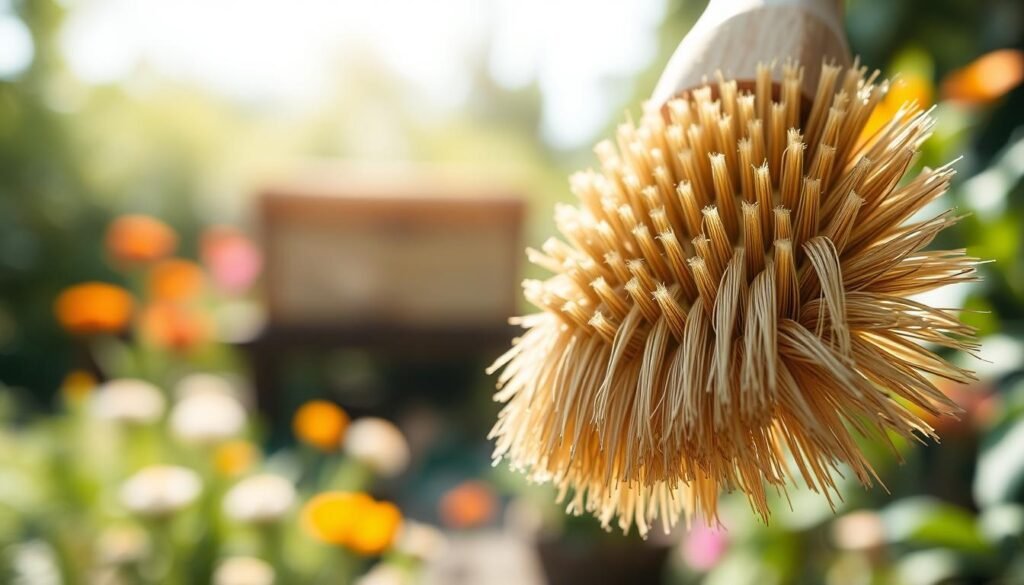
Horsehair stands out for its soft feel and lasting shape. Shenzhen Benefitbee Bee Industry Co., Ltd. notes that a double-row horsehair design improves coverage and helps remove bees without causing stress.
A 15-inch wooden handle gives reach and a secure grip. A model rated 4.4 stars by 100 beekeepers shows that many pros favor horsehair bristles for routine hive care.
Synthetic Alternatives
Synthetic bristles can offer consistent density and easier cleaning. Some beekeepers pick synthetics for durability, but many still prefer natural fibers to move bees without harming them.
“Inspect bristle density and handle construction before every use to avoid damaging the colony.”
- Material: soft bristles reduce agitation.
- Design: double-row bristles increase efficiency when you remove bees from frames.
- Grip: a solid wooden handle improves handling and longevity.
Compare models and read reviews, and consider a trusted supplier or a targeted purchase guide like quality beekeeper brushes or planning resources at sustainable apiary planning.
Key Material Considerations for Bee-Friendly Equipment
Handle selection shapes how comfortably you work at the hive and how steady your movements stay. A well-chosen handle changes the way a beekeeper controls frames and moves bees during routine tasks.
Wooden handles are common because they balance grip and weight. Beech wood is popular among pros. It resists moisture from cleaning and stays pleasant in the hand during long shifts.
The Role of Handle Construction
Look for secure bristle attachment and a tight fit between handle and head. Loose joins lead to shedding and extra wear on panels and honey stores.
- Grip: textured or contoured wood reduces slipping when working wet frames.
- Durability: solid materials endure repeated cleaning and apiary conditions.
- Ergonomics: an ergonomic shape lowers hand fatigue and improves handling during frame checks.
When choosing beekeeping equipment, prioritize natural materials that offer both comfort and long life. For comparison shopping and supplies, see our recommended apiculture supply source at apiculture supplies.
Design Features That Improve Inspection Efficiency
Smart tool geometry helps you move bees quickly without extra agitation. Thoughtful design shortens time in the hive and raises overall efficiency during each inspection.
Double Row Bristle Arrangements
Double-row bristles sweep more area in one pass and let you remove bees with less motion. That setup lowers handling time and helps clear frames gently.
Lightweight Handle Benefits
A brush that weighs just 3.98 ounces gives better maneuverability in tight hive spaces. Lightweight tools reduce arm fatigue and keep your grip steady during long beekeeping tasks.
Steady handling matters when you are harvesting honey and checking brood or pollen. A light handle helps you stay focused and calm while you work.
Optimal Brush Shapes
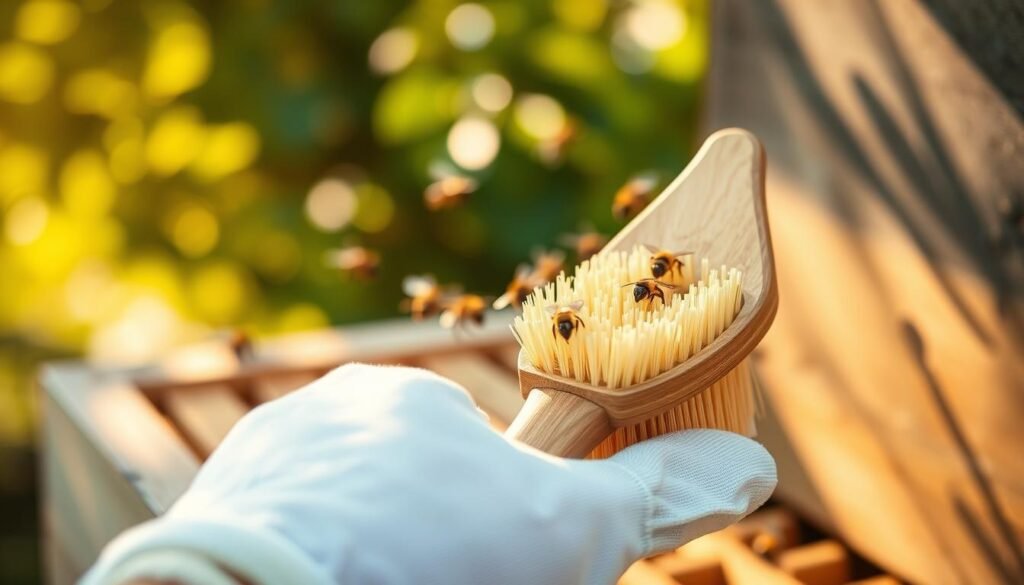
Oblong heads and tapered edges reach corners of the beehive without harming the colony. The right shape pairs with bristle density to increase effectiveness and durability.
- Double-row layout clears frames faster and lets you remove bees in a single, gentle motion.
- Low weight cuts time spent in the hive and reduces stress on the colony.
- Ergonomic grip improves control and lowers the chance of accidental damage.
For more on basic tool use, see a short guide to what is a bee brush, and review differences in hive layouts like horizontal beehive layouts when planning your workflow.
Proper Maintenance to Extend the Life of Your Tools
Simple cleaning after each hive visit prevents buildup and preserves tool performance. Rinse bristles in warm water with mild soap to remove wax, propolis, and pollen residue.
Wash brushes after every session and let them air dry away from direct sunlight. Store tools in a dry box or cabinet to avoid moisture damage and warped handles.
Inspect heads and the hive tool regularly. If bristles fray or lose shape, replace the unit to avoid harming the colony during use.
“Consistent care keeps tools effective and limits stress on your colony.”
- Clean with warm water and mild soap after hive work.
- Dry and store tools in a shaded, dry place.
- Check bristles and handles before each season and swap when worn.
| Task | Frequency | Why it matters | Quick tip |
|---|---|---|---|
| Rinse bristles | After each hive visit | Removes propolis and pollen that stiffen bristles | Use mild soap and warm water |
| Dry & store | After cleaning | Prevents mold and handle warping | Keep in a dry, shaded box |
| Inspect wear | Monthly or before season | Stops degraded tools from damaging frames | Replace frayed heads promptly |
| Tool care routine | Every season | Extends durability and effectiveness | Follow a simple checklist |
Follow a maintenance schedule to keep your beekeeping equipment reliable and efficient. For safe handling and deeper care tips, see our guide on essential tool care and expanding your apiary planning at beekeeping expansion tips.
Conclusion
The right gear shortens time at the hive and protects brood during handling. Prioritize natural materials like horsehair and a well-shaped handle to improve control and reduce stress while you move frames.
Regular cleaning and simple maintenance keep bristles and tools reliable season after season. Check wear, dry items fully, and store equipment in a dry box to preserve durability and performance.
Selecting a quality bee brush and a tidy toolbox supports efficient beekeeping and safer honey harvests without causing harm to your colony. See curated toolbox options and a step-by-step hive check to refine your routine.