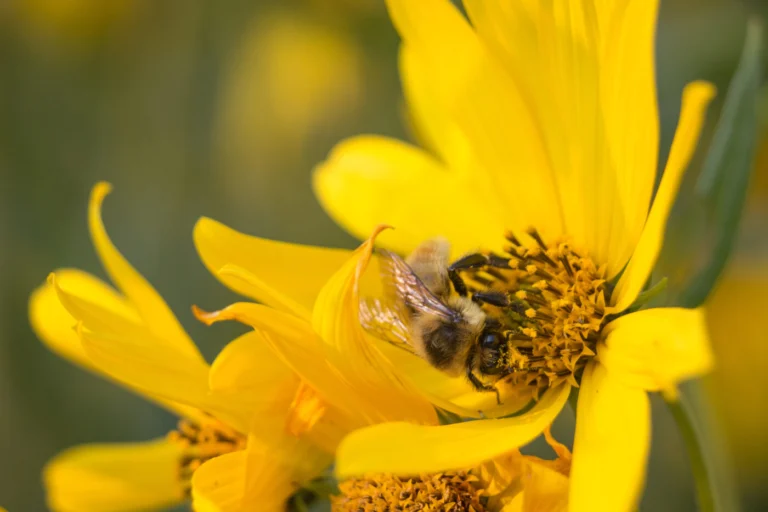
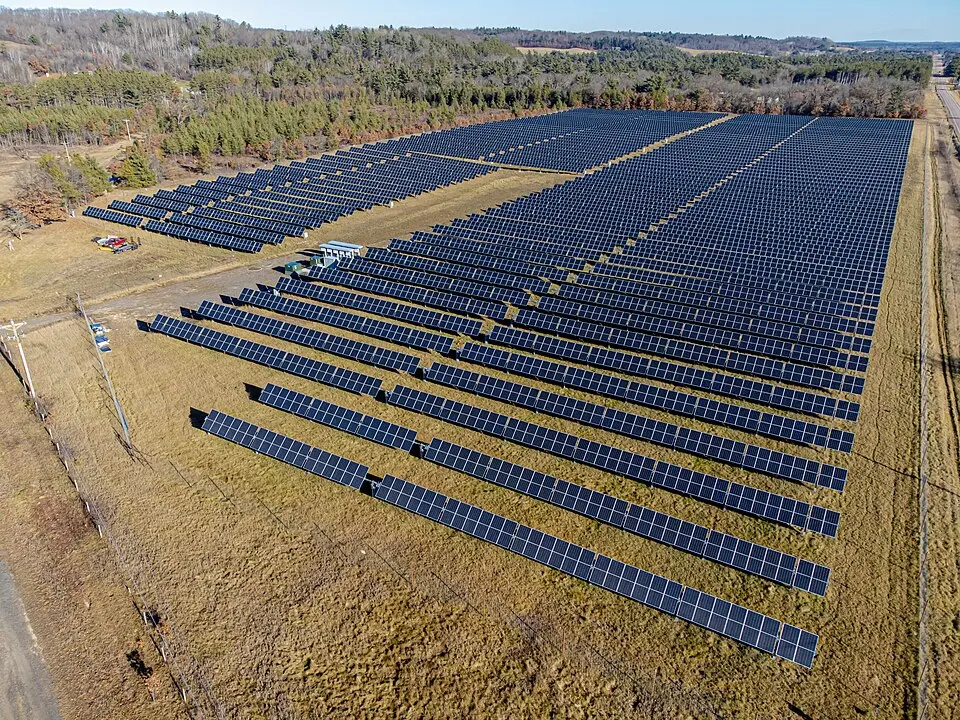
Researchers restoring native vegetation underneath solar panels at Minnesota energy facilities recorded a 20-fold increase in native bee numbers on the test sites, and tripled total insect abundance overall — turning land normally written off as pure industrial infrastructure into some of the more productive pollinator habitat in the surrounding landscape. The practice has a name, agrivoltaics, and while most of the public conversation around it focuses on grazing sheep between panel rows, the pollinator-habitat version may end up mattering more for a landscape already short on undisturbed ground.
Key Takeaways
- Agrivoltaics broadly means combining solar energy production with agricultural or vegetation-management practices on the same land — pollinator habitat is one specific application among several.
- Research at Minnesota solar facilities found native bee numbers increased 20-fold and total insect abundance tripled after native, pollinator-friendly plantings replaced standard mowed turf under and around panels.
- A separate research effort identified 14 focal forb species that could successfully establish at solar sites over a three-year test period and collectively support 122 unique bee species — roughly a quarter of Minnesota’s documented bee diversity.
- The benefit isn’t confined to the solar site itself: insects supported by solar-facility habitat were documented visiting nearby crop fields, contributing real pollination value to adjacent farmland.
- Government and national laboratory research — including work associated with Argonne National Laboratory and the National Renewable Energy Laboratory (NREL) — has taken the practice seriously enough to publish detailed technical guidance rather than treating it as a marketing gesture.
Table of Contents
- What Agrivoltaics Actually Means
- The Minnesota Research: 20x More Native Bees
- Which Plants Actually Work Under Panels
- The Spillover Effect on Neighboring Farmland
- Why Solar Sites Specifically Make Good Habitat
- Being Honest About the Limits
- Frequently Asked Questions
What Agrivoltaics Actually Means
Agrivoltaics is the general term for combining solar energy generation with agricultural or ecological land use on the same footprint, rather than treating a solar array’s land as sacrificed exclusively to power generation. The most commonly discussed version involves grazing livestock, typically sheep, in the grass between and under panel rows — useful for vegetation management and a modest secondary income stream. The version most relevant to this site is different: restoring native, flowering vegetation specifically to function as pollinator habitat, sometimes described separately as “ecovoltaics” or pollinator-friendly solar. Both share the same underlying idea — a solar facility’s land doesn’t have to be ecologically inert just because its primary purpose is generating electricity.
The Minnesota Research: 20x More Native Bees
The most striking published results come from research at solar facilities in Minnesota, a state that has been unusually active in studying this specific application. Sites where standard turf grass was replaced with native, pollinator-friendly plantings saw native bee populations increase twenty-fold compared to conventionally managed sites, alongside an overall tripling of total insect abundance. Those aren’t marginal improvements — a twenty-fold increase reflects habitat that went from functionally empty to genuinely productive, inside the footprint of infrastructure that exists for an entirely different purpose.
Which Plants Actually Work Under Panels
Turning a solar site into real habitat isn’t as simple as scattering a generic wildflower mix and walking away — established research specifically tested which plants actually survive and spread under the particular growing conditions solar arrays create (partial shade cycling with direct sun, disturbed soil, uneven moisture from panel runoff). That research identified 14 focal forb species capable of successfully establishing over a three-year trial period at Minnesota facilities. Collectively, planting for that specific set of species was found capable of supporting the full flight-season needs of 122 unique bee species — close to a quarter of all documented bee diversity in the state, an unusually direct measure of habitat value for a research result.
Researchers behind the work framed the conclusion plainly: the findings “provide support for solar-pollinator habitat as a feasible conservation practice to safeguard biodiversity and increase food security in agricultural landscapes” — language that treats the practice as genuine conservation infrastructure, not a public-relations add-on.
The Spillover Effect on Neighboring Farmland
One of the more practically useful findings is that the benefit doesn’t stay fenced inside the solar site. Insects supported by restored habitat at these facilities were documented visiting nearby crop fields, providing real pollination services to adjacent farmland rather than existing in isolation. That spillover effect matters directly to the broader case this site makes in its coverage of what pollination is actually worth economically and pollination services demand in U.S. agriculture — a solar facility positioned near working farmland isn’t just neutral to that farmland’s pollination needs, it can become a genuine net contributor.
Why Solar Sites Specifically Make Good Habitat
Part of what makes solar facilities unusually good candidates for this kind of restoration is mundane but important: the land is already fenced, already excluded from pesticide-heavy row-crop agriculture, and already committed to decades of stable, undisturbed land use for the life of the solar lease. That combination — long-term security, existing perimeter protection, and freedom from the agrochemical inputs that make adjacent farmland hostile to sensitive pollinators — is difficult and expensive to replicate on purpose. Solar development effectively creates that condition as a byproduct, and pollinator-focused agrivoltaics is simply the choice to make deliberate use of it rather than defaulting to low-maintenance turf.
Being Honest About the Limits
None of this makes solar development a pollinator-conservation strategy on its own, and it’s worth resisting that framing. The habitat value only materializes when a site’s owner or operator deliberately chooses native plantings and ongoing vegetation management suited to pollinators over the cheaper default of mowed turf or gravel — nothing about a solar array intrinsically creates habitat by existing. The research results are genuinely encouraging, but they describe what’s achievable with deliberate investment in the right seed mixes and maintenance regime, not a free byproduct every solar facility automatically delivers.
Frequently Asked Questions
What’s the difference between agrivoltaics and pollinator-friendly solar?
Agrivoltaics is the broader category — any combination of solar power and agricultural or ecological land use, including livestock grazing. Pollinator-friendly solar (sometimes called ecovoltaics) is one specific application focused on restoring native flowering habitat.
How much did native bee numbers actually increase at studied sites?
Research at Minnesota solar facilities found a twenty-fold increase in native bees and a tripling of total insect abundance after native plantings replaced standard turf.
Do the pollinators helped by solar-site habitat actually benefit nearby farms?
Yes — studies documented insects from restored solar-site habitat visiting neighboring crop fields, providing measurable pollination benefit to adjacent farmland.
Does every solar farm automatically become pollinator habitat?
No. The benefit requires a deliberate choice to plant native, pollinator-friendly vegetation and manage it accordingly — a solar site with standard mowed turf provides essentially no additional habitat value.
Is this a new idea?
The underlying practice is fairly recent as a formally studied conservation strategy, though interest has grown quickly alongside solar buildout, with research organizations including national laboratories now publishing detailed technical guidance on plant selection and site design.