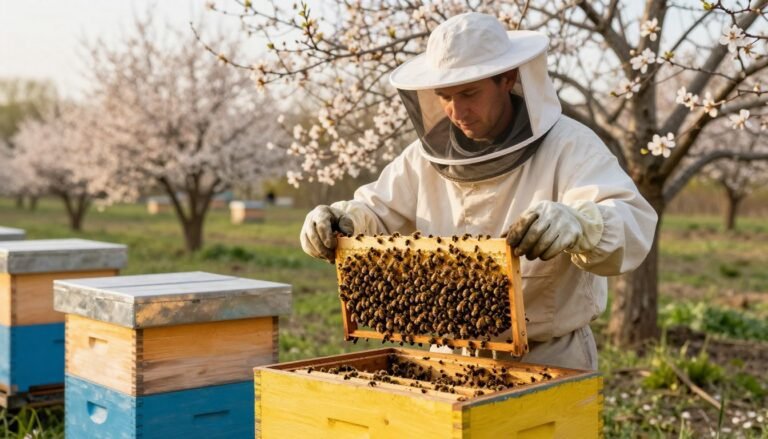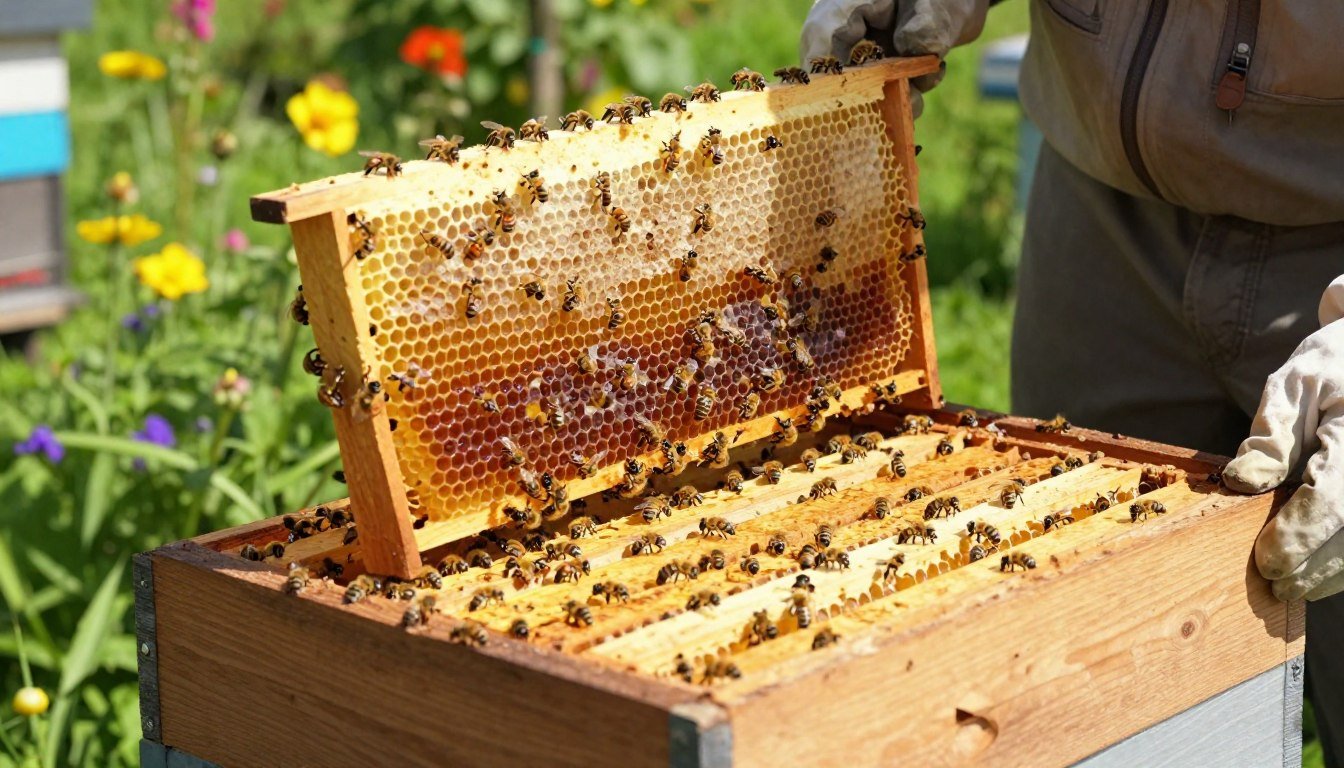
Spring activity drives colony growth, and Ruth O’Neill at Montana State University stresses that early-season work sets the year’s outcome.
New hives spend much of their energy building wax and comb, expanding brood space in the brood boxes, and storing nectar for winter survival. Monitor frames and population to avoid crowding the queen or limiting space for foragers.
As bee activity rises, watch for signs of surplus storage and capped cells. If weather and flow align, beekeepers may add boxes for comb and harvest. Practical guidance on timing and readiness can be found in our link on adding honey supers and in the spring checklist for hive checks.
Key Takeaways
- Spring brood growth signals when to watch hive space and frames.
- Prioritize wax and comb building before adding storage boxes.
- Check for capped cells and strong population before adding any super.
- Good weather and nectar flow boost first-year harvest potential.
- Monitor queen space and brood boxes to prevent crowding and stress.
Understanding the Role of Honey Supers in New Colonies
Providing an extra box creates dedicated real estate for ripening nectar and reduces brood crowding. This separation helps bees focus on comb building and food storage without disrupting the nursery.
Queen excluders are often placed between brood chambers and supers to keep the queen out of storage frames. The device is metal or perforated plastic and helps ensure harvest frames are free of brood.
Population growth during the active season pushes bees upward. Adding supers gives foragers room to deposit nectar and allows workers to finish comb and cap cells. Weather and local forage pace how fast those frames fill.
- Watch brood density on lower frames and available space around the queen.
- Use an excluder to keep brood out of storage and simplify harvest.
- Consider local weather and seasonal forage before adding boxes.
| Factor | Effect on Hive | Action | Result |
|---|---|---|---|
| Population | Increased brood and worker activity | Add honey super | More storage, less congestion |
| Queen Excluder | Prevents queen from entering storage | Place between boxes | Harvestable frames free of brood |
| Weather / Forage | Controls nectar flow speed | Delay or advance supering | Optimized honey fill rate |
| Frames / Comb | Needs foundation or drawn comb | Provide frames or pre-drawn comb | Faster storage and capping |
For deeper guidance on the role of supers in management, see role of honey supers and tips to boost hive productivity naturally.
Key Indicators for When First-Year Colonies Should Get a Honey Super
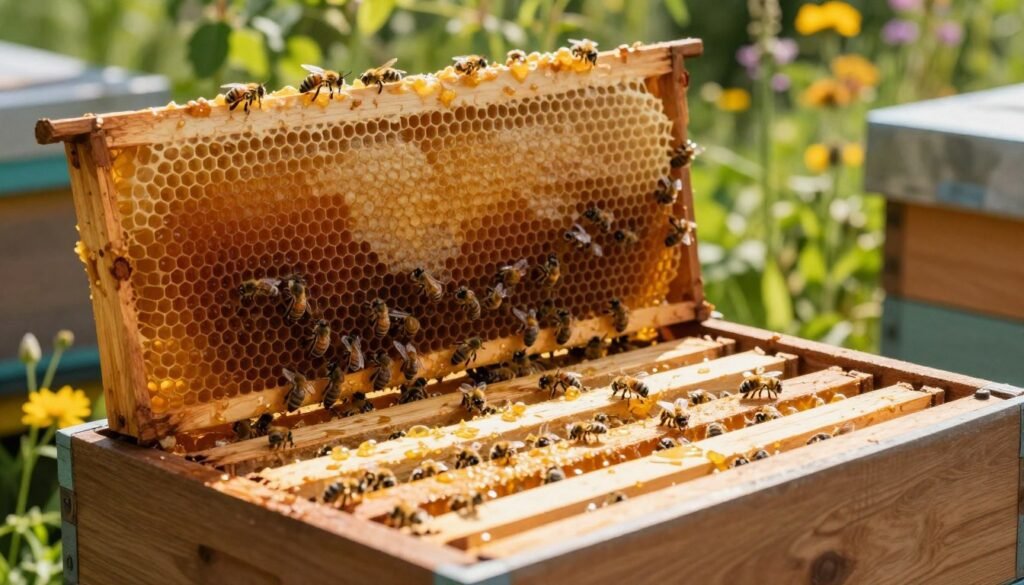
Track comb fill and flight activity to judge whether the hive needs more room. Short, regular checks let you act before congestion forces swarming. Watch frames and entrance traffic for clear signals.
The Eighty Percent Rule
The 80% rule means if about eight of ten frames show active storage or capped cells, plan to add a box. This rule helps beekeepers avoid brood compression and gives bees space to finish comb and cap honey.
Monitoring Nectar Flow
Observe local forage and flight intensity during spring flows. Strong nectar flow plus heavy forager returns usually precede rapid frame fill.
- Inspect lower frames for brood and capped cells.
- Note weather conditions that speed or slow flow.
- Use short checks so bees stay calm and productive.
| Indicator | What to Look For | Action |
|---|---|---|
| Frame use | 8 of 10 frames in use | Add supers or frames |
| Forager traffic | Busy returning flights | Prepare to add super |
| Weather / flow | Warm, consistent nectar sources | Advance supering |
| Brood density | Most cells filled or capped | Separate brood with an excluder and add box |
For practical timing guidance see the guide on when to add honey and the spring checklist for inspection tips.
Essential Equipment and Configuration Strategies
Select equipment that balances storage needs with manageable weight for lifting. Pick the box size that fits your body and workflow. A shallow is 5 ¾ inches and about 40 lbs when full. A medium is 6 5/8 inches and roughly 60 lbs. A deep box stands 9 5/8 inches and can reach 90 lbs.
Top placement is the most common: place an empty box on top of the highest existing box so bees move up to store nectar. Bottom insertion puts new storage below existing supers and above brood; some beekeepers find this speeds storage.
Practical tips
- Keep frames and foundation ready so you can add supers quickly.
- Use a queen excluder if you want brood confined to lower boxes.
- Choose size based on lifting ability and harvest goals.
| Item | Specification | Management Note |
|---|---|---|
| Shallow | 5 ¾ in, ~40 lbs full | Easy to lift; good for small operations |
| Medium | 6 5/8 in, ~60 lbs full | Balance of capacity and weight |
| Deep | 9 5/8 in, ~90 lbs full | High capacity; requires strong lifting plan |
| Placement | Top or bottom insertion | Choose by colony behavior and personal workflow |
For timing and setup guidance, review this practical note on adding honey supers and consult a seasonal calendar at beekeepers’ seasonal calendar.
Potential Risks of Improper Supering
Mistimed supering alters colony balance, affecting brood rearing and food stores. Proper timing protects population growth and maximizes harvest. Poor timing creates clear risks that merit careful attention during the nectar flow.
Consequences of Adding Too Early
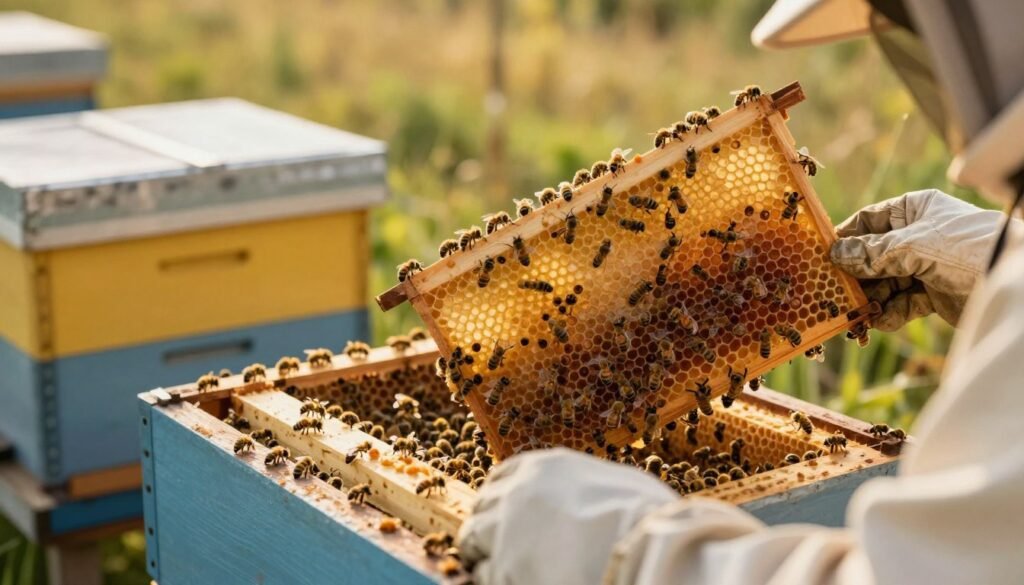
Too much empty space forces bees to heat unused volume and expend energy. Pests like wax moths and small hive beetles find easy refuge in unused comb.
- Empty frames invite pest pressure and lost comb.
- Energy spent on warming reduces brood care and foraging.
- Extra boxes delay efficient filling and lower seasonal yield.
Dangers of Adding Too Late
Waiting until storage is full can make the colony honey bound. That leaves the queen with no room to lay brood and raises swarming risk.
| Issue | Effect | Action |
|---|---|---|
| Honey bound | Brood space lost | Add boxes or split colony |
| Overcrowding | Swarm impulse | Inspect frames for space |
| Missed flow | Lower harvest | Watch flight activity |
Tip: Monitor frame use, flight activity, and brood layout. Use an excluder or extra foundation only when the bees show need to keep balance and hive health.
Managing Hive Inspections During the Nectar Flow
Inspect sparingly during peak nectar activity to avoid disrupting foragers and brood care. Inspecting briefly keeps bees calm and preserves flight activity. Use short checks every 10–14 days rather than long examinations.
Top-box checks are the fastest way to tell if you need to add supers. Open the top box, glance at outer frames, then close the hive. This lets the colony keep working on comb and stores.
In regions like South Carolina, pests such as the Small Hive Beetle thrive in unused space. Limit empty boxes and rotate inner frames outward to encourage even filling. A queen excluder helps keep brood out of harvest frames for a cleaner harvest.
- Check entrance activity to gauge forager returns and flow strength.
- Rotate inner frames if bees concentrate on the center to promote outer-frame use.
- Manage foundation so comb builds quickly and reduces pest refuge.
| Action | Why | Timing |
|---|---|---|
| Quick top-box check | Assess fill without long disturbance | Every 10–14 days |
| Rotate inner frames | Promote even storage | As noticed during checks |
| Use queen excluder | Keep brood out of harvest frames | During strong nectar flow |
Practical links: Find timing tips for the nectar flow in this nectar flow guidance, and review common pitfalls at common beekeeping mistakes.
Conclusion
Reading the hive matters more than a date on the calendar. Watch frames, flight activity, and brood layout to match space to need. This approach keeps bees productive and lowers swarming risk.
Choose the correct box size and add boxes when storage and nectar flow justify it. Good timing protects brood health and boosts harvests without stressing the queen or workers.
Keep notes and adapt each season; local forage, weather, and hive strength guide every move. For more practical cautions and tips, see this guide on common beekeeping myths and tips.
FAQ
How do I know when to add a honey super to a first-year colony?
Look for strong population growth, most brood frames well covered with bees, and active nectar collection. Use the eighty percent rule: when about 80% of frames in the brood box show drawn comb or bees working nectar and pollen, add a super. Also watch local nectar flow and weather—add space during sustained warm, dry conditions and pause during cool, rainy stretches.
What is the eighty percent rule and how does it apply to new hives?
The eighty percent rule means adding another box when roughly four of five frames in the brood chamber are occupied with brood, drawn comb, or heavy bee traffic. For new hives, this signals enough worker force to build comb and store nectar in an upper box without crowding the queen or disrupting brood rearing.
How important is monitoring nectar flow for supering decisions?
Nectar flow timing is critical. Strong local nectar sources and warm weather speed comb building and honey storage, so add boxes at the start of sustained flow. During a weak or intermittent flow, wait until bees visibly pack nectar into cells and cap comb before adding more boxes.
Should I use a queen excluder when adding supers to a young colony?
Many beekeepers use a queen excluder to keep brood out of honey boxes. For first-year colonies, install the excluder if the queen is still expanding brood and you want clean honey comb. If the colony is small, an excluder can restrict worker movement and slow storage, so evaluate population size first.
How do I choose between adding a super on top versus underneath?
Top supering is standard: add the honey box above the brood nest so foragers store nectar upward. Brood boxes are below. Bottom supering (reversing boxes or placing brood above) can confuse hive orientation and stress bees. For new colonies, stick with top addition unless you have a specific management reason.
What equipment and configuration strategies help new colonies build comb quickly?
Start with quality foundation or foundationless frames, proper box size, and clean hive bodies. Use deep brood boxes and medium or shallow supers for honey. Ensure adequate ventilation, a solid entrance, and easy inspection access. Match frame spacing and foundation type to encourage straight comb building.
What are the risks of adding a super too early?
Adding boxes prematurely can lead to cold brood, queen moving upward into honey frames, or unfinished comb. It stretches the workforce and may reduce brood care and winter stores. Early supers can also tempt robbing if nectar is scarce.
What happens if I add a super too late?
Late addition risks swarming because the colony lacks storage and becomes crowded. Bees may backfill brood cells with nectar, reducing brood production and colony growth. You can lose potential harvest when the main flow ends before bees finish comb and cap honey.
How often should I inspect a first-year hive during active nectar flow?
Inspect every 7–10 days during peak activity. Keep inspections brief to limit disturbance. Focus on population size, queen presence, brood pattern, and stores. Adjust intervals based on weather and colony temperament to avoid unnecessary stress.
Can small or weak colonies support a super during the first season?
Weak colonies need more brood space and resources before carrying additional boxes. If population is low or brood pattern sparse, delay adding extras. Strengthen the colony with feeding or combine weak hives if necessary so they can draw comb and store nectar effectively.
How does local forage and weather affect supering timing?
Local flora and sustained warm temperatures drive nectar flow. In regions with short flows, add supers early in the window so bees have time to build and cap comb. In areas with prolonged flows, add gradually as the colony grows. Watch forecasts—cold snaps or heavy rain reduce foraging and delay comb completion.
Are there signs during inspections that indicate it’s time for another box?
Yes. Look for bees clustering on top bars, nectar being packed into brood frames, and available frames filling quickly. When most frames show active foraging and drawn comb, or when bees begin to store nectar in less desirable locations, add a box to prevent congestion and swarming.
What management steps reduce the risk of robbing when adding supers?
Add supers during a strong nectar flow, avoid leaving exposed honey, and conduct quick, calm inspections. Reduce entrance size, use clean equipment, and schedule manipulations in early morning or late afternoon to lower robbing pressure. Seal or store frames with honey securely when not in the hive.
How does foundation type affect how quickly bees draw comb in a new super?
Wax foundation gives bees a clear starting grid and speeds drawing compared with foundationless frames. Plastic foundation can work well if bees adapt. Foundationless frames let bees build natural comb but may take longer and require stronger populations. Choose based on colony strength and management goals.
What role does queen quality play in supering success during the first year?
A young, prolific queen boosts brood production and worker numbers, enabling faster comb construction and storage. A poor or aging queen slows growth, making early supering risky. Confirm a healthy laying pattern before adding space for honey storage.