Published March 31, 2026
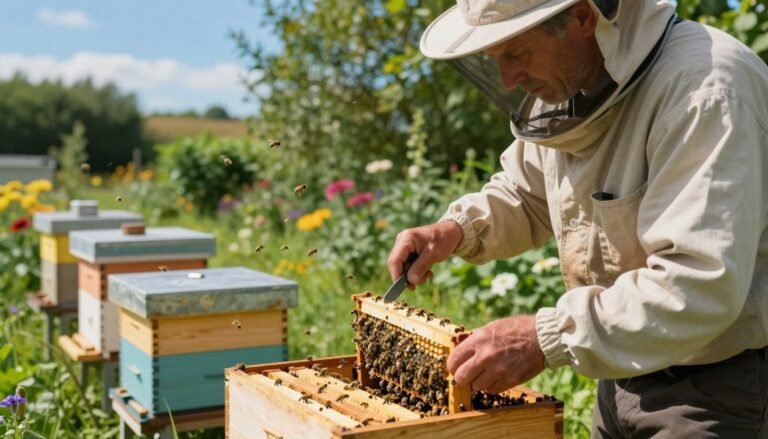
Starting a colony takes careful setup and timely choices. Rgelect moved two 4-frame nucs into Flow Hive brood boxes and showed how proper placement helps bees reorient. Place the nuc box where the hive will live so foragers return to the right spot.
Use an entrance reducer while the population grows. Check weight by lifting the bottom board as the Ontario Beekeepers Association suggests. That quick lift gives a sense of stores without opening frames.
Watch weather and natural nectar flow before you add sugar syrup. If stores run low, offer syrup and a feeder so brood and comb can develop. For practical feeding guidance, consult this resource on what a nuc needs during queen development: feeding guidance for nuc development.
Key Takeaways
- Place the box in its final location so bees reorient quickly.
- Use an entrance reducer to help the colony defend the hive.
- Lift the bottom board to estimate stores before opening frames; see inspection tips: inspection and weight checks.
- Offer sugar syrup when weather and nectar are scarce, and withdraw syrup once comb is drawn.
- Monitor brood, honey, and pollen on frames to guide feed choices and space needs.
Understanding the Role of Supplemental Feeding
Adding light syrup can kickstart comb drawing and strengthen colony growth in cool weather. Supplemental food is not a permanent fix. It helps bees build brood and draw comb when nectar is scarce.
The Ontario Beekeepers Association recommends a 1:1 sugar-to-water mix by weight for spring stimulation.
“Use a one-to-one ratio of sugar and water, by weight, for spring feeding.”
The Importance of 1:1 Syrup
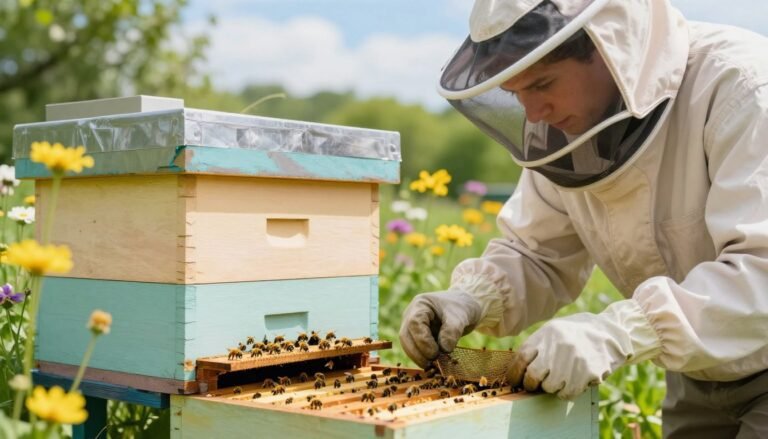
Place the feeder on top of the brood box so syrup sits above the frames but does not press on them. A screened plastic pail with a tight cover works well and keeps pests away.
Avoiding Early Honey Contamination
Do not leave honey supers on the hive while offering syrup in spring; that risks adulterated honey. Barrel feeding in fall is also discouraged for the same reason.
- Monitor weather; cool days cut syrup uptake.
- Heft the bottom board to estimate stores before adding more sugar.
- Manage equipment like a hive top feeder so bees have steady access.
For detailed tips on supplemental feeding and pollen patties consult this supplemental feeding guidance, and read about ways to boost colony population naturally.
When to Stop Feeding a New Nuc
Know the signs that it’s time to end supplemental syrup and let bees forage on their own.
Inspect the colony every two weeks for the first month. Dawn_SD recommends this cadence to watch brood stages and stores without over-handling the hive.
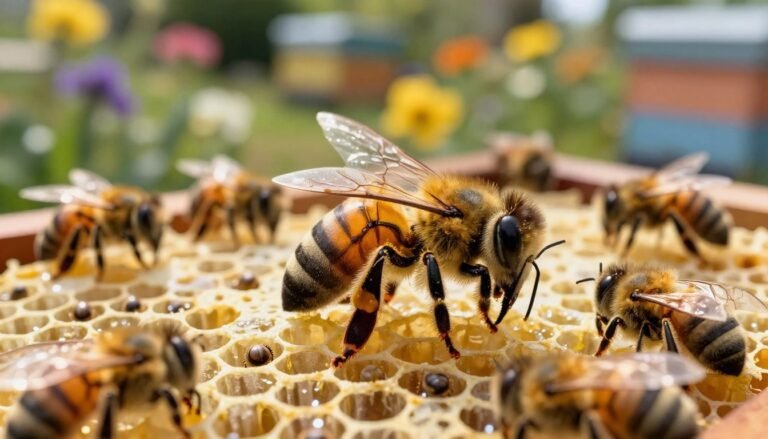
Look for brood in all stages — eggs, larvae, and capped brood — plus drawn frames across the box. A healthy, organized brood pattern means the queen is laying properly and the colony can use nectar.
Heft the rear board to judge stores. If the hive feels heavy and you see steady incoming pollen and active foragers, you can reduce syrup. Dandelion and other blooms are good natural cues.
Place frame feeders close to the brood nest while feeding. Check the plastic bag or feeder cover for leaks so syrup doesn’t spill and attract pests.
- Inspect every two weeks for a month.
- Confirm drawn frames and brood in all stages.
- Heft the board to verify adequate stores before removing syrup.
For guidance on quarantining stock before adding to your apiary, see quarantine new bees.

Signs Your Colony is Ready for Expansion
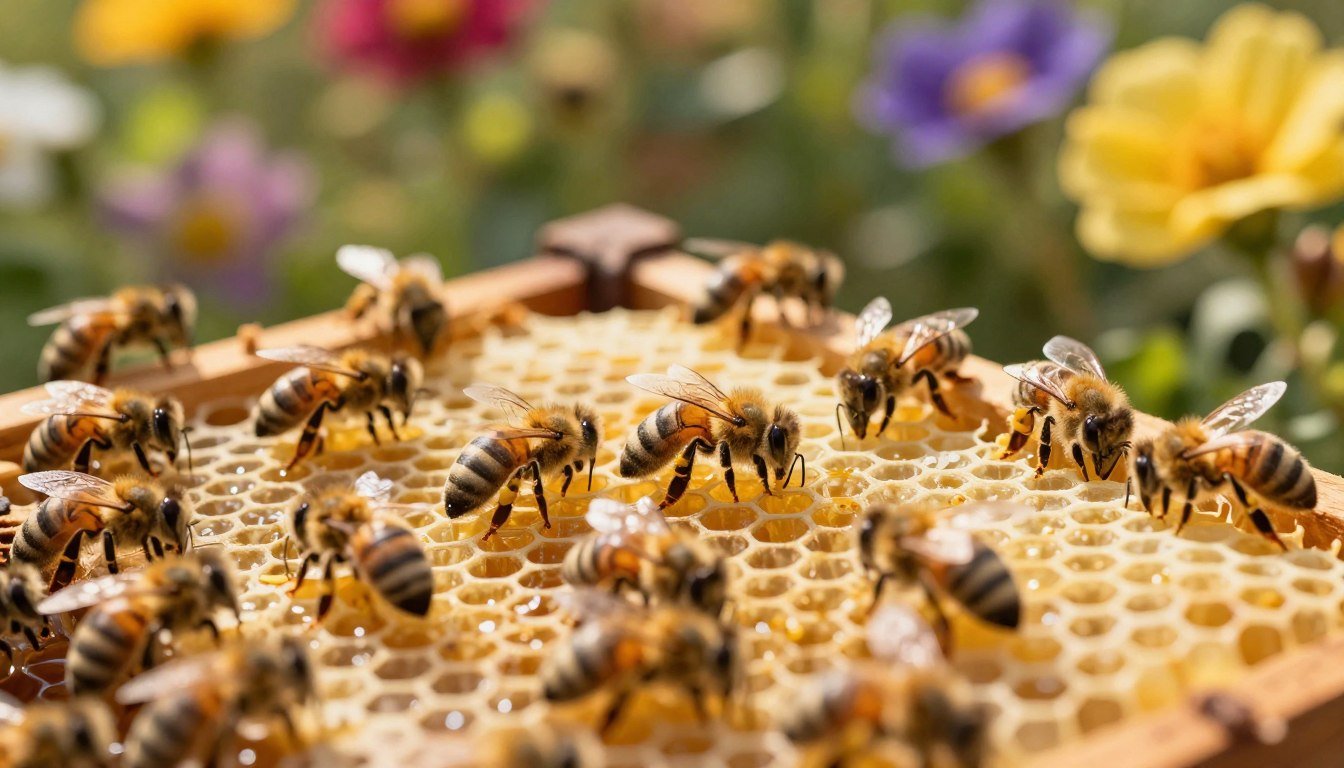
Gauge colony strength by watching how many frames are fully drawn and busy with bees. Drawn comb across most frames shows the colony can store honey and raise brood in new space.
Evaluating Drawn Comb
Make sure at least 80% of each frame holds brood, pollen, or honey before adding another box. Dawn_SD recommends adding a super only after the brood box has mostly drawn comb.
Smearing a bit of burr comb over Flow frames can speed interest and encourage bees to accept the new super.
Assessing Brood Patterns
Check for eggs, larvae, and capped brood across multiple frames. A solid, even brood pattern means the queen is laying well and the hive can expand.
Monitoring Bee Population Density
Look for dense coverage on frames and steady incoming pollen and water. Heft the rear board; a heavy feel indicates adequate food stores for the season.
If you are still offering sugar syrup, make sure to stop feeding before placing honey supers. That prevents syrup contamination of future honey.
- Make sure every frame is well-covered with bees.
- Time additions for mid-season when comb is plentiful.
- Read more about moving between boxes at how long bees can live in a nuc and balancing harvests at balancing honey harvesting.
Seasonal Considerations for Hive Management
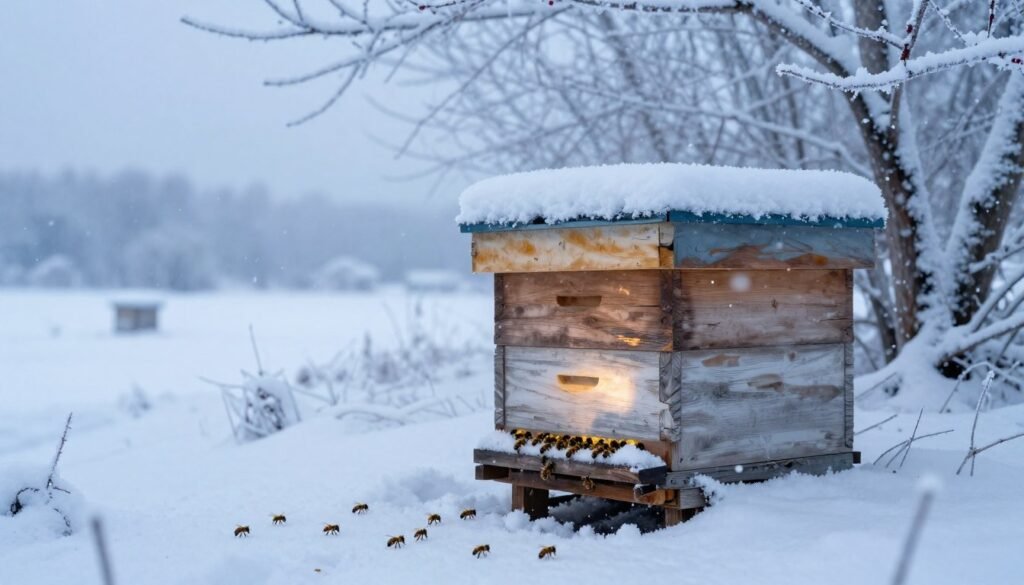
Assessing stores in autumn helps beekeepers set up hives for a successful winter cluster.
Preparing for Winter Stores
Aim for weight and capped frames. The Ontario Beekeepers Association recommends a single brood chamber colony weigh 70–90 lbs before cold sets in.
Finish major sugar additions by mid-October so bees have time to ripen stores. Use a 2:1 heavy sugar syrup in fall; that ratio helps the colony cure food fast.
Heft the bottom board to judge weight. A heavy feel means better odds for winter survival. If frames lack honey or pollen, add a protein patty or feeder supplement.
During winter, bees keep heat by muscle vibration. That process burns reserves quickly, so full stores matter.
| Check | Action | Timing |
|---|---|---|
| Weight (70–90 lbs) | Heft board; add syrup if light | By mid-October |
| Frames | Confirm capped honey on key frames | Late fall inspection |
| Pollen | Provide protein patty if low | Before hard freeze |
Remove honey supers early so bees can finish winter stores. For a fall checklist and practical steps see fall checklist. Read about ways to stimulate brood production safely if brood levels are low.
Conclusion
Regular inspections and seasonal awareness are the backbone of reliable apiary care.
Healthy bees result from steady checks, timely syrup and sugar management, and careful assessment of brood and drawn comb. Learn practical courses and local workshops from the University of Arkansas to sharpen skills and confidence.
Knowing exactly when to stop feeding nucs prevents honey adulteration and protects colony health. Watch stores, population, and forager returns before removing syrup. Track expansion signals in hives so supers are added at the right moment.
For guidance on finishing fall tasks and moving stock, see finishing feeding and moving nucs and consult expansion tips for practical next steps.
FAQ
How long should I feed a brand‑new nuc after installation?
Feed for as long as the colony lacks sufficient nectar and pollen stores. Keep providing 1:1 sugar syrup in an internal or entrance feeder until bees draw comb and cleanly cap stores. Check frames every 7–10 days. Once at least half the frames show stored syrup, actively drawn comb, and a steady brood pattern, you can reduce and then end supplemental syrup.
Why use 1:1 sugar syrup for early feeding?
A 1:1 ratio mimics natural nectar and encourages bees to store and build comb quickly. It supports brood rearing without producing hard sugar that mimics late‑season feed. Use a clean feeder and fresh sugar to avoid fermentation and to keep comb suitable for brood.
How do I avoid syrup contaminating early honey frames?
Place feeders where foragers can access them without spilling into comb designated for honey. Use internal feeders during calm weather and avoid open feeding. Mark and rotate newly drawn comb so the colony stores nectar away from frames intended for human harvest.
What signs show the colony is ready for expansion into a full deep or super?
Look for multiple frames with drawn comb, consistent sealed brood across frames, and rising adult numbers. If bees fill 60–70% of the nuc box with comb and stores and the queen lays in nearby frames, add space or move frames into a brood box to prevent swarming and allow growth.
How do I evaluate drawn comb quality?
Drawn comb suitable for brood is even, clean, and approximately brood‑cell size in the center frames. Cells used for brood show larvae, capped brood, and a pattern without patchy gaps. Pollen and nectar in adjacent cells indicate good resource flow.
What should I look for in brood patterns?
A solid brood pattern has few empty cells among capped brood and consistent larval stages. Spotty or isolated brood patches suggest stress, queen issues, or disease. Healthy brood plus active nurse bees usually means feeding can taper.
How do I monitor population density effectively?
Count frames with significant adult coverage during inspections. Rapid increases in occupied frames over two weeks show a growing population. If adult coverage expands and forager returns are strong, you can reduce supplemental syrup and add space.
When should feeding end before winter preparation?
Stop supplemental syrup well before temperatures drop so bees can cure nectar into stable stores. For many regions, cease heavy feeding at least 4–6 weeks before the first consistent freeze. Leave 60‑90 pounds of stores in the brood box depending on local climate and colony size.
What feeders work best for nucs and small colonies?
Internal division board feeders, frame feeders, and small top feeders suit nucs because they reduce robbing and spilling. Entrance feeders help during warm weather. Always keep fresh water and pollen substitutes available if natural forage is scarce.
How does weather affect feeding decisions?
Cool, rainy, or windy days reduce foraging and increase dependence on syrup. Feed during warmer stretches so bees can process syrup quickly. Stop heavy feeding if prolonged nectar flows arrive; resume only if stores dip and brood rearing continues.
What equipment and placement tips help when feeding a small colony?
Use clean plastic or glass feeders and cover them to prevent bees from drowning. Place feeders inside the brood box or between top bars to keep syrup warm and accessible. Ensure proper ventilation and use entrance reducers on nucs to limit robbing.
How does queen performance affect feeding needs?
A prolific queen increases brood demand and requires more feed. If the queen is slow or absent, reduce syrup until a new queen is mated and laying. Assess brood area and egg presence before changing feed strategy.
Can I feed pollen substitute with syrup?
Yes. When natural pollen is scarce, offer pollen substitute patties to support nurse bees. Place patties on top of frames or under inner covers. Combining protein with 1:1 syrup boosts brood production during spring build‑up.