Published March 31, 2026 · Last Updated August 26, 2026
Timing matters when introducing a new breeder into a starter colony. Rusty Burlew warns that every extra day in an enclosure reduces laying vigor. Keep storage brief and planned so the monarch begins laying on comb quickly.
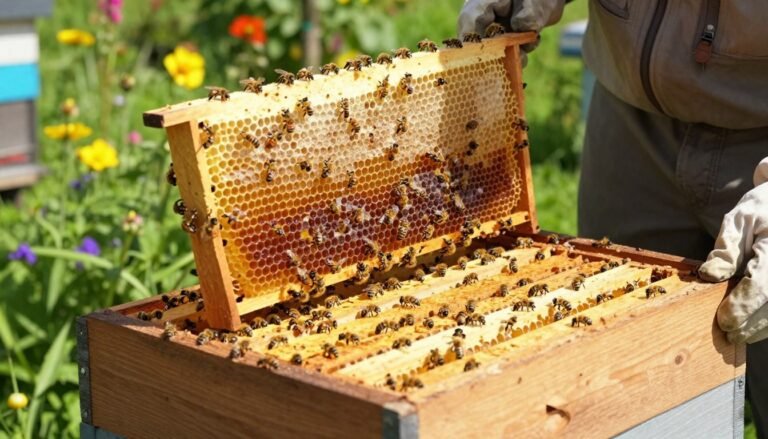
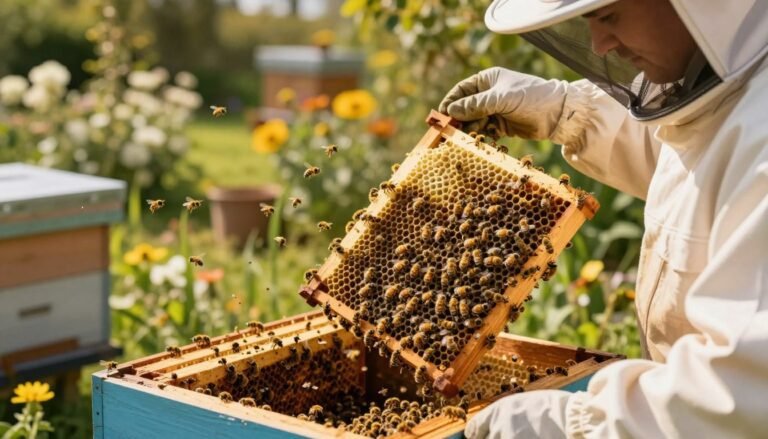
Set up the nuc with frames of brood and pollen from a strong hive. Place the cage on the frame bars where you can watch worker response. Observe bees on the comb and check that attendants feed and groom the enclosed female.
Proper brood and frame management gives the new ruler her best chance. If you want step-by-step care notes, see this short guide on caring for a caged queen. Release once workers accept her signals and the colony begins to build around the brood.
Key Takeaways
- Minimize time in the cage; each day can reduce laying quality.
- Use frames of brood and pollen to speed acceptance in a nuc.
- Place the cage on frame bars for easy observation of worker behavior.
- Watch comb and attendants to decide when to release the breeder.
- Good frame and brood management supports long-term hive success.
Understanding the Role of the Queen Cage
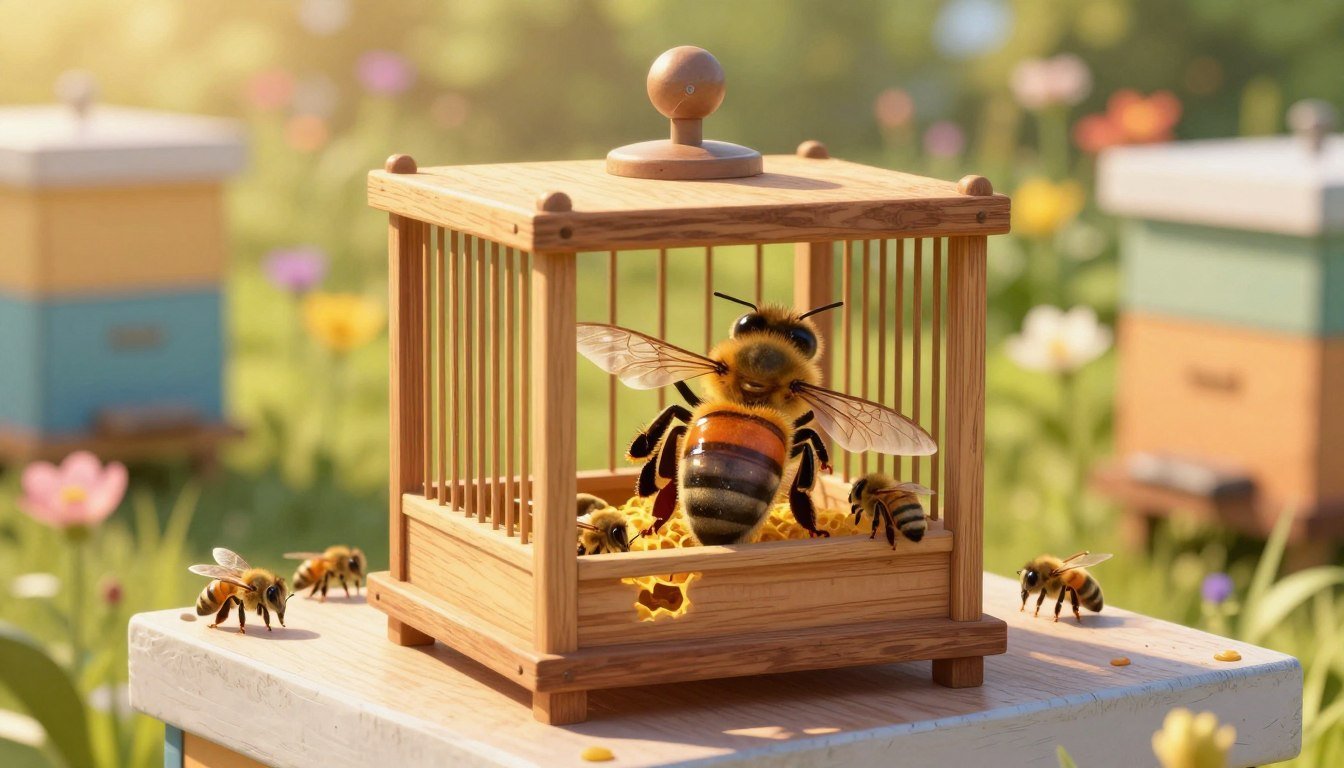
A compact box of wood and wire stands between an unfamiliar royal and the hive until pheromones register. This small queen cage is roughly the size of a matchbox and gives workers time to see and smell the newcomer without risking her life.
The candy plug at one end serves as a timed release. It usually dissolves over 3–7 days, letting attendants eat through and free the female when the colony is ready.
Beekeepers use the cage when adding a new queen or capturing a swarm. The protective box helps anchor bees in a new hive and prevents immediate attacks while workers learn the breeder’s scent.
- The cage lets bees detect pheromones through wire without direct contact.
- It offers a controlled, slow introduction so the colony can accept the ruler.
- Frames and comb remain the future laying sites while the queen stays safe in the box.
For details on the cage’s primary function see primary function of a queen cage, or review top queen cages for introduction.
Determining How Long to Keep a Package Queen Caged
Deciding the best confinement window for a new breeder balances stress, food, and acceptance by workers. Short holds give the ruler energy and a better chance of quick laying. Beekeepers favor a concise plan and daily checks.
The Three Day Ideal
Three days is the gold standard. This window minimizes stress and keeps vitality high so she will begin laying on comb and frames soon after release.
Provide fresh candy in the plug and watch attendants feed her. If the plug is gone on arrival, make queen candy from powdered sugar and corn syrup and replace it promptly.
Maximum Survival Thresholds
Survival beyond one week is possible but risky. Extended confinement can lower long-term performance on brood and frames and reduce acceptance in the hive or nuc.
Check the candy plug daily. Prioritize the ruler’s health over convenience and avoid pushing cages past the safer threshold.
| Metric | Recommended | Risk |
|---|---|---|
| Typical hold | 3 days | Low stress, good laying start |
| Extended hold | 5–7 days | Moderate risk to vigor |
| Beyond 7 days | Not advised | Higher chance of reduced vitality |
For real-world experiences, read a swarm discussion on swarm introductions or tips on buying bees and nucs in the US at buying packaged bees and nucs.
Creating the Ideal Environment for Caged Queens
Temperature control and calm surroundings set the stage for a successful introduction and early laying. Keep the enclosure in a stable spot and avoid direct sun or near heating vents.
Temperature and Light Requirements
Maintain 18–24°C. This range protects the breeder and her attendants. Temperatures below 10°C or above 30°C raise mortality risk.
Store the box in a dark, draft-free drawer or container. Rusty Burlew suggests using a warm drawer with soft clothing for insulation.
“Keep the queen cage in a warm, dark, and draft-free environment.”
- Ensure the screen stays clear so bees get airflow without cold drafts.
- Avoid windows, speakers, and pet areas to reduce disturbance.
- Handle the cage gently to protect comb and the candy plug inside.
For step-by-step care notes and setup tips visit care notes or check best practices for hive placement at beehive setup.
Managing Attendants and Nutritional Needs
A few workers inside the enclosure act as nurses, and their condition directly affects the breeder’s health.
Hydration is simple but vital. Wet a fingertip and place one tiny drop on the screen twice per day, morning and evening. Too much moisture chills the bees and makes a mess, so keep it minimal.
When confinement lasts several days or into a week, add a little sugar to the water or provide a candy plug. This helps maintain energy if the box lacks stored food.
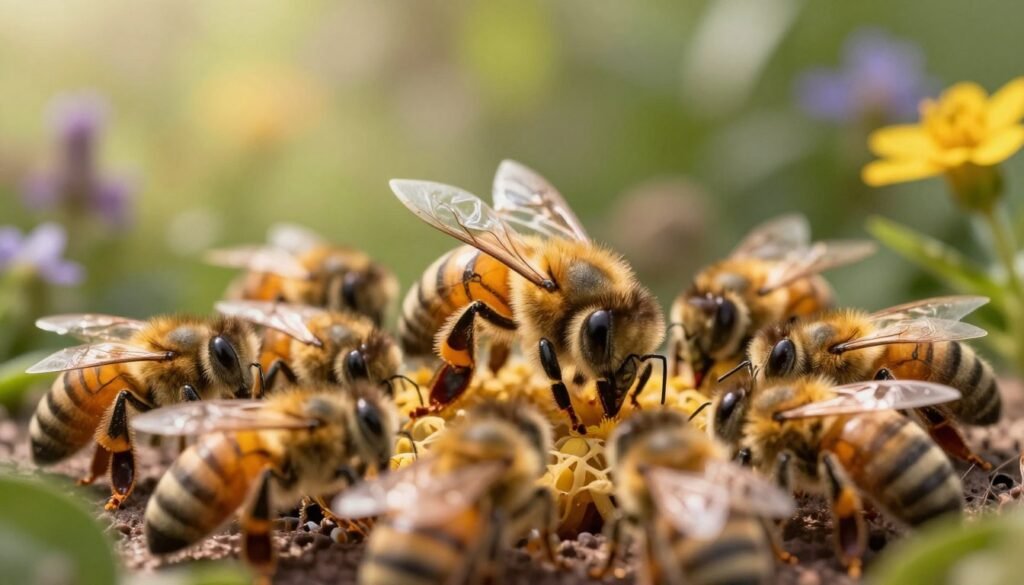
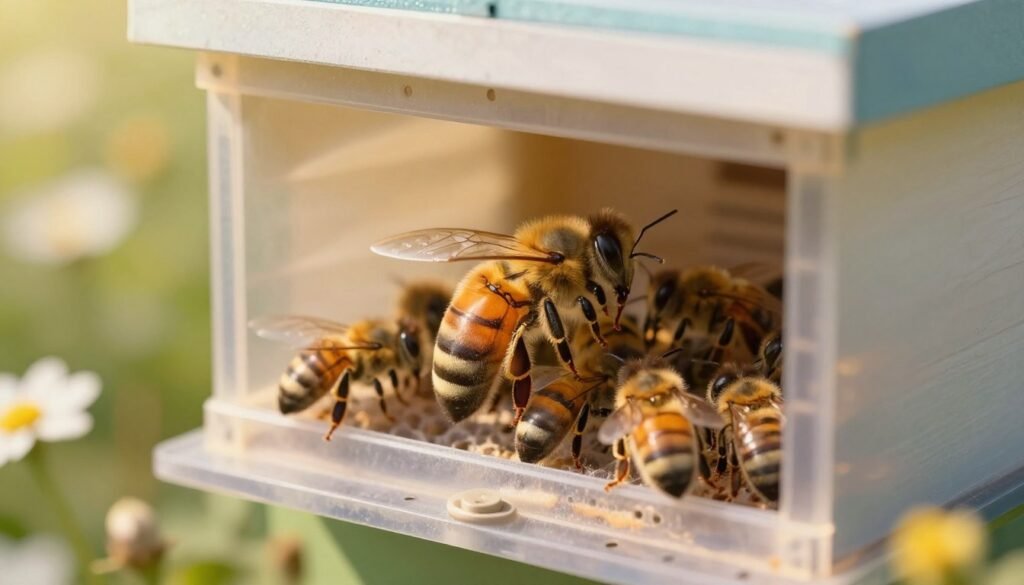
The 2–3 attendants inside the cage feed and groom the prisoner and keep contact with the hive through scent. Monitor their activity. If attendants look sluggish, the ruler will suffer.
- Apply one drop of water to the screen twice daily for hydration.
- Provide sugar or candy for energy when held several days.
- Watch attendants; their health equals the breeder’s health.
- Avoid over-wetting to prevent chilling and mold.
| Metric | Recommended Action | Frequency |
|---|---|---|
| Hydration | Single tiny drop on screen | Twice per day |
| Energy | Replace candy plug or mix sugar in water | Every 2–3 days if held |
| Attendant check | Observe movement and feeding | Daily |
For storage guidance and detailed handling tips visit storage management tips. For quarantine practices before adding bees, see this short guide on quarantine new bees.
Troubleshooting Common Challenges During Confinement
A quick inspection often solves the most common issues inside the introduction box. Check the enclosure daily and act promptly if you spot problems.
Handling Dead Attendants
If workers die inside the box, remove them to lower infection risk.
Hold the cage with the cork end down and use tweezers or a toothpick to extract deceased attendants carefully. Move slowly so you do not harm the breeder.
Addressing Dehydration
Dehydration shows as sluggish movement among attendants and the ruler. Add a single tiny drop of water to the screen for feeding.
For longer holds, refresh the candy plug or offer a small sugar mix so the group stays nourished for the days they remain confined.
Recognizing Signs of Stress
Watch for lethargy or an inability to move. An alert breeder still grooms and responds to attendants.
If all attendants die, remove them and consider a clean start before introducing into the hive.
- Remove dead bees to prevent pathogens from developing.
- Observe activity; movement usually signals good condition.
- Use minimal water on the screen for quick rehydration.
- Check for low food or extreme temperature swings if stress appears.
| Issue | Action | When |
|---|---|---|
| Dead attendants | Remove with tweezers, clean cage | Immediately |
| Dehydration | Tiny water drop on screen; replace candy | Twice daily or as needed |
| Stress signs | Adjust temp, check food, consider release plan | At first sign |
For more on raising breeders and introductions, see resources on raising queens and seasonal care at seasonal beekeeping tasks.
Conclusion
Small, regular checks and the right environment help the newcomer arrive in peak condition.
Successful management relies on clear attention, proper hydration, and stable shelter inside the cage. These steps protect the queen and support healthy brood development.
Beekeepers should aim for a quick introduction into the hive once attendants signal acceptance. Proper care during confinement is the first step toward building a strong, productive colony for the coming season.
If questions remain about queens or handling, call our support team at 970-392-4419 for expert guidance.
FAQ
How many days should the new queen remain in the cage before release?
Most beekeepers wait three days after introducing the box with the comb and attendants before removing the screen plug. This gives workers time to accept pheromones and reduces rejection. Keep monitoring frames and brood; if workers show calm behavior around the cage, proceed with release.
What purpose does the queen cage serve inside the hive?
A queen cage protects the new monarch during introduction. It prevents sudden contact with workers while allowing feeding through comb or candy plugs. The cage supports safe pheromone transfer, helps the colony recognize her, and reduces the risk of injury or stinging.
Is three days always ideal, or are there exceptions?
Three days is a common ideal, but conditions matter. Weak nucs or stressed colonies may need shorter confinement to minimize nurse bee displacement. Strong hives can tolerate three to five days. Adjust based on brood pattern, number of attendants, and colony temperament.
What is the maximum safe period for keeping a queen in the cage?
Do not exceed seven to ten days under normal circumstances. Attendants can starve or die if food access is poor. Extended confinement risks reduced queen viability and delayed egg-laying. If delays occur, provide syrup or fresh comb near the cage and check frequently.
How should temperature and light be managed for a caged queen inside the hive?
Maintain hive temperature within the normal brood range, about 90–95°F at the center, and keep the hive shaded during extreme heat. Avoid bright light directly on the cage; brief low-light checks are fine. Stable warmth and gentle darkness help attendant bees care for the queen.
What attendants are needed for a successful confinement period?
A few nurse bees in the box are essential; they feed and clean the queen. Ensure the package or nuc contains attendants and some brood for food resources. If attendants die, replace the cage into a frame with nurse bees or transfer the queen to a new box with workers.
How can I prevent dehydration for the queen and attendants while caged?
Provide carbohydrate by placing a sugar plug or small syrup feeder near the cage. Fresh comb with stored honey or pollen also helps. Avoid direct liquid contact that might drown bees; use soaked candy or dry sugar frames for safe moisture and energy.
What should I do if attendants are found dead in the cage?
Remove the cage briefly and assess. If most attendants are dead, move the queen into a new cage with live nurses or into a stronger colony. Clean any residue, replace candy plugs if needed, and ensure the receiving hive has ample nurse bees and food.
How do I spot dehydration or stress in a caged queen?
Signs include lethargy, reduced movement, absent attendants, and dried-out candy. Workers may avoid the cage or become agitated. Respond quickly by offering syrup, replacing the cage location, or transferring the queen to a healthier colony or nuc.
When is it safe to fully release the queen into the hive?
Release when worker behavior is calm, attendants remain active, and frames show normal feeding activity. Typically after three days, but confirm presence of nurse bees and adequate food. Open the cage gently and watch for immediate aggression; be prepared to reseal if necessary.
Can you introduce a queen directly without a cage using a screen or push-in method?
Some beekeepers use a push-in frame or screened introduction without a traditional candy plug. These methods can work in strong, accepting colonies. However, cages provide more control and reduce risk in less predictable hives, packages, or new nucs.