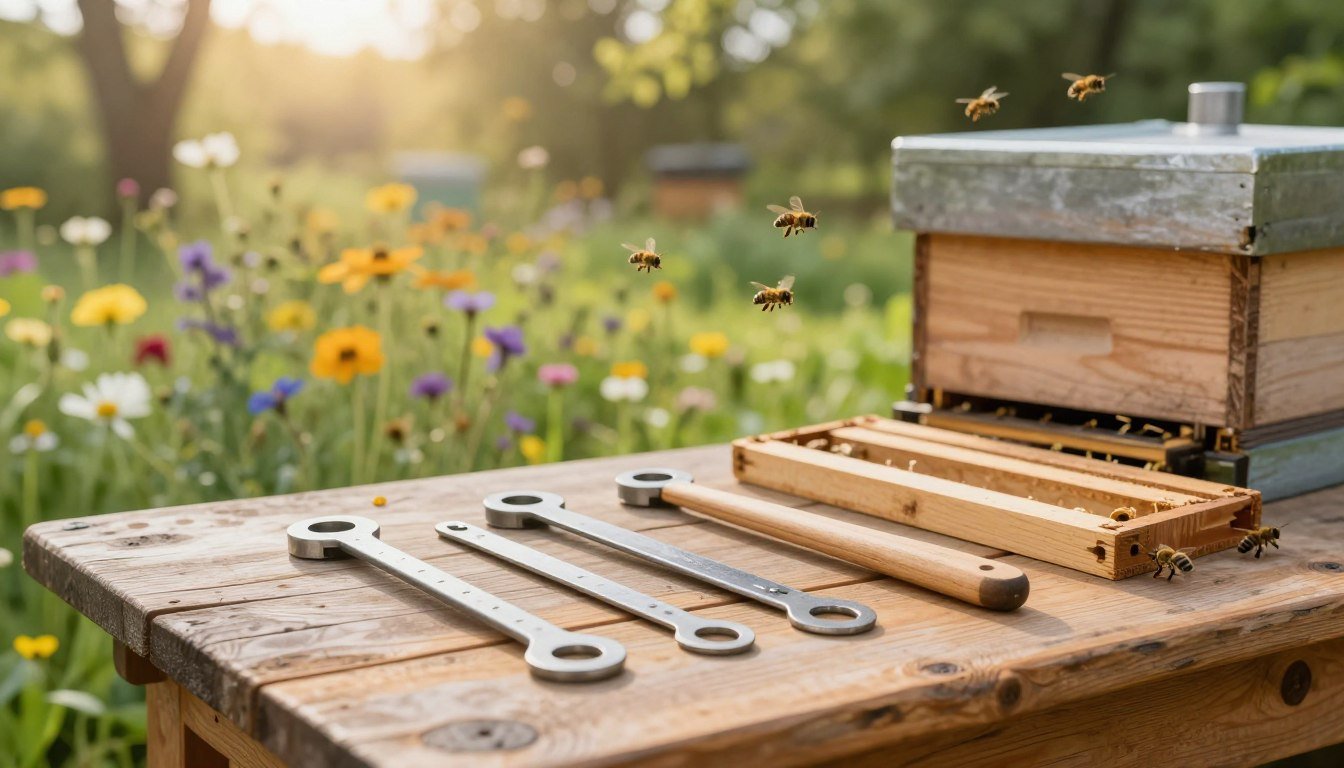
Published March 31, 2026
Precise setup makes hive work safer and more productive. In this guide we explain how specialized equipment helps you reduce the number of frames in a honey super box and keep comb straight.
Professional apiarists rely on simple devices to convert a 10-frame box to 9 or 8 frames, or to change 8 down to 7. These adjustments boost harvest efficiency and cut handling time without harming the colony.
Good practice keeps each frame centered in the box and preserves bee-space. Learn when to use a tighter layout with undrawn foundation and when to widen gaps to fatten comb and ease uncapping. For product options and community discussion, see this practical forum post and gear guides at bee frame spacing discussion, super arrangement tips, and a review of popular spacers at best frame spacer.
Key Takeaways
- Accurate placement reduces labor and protects comb integrity.
- Convert 10 frames to 9 or 8 to suit drawn comb and harvesting goals.
- Wider layouts can speed uncapping and reduce the number of boxes to handle.
- Use tighter setups with undrawn foundation to avoid cross-comb.
- Choose durable gear that matches your box dimensions and workflow.
Understanding the Importance of Frame Spacing Tools for Beekeepers
A well-measured gap between supports prevents stray comb and eases seasonal work. Accurate placement of supports lets colonies build straight comb and reduces repairs during harvest.
Why precise placement matters:
- It keeps comb aligned, cutting the chance of burr comb and comb damage.
- Even gaps improve airflow and make inspections quicker and less disruptive.
- Removing one support in a box gives bees extra storage space, a common commercial practice.
A reliable device helps you change a 10-support box to 9 or 8, or move 8 down to 7, while preserving bee health. This control over the internal layout supports better comb development and easier uncapping during extraction.
For a practical guide on maintaining correct bee-space and optimizing your setup, consult this detailed resource on bee-space management.
Available Options for Hive Frame Management
Using color-marked inserts makes quick adjustments to a box both repeatable and error-free.
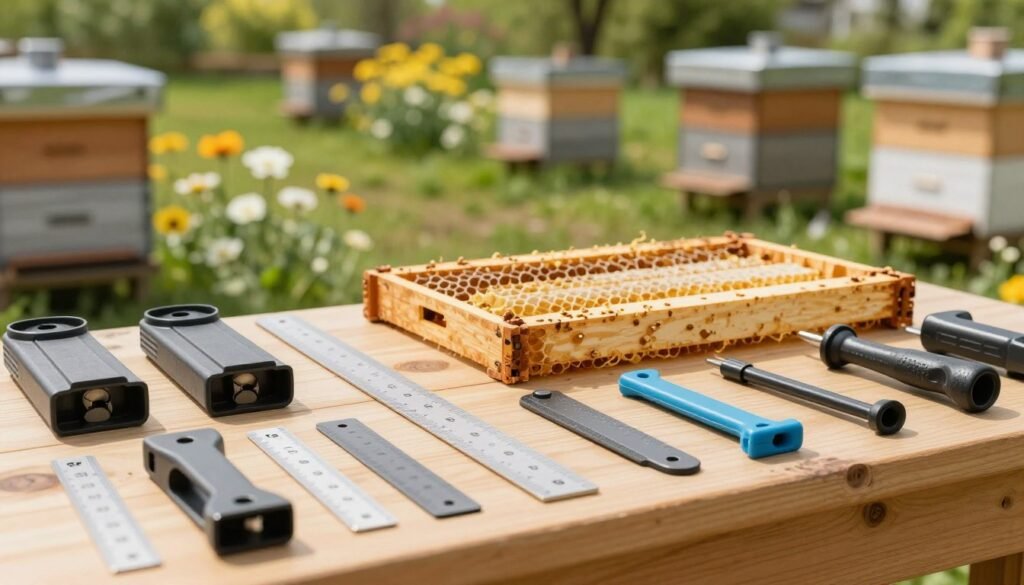
Color-Coded Spacing Solutions
Choose by color: orange converts a 10-frame box to 9 frames, yellow moves a 10-frame box to 8 frames, and blue adapts an 8-frame box to 7 frames.
The plastic versions are light. They weigh about 0.25 LBS and measure 4.40 inches. That makes handling during inspections easy.
Material Durability and Performance
Stainless steel is available for the 10-to-9 conversion and gives long-term wear resistance. It suits heavy-use apiaries and frequent hive work.
- Plastic: lightweight, 0.25 LBS, 4.40 inches.
- Stainless steel: premium durability, recommended for heavy use.
- Compact weight (approx. 10 oz pack) simplifies transport.
| Option | Conversion | Weight | Length |
|---|---|---|---|
| Orange (plastic) | 10 → 9 frames | 0.25 LBS | 4.40 in |
| Yellow (plastic) | 10 → 8 frames | 0.25 LBS | 4.40 in |
| Blue (plastic) | 8 → 7 frames | 0.25 LBS | 4.40 in |
| Stainless steel | 10 → 9 frames | Approx. 10 oz (set) | 4.40 in |
Pick materials that match your workflow and inspection frequency. For more detailed construction notes, see the essential guide to beehive frames and advice on choosing the best hive tool for propolis-heavy colonies.
Technical Specifications and Shipping Information
Shipping details and technical specs ensure you know what to expect when ordering this hive accessory.
Product note: this tool converts an 8 frames box down to 7 frames, making it a compact, reliable option when you need a tighter internal layout.
Shipping Policies and Order Processing
We offer free shipping on most orders of $150 or more when sent via standard ground service within the lower 48 states.
- Please note that any order containing a backordered item may be held until all items are available.
- Items marked as not qualifying for free shipping are excluded from the standard offer.
- You can check your order status or manage your account online to track delivery and updates.
- Before completing your purchase, read customer reviews to learn how this product performs when spacing frames down from 8 frames to 7 in your box.
Orders are processed promptly, but any backordered components can delay shipment until the full order is ready.
Need related gear? Compare handling aids and view user feedback on the best frame grip page.
Copyright © 2026 Dadant. All rights reserved.
Conclusion
The correct accessory helps you tailor a box layout to your colony’s needs.
Investing in the right product improves hive management and can boost honey yield. A compact tool makes inspections faster and reduces damage during harvest.
Always check your account for shipping updates and read product specifications before purchase. If you want community input, see this box conversion discussion.
Please leave reviews after use; shared feedback helps others choose well. With free shipping on qualifying orders, now is a good time to upgrade and streamline your beekeeping routine.
FAQ
What are frame spacing tools and why do they matter?
Frame spacing tools are devices that help maintain uniform distance between hive components during assembly and inspection. Proper alignment reduces colony stress, improves comb construction, and makes inspections quicker and safer. Consistent gaps prevent bees from building burr comb that can fuse parts together and disrupt honey flow.
How do color-coded spacing solutions help during hive work?
Color-coded guides speed identification of the correct slot or position when installing or moving components. They reduce mistakes, cut handling time, and make training assistants easier. Bright, contrasting colors are especially useful in low light or when working with gloves.
What materials are best for long-lasting guides and inserts?
Durable plastics like HDPE and injection-molded ABS resist moisture and wear. Stainless steel options offer strength and heat resistance. Choose corrosion-resistant materials to avoid contamination and to withstand repeated cleaning and outdoor exposure.
Can these products fit different hive styles, such as Langstroth and top-bar designs?
Many manufacturers make adjustable or model-specific guides that fit common hive standards. Look for products with clear dimensions or adjustable pins to match your boxes and bars. If uncertain, measure your internal dimensions before ordering to ensure compatibility.
How do I use a spacing gauge during an inspection?
Insert the gauge between bars or along the top of the assembly to check and correct gaps. Work methodically across the box to keep spacing uniform. Remove and store the tool immediately after use to prevent bees from coating it in propolis.
Do these devices affect bee behavior or productivity?
Properly sized guides support natural comb building and reduce disruptive burr comb, which can improve colony efficiency. Well-aligned frames make it easier for bees to move and store resources, often leading to better brood pattern and honey storage.
What should I look for in product reviews and seller info?
Focus on reports about durability, fit with your hive type, and ease of cleaning. Check seller shipping policies, return terms, and real user photos. Brands with transparent specs and responsive customer service tend to be more reliable.
How long does shipping and order processing usually take?
Processing times vary by vendor but often range from 1–5 business days. Domestic shipping typically takes 2–7 days; international orders can take longer and may include customs delays. Review the seller’s shipping policy for exact timelines and tracking options.
Are there tools designed specifically to prevent damage during transport or storage?
Yes. Rigid spacers and protective inserts help keep components from rubbing or shifting in boxes. Some kits include reusable shipping clamps or foam supports to preserve alignment during transit and in seasonal storage.
Can I make a DIY guide that works as well as commercial products?
Simple DIY options can be effective if made to correct dimensions and from durable, non-toxic materials. However, commercial products often offer tighter tolerances, color coding, and material treatments that extend service life and reduce maintenance.