
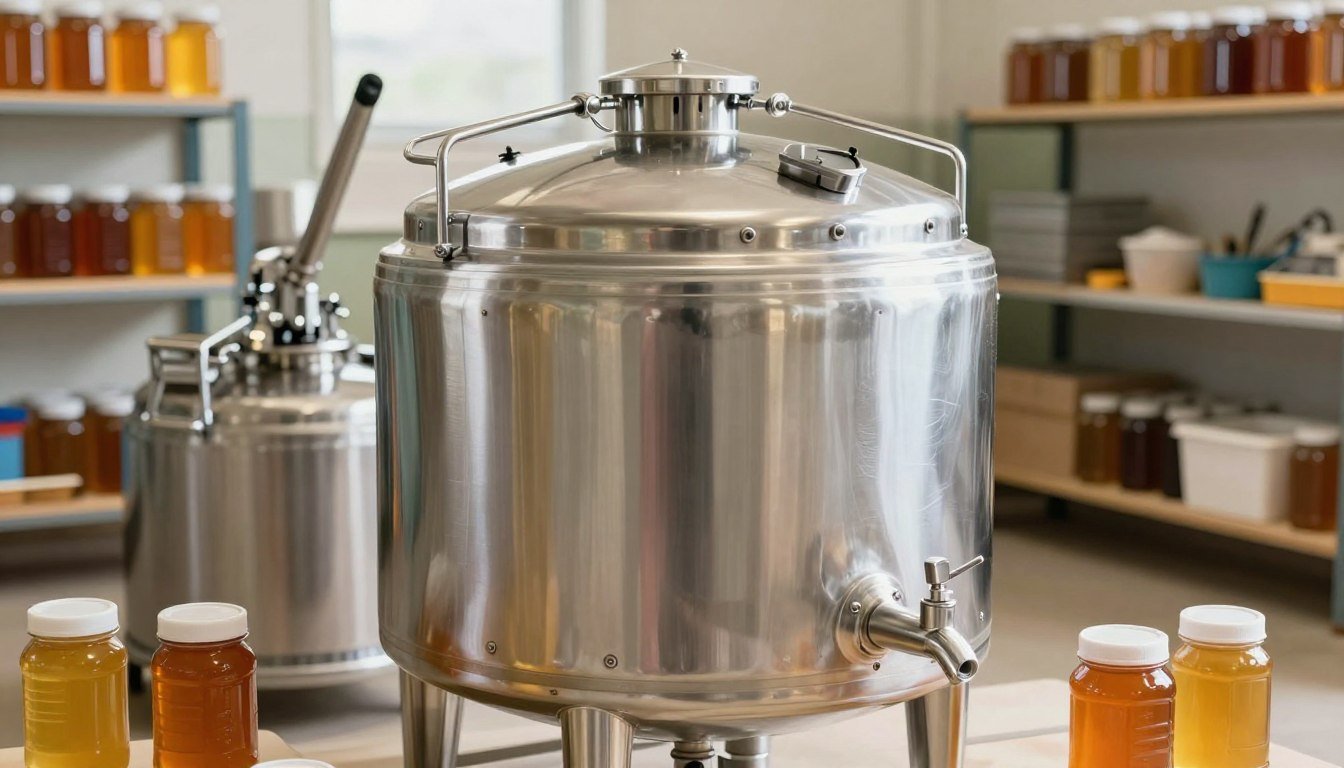
Choosing the correct equipment sets the tone for clean processing and steady output. Whether you run a small apiary or manage a large commercial operation, knowing the available capacity and materials helps you plan production and bottling.
At HONESTBEE, we focus on durable stainless steel solutions that support hygiene and long-term value.
Mixing and processing vessels come in a wide range, from small hobby sizes to industrial systems above 5,000 gallons. Our product line includes heated honey options and custom stands to streamline filling and mixing tasks.
We pair products with expert advice so you can balance performance with price. For technical specs on SS304 models and capacity ranges, see this SS304 honey storage reference.
Key Takeaways
- Pick steel equipment for durability and sanitation.
- Match capacity to current and future production needs.
- Consider heated models to aid bottling and viscosity control.
- HONESTBEE offers ranges for hobbyists and commercial beekeepers.
- Balance price with long-term quality and accessories.
Understanding the Importance of Your Honey Settling Tank Size
Choosing the right vessel early shapes how smoothly your extraction and bottling days run. This foundational decision links directly to the volume you process each batch and the consistency you achieve during bottling.
Durable stainless steel equipment supports food safety and long-term value. For professional producers, a quality stainless steel honey unit preserves clarity and flavor while minimizing contamination risks.
Proper heating and mixing features help maintain uniform viscosity for easier filling. Those functions reduce labor and speed throughput during peak harvest weeks.
View your purchase as a business investment: the correct storage unit lowers hidden costs from inefficient processing and improves your price-to-value ratio over time.
- Match capacity to expected batch volumes.
- Prioritize stainless finishes for sanitation.
- Choose models with heating and mixing if you bottle frequently.
| Factor | Why it matters | What to check |
|---|---|---|
| Material | Prevents contamination and corrosion | SS304 or better, polished interior |
| Heating & Mixing | Stabilizes flow and bottling speed | Adjustable thermostats; gentle agitator |
| Capacity vs. Throughput | Determines batch handling and storage needs | Match to peak extraction volume |
| Price-to-Value | Impacts long-term operating costs | Warranty, service, and accessory availability |
For a practical overview of equipment function, see our FAQ on what a settling tank does. If you run a small operation, compare options at best bottling tanks for small producers.
The Comprehensive Honey Settling Tank Size Guide
Right-sizing your stainless vessels is a strategic step for reliable bottling output. Standard stainless steel mixing and blending units typically run from 100 to 5,000 gallons. Knowing that range helps you match capacity to current throughput and planned growth.
Professional honey operations benefit from varied configurations. Small stainless steel honey units suit artisanal producers, while large steel honey storage systems support high-volume processing. Proper heating and mixing features keep viscosity steady for faster bottling and cleaner fills.
Compare price and performance when choosing a storage tank. Look for durable steel finishes, adjustable heating controls, and gentle agitators to protect quality. Our experts can help you view options that balance cost and long-term value.
- Capacities from 100–5,000 gallons cover most needs.
- Heating and mixing are essential for consistent processing.
- Choose configurations that scale with your beekeeping operation.
Small Scale and Hobbyist Production Requirements
Small-scale producers often prioritize compact equipment that fits a shed or garage without sacrificing performance.
Artisanal Batch Management
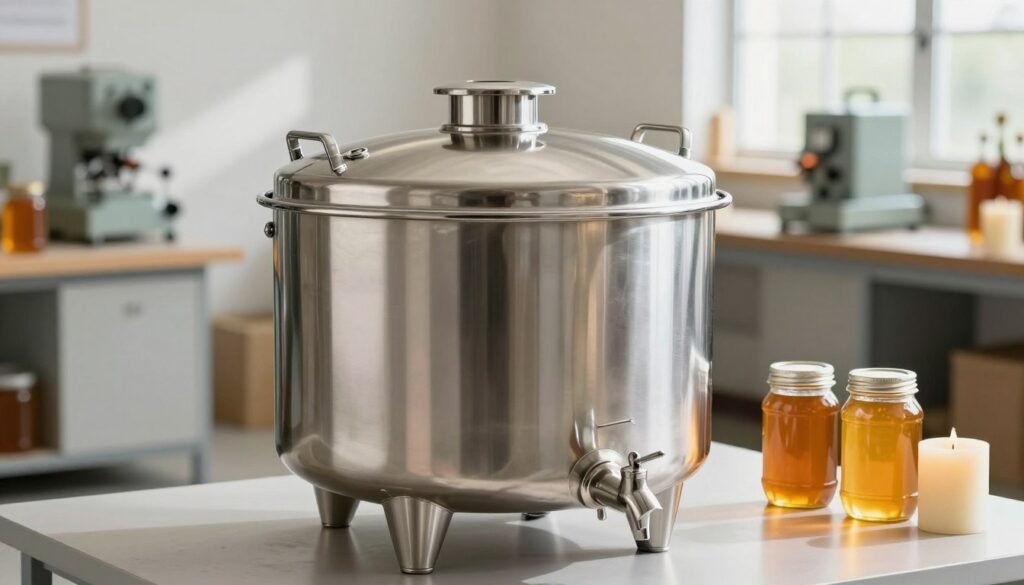
A 100-gallon stainless steel honey tank often hits the sweet spot for hobbyists. It balances capacity and footprint for testing new flavors and small runs.
These units support gentle heating and simple mixers so you can blend and bottle without large overhead. Using a durable steel honey storage unit preserves quality better than many plastic options.
Space Considerations
Compact tanks sit neatly on a stand and free up floor space in tight operations. They pair well with common tools like a honey bucket and a basic strainer honey setup.
We help beekeepers choose accessories and affordable products to keep initial price low while leaving room to scale. For equipment checklists, see our basic bottling equipment and a review of the best strainer options.
Mid Sized Commercial Operations and Capacity Needs
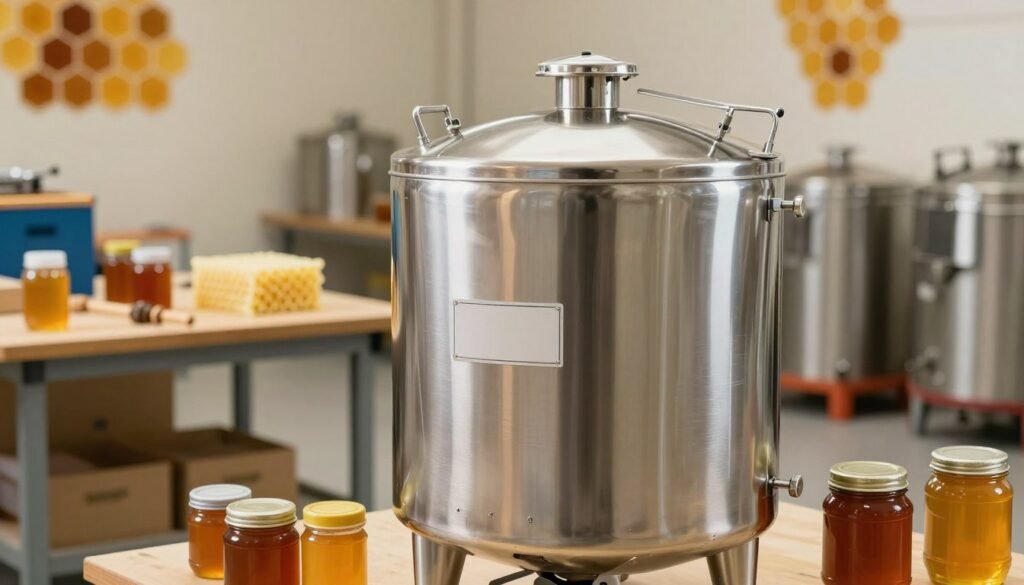
Growing commercial producers often choose a 500–2,000 gallon solution to scale processing without moving to industrial systems. This range gives operational flexibility and efficient throughput for established apiaries.
Why mid-sized works: stainless steel options in this class balance durability and food safety. Built-in heating and gentle mixing keep product viscosity steady during long runs. That protects quality and speeds bottling.
- 500–2,000 gallon capacities fit most expanding operations.
- Stainless and steel finishes improve sanitation and longevity.
- Designed for consistent heating, mixing, and reliable processing.
“Choose a mid-sized unit to avoid bottlenecks as demand grows while keeping capital and floor footprint manageable.”
| Factor | Benefit | What to check |
|---|---|---|
| Material | Food-safe, long-lasting | SS304 finish |
| Heating & Mixing | Consistent flow for bottling | Adjustable controls & gentle agitator |
| Capacity | Matches throughput without overspending | 500–2,000 gallon range |
Price remains competitive across models, and our team can help you view mixing tanks FAQ to pick the right configuration. With proper tools and the right storage tank, your products stay consistent and your workflow improves.
Industrial Scale Processing and High Volume Throughput
When throughput is measured in tons per day, industrial-grade stainless steel vessels become mission-critical. Large facilities use 2,500 to 5,000+ gallon units designed for nonstop processing and automated line integration.
Integration with Automated Lines
Automated bottling and conveyor systems require consistent feed and precise flow control. Robust fittings, sanitary valves, and integrated heating ensure smooth handoffs to packing lines.
Throughput Efficiency
High-capacity stainless steel honey tanks act as buffers during peak runs. Proper heating and gentle mixing preserve product quality and speed up bottling without extra labor.
Structural Support
Massive steel honey units need engineered stands and floor reinforcement. Our professional processing tools and accessories help facilities handle the load safely.
- Range: 2,500–5,000+ gallons for industrial operations.
- Quality: sanitary finishes and reliable heating improve output.
- Price & view: we advise on cost, installation, and long-term value.
| Need | Benefit | Check |
|---|---|---|
| Capacity | High daily throughput | Match to peak processing |
| Structural support | Safe continuous runs | Engineered stands, reinforced floors |
| Integration | Seamless bottling | Sanitary valves, automation ports |
Why Stainless Steel is the Industry Standard
Stainless steel remains the backbone of professional processing because it delivers consistent sanitation and rugged performance.
Food Safety and Durability
High-grade stainless steel is non-negotiable for food-contact equipment. It resists corrosion and holds up to repeated cleaning without degrading.
We design every storage tank and mixing unit with a secure tank lid to prevent contamination. That lid and polished interior beat cheaper plastic options for long-term hygiene.
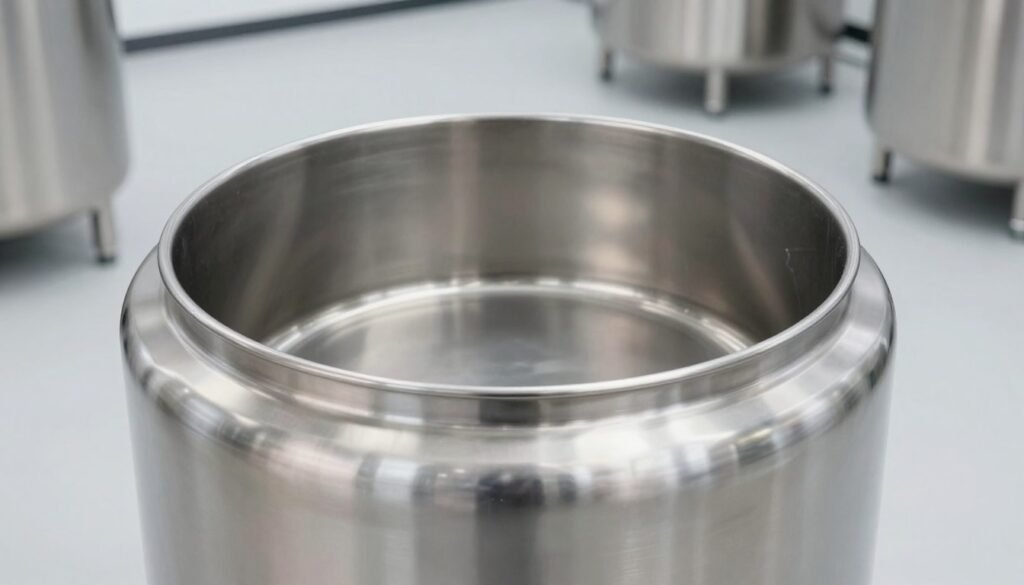
- Stainless steel ensures food safety and durable use in viscous environments.
- Our stainless steel honey tanks include a secure tank lid and robust fittings.
- Investing in steel tools and accessories lowers maintenance and supports high-volume storage.
“Choosing stainless steel cuts hidden costs from replacements and cleaning, improving output and product quality.”
| Feature | Benefit | What to check |
|---|---|---|
| Material | Sanitary, long-lasting | SS304 finish |
| Cleaning | Easy, reliable | Polished interior, smooth welds |
| Accessories | Better workflow | Heaters, mixers, lids |
For a practical view of container options, compare materials and price before you invest.
The Role of Gravity in Honey Settling and Clarity
In a calm stainless container, denser debris drifts down and leaves the product bright and market-ready.
Gravity separation in stainless steel tanks is a low‑tech, high‑value step. It lets wax fragments and air bubbles drop away without extra filtration.
We design our stainless steel honey storage to support natural clarification. A smooth interior and controlled rest time reduce agitation and speed the clarity process.
Proper settling protects flavor and color. It also lowers rejects at bottling and improves the perceived quality of each jar.
- Gravity removes heavier debris while preserving viscosity.
- Gentle rest reduces air and wax before final bottling.
- Quality stainless storage gives a sanitary, predictable environment.
“Natural separation in a polished steel vessel simplifies processing and delivers a clearer product with less labor.”
| Process Step | Benefit | What to check |
|---|---|---|
| Gravity clarification | Removes debris and air | Polished interior; minimal agitation |
| Controlled rest | Improves visual quality | Temperature stability; covered storage |
| Accessory tools | Professional results without heavy filtration | Gentle skimming tools; sanitary valves |
Price reflects performance: investing in quality steel storage and proper tools raises product clarity and marketability.
Balancing Footprint Against Processing Capacity
A smart layout lets you get high throughput from a modest footprint.
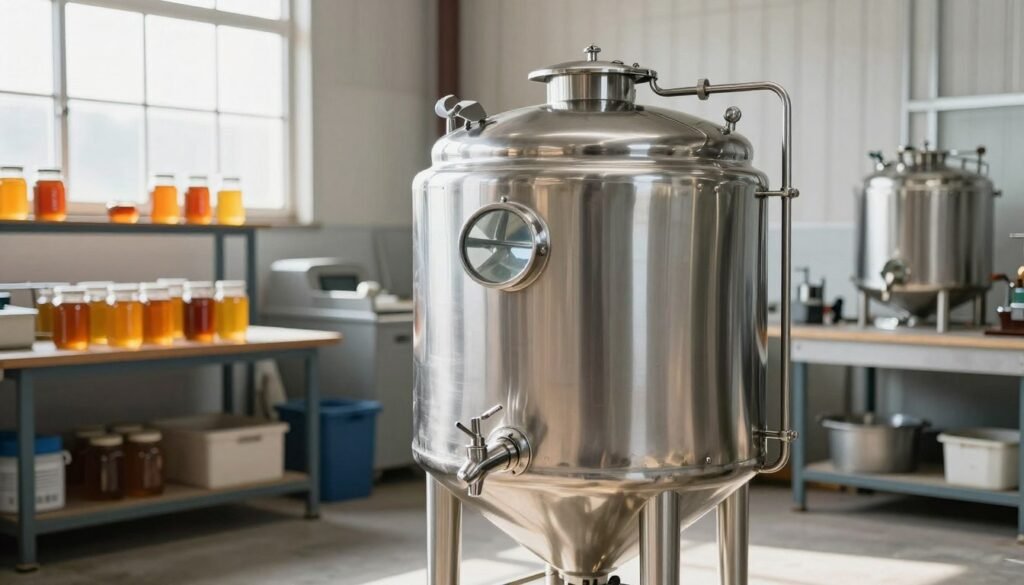
Balance matters: larger vessels increase daily output but take more floor space. Smaller units fit tighter rooms and give flexibility for multiple varietals.
We offer stainless steel options in varied volumes to match your current and planned capacity. Our designs often sit on a stand to free floor area and simplify access.
Plan the processing line so tools and ports are easy to reach. That reduces handling time and keeps processing steady without expanding your facility.
| Footprint | Capacity | Benefit |
|---|---|---|
| Compact | 100–500 gal | Flexible placement; handle multiple batches |
| Mid | 500–2,000 gal | Good throughput with modest floor use |
| Large | 2,500+ gal | High processing; needs reinforced floor |
Price and specs are clear for each model so you can make an informed view. Our team helps design layouts that scale production while maximizing available space.
Managing Multiple Varietals with Smaller Tanks
Managing multiple varietals demands a flexible processing line that preserves distinct flavors.
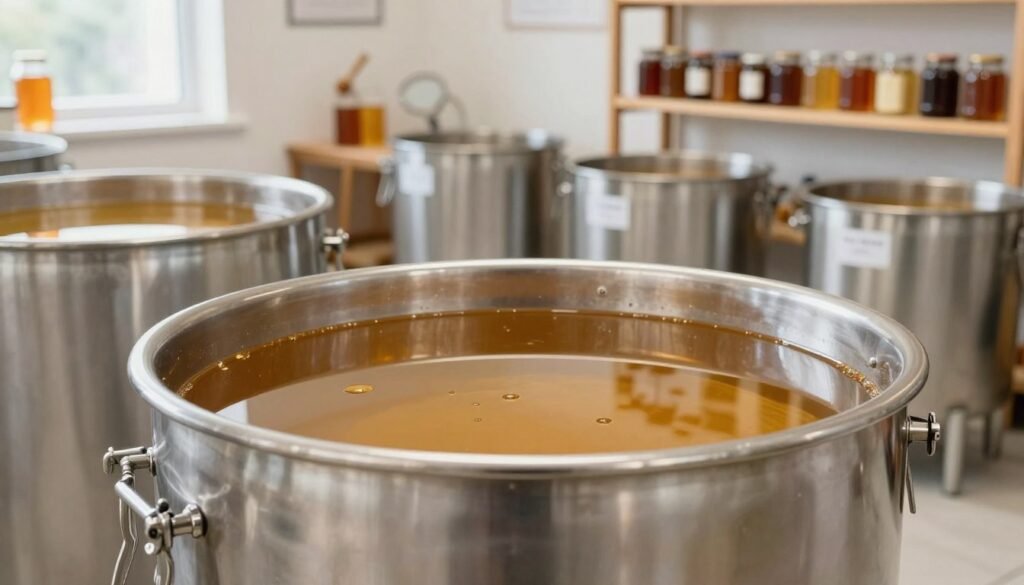
Using several 500-gallon stainless steel units helps beekeepers keep each floral source separate. This prevents cross-mix and protects aroma and color for each batch.
Smaller steel vessels also speed turnaround. They make it easy to move product, switch lines, and store multiple varietals without tying up one large unit.
- Maintain varietal purity with separate storage and processing.
- Swap batches quickly using a honey bucket and simple accessories.
- Choose steel over plastic for durability and food safety.
“Multiple compact units deliver agility and lower long‑term costs.”
| Benefit | Why it matters | What to check |
|---|---|---|
| Modularity | Process several varietals at once | Number of tanks; port layout |
| Sanitation | Preserve quality and reduce contamination | Polished interior; stainless finish |
| Cost | Affordable to expand | Compare price per unit and accessories |
Avoiding Common Pitfalls in Tank Selection
Picking the wrong capacity can quietly drain profits and slow your line during peak harvest.
Oversizing wastes capital and raises energy bills when a heated honey tank heats far more than you need.
Undersizing creates bottlenecks that stop production and harm timely bottling. This forces extra transfers and more labor.
The Risks of Oversizing and Undersizing
Practical planning means matching capacity to expected throughput and planned growth. Consider how many varietals you will process and if multiple tanks or a honey bucket workflow fits your operation.
- Too large: higher running costs, idle volume, and harder temperature control.
- Too small: frequent fills, stalled mixing, and lost hours during peak season.
- Right fit: saves money, eases handling, and improves product flow.
| Issue | Impact | What to check |
|---|---|---|
| Oversized heated honey tank | Energy waste; uneven heating | Match capacity to batch volume; consider smaller heated units |
| Undersized unit | Production delays; extra transfers | Assess peak throughput and future growth |
| Poor accessory choices | Contamination risk; slow processing | Select proper tank lid, strainer honey tools, and a solid stand |
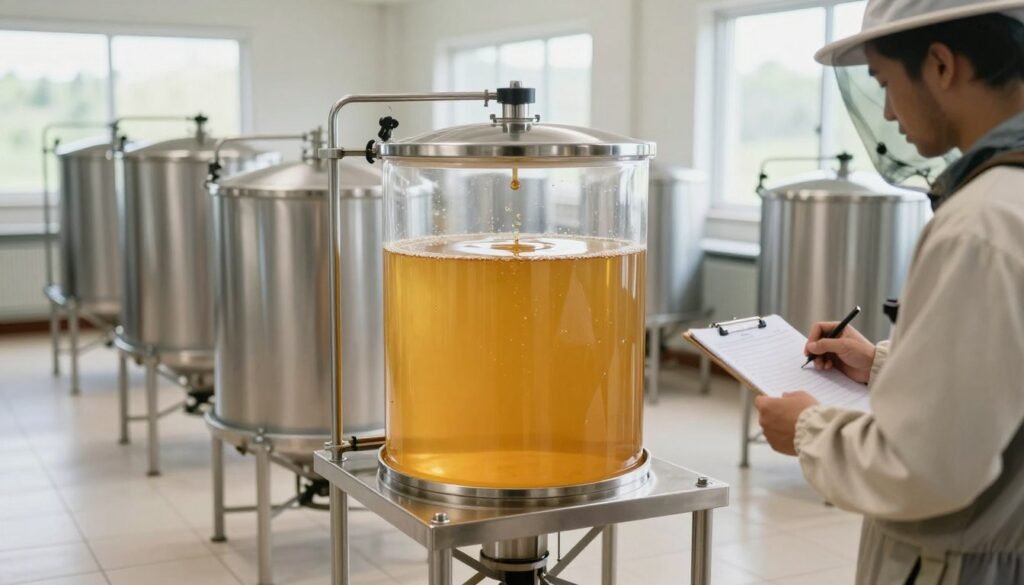
We provide clear pricing and expert view to help beekeepers avoid costly mistakes. For packaging and labeling tips, see how to package and label honey for sale.
“Choose capacity that supports growth — not one that creates hidden costs.”
Conclusion
Selecting the right storage system makes daily processing faster and keeps product quality consistent.
Choosing quality stainless tanks improves efficiency, preserves clarity, and helps your apiary grow. Whether you run a hobby line or operate as commercial beekeepers, the correct equipment reduces labor and rejects.
From a small bucket to large industrial honey tank systems, our products cover every stage of production. We pair durable hardware with expert support so you can scale with confidence.
Contact HONESTBEE to discuss needs and match the right tanks to your workflow. Thank you for trusting us—we look forward to helping you meet this season’s production goals.
FAQ
How do I choose the right stainless steel settling tank capacity for a small-scale apiary?
Start by estimating your weekly harvest and typical batch sizes. For hobbyist operations, a 20–100 gallon stainless vessel often fits artisanal batches and small bottling runs. Allow extra headspace for heating elements and strainers, and factor in room for gentle warming to reduce viscosity for filling and filtering.
What features matter most when selecting a heated stainless storage tank?
Prioritize food-grade 304 or 316 stainless for corrosion resistance and easy cleaning. Look for integrated heating jackets or external heaters, a tight-fitting lid, a sampling valve, and a sanitary drain. A tank with a removable inline strainer or mesh facilitates filtering and maintains product quality during transfer to buckets or bottling lines.
Can I use plastic containers instead of steel for storing and clarifying product?
Food-grade plastic can work for very small, cold-storage batches, but it lacks the durability, heat-transfer efficiency, and longevity of stainless. For consistent quality, heating, and commercial bottling, stainless steel minimizes contamination risk and withstands repeated cleaning and temperature cycles.
How many smaller vessels should I have if I process multiple varietals?
Match the number of tanks to the number of varietals you plan to keep separate plus one buffer tank for blending or temporary holding. Smaller tanks (20–60 gallons) let you preserve distinct flavor profiles and reduce cross-contamination during straining, mixing, and labeling.
What are the downsides of choosing an oversized vessel?
Oversized units can raise heating and energy costs, increase dead space where crystallization occurs, and delay turnover. They also make batch tracking harder and can inflate initial capital outlay. Right-sizing improves throughput efficiency and reduces product stagnation.
How does tank shape and stand design affect settling and clarity?
Conical or slightly tapered bottoms promote sediment collection and cleaner draws to bottling lines. A sturdy stand raises the drain valve for buckets and pumps. Ensure the stand supports the combined weight of the filled steel vessel and accessories like heaters or strainers.
Do commercial operations need automation-ready tanks?
Yes. Mid to large operations benefit from tanks with ports for pumps, level sensors, and quick-connect fittings that integrate with automated filling, mixing, and heat-control systems. Automation improves throughput, reduces labor, and maintains consistency across shifts.
What capacity range suits mid-sized commercial processing?
Mid-sized processors commonly use 200–1,000 gallon stainless tanks. This range balances batch size for semi-automated bottling, allows efficient heating, and supports regular turnover without excessive storage time that can affect quality.
Are there structural considerations for installing large stainless vessels?
Yes. Large tanks require strong flooring or pallet-style supports, vibration-free mounting, and adequate access for cleaning and maintenance. Verify load ratings of floors and stands, and plan for safe handling during installation and service.
How should I size tanks to match bottling throughput?
Calculate daily or hourly bottling rates, then size holding and processing tanks to supply at least one full shift of production without frequent refilling. Include contingency capacity for peak harvests and cleaning cycles so bottling lines run continuously.
What maintenance keeps stainless vessels sanitary and long-lasting?
Regular CIP (clean-in-place) or manual wash with food-safe detergents, timely inspection of seals and valves, and occasional passivation prevent corrosion and microbial risk. Keep lids closed during storage and use sanitary fittings to limit contamination.
How much does a professional stainless storage vessel typically cost?
Prices vary by capacity, grade (304 vs. 316), heating options, and fittings. Small 20–100 gallon units are the most affordable, while 200–1,000 gallon heated, fitted tanks for commercial use command higher prices. Request quotes from vendors like APICraft or local stainless fabricators for precise pricing.
Can I retrofit an existing tank with heating and strainers?
Many tanks accept retrofits: external jackets, band heaters, sanitary strainers, and sampling valves can be added. Confirm wall thickness and weld compatibility, and hire certified technicians to maintain food-safety standards and warranty coverage.
What safety features should be on a processing tank used with mixers and pumps?
Include pressure-relief vents, grounded electrical connections for heaters and mixers, lockable lids, and clearly labeled valves. For tanks connected to pumps, use sanitary quick-connects and check valves to prevent backflow and contamination.
How does gravity play a role in achieving clear product in storage vessels?
Gravity allows solids and air bubbles to rise or settle naturally when product rests undisturbed. Tall vertical vessels with gentle inlet flow reduce agitation and speed clarification. Combining gravity settling with low-temperature storage and time yields the clearest results.


