Published March 31, 2026
Understanding the difference between a missing queen’s effect and a sick brood is critical for every beekeeper. A healthy queen will lay eggs in a steady arrangement, while a hive without a laying queen often shows scattered or absent young. Quick checks of cells and larvae help you decide the next steps.
Hilary Kearney, a San Diego beekeeper, notes that new beekeepers often miss early signs of queenlessness. Watch for workers starting to lay or for many drone cells, which hint at a deeper issue. Also distinguish a recent swarm event from true queen loss.
If eggs vanish over several days or the population drops, inspect for a new queen or queen cell. For tips on boosting numbers and spotting early warnings, see how to boost colony population naturally.
Key Takeaways
- Compare egg distribution and cell type to tell queen issues from disease.
- Look for laying workers and many drone cells as signs of trouble.
- Check for eggs within 7–10 days after introducing a new queen.
- Monitor population trends over days to catch declines early.
- Act before winter; weak colonies have lower survival odds.
Understanding the Brood Nest
A healthy nest of developing bees centers the young in a compact, warm zone across the frames. This central arrangement helps the colony keep steady temperatures so eggs and larvae mature on schedule.
The Football Shape
The queen tends to lay in a concentrated, oval area across the central frames. Worker bees keep this area clear and clustered so heat moves efficiently through the comb.
Honey and pollen sit above and around the central cells, creating a ring of stores. Drone cells usually appear on the lower edges of the frame where it is slightly cooler.
Normal Development from Egg to Cap
In a vigorous colony the queen can lay up to about 2,000 eggs a day in a typical Langstroth hive. Eggs become larvae and are fed by workers until they are capped, usually about nine days after hatching.
Beekeepers should watch the progression across frames and ensure the queen is laying consistently. Regular checks and proper frame management give the queen space to keep the colony growing.
For cold-related developmental issues, see identifying chilled brood for targeted advice.
Queenless Brood Pattern vs Diseased Brood: Key Differences
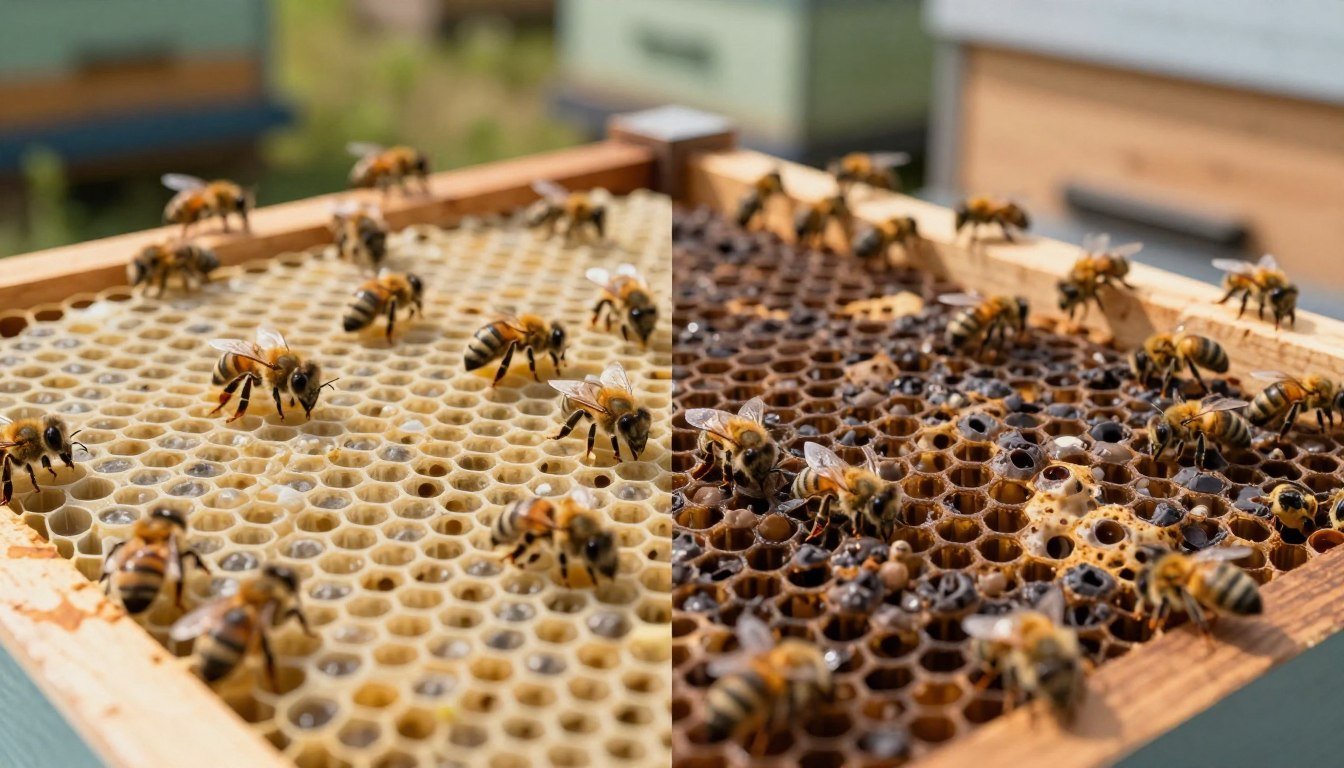
A scattered nest of young and empty cells often tells a different story than signs of contagious illness. A spotty arrangement across frames usually signals reproductive trouble in the colony rather than an infection.
The Football Shape
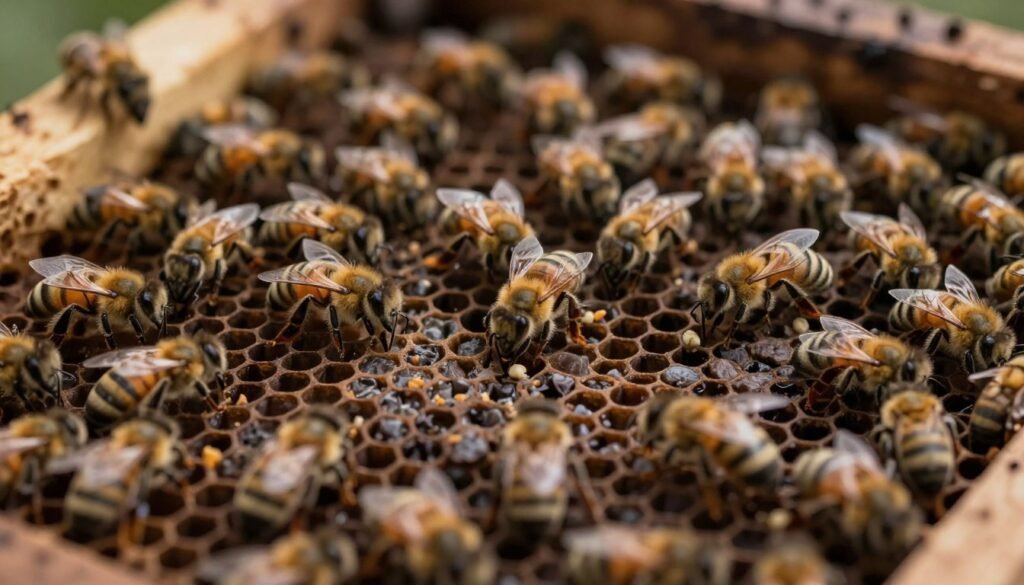
The classic oval cluster of developing young is how a healthy queen keeps the comb warm and efficient. If that compact shape breaks into isolated spots, check for queen cells and the absence of fresh eggs.
“The presence of queen cells in a hive with few eggs is a strong sign workers are trying to raise a new queen.”
Normal Brood Development
In a normal cycle, eggs turn into larvae and are capped in predictable time increments across frames. Diseased comb usually shows sunken or perforated caps, or discolored larvae that feel mushy.
Action tip: Monitor frames for a new queen or signs of laying workers within a few days. For a practical guide to confirming queen failure, see queenlessness in your hive, and use heat mapping for layout checks: heat mapping for brood pattern assessment.
Identifying Signs of a Queenless Colony
Early signs of a lost queen show up in the comb long before a colony collapses. Inspect frames regularly to catch problems while intervention is still effective.
Lack of Eggs and Larvae
The most immediate sign is fewer or no eggs across central frames. If you can’t find fresh eggs after a careful check, the colony may lack a laying queen.
Tip: Introduce a frame of young brood from a healthy hive to test responses and confirm queenlessness.
Changes in Foraging Behavior
Watch the flight line. A drop in bees returning with nectar or pollen often signals falling population and reduced productivity.
Less honey and fewer foragers over days means the colony has fewer workers feeding the comb.
Presence of Queen Cups
Empty queen cups do not always mean the queen is gone. If bees build full queen cells along the frame bottom, they may be raising a new queen or preparing to swarm.
Action step: Look for sealed queen cells and multiple egg-less frames before deciding to introduce a new queen.
| Sign | What to look for | Immediate action |
|---|---|---|
| Egg absence | No fresh eggs on central frames | Introduce brood frame or inspect for queen cells |
| Reduced foraging | Fewer bees with nectar/pollen | Monitor population and feed if weak |
| Queen cups/cells | Empty cups vs sealed cells on frame bottom | Confirm if raising a new queen or preparing to swarm |
For practical confirmation steps see a queenless hive guide and tips on signs of a failing queen.
Recognizing Symptoms of Brood Disease
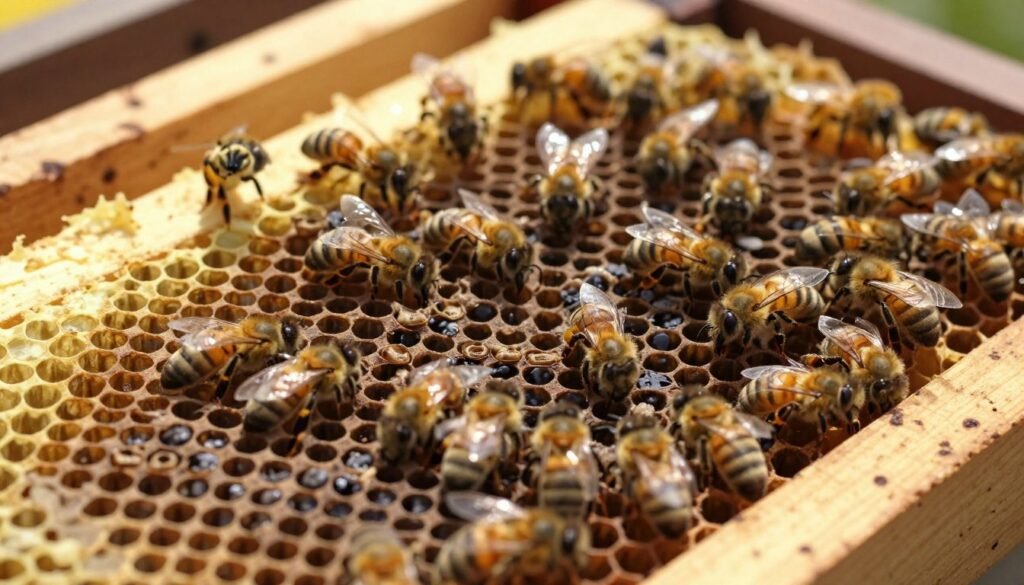
A sudden smell or sticky, sunken cappings on the comb often signal a deeper hive infection. Watch for greasy or discolored caps that differ from the convex, healthy cappings you expect.
If larvae lie twisted, dark, or disintegrate inside cells and a foul odor is present, the colony likely needs urgent attention. Worker bees normally remove dead young; if they do not, the hive may be too weak or overwhelmed.
Spotty patches of developing young across frames can mean disease or a failing queen. The presence of laying workers can follow if the queen is lost after disease weakens the hive.
- Look for sunken, greasy caps and a sticky feel on the comb.
- Note any dead or twisted larvae and unusual odors during inspections.
- Use diagnostic tests, such as the rope test for American Foulbrood, to confirm infections.
Regular, short inspections help catch illness early and limit spread to other colonies. Keep colonies strong with good nutrition and hygiene as the best defense against common pathogens.
For focused steps on managing larval illnesses, consult a sacbrood management guide that outlines testing and treatment options.
The Role of Laying Workers in Failing Colonies
A colony that lacks a laying queen for weeks may develop laying workers, a change that speeds a hive toward collapse.
The shift usually occurs in about 32 days after the queen is gone. Without the queen’s pheromones, the ovaries of some workers activate and they begin to lay eggs.
Identifying Multiple Eggs
Look for several eggs in a single cell or eggs stuck to the cell sides. These are classic signs that workers, not a queen, placed the eggs.
- Multiple eggs per cell: haphazard placement on the sides or walls instead of at the base.
- Drone brood in worker cells: unfertilized eggs become drones; bullet-shaped cappings may appear.
- Timing: expect visible signs after roughly 32 days; drone production can reach about 12.5% of the brood.
Once laying workers dominate, introducing a new queen is risky; the introduced queen is often rejected. Many beekeepers consider such colonies beyond recovery and focus on prevention—keeping strong frames of young brood and monitoring queen health to avoid terminal queenlessness.
“Identifying multiple eggs per cell during an inspection is a critical warning sign that the colony has reached a state of terminal queenlessness.”
Diagnostic Testing for Hive Health
Start with a simple frame swap to diagnose reproductive problems or disease quickly. Place a frame of young brood from a healthy colony into the suspect hive and watch how the workers respond over several days.
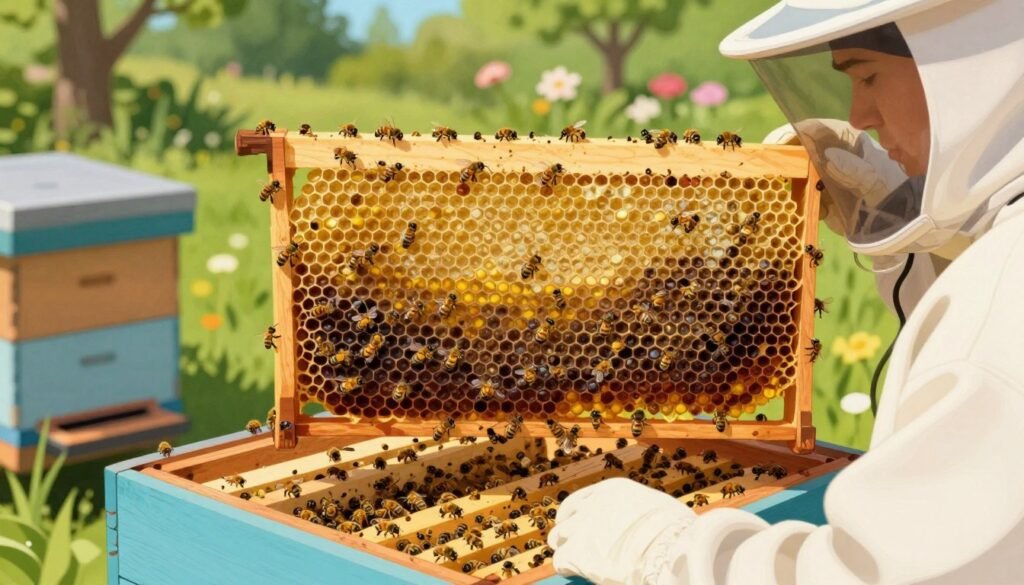
If the bees begin to build queen cells on the introduced frame, the test confirms the colony is trying to rear a new queen. That reaction is a clear sign the current queen is failing or absent.
Monitor the frame for about a week. Record changes in eggs, capped cells, and adult numbers. A losing colony can shed half its worker bees in the first 25 days and may survive about 86 days without intervention.
- Check for mites and pathogens during the test to rule out compounded issues.
- Decide quickly: introduce a mated new queen if rearing fails.
- Keep notes for each hive so trends across your apiary are clear.
“Diagnostic testing saves time and increases the chance of successful intervention.”
For basic inspection protocols see beekeeping basics.
Conclusion
, A clear, calm inspection routine helps you spot trouble before it costs the colony its future.
Learn to read early signs on frames: missing eggs, odd cells, or changes in worker behavior. These clues point to queen problems or illness and guide quick action.
Understand the timeline: a declining hive can fail within about 86 days if left unchecked. Act fast—introduce a new queen or add a frame of young brood to boost recovery.
Keep short, regular checks and note changes in population and foraging. Small steps now protect your bees and keep the colony productive long term.
FAQ
What is the main difference between a queenless brood pattern and signs of disease in a hive?
The key difference lies in distribution and condition. When the queen is absent, cells show irregular or empty areas where eggs and larvae should be, and workers may start building emergency queen cells. Diseased comb often has discolored, sunken, or perforated cappings, dead or malformed larvae, and clustered symptoms that follow specific pathogens rather than the scattered gaps that come from poor or missing egg-laying.
How does the brood nest normally appear when the queen is healthy?
A healthy nest shows a compact, mostly solid area of developing young with few empty cells, smooth cappings on sealed cells, and an orderly progression from eggs to larvae to capped cells across adjacent frames. Worker attendance and regular food stores like pollen and nectar nearby support this pattern.
What is the “football” pattern and what does it indicate?
The “football” pattern is an oval patch of developing young surrounded by empty cells and stores. It often indicates inconsistent laying by the queen or recent loss, leading to gaps where eggs should be. This differs from disease, which typically alters the condition of individual larvae and cappings rather than creating a uniform empty border.
What signs point to a hive losing its queen or becoming queenless?
Look for an abrupt drop in fresh eggs, workers building multiple queen cups or emergency queen cells, reduced brood area, and changes in foraging or guard activity. Over several days you may also see a rise in drone cells if workers begin laying unfertilized eggs.
How can a beekeeper tell if worker bees are laying eggs?
Worker-laid eggs often appear in multiple eggs per cell and tend to be scattered at the edges of comb. These eggs produce only drones, so you’ll later notice a predominance of drone brood and irregular, poorly capped cells. Identifying several eggs in one cell is a strong sign of laying workers.
What disease symptoms should trigger immediate action or testing?
Immediate testing is warranted for groups of discolored, sunken, punctured cappings, brown or ropy larvae, foul odors, or many dead larvae and pupae. These signs suggest foulbrood or other serious infections that require prompt diagnosis and management to protect the apiary.
When should I use diagnostic tests instead of relying on visual inspection?
Use lab tests or rapid field kits if visual signs are ambiguous, if you suspect foulbrood, or when you plan to move or sell hives. Tests confirm pathogens like American or European foulbrood and guide legal and treatment decisions for antibiotic use, hive destruction, or quarantine.
Can swarming or seasonal changes mimic the signs of a failing colony?
Yes. Preparing to swarm, seasonal brood breaks, or autumn reductions in laying can produce smaller brood areas and more empty cells. Check for swarm cells, queen presence, and recent weather or nectar flows before concluding the colony is unhealthy.
How quickly should a beekeeper act upon finding a failing nest area or suspected disease?
Act promptly. If the queen is missing, requeening or combining with a strong hive within a few days can save the colony. If disease is suspected, isolate the hive and arrange diagnostic testing immediately to determine containment or treatment steps.
What practical steps help prevent laying workers and colony decline?
Maintain regular inspections, ensure timely requeening when queen performance drops, avoid long broodless periods, and keep strong nurse and forager populations by managing nutrition and mite levels. Promptly address small problems before they lead to worker egg-laying or severe population loss.