Understanding the key differences between these two brood diseases helps every beekeeper protect colonies and honey production. Both are bacterial infections that threaten hives, but their biology, spread, and long-term risks differ.
One type produces hardy spores that can persist in equipment for decades and demands decisive action when detected. The other does not form long-lived spores and may respond to management and favorable conditions.
Field diagnosis, such as the rope test, aids quick identification of the spore-producing disease. Proper identification is the first step to protect bees and prevent apiary loss.
Consult state inspectors and trusted guidance on reporting and treatment, and follow strict hygiene for tools and hives to limit spread. For practical management and sterilization tips, review resources on detection and equipment care.
Learn more about regulations and the threat from specialist guides: disease overview and reporting, tool sterilization methods, and handling contaminated equipment.
Key Takeaways
- Different bacteria: one creates long-lasting spores, the other generally does not.
- Both diseases are highly contagious and can devastate apiaries if unchecked.
- The rope test is a quick field tool to suspect the spore-forming infection.
- Proper ID and reporting to inspectors are critical first steps.
- Cleaning and strict tool hygiene help prevent spread between hives.
Understanding the Biological Differences Between Foulbrood Diseases
The biology of each bacterium determines how long it survives in hives and how hard it is to eradicate.
Spore-forming versus Non-spore-forming Bacteria
Paenibacillus larvae forms hardy spores that survive temperature and cleaning. A single infected larva can yield up to 100 million spores, creating a long-term contamination risk for wooden boxes and equipment.
In contrast, Melissococcus plutonius does not form long-lived spores. This bacterium tends to fade from the environment if colonies recover and sanitation is good.
Transmission Pathways within the Colony
Both diseases spread when nurse bees feed contaminated food to very young larvae. Larvae under two days old are most vulnerable.
The bacteria multiply in the larval midgut, compete for food, and kill the developing bee inside the cell. Robber bees and shared equipment can move spores or bacteria between colonies, so containment is a community effort.
| Feature | Spore-forming Bacterium | Non-spore-forming Bacterium |
|---|---|---|
| Bacterium | Paenibacillus larvae | Melissococcus plutonius |
| Environmental Persistence | Decades on equipment and wood | Short-term; declines with sanitation |
| Primary Transmission | Spores on tools, robbers, nurse bee food | Contaminated food carried by nurse bees |
| Impact on Larvae | High spore load; mass colony risk | Competes in midgut; often linked to stress |
For practical guidance on detection and regional reporting, consult this overview on disease differences and reporting and research on hygienic behavior in bee lines to reduce spread.
Comparing American Foulbrood vs European Foulbrood Symptoms
Comparing larval color and position inside cells gives quick, practical clues for diagnosis.
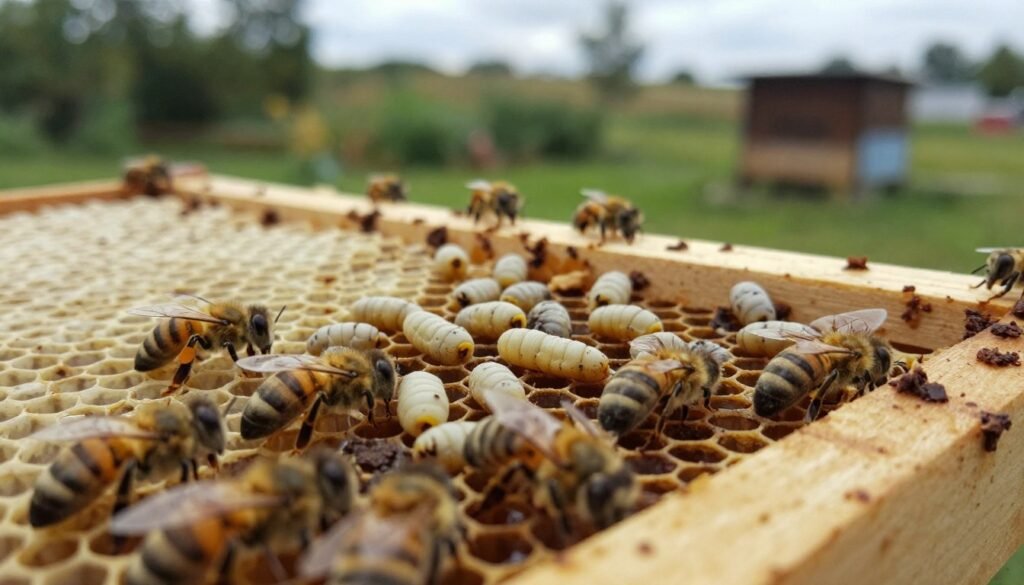
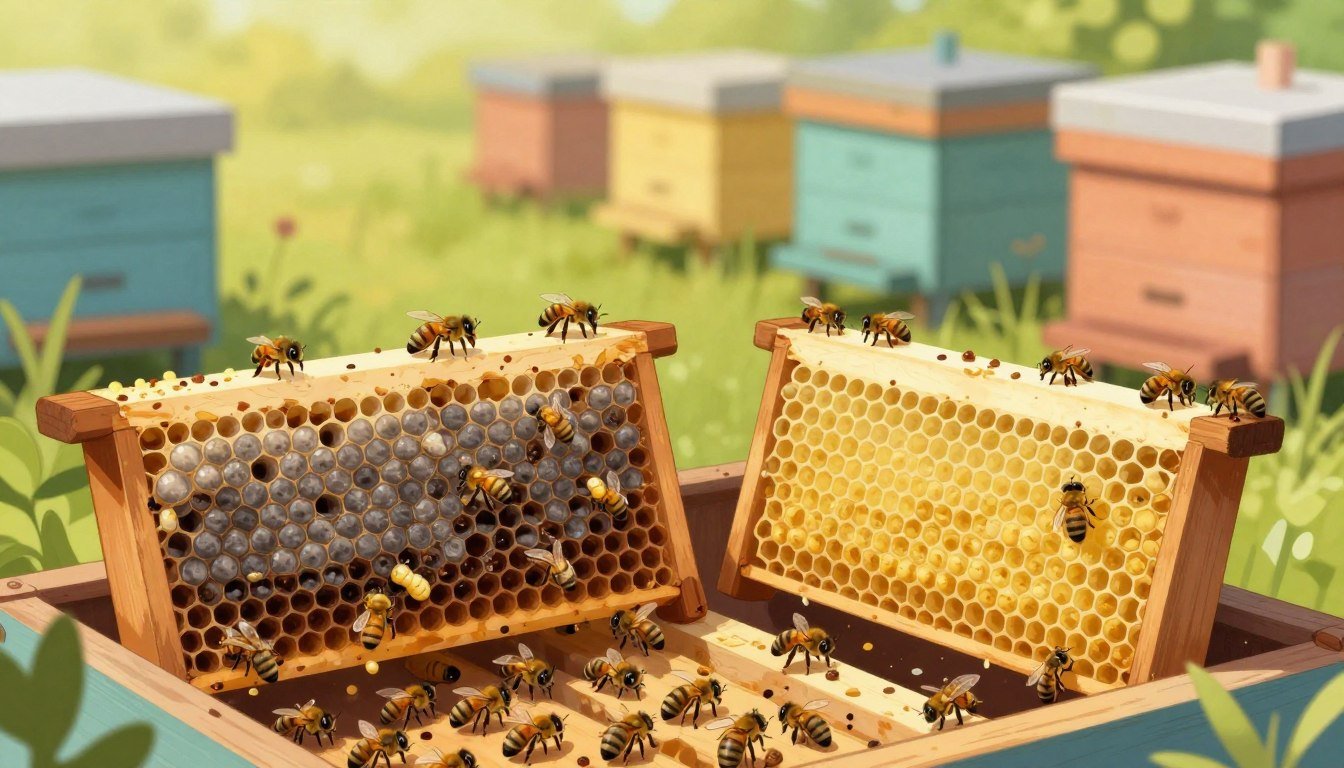
Inspect brood frames for clear visual signs. For the spore-forming disease, look for sunken, greasy cappings and a distinct sulfurous odor in advanced cases. During the pupal stage a melted pupa may show a false tongue as it decays.
By contrast, european foulbrood infected larvae often die before the cell is capped. They appear twisted and yellow brown at the bottom of the cell. Nurse bees may remove affected larvae early, creating a spotty brood pattern.
Common inspection tips for beekeepers:
- Check for sunken cappings in pupae and a sulfur smell.
- Note twisted, yellow-brown larvae lying at the bottom of cells.
- Watch for spotty brood patterns—useful but not definitive.
- Be extra vigilant in early spring, when outbreaks often appear.
For regional guidance on diagnosis and reporting, review european foulbrood guidance and practical apiary strategies like beekeeping expansion tips.
Diagnostic Techniques for Hive Health
Accurate field checks and lab tests together give the best chance to identify brood disease early. Use a mix of simple in-hive checks and confirmatory analysis to protect colonies and equipment.
The Rope Test
The rope test is a quick field method for detecting the spore-forming infection. Insert a toothpick into a suspect cell and pull gently.
If larval remains stretch at least 1.5 centimeters, the result suggests the spore-forming bacterium. This test is reliable for that infection but not effective for european foulbrood.
Visual Inspection of Brood
Hold frames at hip height with the sun at your back to see into the bottom of cells. Look for sunken cappings, a distinct odor, or larvae that are yellow brown and twisted.
Note the difference in scale: the hard scale from paenibacillus larvae often stays stuck to the bottom of the cell. Scale from the other disease is brittle and removes easily. Always avoid using the same tools on different hives.
Laboratory Analysis
Laboratory confirmation remains the gold standard. The USDA Bee Research Lab in Beltsville, MD, provides definitive testing and instructions for sample collection and shipping.
Vita in-field tests can screen quickly, but send samples for lab analysis before major action. For more diagnostic resources, see diagnostic resources for bee diseases.
Management and Prevention Strategies for Beekeepers
Keeping tools and comb clean is the cornerstone of healthy colonies. Good sanitation lowers the chance that larvae or adult bees pick up bacteria and spread disease through the hive.
Practical steps include rotating out old comb every few years and replacing brittle frames. Move a stressed colony to fresh comb with the shook swarm method when european foulbrood pressures rise in early spring.
Sanitation and Equipment Hygiene
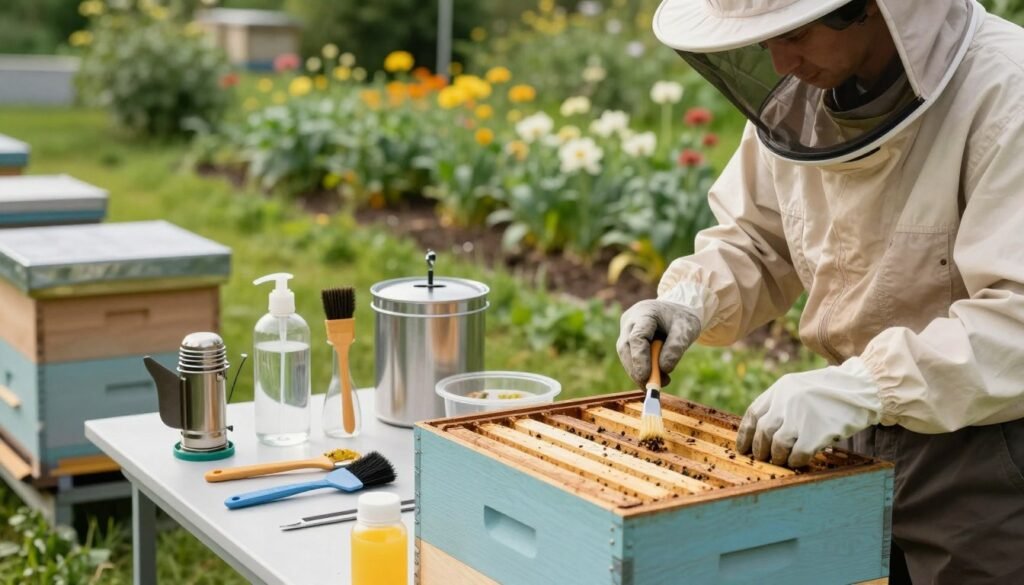
Disinfect tools between hives and avoid sharing frames without cleaning. Use proven methods — for detailed cleaning and sterilization advice see bleach and cleaning methods.
“Maintain strict tool hygiene; it is the most effective way to prevent transmission of spores and bacteria.”
Follow veterinary rules: as of 2017, antibiotics require a prescription. For vet protocols and sample guidance consult veterinary guidance.
| Action | What to do | Benefit |
|---|---|---|
| Comb rotation | Replace old comb every 2–5 years | Reduces buildup of pathogens and old honey |
| Tool hygiene | Flame or disinfect between hives | Prevents spread of spores and bacteria |
| Colony support | Feed sugar syrup and protein patties in spring | Relieves stress and improves nurse-to-larvae ratio |
| Genetics | Requeen with hygienic stock | Improves removal of infected larvae and cells |
Conclusion
Early detection and clean equipment are the best defenses for healthy colonies. Distinguishing the two main brood diseases helps beekeepers act fast to protect honey, brood, and the hive.
One disease forms hardy spores and can demand extreme measures, while the other often responds to management and colony support. Use the rope test, watch larvae and cell symptoms, and keep tools sterile between hives.
Always contact state inspectors or a veterinarian for suspected cases and follow legal reporting. For practical guidance on reporting and handling contaminated comb, see this disease guide and advice on when to discard comb.
FAQ
What are the main biological differences between the two larval diseases?
One is caused by a spore-forming bacterium that produces long-lived, resistant spores. The other is caused by a non-spore-forming bacterium that relies on live bacterial cells to spread. This difference affects persistence in equipment, the environment, and the approaches needed for control.
How do the transmission pathways differ inside a colony?
Both diseases spread primarily via nurse bees feeding infected larvae and contaminated food. The spore-forming agent can also spread through contaminated tools, frames, hive boxes, and honey, persisting for years. The non-spore-forming agent tends to be more associated with weakened colonies and contaminated nectar and pollen, but it does not form hardy spores.
How can I tell the two diseases apart by symptoms in the brood?
Symptoms overlap, but one disease often produces sunken, punctured cappings and a sticky, ropy larval residue that darkens over time. The other typically shows twisted or displaced larvae that are yellow-brown and lack the classic ropey pull; brood may die earlier and smells sour rather than strongly foul.
What is the rope test and how reliable is it?
The rope test pulls the dead larval remains with a small tool or toothpick. If the larva forms a sticky, stringy rope several millimeters long, that suggests the spore-forming disease. A negative or crumbly result leans toward the non-spore-forming disease. The test helps in the field but is not definitive; lab confirmation is recommended.
What should I look for during a visual inspection of brood?
Lift frames and scan for irregular brood patterns, discolored or twisted larvae, sunken cappings, and any abnormal odors. Note the stage of death—whether larvae died before capping or in the pupal stage. Check nearby cells and the bottom board for dead brood and darkened scales.
When is laboratory analysis necessary and what tests are used?
Send samples for culture or PCR when field signs are unclear, when you suspect a resistant spore problem, or before moving colonies. Labs test for the specific bacteria and their spores; PCR gives rapid species-level ID, while culture can indicate spore presence and severity.
What sanitation measures protect hives and equipment?
Burn or deeply bury heavily contaminated frames and boxes where regulations require. For reusable metal tools and hive parts, heat sterilize, flame, or use approved disinfectants. Avoid sharing comb between apiaries, and clean protective gear, hive tools, and gloves between inspections.
How should a beekeeper manage an infected colony in early spring?
Isolate the colony and limit movement. Remove and properly dispose of heavily infected comb. Consider splitting only if tests confirm a non-spore-forming infection and you follow strict hygiene. Work with a local apiary inspector and follow state rules; early action improves recovery chances.
Can honey, pollen, or equipment spread these diseases to other apiaries?
Yes. Contaminated honey and pollen carried by robbing or by feeding can spread infection. Equipment and used comb are major vectors, especially when the pathogen forms spores. Always assume used comb could carry infection and treat or dispose of it accordingly.
What role do nurse bees play in the spread and control of these diseases?
Nurse bees transmit disease when they feed larvae with contaminated brood food. Strong, healthy nurse populations can sometimes reduce impact by hygienic behavior—removing and cleaning infected cells. Maintaining colony strength, nutrition, and good genetics for hygienic traits helps reduce disease spread.
Are there effective treatments or antibiotics available, and what are the limits?
Antibiotics may suppress symptoms for the non-spore-forming disease and sometimes reduce symptoms of the other, but they do not eliminate spores. Their use is regulated, can affect honey residues, and may mask infections. Integrated approaches—hive hygiene, equipment management, and following local rules—are essential.
How should I handle frames or hives that test positive for the spore-forming agent?
Many jurisdictions require destruction of heavily infected comb and equipment or approved sterilization. Sterilize tools and equipment with high heat or approved treatments before reuse. Consult your state apiary inspector for required steps and documentation.
What preventive steps reduce the chance of outbreaks in my yards?
Practice strict sanitation, avoid sharing comb and equipment, inspect regularly in spring and summer, maintain strong queens and colony nutrition, and select for hygienic stock. Limit movement of colonies and honey between apiaries without testing. Promptly isolate and test suspect colonies.
How do odors and larval color changes help in early detection?
One disease often produces a pronounced foul odor as infected larvae decay and darken to brown-black. The other tends to show yellow-brown larvae with a sour or fermented smell rather than the classic foul scent. Odor and color are useful clues but not definitive without testing.
When is it appropriate to call an apiary inspector or a diagnostic lab?
Contact authorities when you see unusual brood mortality, ropey or discolored larvae, persistent odors, sudden colony losses, or when you plan to move hives. Early reporting helps contain spread and ensures you follow legal and best-practice responses.