Understanding the right number of pollinators can make the difference between a good season and an exceptional harvest. In the United States, honey bee services drive roughly $15 billion in agricultural value each year, so planning hive placement matters to both yield and fruit quality.
Growers should account for colony size and foraging habits when deciding on density. A local beekeeper can assess your field and advise on optimal hive placement to balance a healthy bee population with crop needs.
This guide outlines key factors to evaluate: the number and size of colonies, the local pollen sources, and the expected foraging range of honey bees. Use this information to protect your investment and ensure that pollinators reach crops during critical bloom periods.
Key Takeaways
- Economic impact: Honey bees support billions in U.S. agriculture value annually.
- Consult a professional beekeeper to set appropriate hive density for your fields.
- Consider colony population, foraging behavior, and local pollen quality.
- Adjust numbers based on crop type and bloom duration to boost yield.
- Learn options like renting bees through trusted services to match seasonal needs: renting bees for pollination services.
The Importance of Honey Bee Pollination
A strong population of managed honey bees is central to reliable fruit set and consistent farm yields. In the United States, services tied to these insects add an estimated $15 billion in agricultural value each year.
The agricultural sector depends on bees to transfer pollen between flowers across many fruit and vegetable crops. Effective pollination raises both total yields and produce quality, giving growers a measurable return on investment.
Maintaining a healthy colony ensures steady fruit set and smoother production planning. Many growers hire professional beekeepers to provide timed services. Renting a hive is, in effect, investing in an essential biological process that underpins harvest success.
- Higher yields: Managed bees increase fruit count and uniformity.
- Better quality: Proper visits lead to improved size and marketability.
- Consistent production: Reliable colony activity reduces crop variability.
Understanding Colony Biology and Foraging Behavior
A colony’s internal rhythm and worker roles shape when and how bees visit blooms.
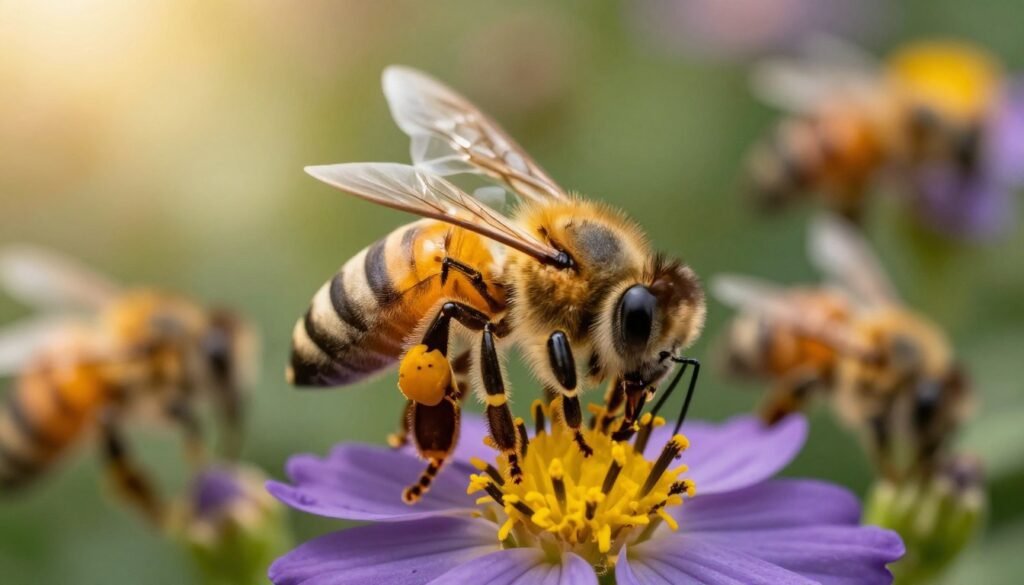
Life Cycle of Worker Bees
Worker bees move from in-hive tasks to field work at about 21 days old. Younger workers tend brood, build comb, and care for the queen.
Once they shift to foraging, they collect nectar and pollen that sustain colony growth and fruit set in nearby crops.
Temperature and Flight Activity
Activity starts near 55°F and rises sharply as temperatures reach 65–70°F. Peak efficiency usually happens in mild, calm weather.
Practical note: A strong colony can grow from 10,000–15,000 workers in winter to 50,000–60,000 by midsummer. That scale affects food stores, hive behavior, and overall crop support.
| Factor | Threshold | Impact on Activity |
|---|---|---|
| Worker age | 21 days to forage | Switch from house tasks to field trips |
| Temperature | 55°F start; 65–70°F optimal | Flight frequency and nectar load increase |
| Colony size | 10k–60k (seasonal) | More workers = higher foraging and honey production |
Beekeepers must monitor brood, queen health, and stores to manage population size and maintain efficiency. Timely checks help ensure the colony has enough food during critical bloom windows.
For techniques to boost colony population naturally, see this colony growth guide.
Determining How Many Hives Per Acre for Pollination
The ideal density of managed colonies depends on crop type, nectar abundance, and competing forage nearby. Start by surveying bloom intensity and mapping areas with the heaviest flowers.
Assess bloom density and attractiveness. Dense, high-value fruit stands need fewer units than scattered vegetable plots. Track weather forecasts; wind and cold shrink daily foraging time and raise the number you should arrange.
Consult published recommendations and a trusted beekeeper to decide the final number of colonies to rent. Colony strength, disease status, and management practices directly affect efficiency and fruit set.
- Estimate floral resources and competing wild blooms during peak bloom.
- Match colony strength to crop needs rather than relying on a single ratio.
- Verify regional timing; bloom windows shift by state and microclimate.
Practical note: required units range widely—from under 0.1 to around 10 colonies on extreme crops—so tailor density to local conditions. For orchard-specific guidance, see almond hive recommendations at almond hive guidance.
Factors Influencing Optimal Hive Density
Nearby nectar and pollen supplies shape the carrying capacity for managed colonies.
Assess forage within a three-mile radius before setting density. A rich, mixed landscape supports a higher number of bees without stressing food supplies. Monocultures usually need wider spacing to avoid competition and reduced yield.
Adjust stocking to crop needs and seasonal bloom cycles. Monitor floral abundance during early bloom to refine your plan. Review recommendations as bloom progresses to keep colony health and production steady.

Key management checks
- Survey wild and cultivated nectar sources around the site.
- Ensure continuous food through staggered bloom or supplemental feeding.
- Work with a beekeeper to match colony strength to crop demands.
| Factor | Consideration | Action |
|---|---|---|
| Forage radius | 3-mile influence on bee foraging | Map floral sources and adjust placements |
| Landscape diversity | Mix of wildflowers and cover crops | Higher stocking possible; monitor food levels |
| Seasonal timing | Bloom windows vary by region | Review and revise density during bloom |
For practical methods to evaluate nearby resources, see this forage assessment guide. Maintaining the right density protects colony welfare and improves fruit set across crops.
Evaluating Colony Strength and Quality
Field checks that focus on brood coverage and comb area give the clearest signal of colony health. A systematic inspection helps confirm a unit meets regional standards and will perform in the crop during bloom.
Inspecting Brood and Comb
Measure comb area. Oregon requires about 3,000 square inches of comb for a pollination colony. Inspect frames for continuous brood and evenly spaced larvae.
The amount of brood is a key indicator of a colony’s future strength and ability to collect nectar and pollen.
Assessing Adult Bee Populations
Look for a uniform population of active workers. A Grade A orchard colony should show roughly 14,000 adult bees to guarantee coverage during peak bloom.
A professional beekeeper should demonstrate queen presence and a healthy population to ensure efficient service and higher yield.
Identifying Disease
Scan comb for signs of American foulbrood and other infections. Early detection protects other units and maintains honey production.
Ensure food reserves. Check stores so colonies do not starve during cold snaps or low nectar days.
- Confirm comb area and brood coverage meet local standards.
- Require visible queen or reliable brood pattern from the beekeeper.
- Prioritize disease-free colonies to protect crop yield and honey harvest.
- Monitor for active foraging during appropriate time of day.
For practical guidance on colony strength and beekeeper challenges, review this colony strength overview and resources on apiary productivity.
Regulatory Standards for Commercial Pollination
Regulatory frameworks give growers measurable criteria to judge rented colonies before bloom. Oregon set colony-strength rules in 1960 and Washington added standards in 1978. These laws define minimum bee and brood amounts to help ensure service quality.
Even where enforcement is spotty, these rules act as useful benchmarks in a contract. A professional beekeeper should know the requirements and confirm the unit meets them before placement.
Clear contract language prevents disputes. Specify the number of bees, comb area, and honey reserves that the beekeeper will supply. That protects both grower and apiary during crop bloom.
| State | Year | Minimum requirement |
|---|---|---|
| Oregon | 1960 | Defined brood and adult bee area for a pollination unit |
| Washington | 1978 | Set colony strength and comb area benchmarks |
| Best practice | — | Include standards in contracts and inspections |
For a practical guide to evaluating units, review evaluating honey bee colonies.
Managing Hive Placement and Forage Areas
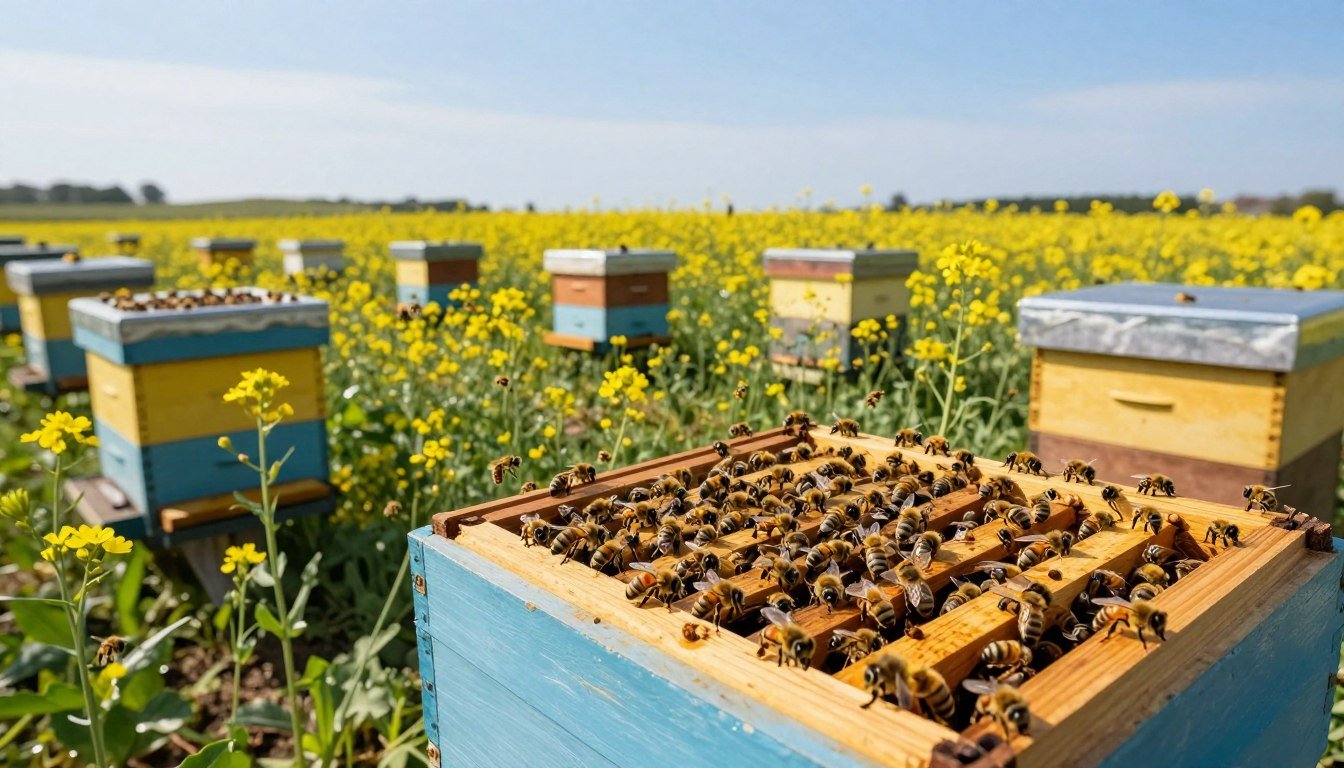
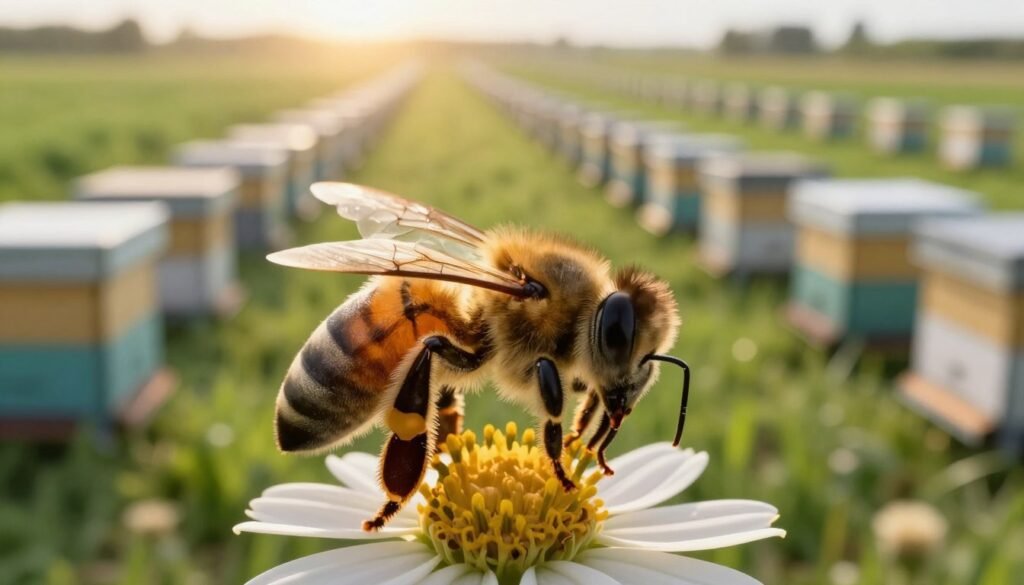
Place colonies where workers can quickly reach target blooms. Honey bees will forage up to three miles from a bee hive, so landscape quality matters more than property size.
Site units near water, shelter, and the densest flower patches. This reduces travel time and keeps workers active during short flight windows.
Work with a professional beekeeper to space colonies across the field and nearby edges. A beekeeper can give recommendations on distribution and unit strength.
Maintain continuous floral supply while your crop blooms. Planting cover crops or strips of wildflowers extends forage and supports colony food stores, improving fruit set and crop yield.
Practical tip: place beehive entrances away from strong winds and near sunny spots to extend daily foraging time and enhance production.
For guidance on workload and apiary planning, consult this resource on managing apiary scale: apiary capacity and planning.
Risks of Overstocking and High Density
When apiary density climbs above the land’s carrying capacity, problems appear in both yield and bee health.
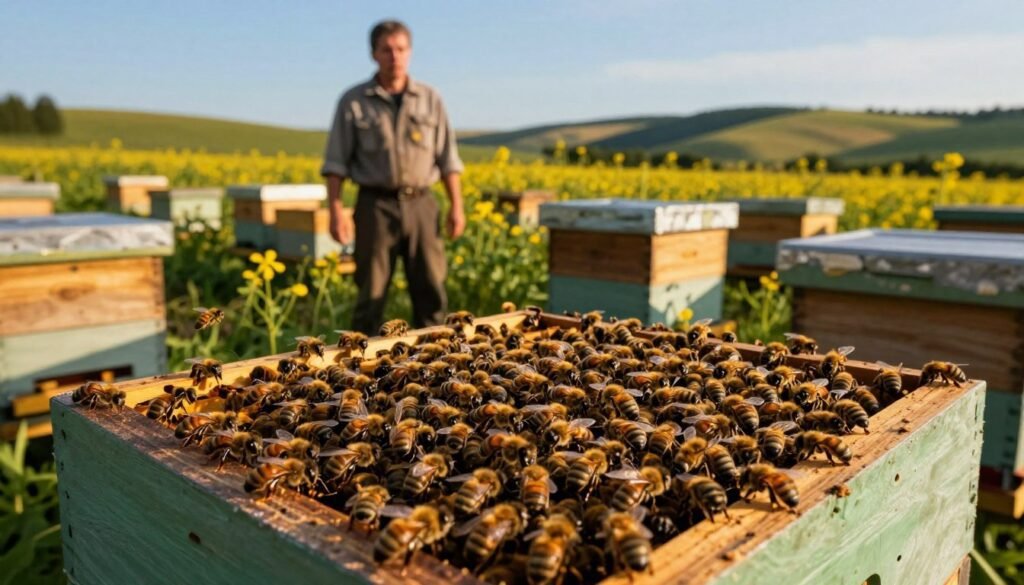
Placing too many colonies on a site intensifies competition for nectar and pollen. That reduces honey production in each hive and forces workers to travel farther, lowering efficiency and increasing time spent per trip.
Disease Transmission Risks
Close-packed units spread pests and infections faster. Varroa mites and foulbrood pass more easily when colonies are dense. A single sick colony can threaten nearby units and harm overall production.
Competition and Robbing
Strong colonies may rob weaker ones when resources are thin. Robbing raises stress, damages comb, and can collapse vulnerable colonies. During a nectar dearth, chaos grows quickly without active management.
- Monitoring matters: a professional beekeeper must track population and health to avoid overload.
- Too many units in one area can cause a measurable drop in yield across the apiary.
- Plan stocking to match local floral supply and stagger placements to lower conflict.
For seasonal checklist items that help prevent these risks, see seasonal beekeeping tasks. Proper management keeps colonies productive and protects crop results.
Comparing Honey Bees and Bumble Bees
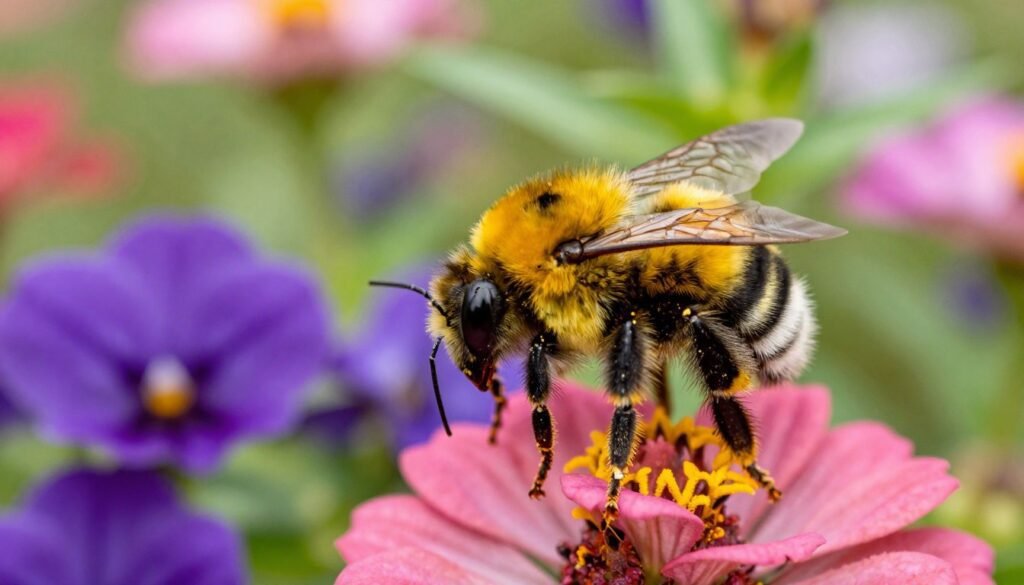
Temperature and flight patterns make a clear distinction between these pollinators. Bumble bees remain active near 50°F, while the honey bee typically needs warmer air above 60°F. That difference affects daily activity windows and fruit set timing.
Bumble bees excel in cool, wet conditions and orient well in greenhouses and enclosed spaces. Many growers use them in specialty vegetable and berry production because they work when honey bees are less active.
Recommended stocking for bumble colonies ranges from 0.5 to 3 colonies per acre depending on crop and density of flowers. In larger field systems, honey bees remain the primary unit for broad coverage, while bumble units add targeted benefits.
| Feature | Bumble Bee | Honey Bee |
|---|---|---|
| Temperature tolerance | Active near 50°F | Prefers above 60°F |
| Foraging range | Shorter, intensive visits | Longer range across a field |
| Best use | Greenhouse, cool-season crops | Large-area crop production |
| Recommended management | 0.5–3 colonies per acre; targeted release | Match hive strength and distribution for coverage |
Complementary deployment often gives the best results. Using both types can improve overall visit rates, raise fruit quality, and reduce gaps in service during cool snaps. For trial data on vine crops and practical recommendations, review the bumble bee trials in vine crops.
Conclusion
A final review of stocking, placement, and colony health will protect your seasonal yield goals. Keep checks simple: confirm brood, stores, and worker activity so each beehive meets the crop’s needs.
Work closely with a professional beekeeper to match the number and strength of colonies to local floral supply. Proper placement of hives and steady management raises yields, maintains honey quality, and supports healthy pollen flows across the field.
Prioritize colony health to protect your investment and long-term production. For practical guidance on combining beekeeping with farm income, see this note on beekeeping as a side income.
FAQ
What is recommended hive density to achieve good crop pollination?
Recommendations vary by crop. For almonds, recommendations often range from 2 to 8 strong honey bee colonies per acre; for apples, cherries, and many berries, typical guidance is 1 to 2 colonies per acre. Growers should match colony strength to bloom intensity and local forage to get consistent pollination and fruit set.
Why do honey bees matter for agricultural production?
Honey bees increase fruit set, seed production, and overall yields for many crops. Their foraging transfers pollen efficiently between flowers, improving crop uniformity and marketable yield. Reliable colonies during bloom reduce the need for hand-pollination and increase farm profitability.
How does colony biology affect pollination performance?
Colony size, age structure, brood production, and forage needs control daily forager numbers. A strong, healthy colony produces more foragers, extends foraging hours, and handles diverse floral resources, which boosts pollination efficiency during critical bloom windows.
What is the typical life cycle of worker bees relevant to bloom timing?
Worker bees develop from egg to adult in about 21 days. Forager onset occurs around 2–3 weeks after emergence. Timing hive health and queen laying to produce a peak forager cohort just before bloom improves pollination capacity during crop flowering.
How do temperature and weather influence flight activity?
Bees fly best between roughly 55°F and 95°F depending on wind and sunlight. Cold, wet, or very windy days reduce foraging, so growers should consider local weather forecasts when scheduling colony placement to avoid poor pollination during key bloom days.
How should growers determine the number of colonies needed for a given field?
Start with crop-specific guidelines, then adjust for field size, bloom density, competing forage, and expected weather. Perform on-site flower counts and post-placement fruit set checks. Collaborate with an experienced beekeeper to match colony strength to the field’s needs.
Which local factors most influence optimal colony density?
Nearby natural and agricultural forage, landscape diversity, competing crops in bloom, and the distance bees must fly to reach flowers affect density. Fields surrounded by abundant alternative blooms often need higher colony inputs for adequate pollination.
How do beekeepers and growers evaluate colony strength and quality?
Inspections focus on brood pattern, queen presence, food stores, and adult bee population. A colony with a solid brood pattern, ample worker numbers, and adequate pollen and nectar stores will provide superior pollination services.
What should inspectors look for in brood and comb during assessments?
Look for continuous, even brood coverage with few empty cells, healthy white larvae, and no excessive drone or spotty brood. Clean comb without excessive mold or deformities indicates good hive conditions and strong future foraging potential.
How can adult bee populations be assessed quickly?
Estimate adult numbers by frame coverage: lightly covered, half-covered, or fully covered frames of bees. A transportable metric is number of frames of bees; most pollination contracts specify minimum frames per colony to ensure consistent foraging.
What disease signs should be identified before placing colonies in crops?
Monitor for American foulbrood, European foulbrood, Varroa mite impacts, Nosema, and signs of dysentery or colony collapse behaviors. Diseased or weak hives threaten pollination reliability and can spread pathogens to other colonies.
Are there regulatory standards for commercial pollination services?
Yes. States and USDA programs set health, movement, and inspection rules for pollination rentals. Commercial operators must comply with transport permits, apiary registration, and sometimes mandatory disease testing before interstate movement.
How should hive placement and forage areas be managed on a farm?
Place colonies at field edges or within easy reach of bloom while providing shade, wind protection, clean water, and secure access. Maintain nearby wildflower strips or cover crops to extend forage and reduce stress on colonies before and after bloom.
What risks arise from placing too many colonies in one field?
Overstocking increases disease transmission, raises competition for limited nectar and pollen, and can trigger robbing and stress. High density may lower per-hive productivity and reduce overall pollination quality when forage cannot support the population.
How does high colony density affect disease spread?
Close proximity raises contact rates between foragers and drifting bees, increasing Varroa and pathogen transmission. Managing hive health, spacing, and monitoring reduces outbreak risks and preserves long-term apiary productivity.
What management practices reduce competition and robbing at high densities?
Ensure adequate forage, provide supplemental feeding when necessary, position hives with space and varied entrances, and avoid unnecessary hive openings during nectar dearths. These steps lower stress and minimize aggressive interactions.
How do honey bees compare to bumble bees for certain crops?
Honey bees excel at large-scale, generalist pollination and are cost-effective for orchards and field crops. Bumble bees forage in cooler conditions and buzz-pollinate crops like tomatoes and blueberries, so combining both can improve pollination for specific crops.