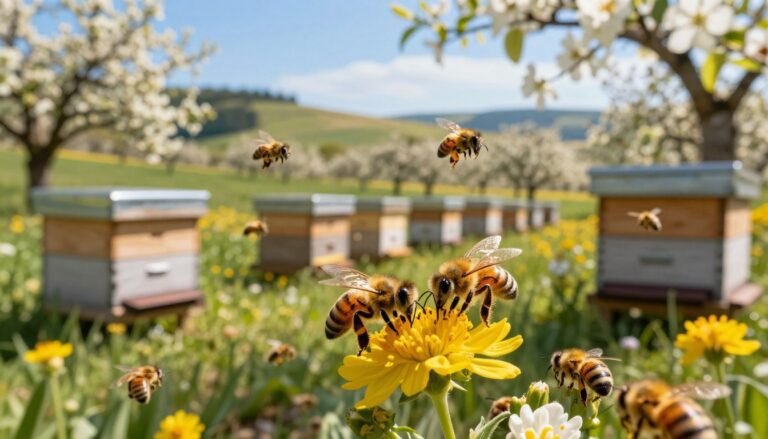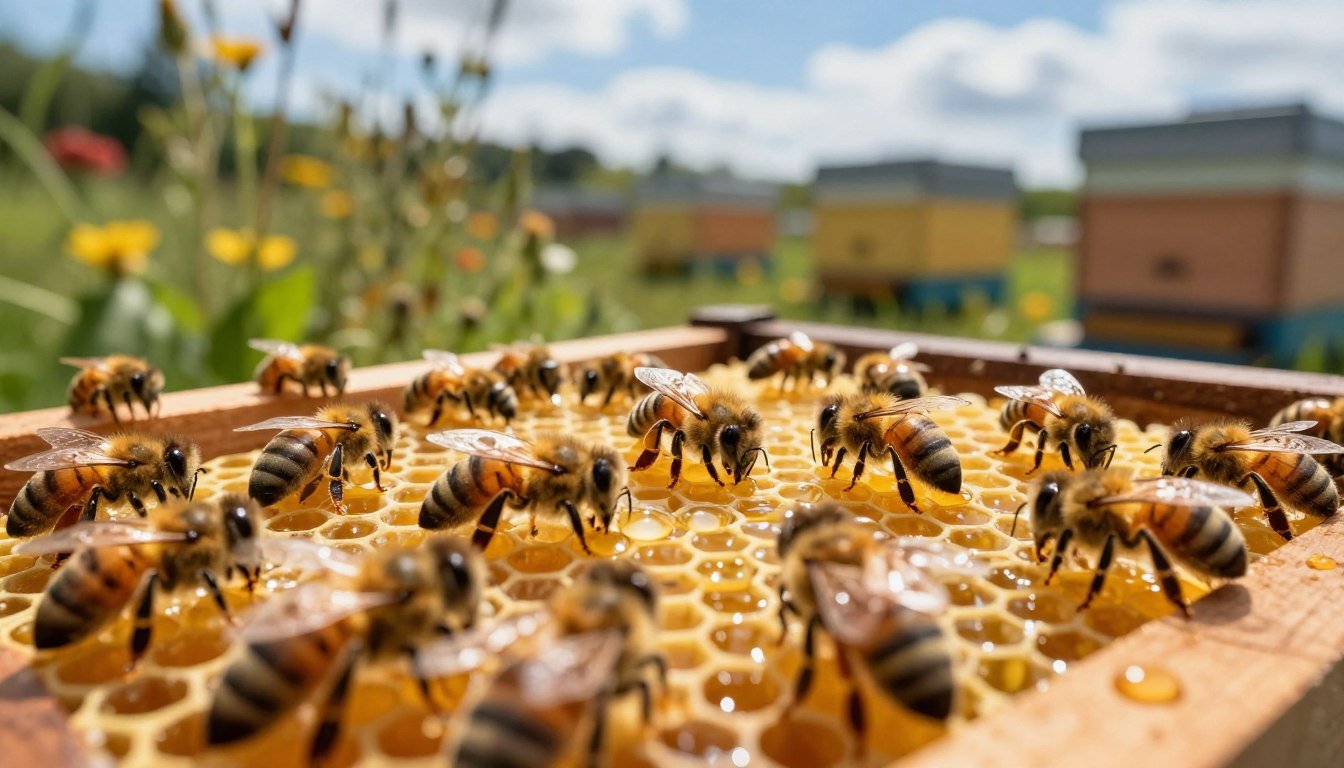
Turning a love of bees into steady income starts with clear choices about production and care. In the United States, the average beekeeper earns about $50,500, which shows real potential for growth.
Good beekeeping rests on simple priorities: healthy colonies, clean equipment, and thoughtful time allocation. A single hive can teach a new beekeeper the basics, while scaling requires planning and reliable gear.
Quality honey and steady production come from daily habits that protect bees and boost yield. Evaluating routines helps uncover ways to cut costs and raise annual income without sacrificing colony health.
Focus on small gains: track yields, maintain tools, and match chores to seasonal needs. These steps build steady profit and keep your operation resilient through the year.
Key Takeaways
- Average U.S. beekeeper salary signals real career potential.
- Start with one hive, then plan equipment and time before scaling.
- Healthy bees lead to better honey and higher income.
- Routine checks and targeted investment reduce costs over time.
- Small operational changes can meaningfully increase profit.
Understanding the Financial Reality of Beekeeping
Behind every jar of honey are recurring costs and daily management choices. A clear, realistic view helps both casual keepers and entrepreneurs plan work, purchases, and seasonal effort.
The Hobbyist Perspective
Most beekeepers in the UK are hobbyists. About 25,000 people keep bees, and many run just 3–5 hives.
Hobbyist colonies yield limited honey, so income is often supplemental. Basic equipment, comb replacement, and food add annual expenses.
Commercial Scale Realities
Commercial operations manage hundreds of colonies. Scale changes nearly every factor: labor, disease control, and equipment wear.
Key differences:
- Time demands grow as hives increase.
- Bulk production raises both revenue and exposure to losses.
- Management systems and frames become critical for stable production.
For a practical next step, read the hobbyist to revenue journey for budgeting tips and realistic expectations.
How to Evaluate Profitability per Apiary Yard
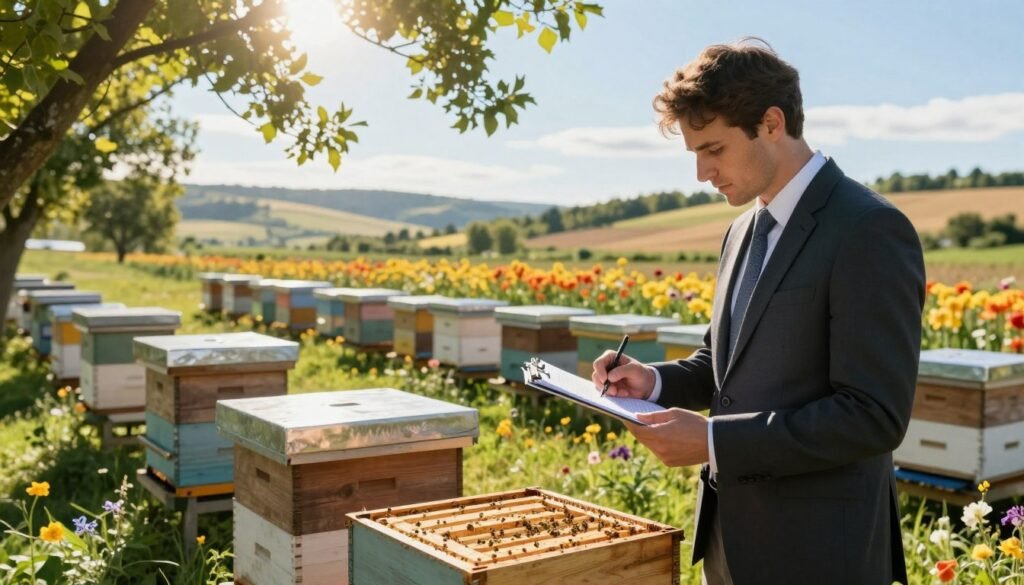
A clear ledger for each hive turns guesswork into measurable net results. Record every sale, feeding cost, and equipment purchase linked to a colony. Use that data to calculate the net profit per hive.
Track honey weight and other products like wax and queen sales during the peak season. Compare production per colony and note frames built and comb drawn by bees.
Monitor losses each year. High loss rates point to weak locations or management gaps. That insight helps you shift resources and reduce future costs.
Maintain simple monthly sheets: income, labor time, treatments, and equipment repair. Summarize yearly totals to see which colonies or hives meet your income goals.
- Calculate net: sales minus gear, food, and frames.
- Compare season production across colonies.
- Factor in losses, queen health, and comb amount.
- Include value from wax, queens, and other products.
Consistent management and simple record keeping let beekeepers spot trends, cut unnecessary costs, and grow profit over the year.
Essential Startup Costs and Initial Investments
A clear startup budget keeps early beekeeping choices realistic and manageable.
Starting small with two hives and basic gear is common. A typical initial outlay is about 1,000 GBP for two hives, a suit, and essential tools. Set aside extra funds for foundation and frames so colonies can draw comb quickly.
Budgeting for Equipment and Bees
Plan the first year carefully. Protective gear is not optional; it protects the beekeeper and keeps work efficient.
Many beekeepers forget ongoing production costs. Reserve money for expansion, treatments, and replacements as colonies grow.
- Protective gear: suit, gloves, veil.
- Hive hardware: boxes, frames, foundation.
- Operational buffer: feed, treatments, comb replacement.
| Item | Quantity | Approximate Cost (GBP) | Notes |
|---|---|---|---|
| National-style hives | 2 | 400 | Includes boxes and basic fittings |
| Protective suit & veil | 1 set | 150 | Durable suit for safe inspections |
| Frames & foundation | 20 | 200 | Ensures comb building and honey production |
| Tools & starter supplies | Various | 250 | Smoker, hive tool, feeder, treatments |
Track every cost in the first year. Careful records help you see when honey and other products will cover initial expenses. For practical revenue ideas and real-world numbers, read this short guide on making money with beekeeping: making money with beekeeping.
Managing Annual Operational Expenses
Managing yearly outlays is essential for steady beekeeping and reliable yields. Small, regular costs add up fast, so list recurring items and assign a simple monthly budget.

Food for winter feeding, treatments, and routine gear repairs are predictable line items. Plan for sugar and supplemental feed, and note the amount used per hive each season.
Replace roughly 30% of brood comb each year. This lowers pathogen load and supports healthier colonies and better honey production.
- Track frames and foundation used to control inventory and waste.
- Tally the time spent on inspections and chores as a hidden cost.
- Buy equipment and supplies in bulk where possible to cut unit costs.
Winter losses raise costs quickly. Prioritize proactive management and timely interventions to limit losses and protect annual income.
Practical step: keep a short monthly sheet that records food, treatments, frames, and sales of other products. For side-income planning and U.S. perspectives, see this side income guide.
Maximizing Honey Production and Sales
A reliable honey harvest depends on landscape choices and attentive colony care throughout the year. Focus on forage, timely inspections, and strict pest control to keep yields steady.
Pricing Strategies
Know your local market. Many beekeepers capture premium prices by selling small-batch, local honey at farmers markets and specialty shops.
Price by jar size and quality, and factor in costs like equipment, bottles, and labor. Consider bundles with wax or royal jelly for higher net income.
For ideas on boosting revenue with other hive products, see a short guide on diversification strategies.
Quality Control
Keep purity high. Harvest only fully capped frames and avoid heating that darkens flavor.
Control Varroa mites and swap old combs regularly to protect colony health and maintain consistent yields. The UK average is roughly 25 lb honey per hive some years; careful management helps approach that number.
At markets, attractive packaging and clear sourcing build buyer trust. For a sustainable production plan, review this sustainable apiary plan.
- Ensure continuous bloom during the season.
- Monitor frames, foundation, and queen health.
- Offer wax, propolis, or royal jelly for diversified sales.
Diversifying Revenue with Hive Products
Diversified hive products turn seasonal surpluses into year-round cash flow. Selling wax, propolis, and royal jelly can lift overall income and reduce reliance on honey during a weak season.
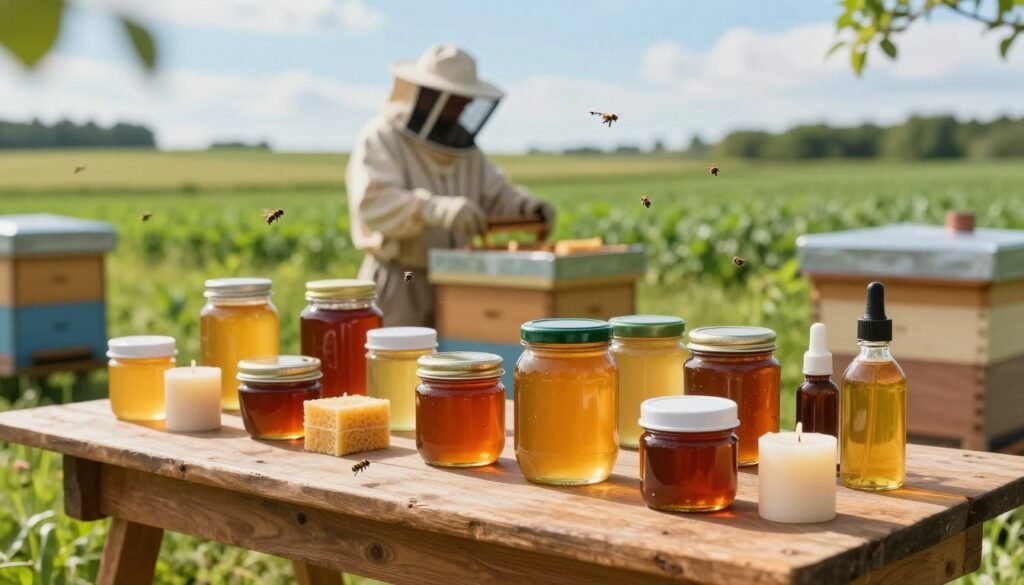
Many beekeepers find beeswax candles and skincare items sell at premium prices. These goods need modest equipment and simple techniques, so start small and scale as sales grow.
“Offering multiple products protects your operation and attracts different buyer groups.”
Specialist sales, like mated queen offerings, require skill but return higher price points. Selling queens suits beekeepers who breed for strong genetics and steady colony performance.
- Wax: candles, wraps, creams — low cost, steady demand.
- Propolis and royal jelly: niche markets, higher prices.
- Queens: premium product for local beekeepers and breeders.
| Product | Equipment Needed | Typical Price Range (US) | Notes |
|---|---|---|---|
| Beeswax candles | Melter, molds | $8–$25 per candle | High demand at farmers markets |
| Propolis tincture | Extraction kit, bottles | $10–$30 per ounce | Small-batch, niche buyers |
| Mated queen | Breeding cages, mating area | $25–$60 each | Requires proven stock and timing |
For guidance on launching sales and local rules, see a short guide on starting a honey business.
The Role of Pollination Services in Profitability
Adding pollination contracts can turn seasonal demand into a dependable revenue stream for serious beekeepers. Pollination work often brings higher prices than a single honey run and spreads income across the year.
Contracting with local farmers is especially valuable in spring, when demand for strong colonies peaks. Commercial operators commonly earn about $185–$225 per hive for premium pollination work during major bloom periods.
Contracting with Local Farmers
Write clear agreements that state the number of hives, placement, and the pollination period. Farmers expect healthy, robust colonies, so list health standards and any treatment responsibilities in the contract.
- Plan logistics: transport costs and timing can raise your operational costs but often pay off in higher income.
- Manage colony strength: focus on queen quality, frames, and food reserves before moving hives.
- Monitor pests: mites and disease control keep colonies productive and protect your reputation.
“Successful pollination requires strict control of colony health and clear, written terms.”
For guidance on scaling hive numbers and balancing labor, see practical notes about capacity in this short guide: how many hives can one person.
Evaluating the Value of Selling Bees and Queens
A well-timed nuc or mated queen sale can offset a year’s equipment and feed costs. Selling surplus colonies and queens is a direct path to extra income for beekeepers with strong stock.
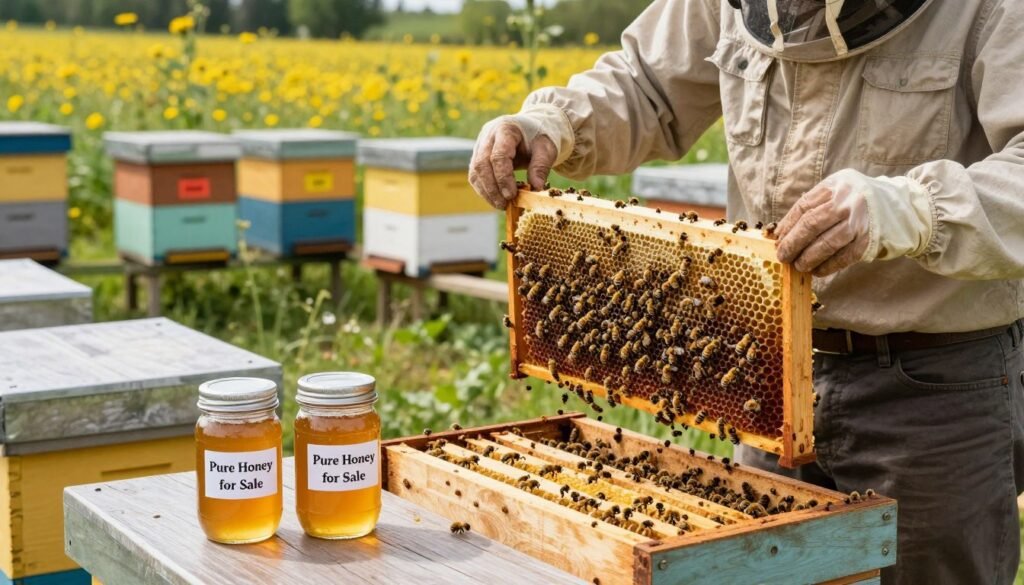
Nucleus colonies (nucs) meet steady demand from new beekeepers. Prices often reflect local shortages, letting sellers set competitive rates that improve net profit.
Queens are a high-value product. A quality queen helps other hive owners maintain healthy colony production, and mated queens command a premium price.
Factor in time spent on rearing, marking, and quarantining. Those costs affect final profit and should be part of your annual ledger.
- Sell surplus bees to keep hive numbers manageable.
- Use queen sales to boost annual income and offset losses.
- Price nucs and queens based on local supply, demand, and quality.
“Local markets often pay more for proven stock than for generic listings.”
Always check local regulations before selling. Permits and health rules protect regional bee populations and preserve long-term market trust.
Mitigating Losses to Protect Your Bottom Line
Loss control is the single biggest driver of steady revenue in beekeeping. Most operations face a 20–25% colony loss rate each year, so planning for losses must shape your budget and routines.
Disease and Pest Management
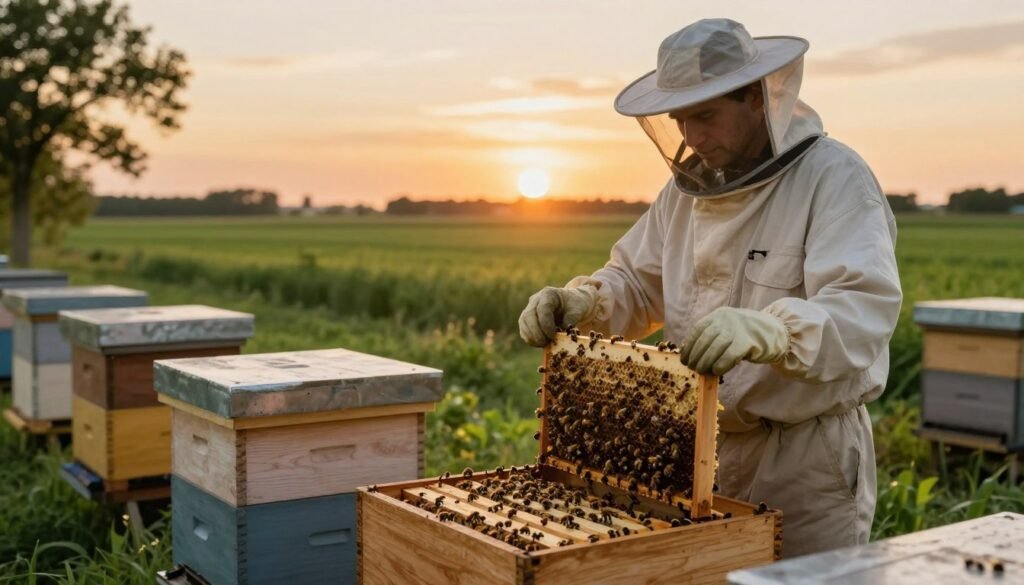
Early detection saves colonies and cash. Regular comb checks and mite monitoring catch issues before they spread.
Treatments for mites are a modest cost compared with replacing a full colony. Track treatment dates, product names, and outcome in a simple log.
- Inspect frames and brood for signs of disease weekly during season.
- Rotate foundation and replace old comb to cut pathogen load.
- Buy proven treatments and follow label guidance for best control.
Winter Survival Rates
Focus on winter strength to reduce replacement expenses. Feed plans, queen quality, and adequate stores cut starvation losses and raise survival rates.
Strong queens and timely feeding lower the number of nucs or packages you’ll need next year, improving net income.
| Risk | Action | Estimated Annual Cost |
|---|---|---|
| Varroa mites | Routine monitoring, targeted treatments | $5–$20 per hive |
| Starvation | Planned feeding, winter stores check | $3–$15 per hive |
| Poor queen | Requeen with quality stock | $25–$50 each |
| Comb disease | Replace 20–30% brood comb yearly | $2–$10 per frame |
“Mitigating losses preserves production, reduces yearly expenses, and protects long-term profit.”
Leveraging Technology and Data for Better Yields
Modern hive sensors and simple dashboards let beekeepers spot yield trends fast. Small operators can track honey and colony health with far greater precision than before.
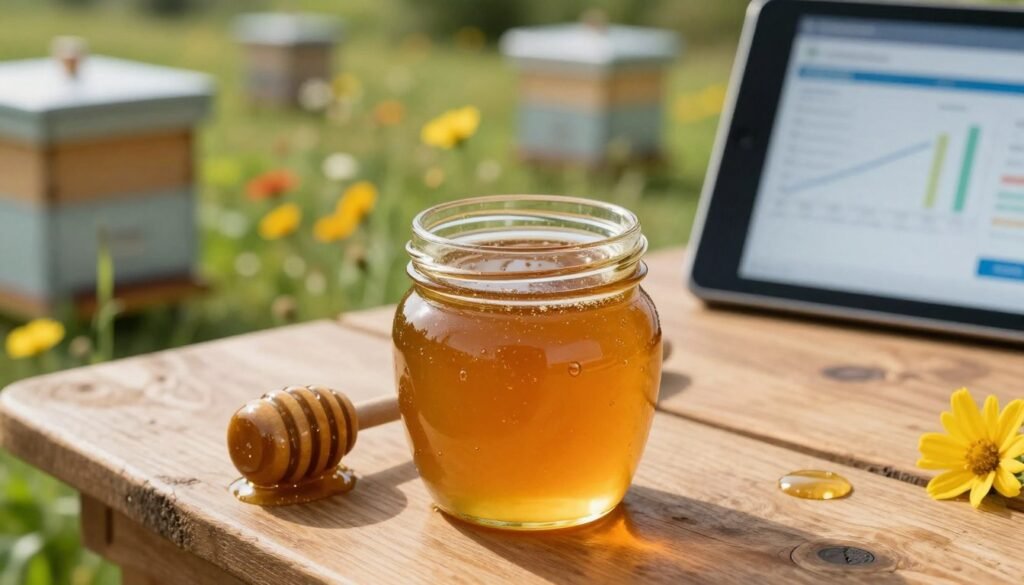
Digital tools save time on routine management tasks. They flag when a colony needs extra frames or is ready for harvest. That reduces wasted visits and lowers labor cost.
Temperature and humidity sensors help prevent losses and keep the queen in steady conditions through seasonal swings. Good data makes decisions clearer.
“Smart monitoring turns notes into actionable patterns that improve production and income.”
| Tool | Benefit | Typical Impact |
|---|---|---|
| Hive sensor | Real-time temp and activity | Fewer surprise losses |
| Dashboard | Trend visualization | Better harvest timing |
| Log software | Records queen swaps and treatments | Improved colony selection |
Investing in the right equipment and keeping tidy records helps you focus on your best colonies. For a detailed example of precision tools, see Nectar precision beekeeping.
Scaling Your Operation for Long Term Growth
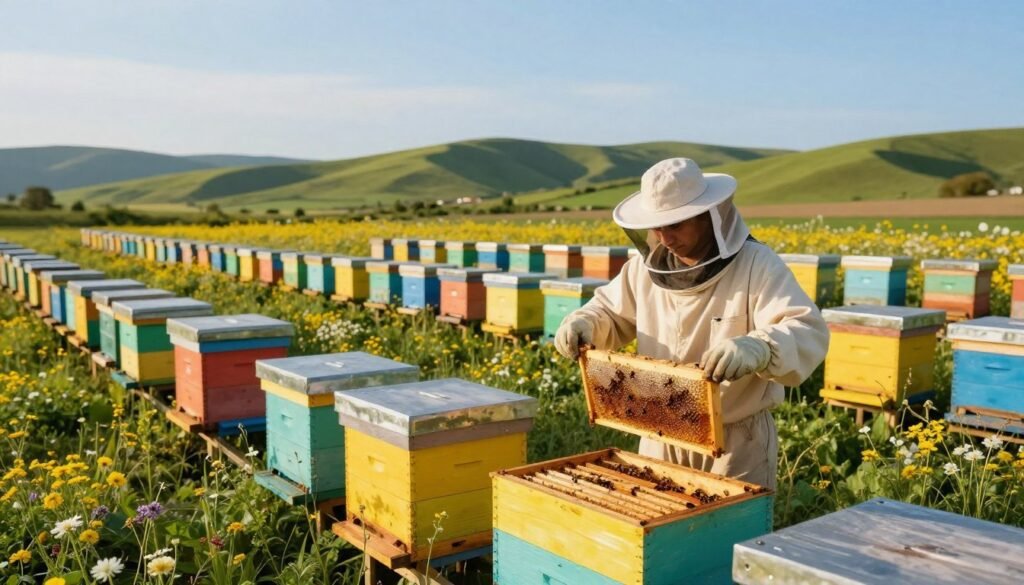
Smart scaling focuses on maximizing what each colony produces while opening new markets. Growth is more than adding hives; it means improving production, cutting unnecessary cost, and planning staff time.
Diversifying Income Streams
Diversification stabilizes income across seasons. Add wax and royal jelly alongside honey to meet niche demand and lift average prices.
Think beyond jars: sell beeswax candles, propolis tinctures, and mated queen stock. Each product brings different margins and market windows.
- Optimize frames and queen quality so each bee colony reaches its production potential.
- Factor equipment cost and labor when increasing hive numbers.
- Monitor local markets and prices so products stay competitive.
- Bundle items—wax with honey or queen sales—so income is steadier year-round.
Practical step: track product costs and set price points that reflect quality and uniqueness. For deeper financial context, review a short guide on beekeeping economics.
“Every product sold, from honey to queen bees, contributes to long-term operational growth.”
Conclusion
strong, Protecting colony health while tracking costs and outcomes turns seasonal work into dependable income. Keep simple records, monitor hive activity, and make small improvements each season.
Focus first on bee health. Use clear logs and basic sensors so data guides your choices. Diversify products and services to smooth income and reduce risk.
Consistent management and steady attention create long-term growth. With neat books, smart decisions, and durable care, hobbyists can scale toward a professional, resilient operation that rewards effort and skill.
FAQ
What key metrics show whether an apiary is financially viable?
Look at net income after expenses, revenue per hive, yield in pounds of honey per colony, labor hours, and cost per pound. Track losses from winter die-off and disease, price realized for honey and value-added products like beeswax or royal jelly, and income from pollination contracts. Use simple spreadsheets to compare seasons and spot trends.
What are typical startup expenses for a small beekeeping operation?
Initial costs usually include hives and frames, protective equipment, smokers, extraction gear, bee packages or nucs, queens, foundation, and transport. Expect to budget for quality hives, a queen per colony, and basic extraction tools; prices vary by brand and region. Plan for contingency funds for replacements and legal requirements like registration.
How should a hobbyist compare costs with a commercial beekeeper?
Hobbyists often spend more per hive because they buy smaller quantities and focus on quality. Commercial operators gain economies of scale in equipment and bulk feed, and may hire seasonal labor. Compare per-hive fixed costs, variable expenses like feed and treatments, and the expected revenue streams for a realistic picture.
What annual operating expenses must be tracked carefully?
Monitor feed, mite treatments, queen replacements, equipment maintenance, extraction and bottling supplies, fuel, insurance, licensing, and labor. Seasonal spikes occur for winter feeding and spring buildup. Recording receipts and time spent helps calculate true cost per hive and per pound of product.
How can I increase honey yield without compromising bee health?
Improve forage access, maintain strong genetics with productive queens, manage pests like Varroa mites, and time splits and supering correctly. Avoid over-harvesting and ensure colonies have enough stores going into winter. Strategic placement near diverse floral sources raises pound-per-hive yields.
What pricing strategies work best for selling honey?
Price by quality and format: raw, creamed, comb honey, and retail jars command higher rates. Research local markets—farmers markets, health food stores, and online sales—and use tiered pricing for bulk vs. retail. Highlight labelling, origin, and certifications to justify premium pricing.
How important is quality control for honey and other products?
Very important. Proper extraction, filtration level, moisture testing, and contamination avoidance preserve flavor and shelf life. Wax, propolis, and royal jelly require specific handling and storage. Good quality reduces returns, improves brand reputation, and supports higher prices.
What additional products can boost revenue beyond honey?
Diversify with beeswax, pollen, propolis, royal jelly, nucs, queens, and pollination services. Value-added items like infused honeys, cosmetics, and candles increase margins. Each product has distinct production costs and market channels, so track margins separately.
How do pollination contracts affect overall returns?
Pollination services can provide steady income, often at premium rates during peak crop seasons. Contracts need clear terms on hive density, duration, payment, and liability. Weigh travel, labor, and increased disease risk against the contracted fees to assess net benefit.
Is selling bees and queens profitable compared with honey sales?
Selling nucs and queens can be highly profitable, especially in spring when demand is high. Profit depends on genetics, survival rates, and labor for rearing. It complements honey income and can smooth cash flow, but requires breeding skills and biosecurity measures.
What measures reduce colony losses and protect income?
Implement integrated pest management for Varroa, monitor for Nosema and American foulbrood, maintain hygienic stock, provide adequate winter stores, and minimize stress during moves. Regular inspections and timely interventions keep survival rates higher and reduce replacement costs.
How do winter survival rates impact annual financial planning?
High winter losses raise costs through replacement queens, nucs, and lost production next spring. Forecast realistic survival rates in budgets and set aside emergency funds. Good winter prep—feeding, ventilation, and insulation—improves survivorship and stabilizes returns.
What technologies offer the best return on investment for beekeepers?
Hive scales, remote sensors for temperature and humidity, and digital recordkeeping reduce labor and improve decision-making. Extraction equipment that increases throughput can lower per-pound costs. Choose tech that addresses specific pain points and monitor impact on yields and time saved.
When is it wise to scale up an operation?
Scale gradually after proving consistent returns and effective management at current size. Ensure you have markets for increased production, adequate labor, reliable suppliers, and systems for disease control. Diversify income streams before rapid expansion to reduce risk.
Which local markets typically pay the highest prices for specialty bee products?
Farmers markets, upscale grocers, natural food stores, and online niche marketplaces pay higher rates for raw, single-origin, or certified organic honey. Artisan and cosmetic manufacturers also pay premiums for clean beeswax and propolis. Build relationships and strong branding for top prices.
How should production losses be factored into profit calculations?
Count average losses from past seasons into yield estimates, and include replacement costs in operating expenses. Use conservative revenue projections that incorporate typical swarm and disease losses. Tracking loss causes helps plan targeted mitigation and budget adjustments.
What role does queen quality play in financial outcomes?
Strong, productive queens improve colony vigor, honey yield, and overwintering success. Investing in proven breeder queens or reputable sources like Cox’s or Mann Lake can raise per-hive returns. Replace failing queens promptly to avoid prolonged productivity drops.
How can beekeepers control variable costs without sacrificing quality?
Buy supplies in bulk, negotiate with vendors like Dadant or Betterbee, optimize routes to save fuel, and train helpers to reduce hired labor. Prioritize spending on items with clear ROI—healthy stock and reliable extraction gear—while cutting wasteful expenses.
What records should be kept for accurate financial analysis?
Maintain records of hive locations, yields in pounds per colony, input costs (feed, treatments, equipment), labor hours, sales by product and price, losses, and contract terms. Consistent recordkeeping enables per-hive and per-product profit calculations and better decisions.
How does seasonal demand affect cash flow and pricing?
Demand peaks in late summer and around holidays. Plan inventory and marketing to capture higher seasonal prices, and use off-season sales channels for steady income. Forecast cash flow needs for winter feeding and spring buildup when revenue is lower.