Clear documentation keeps earnings steady during peak almond season. Almond work commands the highest per-hive rates, typically $185–$220 per hive. That premium makes accurate billing essential.
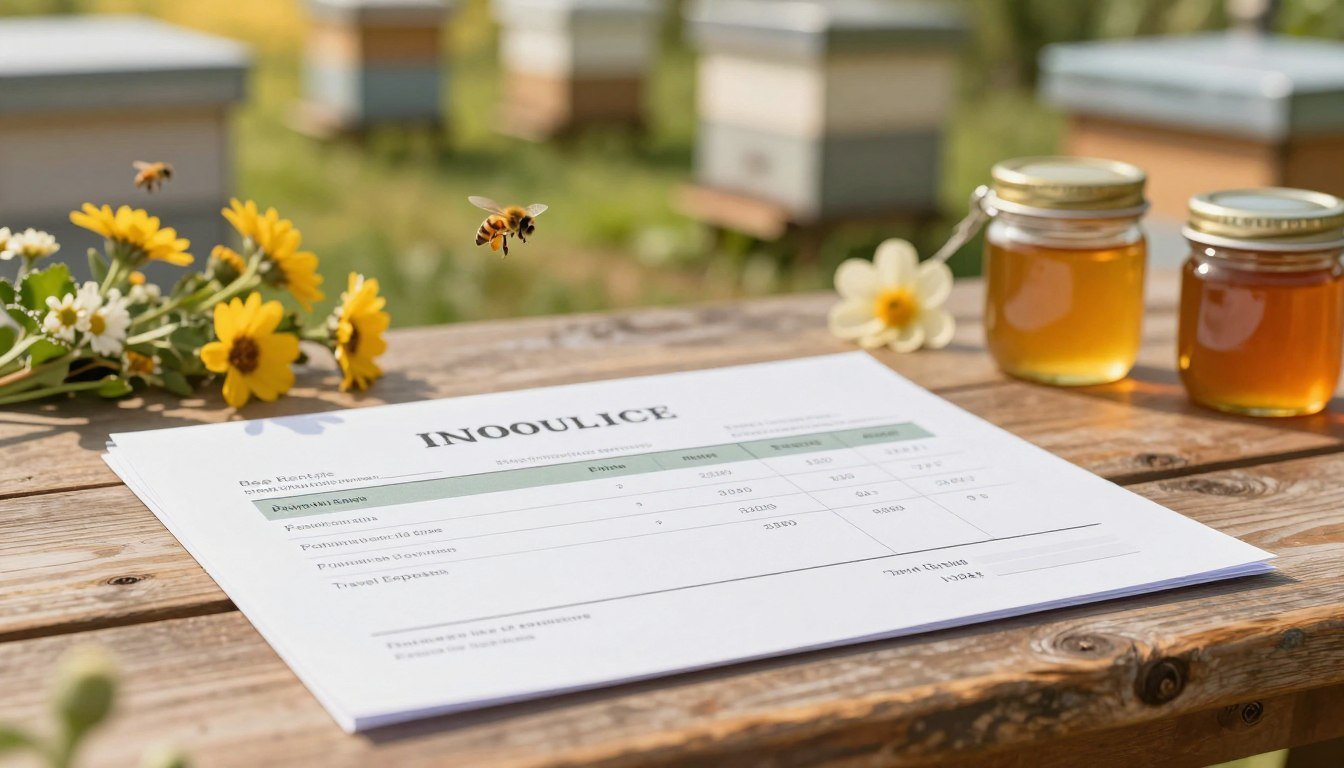
More than 70% of payment disputes start with informal or handwritten records. A formal pollination invoice that lists the hive count and delivery dates protects your payment terms and your reputation.
Use a consistent format that shows the per-hive rate, the contract terms, and the grower name. This reduces confusion during busy moves and speeds up payment.
For guidance on renting and coordinating colonies, see this short guide on renting bees for pollination. Standardized records turn claims into clear facts and keep your business professional.
Key Takeaways
- List hive count and delivery dates on every document.
- State the per-hive rate and contract terms clearly.
- Use formal, typed records to avoid 70% of disputes.
- Document grower details and proof of delivery.
- Standard forms speed payment and reduce confusion.
Why Generic Invoices Fail Pollination Beekeepers
Generic billing templates often leave out the fields that matter in commercial pollination. They rarely capture GPS delivery points or documented hive strength, and that missing data drives disputes. Research shows informal or handwritten forms play a role in over 70% of payment problems in the industry.
When a grower questions counts or colony health, a basic form gives them room to delay a late payment. A solid, professional pollination invoice ties your delivery records to the contract and reduces negotiation time.
- Missing GPS or timestamps makes verification hard.
- No hive strength field weakens claims about colony quality.
- Loose contract terms invite payment holds and disputes.
Use a tailored template that records delivery locations, documented strength, and agreed terms. That step turns a simple bill into a legal record and speeds payment from the grower.
For a ready guide to building compliant paperwork, see pollination service invoicing.
Essential Pollination Service Invoice Items for Beekeepers
A tight, consistent billing layout lets accounting teams process claims faster. Start each document with clear contact details so the grower’s AP department knows who to reach. Include your full legal business name, postal address, and apiary registration number in the header.
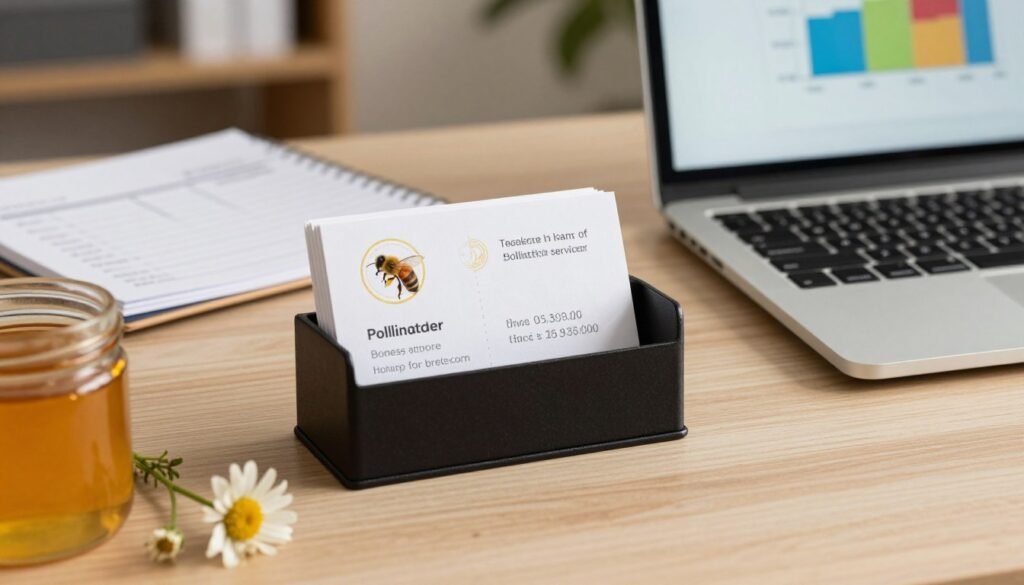
Business and Contact Information
Show a unique invoice number and the delivery date near the top. Add a primary phone and email. That small step prevents delays when questions arise.
List payment terms and the payment due or due date clearly. Note the contract number tied to the project so accounting can link the bill to purchase orders.
Grower and Site Details
Record the grower name, grower information, orchard address, and GPS coordinates. Add a reference delivery number that matches the signed agreement.
Include contracted hive count, delivered hive count, and documented colony strength. These fields show how the total amount is calculated and cut down on disputes.
| Field | What to Include | Why it Matters | Sample Entry |
|---|---|---|---|
| Business name | Full legal name, address, apiary reg. # | Identifies payer and seller | Sun Valley Apiaries LLC, 123 Farm Rd, CA • API-98765 |
| Invoice & delivery | Invoice number, delivery date, reference delivery # | Links bill to service and proof of delivery | INV-2026-045 • 03/15/2026 • REF-22 |
| Counts & strength | Contracted vs delivered hive count; colony strength | Ensures accurate total amount | Contract 200 / Delivered 198 • Strong |
| Grower & site | Grower name, contract #, orchard GPS | Required for processing and verification | Green Orchard Co. • CN-334 • 37.1234,-121.5678 |
When you standardize these fields on every invoice you create a durable record of the project and its terms. For deeper valuation guidance, see the analysis of the relative value of hives.
Structuring Your Rate and Payment Terms
Build your per-hive rate around real logistics costs, not past habit. Account for diesel and labor so your margins remain stable during peak moves.
Diesel in California often runs between $4.50 and $5.50 per gallon. That range can add hundreds to a single delivery run.
Be explicit on the document: list transport fees, hours, and the hive count tied to each delivery. Clear line items reduce questions from the grower and speed payment.
Handling Fuel Costs and Logistics
- Negotiate a 14-day net on the second half of pollination contracts to improve cash flow.
- Include a 1.5% per month late payment fee to discourage delayed remittance.
- Break out logistics charges so the delivery math is visible and verifiable.
Tip: Reference contract terms directly on the document so accounting links the charge to the original agreement.
| Charge | What to show | Why it helps | Sample |
|---|---|---|---|
| Per-hive rate | Base rate + transport markup | Explains total and defends pricing | $200 + $12 transport |
| Fuel adjustment | Per-mile or per-gallon surcharge | Covers volatility in diesel costs | $0.25/mile • CA diesel $4.50–$5.50/gal |
| Payment terms | Due dates, 14-day net on second half | Improves cash flow and planning | 50% on arrival • balance net 14 |
| Late fee | 1.5% per month, terms late defined | Reduces late payment risk | 1.5% per month after due date |
For contract planning and bill-ready templates, see an annual planning guide at annual pollination contract planning and a practical earnings overview at beekeeping as a side income.
Documenting Hive Strength and Delivery Data
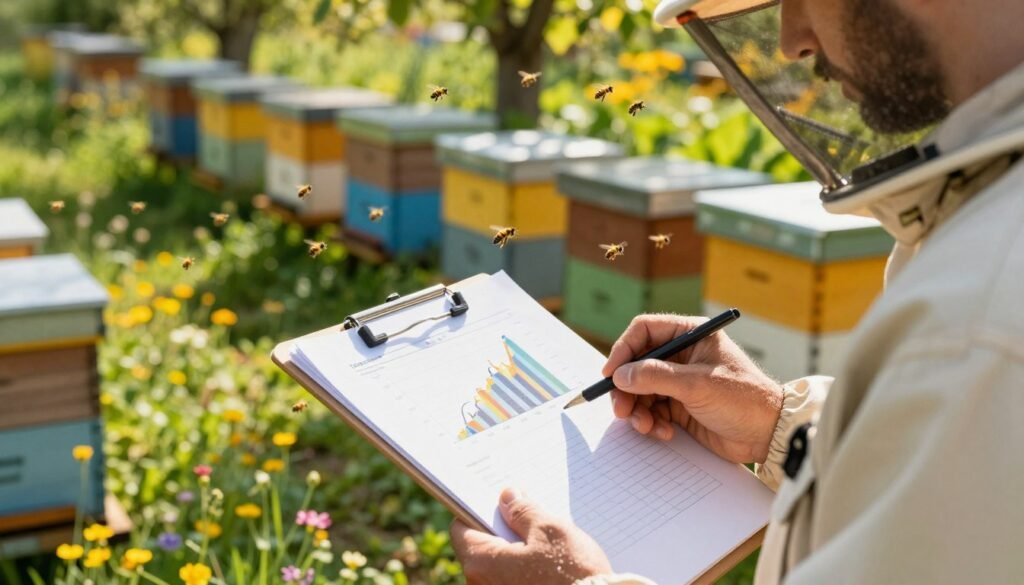
Accurate delivery records protect your claim to full payment. Record the exact hive count, the business name at the orchard, and the delivery date on every document. These items form the baseline of a verifiable record.
Verifying Hive Counts
Count hives at drop-off and note any shortfalls. Use a consistent invoice number and a reference delivery entry so accounting can link the document to the contract and approve the total amount quickly.
Recording GPS Timestamps
GPS timestamps act as evidence. Log coordinates and time at each stop. That timestamp is often the deciding factor in payment disputes and proves the delivery date.
Documenting Colony Health
Record colony strength, such as 8 frames versus 6 frames. A premium colony often commands an extra $15–$25 per hive, so list that in the per-hive rate line and note the colony strength on the record.
| Field | What to record | Why it matters |
|---|---|---|
| Hive count | Contracted vs delivered number | Supports the total amount calculation |
| Delivery date & GPS | Timestamp and coordinates | Provides verifiable proof of delivery |
| Colony strength | Frames of bees (e.g., 8 frames) | Justifies premiums and per-hive rate |
| Business name | Orchard/ grower legal name | Allows grower approval and processing |
For a ready template that includes these fields, see the pollination invoice template.
Step by Step Guide to Building Your Template
Begin with a clear header: list your legal business name, contact information, and a unique invoice number that ties each transaction to a contract.
Next, add dedicated fields for hive count, delivery date, and pickup date. These entries track the full duration of the pollination engagement and make each record verifiable.
Include explicit payment terms and cite the original contract terms so the grower understands obligations and the consequence of any late payment.
Document colony strength and list the per-hive rate on the same line as the colony note. That lets the grower verify the total and speeds approval.
Finish with consistent grower information and a brief description of services. A repeatable format creates a professional record and simplifies accounts. When you are ready to get started, review guidance on creating a sustainable apiary plan.
Managing Accounts Receivable and Late Payments
A firm receivables plan protects cash flow after each orchard delivery. State the payment terms and the exact due date on every invoice so there is no ambiguity about when a payment is expected.

Apply a standard 1.5% per month late fee to any balance that passes the agreed payment due date. That 1.5 per month charge is common and deters delayed remittance.
Escalation Strategies for Overdue Balances
Begin with automated reminders at number-based intervals: at due date, seven days late, and 14 days late. If the grower still misses the 14-day net or 30-day window, send a formal notice that references the contract terms.
Keep records of hive count and delivery status to resolve any payment disputes quickly. These documents support your claim and speed approvals from grower accounting.
“Start simple: automated reminders, formal letters, then mediation if needed.”
If late payments persist past 30 days, escalate to formal mediation under the contract terms. Maintain one thread of communication and cite the original contract when you request resolution.
For a guide that ties contract language to collections, see pollination contract invoicing.
Automating Your Invoicing Workflow
When delivery data flows straight from the truck to your accounting system, cash flow improves fast.
Modern platforms pull verified hive counts and GPS timestamps from field devices and populate each pollination invoice automatically. That removes manual entry errors and creates a clear, auditable record tied to the project.
Send growers a professional billing notice immediately after delivery. Instant sending reduces late payments and speeds payment on the stated payment terms.
Use a digital project tool to track every contract and delivery. This ensures hive counts, delivery timestamps, and contract terms remain linked, so accounting teams approve payments faster.
| Feature | Benefit | Sample output |
|---|---|---|
| GPS timestamps | Verifiable proof of delivery | Delivery 04/12 • 37.1234,-121.5678 |
| Verified hive counts | Accurate totals and fewer disputes | Delivered 198 • strong colony |
| Auto-send billing | Improved cash flow and fewer late payments | Invoice sent on delivery • payment due 14 days |
| Project tracking | Links contract to payment status | Project CN-334 • invoice INV-2026-045 |
Tip: For integrated payment and account tools tailored to apiaries, see digital payments for apiaries. For guidance on solid record keeping, visit the beekeeping record keeping guide.
Conclusion
Strong, consistent records are the best protection for your work. Well-organized delivery records protect your earnings and simplify accounting. They turn each hive movement into verifiable information that ties back to the contract and grower name.
Implementing a professional pollination approach ensures accurate payment and fewer disputes. Document every delivery and hive count, note colony strength, and state clear payment terms. This work builds trust and makes approvals faster.
Get started by reviewing current contract terms and updating your invoice template. Clear communication about terms and colony quality will grow stronger relationships and steady payments for the services you provide to agriculture.
FAQ
What core details should appear on a pollination billing template?
Include your business name, mailing and contact information, the grower’s full details and site location, invoice number, delivery date, pickup date, hive count and per‑hive rate, total amount due, payment due date, and clear payment terms such as “Net 14.” Add reference delivery notes and any contract or project ID to link the record to an existing agreement.
How do I show hive strength and colony health on each record?
Use short, consistent fields: colony strength (frames of bees), queen status, disease or mite notes, and an overall grade (A/B/C). Record GPS timestamps and the verifier’s name at delivery so growers can cross‑check counts and condition on file.
What billing models work best: per‑hive rate or flat project fees?
Per‑hive rates suit commercial moves where hive count varies; flat fees work for fixed projects or guaranteed placements. Consider hybrid options: a base project fee plus a per‑hive line for added colonies or exceptional handling.
How should fuel and logistics be presented on a bill?
Show fuel or transport as a separate line with a short explanation (e.g., long‑haul surcharge, seasonal fuel adjustment). If you apply a 1.5 per‑month handling or staging fee, list it clearly and tie it to the delivery dates.
What payment terms reduce late payments and protect cash flow?
Set clear terms such as Net 14, state late payment penalties (e.g., 1.5% monthly), and require a deposit for large moves. Offer multiple payment methods and send invoices promptly on delivery to accelerate payment cycles.
How do I escalate overdue balances without damaging grower relationships?
Start with polite reminders at 7 days past due, follow with a formal notice at 30 days, and propose a payment plan before initiating collections at 60+ days. Keep communications factual, attach delivery records, and reference the signed contract terms.
What documentation helps resolve payment disputes quickly?
Attach delivery acknowledgments, GPS‑stamped photos, hive strength forms, and the pollination contract. Include the grower’s signed acceptance or email confirmation and any prior correspondence about adjustments or damages.
Can I automate recurring billing and what should I automate?
Yes. Automate recurring invoices for multi‑month placements, reminders for upcoming and overdue payments, and reconciliation of received payments. Integrate accounting software with your record system so hive counts and delivery confirmations populate invoices.
How often should I send invoices during a multi‑month project?
Send invoices every billing cycle you agreed on—commonly monthly or Net 14. For long contracts, monthly statements help maintain cash flow and make it easier to track hive counts, adjustments, and any seasonal charges.
What contract terms protect me during pickup and return of colonies?
Specify delivery and pickup dates, acceptable hive strength at transfer, liability for losses, force majeure clauses, payment schedule, and dispute resolution steps. Include inspection windows and remediation steps if colony health falls below agreed levels.