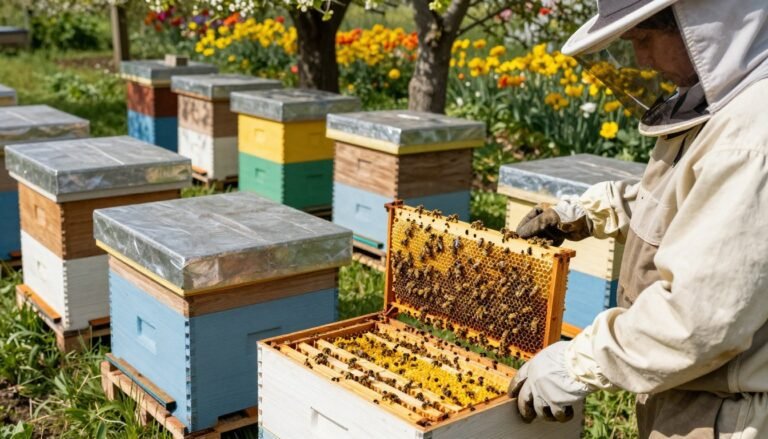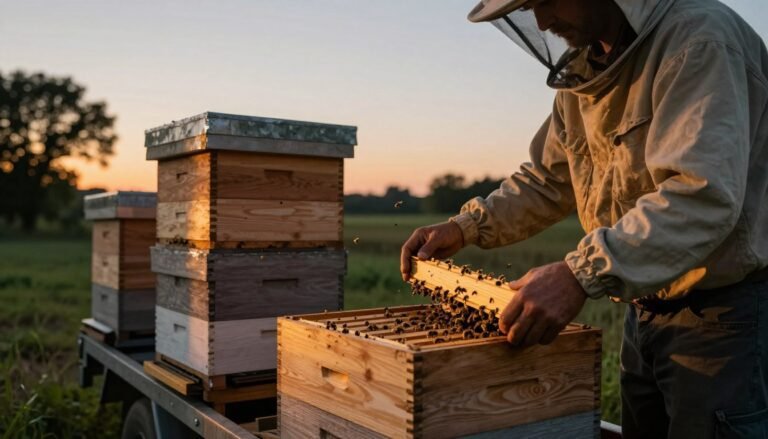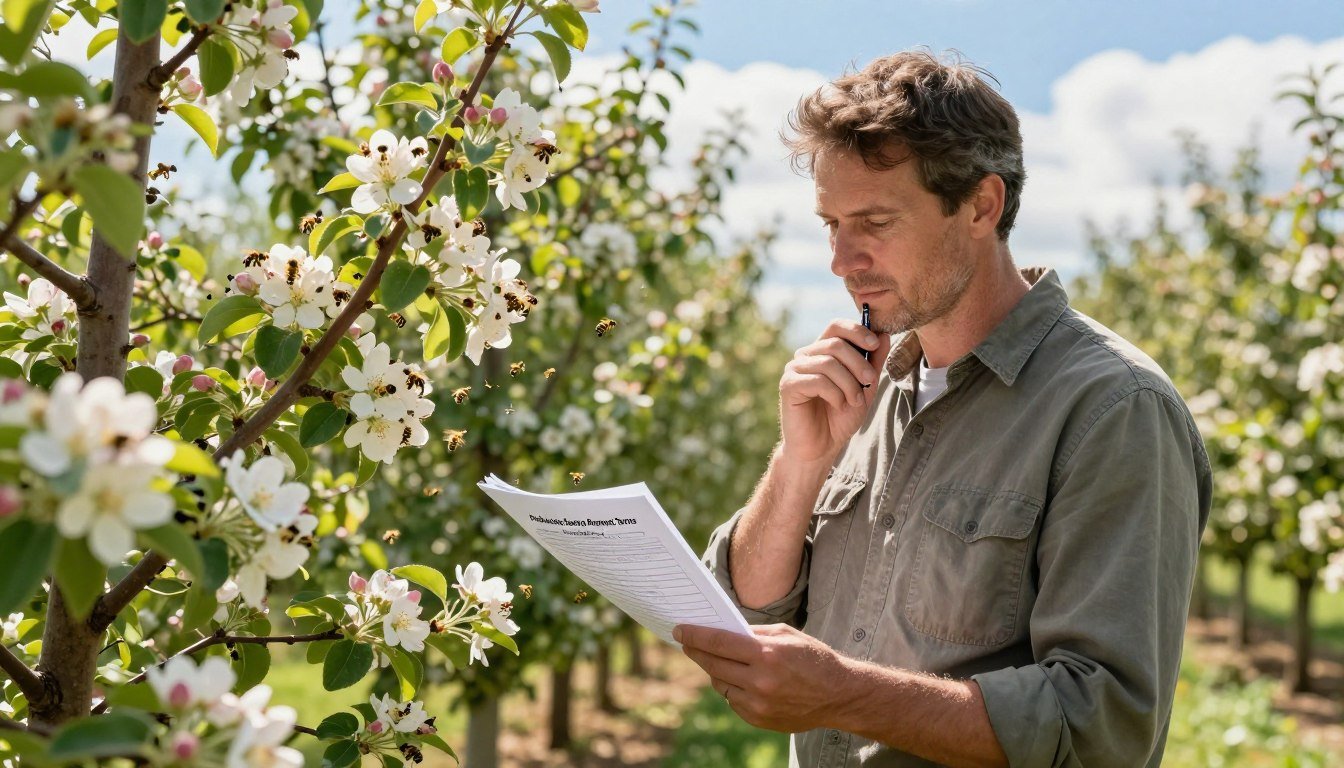
Managing contracts for almond bloom and other crops demands clarity. In 2018 the USDA reported that about 82% of U.S. honey bee colonies were placed in California for almond work. That scale makes the almond market the most structured global arena for these arrangements.
Research in the Journal of Apicultural Research outlines best management practices to protect both beekeepers and crop owners. Clear agreement language helps address interstate moves of honey bee colonies and risks like pesticide exposure.
Good contracts define delivery windows, number of hives, and liability for hive losses. This reduces disputes when demand spikes in the Pacific Northwest and California during bloom. For practical tips, see a short guide on renting bees and related agreements.
Key Takeaways
- California almond demand uses a large share of U.S. colonies; clear terms matter.
- Formal agreements follow best management practices and lower risk.
- Specify hive numbers, delivery time, and responsibilities for pesticide exposure.
- Interstate movement of honey bees creates logistical and legal needs.
- Use sample contract language to standardize expectations and protect both parties.
Understanding Pollination Service Payment Terms for Growers
Almond bloom creates one of the highest seasonal demands for managed honey bee colonies in the U.S.
With over one million productive acres of almonds as of 2018, California required about 2 million colonies to meet crop needs. That scale depends on out-of-state shipments, which rose 64% from 2008 to 2018.
Beekeepers often prepare colonies in early winter to restore populations before spring bloom. Shipping eastern hives can add roughly 25% to the total pollination fee, so logistics and timing matter when negotiating an agreement.
Clear contracts should spell out the number of hives, expected colony strength, and responsibility for losses. These elements reduce disputes and align expectations between a beekeeper and the orchard owner.
“Early coordination and transparent contract language save costs and protect colonies.”
For a practical overview of contracting issues and market evolution, see this contracting overview.
The Role of Pollination Brokers in Financial Transactions
Independent intermediaries handle complex billing and scheduling when many colonies must converge on a single crop. Brokers play a financial and logistical role that eases transactions between large farms and beekeepers.
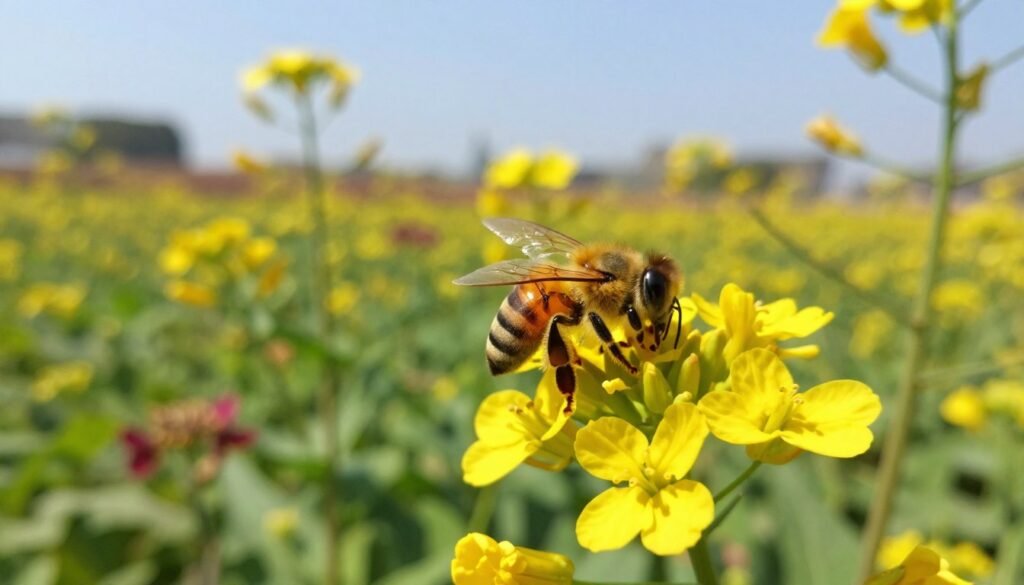
In practice, fees generally range from $2 to $20 per contracted colony. That fee compensates the broker for vetting beekeepers, managing contracts, and guaranteeing timely collection of funds.
Benefits of Intermediaries
Brokers reduce risk by assuring beekeepers get paid even if a grower delays. In 2015, about 53% of almond producers rented colonies directly, while others relied on brokers to coordinate dozens of honey bees operations.
- They consolidate the number of beekeepers needed for large orders.
- They include sample contract clauses to protect both parties.
- The Almond Board of California lists over 40 brokers to help match growers and beekeepers.
For beekeepers exploring supplemental income paths and contracting options, see a short guide on beekeeping as a side income.
Establishing Formal Versus Informal Agreements
Deciding between a written contract and a handshake often depends on operation size and history.
A 2015 survey of 114 almond producers found 43% used formal written contracts while 42% relied on oral handshake deals. Relational contracts remain common because long-term trust can simplify arrangements.
Still, larger farms tend to favor formal agreements. Written documents correlate with higher yields and more years of experience in almond production. A clear agreement reduces disputes during bloom and clarifies the number of colonies, timing, and responsibilities.
| Approach | Typical Scale | Key Benefit | Common Risk |
|---|---|---|---|
| Formal written contract | Large operations | Legal protection | Requires negotiation |
| Informal handshake | Small to medium | Faster setup | Risk if relationship ends |
| Relational contract | Long-term partners | Flexibility and trust | Less formal record |
“Even in long partnerships, a written contract gives both parties a clear record to avoid disputes.”
Practical tip: For any number of bees or colonies, document key dates and crop responsibilities. That simple step protects both beekeepers and growers and supports consistent honey returns.
Key Components of a Standard Pollination Contract
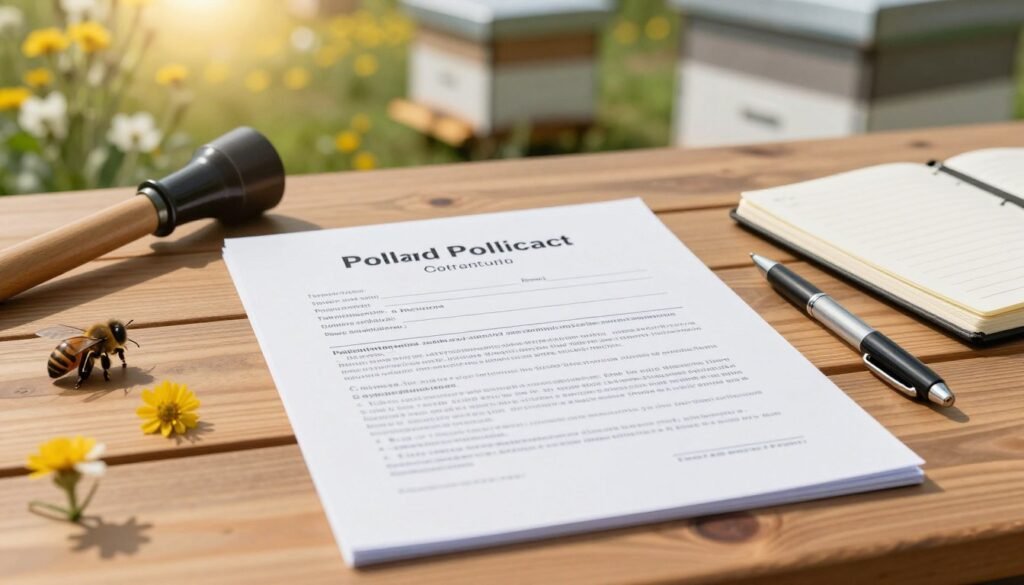
A clear contract lists who to contact and where to send notices during the busy spring bloom. Start by recording the full legal name, physical address, and mailing address of both the beekeeper and the grower. This reduces miscommunication when timing matters.
Contact Information
Include primary phone numbers, an email address, and an emergency contact. Add a witness clause if required by local sample agreements in the Pacific Northwest.
Deployment Logistics
Define notice periods and movement rules. A common standard is a 48-hour notice for placing hives once bloom reaches the target percentage. State who provides transport and how hive shifts are handled.
Duration of Service
Spell out the start and end dates and a maximum time a hive may remain on the crop. Describe colony strength by required frames covered with adult bees and the expected brood amount. These metrics clarify expectations and protect both parties.
“Using a clear sample contract saves time and reduces disputes during the peak season.”
- Contact details for both parties and a witness clause.
- 48-hour placement notice and movement protocol.
- Colony strength defined by frames and brood.
- Specified start/end dates and maximum deployment period.
Defining Colony Strength and Quality Standards
Clear metrics remove subjective debate about hive readiness. Define an “active” frame as bees covering at least 75% of both sides or roughly four bees per square inch. Use frames and presence of healthy brood as the core measures in any agreement.
Inspection Protocols
Inspections commonly sample 10% to 25% of delivered hives. This gives an estimate of the overall population without dissecting every unit.
Many growers hire third-party inspectors at about $1.50 to $2.00 per hive. These checks verify that the beekeeper met the contract requirements and help avoid disputes.
- Define pass/fail standards: frames covered and healthy brood levels.
- Sampling rule: inspect 10%–25% of hives to estimate average strength.
- Cost clarity: state who pays third-party fees in the agreement.
- Premiums: note that high-strength colonies can earn a 5.7%–8.6% market premium in poor weather.
Evaluating honey bee colony strength is well documented in the Journal of Apicultural Research. Use a standard checklist and, when needed, the Oregon State guide on evaluating honey bee colonies to set consistent inspection protocols.
Managing Payment Schedules and Late Fees
A practical payment schedule protects the beekeeper’s cash flow during peak season.
Every pollination contract should state the price per hive and the exact due date for the total amount. List the number of hives and their location on the property so the payment matches services rendered.
Include a clear late-fee clause that triggers if the grower misses the due date. This clause shields beekeepers from financial uncertainty and encourages timely settlement after the crop period ends.
Define extra compensation if the grower requests additional movement of colonies after placement. State a per-hive fee and who covers transport or labor costs for extra shifts.
- Price per hive and final due date.
- Late-fee percentage or flat fee and grace period.
- Charge schedule for any post-placement hive moves.
- An arbitration clause to resolve disputes efficiently.
“Clear financial clauses prevent most disputes and keep both sides focused on a healthy crop.”
For a sample framework and more legal guidance, see this pollination contract payment guidance.

Liability and Risk Mitigation for Growers
Assigning clear responsibility for hive losses reduces disputes during bloom season. A contract must state who bears risk for damage, theft, or loss of colonies and equipment while hives sit on the land.
The agreement should grant the beekeeper and any necessary vehicles unobstructed access to perform maintenance and inspection during the deployment period. Clear access prevents delayed care that can weaken colonies or lower honey yields.
Property Access
Spell out gate codes, parking areas, and hours when work may occur. Include an emergency contact and a procedure for after-hours access so a beekeeper can respond quickly to hive issues.
Theft and Vandalism
Security measures help protect hives. Require visible signage, locked apiary gates when practical, and agreed camera or patrol plans when theft risk is high.
- Grower liability: state that the grower assumes responsibility for theft, vandalism, or physical damage while hives are on the property.
- Access rights: allow the beekeeper full entry to care for colonies and inspect frames as needed.
- Stinging incidents: assign liability for injuries on the property to the grower and document on-site safety protocols.
- Pesticide notice: require advance written warning of any chemical applications to reduce pesticide exposure risks to the bee colonies.
“Clear, specific clauses on access, security, and pesticide notice protect both parties and support a healthy crop.”
Addressing these points in a written agreement brings clarity and helps maintain a productive, long-term relationship. For community-level support that can boost local apiary resilience, see how community gardens can support apiaries.
Protecting Bee Colonies from Pesticide Exposure
When sprays are necessary, advance notification and buffering keep colonies safe.
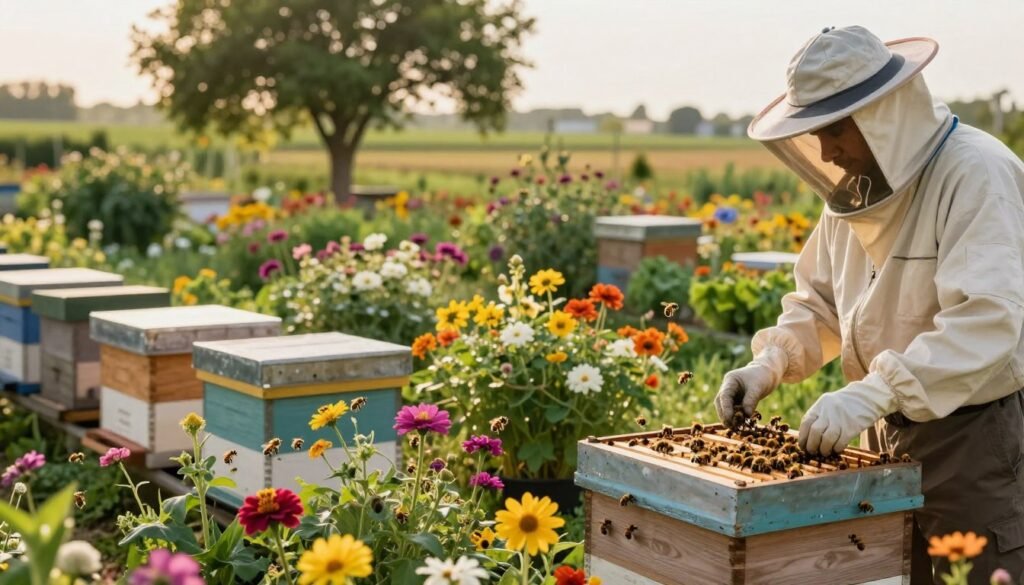
The contract must require the grower to notify the beekeeper before any pesticide use on the crop or nearby fields. Timely notice lets the beekeeper move hives, cover entrances, or delay activities to reduce risk.
If no notice is given, the grower accepts liability for damage from drift or equipment malfunction. Many agreements set a specific trigger—such as a 50% loss of adult bees—that starts a compensation payment to the beekeeper.
Providing clean, uncontaminated water near hive sites is a simple, effective obligation of the grower. A nearby source reduces foraging on polluted puddles and helps colonies recover from minor exposures.
Best practices include avoiding sprays during bloom and calibrating equipment to limit drift. Clear rules in contracts protect the number and quality of colonies and make expectations enforceable.
“Advance notice and specific compensation thresholds keep beekeepers and growers aligned.”
For guidance on evolving contract language and managing chemical risks, see new contract strategies and a related review of colony collapse causes at colony collapse causes.
Best Practices for Long-Term Partnerships
Stable relationships between crop owners and beekeepers cut administrative time and help colony health. Nearly 80% of almond growers work with the same beekeeper for at least four seasons. That continuity saves time and reduces turnover.
Annual reviews are a core best management practice. Meet once a year to review the prior season, update the agreements, and set expectations about hive strength and site access. These talks keep both parties aligned on targets and risks.

Conflict Resolution
Include a clear dispute-resolution clause in every contract. Binding arbitration is common because it resolves issues faster and preserves the working relationship.
“Trust and clear communication are the foundations of successful, long-term pollination partnerships.”
| Practice | Why it matters | Suggested action |
|---|---|---|
| Annual meeting | Keeps expectations current | Schedule post-harvest review |
| Arbitration clause | Speeds dispute resolution | Add binding arbitration language |
| Shared info | Updates bee health and tech | Exchange sample reports and resources |
Provide additional information and sample resources so both sides stay updated. Research in the Journal of Apicultural Research shows that trust and clear communication lead to better outcomes for honey bee colonies and the growers who rely on them.
Conclusion
A short, specific pollination agreement gives both parties an actionable plan when timing matters.
Write clear agreements that spell out responsibilities, inspection rules, and compensation milestones. This helps protect colony health and keeps expectations aligned between a beekeeper and a grower.
Focus on measurable colony metrics, advance notices for sprays, and a simple dispute process. Those steps reduce risk and speed resolution if problems arise.
Prioritize bee welfare and long-term partnerships. Use this guidance to draft a robust contract that protects interests and supports resilient services in your operation.
FAQ
What are typical payment structures for pollination agreements?
Payment arrangements usually include flat fees per hive, per-acre rates, or seasonal retainers. Contracts often specify deposit amounts, billing milestones, and final settlement dates tied to delivery and verification of colony counts. Growers and beekeepers can agree on progressive payments aligned with crop stages to balance cash flow and risk.
How do brokers affect pricing and fees?
Brokers introduce brokerage fees that cover matchmaking and logistics coordination. They can increase transparency in the market and help growers find available colonies in peak demand. When using intermediaries, confirm if fees are one-time, percentage-based, or included in the quoted hive rate.
What advantages do intermediaries offer to both parties?
Intermediaries reduce search costs, simplify scheduling, and manage transport permits. They often verify colony health, arrange insurance options, and handle payment processing. Using a reputable broker can save time and lower the risk of late placements or mismatched expectations.
Should I use a formal written contract or a verbal agreement?
Always prefer a written agreement. Formal contracts create clear obligations on hive counts, arrival dates, fees, cancellation policies, and pesticide protections. Verbal deals increase the chance of disputes over scope, timing, and liabilities during the season.
What core elements must a standard pollination contract include?
A solid contract lists contact information for both parties, deployment logistics (delivery windows, site access, and parking), duration of placement, compensation details, and signatures. It should also define colony strength criteria, inspection rights, and procedures for replacements or penalties.
What contact details are essential in the agreement?
Include legal business names, primary and secondary phone numbers, email addresses, physical addresses for hive drop-off, and emergency contacts. Add insurance carrier information and the beekeeper’s registration number if applicable in your state.
How should deployment logistics be specified?
Specify precise delivery dates, time windows, on-site setup instructions, preferred hive orientation, spacing requirements, and staging areas for trucks. Include instructions for returning equipment and any property access codes or gate hours to avoid delays.
How long are colonies typically deployed for a crop?
Duration varies by crop and bloom length but commonly ranges from two to six weeks. Contracts should define start and end dates, extension options, and conditions for early removal due to crop failure or weather events.
What defines an acceptable colony strength?
Acceptable strength usually means a specified number of frames of bees and brood—for example, six to eight frames covered with bees. Some contracts reference Department of Agriculture or Journal of Apicultural Research standards. Use agreed inspection protocols to confirm strength before payment.
How are inspection protocols handled?
Inspections can be scheduled prior to placement and during bloom. Protocols state who inspects, what metrics are checked (frames of bees, brood, stores), and documentation required. Written inspection reports support invoicing and replacement claims.
What are common payment schedules and late fee practices?
Many contracts require a deposit at booking, a balance due on delivery, and final payment within 30 days. Late fees typically range from 1% to 1.5% per month. Define grace periods, acceptable payment methods, and remedies for nonpayment, such as withholding future placements.
How can growers limit financial risk related to hive losses?
Include insurance and liability clauses, require proof of beekeeper insurance, and specify responsibilities for theft or vandalism. Consider holdbacks until post-bloom verification and include terms for reimbursements if colony numbers fall below agreed levels.
What access rights should be written into the contract?
Grant beekeepers reasonable access for delivery, inspections, and removal. Define hours, gate codes, and contact persons. Clarify who is liable for damage to roads, fences, or irrigation equipment during hive placement.
Who is responsible if hives are stolen or vandalized on-site?
Contracts should allocate responsibility clearly. Often beekeepers retain ownership and risk, while growers agree to provide reasonable security and access. Specify notification timelines, replacement procedures, and any compensation for losses.
How do contracts address pesticide exposure and bee protection?
Include pesticide notification requirements, pre-bloom communication protocols, and mutually agreed buffer zones. Many agreements reference best management practices from state departments of agriculture and research on evaluating colony health after exposure. Specify mitigation steps and compensation if exposure causes colony losses.
What practices build long-term relationships between beekeepers and growers?
Maintain clear communication, honor payment timelines, schedule joint inspections, and share crop and pesticide plans early. Respecting hive care needs and accommodating timing changes fosters trust and repeat business.
How should conflicts be resolved under the contract?
Define an escalation ladder: first direct negotiation, then mediation, and finally binding arbitration or small-claims court. Choose a governing jurisdiction and include timelines for raising disputes to prevent prolonged interruptions to operations.