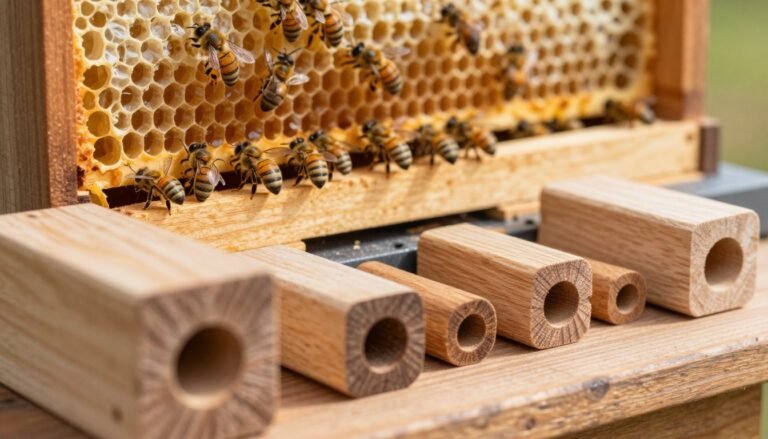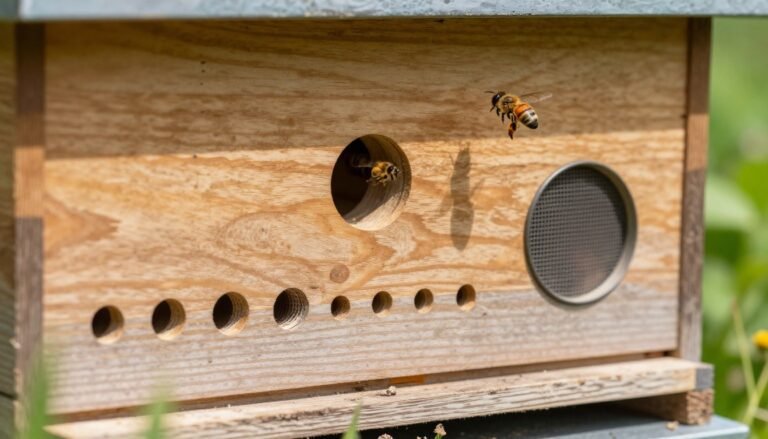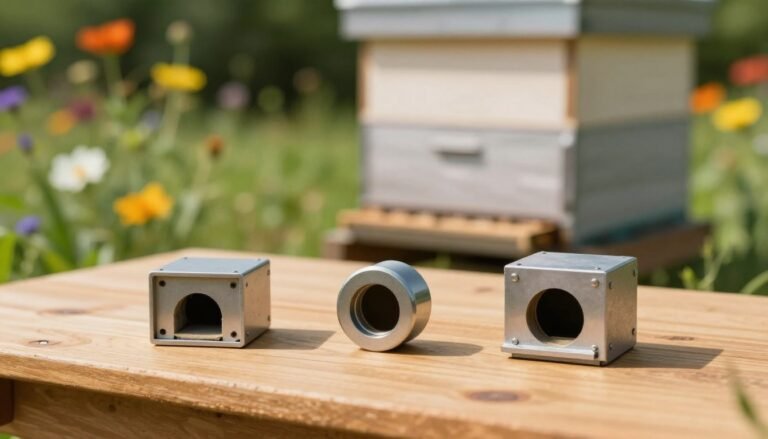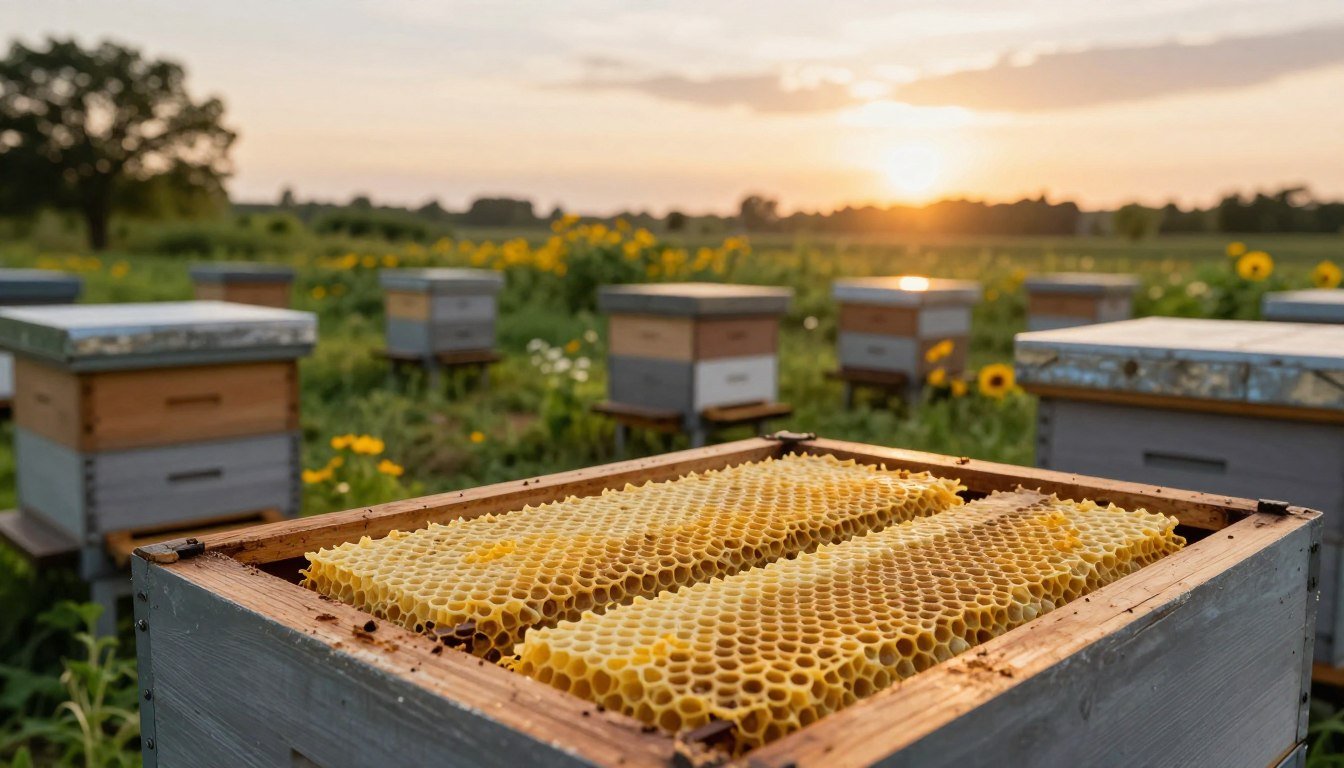
Successful beekeeping rests on a clear grasp of equipment and bee biology. Dr. Leo Sharashkin stresses that technical knowledge of hive gear and colony behavior is key to consistent results.
Horizontal hive design needs specific adaptations. A well-fitted screen helps beekeepers harvest valuable resin while keeping the colony calm and intact. Proper installation also aids pest control and internal climate management.
Understanding nuances in layout and materials prevents false conclusions about colony health. When the equipment matches the hive design, natural sanitizing actions by the bees work more effectively.
Practical use of a screen in a horizontal hive improves product collection without undue disturbance. Many experienced beekeepers report better colony stability and cleaner comb when they integrate the right gear.
Key Takeaways
- Technical knowledge of hive gear and bee biology is essential.
- A proper screen fits horizontal hives and supports resin harvesting.
- Correct installation improves pest control and internal climate.
- Matching equipment to design helps natural colony sanitization.
- Experienced beekeepers see better stability and cleaner comb.
Understanding the Role of Propolis in the Hive
Worker bees harvest tree resins to craft a protective substance that stabilizes the comb. This resinous material acts as both a cleaner and a sealant inside the nesting space.
Natural Sanitization
Dr. Leo Sharashkin notes that bees collect plant resins to produce this substance, which helps kill germs and limit pathogen spread. The material lines entrance points and small cavities to reduce microbial load.
Hive Reinforcement
The same resin gives structural support. Bees use it to firm up wax comb and to seal tiny gaps. That sealing blocks drafts, deters pests, and keeps brood chambers stable through changing weather.
- Resin collection is a deliberate behavior that supports colony survival.
- Applying the substance at entrances forms a protective envelope against external threats.
- Beekeepers often observe workers filling small gaps with this resin during routine inspections.
To learn practical ways to increase resin gathering, see this guide on encouraging production and this how-to resource.
Benefits of Using Propolis Screens for Top Bar Hives
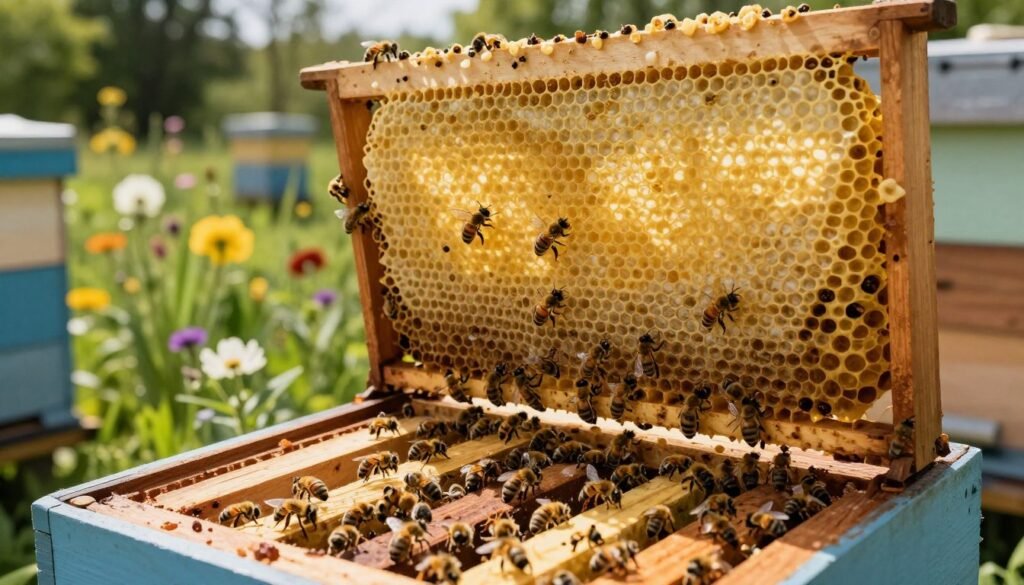
Adding a perforated collector lets beekeepers harvest high-grade resin with minimal disturbance.
It mimics the tiny gaps bees like to seal, so workers fill the holes during normal activity.
This method yields a clean product without scraping wax from comb or disrupting brood. A healthy colony can produce useful amounts of resin, which adds revenue and supports hive hygiene.
“Propolis is a highly valuable product that beekeepers can harvest easily by using a specialized collector screen.”
| Benefit | Colony Impact | Harvest Method | Ease |
|---|---|---|---|
| High-quality resin | Low disturbance | Remove frozen collector | Easy |
| Added income | No brood harm | Pull perforated panel | Moderate |
| Improved hygiene | Reduced pathogens | Regular rotation | Easy |
Many beekeepers report better stability when they install a dedicated collector. If you want guidance on tools that work well in active apiaries, see this best hive tool guide.
Selecting the Right Equipment for Your Apiary
Choosing the right collector shapes how smoothly your resin harvest will go. Start by matching the tool to your hive size so insertion is secure and removal is simple.
Choosing Between Plastic and Mesh
Food-grade, flexible plastic collectors with deep grooves often work best. They encourage bees to deposit material while letting you pull the panel without damaging comb or frames.
Some beekeepers try black mesh or rigid white plastic. Those options can need trimming to fit the internal dimensions of horizontal systems.
- Measure your hive before buying so the collector sits flush and does not stress the colony.
- Prefer flexible plastic with perforations or grooves; they are easier to fit and clean.
- Design matters: choose collectors that insert and remove quickly to limit disturbance during routine checks.
Good equipment selection protects colony health and improves the odds of a successful harvest. Pick tools designed for your layout and prioritize ease of use to keep honey production steady and colonies calm.
Preparing Your Hive for Propolis Collection
A well-timed setup and a strong population are the two main factors that drive successful resin harvests.
Dr. Leo Sharashkin advises that late summer into early fall is prime time. Warm days and cooler nights prompt workers to collect more material.
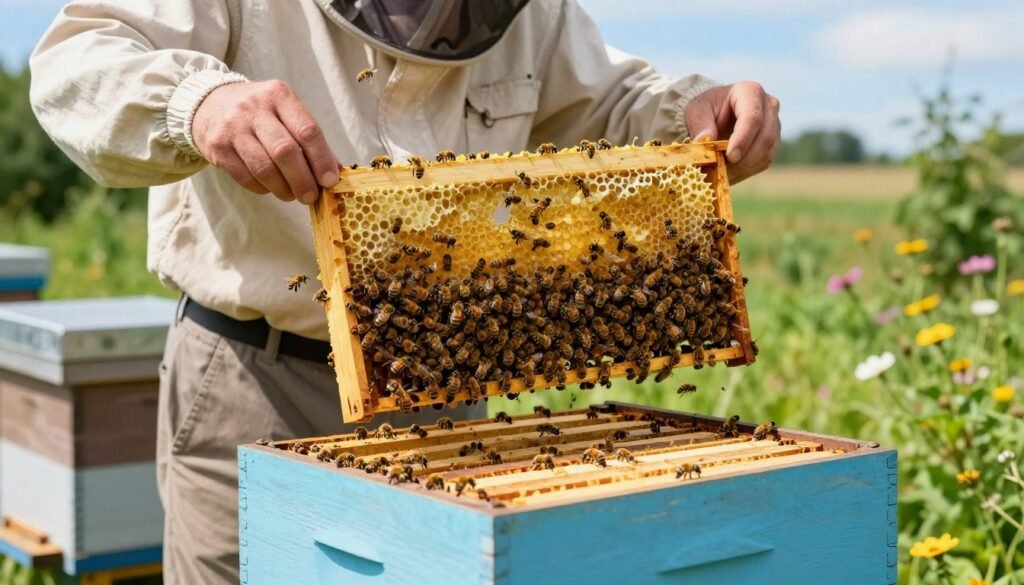
Make sure the colony is robust. A large, healthy colony will fill a collector quickly and reliably.
Install the collector when the nectar flow wanes so bees can shift effort toward collection. Avoid installing late in fall, since low temperatures harden resin and slow work.
Keep the area around the hive clean. Remove debris and trim grass to prevent obstructions at the entrance and to reduce pests that can interfere with your collector.
- Timing: late summer and early fall.
- Colony health: aim for strong, well-populated frames.
- Maintenance: clear entrance paths and clean the stand area.
“A strong colony and the right timing make collection predictable and low-stress.” — Dr. Leo Sharashkin
For tips on entrance adjustments that keep traffic smooth, see entrance reducer alternatives.
Installing Propolis Screens for Top Bar Hives
A simple vertical collector works well in a horizontal hive. Install it like a divider after the last frame so the deep grooves face the bees.
Vertical Divider Board Method
Leave a small gap at the bottom—about 3/8-inch—to let workers pass freely while still prompting them to fill the grooves.
To avoid trapping strays, cut 1/2-inch square holes in the bottom corners of the panel. This gives a safe exit and entry path.
Frame Attachment Method
Attach the collector to a frame with thumb tacks, grooves facing outward toward the bees. If end bars are tapered, trim the taper so the panel sits tight against the wood.
Check fit and finish to prevent gaps that invite comb bridging or extra wax work. Proper fit speeds filling and eases later removal.
“Install the collector vertically and allow several days for workers to fill the perforations.”
| Method | Key Setup | Access Points |
|---|---|---|
| Divider board | Vertical after last frame | 3/8″ gap or 1/2″ corner holes |
| Frame mount | Thumb tacks, grooves outward | Trim tapered end bars if needed |
| Maintenance | Inspect after several days | Clean edges before removal |
Optimizing Airflow to Increase Resin Production
A gentle draft through a collected panel is often the single biggest cue that prompts workers to seal gaps with resin. This movement of air, or draft, signals the colony to protect the interior and quickly encourages material deposition on the collector.
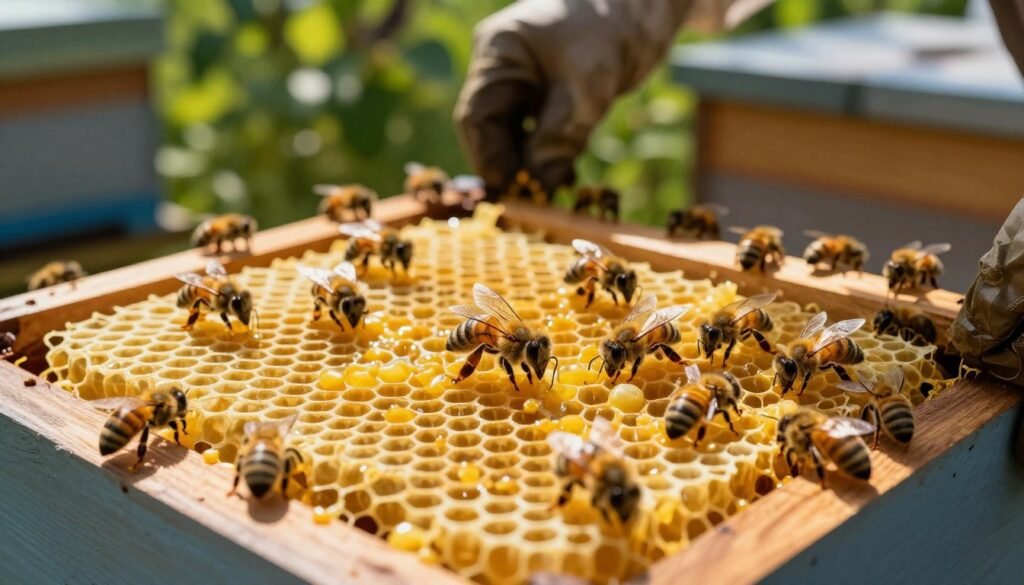
Practical steps: prop the hive cover slightly to create a controlled airflow. Do this for short periods and check often so pests do not exploit the opening.
In warm climates, cover the empty compartment with an insect screen to keep airflow high while blocking beetles and other invaders. This preserves security without losing the draft stimulus.
Place the collector at the edge of the brood nest. Workers at that boundary react most to drafts and will focus sealing there. Proper design that channels air toward this area raises daily collection rates through the summer.
“Creating a slight air draft through the collector is an effective way to stimulate increased resin production.”
- Dr. Leo Sharashkin notes that a mild draft speeds up filling.
- Use a screened vent or small cover lift where pests are common.
- Link timing and setup to the optimal time to add traps for best results.
Managing Small Hive Beetles During Collection
Extra cavities behind a collector may invite beetles, so preventive steps matter during collection. Take a cautious approach when adding any propolis collector to an active hive.
Choose strong, well-populated colonies. Vigorous colonies patrol and remove intruders. Weak colonies are at higher risk of infestation when extra equipment creates hiding spots.
Preventing Infestations
Inspect often. Check the side and points around the collector every few days. Look for beetles on the frame edges and clean or adjust the equipment if you spot activity.
- Do not store extracted honey frames in the empty compartment behind a collector; this attracts beetles.
- If beetles appear on the side of the panel, remove and clean the area immediately.
- Use an insect screen to cover the empty compartment when beetles are common; it blocks access while keeping airflow for collection.
“Every propolis collector creates potential hiding spots for small hive beetles, requiring the use of strong, healthy colonies.”
For details on identifying and managing beetles, see this small hive beetle resource.
Monitoring Progress and Rotating the Screen
A timely check and a simple flip can turn a patchy collector into a full harvest.
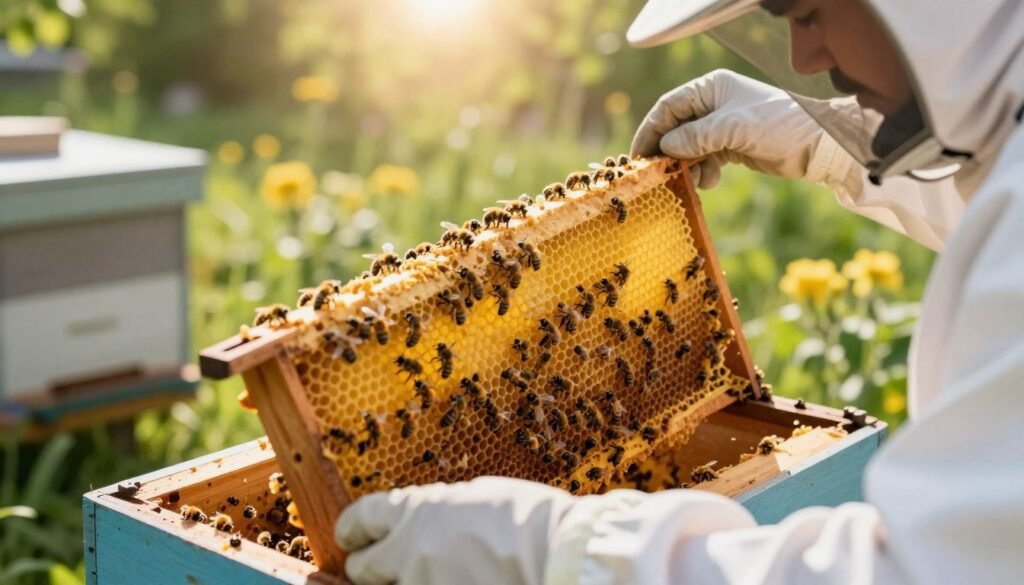
Bees often begin filling the propolis collector from the top down. If left in one position, the bottom slots may stay empty and reduce total yield.
Inspect the panel after about 2–3 weeks. A 180-degree rotation encourages bees to finish the remaining grooves. This short action balances deposit patterns and cuts the chance of an uneven harvest.
Regular inspection during the nectar flow also tells you if the colony is a strong propolizer. If the screen is barely coated by the end of the season, the colony may prioritize nectar and honey instead of resin.
| Check Interval | Action | Outcome |
|---|---|---|
| 14–21 days | Rotate collector 180° | More uniform fill |
| Weekly (during flow) | Quick visual inspection | Detect weak deposition |
| End of flow / before spring frost | Prepare to harvest | Maximized quality |
“Rotate the collector mid-season to ensure the entire surface is used by the colony.”
Harvesting and Processing Propolis
Quick freezing turns sticky deposits into brittle chunks that pop out with little effort.
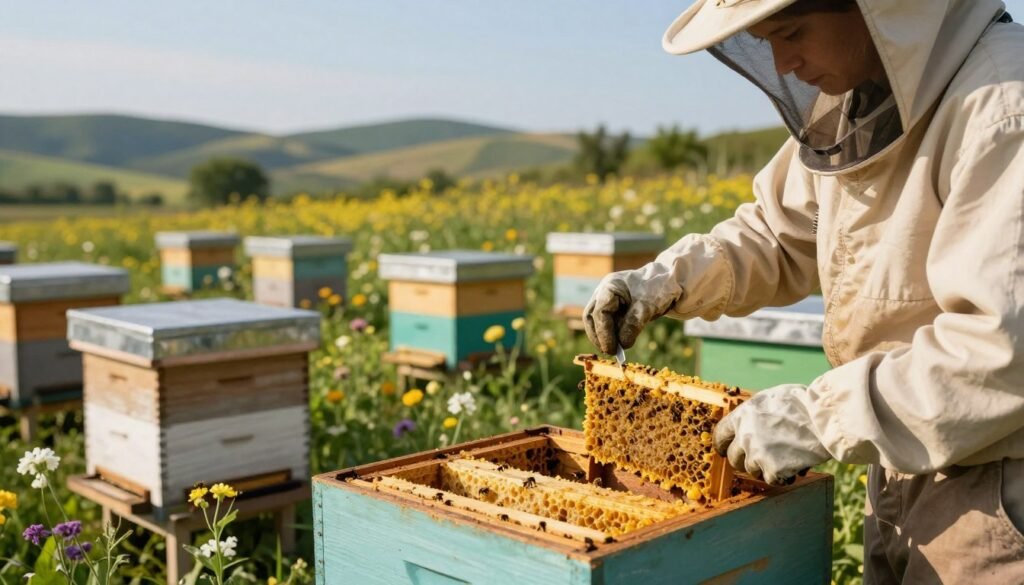
Freezing for Easy Removal
Place the collector inside a heavy trash bag and freeze it for 24–48 days. Cold makes the resin hard and brittle, so pieces separate cleanly.
Once frozen, twist the panel inside the bag to release chunks without messy scraping. This protects frames and reduces wax contamination.
Creating Propolis Tincture
Place harvested chunks into a jar and cover with 190 proof grain alcohol. Store the jar in a cool, dark spot and shake it once a week for six months.
After extraction, filter the liquid through a coffee filter to remove sediment. The result is a fragrant, concentrated tincture ready for use or sale.
| Step | Time | Result |
|---|---|---|
| Freeze collector | 24–48 hours | Brittle pieces, easy removal |
| Twist inside bag | Minutes | Clean chunks, less wax |
| Soak in alcohol | 6 months | Concentrated tincture |
| Filter & bottle | After soaking | Sellable product or base for salves |
“Fresh resin is gooey when warm but becomes hard and brittle in low temperatures.”
Many beekeepers boost income by making salves, lip balm, or selling raw chunks. For tips on cleaning plastic foundation and prep before collection, see this clean plastic foundation.
Storing Your Harvested Bee Resin
Store harvested resin in airtight containers to protect its aroma and texture. A sealed mason jar or a plastic bucket with a tight lid stops volatile compounds from evaporating and keeps the material supple.

Keep jars in a cool, unheated space such as a garage or cellar. Lower temperatures preserve fragrance and prevent the resin from drying out or becoming crumbly.
Avoid paper bags or cardboard boxes. These let scent escape and speed loss of quality. Also, ants are often drawn to the smell, so hermetic sealing is essential.
- Dr. Leo Sharashkin recommends tight lids to retain volatile aromatic compounds.
- Freezing does not damage this resin, so storage in low-temperature areas is safe.
- Store harvested pieces away from honey and comb to avoid cross-contamination.
“Proper storage is the final step in the harvest process, ensuring high quality for months or years.”
Troubleshooting Common Issues
Before using any bee-derived salve, test a small patch of skin to check for irritation. Some people develop redness or a mild rash when they touch propolis. If a reaction occurs, stop using the product immediately and seek medical advice if symptoms persist.
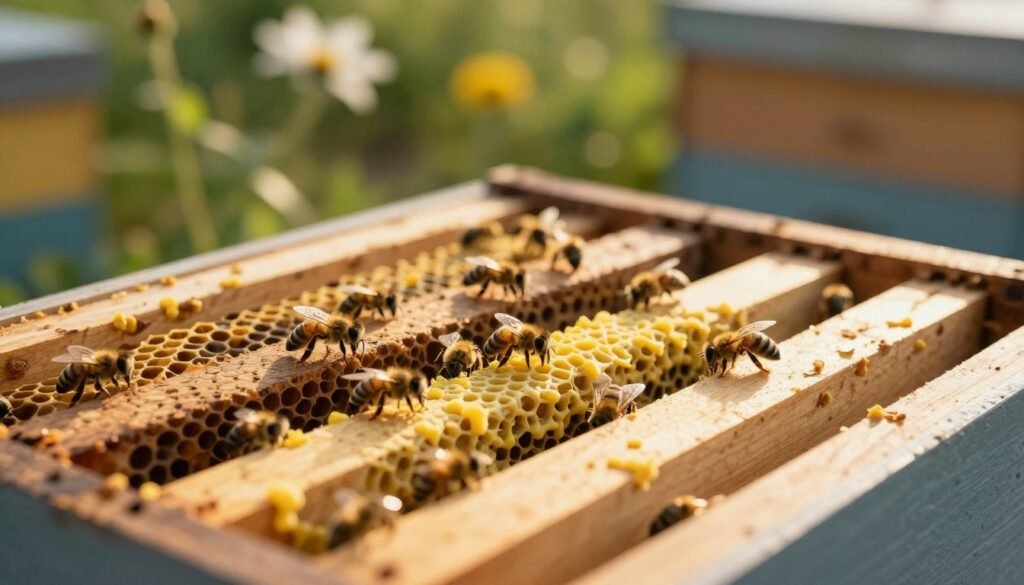
Addressing Propolis Sensitivity
Simple testing protects users and customers. Apply a tiny amount of a salve or tincture to the inner forearm for 24 hours. Note any swelling, itching, or blistering and avoid the product if you see a reaction.
- Record reactions in your apiary log so you link specific products to reports.
- When bees do not fill the collector, confirm the screen is placed near the brood and that the colony is strong.
- During inspections check queen health and look for disease before blaming equipment or design.
“Keep a careful journal of which frames and colonies produce the best resin — it makes future harvests predictable.” — Dr. Leo Sharashkin
Conclusion
Good timing and steady checks turn a modest panel into a reliable source of pure resin.
Integrating a propolis collector into your hive routine boosts hygiene and can add income through honey and resale products. Follow installation, monitoring, and harvest steps to avoid stress on the colony and keep bees calm.
Use proper fit, brief inspections, and timely freezing when harvesting to protect comb and preserve quality. Beekeepers who maintain strong colonies see the best results and steady yields.
With attention to equipment, bee health, and simple maintenance, this method is a low-impact way to enhance beekeeping and expand what your hives produce.
FAQ
What is a propolis screen and why use one in a top bar hive?
A propolis screen is a mesh or perforated panel placed inside a top-bar hive to encourage bees to deposit resinous sealant. Beekeepers use it to harvest sticky resin without dismantling comb or frames. It helps keep comb intact, speeds inspections, and yields material useful for tinctures, salves, and hive maintenance.
How does resin improve hive health?
Bees use resin as a natural sanitizer and hive reinforcement. The sticky material seals cracks, reduces drafts, and limits pathogen spread. Colonies with ready access to resin often show stronger nest integrity and fewer disease hotspots, which supports honey flow and colony longevity.
Should I choose plastic mesh or metal screen for collection?
Both work, but each has trade-offs. Plastic is lightweight, resists corrosion, and won’t warp. Metal or stainless steel lasts longer and tolerates heat during cleaning. Match screen size to your hive design and local climate to maintain proper airflow and deter pests.
How do I prepare a top-bar hive for resin collection?
Start by ensuring the colony is healthy and populous in spring or summer. Install the screen where bees naturally seal gaps—usually under the top bars or along a divider. Offer pollen or propolis-attractant sources nearby to encourage activity. Clean loose wax and check for swarms before proceeding.
What are the common methods to install a collection panel?
Two popular methods are the vertical divider board method and the frame attachment method. The divider sits between combs to collect material across a broad surface. The frame method clips a small screen into place like a comb, letting bees deposit resin without disrupting brood or honey frames.
How can I increase resin production with better airflow?
Proper ventilation stimulates foraging and encourages bees to seal drafty areas. Keep entrances clear, use screened bottom boards, and avoid over-insulating in summer. Moderate airflow helps bees regulate humidity and promotes consistent resin deposition on the collection surface.
Are there pest risks when using a collection device?
Yes. Small hive beetles and wax moths can exploit weak points. Regularly inspect the screen and surrounding comb. Keep hive entrances sized to limit invaders and work promptly when you spot infestation signs. A clean, active colony is your best defense.
What steps prevent small hive beetle problems during collection?
Monitor bait traps, maintain healthy adult bee populations, and remove comb with excessive mold or brood stress. Avoid leaving collection equipment in the hive for long, especially during warm, humid periods when beetles proliferate. Rotate or clean the screen promptly.
How often should I check and rotate the collection panel?
Inspect every 7–14 days during active foraging seasons. Rotate or reposition the panel to balance resin build-up and allow bees to continue sealing elsewhere. Frequent checks help catch pests early and prevent comb damage near the device.
What’s the best way to remove harvested resin from the screen?
Freezing the screen makes hardened resin brittle and easy to scrape off. Place the panel in a sealed bag and freeze for several hours, then gently pry pieces loose with a plastic scraper. For sticky residue, brief warming with a heat gun softens material for collection.
How do I process resin into a tincture safely?
After cleaning and drying the harvested material, grind it into small bits and soak in food-grade ethanol at a 1:5 to 1:10 ratio (resin to solvent). Let it macerate for 1–2 weeks with occasional shaking, then filter through fine cloth or lab-grade paper. Store tincture in amber bottles away from light.
What is the proper storage for collected bee resin?
Keep dried pieces in airtight containers in a cool, dark place to preserve volatile compounds. Vacuum-sealed jars or amber glass with tight lids work well. Long-term refrigeration or freezing extends shelf life, and separate storage from honey or pollen prevents cross-contamination.
My bees seem sensitive to the panel—what can I do?
Some colonies react to new materials or placement. Try different mesh sizes or use wood-framed screens to blend with hive aesthetics. Move the device gradually, and avoid aggressive handling during inspections. If bees become defensive or stop working the area, remove the panel for a few days and reintroduce it slowly.