
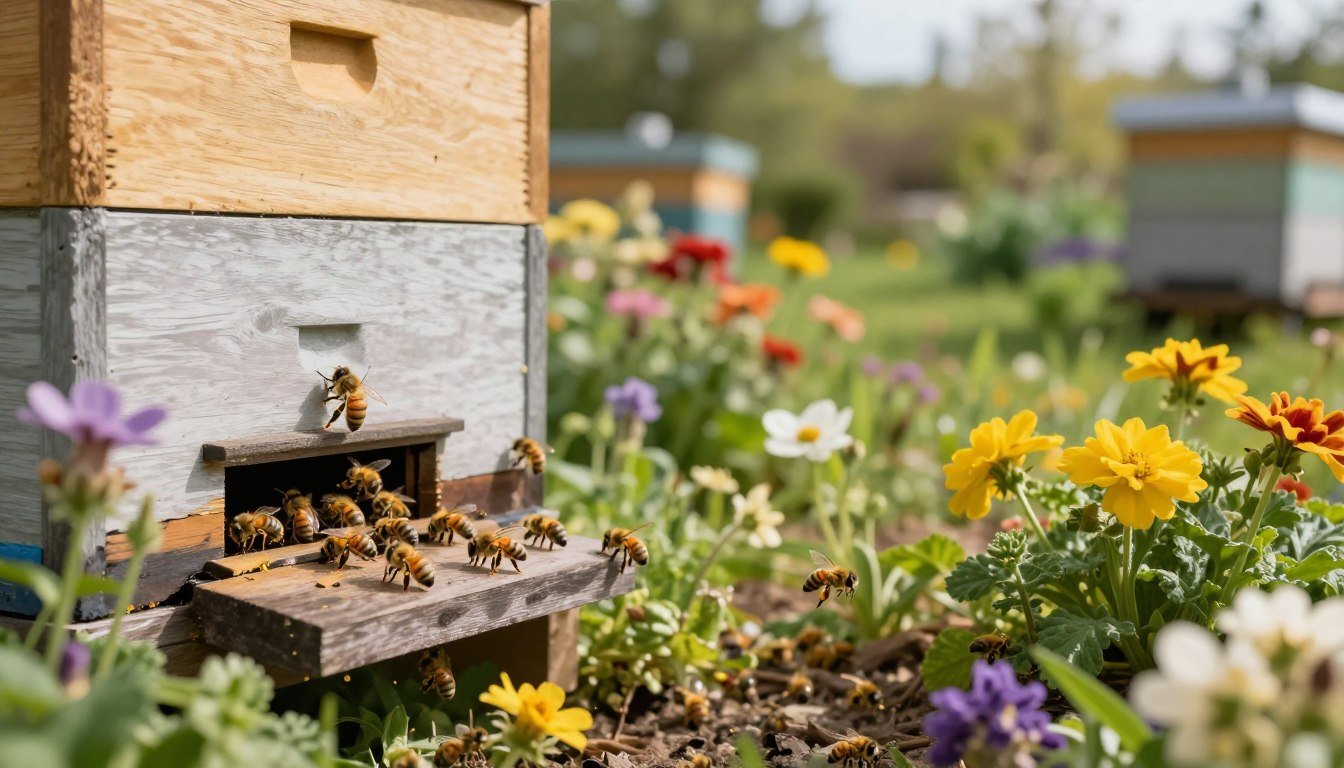
Nicole Marois published this guide on May 16, 2025, after years of field work and careful observation. Her note frames robbing as a high-stress event that often strikes during a dearth or a weak nectar flow.
Simple steps can protect your hive and honey stores. Manage the hive entrance, fit an entrance reducer, and install a robbing screen when colonies show signs of robbing. Keep the landing board clean and remove stray wax pieces or exposed sugar syrup outside hive areas.
We also stress health checks: a colony weakened by varroa mite pressure cannot field enough guards. Small changes in space, air movement, and the size of entrances give your bees a tactical edge during tough times.
Key Takeaways
- Control entrances and use screens or reducers to shield honey stores.
- Keep landing boards and yard areas free of wax, syrup, and scent trails.
- Monitor colonies for varroa mite stress; healthy guards deter intruders.
- Adjust hive size and air flow during nectar flow or dearth periods.
- Simple, routine actions cut risk and boost long-term hive security.
Understanding the Mechanics of Robbing
Raids begin as an imbalance: motivated outsiders meet a poorly defended entrance. In many cases, a hive under stress offers an easy target for hungry foragers looking for stores.
Defining the action
Defining Robbing
Robbing is the act of workers or other insects entering a hive to steal resources during a nectar dearth. It happens when bees from one hive rush into another colony whose guards are too few or fatigued.
The Impact of Scent
The smell of exposed honey becomes a powerful attractant. Scent can travel a surprising distance and draw foragers into a mass event.
“A weak entrance invites trouble; the scent of stores spreads the alarm.”
- Robbing often follows a dearth when nectar sources vanish.
- Weak colonies that cannot defend their entrance lose stores and stamina.
- Beekeepers who study colony life history can spot vulnerability early.
For practical signs and early detection, see this guide to identify robbing behavior early.
Identifying the Signs of a Hive Under Attack
A frantic buzz and odd flight paths are the earliest clues that a hive faces pressure. Watch the landing board for high activity and fights at the entrance. These are clear signals a hive robbed of stores may be happening.
Robber bees often fly low and weave while searching for any gap. If returning foragers act confused or fail to land normally, guards are likely overwhelmed.
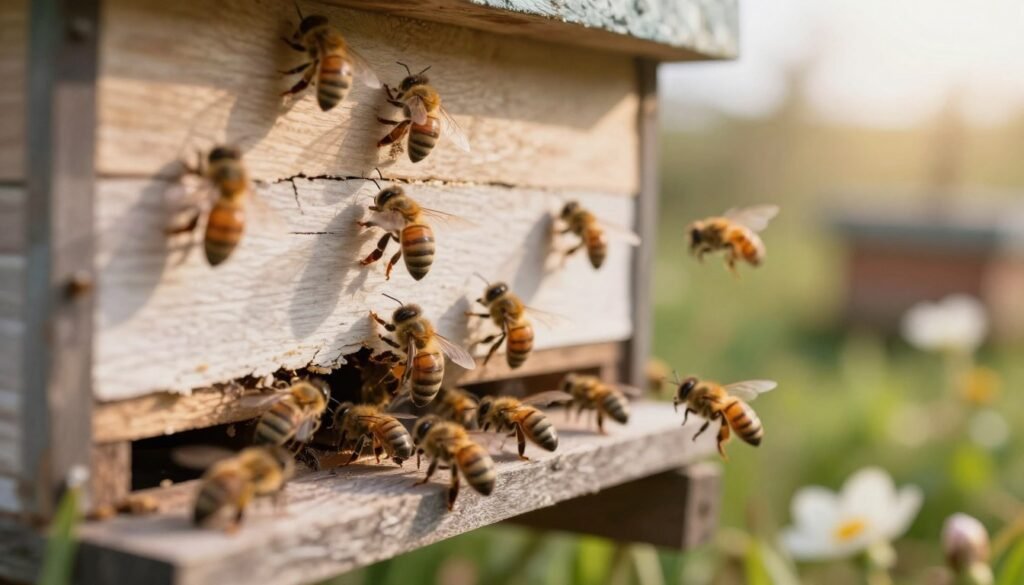
Listen closely. Beekeepers with years of experience note the difference between a steady nectar flow and the frantic hum of robbing. A lost queen or heavy mite load makes a colony much more vulnerable.
- Unusual hum and frantic entrance activity.
- Fighting at the entrance and many invaders.
- Weaving flight near the ground and odd landings.
- Historical records from years of beekeeping often reveal early patterns before full assault.
“During a nectar flow, entrance traffic stays orderly; chaos at the opening is a red flag.”
For practical field tactics and further reading, review this short guide on preventing robbing behavior.
How to Prevent Robber Bees from Cross-Yard Contamination
A compact entrance and a screening barrier shift the odds in favor of the colony. Narrow openings make it easier for guards to repel intruders and reduce chaos during a nectar dearth.
Install a robbing screen early in the season when stores are high or a scarcity looms. A screen limits the space defenders must cover and buys time for weakened hives to recover.
Keep the landing area free of spilled syrup and stray wax. Protecting honey stores removes the scent cues that draw outsiders to your hives.
Inspect entrances regularly. If a scout appears at any hive, act immediately: reduce the opening and fit a screen. These steps cut the chance of cross-yard spread of disease and mites between colonies.
“A well-defended hive is much less likely to suffer from loss of stores or yardwide outbreaks.”
- Manage entrance size for current population.
- Fit a robbing screen before dearth begins.
- Remove attractants near the hive mouth.
- Inspect and respond quickly when scouts appear.
For a practical field reference, consult the CSU Bee Book for diagrams and placement tips.
The Role of Hive Entrance Management
Narrowing the opening gives a small guard force a clear advantage at the hive mouth. Manage entrances early in a dearth so defenders can monitor traffic and block intruders.
Adjusting entrance size lets a colony concentrate its limited guards on a smaller space. An entrance reducer customizes the opening for population and local pressure.
Adjusting Entrance Size
Use a reducer when stores are high or when you see scouts near the landing board. Add a robbing screen for extra complexity; this forces incoming bees along a path guards can watch.
- Smaller entrance = fewer gaps for multiple bees to swarm in.
- Match entrance size to colony strength and local robbing pressure.
- Protect each hive in a yard; proper sizing limits spread between colonies.
“Limit the space at the hive entrance and you make large-scale entry far less likely.”
| Situation | Recommended Action | Effect |
|---|---|---|
| Strong colony, low pressure | Standard entrance | Normal foraging, minimal defense strain |
| Average colony, rising scouts | Partial reducer + watch | Improved guard focus, easier monitoring |
| Weak colony, dearth present | Full reducer + robbing screen | Max defense, slows invaders |
| Multiple hives in yard | Adjust each entrance | Reduces yardwide spread of pests |
Strategic Placement of Supplemental Feeders
Placing supplemental food wisely keeps scent inside the hive and lowers yard risk. Confined feeding reduces the signal that draws unwanted visitors and protects honey stores.
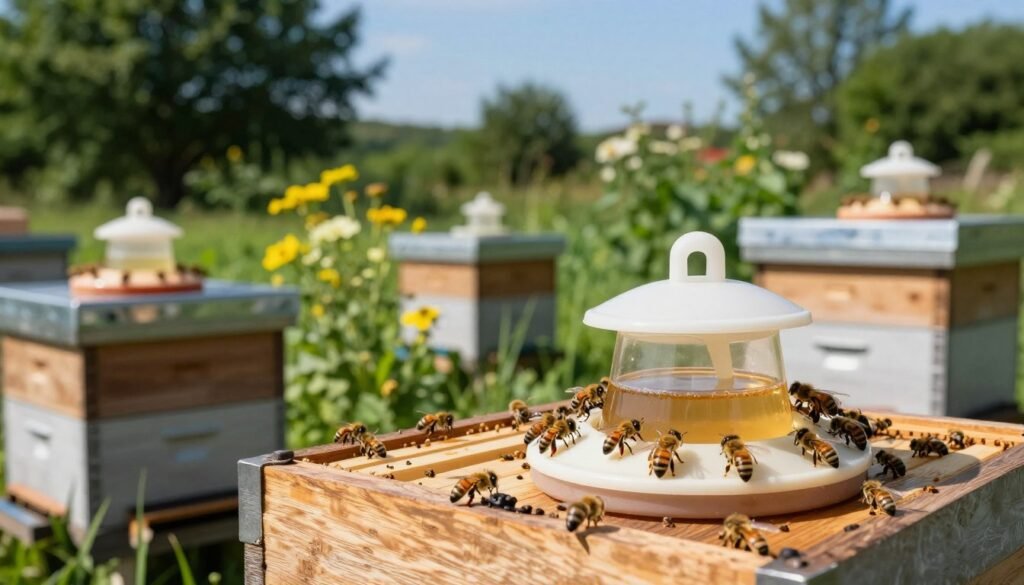
In-hive feeding methods give a colony sole access to syrup or fondant. Use top feeders, frame feeders, or internal jars placed within the hive body. These choices keep sugar scent inside the colony and let guards control access at the hive entrance.
In-Hive Feeding Methods
Choose a feeder that fits your hive and season. Frames converted for feeding must sit securely between brood boxes so the food cannot leak onto the landing board.
“Feed inside the hive; that containment is the simplest defense against yardwide robbing.”
Avoiding External Feeders
Never expose sugar syrup outside the hive. An external feeder quickly becomes a magnet for robbing and triggers fights at the hive entrance.
- Feed late afternoon when scouts are less active.
- Inspect the landing board after any manipulation for spills.
- Keep frames with syrup inside the hive body only.
| Feeding Option | Placement | Benefit |
|---|---|---|
| Frame feeder | Inside hive body | Minimal scent release, guarded access |
| Top feeder | Under inner cover | Easy refill, protected by colony |
| External feeder | Outside hive | Attracts outsiders, increases robbing risk |
For details on a closed system, read about the closed feeding method.
Maintaining Strong Colony Health to Deter Intruders
Healthy bee populations give your yard its best defense during lean nectar periods. A vigorous colony supports many guards that hold the entrance steady.
Monitor varroa levels and act if counts rise. Varroa pressure weakens bees and lowers a hive’s ability to repel attacks.
Keep stores balanced and provide clean water near the apiary. Proper nutrition helps bees regulate brood rearing and guard numbers over time.
If one colony shows stress, consider fitting a robbing screen while you treat mites and boost food. A screen buys critical time and reduces yardwide spread.
“A strong colony is the single best long‑term defense against robbing pressure.”
- Routine mite checks and timely treatment preserve guard populations.
- Feed inside the hive during dearth to keep honey scent contained.
- Provide water and check stores weekly so colonies stay resilient.
| Issue | Action | Outcome |
|---|---|---|
| High varroa counts | Treat per label and recheck after treatment | Restored strength, better guard response |
| Low stores | In-hive feeding and monitoring | Stable brood rearing and fewer scouts |
| Weak colony | Fit robbing screen and combine if needed | Short-term protection while rebuilding |
| No water source | Provide clean water near hives | Improved forager efficiency and colony health |
Managing Queen Health for Better Defense
A productive queen keeps the colony stocked with new workers and steady guards at the entrance.
Inspect frames regularly for a solid brood pattern and steady laying. A failing queen shrinks the population and leaves the hive vulnerable during a dearth.
Look for clustered brood, uniform cells, and consistent egg placement. If brood appears spotty or the queen is absent, act without delay. Replace a weak queen so the colony can rebuild numbers and defend honey stores.
Prompt replacement buys crucial time while you fit a screen or reducer at the entrance. A strong colony recovers faster and resists robbing with fewer losses.
“A healthy queen is the heart of a resilient apiary.”
- Confirm laying pattern at each inspection.
- Replace a suspected failing queen promptly.
- Pair queen management with entrance changes for short-term defense.
The Impact of Varroa Mite Infestations on Hive Security
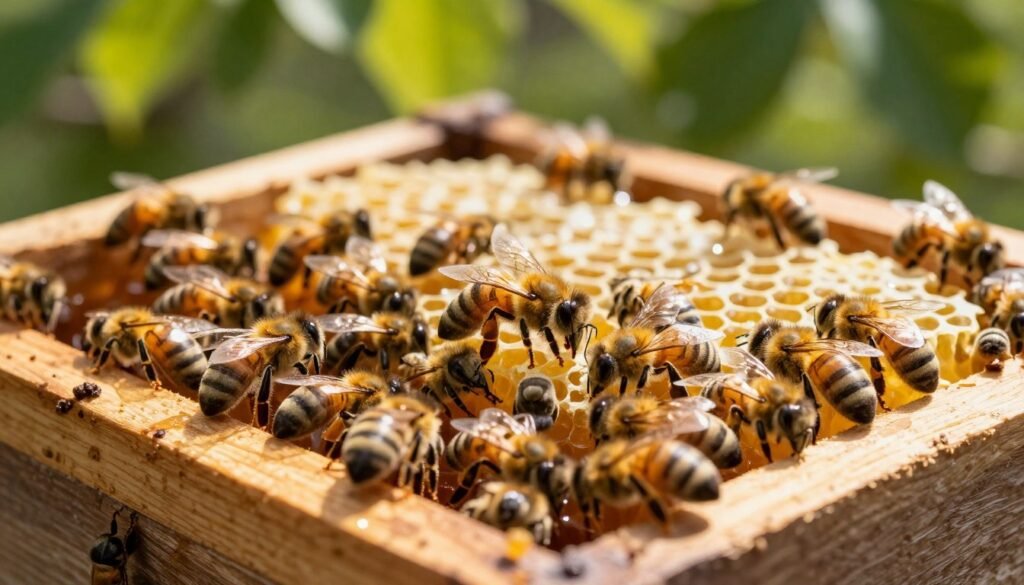
A heavy varroa load can erode a colony’s defenses faster than visible signs suggest. Mites weaken workers and reduce the number of guards at the entrance. That loss makes a hive an easy target for robbing and yardwide spread.
Treatment Timing and Restrictions
Read every label closely before treatment. Some varroa mite products require a specific hive entrance condition. Those rules may conflict with the need to narrow an opening during a dearth.
If a treatment mandates an open entrance, fit a robbing screen or use an entrance reducer where allowed. This balances effective mite control with protection of honey stores.
“Plan treatments well ahead of peak robbing time; timing preserves strength and reduces risk.”
- Varroa infestations shrink guard populations and invite rapid escalation.
- Always verify product restrictions on entrances and ventilation.
- When open access is required, use a robbing screen to shield the hive entrance.
- Schedule mite work outside local robbing peaks whenever possible.
| Condition | Treatment Requirement | Recommended Entrance Action |
|---|---|---|
| Topical miticide needing open airflow | Full or partial opening | Use robbing screen + monitor closely |
| Strip or pad application internal | Close hive for set period | Use entrance reducer until cleared |
| Oxalic vaporization | Short, open access may be needed | Limit time open; screen afterward |
Best Practices for Conducting Hive Inspections
Short, organized checks reduce the moment that honey scent reaches hungry visitors. Keep visits brief during a nectar dearth and plan each step before opening a hive.
Have gear ready so you spend minimal time with frames exposed. If a frame must be removed, cover it or place it in a sealed box while you work.
Watch the landing board closely. Wipe up any syrup or drips immediately and inspect for unusual flight or a single scout. If you spot a robber or signs of robbing, close the entrance and fit a screen for added protection.
Beekeepers should use an efficient sequence: open, inspect brood and stores, replace frames, and close. This limits stress on the colony and lowers the chance that nearby bees will catch a scent cue.
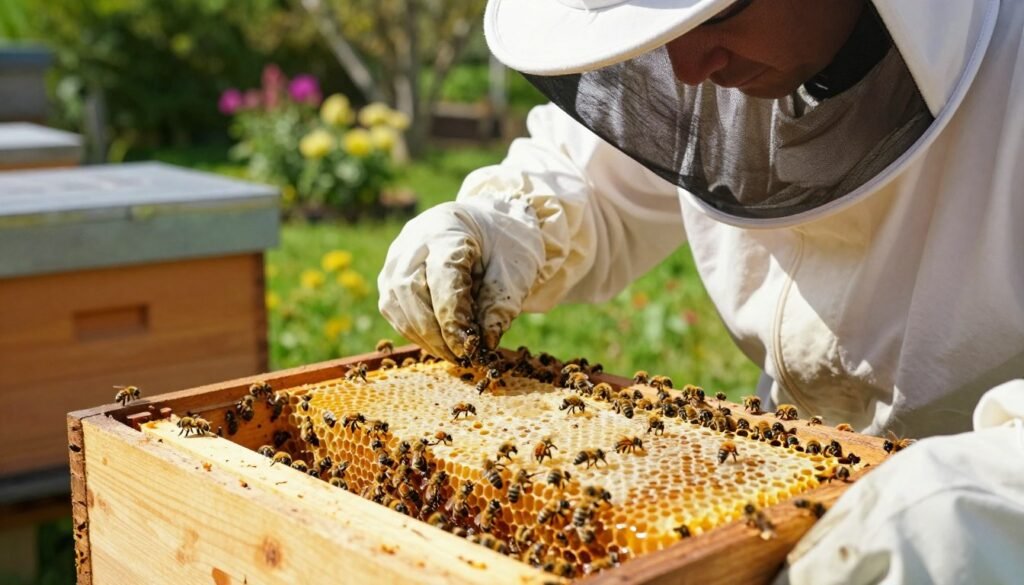
“A calm, quick inspection protects stores and keeps guards focused.”
- Work late day when scouts are less active.
- Keep removed frames covered; avoid leaving honey or syrup on the board.
- Close the hive immediately if invaders appear and consider fitting an entrance screen.
| Task | Action | Benefit |
|---|---|---|
| Prepare kit | Lay out tools and boxes before opening | Less time with frames exposed |
| Frame handling | Cover or seal removed frames | Reduces honey scent release |
| Landing board check | Clean spills and watch flight | Early detection of robbing |
| Immediate response | Close hive or fit a screen | Protects stores and nearby colonies |
For guidance on feeding with minimal yard risk, see feeding without causing robbing. Follow these steps and you will keep your hives safer while you inspect.
Handling Exposed Frames and Honey Spillage
A single dribble of honey can change a quiet yard into a battleground in short order.
Handle frames with care during every inspection. If a frame leaks, cover it or place it inside a sealed box right away.
Wipe the landing board and remove wax pieces immediately. Even small scraps send scent through the air and draw other bees fast.
Store surplus frames in a locked container inside the apiary or a secure building. Keeping stores away from open yards lowers yard pressure and the chance of robbing.
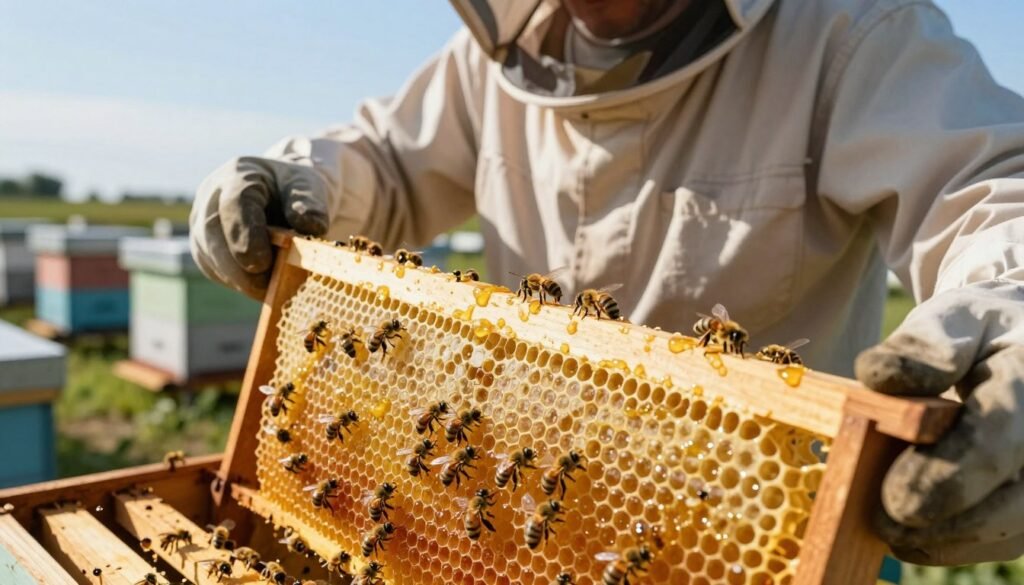
“A clean yard and careful frame handling cut the odds of fighting at the entrance.”
- Clean spills at once; sugar syrup scents carry far.
- Use sealed boxes for temporary frame storage inside hive areas.
- Work slowly when frames contain honey to avoid sudden drops.
| Issue | Immediate Action | Benefit |
|---|---|---|
| Dripping frame | Cover and seal inside box | Stops scent, protects stores |
| Wax pieces on board | Remove and clean board | Reduces attractant for intruders |
| Refill syrup outside | Move feeding inside hive or sealed feeder | Limits yardwide calls and fighting bees |
For tips on safe feeding during lean months see feeding during dearth.
When to Combine Weaker Colonies
If a colony cannot hold its entrance and loses stores repeatedly, combining it with a stronger hive may be the right move.
Look for clear signs: few guards, low numbers at the board, repeated attacks, or a hive robbed of honey stores. These indicate the unit will likely fail during a nectar shortage.
Before combining, confirm both colonies are free of disease. A healthy partner prevents spreading mites or infection into the new unit.
Use a method that reduces stress. Introduce frames slowly, place the weaker queenless under the stronger colony, or use the newspaper merge technique so bees acclimate rather than fight.
Benefits are immediate: a larger population defends food and manages frames and syrup more efficiently. Combined colonies hold stores better through lean months and enter winter with greater resilience.
“A timely union of small colonies creates a larger, more resilient population that resists raids.”
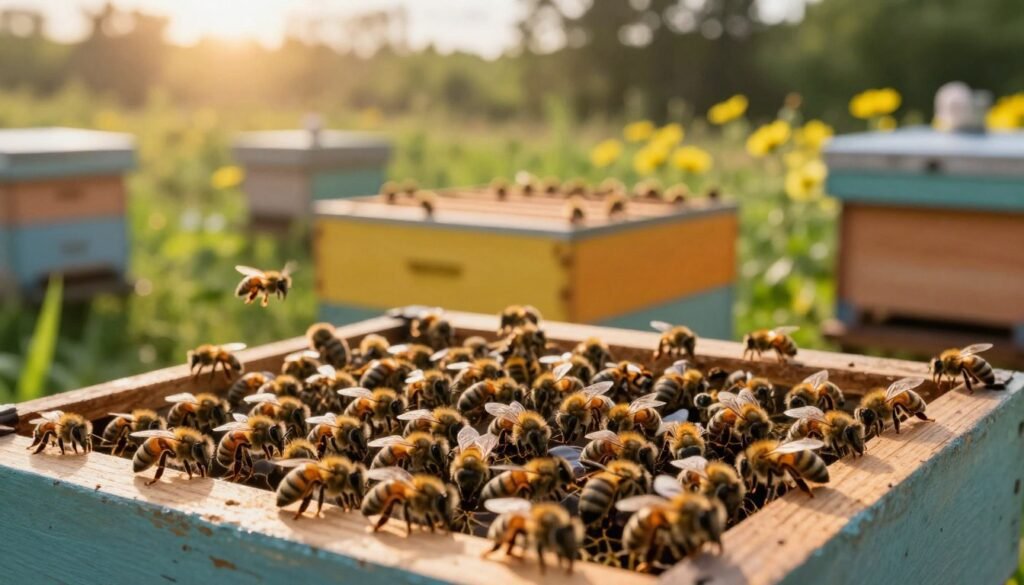
- Combine when low guard numbers and repeated loss occur.
- Verify health before merging to avoid disease spread.
- Use gentle merge techniques for a smooth transition.
Utilizing Robbing Screens and Entrance Reducers
A solid physical barrier can give a small guard force the edge it needs at a vulnerable opening.
Robbing screens and an entrance reducer provide a simple, proven defense that keeps stores safe while preserving airflow. Fit a screen inside the hive or at the hive entrance so defenders can channel incoming traffic into a controllable path.
Have both items on hand before a nectar shortage begins. A reducer shrinks the opening so fewer guards must cover the board. A screen adds an extra layer that slows invaders and buys critical time for a weak colony.
- Use a reducer during early signs of pressure for rapid control.
- Install a robbing screen when repeated scouts appear near the landing board.
- Check fittings after installation; even small gaps let invaders slip in.
- Maintain hardware seasonally so screens and reducers function reliably.
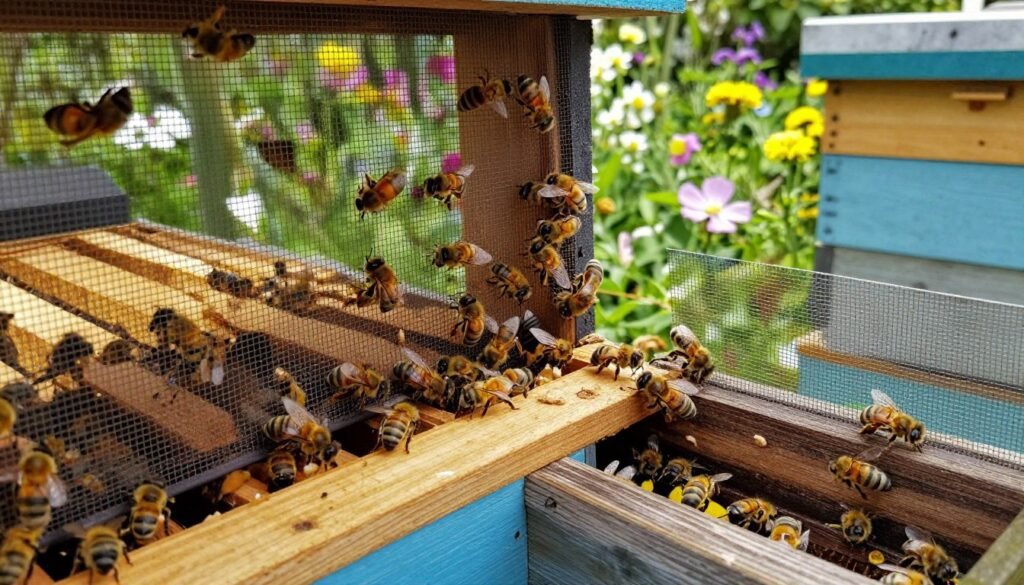
| Tool | Placement | Main Benefit | When to Use |
|---|---|---|---|
| Entrance reducer | Fit at hive entrance | Smaller opening for guards | Rising scout activity |
| Robbing screen | Inside hive or at mouth | Slows invaders, allows ventilation | Persistent robbing pressure |
| Reducer + screen | Combined at entrance | Max defense, controlled access | Weak colony during dearth |
| Regular inspection | All entrances | Ensures fit and function | Start of season and after storms |
“Well‑fitted hardware changes an entrance from an open invitation into a defended gate.”
Recognizing the Dangers of a Nectar Dearth
When flowering stops, scent and scarcity turn stored honey into a magnet for nearby hives. A true nectar dearth leaves foragers searching and raises the risk of robbing at each entrance.
Watch flight and the landing board. Heavy weaving, frequent scouts, or many wax pieces on the board are early signs a colony struggles. Small debris and spilled syrup draw attention fast.
Know local nectar flow timing and act early. Short bursts of bloom give bees relief; long gaps demand careful management of stores and frames.
Feed inside the hive when needed so sugar scent stays internal. Place fondant or an internal feeder and check the air around the hive for stressed activity after feeding.
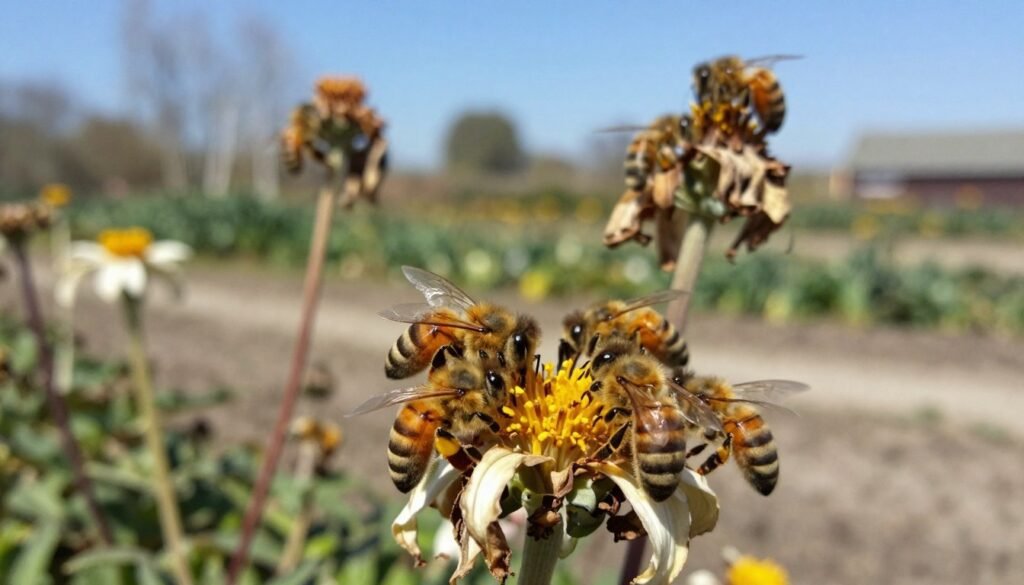
“A well-timed response during a dearth keeps stores, guards, and colonies intact.”
For signs that a unit faces starvation, consult this guide to detect early hive starvation and prepare your apiary before pressure grows.
Monitoring Your Apiary for Unusual Activity
A sharp change in noise around the apiary often signals an urgent problem at a hive.
Listen and watch. A loud, excited hum or fighting at the entrance is a primary sign of robbing. Note low, weaving flight and odd landings; these are early warning signals.
Over the years, experienced beekeepers learn to read small shifts in behavior. Quick action matters. If a scout appears, install a robbing screen or reduce the entrance size without delay.
Keep inspections regular, brief, and late in the day when activity eases. Monitor mite counts and general health—weak colonies draw more attention. Provide clean water and clear, secure surroundings so the colony can defend its stores.
“Observation and prompt response protect stores and reduce yardwide risk.”
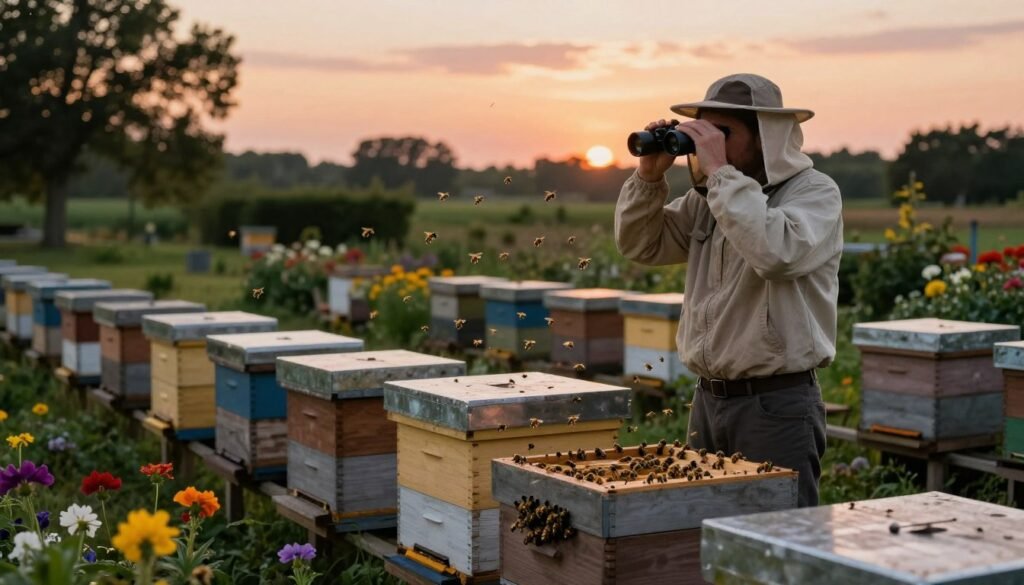
- Watch sound, flight, and fights at each entrance.
- React quickly: fit a screen or a reducer as needed.
- Record sightings and check mite levels after incidents.
| Sign | Immediate Action | Benefit |
|---|---|---|
| Loud, agitated hum | Inspect quickly; limit exposure time | Early detection before full assault |
| Weaving flight and failed landings | Fit robbing screen or reducer | Gives guards control of entrance |
| Repeated scouts at board | Clean spills; provide water away from hives | Reduces scent cues, lowers attraction |
| High mite counts | Treat per label; protect entrance during work | Restores colony strength and defense |
For options on sizing and gear, review hive entrance reducer alternatives.
Conclusion
Consistent yard routines and fitted hardware keep hives ready for lean seasons.
Protecting your colony takes proactive management, simple tools, and steady observation. Fit a proper screen or reducer when pressure rises and keep spills and debris away from the landing board.
Maintain strong, healthy colonies through regular checks for pests and nutrition. Good practice and ongoing learning are core to successful beekeeping.
For broader biosecurity guidance and planning, review practical biosecurity practices. For growth and layout ideas that support a safer yard, see this apiary planning resource.
Keep your colonies healthy, your hives well‑equipped, and your routines consistent. That combination gives beekeepers the best chance of keeping stores safe all year long.
FAQ
What are the first signs a hive is being robbed?
Look for unusually aggressive traffic at the entrance, many bees fighting or dragging dead workers, and a stream of bees carrying pollen or honey away. You may see bees hovering in front of the landing board and a sudden drop in honey stores. These signs often appear during warm, sunny afternoons and worsening during nectar dearths.
How does scent influence theft between yards?
Strong honey or syrup odors attract nearby colonies. Robbing scouts detect these scents and recruit others. Spilled syrup, exposed frames, and fresh cappings broadcast a scent trail that overpowers normal floral cues, increasing the risk of invasion from neighboring apiaries.
What entrance changes reduce the chance of an attack?
Narrowing the entrance and installing an entrance reducer or robbing screen forces defenders to guard fewer access points. Shortening the landing board and adding a small guardrail lets worker guards exclude intruders more easily without disrupting foraging during nectar flows.
Should I feed colonies inside the hive or with external feeders?
In-hive feeding with a top feeder or frame feeder cuts down on odor spread and visible syrup, lowering attraction for outsiders. External feeders, like open jars or hummingbird-style stations, risk broadcast scent and should be avoided during high-risk periods.
When is it safe to offer syrup without inviting thieves?
Feed only during true dearths, at dusk or night when foragers are home, and use in-hive methods. Feed small volumes and seal or remove feeders promptly once stores rise or a nectar flow begins. Limit syrup odors by using thick syrup (2:1 sugar:water) for short-term boosts.
How does colony strength affect defense against intruders?
Strong colonies with abundant adult workers and healthy brood maintain a robust guard force. Weak or queenless colonies struggle to muster defenses, making them prime targets. Regular management—requeening, combining weak hives, and feeding appropriately—keeps colonies resilient.
When should weaker colonies be combined rather than kept separate?
Combine a failing, queenless, or low-population colony before stores run out or signs of robbing start. Use the newspaper method or follow safe combining protocols to minimize fighting. Combining consolidates resources and reduces the number of vulnerable targets in the yard.
What role do varroa mites play in hive security?
Heavy varroa loads weaken workers and queens, reducing colony vigor and defensive response. Treat varroa on an appropriate schedule and choose approved treatments that won’t leave attractive residues. Timing treatments away from honey flows prevents contamination of stores.
How should I time varroa treatments to avoid attracting thieves?
Treat during low foraging periods and avoid using sugar syrup or open feeding immediately after application. Use contact treatments or miticides per label instructions and ensure no sticky residues or strong odors remain on hive exteriors that could attract other colonies.
What are best practices during hive inspections to avoid inviting attackers?
Inspect quickly and deliberately, minimize exposed frames, and cover open honey with clean foundation or cloth when pausing. Close up hives at night or in poor weather if robbing pressure exists. Avoid spilling syrup and move frames back into boxes promptly.
How should I handle spilled honey or exposed frames during an inspection?
Immediately return frames to the hive and wipe excess honey with a clean tool or cloth. Work near the hive so you can close it quickly if visitors appear. If you must leave frames temporarily, cover them with a clean sheet to mask scent until you can finish.
Are robbing screens effective, and how do I use them?
Robbing screens slow intruders and give guards a positional advantage. Fit a screen over the entrance so foragers must crawl under and defenders can access a protected interior. Use alongside entrance reducers and only remove screens when the risk has passed.
Does apiary layout influence cross-yard theft?
Yes. Space colonies to reduce scent overlap and avoid placing weak hives downwind of strong, heavily fed colonies. Grouping hives in clusters with similar strength helps guards focus on local intruders. Keep water sources and supplemental feeders away from hive clusters.
How can I monitor my yard for early invasion activity?
Perform daily checks during high-risk months, watch for new flight paths, and record unusual visitor numbers or persistent hovering. Install a small motion camera or use timed observations during peak afternoon hours to catch scouts before a full-scale assault starts.
What immediate steps should I take if a hive is under attack now?
Reduce the entrance, install a robbing screen, and place a fan or white cloth to disrupt scent trails. Move nearby honey supers away from vulnerable hives, close off any open feeders, and call in assistance from an experienced beekeeper if the situation escalates.
Can water sources influence robbing behavior?
Yes. Shared water sites concentrate bees and can facilitate scent transmission between colonies. Offer a dedicated shallow water tray for your apiary and keep it at a distance from hive entrances to reduce congregation immediately in front of boxes.
What long-term habits help minimize theft between yards?
Maintain strong queenright colonies, practice timely varroa control, avoid open feeding, use entrance management tools seasonally, and remove or combine weak colonies promptly. Consistent hygiene—cleaning up spilled syrup and sealing exposed honey—keeps scent cues low.


