Published March 31, 2026 · Last Updated August 26, 2026
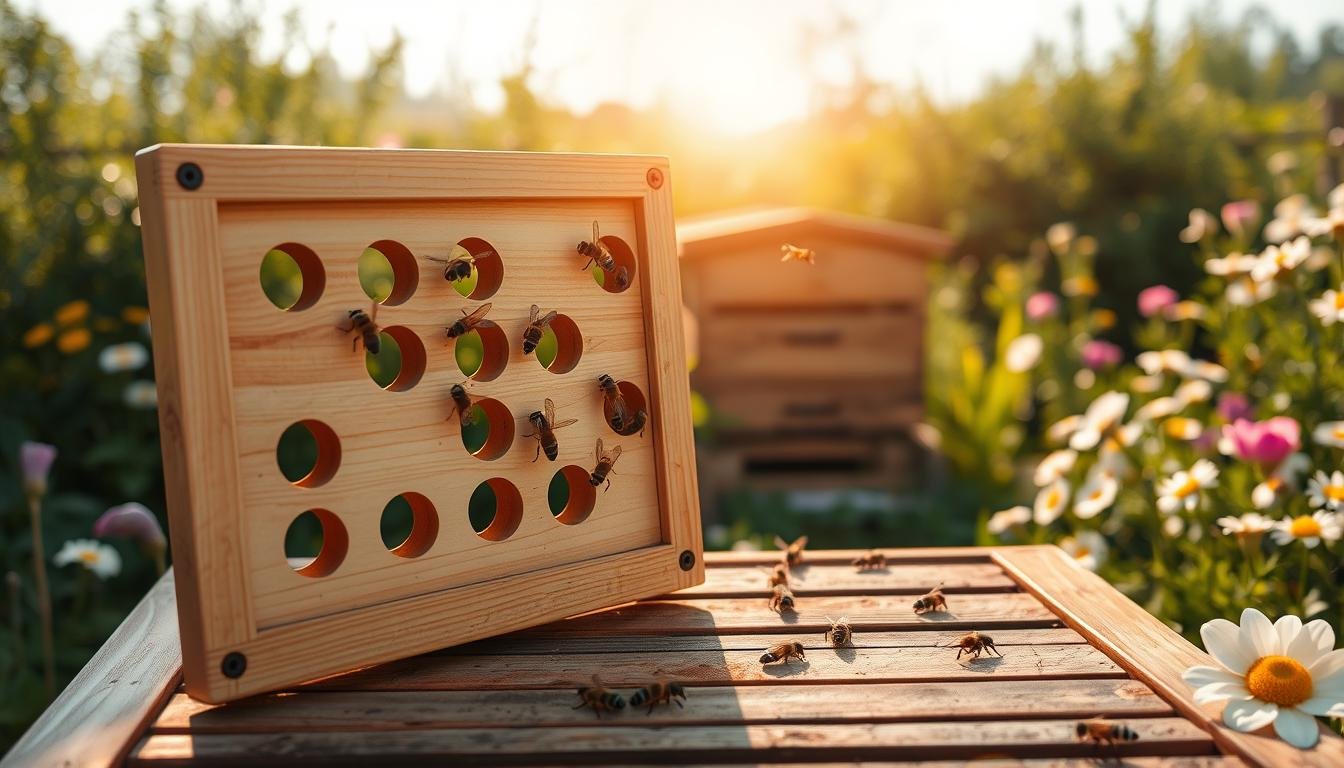
Efficient, low-stress removal of frames makes late summer work smoother. When you stack supers on a hive, the top box often fills with workers. A quality escape board clears most bees without smoke or harsh repellents.
This simple device acts as a one-way valve, guiding bees downward away from the super and leaving frames ready the next day. Triangle and plastic designs both work; choose durable equipment that fits your cost and apiary needs.
Learn how a bee escape board functions in detail at how a bee escape board functions. For seasonal care that protects the brood and hive through cold snaps, see tips on winter hive care.
Key Takeaways
- Use an escape board to clear most bees from supers with minimal disturbance.
- Place the device under stacked supers and leave it overnight or up to two days.
- Triangle or plastic designs both move bees to the bottom of the hive effectively.
- Expect about 95% clearance; brush a few stragglers when removing frames.
- Pick a durable, cost-effective board to protect the queen and brood and save time.
Understanding the Role of Bee Escape Boards in Honey Harvest
A dedicated one-way passage moves most workers down into the brood chamber while you prepare frames.
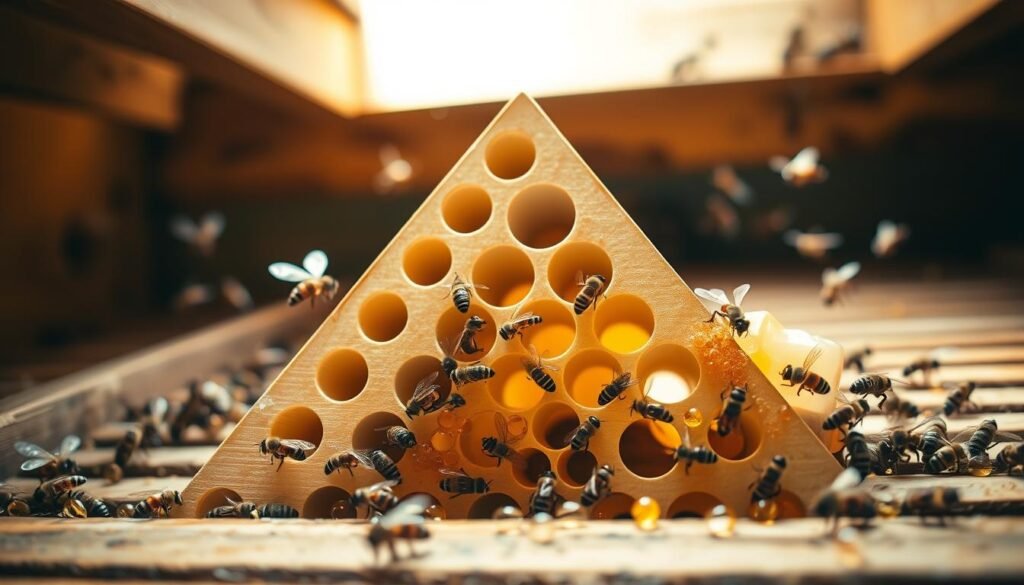
The primary function of this simple device is to give worker bees a one-way exit from the upper boxes. Placed between the top super and the brood chamber, the triangle style guides workers downward and keeps the queen below.
This method clears bees from the top box with minimal stress. It speeds the process, so you can remove supers the next day without heavy lifting or chemicals.
- Protects brood and queen by keeping them in lower chambers.
- Works with stacked supers to clear multiple hives in a single day.
- Plastic and wooden designs both create a smooth exit path for workers.
| Feature | Triangle Design | Plastic Maze |
|---|---|---|
| Placement | Between super and brood | Between super and brood |
| Clearance Time | Overnight to one day | Overnight to one day |
| Durability & Cost | Durable; mid cost | Lightweight; low to mid cost |
| Best Use | Stack supers during peak season | Multiple hives; easy cleaning |
Learn more about the purpose of a bee escape board and how to balance removal with colony health at balancing harvest with colony needs.
Evaluating the Best Bee Escape Board for Honey Harvest
Compare clearance, durability, and price to decide which escape option matches your routine. Use data from short trials and simple checks to guide choices.
Performance Metrics
In a three-hive observational study we tested the triangle design against other escapes. The triangle sat between the supers and the brood chamber. It used the bees’ tendency to move right at obstructions to guide workers down.
Clearance time varied by weather and colony strength, but the triangle was consistently successful across ten days. By the next day most bees left the honey supers, leaving few bees left to brush off.
Cost Considerations
Factor in accessories: some plastic escapes need an inner cover or adapter. That raises cost beyond the unit price.
| Metric | Triangle | Plastic Maze | Notes |
|---|---|---|---|
| Clearance (next day) | High | Moderate | Triangle favored across different colonies |
| Accessory needs | Minimal | Often needs inner cover | Check compatibility with your boxes |
| Cost & durability | Mid; durable | Lower unit cost; may wear | Balance price and long-term use |
Monitor respective hives after installation. If bees do not clear in a few days, check for queen or brood in the super. For planning and timing tips see this guide on honey supers handling and a sustainable apiary plan at creating a sustainable apiary plan.
Comparing Popular Escape Designs and Materials
A quick comparison shows how material and fit affect clearance speed and long-term value.
The wooden maze and the diamond-shaped plastic model are the two workhorses most often used in U.S. apiaries.
Wooden Maze versus Plastic Diamond
Wooden maze units usually arrive ready to use. They fit directly under stacked supers and rarely need extra parts. Many beekeepers praise the triangle-style wooden option for reliable performance in varied weather.
Diamond plastic escapes can cost less per unit but often require an inner cover or adapter. That raises total cost and installation time. When attached properly, the plastic diamond provides a clear one-way way for workers to leave the super.
“When sourcing your bee supply, check retailers like Mann Lake or Amazon for both styles; local stores often carry durable wooden and plastic options.”
- Wooden maze: one-piece, simple installation, durable in weather.
- Plastic diamond: lightweight, may need inner cover, careful attachment needed.
- Sourcing tips: compare Mann Lake, Amazon, and local bee supply shops.
| Feature | Wooden Maze | Plastic Diamond |
|---|---|---|
| Installation | Minimal; ready to use | Requires inner cover or adapter |
| Weather Tolerance | High | Moderate |
| Cost Consideration | Higher up front; long term value | Lower unit cost; add adapter price |
For a list of available options and designs see available designs at the manufacturer FAQ.
Installation Tips for Your Hive Equipment
A stable mount and correct alignment will save time and prevent trapped bees overnight.
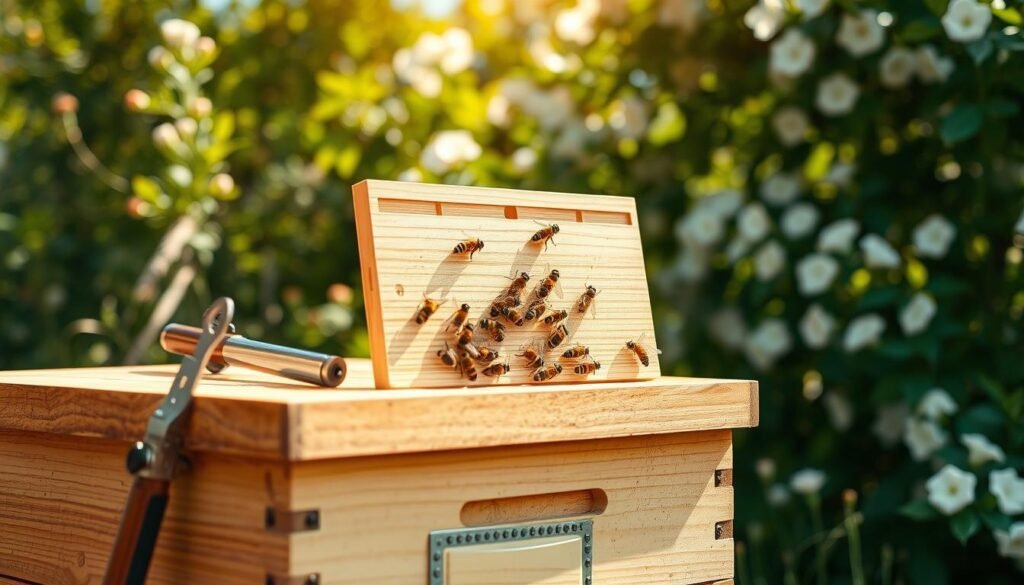
Begin by fastening the escape board to a dedicated inner cover. Use four hex head screws to secure the unit. A tight fit keeps gaps closed and stops workers from getting trapped between boxes.
When you stack supers, place the device exactly between the honey boxes and the brood chamber. This protects the queen and helps workers move down the way intended.
- Make sure the escape aligns so bees can exit without obstruction.
- Check bottom board and all equipment before harvest to catch wear or warping.
- If assembly is required, tighten parts and verify no gaps exist.
Triangle-style installations work well when centered and fastened. Proper fit prevents bees from finding a way back up the super once they exit.
| Step | Action | Why it matters |
|---|---|---|
| Mounting | Attach with four hex head screws to inner cover | Stable fit avoids shifting and gaps |
| Alignment | Center under supers and over brood | Protects queen and guides workers down |
| Pre-check | Inspect bottom board and tools | Reduces last-minute failures at harvest time |
Keep your bee supply tools organized so you can install or remove escapes quickly. For more on proper use, see this short guide to how to use an escape board and other topics at Beekeepers Realm.
Best Practices for Effective Bee Removal
Plan your removal window to match colony behavior and daily weather patterns.
Good timing makes clearing supers much easier and reduces stress on your hive.
Timing Your Harvest
Check hives during warm daylight hours. Most bees are out foraging then, so you will see a drop in activity in the top boxes.
By the next day you should see a clear reduction in bees in the top super. If not, revisit the hive and note weather or other delays.
Use the linked checklist to plan season-long timing: season checklist.
Avoiding Brood in Supers
Inspect frames before you install an escape board. Nurse bees will not leave a super that contains brood.
If brood is present, remove or rearrange frames. Make sure the queen has not moved up into the top boxes.
Clearing brood first avoids stranded nurse bees and reduces bees left in the boxes at harvest time.
Managing Escape Duration
Limit the device to under 48 hours. Leaving it longer lets workers learn to return, defeating the way the unit works.
Check respective hives after two three days of trials to compare results across different colonies.
- Always use bee escapes that fit your inner cover to ensure a tight seal.
- Watch the bottom board to confirm bees have moved down.
- If bees remain, evaluate weather, brood presence, or placement and adjust the method.
| Practice | Action | Why it matters |
|---|---|---|
| Timing | Check during warm daylight | Maximizes forager absence and visibility |
| Brood check | Inspect frames before use | Prevents nurse bees from staying in supers |
| Duration | Remove within 48 hours | Stops bees from learning to re-enter |
| Fit | Use compatible inner cover and unit | Prevents bypass and trapped bees |
For practical tips on separating bees from honey using escape devices, see this detailed guide: escape boards guide.
Conclusion
A concise plan and the right exit device will cut stress during supers removal and speed your workflow.
Choose a reliable bee escape and install it correctly on your hive. Use the triangle or a plastic design as fits your boxes and stack. Follow the 48-hour rule and check for brood and queen before removal.
Consistent use of these escapes across seasons helps manage colonies and protect stores. Test different methods, keep units clean, and track what works in your apiary.
Ready to compare models and tips? See a practical gear guide and learn alternative setups in a horizontal hive overview.
Thanks for following this guide. Proper prep and attention will keep your bees healthy and your harvest reliable.
FAQ
How does an escape board help clear supers of bees?
An escape board provides one-way exit routes that let worker bees leave the honey supers but not return. Place the board between the supers and the brood boxes late in the day or overnight. By the next morning or within one to three days, most foragers and house bees will have moved down into the lower boxes, leaving the supers largely clear for removal.
When is the best time of day to install an escape device?
Install an escape device late afternoon or early evening when foraging activity falls. Cooler temperatures and reduced traffic help bees leave the supers and not return. Avoid installing during heavy nectar flows or extreme weather that keeps bees active.
How long should I leave an escape in place before removing supers?
Typical use is one to three days, depending on colony strength and weather. Check after 24 hours; many hives are clear by then. If you still see many bees, wait another day. Do not leave escapes so long that robbing or excessive drifting becomes an issue.
Will escape devices move the queen into the supers?
No. Properly used escapes create one-way exits and do not allow upward movement of the queen. Inspect frames before removal to ensure no brood or the queen is present in the supers, especially when working with split colonies or uneven boxes.
How do I avoid collecting brood when harvesting honey?
Use timed installs of escapes and inspect brood frames visually before extraction. Avoid placing supers containing brood; if brood appears, return that super to the colony or re-stack so brood is in lower boxes. Managing supers by age and checking regularly reduces brood presence.
Can I stack supers from different colonies on one escape to clear them simultaneously?
It’s not recommended. Stacking supers from different colonies risks drifting and robbing, and it complicates reuniting frames with their original colonies. Clear supers on their respective hives or use separate escapes for each colony to maintain hive integrity.
Should I use a bottom board or inner cover with the escape in place?
Use the escape between the brood box and the supers, with a solid inner cover or queen excluder as needed. A bottom board remains in place under the brood box. Ensure good ventilation and monitor entrances to prevent congestion or heat buildup under the supers.
What are the pros and cons of wooden maze designs versus plastic diamond escapes?
Wooden maze designs are durable, quiet, and work well in cooler weather but can be harder to clean. Plastic diamond-style escapes clear quickly and are cheaper, but they can clog with propolis and may be less effective in cold conditions. Choose based on climate, budget, and maintenance preferences.
How does weather affect escape use and honey removal?
Warm, calm weather with low nectar flow is ideal. Cold weather may slow bee movement through escapes. Heavy nectar flow increases bee traffic and can reduce escape effectiveness. Time your removal during stable weather windows to minimize disturbance and maximize clearance.
How much do quality escape devices generally cost and is it worth buying one?
Prices vary from low-cost plastic models to higher-priced wooden or metal units. For most small-scale beekeepers, a mid-range escape is cost-effective; it saves labor, reduces bee handling, and lowers brood contamination in supers. Consider frequency of harvest and colony numbers when deciding.
Are escapes reusable year after year and how do I maintain them?
Yes. Clean propolis and wax buildup after each season. Wooden escapes benefit from light sanding and occasional sealing; plastic escapes can be soaked and scrubbed. Store in a dry place to prevent warping or mold. Regular maintenance extends life and performance.
Can I use escapes during a honey flow without losing honey to robbing?
Using escapes during a strong flow increases the chance of robbing once supers are removed. If you must clear supers during flow, work quickly, replace covers, and monitor for robbing. Consider timed escapes that minimize exposure and return supers to secure storage promptly.
What safety or handling tips should I follow when using escapes?
Wear appropriate protective gear, work during low activity times, and use a smoker sparingly to calm bees if needed. Check for the queen before removing supers. Keep equipment organized and move removed supers away from the apiary to discourage returning bees and drifting.
How do I handle supers if I find unexpected bees or brood after using an escape?
If you find significant bees or brood, return the super to its original hive and replace the escape if needed. Re-check in 24 hours. For brood in supers, either leave the frames for the colony or re-stack them below the brood chamber, depending on your management plan.