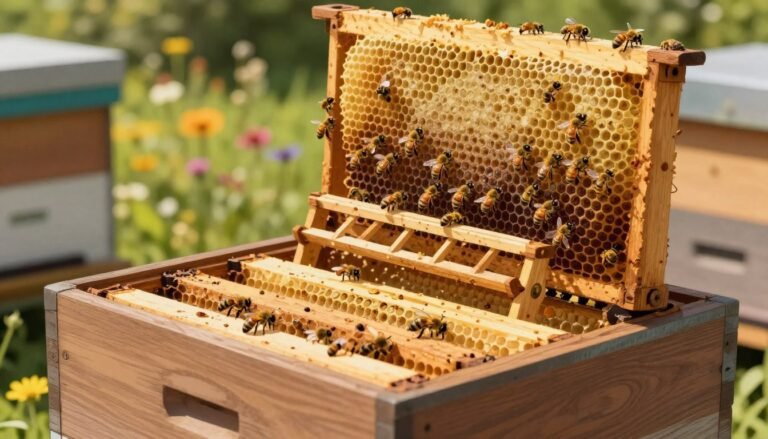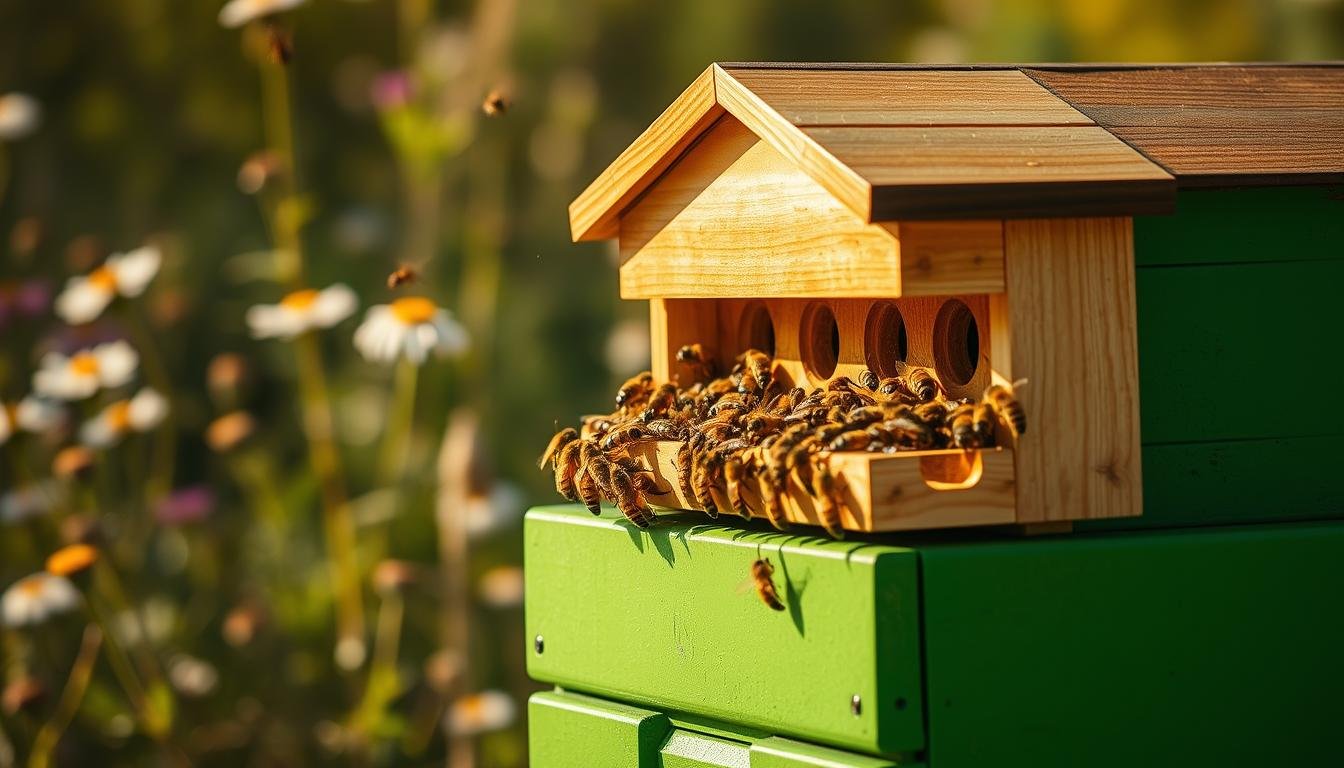
Effective feeding keeps hives productive and strong through changing seasons. In 2025, many beekeepers prefer units with at least a 5-gallon capacity to reduce refill trips and support multiple hives. A well-chosen bee feeder delivers consistent syrup and water without disturbing the brood box.
Durable construction matters. Food-grade plastic designs resist rot and leaching better than wood, and smart shapes cut drowning risk with floats or screened sections. Proper placement under the outer cover gives bees easy access and helps prevent pests and robbing.
Learn practical setup tips and why a top-mounted system lets you refill with minimal stress by visiting a concise guide on recommended units at recommended feeder types. Investing time now saves effort and supports colony health and honey yield for the season.
Key Takeaways
- Choose a high-capacity unit to cut refill time and support multiple hives.
- Prefer food-grade plastic for durability and safer construction.
- Top placement reduces disturbance and lowers robbing risk.
- Look for designs that prevent drowning and allow easy bee access.
- Proper setup improves colony resilience and long-term honey production.
Why Large Colonies Require Specialized Feeding Solutions
When a hive swells with worker bees, ordinary feeding gear quickly falls short. High-density populations often need 3–5 liters of syrup to cut refill trips and keep brood development steady.
Steady flow matters. A reliable top feeder delivers sugar syrup and water without disturbing the box. That steady access reduces stress on nurses and lets the colony focus on brood and honey storage.
Construction and placement affect safety. Durable plastic construction and smart design prevent warping under heavy use and lower drowning risk. Secure seals also block pests like ants and limit robbing behavior.
Experienced beekeepers trust models with high user rating because fewer refill sessions save time and cut hive disturbance. For practical expansion tips and setup ideas, see this concise beekeeping expansion guide.
- Reduced foraging lets bees rear brood more efficiently.
- Robust construction supports intense traffic without failure.
Essential Criteria for Selecting the Best Top Feeder for Large Colonies
Match feeder volume and safety features to the rhythm of your hive’s brood and foraging cycles. Start by deciding how much syrup and water the bees need between refills.
Capacity Requirements
Volume matters. The BeeCastle Pro Feeder offers a 5-gallon capacity that suits very active hives. The Mann Lake model holds 4 gallons and balances convenience with accessibility.
The Foxhound Bee Co. unit stores 8.75 cups and works well when managing multiple hives with shorter refill windows. Make sure the chosen unit feeder fits your 8-frame or 10-frame hive dimensions before purchase.
Material Safety Standards
Prioritize food-grade plastic or stainless steel to avoid chemical leaching into syrup and lake honey. Heavy-duty plastic resists rot and fermentation, which supports harvest quality.
“Choose construction that prevents leaks, reduces drowning risk, and is easy to clean to stop mold growth and keep bees healthy.”
| Model | Capacity | Key Safety Feature |
|---|---|---|
| BeeCastle Pro | 5 gallons | Large reservoir, secure seal |
| Mann Lake Top Feeder | 4 gallons | Food-grade construction, easy refill |
| Foxhound Bee Co. | 8.75 cups | Vacuum-sealed lid to reduce drowning |
Practical checks: verify that internal ladders or grooves aid bee access, confirm the unit prevents spills into the brood box, and that cleaning is straightforward. For guidance on selecting feeding systems suited to weak or small hives, consult this concise feeding systems FAQ.
Finally, ensure any installation matches your apiary layout; see a clear installation guide at beehive installation to make sure placement and seal are correct.

Top-Fill Designs for Efficient Apiary Management
A large fill port makes refills fast and lowers the stress on foragers and nurses. Top-fill designs with a wide mouth — typically 4 inches or more — let a beekeeper add syrup without lifting frames or opening the brood box.
Wide-mouth access reduces spills and speeds feeding time during busy spring and fall shifts. Transparent walls and visible level markers mean you can check syrup at a glance and avoid unnecessary disturbance.
Benefits of Wide-Mouth Access
- A top-fill bee top unit allows quick replenishing, saving valuable time during routine management.
- The honey bee top design often offers multiple entry points so many bees can feed at once.
- When a feeder fits snugly on the hive, inspections stay minimal and the colony stays calm.
- High-quality plastic units resist weather and are easy clean, which reduces mold and spoilage.
| Feature | Benefit | Practical Note |
|---|---|---|
| Wide-mouth (≥4 inches) | Fast refill, fewer spills | Measure opening in inches before purchase |
| Transparent sides | Quick level checks | Reduces unnecessary box openings |
| Multiple feeding ports | Many bees can access syrup | Improves feeding flow during peak demand |
For practical options and installation tips, see a concise bee feeders guide that highlights models and sizes that match common Langstroth hives.
Durable Materials and Safety Features for Hive Health
A well-built reservoir and properly fitted screens cut risks and let bees feed with minimal stress. Choose materials that resist weather and avoid toxic additives to protect hive health and preserve lake honey quality.
Preventing Bee Drowning
Mann Lake units use a galvanized safety screen and a leakproof plastic reservoir to lower drowning incidents. Internal ladders or grooves further allow bees to climb out if they fall.
Make sure the screen is correctly installed and seated each time you refill to maintain bee safety and keep pests out.
Weather-Resistant Construction
Pick heavy-duty plastic or stainless components that resist rot and UV damage. Durable construction gives beekeepers peace of mind and reduces replacement cycles.
When the feeder fits securely on the hive, spilled syrup and pest access drop dramatically, helping maintain consistent syrup and water delivery.
Avoiding Mold Growth
Regular cleaning of plastic units is essential. Sugar water left in crevices can ferment and encourage mold that harms honey bee health and taints lake honey.
“Clean, well-maintained equipment is a frontline defense against disease and spoilage.”
For detailed installation and safety guidance see a concise guide to protective top covers and equipment selection at what features should be sought and an equipment overview at choosing beekeeping equipment.
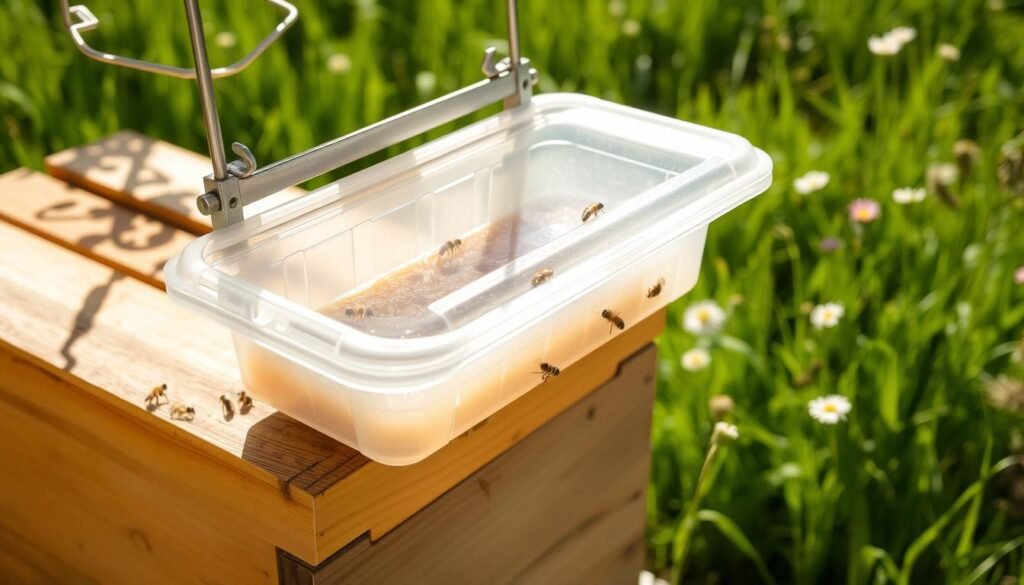
Compact Feeders for Space-Constrained Hive Systems
A compact syrup station can make a big difference when hive space is tight. The BeeCastle 3.3L bee top unit fits into deep boxes alongside one to two frames, so it fits neatly without disturbing brood frames.
The VIVO Boardman model measures 6.6″ x 4.5″ x 1.4″ and offers a discreet option for nucs or busy hives. A 12-pack of plastic bee feeders lets beekeepers stock multiple hives while saving shelf and hive space.
Practical benefits:
- The BeeCastle 3.3L design slides between frames and provides reliable syrup access.
- VIVO Boardman units are low-profile and easy to tuck into tight setups.
- Plastic packs are durable, easy to clean, and simple to install—often tool-free.
Water and syrup access remains vital even in small systems. These compact solutions help maintain colony strength without frequent disruption, and they let you monitor feeding with minimal inspection time.
For a quick purchasing and setup reference, see this helpful guide to hive feeders.
Advanced Feeding Technology for Modern Beekeepers
Smart feeding tools reduce guesswork and help colonies keep steady access to syrup and water.
The solar-powered water sensor unit measures 10.24 x 10.24 x 2.2 inches and sends alerts when levels drop. This saves time and cuts unnecessary inspections.
Pre-assembled solutions simplify setup. The 8-Frame Langstroth Feeder Box includes a floating board to prevent drowning and arrives ready to place on the hive.
Mann Lake continues to lead with leakproof plastic reservoirs and reservoir galvanized screens that boost safety and longevity. A 4-pack bee set makes it easy to manage multiple hives efficiently.
Transparent lids and sensors let you check syrup without opening the box. These designs improve access and reduce disturbance to the honey bee workforce.

| Product | Key tech | Practical benefit |
|---|---|---|
| Solar Water Sensor Unit | 10.24 x 10.24 x 2.2 inches, alerts | Low-maintenance monitoring, less hive disturbance |
| 8-Frame Langstroth Feeder Box | Floating board, pre-assembled | Reduced drowning risk, quick install |
| Mann Lake Reservoir | Leakproof plastic, reservoir galvanized screen | Durable construction, pest protection |
“These tech-forward solutions save valuable time and reduce the stress associated with manual hive inspections.”
To pair modern units with starter gear, see a concise compact starter kit guide that helps equip new and busy beekeepers.
Conclusion
A reliable bee top feeder gives steady syrup and water access and makes hive checks calmer. Choose a unit whose design limits spills and drowning so bees can work without extra stress.
Models like mann lake show how food-grade plastic and anti-drowning features deliver the right feeder choices and lasting peace mind. Look for units that are easy to refill and easy clean.
Careful selection and routine maintenance will help bees thrive. Good feeding gear supports brood, steadies foraging, and makes life simpler for beekeepers.
Explore a practical guide to a reliable top feeder for a beehive to pick the right option and keep your colony healthy.
FAQ
What type of top feeder works best for a large Langstroth hive?
Choose a top feeder with a large reservoir, leakproof plastic or galvanized construction, and a snug fit that sits neatly on the hive. A design with wide-mouth access and clear sightlines helps you check syrup levels quickly without disturbing the colony. Look for models that offer easy clean features and have bee safety measures to prevent drowning and minimize pest access.
How do I prevent bees from drowning in a syrup feeder?
Use feeders with built-in floaters, mesh platforms, or shallow feeding ports that give bees purchase. Adding clean twine or small wood strips provides landing spaces. Rotate and clean the feeder regularly to reduce slippery surfaces, and avoid overfilling so syrup doesn’t pool on top of the hive.
How often should I refill a top-mounted reservoir during heavy feeding?
Monitor consumption daily during spring buildup and nectar dearth. Large colonies may empty a multi-quart reservoir in 24–72 hours. Choose a feeder that allows quick top-fill access so you can refill without lifting boxes, saving time and reducing hive disturbance.
Are plastic feeders safe for long-term use in hives?
High-density, food-grade plastics are safe and lightweight, offering leakproof performance and easy cleaning. Galvanized metal options can resist weather and pests but may be heavier. Inspect plastic for cracks and replace damaged units to ensure hive health and prevent contamination.
Can a top feeder help during winter or cold snaps?
Top feeders can supply emergency syrup during cold periods if managed carefully. Use warm syrup and refill quickly to minimize heat loss. Place feeders so they do not create condensation inside the hive, and avoid encouraging robbing during colder weather when bees are less active.
How do I keep mold and fermentation out of the feeder?
Clean feeders between uses with hot water and a gentle brush; avoid harsh chemicals that leave residues. Ensure syrup is prepared at the correct sugar-to-water ratio and replace old syrup promptly. Good ventilation and using feeders with tight seals reduces exposure to moisture and pests that introduce microbes.
What features reduce robbing and pest access to the feeder?
Choose feeders with narrow entrances, screened vents, or internal access ports that only allow bees from the hive to feed easily. Raised rims, snug-fitting lids, and weather-resistant construction also lower the risk of robbers and small mammals reaching syrup.
How do top-fill designs improve apiary management?
Top-fill feeders let you add syrup without removing deep or brood boxes, saving time and reducing stress on the colony. Wide-mouth access speeds refills and makes cleaning easier. These designs also let you inspect levels visually, helping plan feeding schedules.
Can compact feeders handle the needs of a densely populated apiary?
Compact feeders work well for hives with limited super space or in stacked apiary systems, but they must offer enough capacity or be refilled more frequently. For densely populated operations, pair compact units with efficient refill routines or multiple feeding points to keep colonies well supplied.
Which brands and models offer reliable, leakproof top feeders for serious beekeepers?
Reputable beekeeping brands such as Mann Lake and Dadant produce a range of leakproof plastic and galvanized reservoir feeders that fit Langstroth hives. Look for models with good user reviews, clear maintenance guidelines, and compatibility with your hive boxes to ensure peace of mind and hive health.