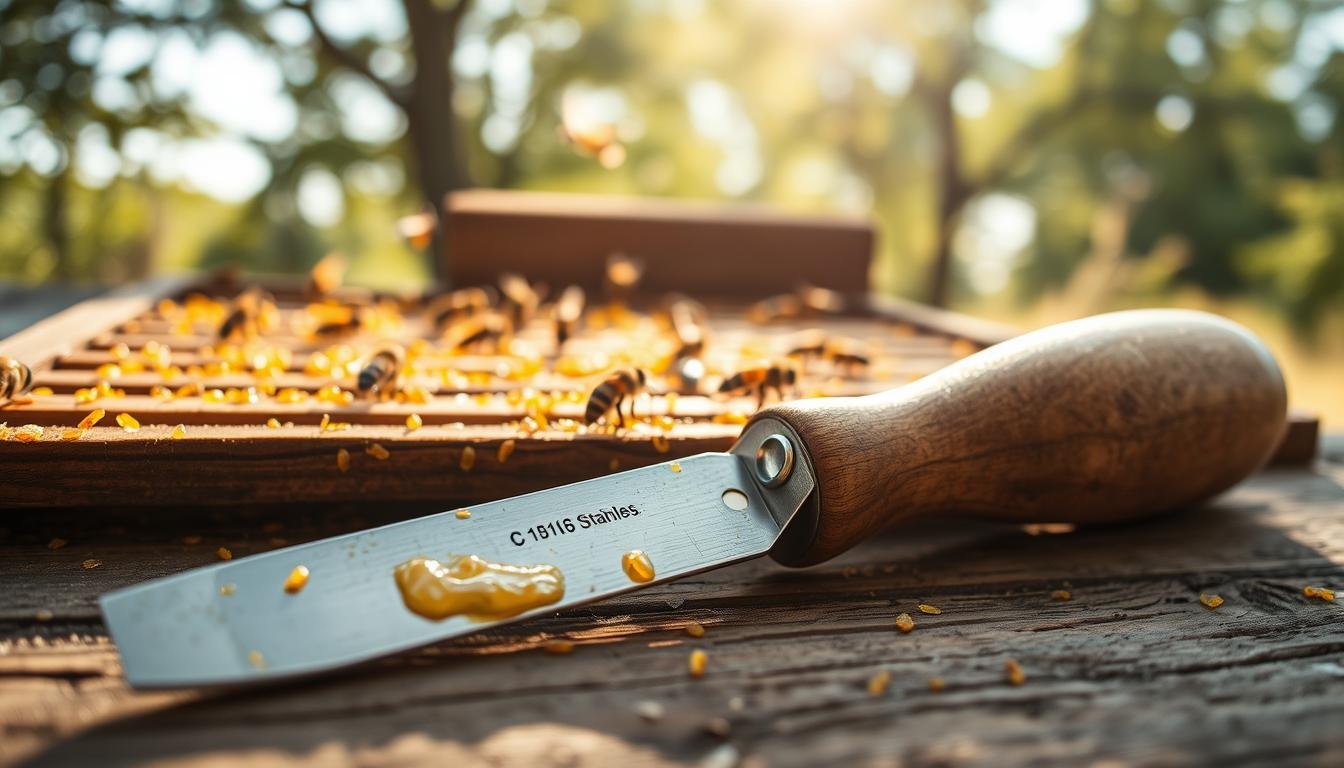
Published March 31, 2026
As of March 30, 2026, practical beekeeping relies on smart gear choices. A good steel scraper or multi-function implement makes inspections faster and safer.
Propolis acts as nature’s sealant. When wax propolis builds up, the right stainless steel implement gives you control during frame removal and heavy boxes handling.
Look for tools with a sharp edge, a durable grip, and an end designed to lift frames without damage. An ergonomic handle or a bright yellow finish improves visibility and reduces hand fatigue.
We cover maintenance tips and long-term durability to help you save time during each visit. Learn how a polished stainless steel bee hive tool resists wax and eases cleanup in our gear guide at this guide.
For safe propolis removal and gentle cleaning methods, see practical advice on warming and brushing at this resource.
Key Takeaways
- Stainless steel tools resist wax buildup and last longer.
- A sharp scraper and proper angle speed up frame removal.
- Ergonomic grip and bright handles reduce fatigue and loss.
- Regular maintenance extends the life of your beekeeping equipment.
- Choose a design that acts as an extension of your hand for precise work.
Understanding the Challenge of Propolis-Heavy Colonies
Propolis gives a hive structural strength, but it also raises the bar for routine inspections.
The Role of Propolis in Hive Health
Propolis is a resinous mix bees use as biological cement. It seals cracks, reduces drafts, and helps protect the colony from pathogens.
Honey bees collect plant resins and mix them with wax and enzymes to coat frames and interior walls. This natural defense improves hive health while stabilizing the internal environment.
Why Propolis Makes Inspections Difficult
For beekeepers, the same resin that protects a hive creates strong seals between boxes and around frame handles.
- Bees use propolis as a biological cement, so frames often stick fast during hive inspections.
- Wax and resin build-up can fuse heavy boxes together and require extra force to separate.
- Moving frames risks disturbing the bee community, so patience and proper technique matter.
Learn more about how bees use propolis in their nests at how honey bees use propolis.
The Best Hive Tool for Propolis-Heavy Colonies
A robust stainless-steel implement makes short work of stubborn resin and speeds up inspections.
Professional stainless steel tools give beekeepers reliable control when frames stick. A good design provides leverage at the end and a sharp edge to scrape wax without bending the frame handle.
Think of the tool as an extension of your hand. A secure grip and balanced weight cut the time you spend forcing boxes apart. That reduces stress on the bee colony and protects honey stores.
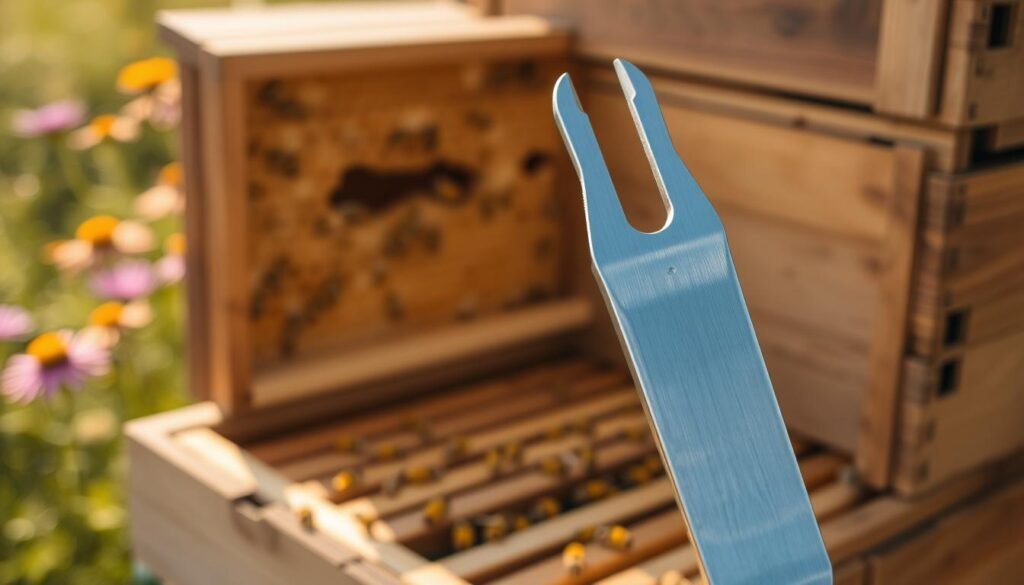
Durable steel construction resists corrosion and cleans easily after inspections. The right scraper shape lifts frames cleanly and helps maintain internal hive hygiene.
- Material: stainless steel offers longevity and strength.
- Edge: sharp scraper for wax and resin removal.
- End design: lever action to separate boxes and lift frames.
| Feature | Benefit | What to look for | Notes |
|---|---|---|---|
| Stainless steel | Durability and easy cleaning | 316 or 304 grade, polished edge | Resists wax buildup and rust |
| Grip and weight | Control during inspections | Ergonomic handle, non-slip surface | Reduces hand fatigue on long jobs |
| Scraper & end shape | Efficient frame removal | Sharp scraper, hooked or wedge end | Provides leverage without damage |
For deeper reading on implement designs and practical options, see a detailed guide on hive tools and a review of alternatives such as entrance reducers at entrance reducer alternatives.
Comparing Standard Tools and J-Hook Designs
Choosing the right pry and lift design shapes how quickly you finish an inspection.
The classic scraper excels at prying sealed boxes and clearing wax from surfaces. Its flat edge gives strong leverage when separating heavy boxes. This makes quick work of stubborn seals and speeds up routine inspections.
Standard scrapers also give a clear edge for scraping frames clean. Many beekeepers trust stainless steel scrapers for durability and easy cleaning.
The Case for the Standard Scraper
The flat end offers a predictable wedge action. It slides under frames and lifts with minimal twist. That control reduces damage to comb and lowers colony stress.
Advantages of the J-Hook Design
J-hook designs provide mechanical advantage when lifting frames. The hooked profile improves the view into the gap and pulls frames smoothly.
| Design | Primary benefit | When to choose |
|---|---|---|
| Standard scraper | Strong scraping edge, quick box separation | Heavy boxes and sticky wax buildup |
| J-hook | Smoother frame lifts, better view of frame gap | Delicate inspections and brood handling |
| Stainless steel variants | Longevity and easy sanitation | Frequent beekeeping and honey work |
Each beekeeper must pick the design that fits their workflow. For details on the red J-type profile see red J-type features. If you want quieter apiary setups, consider noise-reducing stands as part of your gear layout.
Why Material Quality and Durability Matter
Material choice directly affects performance, sanitation, and service life when working in an apiary.
Durable steel reduces wear and keeps inspections predictable. A quality handle acts like an extension of your hand and cuts fatigue during long sessions.
Stainless Steel vs. Painted Alternatives
High-quality stainless steel resists corrosion and will not chip or flake into frames. That protects honey and lowers contamination risk.
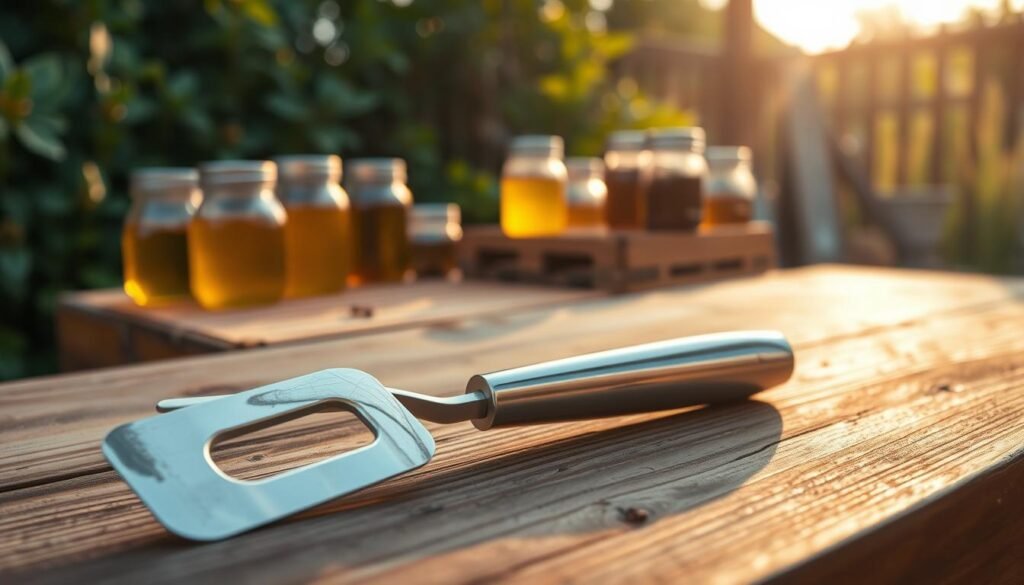
Maintain a 45-degree angle on the scraper edge to improve leverage when removing wax and resin. The shaped end keeps its form and provides steady lift without bending.
“Choose materials that stand up to daily use; that saves time and preserves hive health.”
- Stainless steel gives superior durability and easy cleaning.
- Polished metal outlasts painted finishes that may chip or rust.
- A secure grip prevents slipping and supports safe, controlled movements.
For a practical overview of recommended implements, see our beekeeping tools guide.
Ergonomics and Handling During Hive Inspections
The right weight and grip cut inspection time and reduce wrist strain.
A balanced hive tool between 9 and 12 ounces gives good leverage while limiting fatigue. This weight range helps beekeepers lift frames and separate boxes without overexertion.
Choose a stainless steel model with a comfortable handle and a secure grip. A well-shaped handle keeps the implement steady and acts like an extension of your hand during delicate work.
Durability matters. Solid steel construction and a sharp edge let you scrape resin, lift frames, and maintain control without bending the end. That protects comb and reduces colony disturbance.
Clear sightlines speed inspections. A hooked or wedge end provides leverage and a better view of the frame gap. When you can see the comb, work becomes precise and faster.
See maintenance tips to keep tools sanitary and serviceable between seasons. Proper care extends durability and makes every inspection smoother.
Essential Features for High-Visibility and Storage
High-visibility features and tidy storage transform long inspections into a quick, safe routine.
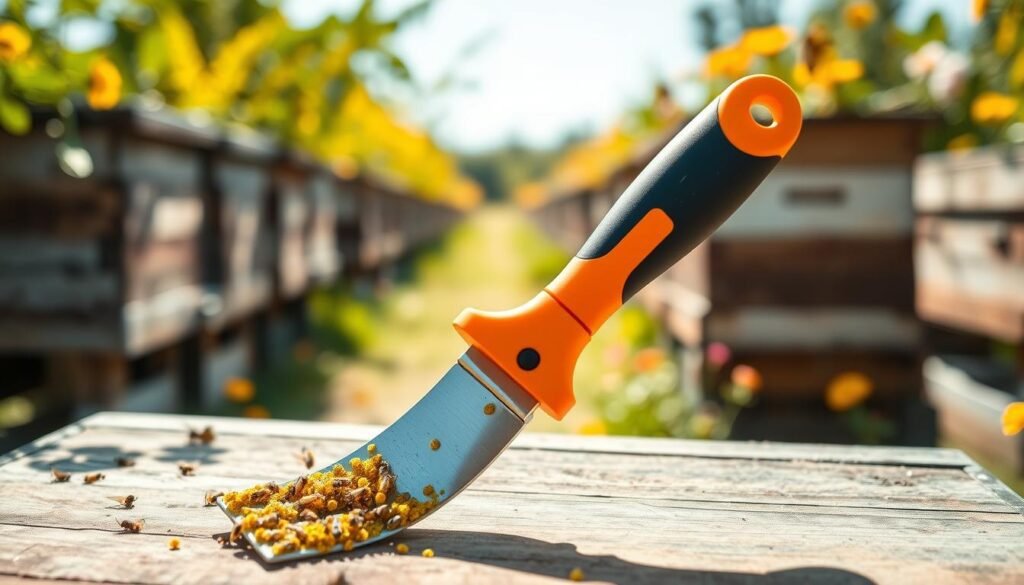
Choose a stainless steel design with a bright yellow finish or painted accent so implements are easy to spot in grass. A visible handle speeds retrieval and reduces lost equipment during a busy season.
Look for practical extras:
- A built-in hanging hole keeps a tool on a peg or carabiner between checks.
- Ergonomic grip that acts as an extension of your hand to keep control while moving frames.
- A robust end and a sharp scraper face that stand up to prying and leverage without bending.
| Feature | Benefit | What to check |
|---|---|---|
| Bright finish | Easy to spot in grass | Yellow paint or insert |
| Hanging hole | Organized storage | Large enough for carabiner |
| Stainless steel build | Durable and cleanable | 304 or 316 grade |
Keep a dedicated box or pegboard near your bee hive and treat your scraper as essential equipment. Small habits save time and protect comb during inspections.
“Well-organized gear cuts downtime and keeps inspections calm.”
See travel options and compact storage ideas at portable hives and travel gear.
Top Product Recommendations for Serious Beekeepers
The right set of implements turns tedious maintenance into a routine that fits any schedule. These picks focus on durability, quick frame removal, and visibility during field work.
Multi-Functional Sets for Efficiency
AukBeeFun’s 7-in-one set bundles pry, scraper, and hook functions to save time during hive inspections. The set helps manage frames and heavy boxes with fewer swaps of equipment.
Many beekeepers value multi-use gear because it acts like an extension of the hand and reduces interruptions.
Lightweight Options for Daily Use
WEICHUAN’s 5.91-inch stainless steel scraper is small and light. It makes frame removal and wax scraping easy on long days.
For broader work, the Sunshane 10.5″ offers strength when you lift frames regularly.
High-Visibility Tools for Field Work
HiveAlive 1 EZ Find Pro uses a bright yellow-and-green design and 3mm steel to stay visible in grass. KINGLAKE’s 10-inch polished scraper resists honey stains and keeps an edge.
| Product | Feature | Best use |
|---|---|---|
| AukBeeFun 7-in-one | Multi-function set | Comprehensive inspections |
| WEICHUAN 5.91″ | Lightweight stainless steel | Daily hive maintenance |
| HiveAlive EZ Find Pro | Bright yellow, 3mm steel | Field visibility |
| KINGLAKE 10″ | Polished scraper | Precise scraping, resists stains |
All listed options hold strong user ratings (≈4.8 stars) and are proven in real beekeeping work. Choose one that matches your inspections and handling style to save time and protect comb.
Maintenance Tips for Long-Lasting Equipment
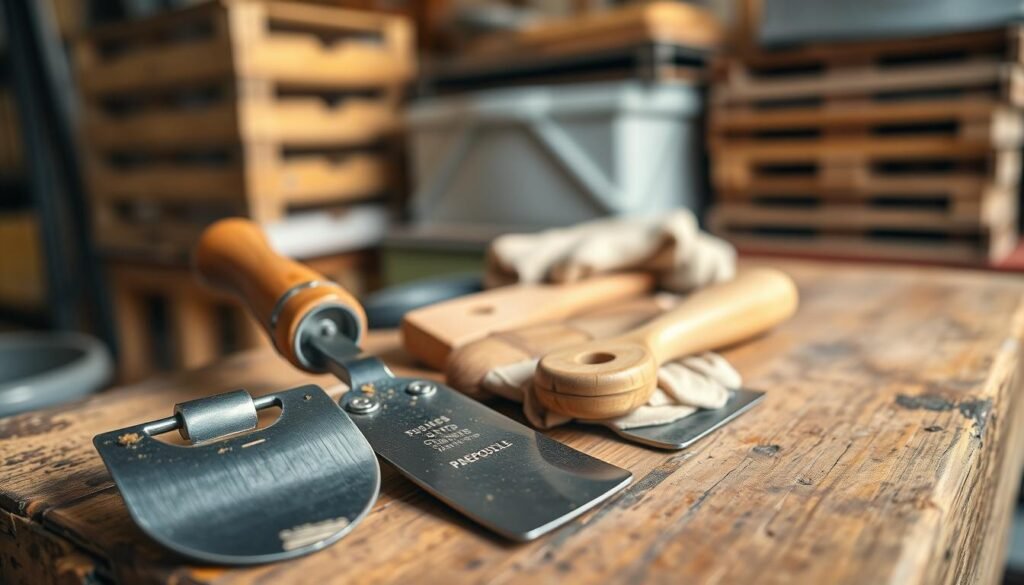
Simple upkeep keeps your stainless steel implements working smoothly season after season.
Clean after every inspection. Remove wax and wax propolis from the scraper and ends of tools. Doing this reduces pathogen spread between hives and protects honey and frames.
Wipe tools with warm water and mild detergent, then dry immediately. Light oiling of steel parts prevents rust and keeps components ready for the next check.
- Scrape away excess wax right away to stop hard buildup.
- Inspect the end and edge for wear; sharpen or replace if dull.
- Store tools in a dry box or on a peg to avoid moisture and loss.
- Sanitize between apiaries to protect bees and maintain beekeeping equipment hygiene.
| Action | Why it matters | How often |
|---|---|---|
| Clean scraper & tools | Prevents resin buildup and disease transfer | After every inspection |
| Dry and oil steel | Stops rust and preserves edge | Weekly or after wet work |
| Check ends & edges | Maintains leverage and safe lifts | Monthly or before season |
| Organize storage | Speeds work and reduces loss | Always |
Keep a short routine and your hive tools will last years. Proper maintenance preserves stainless steel quality and keeps inspections quick and safe.
Conclusion
Good design and solid steel construction turn a simple implement into a dependable partner during checks. Choosing the right hive tool gives you control, reduces strain, and protects comb and honey.
Prioritize durability and ergonomics. A quality scraper or hooked implement acts like an extension of your hand. Proper handling and simple upkeep keep tools ready and extend service life.
Whether you use a standard scraper or a J-hook, pick a hive tool that fits your workflow and sightlines so you have a clear view while you work. Regular maintenance will keep your steel hive implements performing season after season and support healthy beekeeping.
FAQ
What features should I prioritize when choosing a hive tool for propolis-heavy colonies?
Look for a sturdy, corrosion-resistant steel scraper with a sharp, flat edge for breaking propolis seals and a hooked end or J-hook to lift frames. A comfortable, non-slip grip reduces fatigue during long inspections. High-visibility finishes like bright yellow help locate the tool in grass or woodlands. Durable construction and a thin but strong blade make frame removal easier without damaging wood.
How does a J-hook design compare to a standard flat scraper during inspections?
The J-hook provides better leverage to pry frames apart and lift deeply glued frames, reducing wrist strain. Standard scrapers excel at chipping away propolis and cleaning inner covers and bottom boards. Many beekeepers carry a multi-functional tool that combines a flat scraper edge with a hook to handle both scraping and lifting tasks efficiently.
Is stainless steel really worth the extra cost for hive tools?
Yes. Stainless steel resists corrosion from moisture and honey acids, keeps edges sharper longer, and withstands repeated prying without bending. Painted or plated alternatives can chip, rust, and lose effectiveness faster, especially in wet or coastal environments. For durability and hygiene, stainless options are the better long-term investment.
What handle styles improve control when working with heavy boxes and sticky propolis?
Ergonomic handles with textured rubber or molded grips minimize slippage and improve control when pulling frames or levering boxes. Longer handles provide more leverage for heavy supers but can be less compact for storage. Choose a balance between grip comfort, leverage, and portability based on your typical hive setup.
Should I carry multiple tools or a single multi-functional tool during inspections?
A compact multi-functional set often covers scraping, prying, and frame lifting, saving time and pocket space. However, carrying a dedicated heavy-duty scraper and a separate J-hook can be faster for propolis-heavy hives where both intense scraping and strong leverage are required. Consider your routine and hive condition when deciding.
How can I maintain my tools to extend their lifespan and performance?
Clean tools after inspections to remove wax and propolis using hot water, mild detergent, or isopropyl alcohol. Dry and lightly oil any non-stainless parts to prevent rust. Sharpen edges periodically with a file and store tools in a dry, bright-colored sheath or box to prevent damage and make them easy to find in the field.
What length and thickness of blade work best for stuck frames and heavy boxes?
A blade around 1/8″ to 3/16″ thick balances strength and thinness for sliding between frames without splitting wood. A length of 6 to 8 inches gives enough reach for deep boxes and provides leverage for prying. Thinner blades slide better; thicker blades resist bending under heavy leverage.
Are bright-colored tools worth buying for daily apiary work?
Yes. High-visibility colors like bright yellow or orange make tools easier to locate in tall grass, wood chips, or packed equipment boxes. That saves time during inspections and reduces the chance of leaving a tool in a hive or pasture where it could corrode or be lost.
Can a lightweight tool handle frames sealed with lots of propolis?
Lightweight tools work for routine inspections and light propolis, but heavily sealed frames require stronger, heavier-duty steel to avoid bending. If your hives build thick propolis, opt for a sturdier model or keep a heavy-duty backup for tough pulls while using a lighter tool for general tasks.
What additional equipment pairs well with a quality scraper and hook?
A solid hive lifter, bee brush, frame gripper, and a handsaw or frame spacing tool help manage heavy boxes and damaged frames. A bright carrying case or tool roll keeps items organized. For winter or transport, sealing strips and rubber bands can reduce propolis spread and make future inspections easier.