The short answer: Italian bees suit beginners who want a calm, fast-building colony and don’t mind heavier winter feeding; Carniolans suit cold, unpredictable climates where a colony that shuts down brood rearing fast saves stores; Buckfast and Saskatraz suit beekeepers prioritizing disease resistance and gentle temperament over a specific ancestry; and Russians suit anyone in Varroa-heavy regions willing to trade some honey yield for a bee that manages its own mite load. There is no single “best” breed — only the best fit for your climate, your tolerance for swarming, and what you’re actually trying to produce.
Every beginner beekeeping guide on this site, and most catalogs from bee suppliers, will tell you package bees come in a handful of named breeds. What they rarely do is help you actually choose between them before you spend $150–$220 on a package or $200+ on a mated queen. This guide compares the five breeds and hybrid stocks a home or sideline beekeeper is actually likely to be offered in the U.S. today, and gives a straightforward decision framework instead of a marketing pitch for any one of them.
Key Takeaways
- Italian bees (Apis mellifera ligustica) are the most widely sold U.S. package bee: prolific, calm, but slow to shut down brood rearing in fall, which means heavier winter feeding.
- Carniolans build up explosively in spring and shut down fast when forage stops — strong for unpredictable climates, but more swarm-prone.
- Buckfast and Saskatraz are bred hybrid lines, not geographic subspecies — both selected hard for temperament and Varroa tolerance rather than a single “pure” ancestry.
- Russian bees (VSH-selected lines descended from Primorsky stock the USDA imported in 1997) manage Varroa more independently but tend to produce less surplus honey and can be more defensive.
- Breed only predicts tendencies. A well-managed colony of any breed will usually outperform a neglected colony of the “best” one.
Italian Bees: The Default Choice, For Real Reasons
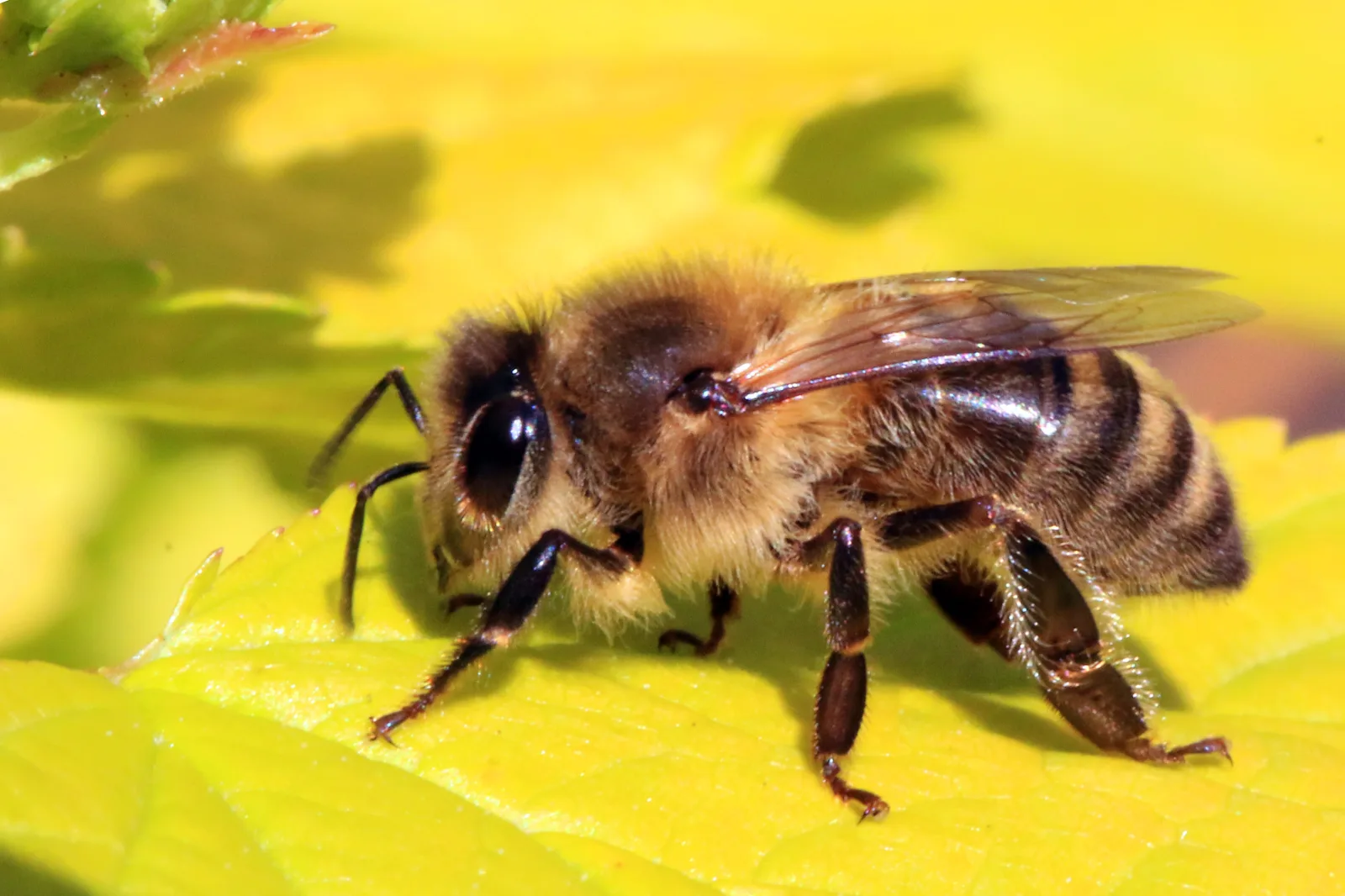
If you buy an unlabeled package from a large U.S. supplier, it’s very likely Italian. Apis mellifera ligustica became the dominant U.S. stock more than a century ago because it is calm on the comb, builds up quickly into a strong honey-producing colony, and has light-colored bees that make finding the queen easier for a beginner.
The tradeoff is winter management. Italians keep rearing brood later into fall than Carniolans or Russians, which means the colony keeps eating stores when a shorter-season breed would already be clustered and conserving. In the Upper Midwest, Northeast, or mountain climates, that can mean the difference between a colony that starves in February and one that doesn’t, if you don’t compensate with earlier fall feeding. Italians also drift and rob more readily between hives in a dense apiary, which matters if you’re keeping several colonies close together in an urban backyard.
Carniolans: Built for Boom-and-Bust Forage
Apis mellifera carnica evolved in the Alpine climate of Slovenia and the Balkans, where a short, intense spring bloom is followed by a long dearth — and it shows. Carniolans ramp up brood production explosively when pollen comes in, then throttle back hard the moment the flow stops, which is exactly the trait that makes them efficient in northern U.S. climates or anywhere forage is unpredictable rather than steady all season.
That same explosive buildup is also their biggest management headache: strong swarming tendency. A Carniolan colony that isn’t given room fast enough in spring will often swarm before you’ve caught up. If you already have a full-guide on Carniolan honey bees bookmarked, the short version for a buying decision is: choose Carniolan if your climate has a hard, short dearth and you’re committed to proactive spring swarm management, not if you want a “set it and check monthly” colony.
Buckfast: A Bred Hybrid, Not a Subspecies
Buckfast is not a geographic race the way Italian and Carniolan are — it’s a closed hybrid line originally developed by Brother Adam at Buckfast Abbey in England, built by deliberately crossing multiple subspecies (Italian, Anatolian, and others) and then selecting hard, generation after generation, for gentleness, low swarming, and productivity rather than for looking like any one ancestral bee. Our full Buckfast guide covers the breeding history in depth; the buying-decision takeaway is that “Buckfast” from one supplier and “Buckfast” from another can vary more than two batches of Italians would, because it’s a maintained line rather than a fixed subspecies — ask the breeder directly about their selection criteria (temperament, mite resistance, honey yield) rather than assuming the name alone guarantees a specific trait profile.
Saskatraz: Bred Specifically for Varroa Tolerance
Saskatraz is a newer North American hybrid program, developed in Saskatchewan, Canada, from stock selected specifically for Varroa tolerance, high honey production, and overwintering ability in a genuinely cold climate. It’s a reasonable pick if your main pain point with a previous colony was mite pressure outrunning your treatment schedule, and our Saskatraz deep-dive covers the specific resistance mechanisms bred into the line. As with Buckfast, it’s a maintained breeding program rather than a fixed subspecies, so sourcing from a breeder who actively tests and selects (rather than one simply reselling the name) matters more than it would with Italians.
Russian Bees: Independent Mite Management, At a Cost
Russian honey bees sold in the U.S. today trace to Primorsky stock imported from the Russian Far East by the USDA’s Agricultural Research Service in 1997 specifically because that population had coevolved with Varroa destructor for far longer than U.S. bees had, and showed measurably better mite-grooming and hygienic behavior as a result. If Varroa has been your single biggest recurring problem, Russians (and VSH-selected lines bred for the same trait) are worth pricing out.
The honest tradeoff: many beekeepers report Russian colonies as more defensive and somewhat less prolific honey producers than Italians, and their brood-rearing pattern is more variable in response to short-term dearths, which can look alarming to a beginner checking for queen problems that aren’t actually there. They’re a better fit for an intermediate beekeeper who can read a brood pattern confidently than for a first-year package.
How to Actually Decide: A Buying Framework
Work through these in order, since climate and management tolerance matter more than any single trait ranking:
- Climate first. Short, sharp dearth (mountain West, northern Plains) → Carniolan or Saskatraz. Long, mild season with steadier forage → Italian.
- Swarm-management time. If you can’t inspect weekly in spring, avoid Carniolan; Italian and Buckfast are more forgiving of a biweekly schedule.
- Varroa history. Repeated mite blowouts despite on-schedule treatment → Russian or a VSH-tested Saskatraz/Buckfast line.
- What you already have. If you’re adding a second colony to an existing apiary, matching the existing breed reduces drift-related robbing and confusion when combining or requeening later — see our comparison of starting with a package, nuc, or swarm for how breed interacts with that choice.
- Source over label. A “Buckfast” or “Saskatraz” queen from a breeder who can describe their actual selection process is a better bet than an unlabeled queen from a supplier who can’t tell you where the genetics came from.
For the mechanics of actually placing an order — deposits, health certificates, shipping timing — our guide to buying packaged bees and nucs in the USA covers the logistics this article deliberately leaves out, so the two are meant to be read together rather than as duplicates of each other.
Frequently Asked Questions
Can I mix breeds in the same apiary?
Yes — most beekeepers with more than one colony end up with a mix, whether intentionally or because a requeening replaced one breed’s queen with another. The main practical issue is drift and robbing between colonies of different temperaments; keeping hive entrances visually distinct (different colors or landmarks) reduces drifting regardless of breed.
Does bee breed affect honey flavor?
No — honey flavor comes from the nectar source (the flowers foraged), not the bee subspecies that produced it. A Carniolan and an Italian colony foraging the same clover field will produce honey that tastes the same.
Will a “gentle” breed guarantee I won’t get stung?
No. Temperament genetics shift the odds, but weather, a failing queen, a recent inspection, or simple bad luck can make any colony defensive on a given day. Breed selection reduces baseline defensiveness; it doesn’t eliminate the need for proper protective equipment and calm handling.
How much more does a specific breed cost versus an unlabeled package?
Unlabeled (typically Italian-derived) packages are usually the cheapest option from large suppliers. Named hybrid queens (Buckfast, Saskatraz) or Russian-certified queens commonly run $10–$40 more per queen than a standard mated queen, reflecting the cost of maintained breeding programs.
Bee-breed decisions are ultimately about matching a colony’s natural rhythm to your climate and your available inspection time — not about finding a universally “best” bee. Whichever you choose, source from a breeder who can tell you exactly what they selected for.