
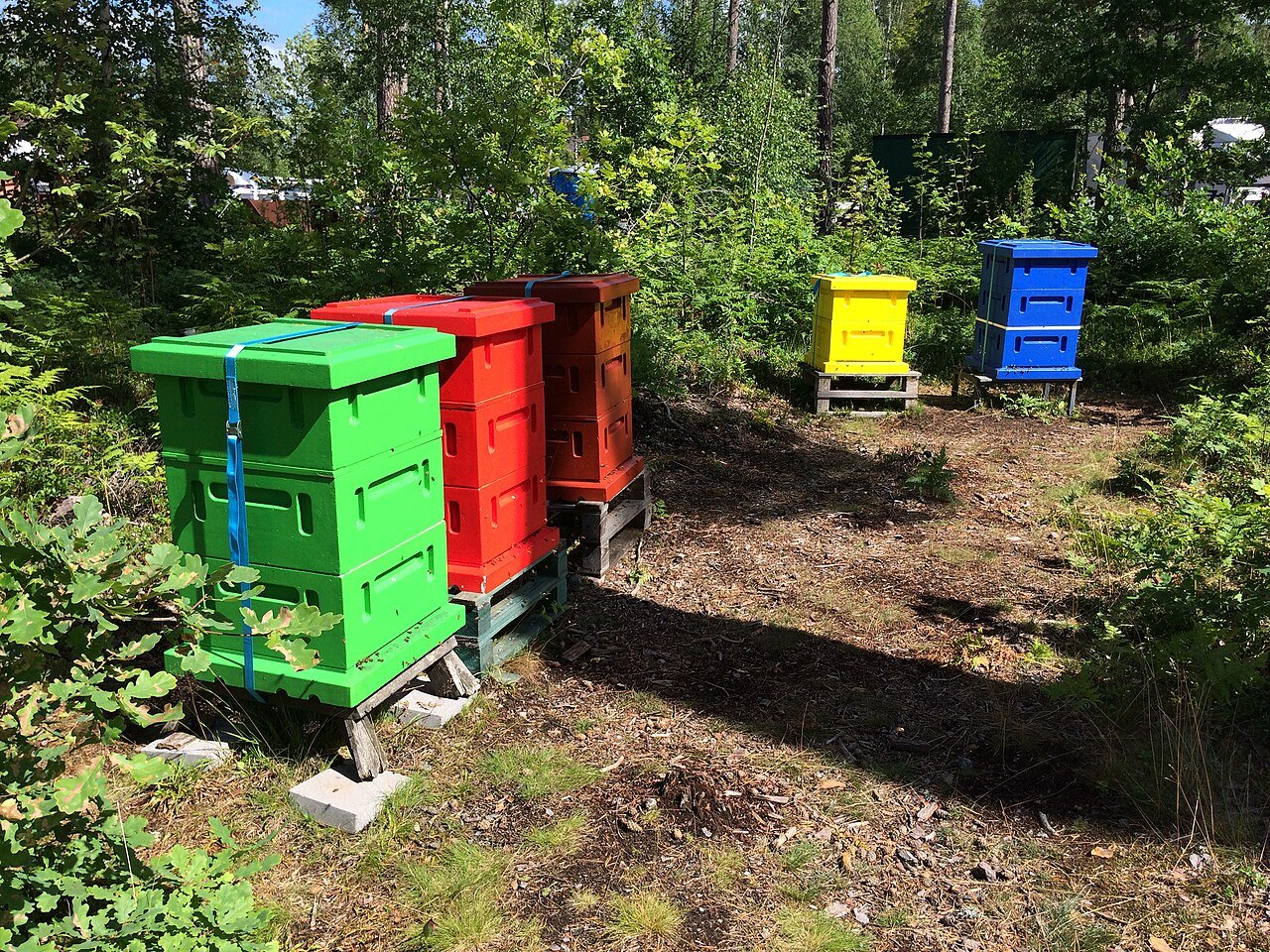
Sweden is in the middle of completely rebuilding its bee health law — the country currently regulates bee diseases under a dedicated Bee Disease Act separate from how it handles every other farm animal, and that entire framework is set to be repealed and folded into Sweden’s general animal health system by the 2028 beekeeping season. The shift is being driven directly by the EU’s Animal Health Regulation, which Sweden began applying in 2021, and it marks a genuine structural change in how Swedish beekeepers will be regulated going forward.
This guide covers Sweden’s current apiary registration and medicine record-keeping requirements, the 500-kilogram honey threshold before needing food-business registration, why bees have historically been regulated separately from other livestock in Sweden, and the major bee-health law reform underway for 2028.
Key Takeaways
- Swedish beekeepers must register their apiary’s location when establishing it, and then only when something changes — a recent simplification from a previous three-year re-registration cycle.
- Beekeepers must keep records of any medication given to their bee colonies, including the date, product name, dosage, and origin.
- A beekeeper can sell up to 500 kilograms of their own honey or other bee products per year without being classified as a food business operator requiring regional registration.
- Sweden currently regulates bee diseases under a dedicated Bee Disease Act and Ordinance, handled organizationally and legally differently from how diseases in other land animals are managed.
- Driven by the EU Animal Health Regulation, Sweden’s entire bee-health legal framework is being rebuilt, with a new organization and rules expected around the 2028 bee season, at which point the current Bee Disease Act will be repealed.
Table of Contents
- Current Apiary Registration Requirements
- Medicine Record-Keeping
- The 500-Kilogram Honey Sales Threshold
- Why Bees Are Currently Regulated Separately
- The 2028 Bee Health Law Reform
- Sweden’s Place in the Broader EU Bee Health Picture
- Frequently Asked Questions
Current Apiary Registration Requirements
Swedish beekeepers must register the location of their apiary with the relevant authority when they first establish it. A recent simplification changed the ongoing renewal cycle: rather than needing to re-register every three years, as previously required, beekeepers now only need to submit an update when something actually changes about their registered apiary. This is administered through Sweden’s County Administrative Boards (Länsstyrelserna) working alongside local bee inspectors (bitillsynsmän), the current organizational structure responsible for bee health oversight across the country’s regions.
Medicine Record-Keeping
Beekeepers in Sweden are required to maintain records whenever they treat their bee colonies with medication. The required record includes the date the medication was administered, the name of the medication, the dosage given, and the medication’s origin. This record-keeping obligation exists for reasons common to livestock medication rules generally: ensuring traceability of treatments and reducing the risk of medicine residue ending up in honey or other bee products intended for consumption. Sweden also restricts beekeepers to using only medicines approved for the Swedish market, consistent with how other EU member states handle veterinary product authorization for food-producing animals – a beekeeper can’t simply substitute an unapproved product because it’s cheaper or more convenient, even if it’s legally sold elsewhere in the EU.
The 500-Kilogram Honey Sales Threshold
Sweden sets a specific, numeric threshold for when a beekeeper selling honey needs to formally register as a food business operator with their regional authority: a beekeeper can deliver up to 500 kilograms of honey or other products from their own beekeeping per year without triggering that registration requirement. This gives small-scale and hobbyist Swedish beekeepers meaningful room to sell a genuine amount of honey — 500 kilograms is a substantial quantity for a non-commercial operation — before the more formal food-business regulatory apparatus applies to them.
Why Bees Are Currently Regulated Separately
Unlike most farm animals in Sweden, honey bee diseases are currently handled under a dedicated legal framework — the Bee Disease Act (Bisjukdomslagen) and its accompanying Bee Disease Ordinance (Bisjukdomsförordningen) — rather than under Sweden’s general animal health law. The Swedish Board of Agriculture (Jordbruksverket) itself describes this as a genuinely different approach, both organizationally and in terms of the rules themselves, compared to how infectious diseases in other land animals are managed. This separate-track history is specifically what Sweden’s current legal reform is designed to end, with the explicit goal of managing bee diseases in a way that’s more consistent with how the country handles disease in other land-dwelling animals.
The 2028 Bee Health Law Reform
Sweden’s bee health regulatory framework is undergoing a fundamental rebuild, driven by the European Union’s Animal Health Regulation (Regulation (EU) 2016/429), which Sweden began applying in 2021. As a result, Sweden must develop new national rules — a new law and ordinance covering animal health that includes bees within the general framework rather than as a separate carve-out. Under the new system, the current Bee Disease Act and Bee Disease Ordinance will be repealed, along with other related national laws and regulations. The Swedish government is expected to present formal legislative proposals to parliament during 2026 or 2027, with the new rules and a new bee-health oversight organization — with Jordbruksverket itself as the responsible authority — expected to take effect around the 2028 beekeeping season, replacing the current County Administrative Board and bee-inspector structure. The upcoming rules are expected to place heavy emphasis on biosecurity measures — the steps beekeepers take to reduce the risk of disease entering and spreading within their colonies and apiaries — with specifically clearer requirements for how beekeepers must respond when spores of Paenibacillus larvae, the bacterium that causes American foulbrood, are detected. Jordbruksverket has already published preparatory guidance materials on preventing and combating infectious bee diseases and American foulbrood specifically, signaling which practices are likely to become formal requirements once the new framework takes effect.
Sweden’s Place in the Broader EU Bee Health Picture
Sweden’s ongoing legal overhaul reflects a pattern playing out across the European Union more broadly: the EU Animal Health Regulation (2016/429) sets a unified framework member states are expected to implement into their own national law, and countries that previously handled bee health through older, bee-specific legislation are having to rebuild those systems to fit the newer, harmonized EU model. This puts Sweden in a genuinely transitional position compared to several other EU countries already covered on this site, whose national frameworks have already been restructured around the same EU regulation – Sweden is still mid-transition, working through a multi-year process rather than having already completed the shift, which is worth understanding if comparing Sweden’s current rules against a country whose reform process finished earlier.
Frequently Asked Questions
Do I need to re-register my apiary in Sweden every few years?
No, only when something changes — registration is now update-triggered rather than requiring renewal every three years.
How much honey can I sell in Sweden without registering as a food business?
Up to 500 kilograms of your own honey or bee products per year.
Why does Sweden regulate bee diseases separately from other livestock?
Historically, bees have been managed under a dedicated Bee Disease Act rather than general animal health law, though this is changing.
Is Sweden changing its bee health laws?
Yes, a major reform driven by the EU Animal Health Regulation is expected to take effect around the 2028 beekeeping season.
What will the new Swedish bee health rules focus on?
Biosecurity measures, with clearer requirements for responding to American foulbrood detections.
FAQ
Do I need to re-register my apiary in Sweden every few years?
No, only when something changes.
How much honey can I sell in Sweden without registering as a food business?
Up to 500 kilograms per year.
Why does Sweden regulate bee diseases separately from other livestock?
A historical dedicated Bee Disease Act, now being phased out.
Is Sweden changing its bee health laws?
Yes, new rules are expected around the 2028 season.
What will the new Swedish bee health rules focus on?
Biosecurity and foulbrood response requirements.


