Published August 31, 2026
Table of Contents
- What a Boardman Feeder Is
- How It Works
- The Genuine Advantages
- The Honest Robbing Problem
- The Internal-Placement Workaround
- Boardman vs. Other Feeder Types
- When a Boardman Feeder Is Actually Appropriate
- Buying vs. DIY
- Who Should (and Shouldn’t) Use One
- Where the Boardman Design Comes From
- Reducing Leak Risk If You Do Use One at the Entrance
- Using a Boardman Feeder for Water Instead of Syrup
- Use for Newly Installed Package Colonies
- Combining With an Entrance Reducer
- Ant and Pest Attraction Beyond Robbing Bees
- Cold Weather Limitations
- Managing Multiple Colonies With Boardman Feeders
- Real-World Cost Comparison
- What to Watch For During Active Feeding
- Tracking Which Feeder Type Works Best
- Common Mistakes
What a Boardman Feeder Is
A Boardman feeder is a simple entrance-mounted feeding device consisting of an inverted jar with a perforated lid sitting on a small wooden or plastic base designed to slide into a hive’s front entrance opening, delivering sugar syrup (or plain water) directly at the entrance. It’s one of the oldest, cheapest, and most widely available feeder designs — and also one of the most genuinely debated among experienced beekeepers, which is worth understanding honestly before choosing it.
How It Works
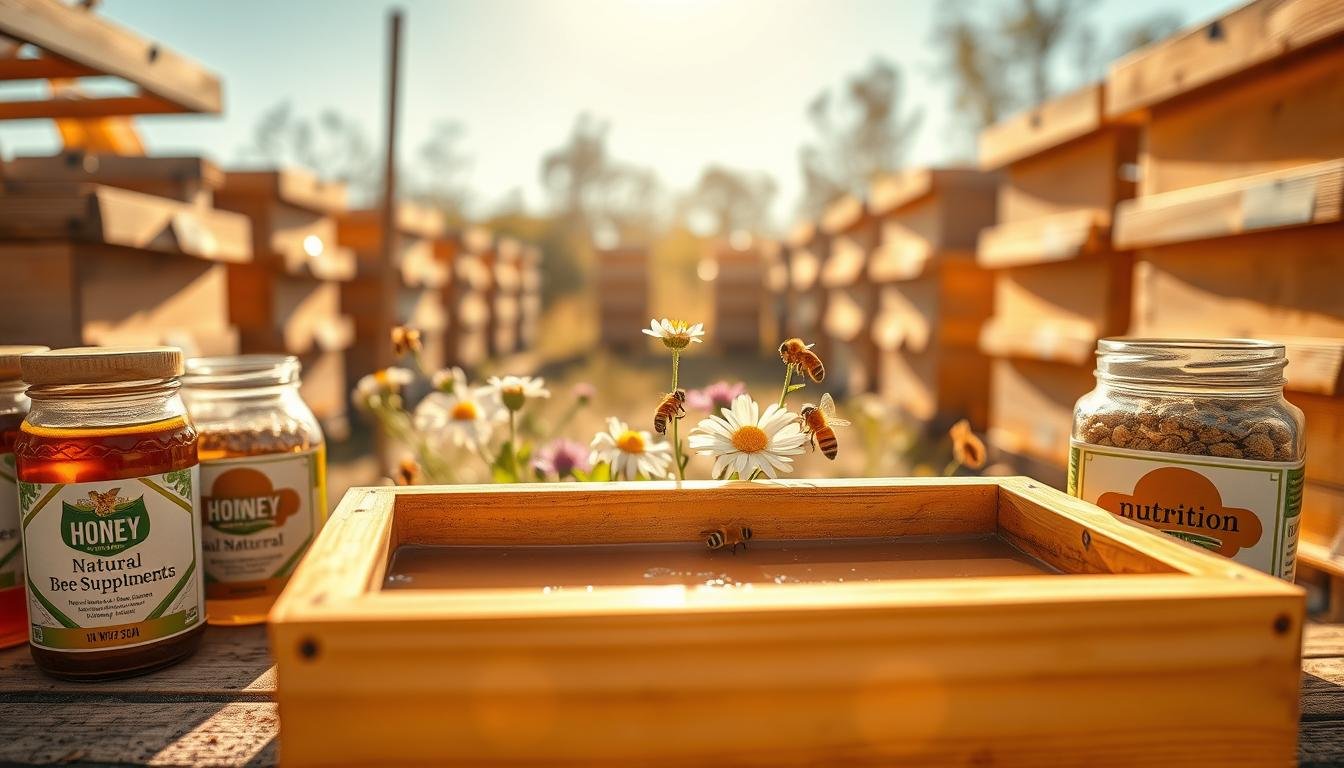
The perforated jar lid uses small holes sized so that surface tension and controlled air pressure keep syrup from pouring out freely, releasing it in small amounts as bees draw it out through the perforations — the same basic principle used in several other inverted-container feeder designs, just positioned at the entrance rather than elsewhere on the hive. Because the jar sits externally, checking syrup levels is as simple as a glance, without opening the hive at all.
The Genuine Advantages
Boardman feeders offer real, practical benefits: they’re inexpensive, work with common mason jars many beekeepers already own, allow at-a-glance level checking without disturbing the colony, and refilling is as fast as swapping an empty jar for a full one — genuinely minimal hive disruption compared to feeder types requiring you to open the hive for every refill. For a beekeeper prioritizing quick, low-disruption feeding checks, these are legitimate practical advantages, not just marketing points.
The Honest Robbing Problem
The well-documented downside — and the primary reason many experienced beekeepers actively advise against Boardman feeders — is that entrance placement creates real robbing risk: jars commonly leak somewhat at the entrance/landing-board area, and that exposed syrup scent right at the entrance is a strong attractant for robbing bees from other colonies and for wasps, particularly during dearth periods when robbing pressure runs highest. This isn’t a minor or overstated concern; it’s the central, genuinely legitimate criticism of this feeder design, and most beekeeping educators specifically warn against using Boardman feeders during active robbing season.
The Internal-Placement Workaround
A workaround some beekeepers use keeps the same inverted-jar mechanism but relocates it: removing the outer cover, placing the jar feeder over the central hole in the inner cover, surrounding it with an empty deep or medium box for protection, then replacing the outer cover on top. This internal placement dramatically reduces robbing risk by moving the food source away from the entrance entirely, while keeping the jar-based convenience — essentially getting the Boardman feeder’s genuine advantages without its most serious documented flaw.
Boardman vs. Other Feeder Types
| Factor | Boardman (entrance) | Top/Hive-Top Feeder | Frame Feeder |
|---|---|---|---|
| Robbing risk | Higher (entrance placement) | Lower (internal) | Lower (internal) |
| Capacity | Small (single jar) | Large | Moderate |
| Check without opening hive | Yes | No | No |
| Cost | Very low | Moderate | Moderate |
This comparison, covered in more depth in our top feeder, frame feeder, and pail feeder comparison, makes clear why most experienced beekeepers reach for a top or frame feeder for any significant feeding volume, reserving Boardman-style jar feeders for narrower use cases where their specific advantages actually outweigh the robbing trade-off.
When a Boardman Feeder Is Actually Appropriate
Boardman feeders make the most sense for very short-term, small-quantity feeding outside of robbing season — supplementing a package installation briefly, or a quick top-off when other feed sources are already adequate — rather than as a primary or sustained feeding method during dearth periods or fall preparation when robbing risk is elevated and feeding volume needs are higher than a single jar can efficiently deliver.
Buying vs. DIY
Because the design is so simple, many beekeepers make their own Boardman-style feeder base for the cost of a small piece of wood, while pre-made plastic or wooden bases are also inexpensively available from most beekeeping suppliers — either approach is genuinely low-cost, and the base itself is the only component you’re actually purchasing, since the jar is typically a standard mason jar you already have.
Who Should (and Shouldn’t) Use One
Beekeepers wanting a genuinely low-cost, at-a-glance feeding option for brief, off-season, low-volume feeding are a reasonable fit, especially if paired with the internal-placement workaround to manage robbing risk. Beekeepers feeding during fall buildup, dearth periods, or anywhere robbing pressure is a real concern should generally choose a different feeder type, or use internal placement specifically rather than standard entrance mounting.
Where the Boardman Design Comes From
The Boardman feeder takes its name from an early design attributed to beekeeper A.G. Boardman, and the basic inverted-jar-at-entrance concept has remained largely unchanged for well over a century despite the ongoing robbing-risk debate — a good example of a simple, cheap design persisting in wide use precisely because of its low cost and convenience, even while remaining genuinely controversial among more experienced practitioners the entire time.
Reducing Leak Risk If You Do Use One at the Entrance
If you choose to use a Boardman feeder at the entrance despite the documented risks, checking that the perforated lid is properly seated and not cross-threaded, avoiding overfilling the jar, and inspecting the base regularly for pooled syrup meaningfully reduces (though doesn’t eliminate) the leak-driven robbing risk compared to a poorly maintained setup. None of these precautions fully solve the underlying entrance-placement problem, but they do reduce the single most preventable contributor to it.
Using a Boardman Feeder for Water Instead of Syrup
Some beekeepers use a Boardman-style entrance feeder specifically for plain water rather than sugar syrup, particularly during hot weather when colonies need water for evaporative hive cooling — since plain water doesn’t carry the same robbing-attractant scent sugar syrup does, this specific use case largely avoids the design’s central problem while still delivering the convenience of at-a-glance level checking and easy jar swapping.
Use for Newly Installed Package Colonies
A newly installed package colony sometimes benefits from a brief period of easily monitored feeding while it establishes itself, and a Boardman feeder’s at-a-glance visibility can be genuinely useful during this specific short window — provided the colony is strong enough to defend its entrance and the feeding period is kept brief rather than extended into a longer-term feeding strategy, since a weak, newly installed colony is actually more vulnerable to robbing than an established one, somewhat offsetting the convenience benefit in this particular scenario.
Combining With an Entrance Reducer
Using an entrance reducer alongside a Boardman feeder — narrowing the actual open entrance to a smaller portion while the feeder occupies the rest — can somewhat help the colony better defend the remaining true entrance point, though it doesn’t eliminate the fundamental issue of exposed syrup scent right at the hive’s exterior. This combination is sometimes suggested as a partial mitigation, but shouldn’t be treated as a complete solution to the robbing risk on its own.
Ant and Pest Attraction Beyond Robbing Bees
Beyond the robbing-bee risk, an exposed sugar syrup source at ground level near the hive base can also attract ants and other pests looking for an easy sugar source, adding another practical downside to entrance placement beyond the bee-specific robbing concern. Elevating the hive on a proper stand and keeping the immediate area around the base clear of ground vegetation somewhat reduces (though doesn’t eliminate) this secondary pest-attraction issue.
Cold Weather Limitations
Boardman feeders share the same cold-weather limitation as other syrup-feeding methods — bees generally won’t break cluster to travel to a feed source in cold temperatures, and the exposed exterior jar position may also make the feeder more prone to syrup thickening or the jar itself getting uncomfortably cold compared to an internally placed feeder better insulated by the hive’s own heat. This makes Boardman feeders a genuinely poor choice for winter or late-fall feeding specifically, on top of the already-elevated robbing risk during that same period.
Managing Multiple Colonies With Boardman Feeders
If you’re running several colonies and considering Boardman feeders across your apiary, the robbing risk compounds meaningfully at scale — one colony’s leaking feeder can trigger robbing behavior that spreads to affect neighboring colonies as well, not just the single hive being fed. This apiary-wide risk is worth factoring in specifically if you manage multiple hives close together, since the consequences of a robbing incident aren’t necessarily contained to the one colony you’re actively feeding.
Real-World Cost Comparison
A DIY or inexpensive commercial Boardman feeder base typically costs just a few dollars, using a mason jar you likely already own, while a top or frame feeder generally costs somewhat more given its larger size and more complex construction — a genuine cost advantage for Boardman feeders that partly explains their continued popularity despite the robbing concerns, especially for beekeepers just starting out and watching every dollar of initial equipment investment.
What to Watch For During Active Feeding
Whenever using any entrance feeder, periodically observing hive activity for signs of robbing in progress — unusually aggressive flight patterns at the entrance, fighting between bees, or a sudden increase in activity from bees that don’t appear to be your own colony’s normal foragers — lets you catch and respond to a developing robbing situation early, before it escalates into a genuinely damaging event. Catching this early and closing the feeder or reducing the entrance further is far easier than recovering from an established robbing episode already underway.
Common Mistakes
Using a Boardman feeder at the entrance during active robbing season, despite widespread, well-documented warnings against exactly this scenario, is the single most common and most consequential mistake with this feeder type. Ignoring visible leaking at the entrance/landing-board junction, rather than addressing it promptly, compounds the robbing risk the design already carries. Relying on a single small jar as a primary feeding method for a colony needing substantial syrup volume (like fall preparation) underestimates how quickly a Boardman feeder’s limited capacity falls short of real feeding needs.
Tracking Which Feeder Type Works Best for You
If you’re weighing Boardman feeders against alternatives, keeping simple notes on which feeder type you used, how quickly it emptied, and whether you observed any robbing activity helps you build a genuinely informed, apiary-specific picture over a season or two, rather than relying purely on general guidance like this article to make every feeding decision going forward.
Sources
Design mechanism, robbing-risk documentation, and the internal-placement alternative reflect established beekeeping equipment guidance and experienced-beekeeper consensus on entrance-feeder use.
FAQ
Why do experienced beekeepers warn against Boardman feeders?
Primarily because entrance placement combined with common jar leaking creates real, well-documented robbing risk, particularly during dearth periods when other colonies and wasps are more aggressively seeking food sources.
Can I still use a Boardman-style jar feeder safely?
Yes — moving the same jar mechanism to an internal placement (over the inner cover hole, protected by an empty box) keeps the convenience while dramatically reducing robbing risk compared to standard entrance mounting.
What’s the main advantage of a Boardman feeder over other types?
At-a-glance syrup-level checking and fast jar-swap refilling without opening the hive, plus very low cost since it typically uses a standard mason jar you likely already own.
Is a Boardman feeder good for fall feeding before winter?
Generally not recommended — fall feeding typically requires higher volume than a single small jar efficiently delivers, and fall is also a higher-robbing-risk period, making a top or frame feeder a better choice for this specific use case.
What jar size works best with a Boardman feeder?
Standard quart-size mason jars are the most common fit for typical Boardman feeder bases, though pint jars are sometimes used for smaller, shorter-term feeding needs — check your specific base’s sizing before assuming a jar will fit.