Published August 27, 2026
Table of Contents
- What the Ben Harden Method Is
- Why Avoiding Queenlessness Is the Whole Point
- Where the Method Comes From
- Equipment Needed
- Setting Up the Upper Box
- Familiarizing the Colony Before Introducing Larvae
- Step-by-Step Process
- Running It Repeatedly Through a Season
- Ben Harden vs. Cloake Board vs. Standard Cell-Builders
- Who This Suits Best
- Signs the Upper Box Is Working
- How Strong Does the Base Colony Need to Be
- Effect on the Colony’s Honey Production
- Best Timing Within the Season
- Common Mistakes
- FAQ
What the Ben Harden Method Is
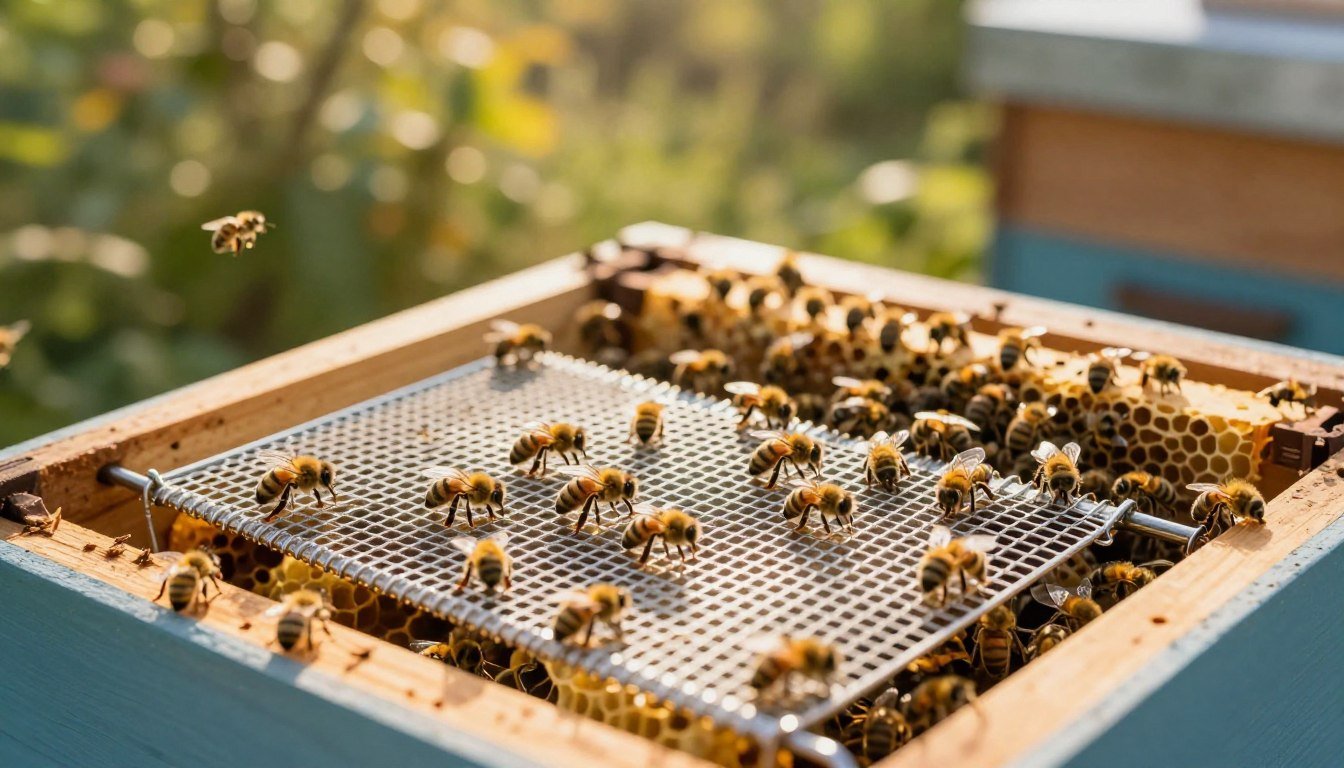
The Ben Harden method is a queen-rearing technique that raises queen cells inside an otherwise completely normal, still-queenright production colony, using a queen excluder to separate an upper box (holding the grafted larvae or prepared cells) from the queen and main brood nest below. Unlike Miller, Alley, and most other graft-free or grafted methods, it never requires making any colony queenless — the production colony carries on foraging and functioning normally the entire time it’s also raising queen cells above the excluder.
Why Avoiding Queenlessness Is the Whole Point
Most queen-rearing methods depend on creating a genuinely queenless “cell-building” colony, since a colony’s strong instinct to replace a lost queen is what drives nurse bees to enthusiastically feed presented larvae into full queen cells. That instinct is powerful, but a fully queenless colony is also, by definition, a temporarily unstable one — it stops normal brood-rearing momentum, and setting one up (and later either requeening it or recombining it) is itself a real chunk of the labor involved in most queen-rearing methods. The Ben Harden method sidesteps this entirely: the colony below the excluder stays completely normal and queenright throughout, while the isolated conditions in the small upper box (concentrated nurse bees, no queen pheromone reaching that specific space, ample pollen) are enough on their own to trigger cell-building behavior in that limited area, without disrupting the colony as a whole.
Where the Method Comes From
The method is named after Ben Harden, a beekeeper whose approach to queenright queen rearing has been documented and taught within the beekeeping community, notably through organizations like BIBBA (Bee Improvement and Bee Breeders Association) and referenced extensively in modern queen-rearing discussion. It’s positioned specifically as an accessible option for beekeepers who want a modest, ongoing supply of queen cells — tens rather than hundreds per season — without the overhead of running dedicated queenless cell-building colonies.
Equipment Needed
- A second brood box to sit above the existing colony
- A standard queen excluder
- Two oversized “dummy boards” (sometimes called “fat dummies”) sized to take up extra space in the upper box
- A cell-bar frame with prepared cell cups or grafted larvae
- Frames of pollen and a frame of unsealed brood to fill out the upper box
Setting Up the Upper Box
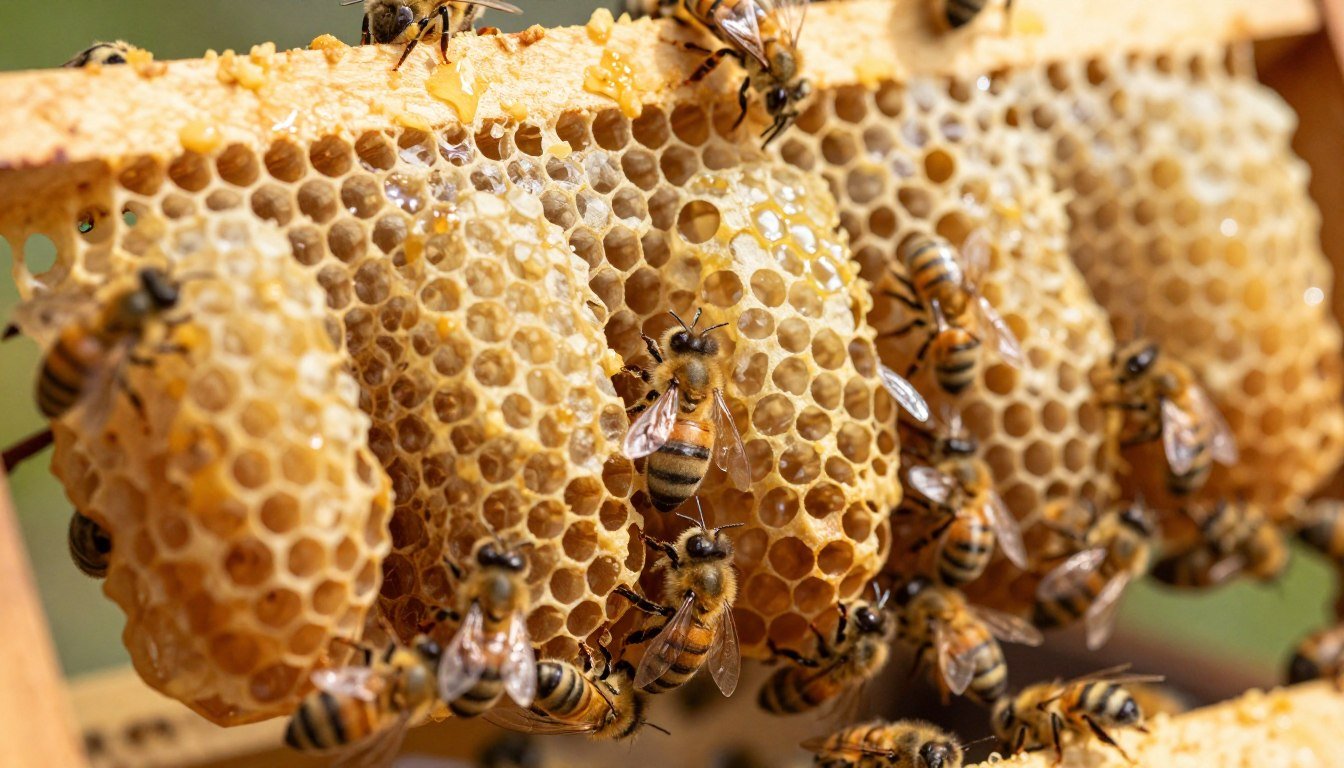
The upper box holds just four frames rather than a full complement: two frames well-stocked with pollen, one frame of unsealed brood, and the cell-bar frame carrying the prepared larvae or grafts. The two oversized dummy boards go on either side of these four frames, physically concentrating the available nurse bees onto this small cluster of frames rather than letting them spread out across a full-width box — this concentration is a key part of what makes the small space work as well as it does despite still being queenright.
Frame order matters: the two dummy boards go on the outer edges, then working inward, a pollen frame, the cell-bar frame, the unsealed brood frame, and the second pollen frame — with the heavily pollen-loaded face of each pollen frame turned toward the cell-bar frame specifically, maximizing the readily available protein source right where the developing larvae need it most.
Familiarizing the Colony Before Introducing Larvae
Rather than placing prepared larvae into a completely unfamiliar setup, a common practice is to place the upper box (queen excluder beneath it, cell bar coated in sugar syrup but without the actual larvae yet) about a day before the larvae are due to go in. Bees clean off the syrup coating during this window, which has the effect of familiarizing them with the cell bar and cups before the real material arrives — by the time larvae are introduced, the frame and cups are no longer a completely novel object to the colony.
Step-by-Step Process
- Add the second brood box above a queen excluder on a strong, healthy production colony.
- Set up the four-frame arrangement with dummy boards, pollen frames, and unsealed brood as described above, leaving the cell-bar frame’s cups syrup-coated but empty at first.
- Wait roughly a day for bees to clean and familiarize themselves with the setup.
- Introduce the prepared larvae or grafts onto the cell bar.
- Leave the setup in place while nurse bees in the upper box develop the presented larvae into queen cells.
- Remove completed cells once they’re ready, and either repeat the cycle with a new batch of larvae or dismantle the upper box back down to a single colony.
Running It Repeatedly Through a Season
Because the production colony itself is never disrupted the way a genuinely queenless cell-builder is, the Ben Harden setup can be run repeatedly across a season with the same colony — introduce a batch of larvae, let it develop, remove the cells, introduce another batch, and continue as long as the colony remains strong and the beekeeper wants more queens. This repeatability without needing to re-establish queenlessness each time is one of the method’s most practical advantages for a beekeeper wanting an ongoing, modest supply of queens rather than one large single batch.
Ben Harden vs. Cloake Board vs. Standard Cell-Builders
| Ben Harden | Cloake Board | Standard Queenless Cell-Builder | |
|---|---|---|---|
| Colony stays queenright? | Yes, throughout | No — temporarily made queenless via the board | No — fully queenless |
| Disruption to production colony | Minimal | Moderate, temporary | Significant — colony repurposed |
| Repeatable without reset? | Yes | Requires resetting the queenless period each cycle | Requires reestablishing queenlessness each cycle |
| Typical scale | Small — tens of queens | Moderate | Can scale to large batches |
Who This Suits Best
The Ben Harden method suits beekeepers who want a modest, recurring supply of queen cells across a season without dedicating a full colony to queenlessness, and who value keeping their production colony’s honey output largely undisturbed. It’s a reasonable fit for beekeepers newer to queen rearing generally too, since the “just add a box above an excluder” concept is more approachable than managing a queenless colony’s specific needs and timing. If you’re weighing this against a graft-free option like the Miller method or the Alley method, note that Ben Harden still requires a graft or otherwise-prepared larvae on a cell bar to place in the upper box — it solves the queenlessness problem, not the larval-placement problem those two methods address instead.
Signs the Upper Box Is Working
Within a few days of introducing larvae, you should see nurse bees actively present and working on the cell-bar frame when you check the upper box, and the presented cell cups beginning to elongate and take on the distinctive downward-hanging queen-cell shape rather than staying flat or being ignored. Steady pollen consumption from the two pollen frames is another good sign, since it indicates the nurse bees are actively provisioning developing larvae rather than treating the space as an afterthought. If cells simply aren’t developing after several days despite a strong base colony, check that the excluder is properly seated and that the upper box hasn’t somehow ended up with unintended access to the queen’s pheromone from below, which would reduce the isolated space’s motivation to build cells at all. A quick physical check of the excluder seating is worth doing before assuming a colony or timing problem is to blame.
How Strong Does the Base Colony Need to Be
Because the upper box draws nurse bees away from the main colony’s own brood-rearing and foraging needs, the Ben Harden method works best on a genuinely strong, well-established production colony rather than a modest or newly built-up one. A colony that’s already stretched thin trying to cover its own brood nest and forage adequately doesn’t have much spare capacity to dedicate to a second, isolated brood-rearing project above an excluder, and forcing the setup onto a marginal colony risks weakening both the main colony’s performance and the quality of cells produced upstairs. As a practical check, a colony that’s already strong enough that you’d consider it a solid candidate for a split or increase is generally also strong enough to support a Ben Harden setup without noticeable strain. If you’re unsure, err toward waiting a bit longer for the colony to build up rather than starting too early on a borderline one.
Common Mistakes
| Mistake | Why it matters |
|---|---|
| Using a weak or only moderately strong colony as the base | The method depends on having enough nurse bees to spare for the concentrated upper-box population without harming the main colony’s own needs |
| Skipping the familiarization period | Introducing larvae onto a completely unfamiliar cell bar can reduce acceptance compared to a pre-familiarized setup |
| Not maintaining adequate pollen in the upper box | Developing larvae need a steady protein supply — thin pollen stores in the upper frames can limit cell quality |
| Assuming the excluder alone guarantees success | The excluder is necessary but not sufficient — frame arrangement, dummy-board placement, and colony strength all matter too |
Effect on the Colony’s Honey Production
One of the method’s most commonly cited practical advantages is how little it disrupts the base colony’s normal honey-production work compared to methods that require queenlessness. Because the queen continues laying normally below the excluder and the main forager force keeps working uninterrupted, a colony running a Ben Harden setup can typically continue contributing to the season’s honey crop at close to its usual rate, with the resource cost mostly limited to the nurse bees and pollen dedicated to the small upper-box population rather than a colony-wide disruption. This is a meaningful practical difference from queenless cell-building, where the repurposed colony effectively stops contributing to honey production for the duration of the cell-rearing cycle.
Best Timing Within the Season
Like most queen-rearing methods, results are best during a period when the base colony is genuinely strong and a decent nectar and pollen flow is underway — typically spring through early summer in most temperate climates, when colonies are naturally at their strongest and best resourced to support the extra work of a Ben Harden setup on top of their normal activity. Attempting this method on a colony that’s already past its seasonal peak, heading into a dearth, or otherwise under resource stress is likely to produce weaker results even with an otherwise correct setup, since the underlying nurse-bee and pollen resources the method depends on simply aren’t as abundant at those times. Watching your local flow and colony buildup rather than working from a fixed calendar date, the same principle covered for timing-sensitive splits elsewhere on this site, applies just as much here.
Sources
Method mechanics and setup details reflect published beekeeping community documentation of the Ben Harden queenright queen-rearing system, including material referenced through BIBBA (Bee Improvement and Bee Breeders Association) and widely circulated beekeeping technique guides.
FAQ
Does the Ben Harden method require making a colony queenless?
No — this is its main distinguishing feature. The production colony stays queenright throughout, with queen cells raised in a separate upper box above a queen excluder.
How many queens can I raise with the Ben Harden method?
It’s suited to modest, ongoing production — generally tens of queens across repeated cycles, rather than the large single batches a dedicated queenless cell-builder can produce.
Can I reuse the same setup multiple times in a season?
Yes — since the colony never becomes queenless, the upper box can be reloaded with a new batch of larvae repeatedly without needing to reestablish queenlessness each cycle.
What are “fat dummies” in the Ben Harden setup?
Oversized dummy boards placed on either side of the four working frames in the upper box, used to concentrate the available nurse bees onto the cell-bar frame rather than letting them spread across a full-width box.