Published August 27, 2026
Table of Contents
- What Checkerboarding Is
- The Theory: Survival Before Reproduction
- Where the Method Comes From
- What You Need
- Step-by-Step Process
- Timing Is Everything
- Checkerboarding vs. the Demaree Method
- Honest Limitations
- Combining Checkerboarding with Nadiring
- What to Do With the Displaced Honey Frames
- Signs Checkerboarding Is Working
- Regional and Climate Timing Considerations
- Common Mistakes
- Does It Scale to a Large Apiary?
- Choosing a Swarm-Prevention Method
- FAQ
What Checkerboarding Is
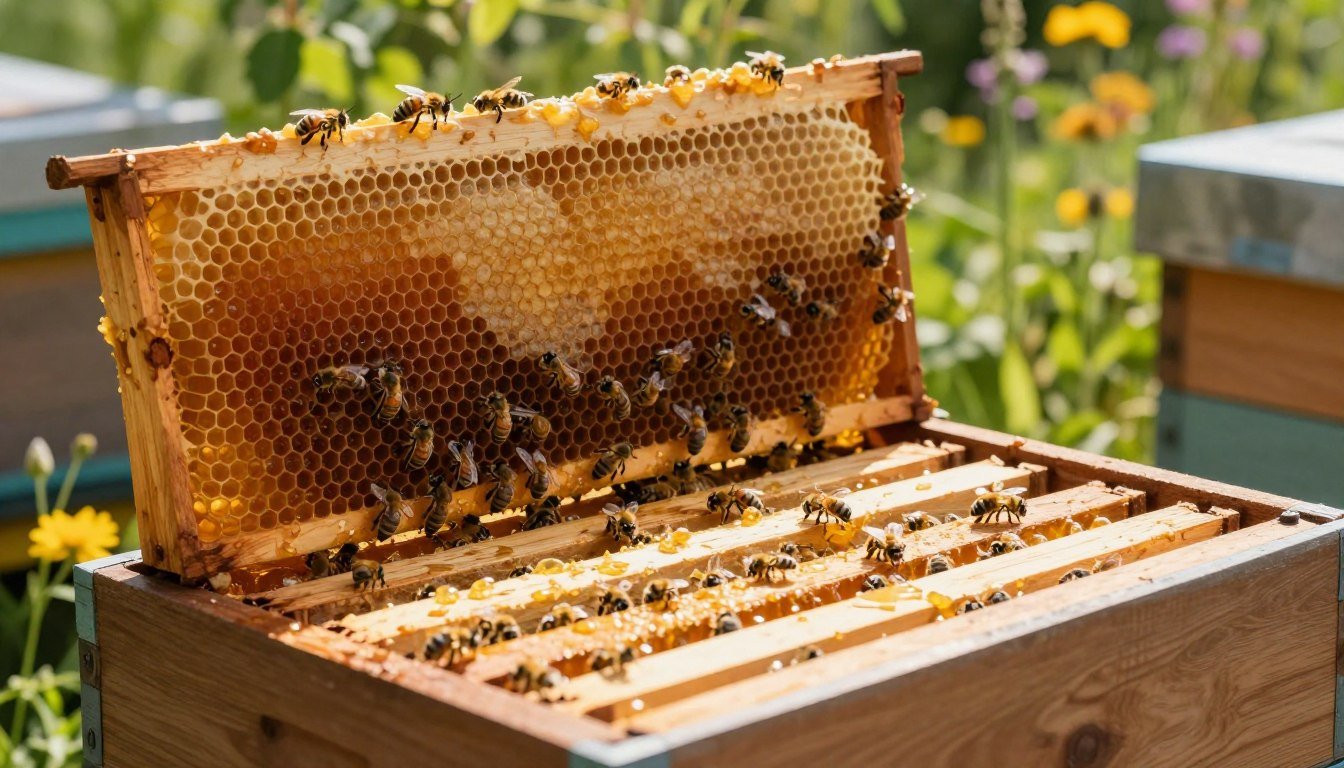
Checkerboarding is a swarm-prevention technique done in late winter that involves alternating frames of capped honey stores with frames of empty drawn comb in the box or boxes directly above the brood nest, creating a literal checkerboard pattern of full and empty cells. Unlike techniques that manipulate the brood nest itself, checkerboarding works entirely in the honey storage area above it, leaving the brood nest undisturbed.
The Theory: Survival Before Reproduction
The reasoning behind checkerboarding is that a colony’s instinct to ensure its own survival takes priority over its instinct to reproduce by swarming. A solid, unbroken band of capped honey above the brood nest can read to the colony as “storage is full, time to prepare to swarm” as the nectar flow ramps up in spring. Breaking that solid band into an alternating pattern of full and empty cells gives the colony open storage space to fill as nectar comes in, which shifts the colony’s priority toward filling that space and expanding the brood nest rather than toward swarm preparation. It’s worth being clear-eyed about this framing: the method isn’t “tricking” the bees so much as responding to a real, disrupted storage configuration that colonies are motivated to fix before turning their attention to swarming.
Where the Method Comes From
Checkerboarding was developed and popularized by Walt Wright, a Tennessee beekeeper, through papers and forum discussions rather than formal published research. It’s a widely discussed and reasonably well-documented method within the beekeeping community, with a real theoretical basis in bee behavior, but it hasn’t been validated through the kind of controlled scientific study that some other techniques have — it’s best approached as an experienced-beekeeper-developed method with a plausible mechanism, not as settled science.
What You Need
- Enough spare drawn comb (not foundation — drawn comb specifically) to alternate with existing frames of capped stores
- A colony that already has solid stores in the box(es) directly above the brood nest to work with
- Standard hive tools for reorganizing frames
Step-by-Step Process
- Identify the box or boxes directly above the brood nest that hold the colony’s winter honey stores.
- Remove alternating frames of capped honey, leaving every other frame in place.
- Replace the removed frames with empty drawn comb, creating an alternating full-empty-full-empty pattern across the box.
- If there’s more than one super above the brood nest, checkerboard the bottom-most one closest to the brood nest first, since that’s the pattern the colony responds to most directly.
- Leave the arrangement in place through the following weeks as the nectar flow builds, without needing frequent follow-up manipulation the way some other techniques require.
Timing Is Everything
Checkerboarding is a late-winter, early-spring technique specifically, done before the colony has entered active swarm preparation — Walt Wright’s original guidance suggested doing it roughly 9 weeks ahead of the local peak swarm season, giving the colony time to respond to the new storage pattern before its swarm-preparation instinct kicks in. Done too late, after the colony is already deep into swarm preparation, checkerboarding is far less likely to change the outcome. This timing-sensitivity is the single most important factor in whether the method works as intended, more so than the exact number of frames swapped.
Checkerboarding vs. the Demaree Method
Both are swarm-prevention techniques that keep the colony as one intact unit rather than splitting it, but they work differently and at different times. Checkerboarding is a single, low-disruption late-winter setup that works on the honey storage area without touching the brood nest or requiring a queen excluder. The Demaree method is a more hands-on spring technique that directly separates the queen from the brood using an excluder, with weekly follow-up checks required. Some beekeepers use checkerboarding as an earlier, lighter-touch first line of defense, reserving Demaree for a colony that still shows strong swarming signs despite it.
Honest Limitations
Checkerboarding isn’t a guaranteed fix, and results reported by beekeepers who’ve tried it vary — some report strong success, others less consistent results, which is typical for a technique based on colony-level behavioral response rather than a mechanical intervention like physically removing brood. It also depends on having enough spare drawn comb on hand, which not every beekeeper does, especially earlier in their beekeeping when comb stores are still being built up. Treat it as one useful tool among several swarm-prevention approaches, not a silver bullet on its own — see how to prevent swarming: best practices for the broader toolkit it fits into.
Combining Checkerboarding with Nadiring
Walt Wright’s original approach paired checkerboarding above the brood nest with a related technique called nadiring — adding an empty box underneath the existing brood nest rather than above it. The logic is complementary: checkerboarding disrupts the honey band above to discourage swarm preparation, while nadiring gives the queen fresh, clean comb to expand into below, closer to the entrance, which more closely mimics how a wild colony naturally expands its nest downward inside a hollow tree over time. As the queen moves down into the new lower box to lay in fresh wax, the colony backfills the older upper comb with incoming nectar rather than treating it purely as excess to prepare a swarm around. Not every beekeeper using checkerboarding also nadirs, and the two can be used independently, but understanding nadiring helps explain the broader “give the colony somewhere productive to put its energy” philosophy the whole approach is built on.
What to Do With the Displaced Honey Frames
The frames of capped honey removed from the checkerboarded box during setup don’t have to go to waste — depending on the colony’s actual stores situation, they can be moved to a weaker colony that could use the extra food, held in reserve as emergency winter feed for later in the season, or simply placed into an upper super above the checkerboard pattern so the colony still has full access to them without them being part of the disrupted band directly over the brood nest. What matters for the technique to work is that the pattern directly above the brood nest is broken up, not that the honey itself is removed from the apiary entirely.
Signs Checkerboarding Is Working
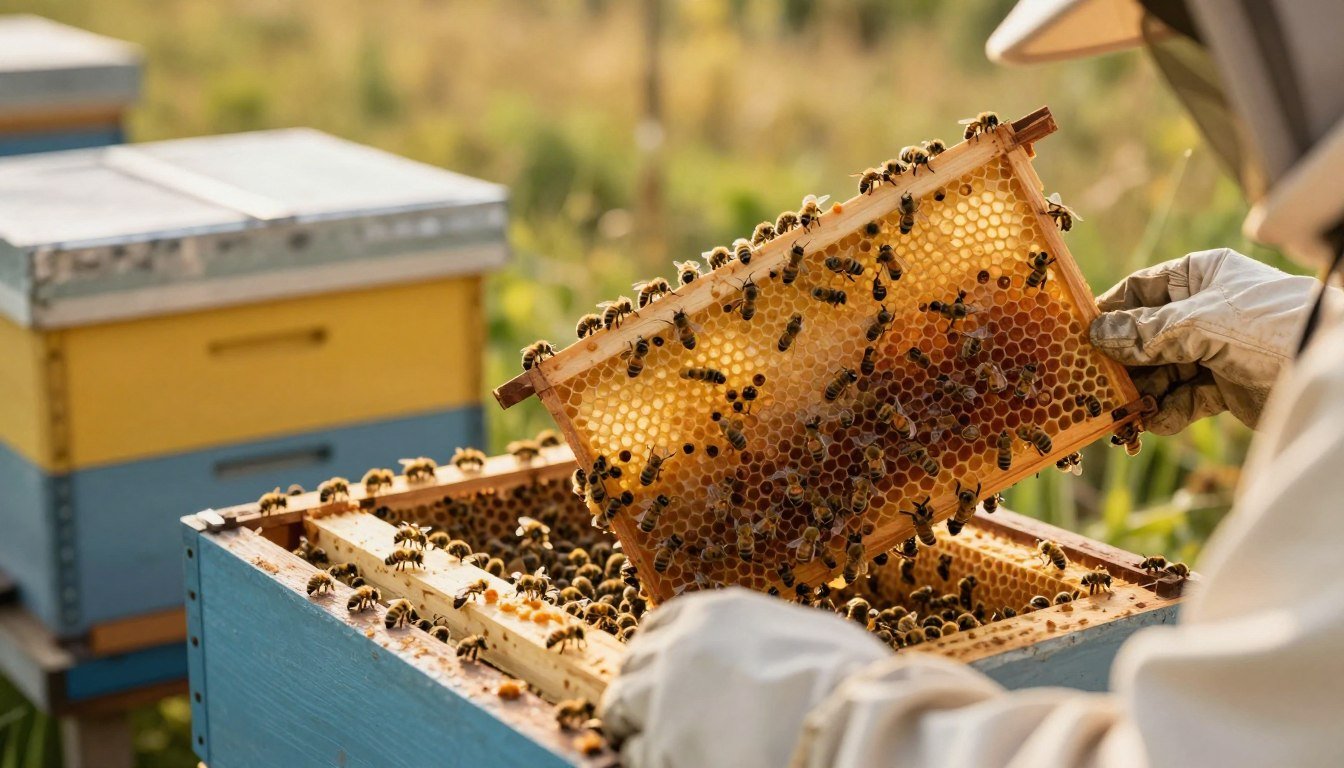
A few weeks after setting up the checkerboard pattern, look for these signs the colony is responding as intended rather than still heading toward swarming: the previously empty drawn comb frames should be visibly filling with fresh nectar or newly capped honey, showing the colony is actively using the space you opened up rather than ignoring it; brood nest expansion should be continuing steadily rather than stalling; and on routine inspections, you should not be finding queen cups progressing into capped swarm cells. If you do find swarm cells forming despite the checkerboard setup, that’s a sign the colony’s swarm preparation was already too far along when you started, or that the colony is unusually strong for the season and may need a more direct intervention like the Demaree method or a split on top of what checkerboarding alone can offer.
Regional and Climate Timing Considerations
Because the entire technique hinges on doing it early enough relative to the local swarm season, the right calendar date varies significantly by region and climate — there’s no single fixed date that applies everywhere. Beekeepers in warmer climates with an earlier spring buildup need to checkerboard correspondingly earlier in the season than beekeepers in regions with a later, more compressed spring. The most reliable way to time it isn’t a fixed date at all, but working backward from your own area’s typical peak swarm season (which local beekeeping association records, mentors, or your own past-season notes can help establish) and counting back roughly the recommended lead time from there. Keeping your own year-to-year notes on when your local colonies typically begin serious swarm preparation is one of the more useful things a beekeeper in any climate can do to fine-tune this and other swarm-prevention timing over time, rather than relying purely on generic seasonal guidance written for a different region.
Common Mistakes
| Mistake | Why it matters |
|---|---|
| Doing it too late in the season | Once a colony is already deep into swarm preparation, the storage-pattern disruption is much less likely to change the outcome |
| Using foundation instead of drawn comb | Bare foundation doesn’t provide the same immediately usable storage space the technique relies on |
| Checkerboarding a box that isn’t actually full of stores yet | The method depends on disrupting an already-solid storage band — there’s nothing to disrupt in a partially filled box |
| Expecting it to work regardless of colony strength or flow conditions | Results vary by colony and conditions — it’s a useful tool, not a guaranteed swarm-proofing method |
Choosing a Swarm-Prevention Method: A Quick Decision Guide
Checkerboarding is one tool among several, and different situations call for different ones. Here’s how the main options compare for a strong colony heading into spring:
| Method | Disruption level | Best for | Follow-up needed |
|---|---|---|---|
| Checkerboarding | Low — honey storage area only, brood nest untouched | Early prevention, before swarm prep has started | Minimal after initial setup |
| Nadiring | Low — adds space below, doesn’t remove anything | Giving the queen fresh laying space as the colony expands | Minimal, often paired with checkerboarding |
| Demaree method | High — separates queen from brood with an excluder | A colony already showing strong swarm signs, wanting to stay one colony | Weekly queen-cell checks required |
| Regular split | High — colony divided into two | Wanting more colonies, not just preventing a swarm | Ongoing management of two separate colonies |
Many experienced beekeepers layer these rather than picking just one for the whole season: checkerboarding (and often nadiring alongside it) as an early, low-effort first step in late winter, with a more direct intervention like the Demaree method or a split held in reserve for any colony that still shows strong swarming signs despite the earlier prevention work. Thinking of these as a toolkit to draw from based on what a specific colony is actually showing, rather than committing to one method for every hive in the apiary, tends to produce better results than a one-size-fits-all approach across colonies that may be at different stages of buildup.
Does It Scale to a Large Apiary?
For a beekeeper managing a handful of backyard colonies, checkerboarding a few hives in late winter is a manageable afternoon project. For commercial or large-scale operations managing dozens or hundreds of colonies, the labor cost of individually reorganizing frames in every hive becomes a real practical constraint, which is part of why the technique is more commonly discussed among hobbyist and small-scale beekeepers than in commercial operations, where swarm prevention is often managed through other means better suited to scale, like more frequent splitting or requeening schedules. If you’re managing a small number of colonies, that labor cost is exactly the situation where a low-follow-up technique like this one is most worth the setup time.
Sources
Method description and theoretical basis reflect Walt Wright’s original checkerboarding papers and widely circulated beekeeping community documentation and discussion of the technique, including balanced commentary from experienced beekeeping writers on both its mechanism and its limitations.
FAQ
What is checkerboarding in beekeeping?
A late-winter swarm prevention technique that alternates frames of capped honey with empty drawn comb in the storage area above the brood nest, using the colony’s survival instinct to defer swarm preparation.
When should I checkerboard my hive?
In late winter, well before your area’s peak swarm season — roughly 9 weeks ahead, per the method’s original guidance. Done too late, after swarm preparation has already started, it’s much less effective.
Is checkerboarding scientifically proven?
It has a plausible, widely discussed theoretical basis in colony survival behavior, developed by beekeeper Walt Wright, but it hasn’t been validated through formal controlled research. Results reported by beekeepers vary.
Do I need a queen excluder for checkerboarding?
No — unlike the Demaree method, checkerboarding works entirely in the honey storage area and doesn’t require a queen excluder or direct manipulation of the brood nest.