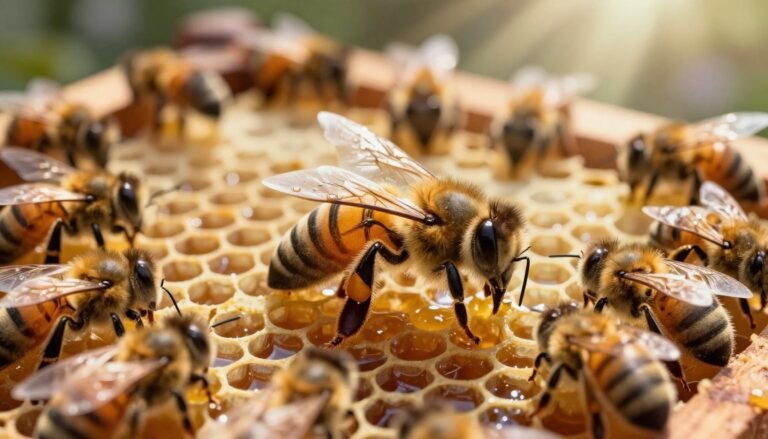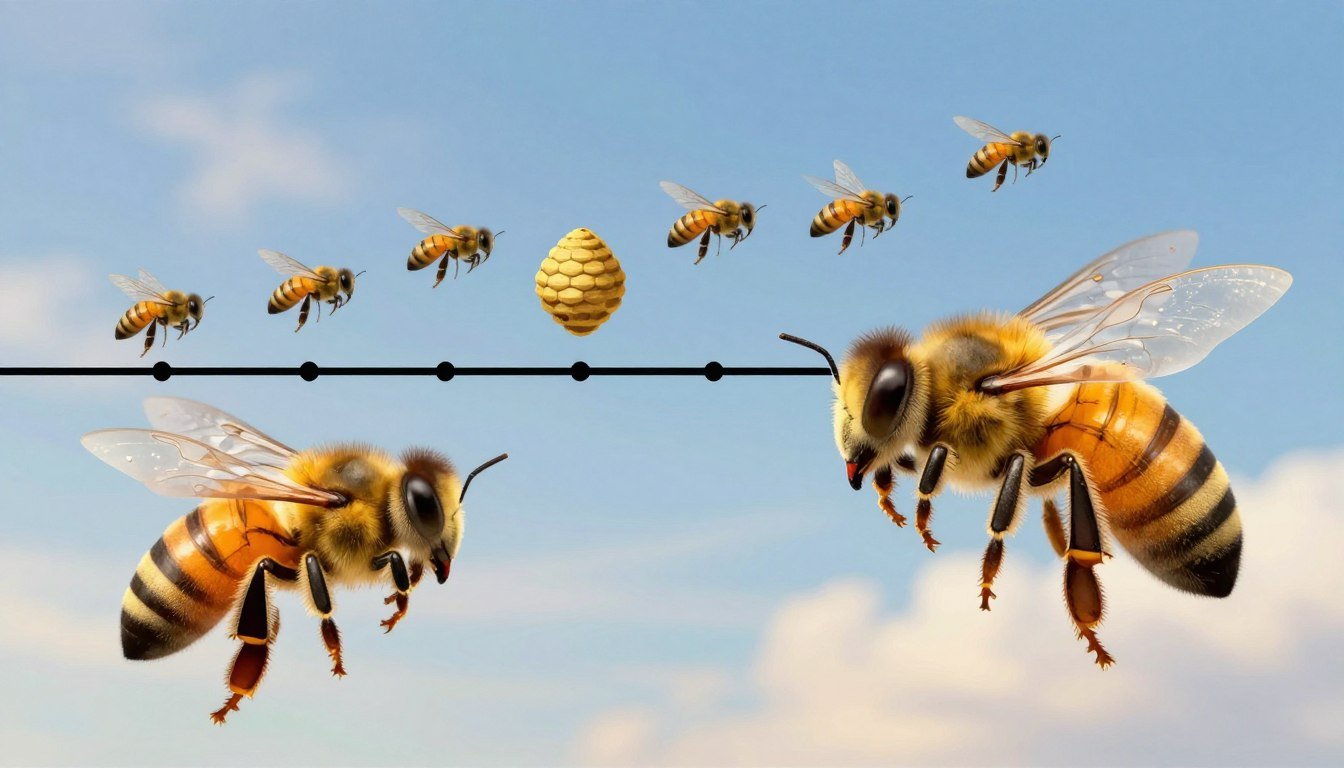
New beekeepers often worry when a freshly emerged queen shows no eggs after three days. This is normal. A queen needs time to finish maturing, harden her exoskeleton, and develop pheromones before she can leave the hive and mate.
The mating process usually begins several days after emergence. Most queens take a few afternoon trips to drone areas over several days. Weather and local drone availability affect how quickly a queen completes her trips and stores sperm.
Expect a delay of about one to two weeks from emergence to consistent egg laying under good conditions. Beekeepers should remain patient, watch for a steady brood pattern, and consult rearing guides like queen rearing basics when planning nucs or replacements.
Key Takeaways
- A newly emerged queen rarely lays eggs within three days; maturation takes time.
- She typically makes several short trips to mate with multiple drones.
- Weather and drone numbers impact how fast mating and sperm storage finish.
- Expect reliable egg laying about 7–14 days after emergence in good conditions.
- Monitor brood patterns and keep spare cells or queens ready if problems arise.
Understanding the Virgin Queen Life Cycle
From emergence, the young queen enters a brief, critical phase. Right after she chews free of her wax cell, the queen focuses on hardening her exoskeleton and developing pheromone signals the workers will read.
During the first few days the queen stays inside the hive and avoids long trips. She is vulnerable while tissues strengthen and ovaries mature. Good hive management at this time reduces stress and disease risk.
Beekeepers should limit inspections and keep frames steady so workers can feed her royal jelly and pollen. This quiet period helps ensure a smooth transition into orientation and later mating activities.
Watch brood patterns and worker behavior rather than forcing early action. If you want guidance on when egg laying should begin, consult a rearing guide such as when a newly hatched queen begins to.
- Day zero: exit the cell.
- First days: hardening and maturation.
- Keep the hive calm; avoid unnecessary intervention.
The Mating Flight Timeline for Virgin Queens
In many apiaries a new queen will complete mating flights and begin laying about ten days after emergence. This average assumes warm afternoons and plenty of drones in nearby congregation areas.

Timing can vary. Weather delays, low drone numbers, or long travel to drone areas can push that start to two weeks or more. After she returns, the queen still needs days for ovarian development before steady egg laying begins.
Beekeepers should balance patience with observation. Look for a regular brood pattern and active workers feeding larvae. If you want deeper guidance on pairing and success rates, see a concise guide to queen mating basics.
- Average start: ~10 days post-emergence.
- Check weather and local drone availability.
- Watch brood and worker behavior rather than rushing replacements.
Emergence and Exoskeleton Hardening
After she chews free of the cell, a young queen needs quiet days to toughen up. This emergence period is delicate and sets the stage for later activity in the hive.
The Emergence Process
The queen uses her mandibles to break the wax cell and enter the brood nest. This brief act exposes her to the hive environment and worker attention.
Workers quickly groom and feed the new queen. These interactions protect her while tissues begin to firm.
Physical Maturation
Chitin in the outer shell must harden. That process takes several days as the exoskeleton thickens and the abdomen readies for laying.
Beekeepers should avoid opening hives during this phase. Cold drafts or rough handling can chill the young queen and interrupt development.
Proper hive temperature and calm inspections help ensure success. Regular brood checks, guided by a method like brood pattern assessment, let workers complete this biological process without interference.
Orientation Flights and Hive Familiarization
Between days three and six, the young queen begins short outings to learn the hive’s position and nearby landmarks. These brief circuits help her memorize the entrance and surrounding cues before longer mating trips.
Sunny afternoons above about 60°F are typical times to see this behavior. Workers often watch and guard the entrance while the queen circles close by.
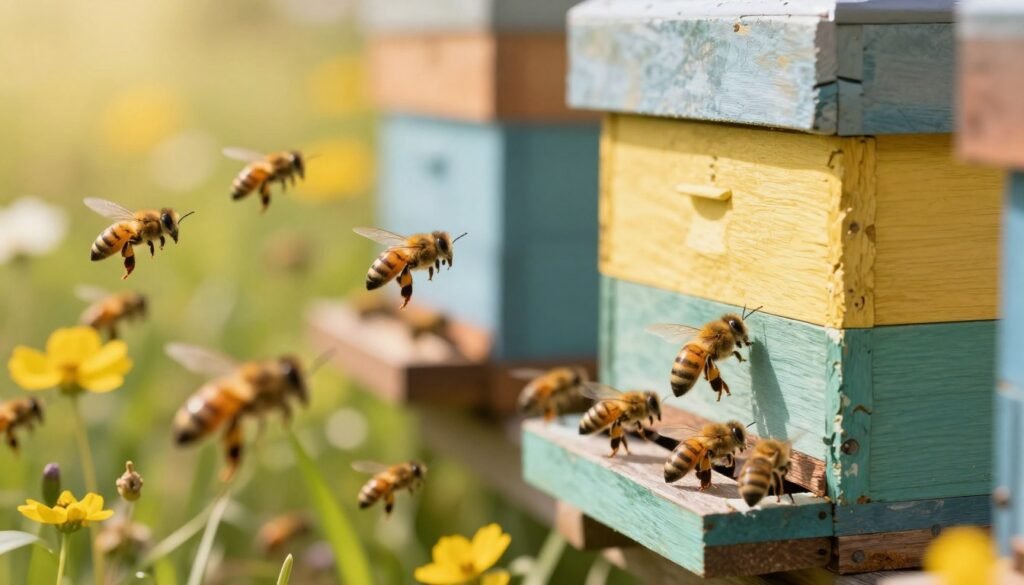
“Orientation is a small, vital step that greatly reduces the risk of losing the queen to disorientation.”
If she fails to orient correctly, the colony can lose its leader. Beekeepers should note when these short flights occur and avoid heavy inspections during that week.
| Days | Activity | Risk/Note |
|---|---|---|
| 3–4 | Short circles near entrance | Low range travel; watch weather |
| 5 | Longer loops; visual landmark learning | Higher return importance |
| 6 | Final familiarization | Ready to attempt longer trips soon |
- Keep hive access clear so the queen sees landmarks.
- Avoid heavy inspections on sunny afternoons when she may be out.
- Record when workers show alarm or escort behavior after these days.
Sexual Maturity and Pheromone Development
Sexual maturity in a new queen usually takes about five to six days after emergence. During this period her glands produce pheromones that signal readiness and draw drones from nearby congregation areas.
These chemical cues are essential. Without well-developed pheromone output the queen will not attract suitors and cannot complete the mating process.
Workers respond to the queen’s scent as it strengthens. This lets the colony recognize her and prepare supportive tasks like feeding and grooming. Beekeepers should view a quiet few days as normal and not assume failure.
Watch the hive for signs of progress:
- Increased worker attention and feeding around the queen.
- Calmer brood area activity and steady placement of royal cells.
- Short orientation outings once pheromone levels rise.
| Days after emergence | Physiological change | Beekeeper cue |
|---|---|---|
| 1–2 | Exoskeleton hardening; little pheromone output | Quiet hive; minimal outside activity |
| 3–5 | Pheromone development increases | More worker grooming; brief orientation |
| 5–6 | Sexual maturity reached | Attraction to drones likely; mating attempts begin |
The Mechanics of Mating Flights
A young queen must leave the hive to meet groups of drones that gather in predictable sky zones.

These outings are brief but vital. The queen visits one or more drone congregation areas where dozens of males pursue her. This increases genetic diversity and secures enough sperm for years of egg laying.
Drone Congregation Areas
Congregation areas are fixed meeting points over landmarks or clearings. Drones learn these spots and wait there. A queen must reach these sites during warm, calm afternoons.
Multiple Mating Events
Most queens mate with a dozen or more drones across several short trips. If sperm stores are low, she may repeat outings in the next few days. Each successful pairing lowers the colony’s risk of inbreeding and supports healthy brood.
| Aspect | Why it matters | Beekeeper cue |
|---|---|---|
| Congregation areas | Concentrate drone availability | Watch warm afternoons |
| Multiple matings | Ensures sperm reserve and diversity | Expect several short outings |
| Risks | Predators, bad weather, loss | Avoid heavy inspections on warm days |
Sperm Storage and Abdominal Contractions
The hours after a queen comes back are critical; her body must shift collected sperm into long-term storage before she can begin laying eggs.
Storage happens in the spermatheca. Sperm migrate from the oviducts by a series of abdominal contractions. This muscular activity moves cells into the tiny sac used for years of brood production.
The migration may take up to 40 hours to finish. During that time, workers keep the hive calm and feed the queen while her internal organs settle.
Any surplus sperm is expelled through the sting chamber once the spermatheca reaches capacity. This prevents internal pressure and readies the queen for regular egg laying.
| Stage | What Happens | Beekeeper Action |
|---|---|---|
| Return | Sperm present in oviducts | Avoid inspections; keep frames steady |
| Migration | Abdominal contractions move sperm to spermatheca | Allow 24–40 hours undisturbed |
| Post-fill | Excess sperm expelled; storage complete | Check for brood after a few days |
Patience matters. Give the hive adequate time before judging laying success. Quiet hives and steady workers usually signal a successful internal process and a healthy start to brood production.
Factors Influencing the Mating Schedule
External conditions and hive context set the real pace for when a new queen begins laying eggs.
Fast starts are possible. If everything aligns, a queen can begin to lay in about eight days. That is the quickest expected time under ideal warmth and abundant drones.
More commonly, a full cycle stretches to around 10–19 days. A week of rain or chilly afternoons can push the process well past the early estimate.
Temperature, wind, and drone availability matter. Strong winds or low drone numbers can delay outings and extend the wait for sperm storage. Beekeepers should note local seasonal patterns and nearby drone sources. See a practical note on drone behavior at drone congregation behavior.

| Condition | Typical Days | Beekeeper Action |
|---|---|---|
| Ideal weather, many drones | 8–10 days | Watch brood 10–14 days after emergence |
| Average season | 10–14 days | Limit inspections; keep frames steady |
| Extended rain or cold | 15–19+ days | Be patient; avoid early replacement |
- Rule of thumb: expect variability and check brood, not dates.
- Delays often reflect weather or drone shortages, not poor queen quality.
Impact of Weather on Flight Success
Sharp drops in temperature or sudden storms can keep a new queen grounded and delay the start of her outdoor activity. Bad weather is the most common reason a hive sees a late start in egg laying.

Sunny, calm afternoons are essential. Temperatures in the 60s or warmer encourage the queen to leave the hive and meet drones. Windy or wet days force her to remain inside with workers until conditions improve.
Temperature and Wind Effects
Cold snaps and persistent wind reduce the risk that a queen will attempt risky outings. A week of poor weather can extend the emerge-to-lay period to 17 days or longer, so patience is key.
| Condition | Likely delay | Beekeeper action |
|---|---|---|
| Warm, calm afternoons | Minimal delay | Watch brood at 10–14 days |
| Cool or windy days | Several days delay | Limit inspections; keep frames steady |
| Rainy week | 10+ days extra | Monitor weather reports; wait before replacing |
Practical tip: monitor local forecasts and plan inspections away from likely outing windows. Understanding weather patterns helps explain why a queen may be late laying eggs and keeps the colony strong through the wait.
Drone Availability and Seasonal Constraints
Insufficient mature drones nearby can stall a queen’s start even when conditions look ideal. In early spring or late autumn drone numbers often fall short of what a new queen needs to secure enough sperm.

Beekeepers should track local patterns. A reduced drone population raises the risk that a queen will remain unmated and later begin laying unfertilized eggs, producing only drones.
“If a queen cannot find healthy males in a reasonable time, intervention may be required to protect the colony.”
- Monitor nearby hives and note peak drone weeks.
- Plan introductions when drone counts are high to cut waiting days.
- Consider moving frames or coordinating with other beekeepers to boost local drone pools.
Practical tip: consult local reports and resources such as queen mating flights to time introductions and reduce the chance of a drone-layer queen.
Identifying Signs of Successful Mating
Confirming a successful pairing helps you decide whether to wait or intervene. Look for specific laying patterns and physical changes in the hive in the days after the queen’s return.
Egg Placement Patterns
A reliably mated queen will start laying fertilized eggs within about 2–5 days of her last outing. The clearest sign is single eggs centered at the bottom of worker brood cells.
Find single eggs on cell floors rather than multiple eggs or wall placements. Multiple eggs per cell or eggs on walls often point to laying workers, not a healthy queen.
- Single eggs in cell base = primary confirmation.
- Irregular placement = investigate for laying workers.
- If no eggs appear after three weeks, perform a careful inspection to check queen presence.
Abdominal Changes
Physical cues also help. A functioning queen will look plumper as her ovaries fill and she starts steady egg production.
“A plump abdomen and regular egg pattern are the best field indicators that the colony has a mated, productive queen.”
Troubleshooting a Non-Laying Queen
When three weeks pass with no brood, take a focused inspection to confirm the queen’s status. Delays often stem from weather or low drone numbers rather than immediate queen failure. Stay calm and follow a checklist.
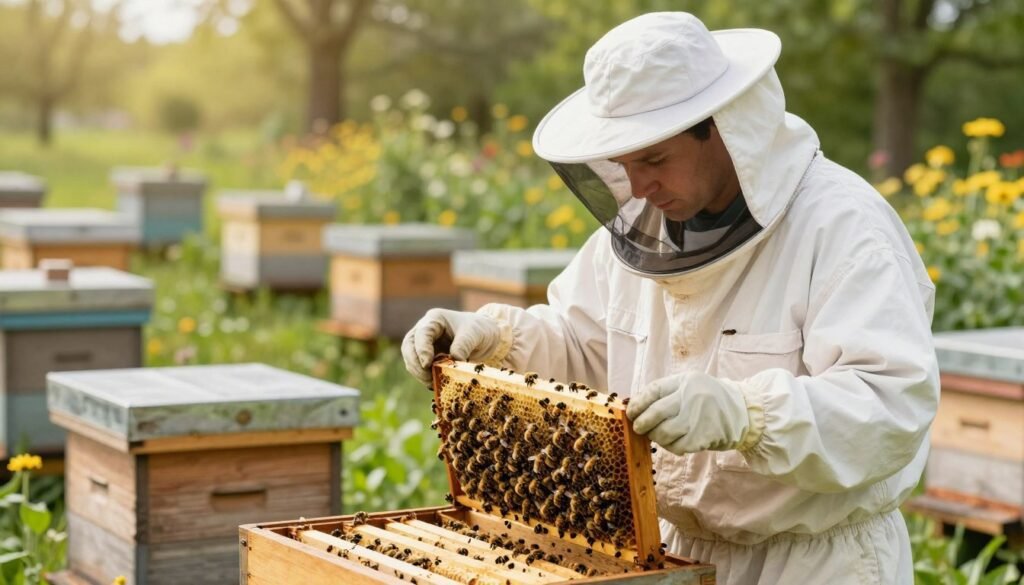
Start by looking for eggs or the laying female. Open frames slowly and scan the center of worker brood cells for single eggs. Also search the hive for signs that the queen is present and healthy.
If there are no eggs after 21 days, check these signs:
- A slender abdomen that never plumps up suggests she never mated successfully.
- Complete disappearance of the queen from the hive indicates loss or removal.
- Domed cappings and drone brood point to unfertilized eggs from an unmated female or laying workers.
| Situation | Likely cause | Recommended action |
|---|---|---|
| No eggs, no queen seen | Queen lost after emergence | Introduce a new queen or combine with a strong hive |
| Drone brood only | Unmated or failing queen | Confirm drone cells; consider requeening |
| Queen present but not laying | Pending sperm storage or stress | Allow extra days; limit inspections and feed if needed |
If you must act, introduce a new queen or merge the colony. Combining preserves workers and honey while giving the colony a chance to recover. For care of young larvae after requeening, review guidance on larval feeding cycles.
“Patience and methodical checks yield the best outcomes when a hive shows no eggs.”
Managing Hive Expectations During the Wait
Give the colony time: a newly emerged queen often needs several calm weeks before steady eggs appear. Expect to wait at least 14 to 21 days from emergence before performing a thorough inspection, especially after poor weather.
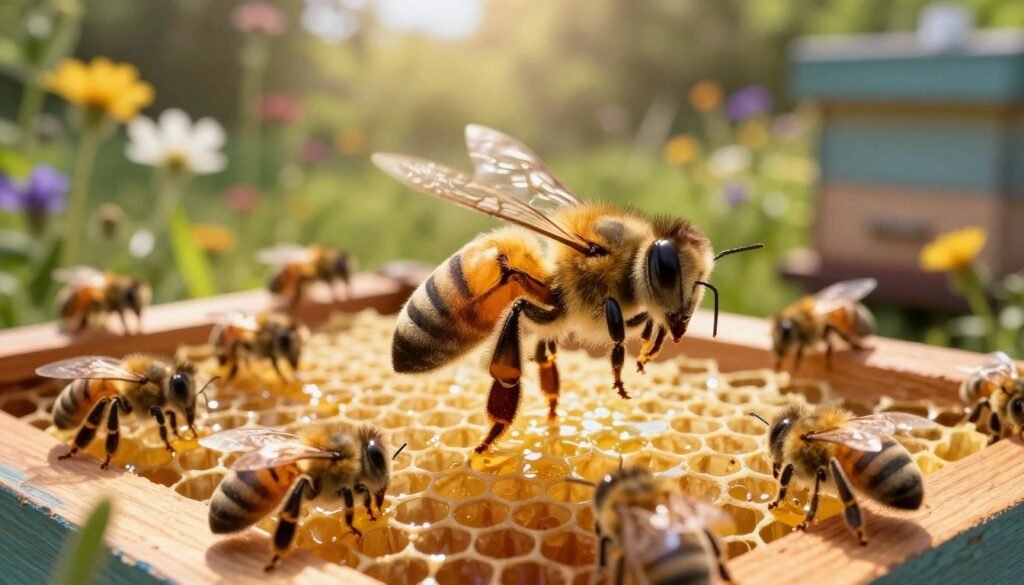
A quiet hive helps the queen finish development and secure sperm stores during initial outings. Avoid frequent openings that stress workers and interrupt vital internal processes.
Support the colony without overhandling. Provide supplemental sugar or pollen patties if stores are low so workers can feed larvae and the queen. This keeps bees healthy while brood production ramps up.
- Wait 14–21 days before major inspections unless there are clear emergency signs.
- Avoid heavy disturbance during sunny afternoons when a young queen may be active.
- Feed the hive if honey or pollen looks scarce to reduce stress on the developing queen.
| Action | When | Why it helps |
|---|---|---|
| Minimal inspections | First 2–3 weeks | Reduces stress and keeps workers focused on care |
| Supplemental feeding | If stores low during wait | Supports nurse bees and future brood |
| Delayed requeening | After 21 days without eggs | Avoids replacing a potentially good queen too soon |
“Patience is the beekeeper’s best tool when a new queen settles in.”
The Brood Cycle and Colony Recovery
After the first eggs appear, the colony still needs weeks before new workers boost hive strength. The brood cycle begins at egg laying and follows a steady biological clock. Understanding that clock helps set realistic expectations about hive recovery.
The Worker Emergence Window
From egg to adult worker takes about 21 days. That single span defines the immediate worker emergence window. Even once the queen lays, the colony must wait nearly three weeks for those cells to produce active workers.
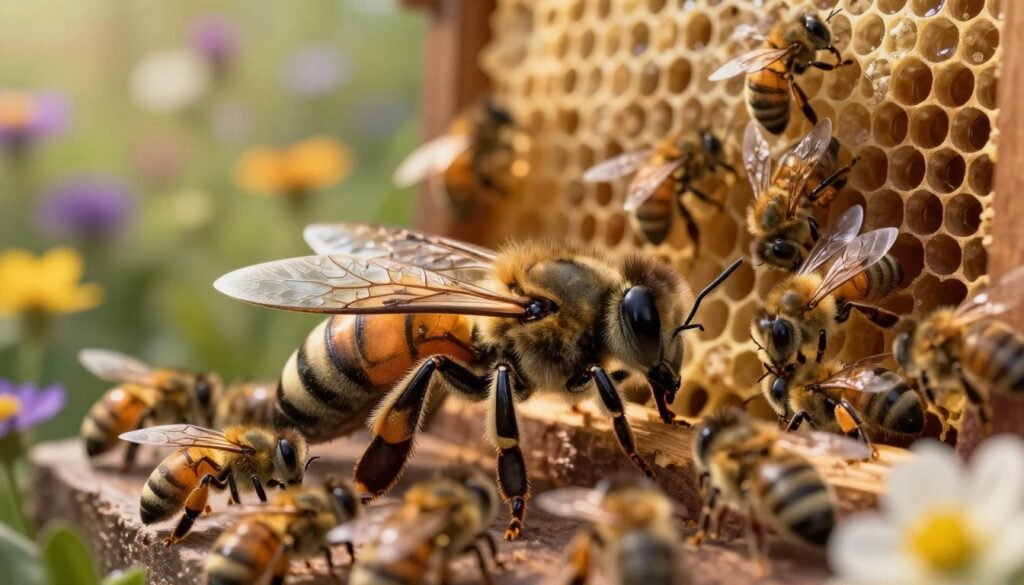
The first generation of new bees needs roughly 5 to 6 weeks before their combined presence noticeably strengthens the hive.
- The brood cycle is a 21-day process; early eggs do not create instant workforce gains.
- Colony recovery often requires 5–6 weeks of new worker emergence and maturation.
- Existing workers must maintain the hive and feed larvae during this waiting period.
- Plan supplemental sugar or pollen if stores of honey are low to support nurses.
| Stage (days) | What Happens | Beekeeper Action |
|---|---|---|
| 0–3 days | Eggs laid; cells start development | Minimize disturbance; monitor stores of honey |
| 4–21 days | Larvae and pupae develop into workers | Provide feed if low; avoid heavy inspections |
| 21–42 days | New workers emerge and integrate | Assess population growth; adjust management |
Practical takeaway: spotty brood or a few eggs are promising but not a quick fix. Keep calm, support the colony’s needs, and expect steady improvement over several weeks as new bees join the hive.
Best Practices for Apiary Inspections
Carry out hive checks quickly and calmly so workers can continue caring for brood and the developing leader. Keep inspections brief and focused to avoid disturbing temperature and pheromone cues.
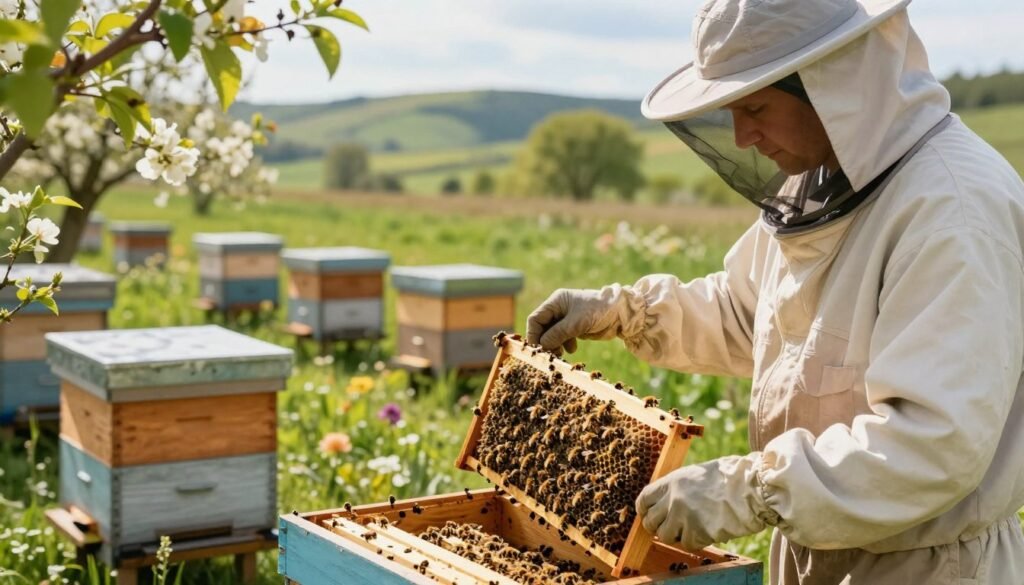
Use quality equipment. Durable hive tools and proper protective gear speed checks and reduce accidental jolts that stress the colony.
Record emergence dates and key observations. A clear log helps track when to expect laying and reduces unnecessary openings.
When an inspection is necessary, pick a warm, calm day and move slowly. Long, cool, or windy checks risk chilling brood and interrupting internal processes.
Look for brood pattern, not just the queen. A consistent, centered brood pattern is the fastest way to confirm a healthy laying female without hunting her down.
- Minimize hive exposure time.
- Wear sturdy gloves and a veil; use a well-oiled hive tool.
- Note dates and brood condition in a written log.
“Brief, methodical inspections protect the colony and give beekeepers reliable cues about progress.”
Conclusion
Good hive outcomes rely on understanding each stage of a new queen’s early development and how weather and drone availability shape success.
Patience is essential. Give the colony time to finish emergence, complete egg laying, and build a steady brood pattern before changing plans.
Track orientation and mating outings, watch brood quality, and avoid heavy inspections that stress workers. Minimal disturbance and timely feeding support a healthy colony recovery over several weeks.
Act only when clear signs demand it—and use calm, methodical checks to protect long-term productivity.
FAQ
What is the typical time from emergence to first orientation flights?
Newly emerged queens usually take 1–3 days to harden their exoskeleton and gain strength. During that short window they perform several short orientation flights near the hive to learn landmarks and entrance location. These flights are brief and close to the colony.
How soon after orientation do queens become sexually active?
Sexual maturity and pheromone production ramp up over 2–4 days after emergence. Most queens are ready to attempt mating within 3–7 days, though local conditions and drone numbers can shift that window earlier or later.
How many mating trips does a healthy queen usually take?
A successfully mating queen will typically make multiple sorties across 1–3 days. She often mates with 10–20 or more drones over several short trips to drone congregation areas, which boosts genetic diversity for the colony.
What are drone congregation areas and why do they matter?
Drone congregation areas are predictable meeting spots where drones from many colonies gather. Queens visit these areas during their flights. Availability and proximity of drone clusters strongly influence mating success.
How does weather affect a queen’s chances to mate?
Warm, calm, sunny days with low wind and temperatures above about 60–65°F are best. Cool, rainy, or windy conditions delay flights and reduce drone activity, lowering the odds a queen will meet enough drones in her mating window.
What signs indicate a queen successfully stored sperm?
Signs include regular, centrally placed eggs laid singly in cells and a steady increase in sealed brood after about 9–14 days. Physically, mated queens may show subtle abdominal changes, but brood patterns are the clearest indicator.
Why might a queen not start laying after returning to the hive?
Causes include incomplete mating (insufficient sperm), injury, poor timing with drone availability, or stress from cold weather. Other factors are disease, inadequate worker care, or queen supersedure attempts by the colony.
What should be done if the queen fails to lay within two weeks?
Inspect brood patterns and worker behavior. If you see no eggs after 10–14 days, consider introducing a proven mated queen or requeening. Some beekeepers allow extra time in cooler areas but monitor for workers producing emergency queen cells.
How long until a mated queen’s laying pattern stabilizes?
Once well mated, a queen typically establishes a clear laying pattern within 2–3 weeks. Brood production ramps up as workers care for larvae; expect consistent egg-laying and a predictable brood cycle by week three to four.
Do queens mate only once or multiple times in their life?
Queens mate during a brief period early in life, usually over several short sorties across a few days. They store sperm in the spermatheca and use it for egg fertilization throughout their multi-year life; they normally do not mate again.
How does drone availability across the season affect success?
Drone abundance peaks in late spring and early summer. If queens emerge when drone numbers are low, mating success falls. Beekeepers rearing queens should time rearing to coincide with peak drone production in their area.
What role do workers play while the queen is completing flights?
Workers feed and protect the virgin queen before and after flights. They also maintain the brood nest, collect pollen and nectar, and regulate hive conditions to support her development and eventual strong egg-laying.
Can temperature and wind prevent a queen from completing mating activities?
Yes. Temperatures below the comfortable flight threshold and strong winds reduce drone and queen activity. Extended poor weather can force a queen to delay flights until conditions improve, shortening her effective mating window.
How soon after successful mating do workers see sealed brood?
Eggs hatch in about three days, and larvae are fed for another five to six days before cells are sealed. You can expect to see sealed brood roughly eight to nine days after consistent egg-laying begins.
What is the best inspection practice while awaiting a queen to start laying?
Keep inspections brief and calm. Look for eggs, young larvae, and nurse behavior. Avoid excessive disturbance during the first two weeks. Record observations so you can detect a trend toward steady brood or identify problems early.