The international five-year code gives beekeepers an easy way to track a hive’s leader and its age. This simple system helps manage breeding, brood health, and honey production with clear, consistent signals.
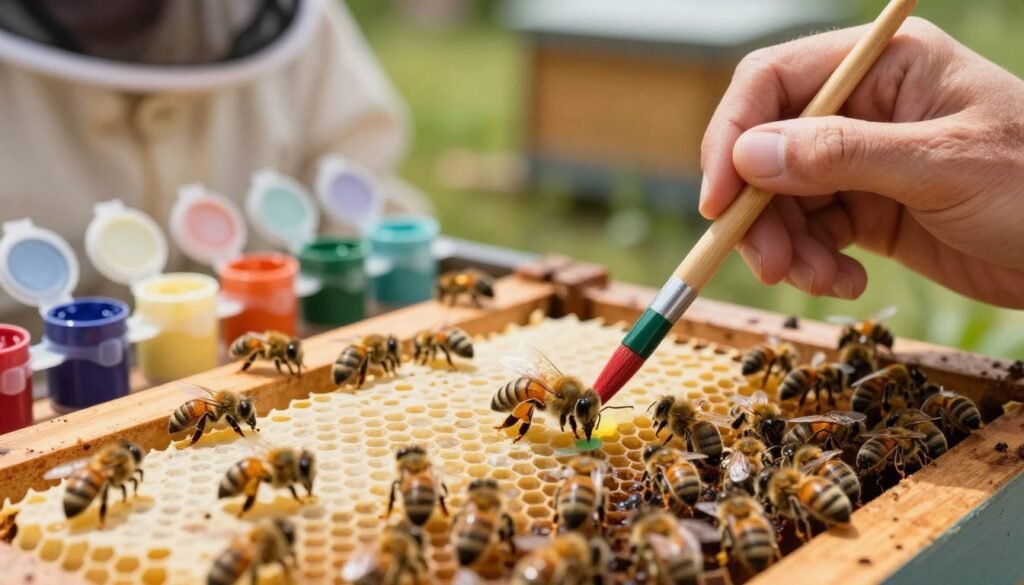
Marking a queen bee on the thorax lets a beekeeper find her quickly among thousands of workers. Using a standard paint pen or a small sticker keeps records accurate and makes inspections faster.
Follow the code to note the hatch year, support breeding programs, and check colony development. For tool choices and best practices, see a trusted guide on marking options and pens.
Key Takeaways
- Standardized five-color coding tracks the age of a hive leader at a glance.
- Marked bees speed inspections and improve record keeping in an apiary.
- Use non-toxic paint pens or numbered stickers for durable identification.
- Consistent marking supports breeding, brood management, and honey quality.
- Refer to expert sources for pen selection and the international code to stay aligned.
Helpful links: review the international system and marking tips at queen marking colors guide and compare pens at best queen marking pen.
Why Beekeepers Mark Queen Bees
Marking the hive leader gives a clear visual cue that speeds inspections and improves records. Most honey bee leaders live between 1 and 3 years, so tracking age helps plan replacements and breeding decisions.
Benefits of age tracking
Age tracking reduces guesswork. A marked leader tells a beekeeper at a glance if the original is still present.
This saves time during checks and helps catch brood problems early. It also supports consistent breeding and higher honey quality across hives.
Identifying supersedure
If the colony replaces its leader, the new individual will not have a mark. That unmarked presence signals a supersedure event and prompts record updates.
For equipment and safe handling tools, see a practical guide on international marking standards and compare tubes for gentle capture at best queen catcher tubes.
- Quick identification speeds inspections.
- Age data supports breeding and hive rotation.
- Unmarked replacement flags supersedure immediately.
Understanding the Queen Marking Color Chart by Year
The five-color system gives beekeepers a fast visual reference for a hive leader’s origin.
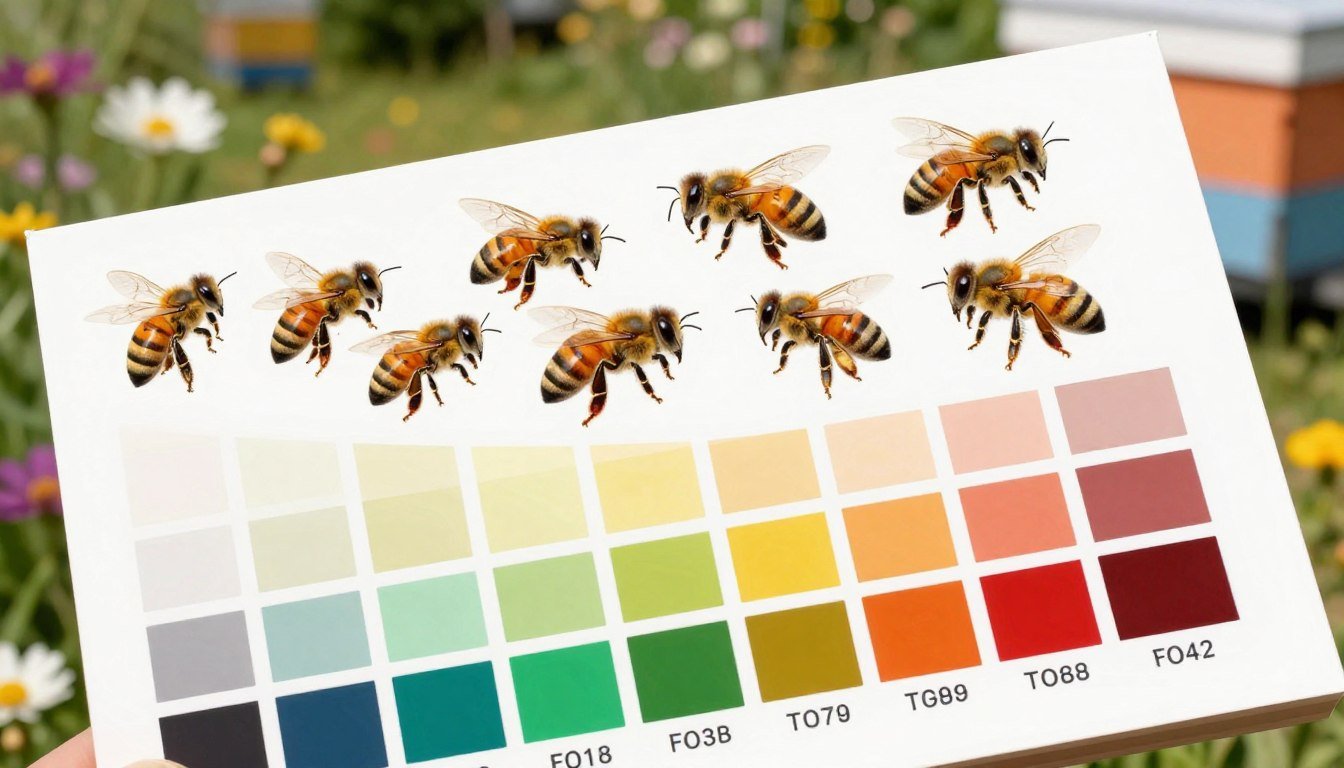
The international code uses five shades: blue, white, yellow, red, and green. Each shade links to the last digit of the year. Years ending in 0 or 5 use blue. Other numbers follow the alphabetical order of the colors. This keeps records simple across apiaries.
Why it matters: Applying the correct paint to the hive leader shows age at a glance. Beekeepers can plan replacements, manage breeding, and predict honey yields more reliably.
- Simple system that reduces inspection time.
- Consistent labeling supports breeding and hive rotation.
- Easy to teach new staff and volunteers.
| Last Digit | Assigned Shade | Example |
|---|---|---|
| 0, 5 | Blue | 2015 → Blue |
| 1, 6 | Green | 2016 → Green |
| 2, 7 | Red | 2017 → Red |
| 3, 8 | White | 2018 → White |
| 4, 9 | Yellow | 2019 → Yellow |
For a clear reference, consult a trusted guide on queen marking colors.
Essential Tools for Marking Queens
Good tools make the task safer and faster. Before you work a frame, assemble the proper kit so handling goes smoothly and the hive stays calm.
Paint Pens and Markers
POSCA paint pens are the industry standard. They use a water-based, non-toxic formula that dries quickly and gives a durable mark.
These markers hold color well and resist rubbing for many seasons. Practice strokes on a spare surface to steady your hand.
Numbered Discs
Numbered discs offer precise ID when genetic records or sales require a unique tag. Many commercial breeders prefer discs for long-term tracking.
Discs pair well with written logs and digital records, improving traceability across hives and breeding programs.
Queen Catcher Tubes
A one-handed catcher tube lets the beekeeper immobilize the bee on the frame surface and work without a second pair of hands.
- Catch safely, then apply paint or insert a disc.
- Use a press-in cage or tube to avoid crushing bees around the brood.
- Practice is crucial; skill reduces stress on the colony and preserves honey production.
For detailed tool reviews and high-precision options, see a practical guide on how to mark and a vendor comparison of high-precision tools.
Best Practices for Safe Queen Marking
Gentle capture and patience during drying cut stress and protect brood quality after identification.
Handle the bee gently. Use a one-handed catcher or soft tube and avoid squeezing the thorax. Proper grip keeps the worker count steady and protects development in the brood area.
Apply a small dot of paint at the center of the thorax. Keep the mark minimal so it does not hinder movement or behavior. Let the paint set for 30–60 seconds before release.
Avoid work during cold months. Do not attempt labeling while the colony clusters; winter handling causes stress and can trigger defensive huddling that harms the hive.
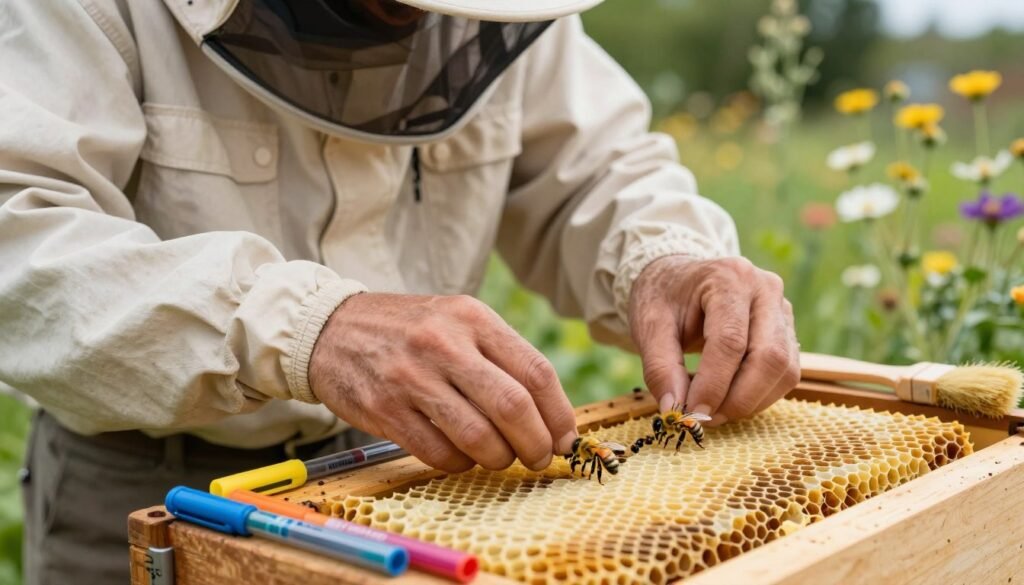
Quick checklist
- Allow 30–60 seconds drying time after the marker is applied.
- Keep the dot small and centered on the thorax.
- Use professional tools and practice to limit stress.
- Skip marking during winter clustering to protect the colony.
| Step | Why it matters | Tip |
|---|---|---|
| Gentle capture | Prevents injury and reduces stress | Use a soft tube or one-handed catcher |
| Small centered dot | Avoids interference with movement | Practice on a spare surface first |
| 30–60 sec drying | Ensures the mark stays and the bee is safe | Hold in a warm, calm spot while paint sets |
Conclusion
Consistent identification simplifies hive checks and supports smart colony decisions.
Implementing a year-based visual system gives beekeepers clear information on queen age and colony health. Use non-toxic paint and a steady marker to protect the bee and keep honey yields steady.
Practice the technique before working live hives. For step-by-step guidance see how to mark a queen bee. For seasonal checklists and practical advice, consult practical beekeeping guides.
Follow the international system, take your time, and record each ID. Small, consistent efforts pay off over the years with healthier queens and better honey production.
FAQ
What is the purpose of using a marking system for queen bees?
Beekeepers use a standardized marking system to track the age and origin of the hive’s reproductive female. It helps with record-keeping for breeding, management, and monitoring colony performance.
How do color codes help with age tracking?
A simple palette rotates on a five-year cycle so a single hue indicates the year the female was introduced. This visual cue speeds inspections and reduces handling time for accurate age records.
Are there alternatives to paint pens for identifying a hive’s reproductive female?
Yes. Besides fine-tipped paint pens, apiarists can use numbered plastic discs placed in the brood area or small adhesive tags designed for bees. Each option has pros and cons for visibility and longevity.
What kind of paint pen should I use to avoid harming the colony?
Choose non-toxic, quick-drying markers labeled safe for beekeeping or livestock. Test a small dot on a surrogate surface to confirm drying time before applying it to the insect.
How long should I wait for paint to dry before returning the female to her hive?
Allow at least a minute for modern, quick-dry pens; many require up to three minutes depending on humidity. Ensure the mark is fully set so workers do not remove the paint during grooming.
What are best practices for handling during identification to reduce stress on the colony?
Work calmly, use smoke sparingly, and limit the duration of inspections. Secure the insect gently in a catcher tube or on the hive lid, apply the identification, and release once dry to minimize disruption.
Can marking affect acceptance of a newly introduced reproductive female?
Properly applied, a small, clean mark does not reduce acceptance. Avoid heavy coating and strong solvents; a light, visible dot preserves pheromone cues and minimizes worker aggression.
How do I read a five-year rotation code for age identification?
The rotation assigns a different hue each year so the color alone identifies the introduction year within that five-year span. Keep a simple written or digital log that links the hue to the actual calendar year for clarity.
When should I use numbered discs instead of ink or paint?
Use numbered discs when you need both visual age cues and a unique colony or breeder identifier. Discs work well in breeding operations or research where cross-referencing records is essential.
How often should I update records after marking or replacing the reproductive female?
Update the hive log immediately after marking or replacement. Record the method used, any identifying numbers, the exact date of introduction, and notes on brood pattern or colony vigor.
Do marked females require different hive management than unmarked ones?
No. Management practices remain the same. Marking is an identification and record-keeping tool; it does not change feeding, disease monitoring, or seasonal tasks for the colony.
Are there legal or safety considerations for using adhesives or tags in an apiary?
Use materials labeled safe for use with animals and follow manufacturer guidelines. Avoid adhesives with harsh chemicals; ensure any attachment does not hinder movement or natural behavior.
How can I ensure consistent marking across multiple apiaries or volunteers?
Create a short protocol sheet that lists approved pens, disc types, drying times, and record fields. Train helpers on gentle handling techniques and require a photo or log entry after each marking event.
Where can I find high-quality tools like beekeeper pens and queen catcher tubes?
Reputable suppliers include Mann Lake, Brushy Mountain Bee Farm, and Betterbee. These vendors offer apiarist-specific pens, numbered discs, and queen catcher tubes built for safe, efficient handling.