Published March 31, 2026 · Last Updated August 26, 2026
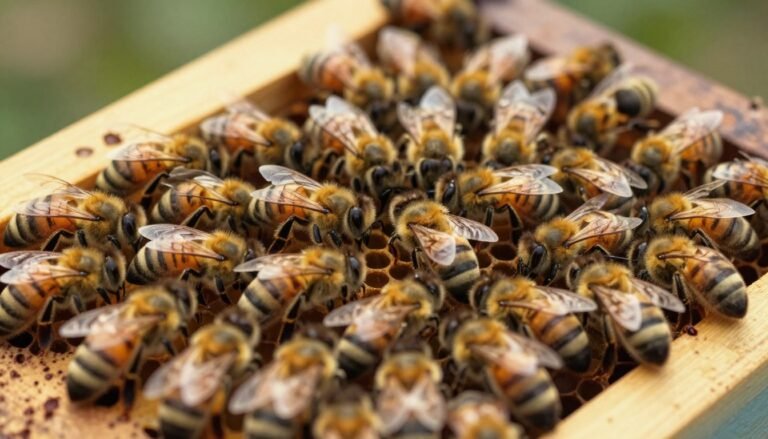
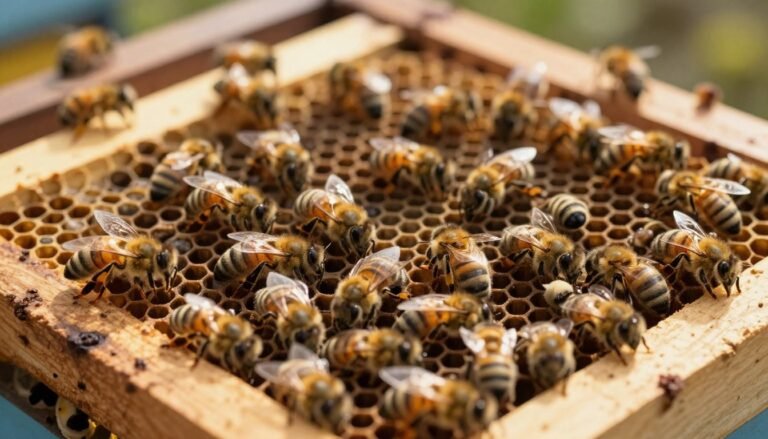
Many beekeepers ask whether a colony with laying workers can recover and accept a new queen. The biology is complex, and the signs you see in brood frames matter. Robert McBain of Worker and Hive Bee Supply provided a photo showing what a true new queen looks like in a hive.
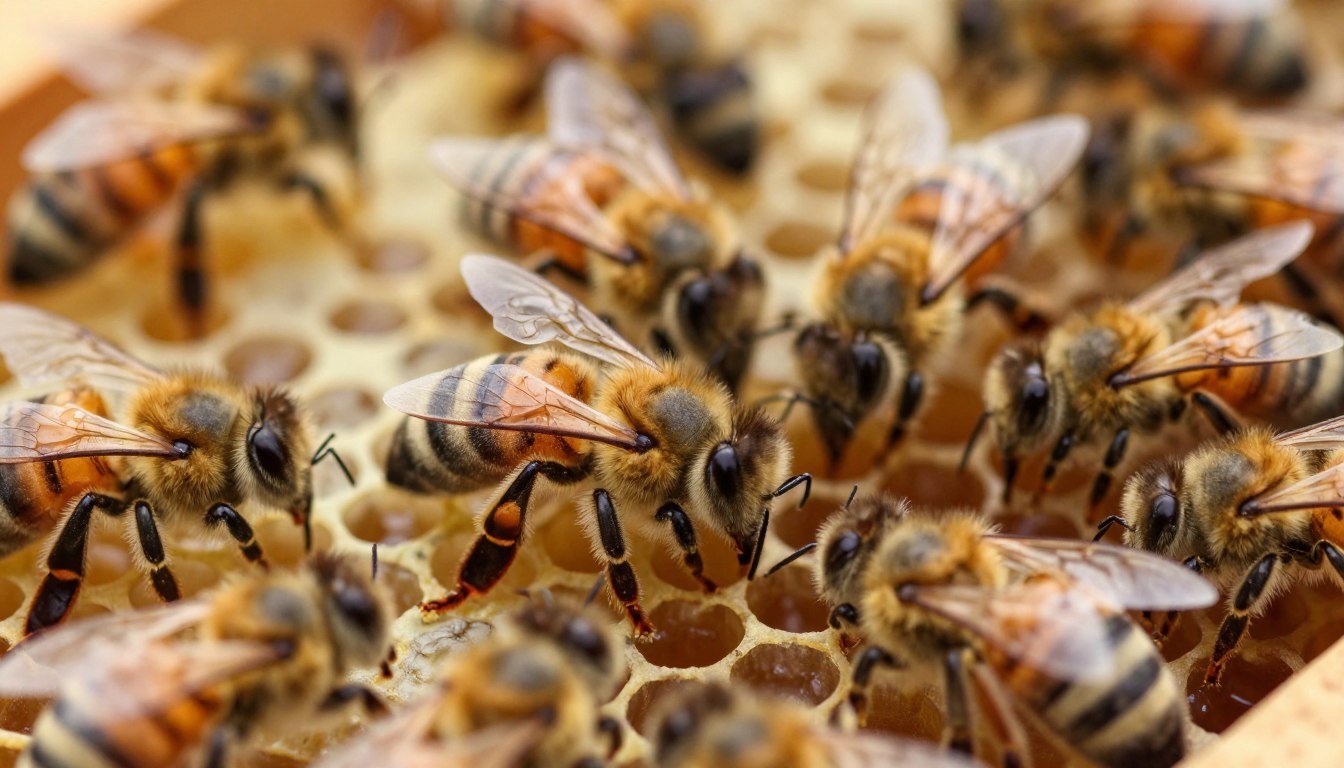
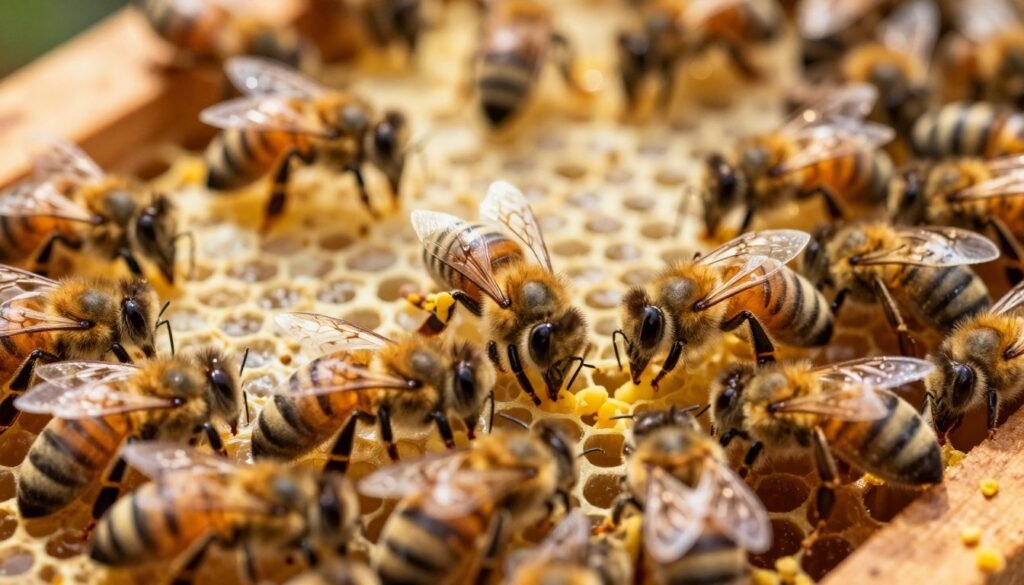
When you find multiple eggs in a single cell, that pattern often points to worker egg-layers rather than a queen. A queen typically deposits one egg in the cell center, while worker-laid eggs sit on the sides.
Before deciding to destroy or requeen, confirm queen-right status by checking for eggs, larvae, and capped brood. For guidance on inspecting brood frames and judging colony health, see beekeeping basics.
Key Takeaways
- Multiple eggs per cell often indicate worker egg-laying, not a laying queen.
- Inspect brood frames for eggs, young larvae, and capped brood to confirm a queen.
- Robert McBain’s photo helps distinguish a true new queen from worker activity.
- Do not destroy a hive if a genuine new queen is present; management differs.
- Understanding the difference between a failing queen and laying worker colonies guides decisions.
Understanding the Laying Worker Phenomenon
A sudden change in brood pattern often signals that the colony has lost its reproductive leader and is shifting to emergency egg layers.
Defining the problem
In a healthy hive, the queen deposits one egg in the center of each cell. This creates neat, predictable brood on the frame.
When that pattern fades, you may see multiple eggs and irregular placement. These signs point to either a failing queen or the presence of laying workers.
The timeline of failure
First, brood pattern breaks within days. Eggs become scattered and drone brood rises over weeks.
Next, worker ovaries activate once pheromone suppression drops. Those unmated workers lay unfertilized eggs that become drones.
- Point: Distinguish drone-laying queen from laying worker colonies by checking egg placement and brood consistency.
- Tip: Inspect frames for larvae and the usual central egg to confirm queen status.
| Stage | Signs | Timeframe |
|---|---|---|
| Early queen failure | Scattered eggs, fewer larvae | Days |
| Worker activation | Multiple eggs per cell, rise in drone cells | Weeks |
| Established laying worker hive | Predominantly drones, no worker brood | Several weeks |
Can Laying Workers Raise a New Queen
Laying activity by unmated workers creates social signals that mimic a healthy hive, complicating requeening.
The primary challenge is recognition. In many colonies, worker egg layers do not respond as a queenless unit. They behave as if pheromonal balance still exists, so introductions fail.
Because these workers act like managers of the nest, they often reject an introduced ruler. Attempts to add a replacement may provoke aggression or murder of the newcomer.
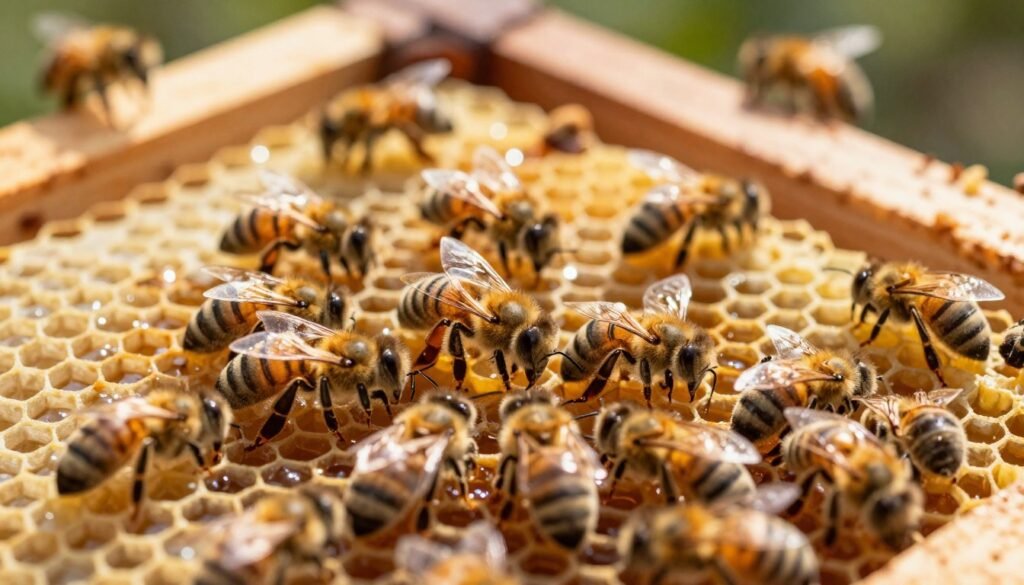
Management steps to restore brood production usually require suppressing the laying instinct first. Common tactics include combining with stronger hives, supplying fresh brood, or using rotation of frames to restore pheromone cues.
- Do not rush reintroduction; evaluate pheromones and brood pattern over days or weeks.
- Consider population redistribution before attempting to raise new queen within the worker hive.
- For visual guidance on egg placement and diagnosis, review the eggs on the wall resource.
Identifying Signs of a Failing Colony
Watch for irregular drone brood and knobby cappings; these are classic early warnings of colony trouble.
Timing matters. Laying workers typically emerge about three weeks after the hive loses its queen and existing brood has hatched.
Visual Indicators of Drone Brood
Look for rough, raised caps on cells where drone pupae sit. Caps often appear too small for true drone size and feel knobbly.
Scattered drone patches across frames, rather than neat worker brood, signal reproductive disruption. Also check for multiple eggs placed off-center in cells.
“Early detection prevents total colony loss,” said researcher Randy Oliver, noting the value of photo comparison in diagnosis.
Why this happens: When worker brood pheromones vanish, suppression of ovaries ends. Unmated workers then produce drone eggs, and worker brood disappears over weeks.
- Point: Scattered drone brood and multiple eggs mean intervention is needed.
- Tip: Inspect frames weekly to spot changes in time for corrective action.
Biological Differences Between Queens and Workers
Genetic rules in the hive decide whether an egg becomes female or male long before it is sealed in the cell.
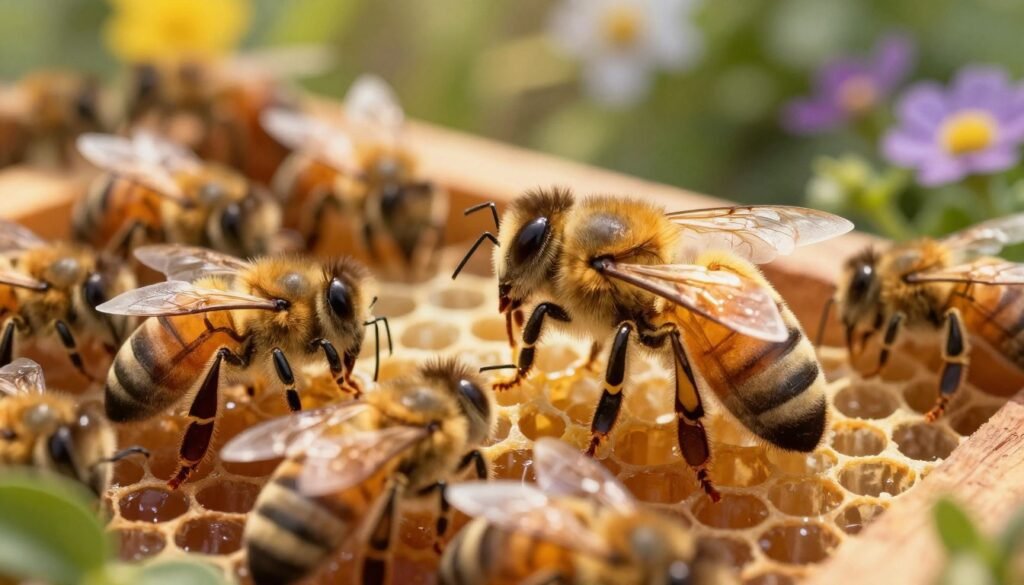
Fertilized eggs develop into diploid females with 32 chromosomes. Unfertilized eggs give rise to haploid drones with 16 chromosomes.
The practical result: only the queen normally produces fertilized eggs that become worker brood. If the ruler fails, the colony loses the steady supply of worker bees.
When workers activate ovaries, they lay unfertilized eggs. That shift reduces genetic diversity because offspring are clones or single-parent lineages.
“Genetic diversity from multiple fathers helps a hive resist disease and adapt,” noted experienced breeders.
- Chromosomes: female = 32, male = 16.
- Egg origin: fertilized = worker; unfertilized = drone.
- Colony impact: fewer worker bees, more drones over weeks.
| Feature | Fertilized Egg | Unfertilized Egg |
|---|---|---|
| Chromosomes | 32 (diploid) | 16 (haploid) |
| Develops into | worker or queens | drone |
| Genetic diversity | High when queen mates with many males | Low; clones or single-lineage |
Why Laying Workers Reject New Queens
When unmated workers activate their ovaries, they change the hive’s chemical signals and act as if the colony is still led. That false signal makes introductions risky.
Without true queen pheromone, the nest lacks the blend that normally calms aggression and guides acceptance. Worker-produced eggs and missing brood pheromone create confusion instead of order.
Introduced rulers arrive into an environment where individuals believe the colony is queen-right. The result is often rejection and attack. Beekeepers must remove or suppress that behavior before attempts succeed.
- Workers act as though the hive has leadership even when fertile workers are present.
- Absence of brood pheromone prompts unmated bees to lay eggs and fail to mimic queen signals.
- Successful requeening usually requires prior suppression of the laying instinct.
For field-tested tactics and community experience, see this discussion on worker egg-laying and practical rearing guidance at queen rearing basics.
The Role of Pheromones in Hive Stability
Pheromones act like a chemical language that keeps order inside a hive.
When those signals change, social roles shift fast and reproductive behavior may follow. Understanding the two main sources helps explain why some colonies stabilize while others decline.
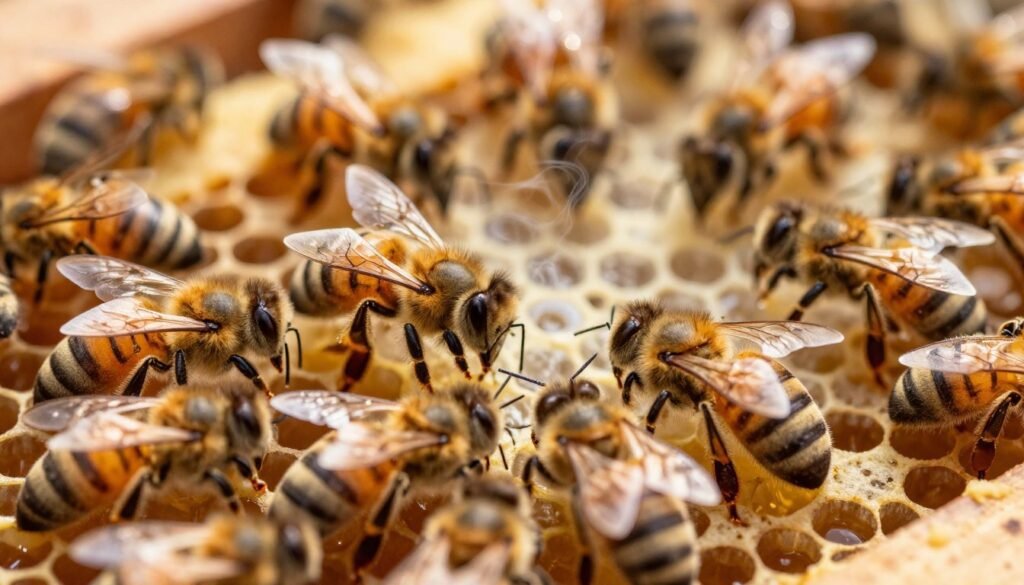
Queen Pheromones
Queen pheromones provide the main social glue. They suppress ovaries in worker bees and guide foraging and defense.
If the queen signal fades over days, workers will test reproductive options. That gap often leads to the emergence of laying workers and scattered eggs in cells.
Brood Pheromones
Brood pheromones come from open worker brood and reinforce suppression of worker reproduction.
Keeping open brood on the frame provides a steady chemical reminder of colony purpose. This is the most effective method to calm reproductive urges in unrested hives.
“Maintaining pheromone balance is fundamental to healthy colony management.”
- Key: Queen and brood pheromones work together to prevent reproductive chaos.
- Action: Introduce or preserve worker brood to restore stability before reintroduction attempts.
- Result: Proper pheromone cues reduce drone drift and improve brood pattern within weeks.
Assessing the Viability of Your Colony
A quick census of adult bees and open brood frames tells you if the colony holds recovery potential.
Start by counting adult bees on frames and noting how many frames contain worker brood. Low numbers of worker brood and few foragers suggest the hive has limited capacity to rebuild.
If the colony was queenless for many days or weeks, aggression and depletion often follow. Small, defensive clusters rarely accept interventions and waste resources.
When population is seriously depleted, combining remaining bees with a stronger hive usually gives better results than solitary recovery efforts.
- Frame count with open worker brood — major recovery indicator.
- Number of adult bees and foragers — shows strength over time.
- Presence of many drone cells or scattered eggs — signals reproductive trouble.
Finally, weigh time and cost against likely success. For guidance on when to requeen or merge, review this practical guide on when and why to re-queen and consider breeding implications in the discussion of genetic diversity in queen breeding.
The Shakeout Method for Population Redistribution
A deliberate shakeout moves all bees from the troubled hive about 100 feet from the original stand. The idea is simple: older foragers fly back to their home hives while less mobile individuals stay behind.
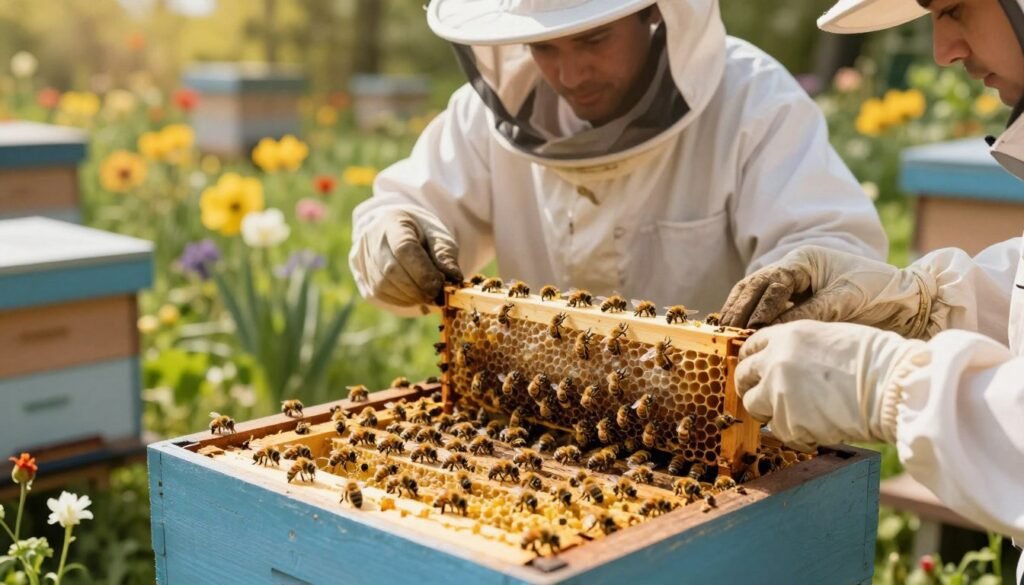
This method helps salvage experienced foragers and bolsters other hive populations in the apiary. It is often used to split a weak colony and place its foragers into stronger units.
Remember that the procedure does not solve the missing queen or restore brood. Without the proper brood and pheromone cues, the remaining cluster will not rebuild worker production on its own.
Use caution: redistributing bees may spread issues like laying workers into recipient hives. Monitor frames for drone brood, off-center eggs, and odd cell patterns over the following weeks.
- Shake at least 100 feet from the original hive.
- Expect older foragers to return; house bees tend to linger.
- Follow up with brood inspections and consider combining or requeening where needed.
Introducing Brood to Suppress Ovaries
A timed brood rotation can replace missing pheromone cues and curb fertile worker activity.
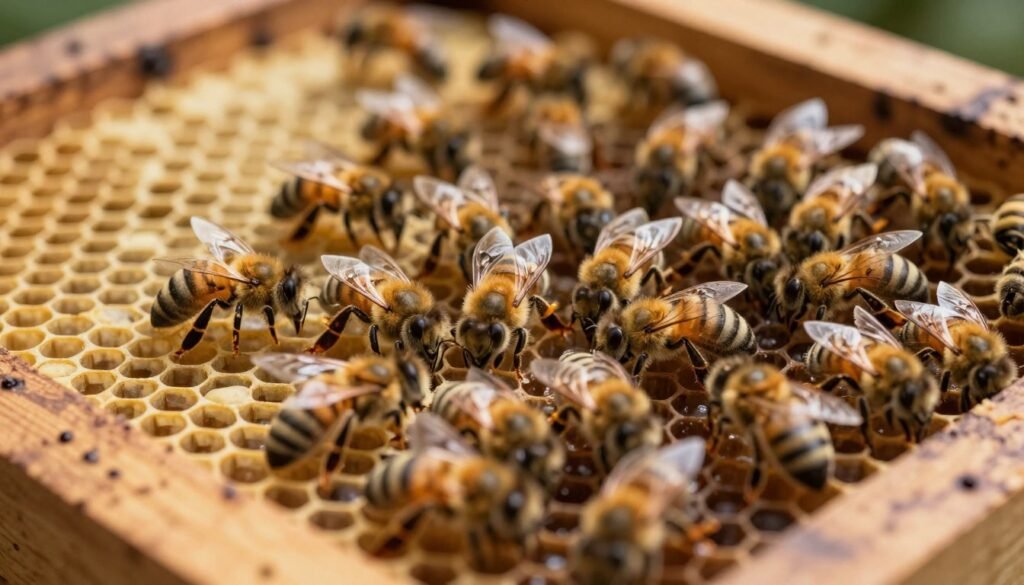
The Weekly Brood Rotation Strategy uses regular additions of open worker brood to restore normal social signals.
Add one frame of open worker brood every 5–6 days for about three weeks. This steady supply of brood pheromones helps stop fertile workers from producing drones.
Why it works: fresh brood mimics the chemical presence of young bees. That lowers ovarian activation and nudges the hive back to worker tasks.
“Consistent brood introductions are a slow, controlled way to rebuild balance before reintroducing leadership.”
- Requires strong donor hives and careful resource planning.
- Acts like a controlled split and uses real brood cues rather than synthetic substitutes.
- Once the colony starts making queen cells or accepts a mated individual, you may let them finish or place that mated queen.
| Timeline | Action | Goal |
|---|---|---|
| Week 1 | Add 1 frame of open worker brood | Introduce brood pheromone |
| Week 2 | Replace with fresh frame after 5–6 days | Maintain pheromone levels |
| Week 3 | Final brood addition, inspect for queen cells | Enable worker role reversal and prepare for acceptance |
Combining Weak Colonies with Stronger Hives
Combining a weak drone-producing colony into a strong, queen-right hive gives the best chance to save remaining bees and brood.
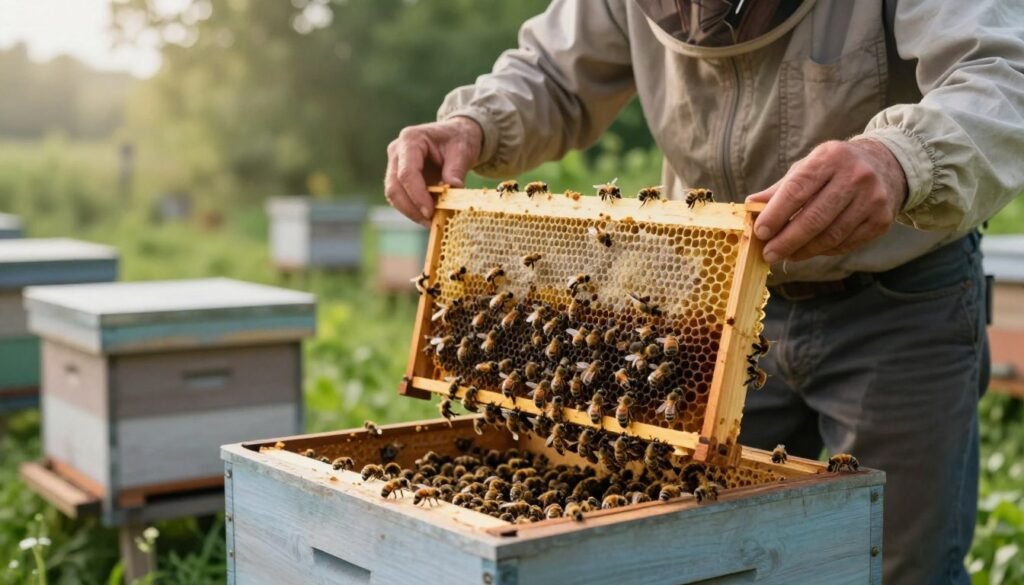
Use a double screen or a newspaper barrier when uniting. This gradual contact lets queen and brood pheromones spread while reducing aggression.
Prepare the transfer. Scrape excess drone brood and remove loose drone comb from frames. Cleaner frames ease absorption and cut drone numbers quickly.
Place the weak cluster above or beside the strong hive with the barrier. Within about 48 days, the strong colony’s pheromones usually restore order and calm hostile behavior.
- Benefit: The larger worker force absorbs foragers and nurses, keeping forage and maintenance steady.
- Risk reduction: Remove obvious eggs and odd cells before joining to limit propagation of faulty brood.
| Step | Action | Expected time |
|---|---|---|
| Preparation | Scrape drone brood; select frames to move | Same day |
| Combine with barrier | Use double screen or newspaper | Immediate setup |
| Stabilize | Allow pheromone influence; monitor frames | 48–72 hours |
For practical merging tips and alternatives, see this guide on combining hives and methods to boost population naturally at boost colony population.
Using the Newspaper Method for Requeening
Placing a nuc on top of the hive with a sheet of newspaper between boxes gives time for scents to blend. This slow contact reduces violent rejection and increases the chance the new queen will be accepted.
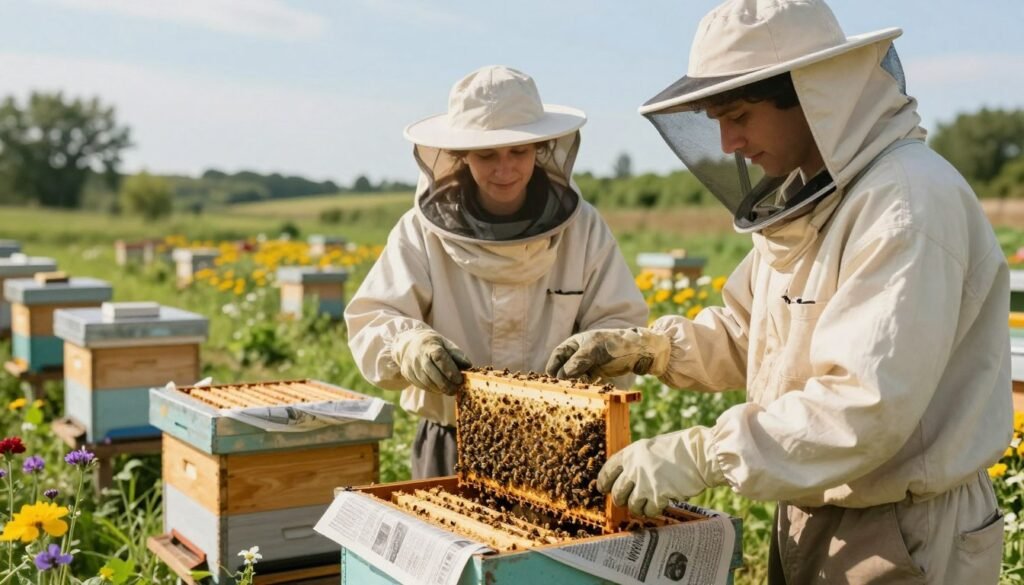
How it works: the bees chew through the newspaper over several days. During that time, pheromone from the donor colony spreads and calms host workers. Leave the hive undisturbed for at least five days after setup to avoid stress and attacks.
When to use it: apply this method when a strong nuc can supply steady pheromone and brood to stabilize the failing colony. It helps mask signs of drone-heavy brood and off-center eggs while the colony adapts.
- Start with clean frames and a healthy nuc.
- Stack the nuc above the hive with one sheet of newspaper separating them.
- Wait five to seven days before full inspection; monitor acceptance without opening prematurely.
| Step | Action | Reason |
|---|---|---|
| Setup | Place nuc above hive with newspaper | Gradual pheromone transfer |
| Waiting period | Do not disturb for 5–7 days | Reduce queen rejection risk |
| Follow-up | Inspect frames and brood | Confirm acceptance and healthy cells |
For further requeening procedures and tips, review this requeening guide.
Risks of Attempting to Save a Hopeless Hive
Not every struggling unit merits rescue. When a hive has been queenless for weeks and shows persistent drone brood, investing time often produces poor returns. Attempting repeated fixes can weaken your apiary and cost valuable stock.
Michael Bush’s “shakeout and forget” approach offers a practical alternative. Dismantle the failing box, scatter frames to healthy colonies, and allow older foragers to return. This salvages brood, stores, and useful frames without wasting time on a lost cause.
Why this matters: forcing a new queen into a host that rejects introductions risks losing expensive queens and wasting hours of labor. Persistent aggression from fertile workers often leads to murder of introduced stock and continued scattered eggs or odd cells.
Protect stronger colonies. Move good frames and resources, then retire the unit. Letting nature redistribute bees avoids spreading problems from a laying worker hive into healthy colonies and preserves the apiary’s overall strength.
Monitoring Progress After Intervention
After any intervention, inspectors should track clear signs that the hive is accepting leadership or forming queen cells. Keep daily notes during the first three weeks and mark when brood frames were added.
Record dates for each frame transfer or brood introduction. These timestamps make it simple to spot trends in eggs, brood, and worker behavior.
If the unit begins to produce its own queen cells, wait until mating is complete before opening the nest often. Early disturbance can interrupt development or mating flights.
Regular inspections ensure the laying worker instinct is fading and that worker brood returns. Look for central-placed eggs, filling brood areas, and fewer drone patches.
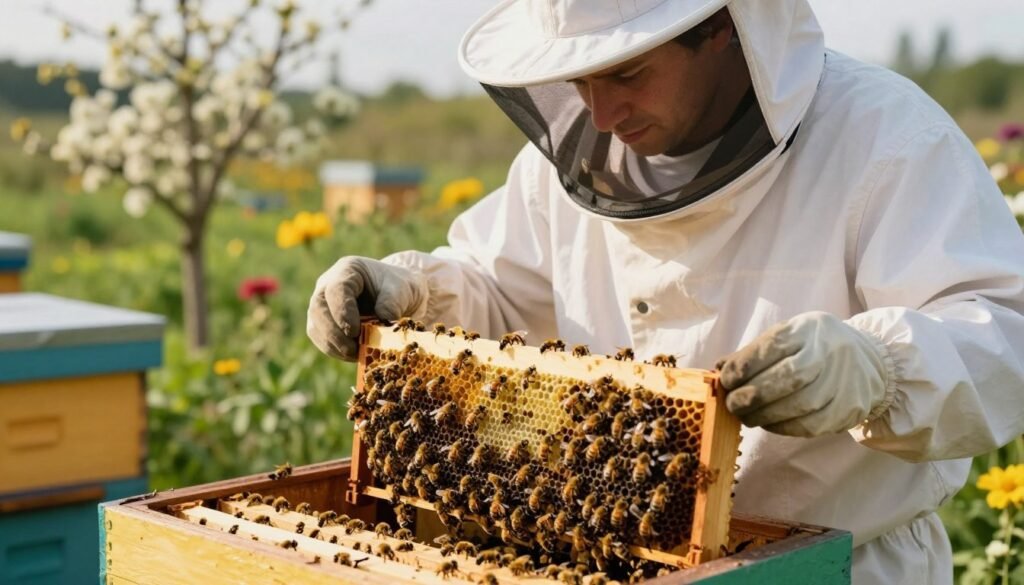
Patience matters. Full recovery may require several weeks. If progress stalls, consider reintroducing brood frames from a strong donor or consult guidance on queen cell management and use heat-mapping methods for brood assessment from brood pattern heat-mapping.
“A careful log and steady inspections are the difference between a saved colony and wasted effort.”
- Keep short, dated notes after each visit.
- Watch for expanding worker brood and centered eggs.
- Delay intrusive checks until mating and brood patterns stabilize.
Conclusion
Practical steps and patience are the beekeeper’s best tools when brood patterns fail.
Successful management of laying issues requires understanding bee biology and steady action. Combining a weak unit with a stronger hive or using timed brood rotation both aim to restore queen-right status and improve brood health.
Always protect your strongest colonies first. Salvaging stores and moving good frames often gives better returns than fighting an aggressive, drone-producing unit. Monitor for centered eggs, healthy cells, and shrinking drone patches.
Keep learning and record what works. For background on honeybee roles and behavior, see honeybee worker roles. With careful checks and early action, you preserve genetic diversity and long-term apiary success.
FAQ
Can laying workers raise a new queen?
In most cases no. When worker bees begin producing eggs without a functional queen present, they produce mostly unfertilized eggs that develop into drones. Workers lack the anatomy and mating behavior required to produce a true queen from their eggs. Successful replacement requires either a viable queen cell or introduction of a mated queen from another colony.
What defines the laying-worker phenomenon?
This condition occurs after prolonged queenlessness or extreme stress. Multiple workers activate ovaries and place many eggs in cells. The brood pattern becomes spotty, and drone brood appears in worker-size cells. The hive’s social signals change, undermining normal colony functions.
How quickly does a hive fail after queen loss?
Timeline varies, but deterioration often shows within 1–3 weeks. Worker-laid eggs and drone brood rise during this period. Without intervention, colony decline continues as brood replacement drops and foraging behavior shifts. Timely management within days to weeks improves outcomes.
What signs indicate a failing colony with laying workers?
Look for multiple eggs per cell, patchy brood, an excess of drone brood, and absence of fresh worker brood. You may observe workers clustered without brood care behaviors and reduced cohesive responses to queen introduction attempts.
How do worker and queen biology differ biologically?
Queens develop from specially fed larvae in large queen cells and possess fully developed ovaries and spermatheca for storing sperm. Workers come from fertilized eggs reared in standard cells and have limited reproductive anatomy. These distinctions make worker-origin queens impossible.
Why do colonies with laying workers often reject introduced queens?
Social cues drive rejection. Multiple egg-laying workers emit altered pheromone profiles and aggressive behavior. They may kill a newly introduced queen or prevent her acceptance. The hive’s diminished brood cues and pheromone imbalance reduce acceptance odds.
What role do pheromones play in hive stability?
Pheromones coordinate reproduction, brood care, and social cohesion. Queen pheromones signal fertility and suppress worker ovaries. Brood pheromones stimulate nursing and maintain colony rhythms. Loss of these signals triggers reproductive shifts among workers.
How can I assess colony viability before attempting rescue?
Inspect frames for brood pattern, note the ratio of drone to worker brood, check for multiple eggs per cell, and estimate adult population. If drone brood dominates and the adult population is small or aggressive, chances of recovery are low without combining with a stronger colony.
What is the shakeout method for redistribution?
This technique moves adult bees from a weak hive into a stronger one by brushing or shaking frames into the stronger colony at night. The goal is to bolster populations and allow the weak hive to be repopulated with fresh brood from nearby sources. Use care to avoid moving disease.
How does introducing brood suppress worker ovaries?
Adding young brood restores brood pheromone signals that inhibit worker reproduction. Nurse bees focus on larval care, and pheromone exposure reduces ovary activation. Regular introduction of frames with eggs and young larvae helps reverse the laying-worker trend.
What is the weekly brood rotation strategy?
Rotate in frames containing eggs and very young larvae on a weekly schedule to maintain brood pheromone levels. Replace older frames with fresh brood from healthy colonies until the weak hive accepts a mated queen or recovers. This approach demands careful timing and monitoring.
Can I combine a weak colony with a stronger hive?
Yes. Merging a weak, worker-egg dominated colony into a robust colony can save resources and integrate remaining workers. Use methods such as the newspaper technique to stage the merge and reduce fighting. Ensure compatibility and monitor for disease transfer.
How does the newspaper method work for requeening or merging?
Place a sheet of newspaper between two hive boxes when stacking the weak colony over the strong one. The thin barrier delays bee contact while scents intermingle. As bees chew through the paper over 24–48 hours, aggression typically subsides and integration occurs smoothly.
What risks exist when trying to save a hopeless hive?
Attempting rescue can spread pests, waste time, and stress neighboring colonies. Introducing a mated queen to a hive dominated by egg-laying workers often leads to queen death. Assess resource value and disease risk before investing effort in recovery.
How should I monitor progress after intervention?
Inspect at weekly intervals. Look for improved brood pattern, reduction in multiple eggs per cell, return of worker brood, and calmer colony behavior. Track acceptance of introduced queens and decreases in drone brood. Adjust your strategy based on observable change within 2–4 weeks.