Keeping protective clothing clean is essential for every professional beekeeper who wants to stop pathogens from moving between colonies. A well-kept beekeeping suit protects you, your investment, and your apiary’s health.
Ventilated beekeeping gear can often be laundered with care. Foxhound Bee Company notes many ventilated suits tolerate a gentle cycle in a washing machine when labels permit. Follow care instructions and handle seams and zippers gently.
If your suit looks grimy or holds residue, start with a thorough shake and spot check. Remove detachable parts, inspect for damage, and treat stains with mild detergent or simple home remedies. For detailed step-by-step care, consult this guide on how to keep your gear in top shape by Lappes Bee Supply and a resource for choosing reliable equipment for U.S. beekeepers.
Key Takeaways
- Clean gear prevents disease spread. Regular care preserves protective function.
- Inspect and remove accessories before laundering.
- Follow label guidance; many ventilated suits accept gentle machine cycles. Care guide.
- Use mild, unscented detergent and air dry away from direct sun.
- Consider equipment choices and backups when planning maintenance. Equipment selection tips.
Why Proper Sanitation Matters for Apiary Health
Controlling contamination in an apiary starts with strict care of your protective clothing. Foxhound Bee Company notes that venom and pheromones can soak into fabric over time. That buildup can intensify allergic reactions and change how bees respond during work.
Regular cleaning of your suit reduces odor cues that attract insects and helps keep colonies calm. Professional beekeeping teams know a dirty beekeeping suit can make tasks tougher and raise safety risks for the beekeeper and the apiary.
“A well-maintained beekeeping suit prevents cross-contamination and extends the life of your gear.”
- Keep gear free of sweat, wax, and propolis. These residues degrade fabric and protective function.
- Routine washing and inspection limit pathogen transfer between colonies.
- If you see a page blocked message while researching safety, try disabling extensions or check for a blocked extension blocked notice so you can access full protocols.
For step-by-step inspection guidance that complements sanitation best practices, see how to inspect a beehive step-by-step. Proper care of your suit is a practical, essential part of beekeepers’ safety routines.
Essential Preparation Before Washing Bee Suits After Diseased Hive Inspections
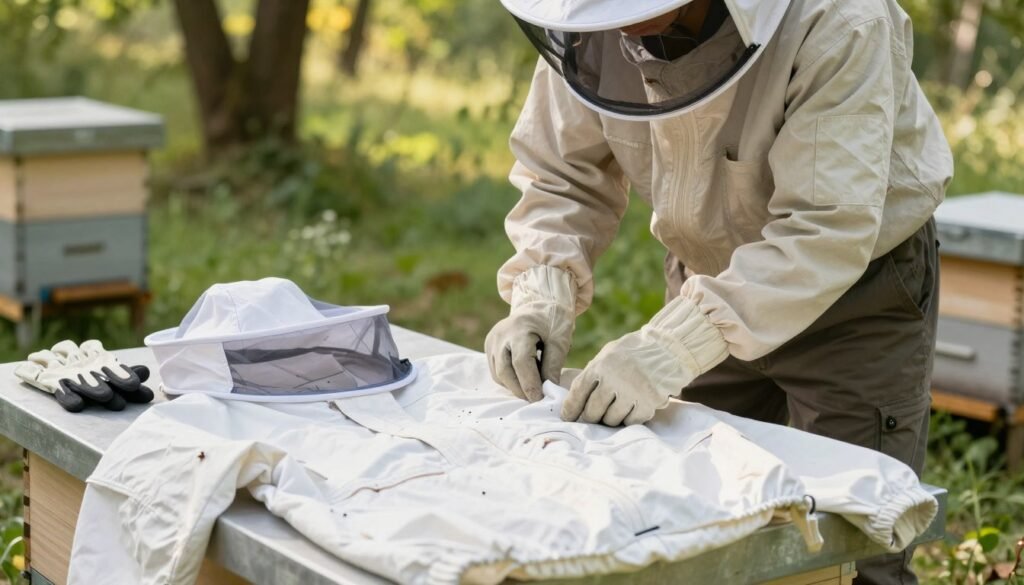
A deliberate pre-wash check prevents damage to both your gear and your washing machine. Make sure pockets are empty of hive tools, queen cages, and hard debris before you proceed.
Clearing Pockets and Debris
Remove all items and shake out loose dirt. Inspect seams and zippers for trapped wax or grit.
Managing Propolis and Wax Residue
Scrape off excess propolis and wax because beeswax softens near 145°F and can harm a machine. Foxhound Bee Company advises scraping before pre-treatments.
“Removing stubborn wax and treating stains before the main cycle saves time and extends fabric life.”
- Treat visible stains on the suit and gloves with a mild pre-wash product.
- If you encounter a page blocked extension, try disabling extensions to access full prep instructions.
- For a care walkthrough, see this care guide.
- Consider equipment choices and backups: beekeeping clothing options.
| Prep Step | Why It Matters | Quick Tip | Effect on Fabric |
|---|---|---|---|
| Empty pockets | Prevents machine damage | Check twice | Protects fabric |
| Scrape wax/propolis | Stops melting in machine | Use a dull scraper | Improves cleaning |
| Pre-treat stains | Removes trapped grime | Spot test first | Preserves finish |
Selecting the Right Cleaning Agents and Methods
Choose detergents and methods that clean thoroughly while protecting delicate mesh and fabric.
Fragrance-free detergent is essential. Use mild, unscented detergent to avoid scent residue that can alarm bees. Foxhound Bee Company recommends warm, not hot, water to protect the fabric and avoid shrinkage.
Choosing Fragrance Free Detergents
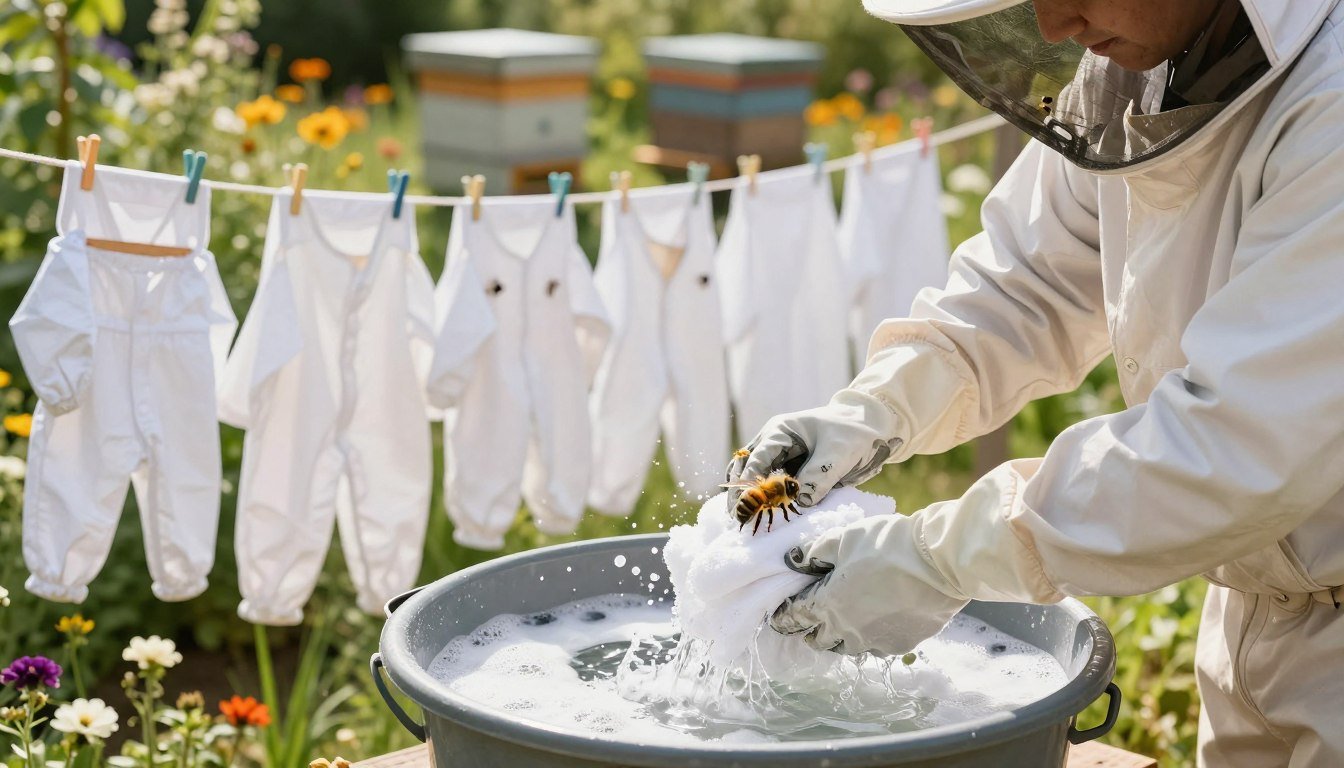
Hand wash or machine care both work. For gloves or heavy residue, Kevin, a beekeeper, soaks items in a 5-gallon bucket with washing soda and a few drops of Dawn soap. This removes propolis and dirt without harsh chemicals.
- Make sure to use the delicate cycle on your washing machine for veils and mesh.
- Avoid using bleach or strong solvents; they leave residues that can agitate colonies.
- If a page blocked extension appears when checking approved cleaners, try disabling extensions to access manufacturer guidance.
| Item | Recommended Method | Why it matters |
|---|---|---|
| Beekeeping suit | Delicate cycle, warm water, fragrance-free detergent | Preserves fabric and mesh integrity |
| Beekeeping gloves | Hand wash in bucket with washing soda and mild soap | Removes propolis and stains without damage |
| Small stains | Spot treat with mild detergent, then air dry | Prevents spread of grime and preserves finish |
“Gentle cleaners and warm water keep gear functional and safe for the next season.”
Handling Delicate Components and Veils
Delicate parts like the veil deserve separate, gentle cleaning to preserve visibility and protection.
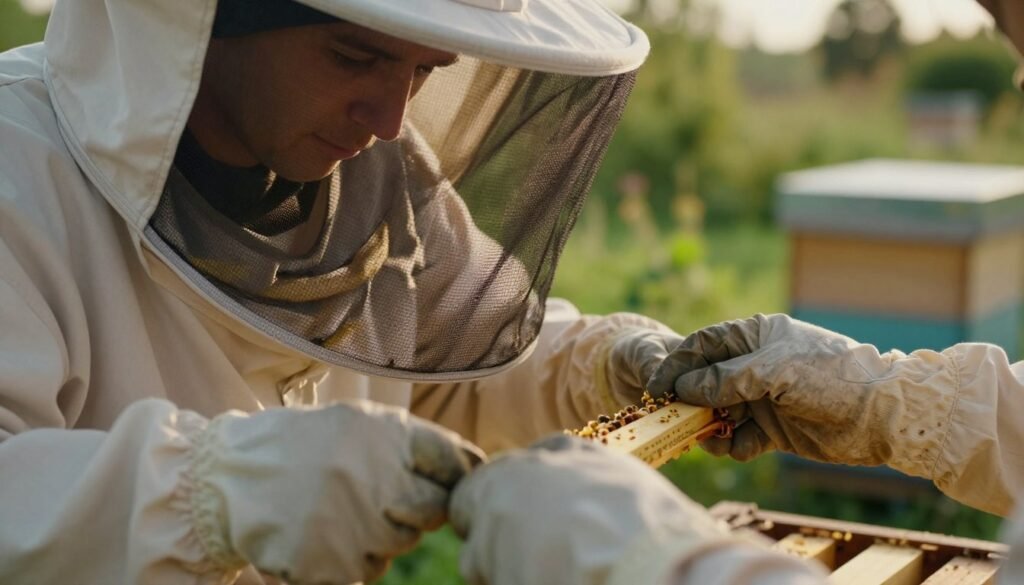
Always remove the veil and hand wash it alone. Use a mild soap and warm water. Gently rinse until suds clear to protect the fine mesh and brim.
Harold, a beekeeper, tucks the veil inside the jacket and secures it with a paper clip before any cleaning. This keeps the mesh from snagging. If you spot early signs of wear, repair the edge or replace the veil before the next field visit.
“The veil is the most sensitive part of your suit, so handle it with extra care to avoid damaging the screen or brim.”
- Hand wash the veil with mild detergent; avoid strong chemicals.
- Gently clean beekeeping gloves in warm water and mild soap to remove stains and residue.
- If you see a page blocked extension or blocked extension message, try disabling extensions to access full cleaning guides.
- Malerie uses a light spritz of vodka on the hood to reduce odors and germs; test on a small area first.
| Component | Cleaning Method | Why it matters |
|---|---|---|
| Veil | Hand wash, mild soap, air dry | Protects mesh and visibility |
| Gloves | Warm water soak, mild detergent, gentle scrub | Removes propolis and stains without damage |
| Brims/frames | Spot clean, inspect for signs of wear | Maintains structural safety |
For step-by-step care of the full suit and related gear, consult a focused guide such as how to wash your beekeeping clothing. For maintenance tips on tools and other items, see beekeeping tools maintenance.
Best Practices for Drying Beekeeping Gear
Drying properly is as important as cleaning. Heat can change the shape of fabric and embed residues back into fibers. Take time to dry each piece the right way.
Avoiding High Heat Dryers
You must avoid using a dryer for your beekeeping suit because high heat can shrink fabric and damage delicate mesh components. Foxhound Bee Company warns heat may melt and spread wax or propolis on your bee suit.
- Do not tumble dry. The dryer can also set stains and deform brims and zippers.
- If you see a page blocked extension while researching, try disabling extensions to access manufacturer warnings about the dryer risk.
- After a machine wash, remove items promptly to limit heat exposure from residual warmth in the washer.
Importance of Airflow
Always air dry your gear in a place with good airflow to remove moisture and prevent mildew. Ventilated material dries quickly when hung on a hanger in a well-ventilated area.
- Hang the suit and beekeeping gloves on separate hangers so air reaches the mesh and seams.
- Air dry in shade or indirect light; direct sun can fade fabric and weaken fibers.
- If a blocked extension blocked message appears while checking tips, try disabling extensions to read full guidance on hand wash and drying veils.
“Using a hanger and steady airflow preserves fit, mesh integrity, and protective function.”
For long-term care and related maintenance, see resources on how to maintain your bee suit and recommended gear for U.S. climates and a detailed guide to maintain your bee suit.
Long Term Storage Strategies for Protective Clothing
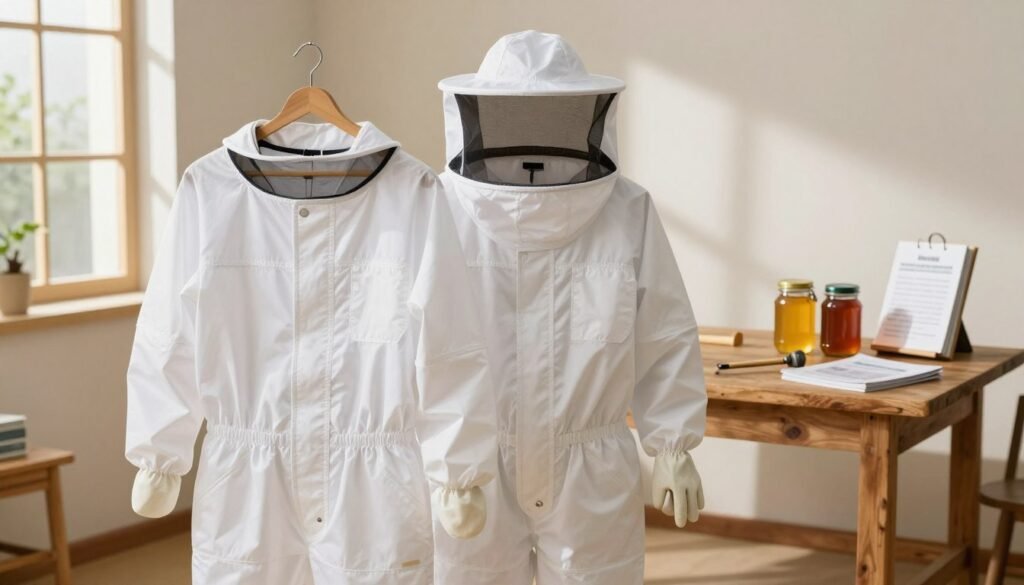
Dry storing prevents mold and mildew that damage fabric and ruin gear. Use a cool, dry place away from direct sunlight to stop fading and breakdown.
Swarm Commander suggests breathable garment bags to keep dust and pests out while letting air move. This helps preserve the veil, zipper, and seams.
“Keep equipment dry and ventilated to ensure protective clothing is ready for the next season.”
- Make sure the beekeeping suit and gloves are fully dry before packing.
- Store items in breathable bags and hang them so air reaches seams and mesh.
- If you see a page blocked extension or blocked extension message, try disabling extensions to view full storage guides.
| Storage Step | Why it matters | Quick tip |
|---|---|---|
| Complete air dry | Prevents mildew and fabric breakdown | Hang in shade until crisp |
| Breathable bag | Blocks pests, allows airflow | Use cotton or mesh garment bag |
| Cool, dry place | Protects from UV and moisture | Avoid attics and damp basements |
Inspect before storing. Check beekeeping gloves, seams, and zippers for wear. Proper dry storing keeps your bee suit serviceable and ready for the next season.
Conclusion
Keep a steady care routine so your protective gear stays reliable season after season.
Regular cleaning of your beekeeping suit removes venom, propolis, and dirt that shorten fabric life and reduce safety. Follow label guidance and use mild detergent and water for general care.
Hand wash delicate veils and air dry the set to avoid heat damage from a washing machine or dryer. Inspect gloves and seams for signs of wear and repair small tears promptly.
If you need more detailed maintenance tips, see this guide to maintain your bee suit and a practical walk-through to repair damaged hive boxes. If resources are blocked, try disabling extensions to access them.
Proper care and storage keep your equipment ready, comfortable, and safe for every season.