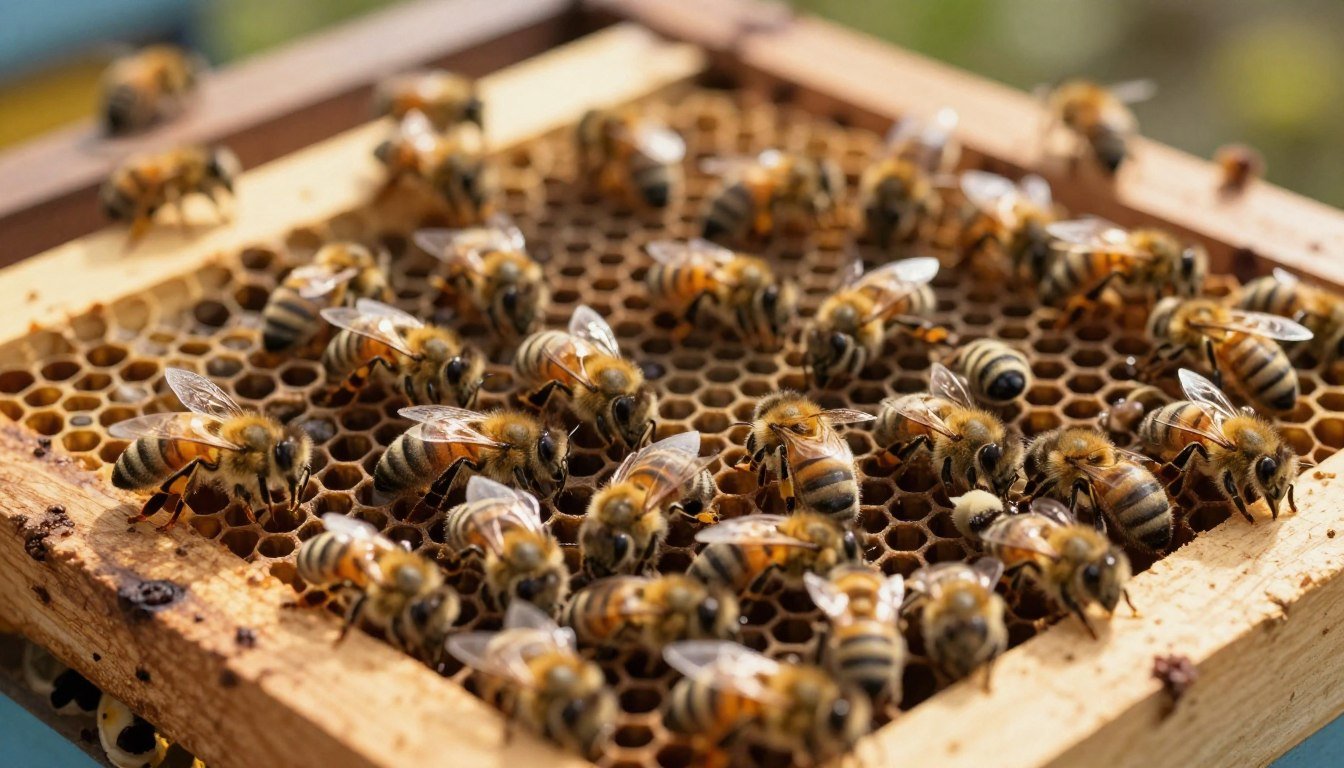
For beekeepers, a frame filled wall-to-wall with sealed brood is a reassuring sign of a healthy colony. That visual pattern often reflects a productive queen and a balanced worker population.
Researchers such as Lee et al. (2019) studied whether brood layout in the hive reliably reflects queen health. A healthy queen tends to lay eggs in concentric rings so worker brood spreads evenly across the frame.
When you spot missed cells or irregular areas, assess the larvae, worker behavior, and frame placement. Environmental factors like pollen shortage or varroa mites can also harm the brood nest and skew what you see.
Track egg-laying rate and watch drone and nurse numbers during inspections. For advice on correcting a weak colony and practical steps, see how to fix a weak beehive.
Key Takeaways
- Brood pattern reveals much about queen performance and colony health.
- Regular hive checks help spot missed cells and early symptoms of decline.
- Life cycle timing (worker cell capped ~12 days) aids accurate inspections.
- Environmental stressors like pollen scarcity and varroa affect brood success.
- Monitor egg laying, nurse bees, and drone counts alongside brood layout.
Understanding the Importance of Brood Patterns
A clear, compact brood pattern often marks a high-performing laying female and a well-managed hive.
A uniform pattern of filled cells makes it easy to estimate larval age because worker cells are capped for about 12 days. That capping schedule helps beekeepers read frames and judge recent egg laying without invasive checks.
Healthy colonies with a tight laying layout can yield up to 30% more honey. When rings of eggs form predictably, workers cover developing larvae and keep temperature steady. If this coverage slips, larvae may fail and the colony will weaken.
- Inspect during peak foraging hours to see if nurse bees are present on frames.
- Empty cells on a new frame often stem from foundation wires, not reduced laying.
- Compare patterns across colonies to find the most productive reproductive stocks.
“Consistent egg laying is the backbone of colony survival through winter.”
For deeper evaluation of trait quality and pattern mapping, review guidance on how to assess queen traits and consider thermal imaging for detailed thermal camera analysis.
Using Brood to Diagnose Queen Problems
A clear visual check helps pinpoint laying issues fast. A frame with many empty cells or scattered larvae often signals the mother is not laying consistently.
Visual indicators of failure
- Spotty brood pattern and isolated capped cells.
- High counts of empty cells on new or drawn comb.
- Backfilling with honey that masks a weak laying rate.
The impact of colony environment
Nutrition, disease and worker numbers change how the nest appears. A study showed a new group of workers can shift the layout after 21 days.
Place a fresh frame of drawn comb to confirm a poor layer. If eggs do not appear within two days, follow standard requeening guidance and document any odd symptoms.
| Indicator | Likely cause | Action |
|---|---|---|
| Spotty pattern | Inconsistent egg-laying | Inspect for disease; note worker presence |
| Empty drawn cells | Failing layer | Add new frame; watch 48 hours |
| Honey in brood area | Strong flow or backfilling | Move frames; monitor occupancy |
For methods that raise overall occupancy and strengthen a bee colony, see boost colony population naturally.
Identifying Healthy Versus Irregular Laying Patterns
A tight, even cluster of capped cells often signals a highly fertile laying female and steady colony growth. This clear brood pattern shows that larvae receive regular care and that workers can keep the nest stable.
Visual Indicators of Failure
Spotty areas, random empty cells, and isolated capped spots suggest the laying female may have low sperm stores or the colony is under stress.
- Healthy worker brood: solid, capped cells with minimal gaps.
- Spotty pattern: scattered empty cells across the frame.
- Drone brood in worker cells often points at reduced fertility of the laying female.
The Impact of Colony Environment
Nutrition, disease, and worker numbers change layout and larval survival. A productive laying female helps workers keep temperature steady and supports good honey yields.
| Indicator | Likely cause | Recommended action |
|---|---|---|
| Even central pattern | High fertility | Routine inspections; maintain forage |
| Spotty cells | Declining fertility or stress | Monitor eggs; check worker counts |
| Random empty cells | Underperforming layer | Place a fresh frame and watch 48 hours; consider requeening |
For practical steps on managing colonies with laying worker issues, consult queenless laying worker colonies.
Common Brood Diseases and Their Symptoms
A focused check for discoloration, odd textures, or missing larvae speeds up response time.
American Foulbrood identification
Cause: Paenibacillus larvae produces lethal spores that persist long-term.
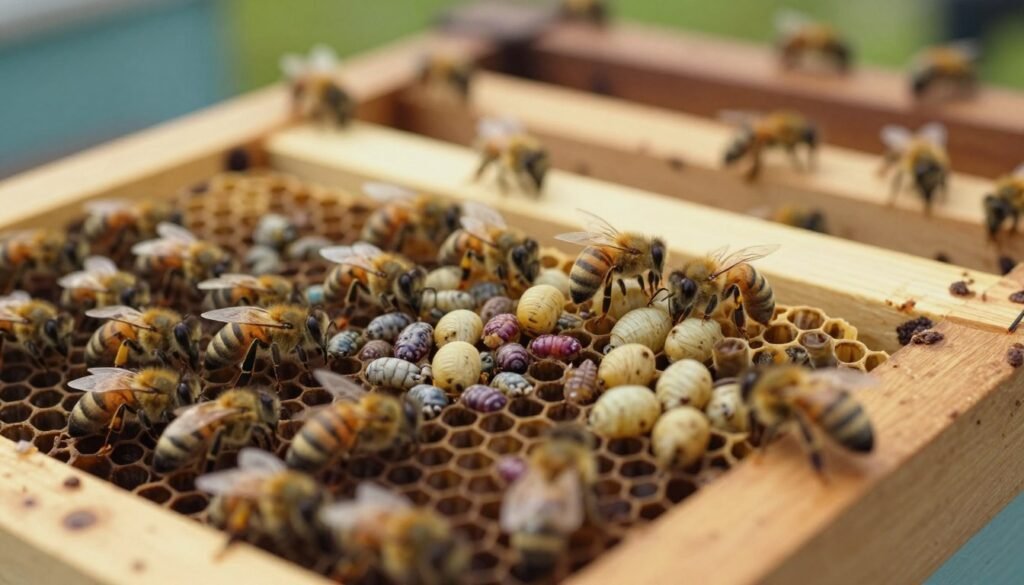
Key signs: capped cells with dead, dark larvae and a sticky scale at the base. A simple ropiness test uses a toothpick; infected tissue may string about 3/4 inch.
European Foulbrood symptoms
Cause: Melissococcus plutonius often appears during spring buildup under colony stress.
Look for a spotty brood pattern and off-white or yellow larvae. Tracheal tubes may be visible beneath the skin of some larvae.
Managing Chalkbrood and Stonebrood
Chalkbrood (Ascosphaera apis) creates white or gray mummies. Bees usually remove these, leaving scattered casings.
Stonebrood from Aspergillus can pose a health hazard for people. Handle infected frames with caution and replace old comb with fresh foundation to cut spore loads.
| Sign | Likely agent | Recommended action |
|---|---|---|
| Dark, sticky scale; ropiness | Paenibacillus larvae | Isolate hive; consult local regs and replace comb |
| Spotty pattern; yellowish larvae | Melissococcus plutonius | Restore nutrition, recheck frames in short time |
| White/gray mummies or hard casings | Ascosphaera apis / Aspergillus | Improve hygiene; remove mummies; swap old frames |
Environmental Stressors Affecting Hive Health
Moisture and poor ventilation in low sites encourage fungal growth and can harm larvae quickly. A damp nest often leads to visible symptoms on capped cells and reduced survival.
Extreme temperatures may cause the queen to stop laying and leave frames empty. Wind, sun exposure, or cold snaps all upset the brood nest and the internal pattern that workers maintain.
Nutrition matters: a pollen shortage creates a spotty brood pattern as the colony struggles to feed young. Replacing pollen with patties during a dearth supports continued laying and preserves honey stores.
Regular checks let beekeepers spot early signs and adjust hive placement, add ventilation, or build windbreaks. For chilled colony guidance see chilled brood guidance and for recent studies consult recent research on environmental impacts.
| Stressor | Likely effect | Recommended action |
|---|---|---|
| Extreme heat/cold | Interrupted laying; empty frame | Provide shade or insulation; relocate hive |
| Pollen shortage | Spotty pattern; weak larvae | Feed pollen patties; increase forage |
| Moisture buildup | Fungal growth; sick larvae | Raise hive; improve ventilation |
| Exposure (wind/sun) | Unstable nest temp; stressed workers | Create windbreaks; add shade |
The Role of Parasitic Mite Syndrome
Heavy varroa loads can quickly tip a healthy hive into collapse when viruses spread through workers and larvae.
Recognizing Viral Infections
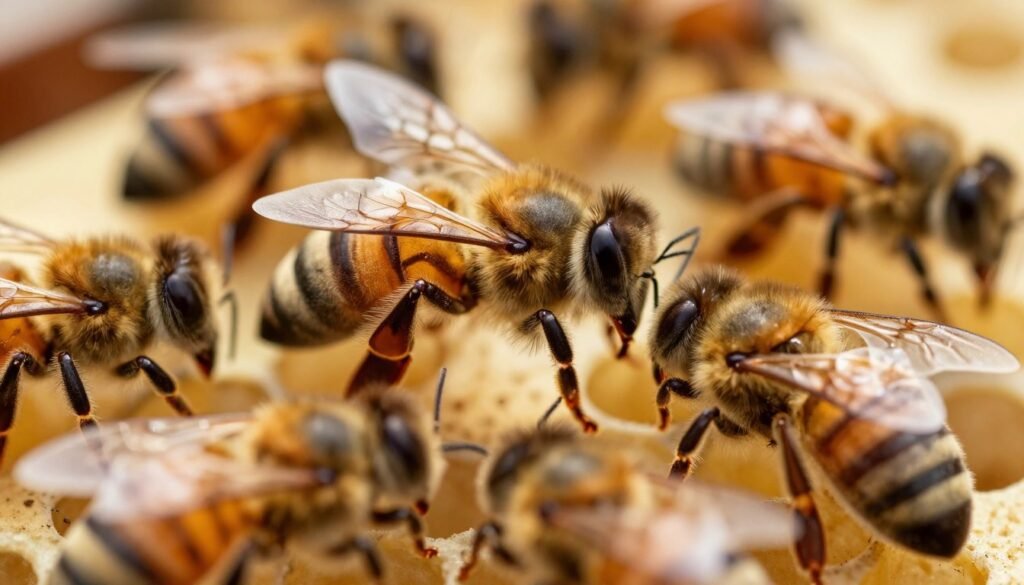
Parasitic Mite Syndrome (PMS) occurs when varroa and viral loads combine, and the colony population falls fast.
Varroa may be visible feeding on larva in open cells. That sight signals a high infestation level in the hive.
Many viruses travel on mites. Deformed Wing Virus is common and can leave a bee unable to fly.
Hygienic workers may remove infected pupae. This action often creates a spotty brood pattern and scattered capped cells.
| Sign | Likely agent | Immediate action |
|---|---|---|
| Mites on adults or in open cells | Varroa | Perform a rapid mite count; treat per label |
| Deformed or weak bees | Deformed Wing Virus | Isolate frames; reduce stressors; treat mites |
| Spotty pattern, chewed caps | Multiple viruses via mites | Consolidate hive space; boost care for remaining bees |
“High mite loads demand immediate action; they undermine immunity and spread viral agents.”
Evaluating Queen Quality Through Hive Inspections
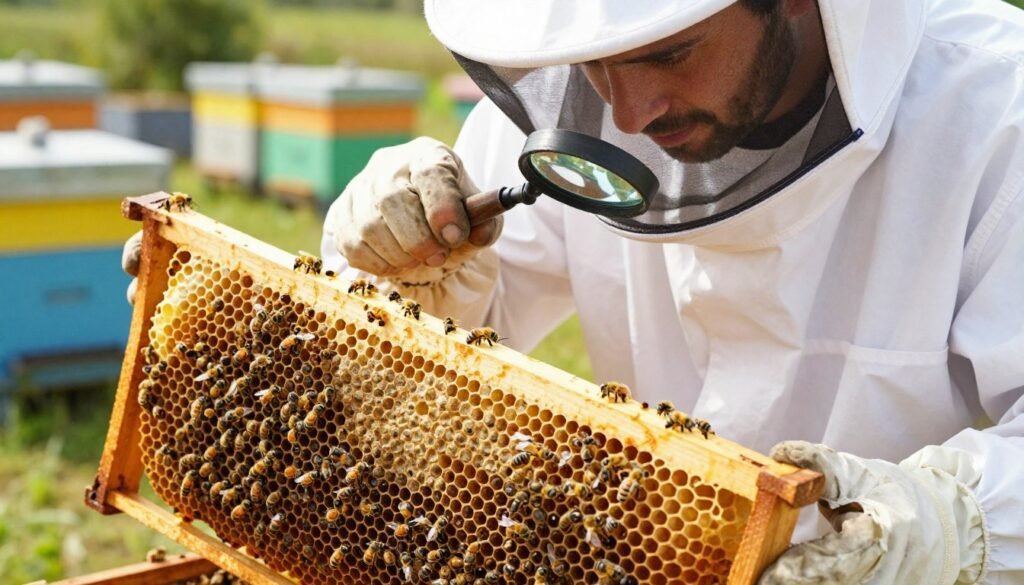
Start your inspection by lifting frames vertically and note how eggs and young larvae fill the central frames. Inspect at least three adjacent frames to see whether the pattern is compact or scattered.
Look for a clear “bullseye” of capped cells. That formation indicates a steady laying female and strong worker coverage. If eggs are sparse or the layout is irregular, the colony may lack a productive breeder.
Perform checks during peak foraging hours, usually between 10 AM and 2 PM, to reduce disruption and get a true view of worker presence and activity.
Track patterns across two or three inspections. Short-term gaps often reflect stressors. Consistent spotty frames suggest a chronic issue and may call for requeening before winter.
- Mark the female with a tube or sticker to monitor age and output.
- Note worker counts and egg placement on each frame.
- Decide on requeening if egg numbers fall and patterns do not improve.
For hygiene and inspection checklists that support healthy frames and colonies, review the apiary hygiene checklist for inspectors.
When to Consider Requeening Your Colony
If frames remain spotty despite good forage and low disease pressure, requeening may save the hive. Persistent gaps across adjacent frames, falling egg counts, or a shrinking population over several inspections are clear symptoms.
Act within 7–10 days when you see decline with adequate resources. If the colony builds multiple queen cell clusters while the laying female is present, this often signals natural supersedure.
Best Practices for Introduction
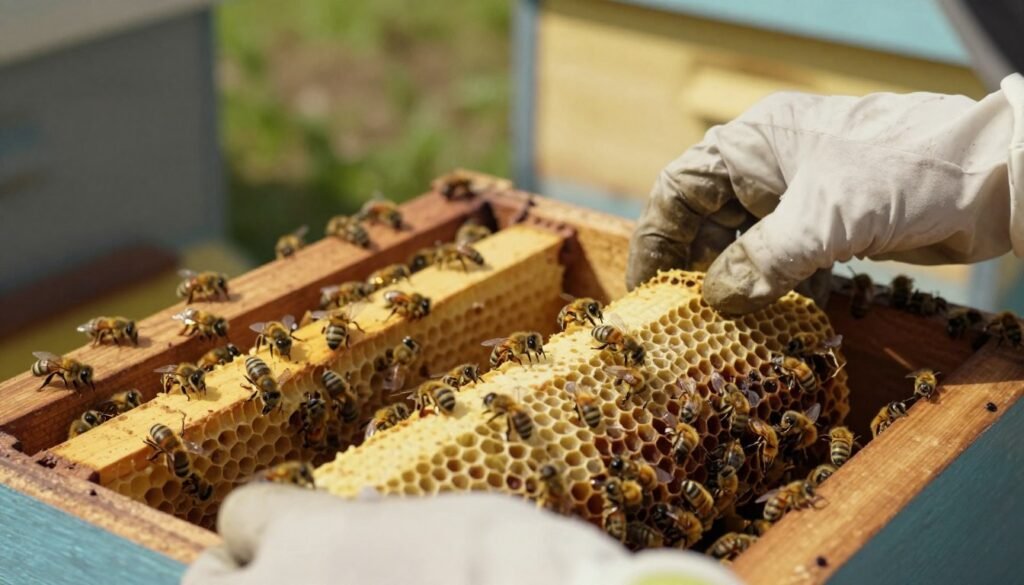
Introduce a new breeder in a slow-release cage to ease acceptance by workers. Provide a fresh frame with new foundation near the center of the nest to encourage early laying.
Choose a young, disease-resistant strain; new genetics can restore vigor and boost population recovery.
Monitoring Post-Requeening Success
Check the hive 48 hours after introduction for initial signs of acceptance and again at 7–10 days for eggs in empty cells. A firm, uniform brood pattern and rising worker counts mean requeening worked.
If symptoms persist after a full cycle, replace the breeder promptly to protect the wider apiary. For step-by-step guidance on requeening, consult requeening a weak hive.
Conclusion
, Regular close looks at central frames often separate transient setbacks from chronic decline.
Learn the visual cues, keep clear notes, and act on patterns instead of guesses. Environmental stress, pests and disease can mimic signs of breeder failure, so confirm cause before drastic change.
Non-invasive checks across several visits give reliable trend data. When replacement becomes necessary, select hardy, disease-resistant stock and monitor acceptance closely.
Mastering these observational techniques turns routine inspections into effective apiary management. For further reading on spotty patterns and interpretation, see the spotty brood study.