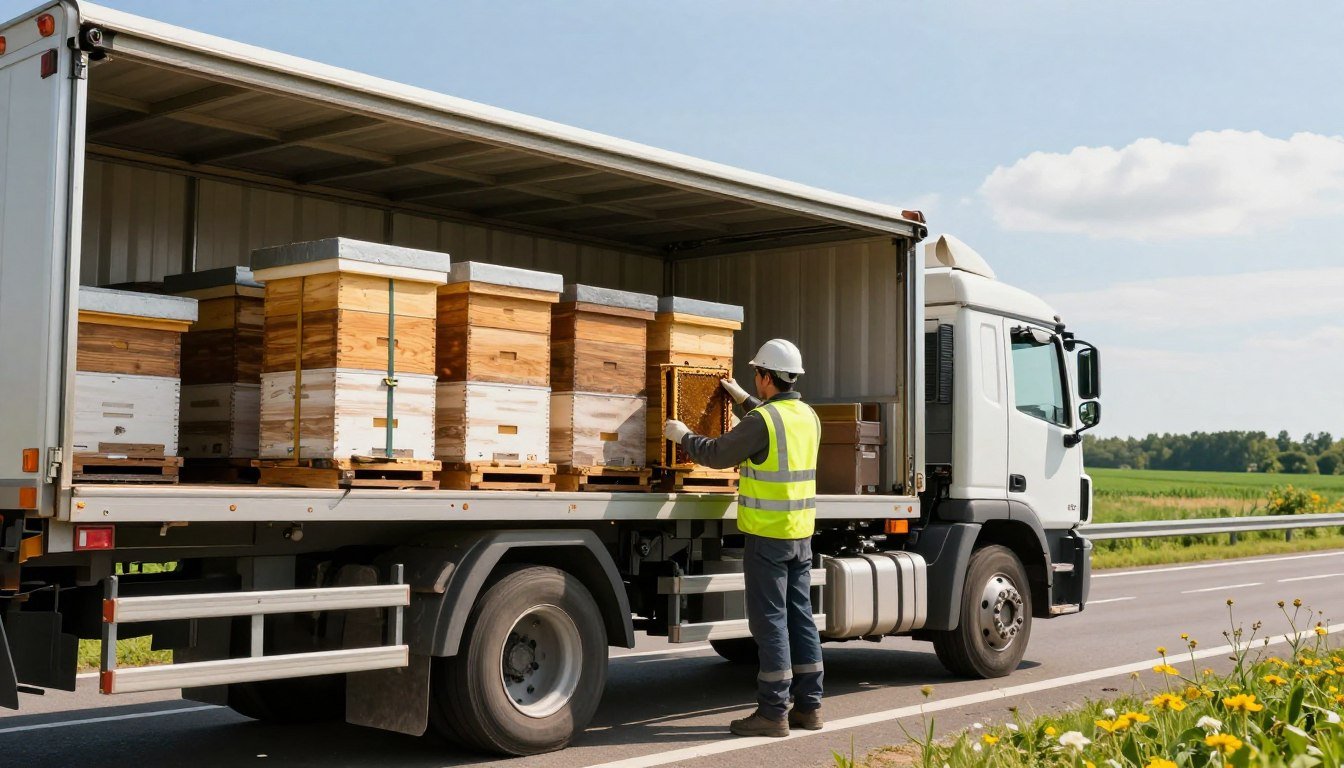
Efficient transport keeps colonies healthy and operations profitable. Professional logistics help beekeepers move large numbers of hives across state lines with less stress on the queen and the worker bees.
The cost of poor load choices is real: overloaded or under-optimized routes add about $1,200 per season in extra fuel. Smart organization of equipment and vehicles reduces that waste and improves pollination timing during peak bloom.
This introduction previews a practical guide on balancing hive counts, legal capacity, heat management, and transit hours. It links to deeper resources like apiary productivity tips to help scale operations while protecting honey production.
Key Takeaways
- Optimize loads to cut fuel waste and keep colonies safe.
- Account for heat, distance, and transit hours to protect queen health.
- Follow state rules and document movement for smooth relocations.
- Balance equipment and hive counts to boost pollination efficiency.
- Use proven systems to maintain honey yields across seasons.
Understanding the Logistics of Migratory Beekeeping
Smart relocation syncs colonies with flowering cycles to boost honey harvests. This practice moves bees to diverse nectar sources so colonies forage on peak blooms across regions.
Professional beekeepers treat each move as a coordinated operation. They balance colony health, travel timing, and local forage availability to keep bees productive. Careful route choices avoid drought, heat, or floral gaps that harm the colony.
Successful migration extends the nectar season beyond a single apiary. That raises honey yields and supports large-scale pollination services. It also requires knowledge of bee behavior and how stress affects brood and foraging.
- Plan travel windows around bloom schedules and weather.
- Monitor colony health before and after relocation.
- Coordinate moves to support commercial pollination contracts.
| Logistics Task | Key Action | Benefit |
|---|---|---|
| Timing | Align moves with bloom maps | Maximizes honey collection |
| Health checks | Inspect brood and stores pre-move | Reduces transit losses |
| Route selection | Avoid extreme weather zones | Improves forager survival |
Learn best practices on seasonal relocation and colony care from resources like benefits of migrating colonies and disease-safe movement guides at moving bees between apiaries.
Truck Weight Planning for Migrating Hives
Accurate axle and gross limits set the foundation for safe, legal moves of apiary loads. Verifying a vehicle’s rated gross capacity is the first step in any relocation. This prevents fines and reduces fuel waste that can exceed $1,200 per season on poorly configured routes.
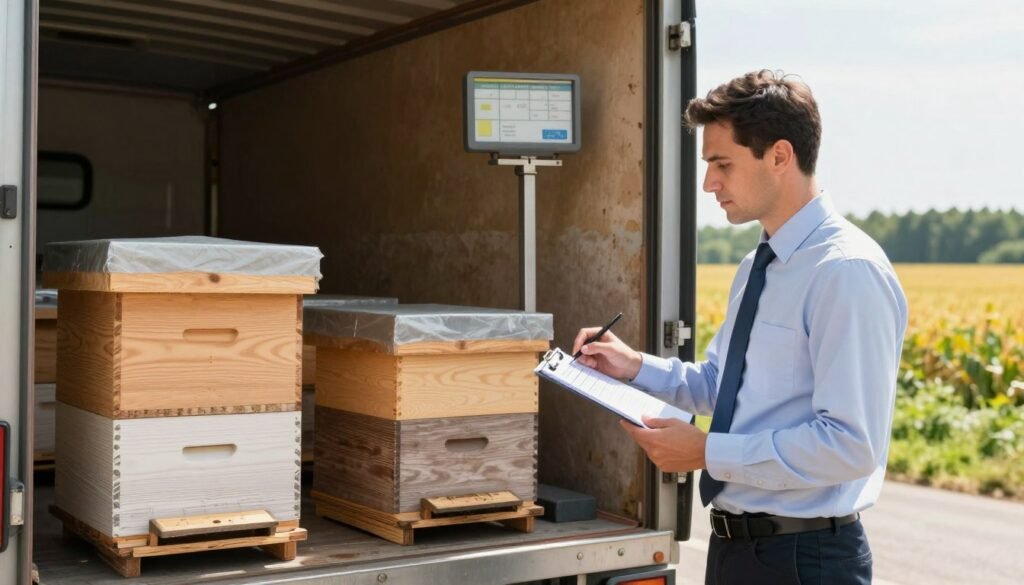
Determining Gross Vehicle Capacity
Check the manufacturer’s gross vehicle rating and axle limits before loading. Weigh an empty rig, then add full pallets and equipment to calculate the safe payload.
Legal compliance protects beekeepers and keeps colonies stable during long runs. It also cuts operational cost and reduces vibration that harms the queen and the bees.
Accounting for Equipment and Seasonal Variance
Include pallets, straps, ventilation kits, and any mechanical loaders in every total. A structured tracking system helps managers record each hive and piece of equipment by number and mass.
Remember that a hive’s mass changes through the year with honey stores and brood. Use tools like wireless hive scales to refine load counts and plan safe moves by distance and hours.
Calculating Payload and Hive Capacity
Quick, accurate payload math keeps colonies healthy and deliveries punctual. Start by subtracting the vehicle curb mass and the mass of pallets, straps, and loading gear from the gross vehicle rating. This gives your safe usable payload.
Weigh a sample of boxes before any long run. Early spring boxes average 80–100 lbs. Mid-summer boxes can reach 150–200 lbs. Fall boxes typically sit between 120 and 160 lbs.
- Plan loads at 90% of maximum capacity to allow variance during the season.
- Moving 1,000 hives to an almond orchard usually needs 2–3 loads. Expect fuel costs near $3,500–$5,000 per run in California.
- Every day in transit is lost foraging time; calculate the number per load to hit the destination on schedule.
Track the number and average mass of boxes from your apiary. Accurate counts reduce cost and increase pollination and honey yield across the year.
Essential Transport Equipment for Colony Safety
Strong transport gear keeps colonies calm and productive during long hauls. Choose systems that cut vibration, control climate, and speed loading to lower stress on the queen and workers.
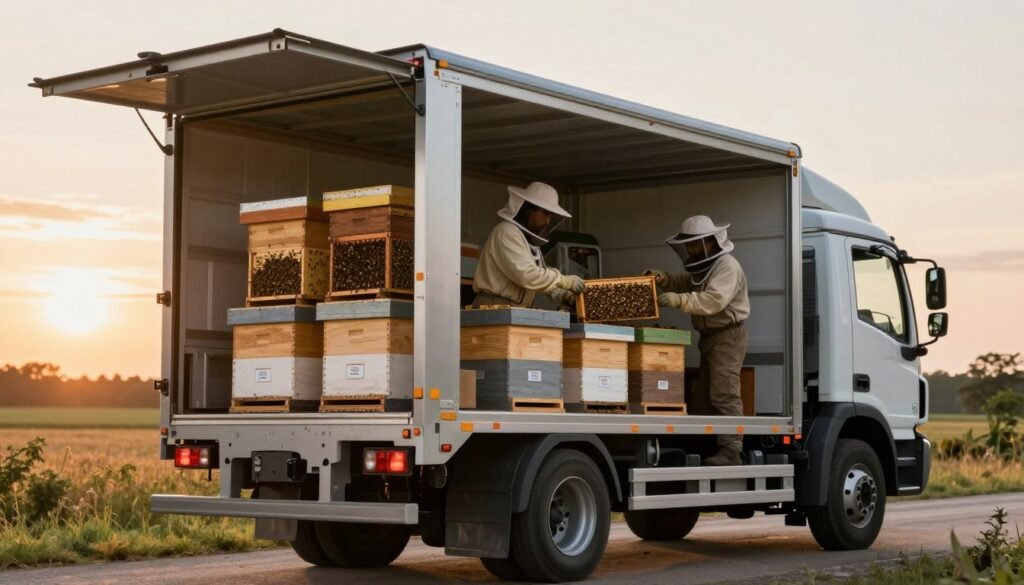
Vibration Reduction Systems
High-stability suspension and cushioned pallet mounts absorb road shocks. This lowers mechanical stress that can harm brood and adult bees.
- Air or coil suspensions reduce jolts.
- Anti-vibe racks keep frames steady during transit.
Ventilation and Climate Control
Proper airflow prevents heat buildup and keeps humidity stable. Ventilation boards between layers help air move through the load.
Active climate units are essential in hot weather to protect honey stores and maintain colony health.
Mechanical Loading Mechanisms
Hydraulic lifts and roller beds cut handling time and manual labor. Faster loading means less time on the vehicle and lower transit stress.
- Use mechanical aids to move heavy hive boxes safely.
- Integrate systems so vehicles and equipment work as a single, secure unit.
Navigating Interstate Compliance and Permits
Interstate moves demand clear paperwork and a checklist that follows each state’s apiary rules. Beekeepers must secure health certificates and movement permits for every state a truck will pass through.
Start permits 1–2 weeks before relocation by contacting state apiary inspectors or an authorized veterinarian. Oversize and overweight permits need separate DOT filings and typically take 48–72 hours to process.
Document every event. Record health inspections, permit numbers, and the number of boxes and hive IDs so you can prove compliance at the destination.
- Use a structured system to track each state’s rules and required equipment declarations.
- Keep checklists for certificates, DOT approvals, and contact info for inspectors.
- Plan lead times to avoid last‑minute holds that interrupt pollination contracts.
Professional migratory beekeeping depends on efficient paperwork. For operational insight and timing, link your permit workflow to tools that help you predict nectar flows and schedule moves with confidence.
Timing Moves with Plant Phenology
Successful relocation hinges on matching bee activity to local bloom calendars. This approach helps beekeepers place colonies where food is abundant at the right time in the season.
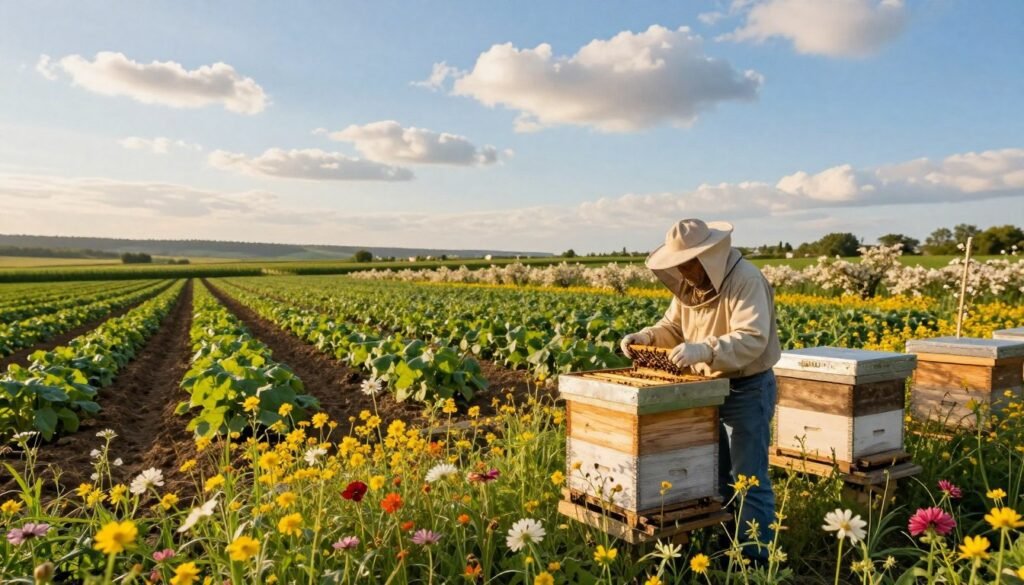
Aligning with Regional Bloom Cycles
Track flowering windows for major crops and wild plants. Plan each arrival to hit the peak bloom so bees begin foraging immediately.
Good timing gives bees steady access to nectar and supports higher honey yields. It also makes pollination services more valuable to growers.
- Monitor weather and bloom maps before any relocation.
- Adjust the number of moves to follow altitudinal or regional shifts in bloom.
- Optimize equipment and loading schedules so colonies spend less time in transit.
“Each relocation is an opportunity to place the colony in a resource-rich environment.”
Use data-driven tools and local reports to plan the year. For crop-specific advice on timing and pollinators, consult resources like honey bees and blueberry pollination.
Managing Long Distance Relocations
Managing long hauls means balancing logistics with the biological needs of the colony at every stop.
Assess colonies 24–48 hours before loading. Inspect brood, stores, and queen condition so the group is fit for travel.
For drives over 8–10 hours, plan a stop at a registered yard for the day. Rest stops cut transit stress and let bees recover before the next leg.
Ventilation is essential during long runs. Make sure the vehicle has airflow systems and that each hive has food and water before departure.
- Document each leg separately to track movement and meet state rules.
- Coordinate multiple vehicles and equipment so arrivals are staggered and supervised.
- Map routes and timing to reduce hours on the road and lower colony stress.
| Need | Action | Benefit |
|---|---|---|
| Pre-move check | Inspect 24–48 hrs before load | Reduces in-transit losses |
| Stopover | Use registered yards after 8–10 hrs | Allows rest and recovery |
| Documentation | Log each leg separately | Clear compliance and traceability |
Goal: arrive at the destination with colonies ready to forage and produce honey. Use tools like a load planning guide and reliable hive scales to refine timing and reduce risk.
Strategies for Efficient Load Sequencing
Sequence loads to match bloom windows and cut needless miles between stops. Good sequencing keeps colonies at the right destination at the right time in the season. It also lowers fuel costs and shortens travel.
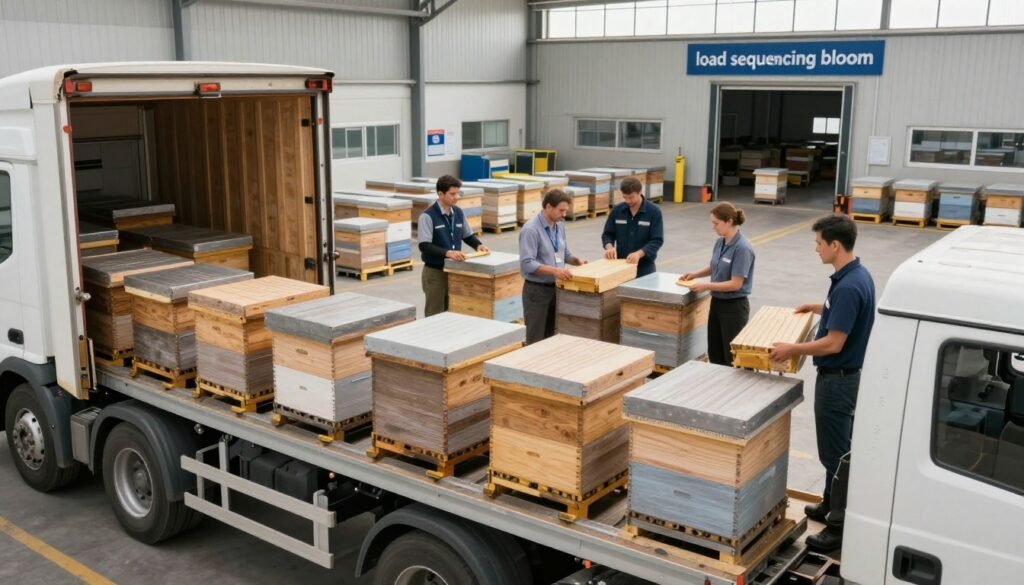
Optimizing Route Sequences
Start with bloom maps and crop calendars. Rank stops by peak forage so the vehicle moves in a tight loop that reduces backtracking.
Use data to set the order: bloom date, road access, and local regulations. This improves honey yield and overall efficiency.
Coordinating Multiple Delivery Stops
Coordinate numbers and equipment across stops so loading is fast and consistent. A simple system to tag each pallet and record movement saves time at each location.
- Batch deliveries to nearby sites on the same day.
- Schedule arrivals to match peak bloom windows.
- Use routing software to minimize miles and time.
| Need | Action | Benefit |
|---|---|---|
| Route order | Sort by bloom and access | Higher honey returns |
| Stop coordination | Standardize loading | Faster turnover |
| Tracking | Log movements in a system | Clear compliance and traceability |
“Every efficient sequence shortens travel and improves colony health.”
Mitigating Transit Stress and Mortality
Minimizing transit harm starts with small, repeatable steps that protect colony health. Treat every relocation as a critical operation and set clear procedures before the move.
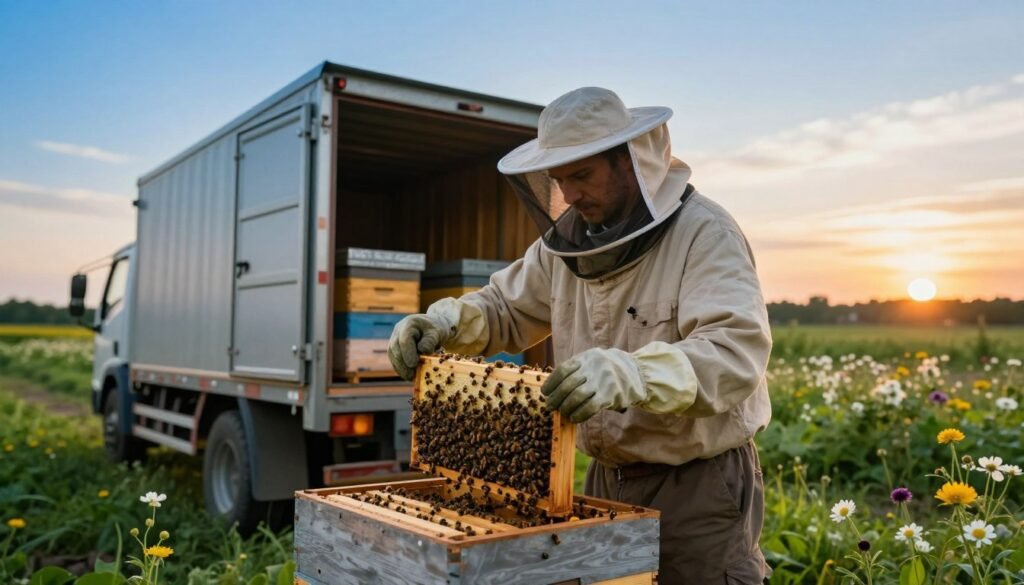
Load at night after temperatures drop below 60°F so bees cluster and escapes fall. Night loading also eases handling and shortens active bee movement during the day.
Ventilation is non-negotiable: screened bottoms and added airspace between pallets keep airflow steady. Active vents or passive flow reduce heat buildup and lower mortality risk.
- Plan the route to cut hours on the road and avoid extreme weather.
- Monitor conditions en route and at stops to protect the queen and brood.
- Keep records of the number of boxes and the apiary origin for every load.
Reduce time in transport to prevent loss of honeybees and to maintain long-term productivity. Professional operators use these steps to keep colonies healthy and ready to work at the destination.
Scaling Fleet Operations for Commercial Growth
A structured fleet system becomes essential once an apiary tops about 500 colonies. Scale stretches simple routines into complex logistics that must be tracked and managed.
Fleet Logistics Coordination
Coordinating vehicles, crews, and manifests
Assign each vehicle a clear route, crew, and load manifest. Use digital records so the number of boxes and colony IDs are visible in real time.
Invest in reliable trucks and supportive equipment to reduce downtime and cut operator stress. Quality gear and routine maintenance keep the season on schedule.
“Effective fleet coordination turns growth into predictable, repeatable performance.”
| Task | Action | Benefit |
|---|---|---|
| Vehicle assignment | Match capacity to load | Reduces delays and overwork |
| Load manifests | Scan colony IDs into system | Traceability and compliance |
| Crew scheduling | Stagger shifts by route | Faster turnover, less fatigue |
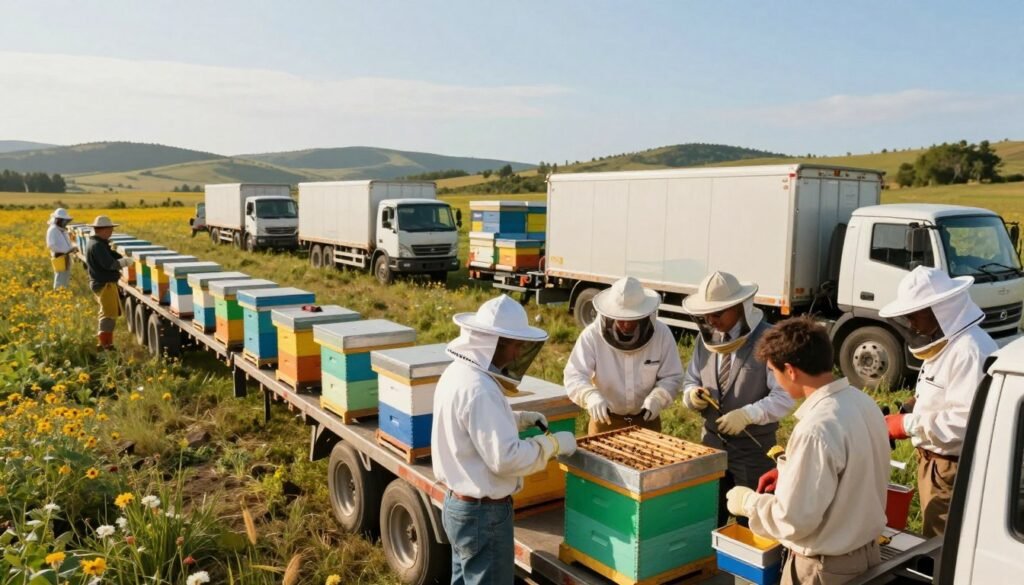
Measure outcomes: track honey yields and pollination delivery at peak windows. Advanced systems help commercial beekeeping stay efficient while protecting colony health.
Conclusion
Consistent handling and verified capacity help colony arrive ready to forage.
Good load controls set the foundation of a productive migratory operation. Professional beekeepers who manage the number of boxes per load and follow state rules protect bees and boost honey returns.
Prioritize the colony with proper equipment, cool transit windows, and precise timing. Experienced beekeepers use digital manifests and fleet tools to scale safely and meet commercial pollination demand.
In the end, success rests on commitment: careful checks, clear records, and steady care deliver healthier colonies and higher honey yields season after season.