Choosing the right feeding method can make or break a colony during scarce forage. This short guide compares common options so beekeepers can protect the queen and brood.
The honey bee feeder is a simple tool that delivers syrup, sugar water, or honey directly to a hive. Placement matters: an internal device gives safe access, while an entrance jar or external pail changes how bees travel and how robbing risk is managed.
Mann Lake offers a wide selection of feeders and ships to 48 states, making it easier to match plastic, jar, or frame-style choices to your apiary needs. Preventing drowning and controlling the amount of feed are top priorities.
This article will walk you through differences in design, access, and best use so you can pick the right way to support your bees and keep colonies healthy through the year. For practical picks, see our guide at best bee feeder for fall.
Key Takeaways
- Feeding supports new colonies and brood when forage is low.
- Feeder placement affects access, robbing risk, and drowning hazards.
- Mann Lake supplies many styles across 48 U.S. states.
- Choose plastic, jar, or frame types based on hive layout and season.
- Manage syrup amount and monitor bees to avoid starvation or robbing.
Understanding the Role of Bee Feeders in Colony Health
When weather or scarce blooms limit foraging, a carefully chosen feeder keeps a hive functioning. Monitoring nectar flow helps beekeepers decide when to offer syrup or a sugar solution.
Feeding is not constant. It is a targeted tool used during droughts, late frosts, or dearths. Providing clean water and high-quality syrup preserves worker strength and supports brood rearing.
A well-managed hive receives honey or sugar feed only as needed. That approach prevents robbing and avoids disrupting natural foraging behavior. Proper timing helps colonies build reserves for winter.
Recognizing stress signals — low stores, reduced flight activity, or clustered bees — tells beekeepers when to step in. Use feeders to prevent starvation and to keep brood production steady.
| Action | When to Use | Key Benefit |
|---|---|---|
| Offer 1:1 syrup (spring) | Early nectar gaps, colony buildup | Boosts brood rearing and energy |
| Provide 2:1 syrup (fall) | Late season, preparing for winter | Raises stores for winter survival |
| Fresh water station | Hot, dry conditions | Maintains hive thermoregulation |
| Temporary honey feed | When local honey is safe and available | Familiar food source, reduces stress |
For details on different bee feeder types and best uses, see different bee feeder types.
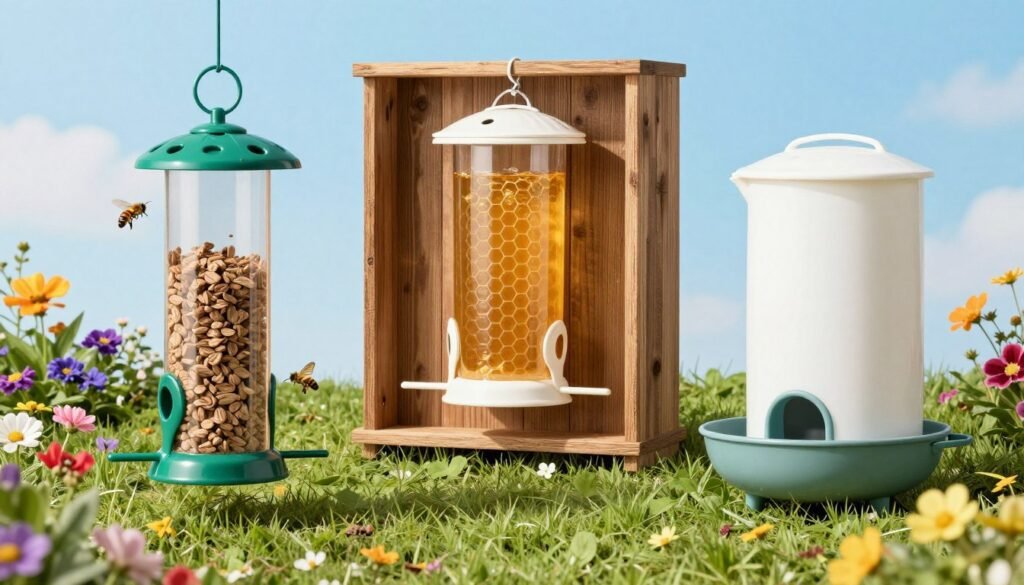
Comparing Top Feeder vs Frame Feeder vs Pail Feeder Options
Selecting an appropriate feeder design helps balance capacity, protection, and refill convenience.
Design Differences
Internal designs like a frame-style unit sit inside the hive and replace one or two frames. They keep syrup protected and warm, which can help brood in cool weather.
External devices that rest on the hive cover hold more food but expose syrup to weather and robbing. Entrance choices are simpler but offer less shelter for the bees.
Capacity Comparison
Built-in units limit volume but reduce disturbance. Cover-mounted models hold larger amounts and cut refill trips.
For long-term feeding, a higher-capacity setup saves time. For spring buildup, smaller internal feed is often better to stimulate brood without chilling the cluster.
Ease of Use
Beekeepers favor easy refill features and anti-drowning ladders in plastic designs. Internal feeders need careful placement around frames and the super cover.
For guidance on internal units during spring buildup, see the best frame feeder for spring buildup.
- Balance capacity with colony protection.
- Choose systems that limit drowning and robbing.
- Consider refill frequency and weather exposure.
Deep Dive into Frame Feeders for Internal Hive Support
Installing a frame-style feed unit inside a hive gives bees quick access to syrup while shielding stores from weather and robbing. Internal placement keeps the food near the cluster so workers can eat without cold exposure.
Pro-style units often include a cap and ladder system to prevent drowning. Many modern feeders use plastic construction, which makes cleaning easier and extends the life of the device.
Benefits of Internal Placement
Replacing a standard frame in the brood box or super puts syrup within reach of the queen and brood. That proximity supports brood rearing during spring or during short nectar gaps.
Inside placement preserves insulation under the cover and reduces contamination from pests or debris. It also eliminates the need to alter the entrance, keeping the hive secure against robbing.
- Insulation: Keeps syrup accessible in cold weather.
- Protection: Prevents robbing and weather exposure.
- Safety: Cap and ladder systems reduce drowning risk.
“A well-placed internal feeder supports comb expansion and steady brood production.”
For guidance on preparing winter setups and related internal strategies, see preparing a top-bar hive for winter.
Evaluating Top Feeders for Large Scale Operations
When managing many hives, efficient syrup delivery becomes a logistical priority for the beekeeper.
HONESTBEE supplies wholesale equipment designed for commercial apiaries. Their high-capacity designs hold up to 4 gallons of syrup for a 10-frame hive. This capacity cuts refill frequency and saves valuable time for crews that service distant colonies.
Built to fit under the hive cover, these units protect brood and frames from disturbance. Durable plastic construction reduces wear and simplifies cleaning between uses.
- Efficiency: Large volume means fewer site visits.
- Protection: Placement under the cover keeps syrup away from robbers.
- Serviceability: Easy refill features make daily work faster.
| Feature | Benefit | Commercial Impact |
|---|---|---|
| 4-gallon capacity | Longer intervals between fills | Reduces labor and travel time |
| Under-cover fit | Minimal brood disturbance | Promotes steady colony growth |
| Durable plastic | Easy cleaning and longevity | Lower replacement costs |
For purchasing guidance and considerations when choosing a wholesale unit, consult this supplier FAQ: HONESTBEE purchasing considerations.
Analyzing Pail and Entrance Feeder Functionality
An entrance jar on a hive can make monitoring syrup levels quick, but it brings clear trade-offs for colony security.
Entrance feeders, often called Boardman feeders, use a jar that sits at the hive mouth. This design lets the beekeeper see syrup at a glance and refill without lifting the cover. For beginners, the easy install and simple cleaning are big advantages.
Advantages of External Monitoring
Being able to check feed without opening the hive saves time and reduces disturbance. A visible jar helps time refills and prevents short-term starvation.
Risks of Exposure
Because the jar and tray sit outside, they face weather and sunlight. Syrup can freeze, ferment, or grow mold and become inaccessible to the bees.
- External placement can attract pests and increase robbing risk.
- Plastic jars and trays are exposed and degrade faster in sun and cold.
- Many beekeepers move to internal options like a frame feeder for long-term colony health.
Maintenance—clean jars, check trays, and protect the entrance in cold weather. For related inside-hive solutions and product FAQs, see the top feeder FAQ.
Seasonal Strategies for Effective Supplemental Feeding
Match syrup strength and timing to seasonal needs to keep colonies healthy.
Spring: Use a 1:1 sugar to water mix in your feeder. This lighter syrup encourages the queen to lay and helps workers rear brood. Choose a frame or cover-mounted unit so syrup sits near the cluster.
Fall: Shift to a 2:1 sugar to water ratio to help bees store honey for winter. Thicker syrup converts into lasting stores more easily than thin mixes.
- Watch for nectar dearths and add feed early to prevent stress.
- Use entrance or internal feeders during critical windows so bees access sugar without chilling the cluster.
- Inspect hives regularly and adjust feed schedules based on activity, brood, and queen condition.
Proper seasonal feeding saves time and reduces losses. With the right syrup, feeder placement, and routine checks, beekeepers support comb building and stronger colonies through changing weather.
Best Practices for Maintaining Feeder Hygiene and Safety
Clean equipment keeps colonies healthy. Maintain a simple routine for feeders to stop mold and bacteria. Good hygiene protects brood and keeps syrup usable.
Preparing safe sugar syrup: Always dissolve sugar in warm water without boiling. Boiling causes caramelization, which is harmful to bees and can spoil the feed.
Use only white granulated sugar for syrup. Avoid dark or unrefined sugars and do not feed honey taken from other hives. These practices reduce the risk of spreading disease and parasites.
Clean and inspect plastic parts after each use. For an inside hive frame unit, secure the cover so syrup stays protected from pests and weather.
| Action | Why it matters | Quick tip |
|---|---|---|
| Use white sugar | Closest to nectar, low contaminants | Mix 1:1 or 2:1 depending on season |
| Never boil syrup | Prevents caramelization and toxicity | Dissolve off-heat in warm water |
| Clean plastic parts | Removes mold and fermentation | Use hot water and mild scrub |
| Avoid external honey | Stops disease transfer between colonies | Feed purchased or fresh white sugar syrup |
For more on safe feeding tools and styles, see a practical guide on feeding your bees and options for large colonies at best feeder for large colonies.
“Simple cleaning and safe syrup are the first lines of defense for hive health.”
Conclusion
strong, A clear feeding plan helps beekeepers keep bees productive when nectar is limited.
Choosing the right feeder or feeders is a fundamental decision for every beekeeper. The correct choice affects colony health, brood growth, and honey stores.
Whether you prefer a frame feeder, a compact internal unit, or another type, match the device to your goals and season. Prioritize hygiene and safe sugar syrup preparation to protect bees and prevent disease.
For practical guidance on using a frame feeder, see our frame feeder guide, and for equipment choices consult equipment choices.
Keep experimenting, learn from each season, and you’ll find the feeding approach that keeps your hive strong.
FAQ
What are the main differences between a top feeder, a frame feeder, and a pail feeder?
A top-fed device sits above the brood boxes and lets syrup drip or pool where bees access it from inside. A frame-style unit replaces or sits between frames so bees feed within the hive structure. A pail setup is external or placed under the hive entrance and holds large volumes of syrup for commercial colonies. Each design changes how bees access syrup, how easy it is to refill, and how well the feeding integrates with the brood and super areas.
How do feeders affect colony health and honey stores?
Proper supplemental feeding supports brood rearing, winter survival, and spring buildup when natural nectar is scarce. Internal feeding helps bees store syrup closer to brood, which conserves energy. External systems supply large amounts quickly but can lead to uneven storage. Clean syrup and appropriate timing reduce disease and contamination risks while promoting healthy hive weight and honey production.
Which design is best for protecting brood and preventing robbing?
Internal units that keep syrup inside the hive reduce robber-bee attraction and protect brood from temperature swings. External pails and entrance trays can increase robbing risk if not managed with robbing screens or placed during calm, nectar-flow conditions. Using mesh covers and limiting open syrup surfaces lowers exposure.
How do capacity and refill frequency compare among these options?
Pail systems hold the most syrup and need less frequent refilling, suiting apiaries with many hives. Top reservoirs offer moderate capacity and are convenient for medium operations. Frame-style units hold less but deliver syrup directly where bees need it, requiring more frequent checks in large apiaries.
Are some feeders easier to use in cold weather or during winter?
Devices inside the hive perform better in cold weather because bees can access syrup without leaving the cluster. External pails risk freezing and make foraging dangerous in low temperatures. Warm-thick syrup and insulated covers help, but internal placement remains the most reliable for winter feeding.
What are common hygiene practices for feeder maintenance?
Rinse and scrub feeding parts after each use, avoid fermented or moldy syrup, and sanitize with a mild bleach solution or hot water. Replace cracked plastic and check for dead bees that can clog ports. Clean feeders reduce disease spread, prevent pests, and keep syrup palatable.
How should I prepare safe sugar syrup for bees?
Use clean water and white granulated sugar; avoid honey or molasses that can carry pathogens. Common recipes are 1:1 by volume for spring/summer feeding and 2:1 for fall to help winter stores. Heat water to dissolve sugar, cool fully, and feed promptly. Keep syrup concentration appropriate to season and colony need.
Can feeders disrupt queen placement or frame inspection routines?
Internal units placed over brood frames can make inspections trickier and require careful handling to avoid crushing the queen. Choose removable feeders that lift out cleanly or locate devices in supers where they won’t interfere with brood. Plan inspections around feeding schedules to minimize disturbance.
What safety risks come with external pail and entrance systems?
External systems expose syrup surfaces to robbery, ants, and wasps. They can also drown bees if access points are poorly designed. Elevated stands, floats, or bee guards reduce drowning and pest access. Monitor hives closely when using external methods and remove open syrup when nectar flows begin.
Which option is most cost-effective for a small backyard beekeeper?
For small-scale beekeepers, internal frame-style units or compact top reservoirs often offer the best balance of cost, control, and ease. They limit waste and robbing while integrating with routine hive checks. Pails suit larger operations where volume and fewer refills justify the expense.
How do I prevent drowning when using liquid feeding methods?
Provide narrow access or floating platforms in syrup containers so bees can land safely. Use mesh screens, cork pieces, or purpose-built floating feeders. Keep open syrup volumes low and change placements if large numbers of dead bees appear near the feeding area.
When is the best time of year to supplement feed colonies?
Feed in early spring to stimulate brood rearing, in late summer or fall to build winter stores, and during dearths or poor weather when foraging is limited. Avoid heavy feeding during strong nectar flows to prevent robbing and unnecessary dilution of natural honey stores.
Does syrup access change honey flavor or contaminate combs?
Properly prepared white-sugar syrup does not significantly alter honey flavor if feeding is stopped when nectar flow resumes and syrup is not stored in supers destined for harvest. Avoid feeding inside supers that will be extracted to prevent contamination. Clean, timely feeding minimizes flavor issues.
How can I monitor consumption and colony response with different feeder types?
Track weight changes, inspect stores, and watch for syrup disappearance rates. External pails make volume measurement easy. Internal devices require lifting and visual checks. Note brood patterns, bee activity, and robbing signs to adjust feeding strategy and timing.
Are there recommended brands or materials for durable feeders?
Look for food-grade plastic or stainless-steel units from reputable suppliers such as Mann Lake, Brushy Mountain, or Kelley Beekeeping. Durable materials resist cracking, are easier to clean, and reduce contamination risk. Match capacity and design to your apiary size and seasonal needs.