Choosing the right base for comb building shapes hive performance. Apiary managers in the United States often weigh cost, colony behavior, and equipment compatibility when they select between small starter pieces and larger sheet options. This guide looks at how each approach affects comb structure, bee work patterns, and seasonal productivity.
Understanding the structural differences helps beekeepers decide whether to favor stability or more natural comb formation. Small pieces can encourage natural drawing and reduce wax inputs, while broader sheets offer uniform support and can speed frame readiness.
Throughout the active season, the choice impacts brood health, honey stores, and hive maintenance time. Use this comparison to match your goals and gear with the most effective method for your apiary.
Key Takeaways
- Compare cost and labor when choosing between smaller pieces and larger sheets.
- Smaller inserts often promote natural comb patterns and flexible colony behavior.
- Larger sheets provide structural support and consistent frame spacing.
- Colony health and productivity respond to the chosen application method.
- Match your equipment and management goals to the option that fits your operation.
Understanding Foundation Application Methods
The way comb is started in a frame sets the pattern for future hive work.
Defining the basic guide helps you choose the right method for your apiary.
Defining a simple guide
Bees cluster on a ridge, festoon, and then secrete wax to build straight down. A small piece of material placed on a top bar or in a frame gives that initial line.
This line encourages neatly drawn comb and reduces cross comb. The National Bee Unit recommends using clear guides to ease inspections, especially during a swarm or heavy work periods.
The purpose of physical guides
A guide keeps comb in the correct position so frames stay usable. It also helps the queen keep a regular brood pattern, which supports colony health.
- Straight comb speeds inspections and lowers damage risk.
- Guide presence influences comb size and how quickly bees draw comb.
- Using a top bar with a proper strip supports long-term frame stability.
The Role of Starter Strips vs Full Sheets of Foundation in Hive Management
A modest cue inside a frame converts bee instinct into usable, movable comb. A well-placed starter strip helps bees build with gravity as their guide, keeping comb centered and preventing attachment to the hive side.
When managers switch between foundationless frames and larger sheets, attention to that first line matters. Centered comb keeps frames functional and eases inspections during peak work and swarm season.
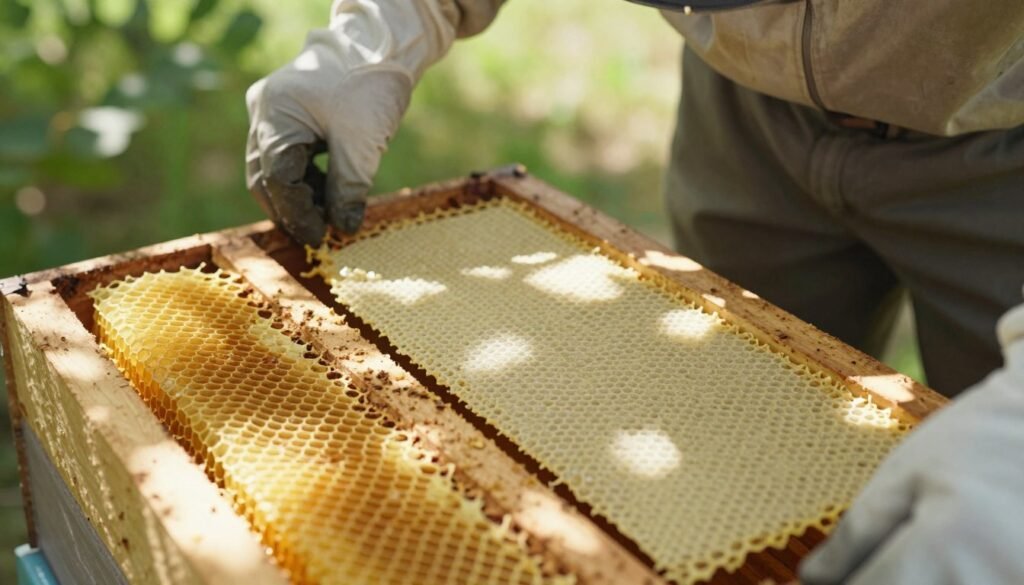
Most beekeepers rotate older frames each year to limit pathogen buildup in dark combs. Using a small starter strip gives the queen a natural cell size option while still guiding construction.
Strong guides reduce cross comb and save time handling colonies. With a clear line, colonies draw comb solidly, and frames stay easier to manage for honey, brood, and long-term hive health.
For practical guidance on starting and managing hive equipment, see how to start beekeeping in the United States.
Benefits of Using Full Sheets for Structural Integrity
Rigid base materials give frames the strength to bear heavy honey loads. This matters most during peak nectar flow when comb can quickly fill and weigh down a frame.
Well-supported frames reduce breakage and speed handling. When bees draw comb on a solid base, the resulting structure is more uniform and easier to extract without damage.
Reinforcement Techniques
Reinforcing with wire or plastic inserts helps frames withstand extractor stress. Commercial operations often wire multiple frames to prevent sagging during spinning.
- Support matters: Rigid bases stop heavy comb from collapsing on hot days.
- Uniform drawn comb: Makes uncapping and extraction cleaner and faster.
- Hygiene: Replace old, manky comb with fresh material to protect colony health.
| Reinforcement | Benefit | Best Use |
|---|---|---|
| Wire | Strong tensile support during extraction | High-yield commercial frames |
| Plastic insert | Stable, lightweight backing; resists warping | Medium-scale operations |
| Double top bar | Prevents tilt and side pull | Hives with heavy supers |
For a comparison of material options and to choose the best foundation options for your apiary, see best foundation options.
Natural Beekeeping and the Case for Starter Strips
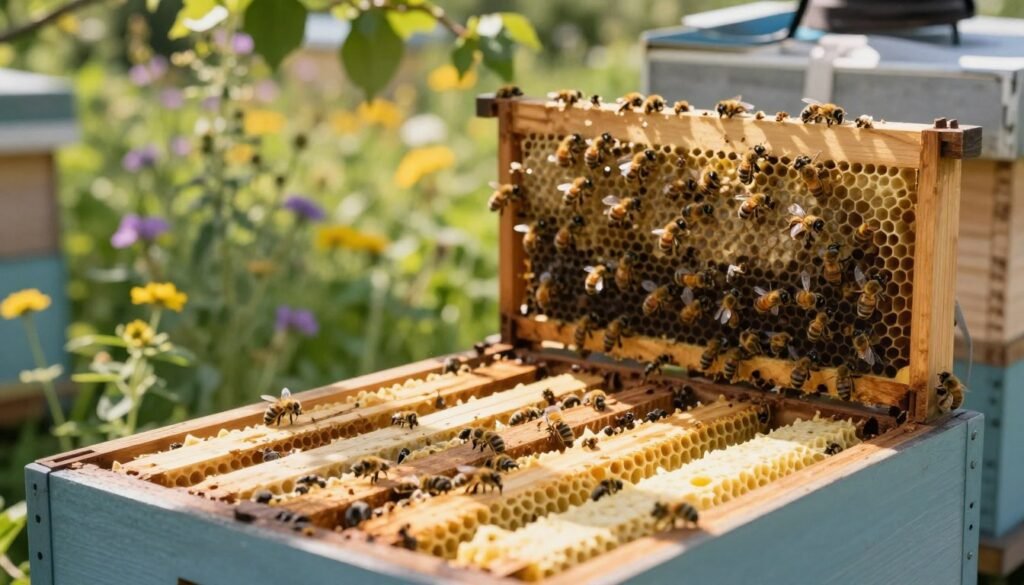
Natural beekeeping often favors starter strips because they let colonies choose cell size and build comb in their own style.
One common reason beekeepers use starter strips is to avoid chemical residues that linger in recycled commercial wax. When workers build from a small cue, they produce virgin wax that does not carry contaminants from past brood cycles.
Allowing bees to build their own comb tends to encourage a healthier balance of worker and drone cells. Over a year, colonies will draw out the comb from that initial line, creating structures that reflect the hive’s needs.
Many who practice foundationless methods value the ability to watch how bees form comb without pre-printed guides. If you want practical tips on making wax bases at home, see how to create wax foundation at. For more on using small guides in frames, consult starter strip techniques.
- Reason: clean, new wax.
- Reason: bees build comb to colony preference.
- Benefit: easy observation in foundationless hives.
Comparing Costs and Material Requirements
Comparing upfront expenses shows how material choices shape your annual apiary budget.
Small changes in materials can lead to large savings over time. Thorne’s list price for 10 DN5 frames and foundation is £28.80. Buying 100 second-quality DN5 frames and fitting homemade strips can lower the unit cost to about £0.72 per frame.
Choosing foundationless frames reduces material cost and uses minimal wax for guides. Bulk buying second-quality frames also cuts starter outlay for expanding hives.
- Cost per frame: branded sets are pricier but require less prep.
- Material needs: DIY guides use wax scraps and basic tools.
- Quality control: you can maintain high standards when making your own frames.
| Option | Unit Cost | Best Use |
|---|---|---|
| Branded frames + foundation | £2.88 per frame (10-pack) | Low labor, consistent quality |
| Second-quality frames + homemade strips | £0.72 per frame | Scaling operations, cost-sensitive apiaries |
| Foundationless frames | Variable (materials minimal) | Natural beekeeping, low material spend |
When choosing frames, match size and material to your beekeeping goals. For related hive maintenance tips, see hive painting for better insulation.
Technical Challenges of Homemade Wax Strips
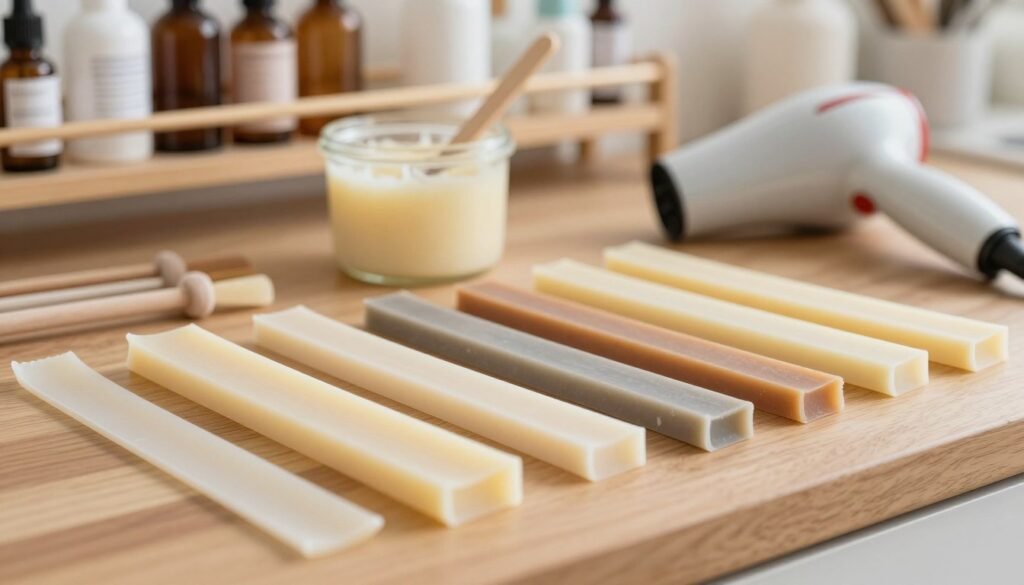
The craft of producing wax laths hinges on strict temperature management. Small errors in heat or handling can ruin a run of guides and make installation harder for your frames.
Temperature Control
Keep molten wax near 75°C. That temperature lets coatings build without melting prior layers.
If wax runs hotter, it will drip and fail to stick to the wooden lath. Too cool and layers will flake or remain thin.
The Dipping Process
The dipping method is repetitive and demands patience. You coat a wooden strip, cool it, then repeat until the desired thickness is reached.
Many beekeepers report that the time invested is a lot for modest savings compared to buying pre-made material.
- Durability risk: homemade wax can be brittle and hard to handle when fitting into frames.
- Structural need: incorrect temperature yields a weak guide that won’t hold comb well.
- Reward: foundationless beekeeping benefits from clean, new wax but requires careful prep.
| Challenge | Effect | Mitigation |
|---|---|---|
| Overheated wax | Melts prior coatings; uneven build | Thermostatic pot set to 75°C |
| Underheated wax | Layer flaking; brittle guides | Slow, steady reheating between dips |
| Handling fragility | Broken during install in frames | Thicker builds or use a thin wooden lath for backing |
For a practical how-to and measured tips, review a detailed starter technique that many U.S. beekeepers use when preparing guides for their hives.
Installing Guides for Optimal Comb Construction
A correctly fitted guide gives bees a clear cue to draw straight comb where you want it.
Attach the guide so it sits firm on the top bar. Michael Bush recommends the lead edge protrude about 1/4 inch from the bar. This small projection helps the queen and workers orient and start the drawn comb on the frame.
Use wax or wood, but make sure the piece cannot fall out during handling. A loose guide invites cross comb and wasted time during inspections.
- Secure mounting: glue or staple a thin backing to the bar.
- Level frames: check the hive; gravity pulls comb toward a tilted side.
- Try types: tongue depressor pieces, triangular molding, or thin wax slats.
The hours spent installing guides in winter pay off in spring when bees build quickly. For more on choosing between guided and guide-free methods, see foundation vs foundationless beekeeping.
| Action | Why it matters | Tip |
|---|---|---|
| Protrude ~1/4 inch | Provides a clear start line for comb | Follow Michael Bush guidance |
| Secure attachment | Prevents dislodging during inspections | Use wood glue or thin staples |
| Ensure level hive | Keeps comb centered and straight | Adjust hive stand before spring |
The Impact of Hive Leveling on Natural Comb
A level hive gives bees a clear horizon, and that simple alignment shapes how combs grow inside frames.
Proper orientation matters. If the hive leans, bees follow gravity. They will angle the comb and often build across multiple frames.
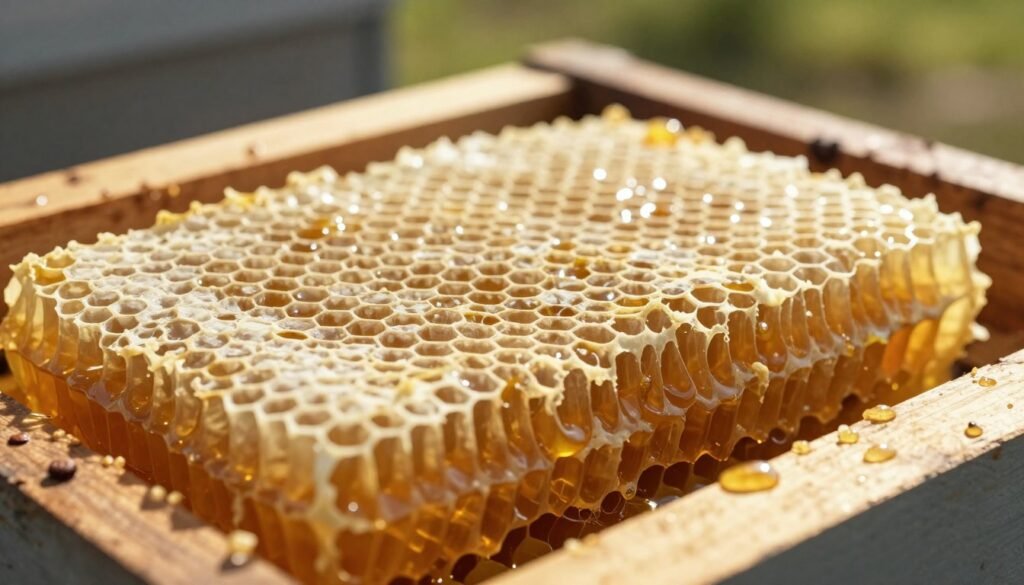
Maintaining a level hive keeps comb centered. That makes inspections faster and reduces the risk of fused comb during honey harvest.
The bees decide comb size and cell placement, but they rely on the hive’s orientation to guide their work. A stable, level stand lets them focus on healthy, straight comb that fits the frame boundaries.
| Problem | Effect on comb | Quick fix |
|---|---|---|
| Hive tilt | Angled comb; cross-combing | Adjust stand; use a spirit level |
| Unstable base | Frames shift; fused comb | Secure stand; add bracing |
| Uneven terrain | Irregular comb size; inspection difficulty | Install level platform or concrete pad |
Routine checks in spring and after storms prevent problems. For deeper guidance on managing guide-free frames, consult this practical review of foundationless frames redux.
Managing Potential Contaminants in Beeswax
Contaminants in wax can travel through a hive and alter long-term colony health.
Pesticide residues and recycled wax are an overlooked risk for comb quality.
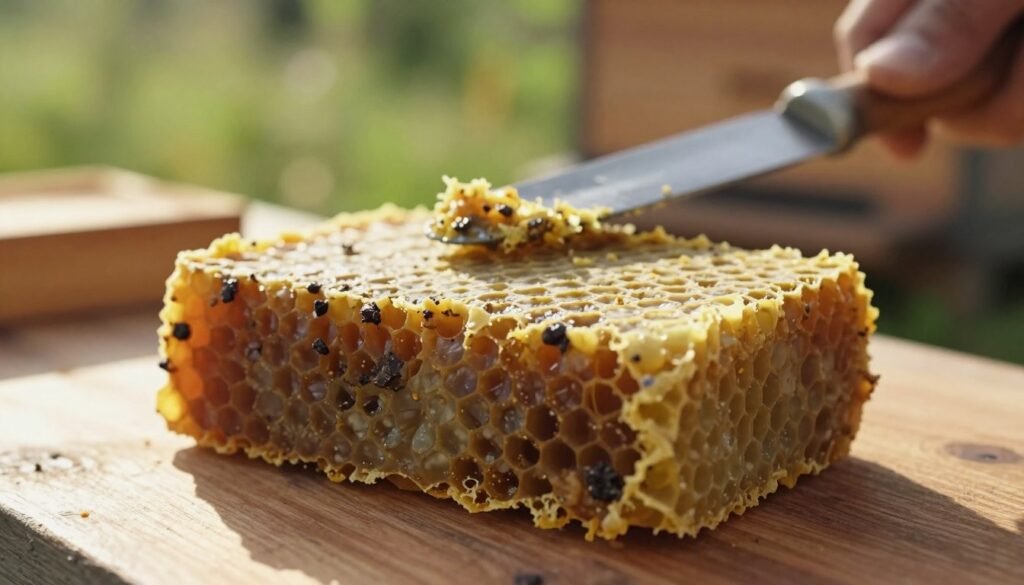
Commercial foundation sometimes contains residues that build up year after year. That legacy wax can carry compounds that affect bee behavior and brood survival.
Many beekeepers prefer to let bees create virgin comb from a small cue. New comb gives the highest quality wax and lowers the chemical load inside frames.
Pesticide Residue Concerns
Regular testing or visual checks help spot dark, old comb that may hold contaminants.
- Risk: recycled wax may contain agrochemical traces.
- Benefit: virgin drawn comb reduces exposure for the colony.
- Action: rotate older combs and monitor wax quality each season.
| Issue | Effect | Mitigation |
|---|---|---|
| Recycled commercial wax | Build-up of pesticide residues | Replace with fresh comb; use new guides |
| Contaminated comb | Lower brood quality; toxin transfer | Remove and discard suspect comb; follow disease guidance |
| Environmental pollutants | Chronic colony stress | Monitor wax; source clean material |
For guidance on when to remove compromised comb, review when to discard comb after disease.
Structural Support Options for Foundationless Frames
Wire or monofilament can act like a safety net, protecting delicate new comb during inspections.
The top bar is the anchor point for any support system. Tie horizontal wires or fishing line across the frame so comb starts on a stable line. Add a small starter strip near the top bar to give bees a clear cue for where to attach the first cells.
As bees build, they fasten comb to the side bars. That side attachment adds major strength over time and reduces sagging risk during hot weather or heavy nectar flows.
- Quick setup: tension wires on frames before install.
- Balanced approach: use a thin strip plus wire to blend natural comb with support.
- Labor note: it takes a lot of time to prep many frames, but the result is durable, natural comb.
“Support systems let beekeepers practice foundationless beekeeping without sacrificing frame integrity.”

| Support Type | Benefit | Best Use |
|---|---|---|
| Horizontal wire | Strong, low-cost tension support | Backyard to small commercial frames |
| Monofilament line | Invisible, flexible safety net | Observation hives; light-weight combs |
| Top-bar plus strip | Guides first comb attachment | Foundationless frames needing a clear start |
Evaluating Beekeeping Goals for Honey Production
Start by listing what you want your apiary to deliver this season—honey volume, comb quality, or ease of inspection. That clear goal makes it easier to choose between using small starter strips or larger backing in frames.
If comb honey with pristine wax matters most, a single starter strip inside a frame helps bees produce virgin comb free from wire and heavy handling. This yields high-grade comb honey for direct sale or display.
Beekeepers focused on natural hive health often prefer foundationless frames. These can aid in Varroa monitoring and let bees set cell size on their own.
- Time vs outcome: weigh prep and inspection time against harvest quality.
- Equipment: a simple top bar setup reduces labour but changes handling methods.
- Scale: small lots favor careful comb; larger operations may choose faster, supported frames.
Define objectives this spring and match gear to those goals. For guidance on choosing hive gear that fits your plan, see how to choose a beehive for.
Risks Associated with Unsupported Brood Comb
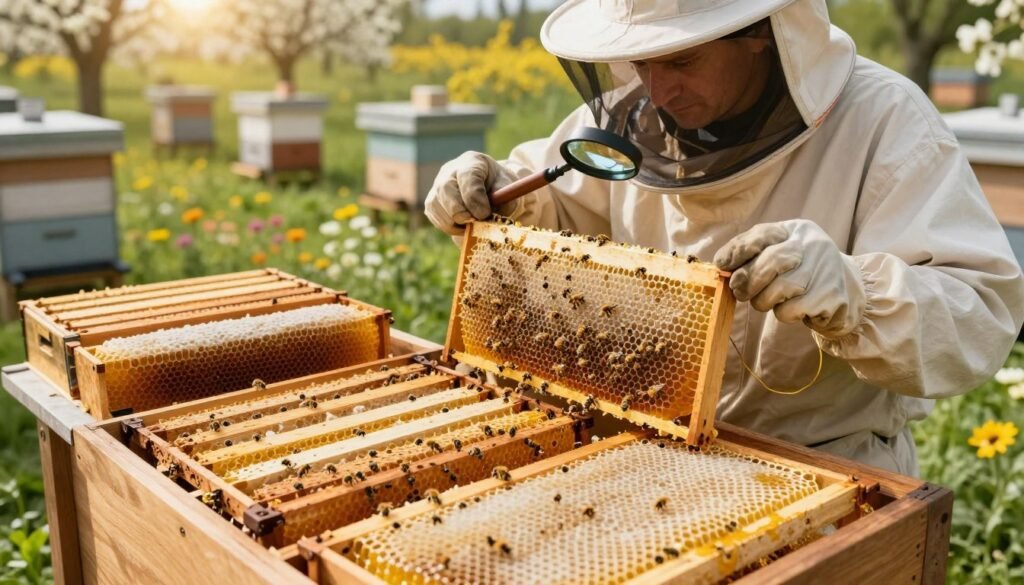
Unsupported brood comb can collapse with little warning, especially during inspections or on hot days when wax softens.
Freshly drawn comb is thin and brittle. A small starter strip gives a cue, but it rarely supports a full, heavy brood comb by itself.
Bees will usually attach comb to the side bars over time, but that reinforcement can take weeks, not days. Until then, the comb hangs vulnerable between bars.
Handle frames slowly and keep inspections short. Rough lifts or prying can tear comb from the frame and harm brood.
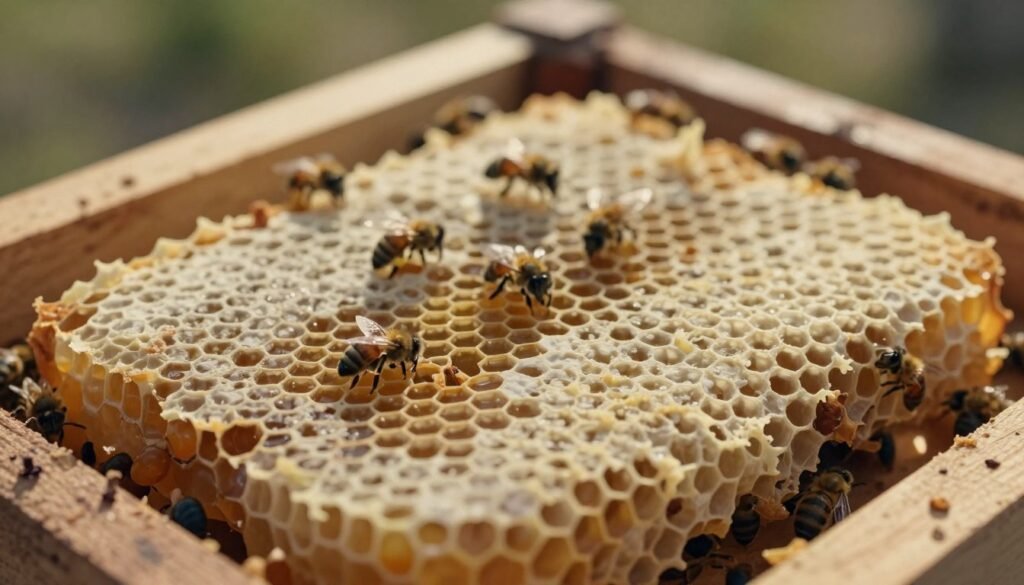
- Collapse risk: foundationless comb can break off when filled with larvae and honey.
- Heat vulnerability: warm temperatures soften wax and increase breakage likelihood.
- Mitigation: use horizontal supports or wire lines as a safety net while the bees reinforce comb.
“A gentle touch and temporary support systems cut losses and protect developing comb during the first year.”
For common misconceptions about beekeeping safety and management, consult U.S. beekeeping myths and misconceptions.
Scaling Your Apiary Operations
Growing hive numbers forces managers to rethink how frames are prepped and staged each season. Efficient equipment management matters whether you use a starter strip or larger backing. Plan materials, workspace, and labor before spring buildup.
As you add more hives, time spent on each frame multiplies. Streamline frame assembly to cut prep hours. Use jigs, batch heating, and an assembly line to ready comb supports faster.
Commercial operations often choose consistent foundation to keep frames interchangeable across yards. That consistency speeds inspections and eases swaps between hives.
Producers focused on organic honey scale by using foundationless methods to protect virgin wax quality. This approach needs more care at first but preserves clean comb for sale.
| Factor | Benefit | Best Practice |
|---|---|---|
| Consistent backing | Interchangeable frames | Standardize sizes and materials |
| Foundationless | Pure wax comb | Prepare support lines and monitor early |
| Assembly workflow | Reduced labor per frame | Batch tools and staging area |
“Streamline prep so you can spend more time on colony health and less on setup.”
Conclusion
Deciding how to cue comb growth shapes a season’s workload and honey quality. Choose based on your goals: high-grade comb honey or fast, sturdy frames for heavy harvests.
Starter strips give bees freedom to build natural comb and preserve clean wax. Using a small starter strip plus a support wire often balances purity and strength.
Large backing and full sheets speed drawing and ease handling. Thorne’s bevelled top bar options help when you run foundationless frames and want reliable results.
Keep hives level, monitor colony health, and compare cost versus time. Make a clear plan this year and your apiary will be easier to manage and more productive.