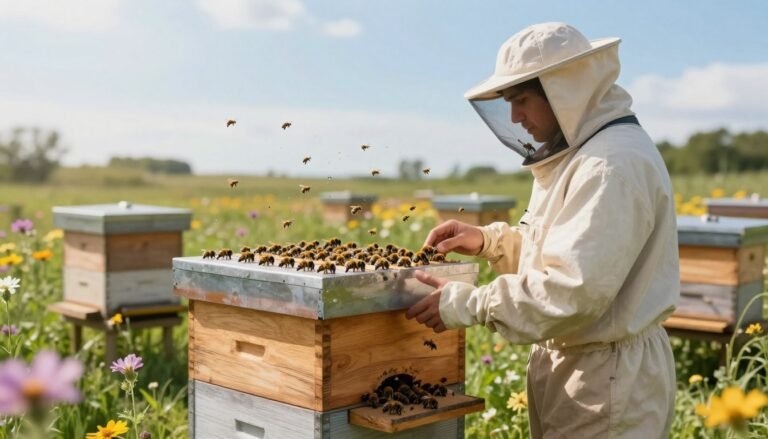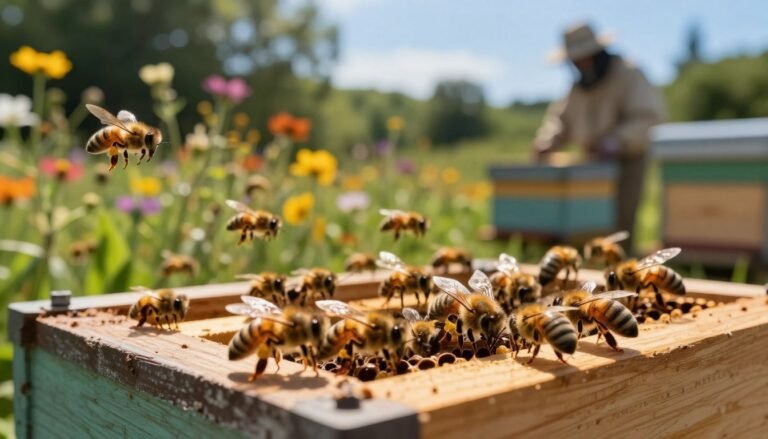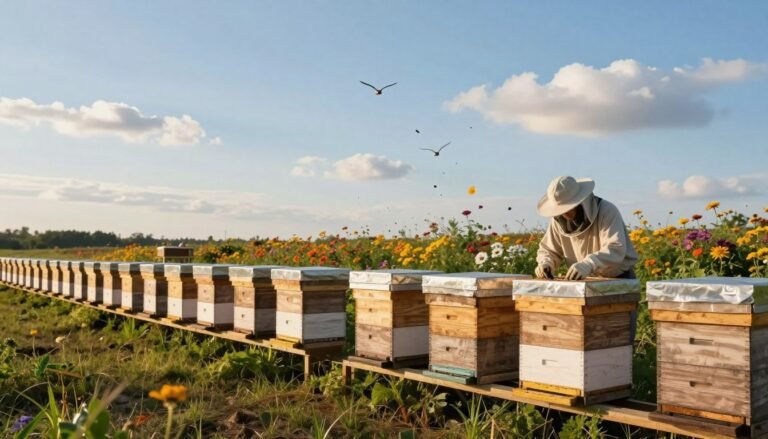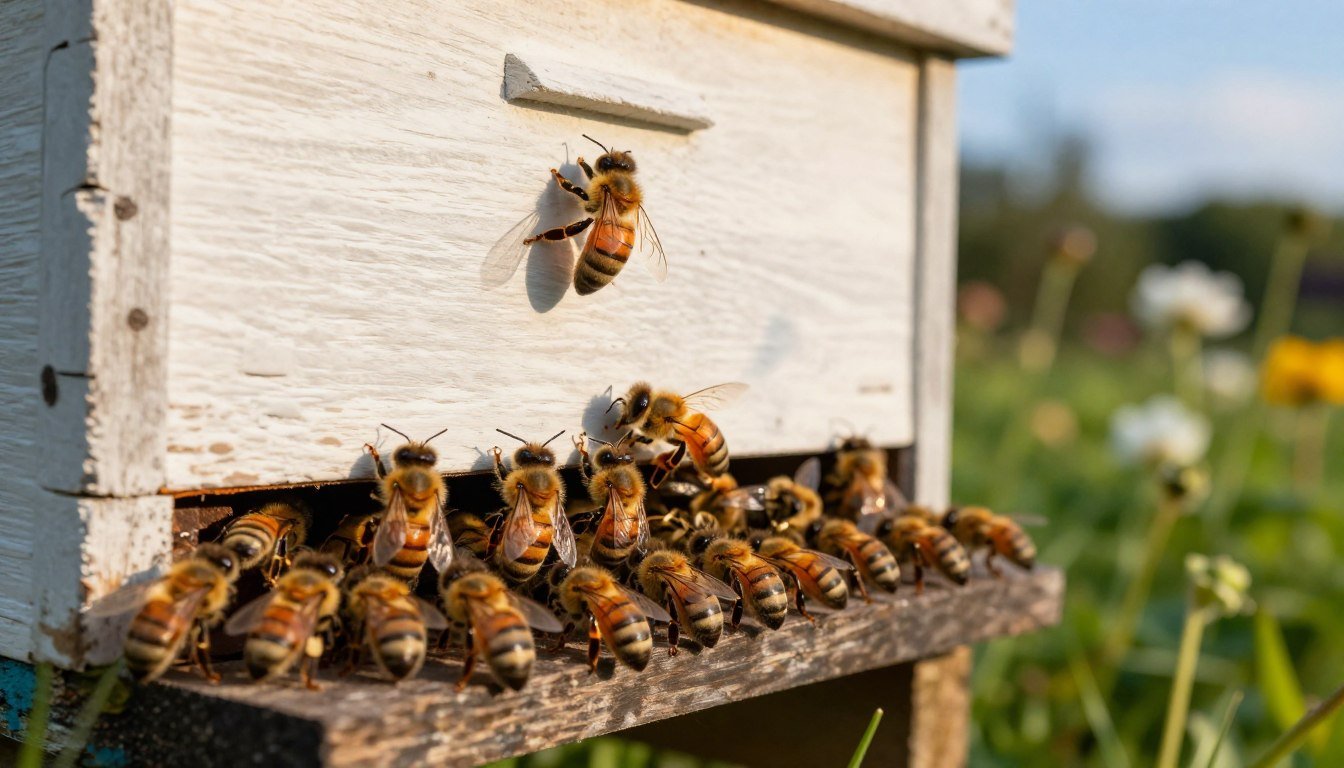
Seeing a cluster at the entrance can alarm any beekeeper. This behavior is often a heat-driven response where a group of honey bees forms a beard to cool the colony and protect the brood nest.
When temperatures and humidity rise, workers shift position to manage hive temperature and airflow. Proper ventilation, shade, and available space help reduce long periods of clustering.
Understanding whether this is normal activity or a sign of issues like swarming or overcrowding matters. Practical steps, such as checking supers and improving ventilation, keep colonies productive and comfortable during hot humid weather.
For community observations and hands-on tips, consult a forum report on clustered arrivals and a detailed guide on managing expansion and airflow for healthy hives.
Key Takeaways
- Beard formation is usually a cooling behavior, not an immediate emergency.
- Monitor hive temperature, brood nest condition, and population for signs of stress.
- Improve ventilation and add shade or space before days of extreme heat.
- Review community experiences for practical acceptance tips: cluster report.
- Consult expansion and management resources for long-term solutions: beekeeping expansion guide.
Understanding New Package Bees Bearding Outside the Hive
What you see at the entrance often reflects simple temperature control, not alarm.
Bee bearding is a common, heat-driven behavior where workers cluster near the entrance to manage internal temperature and airflow.
What is Bearding
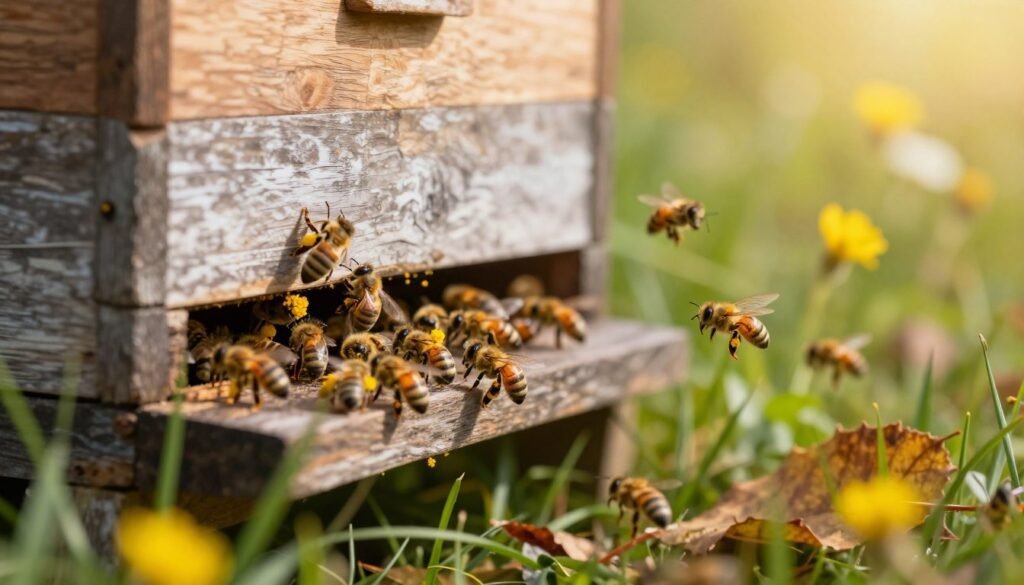
Bee bearding appears as a thick mass on the front of a box. Workers leave crowded frames to cool brood and ventilate stores. This action is normal during hot humid weather and signals active thermoregulation.
Is This Behavior Normal
For many beekeepers, seeing a beard on warm days is a sign of a healthy colony coping with high temperatures. If one of several hives does not show this while others do, inspect for queen issues or low population.
“A thick, full beard on the landing board often means the colony is managing heat rather than preparing to swarm.”
- Bearding usually indicates effective cooling and airflow.
- Monitor clusters over several days to spot stress or overcrowding.
- Improve ventilation and shade when hot spells persist — see practical ventilation tips: beehive ventilation hacks.
Why Honey Bees Cluster Outside the Entrance
To protect the brood, a colony often thins the interior by forming a front cluster on hot days.
Moving forward reduces the number of insects inside the brood nest. That helps keep core temperature steady when temperatures and humidity rise. Think of it like a crowded room cooling down when half the people step outside for fresh air.
Workers that gather near the entrance use two main tactics. They shade comb, and they fan to push cool air through the store and brood area. This coordinated action lowers temperature and stabilizes humidity for developing young.
- Primary goal: regulate internal temperature and humidity during hot weather.
- By moving forward, the colony reduces heat load inside hive and protects the brood nest.
- Fanning and proper ventilation keep air moving and prevent overheating.
- Beekeepers should watch cluster size to decide if more space or shade is needed.
“Clustering at the entrance is a proactive strategy to preserve developing young and maintain a stable microclimate.”
Distinguishing Bearding from Swarming Behavior
Being able to tell cooling clusters from swarm prep saves colonies and prevents surprises.
High activity and departing workers often mean a colony is preparing to relocate. Look for heavy traffic at the entrance, flights packed with bees, and scouts circling nearby.
Compare that with typical bearding: most workers stay near the entrance to cool the interior. If you see a large cluster hanging away from the stand, that is a strong sign of a potential swarm.
Signs of Swarming
- Sudden surge in flight and mass departures from the entrance.
- Groups forming on branches or fence posts, not just on the landing board.
- Found or sealed queen cells during a quick inspection — a definitive indicator.
Identifying Washboarding
Washboarding looks like a rhythmic rocking of workers lined up on the front. Its cause is still debated, but it often appears during warm summer days alongside normal cooling activity.
“Distinguishing between cooling clusters and a swarm requires watching location, movement, and whether queen cells are present.”
Practical tip: Regular inspections and timely checks for queen cells help you act before a swarm leaves. For guidance on recognizing swarm preparation, see how to tell if your hive is preparing to.
The Role of Temperature and Humidity Regulation
On hot summer days, workers use synchronized fanning and body positioning to keep internal temperatures stable.
Temperature and humidity control are essential for colony survival, especially during peak summer. Muscle contractions generate heat when needed, and coordinated fanning moves cool air through comb spaces.
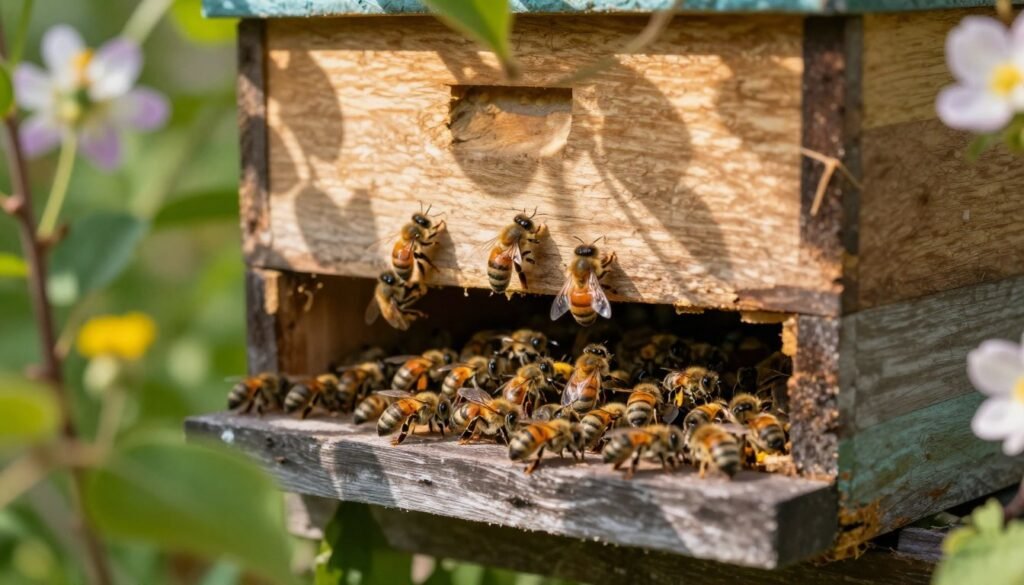
When temperatures inside rise, workers form channels and fan to push warm air out. They also shift away from brood frames to protect developing young.
High humidity intensifies stress. Moist air makes cooling less effective, so many workers will gather at the entrance or on the landing to improve airflow and reduce moisture levels.
- Ventilation helps hot, moist air escape and lowers hive temperature quickly.
- Observing how bees manage airflow reveals colony strength and needs.
- Beekeepers can add screened vents or shade to support natural cooling behavior.
“A stable internal environment reflects a healthy colony and prevents unnecessary stress.”
Why You Might See Bees Bearding at Night
After sunset, crowded colonies sometimes spill onto the landing to find cooler, moving air.
Evening foraging patterns bring many workers back at once. If internal temperature and ventilation lag, returning foragers may hang on the front to cool off and share information about a good honey source.
Evening Foraging Patterns
Seeing bees bearding at night is common after a strong day and a rich nectar flow. High humidity and heat mean the colony gets crowded and needs extra airflow.
- Large numbers may choose to be outside where air moves better and they can fan more effectively.
- Night clustering is not always a problem if population and brood look healthy.
- Practical note: moving a hive in the evening is harder when many workers are on the exterior.
“Large, quiet beards at dusk usually signal cooling behavior, not immediate distress.”
Provide added ventilation and shade to reduce intense evening clusters and help bees manage temperature and humidity through the night.
Factors Influencing Cluster Intensity
Overcrowding, scarce nectar, and poor airflow each raise the odds of heavy clustering at a colony entrance.
High temperatures and rising internal hive temperature push many workers forward. When the brood nest risks overheating, activity concentrates where air moves best.
Limited space inside causes a physical spillover. A strong population with lots of foragers will show more intense bearding than a weak group.
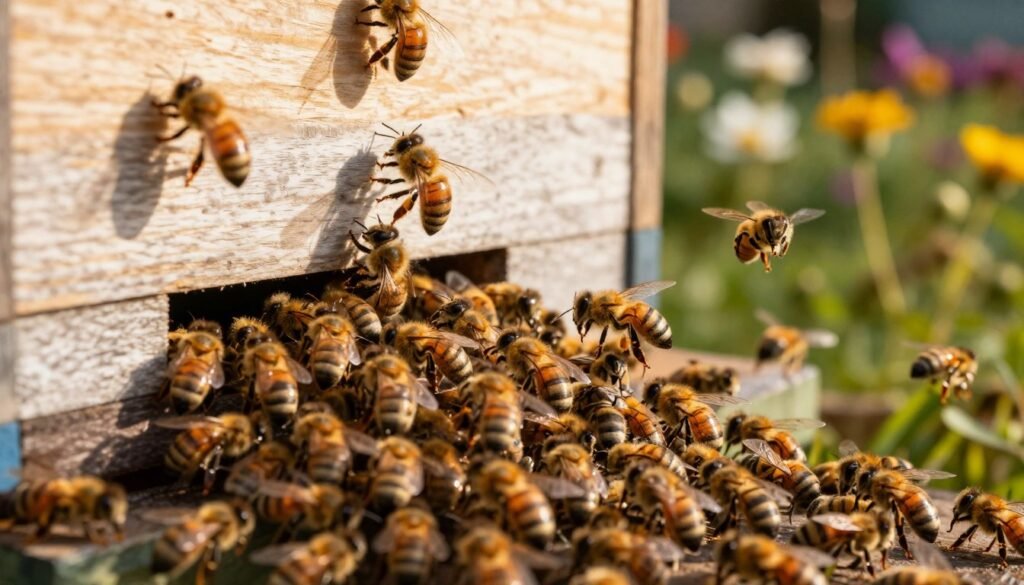
Poor ventilation makes cooling harder. Without proper vents, workers must fan harder and gather on the front to move air. During a nectar dearth, reduced foraging can increase idle clustering while food is scarce.
- High temperatures and heat load increase cluster size.
- Overcrowding forces movement toward entrances and landing boards.
- Low food flow can change daily activity and raise clustering at dusk.
- Strong populations often show stronger bearding as a sign of vitality.
“Watch temperature and space first—these two factors usually tell you whether action is needed.”
| Factor | Typical Sign | Impact | Quick Fix |
|---|---|---|---|
| High temperature | Large daytime clusters | Brood nest stress, higher hive temperature | Add shade; increase ventilation |
| Overcrowding | Bees on landing board and box front | Reduced brood space, agitated activity | Add frames or a super for space |
| Poor ventilation | High humidity, sluggish fanning | Less effective cooling | Install screened vents or top entrance |
| Nectar dearth | Lower foraging, more idle clustering | Activity shifts to waiting and guarding | Provide feeders or wait for flow |
Assessing Colony Health Through Observation
Noting differences between colonies at a glance helps you spot possible queen or population issues early.
Regular observation is the simplest, most effective health check a beekeeper can run. Walk past each stand, watch arrivals and departures, and record what you see.
If most hives show front clustering and one does not, that non‑active colony may have a smaller population or a queen problem. Early detection lets you act before issues grow.
Look for consistent patterns: similar behavior across hives signals stability. Sudden changes in activity or temperature response deserve a prompt inspection.
Keep brief notes on every visit. Date, traffic, clustering, and any odd flights help you spot trends over weeks.
- Use quick records to compare colonies and spot discrepancies.
- Investigate a quiet stand for queen or population concerns during your next inspection.
- Leverage tools like thermal checks to confirm brood patterns when needed: thermal brood analysis.
“Keen observation is the hallmark of a successful beekeeper who truly understands colony needs.”
For seasonal context on cluster behavior in cool periods, review community notes: cluster report. Regular checks and records keep colonies strong and responsive.
Providing Proper Shade for Your Bees
In very hot climates, careful placement of shade can cut midday stress and slow heavy clustering at the entrance.
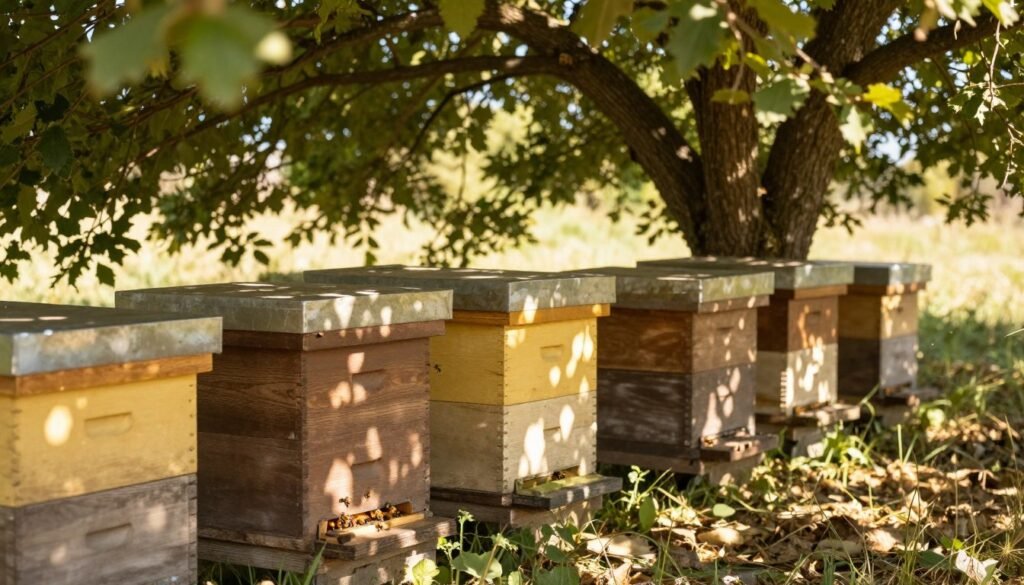
Shade helps lower temperature and light intensity during peak hours, which reduces fanning and front clustering.
Use natural trees or a light shade cloth positioned so it does not block flight lanes. In Arizona, temperatures over 100°F often make extra afternoon protection worthwhile.
Balance is key: too much shade can raise moisture and invite pests. Check stands regularly and adjust coverings seasonally to match local weather and colony needs.
- Keep entrances clear so returning foragers have unobstructed flight paths.
- Combine shade with improved ventilation rather than relying on shade alone.
- Evaluate each site—what works in Arizona may not suit cooler regions.
“Proper shading is one tool among many; use it thoughtfully alongside ventilation and space management.”
| Shade Type | Benefits | Drawbacks | Best Use |
|---|---|---|---|
| Natural trees | Cool, seasonal, low cost | May drop debris; variable cover | Afternoon shade in hot climates |
| Shade cloth | Adjustable, predictable shade | Requires mounting; traps humidity if low airflow | Temporary protection during heat waves |
| Artificial canopies | Durable, tailored coverage | Costly; can block light if overused | Long-term solutions where trees lack |
| Raised stands | Improves airflow and reduces ground heat | Extra work to install | Hot, reflective sites |
For regional advice and reports on heat-driven clustering, consult this practical guide on managing bearding in hot weather: bearding in hot weather.
Optimizing Hive Ventilation for Airflow
A simple screened board can change how a colony handles heat and humidity.
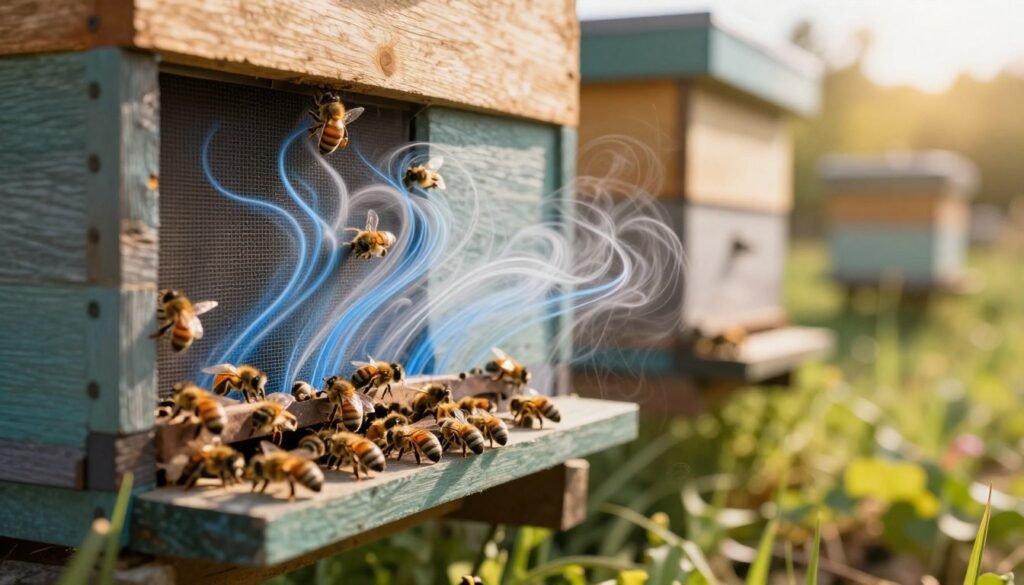
Good ventilation eases internal air movement and helps prevent moisture buildup that damages comb and brood. During hot months, steady airflow keeps inside temperatures manageable and reduces heavy clustering at the entrance.
Screened Bottom Boards
Screened bottoms allow air to flow freely through the box and out underneath. This improves circulation and helps remove moist air that builds near frames.
Top Entrance Benefits
Opening a top entrance creates a chimney effect. Warm air rises and exits, pulling cooler air in from lower openings for continuous airflow.
- Ventilation helps control humidity and reduces mold risk.
- Check vents regularly for debris or blocked ports.
- Be cautious during nectar dearth to avoid robbing; balance airflow with entrance security.
“Proper airflow is a simple, practical step that protects brood and keeps colonies productive.”
Managing Space and Adding Supers
Proper stack management lets a strong colony store surplus without crowding brood areas.
Adding a honey super gives immediate storage for excess nectar and reduces pressure inside hive boxes. A correctly placed super lets workers continue normal tasks and keeps brood chambers clear for egg laying.
Monitor frames and brood area weekly. If a single deep box shows heavy beard or crowded frames, add a super before comb fills. This helps avoid honey-bound conditions and keeps fall stores organized for winter.
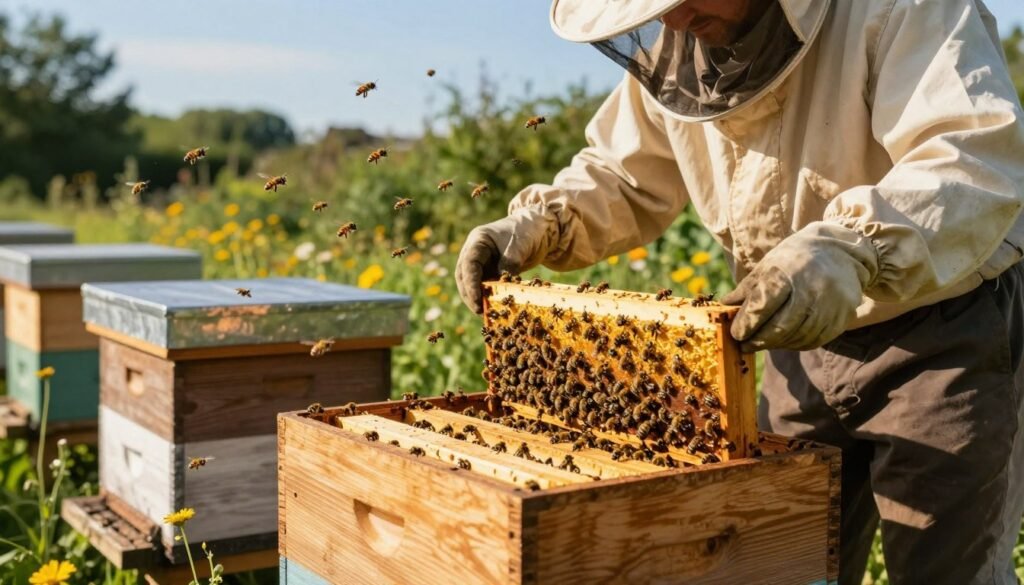
Note: If queen cells are present, simply adding another box will not stop an active swarm. Inspect for sealed or emergency queen cells and act promptly.
- Provide space early during strong nectar flows to reduce swarming risk.
- Ensure the queen has room to lay by checking brood pattern before adding supers.
- Use added supers to store honey earmarked for winter and reduce congestion.
“Thoughtful space management is a proactive step that preserves colony function and lowers stress.”
| Action | When to Add | Benefit | Quick Check |
|---|---|---|---|
| Add single super | Frames 60–80% full | Extra honey storage, less brood crowding | Inspect top frames for nectar |
| Add multiple supers | Strong flow & rapid fill | Prevents honey-bound condition | Weigh boxes or lift to feel weight |
| Delay adding | Low flow or dearth | Avoid extra work and robbing risk | Check local nectar reports |
| Inspect for queen cells | Any heavy bearding or sudden activity | Confirms swarming status | Remove or manage cells if present |
For seasonal scheduling and timing, consult a detailed beekeeping calendar to plan when to add supers for your region.
The Impact of Nectar Dearth on Bee Activity
When floral resources thin out, foragers return with less to do and more time at the landing.
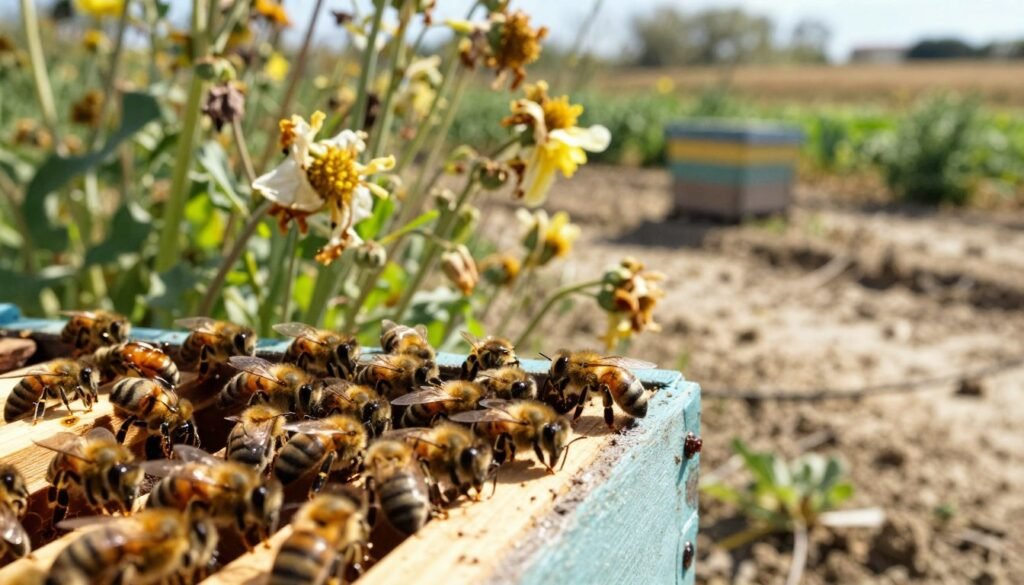
A nectar dearth happens when few flowers bloom, and available nectar drops sharply. During these periods a colony shifts tasks and many workers idle near the entrance.
With less foraging, workers may cluster forward more often. This increased bearding is usually a normal pause in activity while the colony waits for better weather or new blooms.
Reduced field work also raises risk of robbing and more guarding behavior. Watch traffic and secure weak hives if local conditions are poor.
- Monitor local flora and short-term weather to predict low-flow days.
- Provide clean water and, if needed, supplemental food to reduce stress.
- Limit inspections that expose stores during a dearth to prevent raids.
“A temporary drop in foraging often explains extended entrance clustering—management and monitoring are the best responses.”
For practical guidance on managing nectar shortages, see a focused nectar dearth guide. Also consider how recent storms change forage availability by reading about how heavy rains impact colony health.
When to Consider Removing Entrance Reducers
Before widening an entrance for extra ventilation, consider how that change affects colony security.
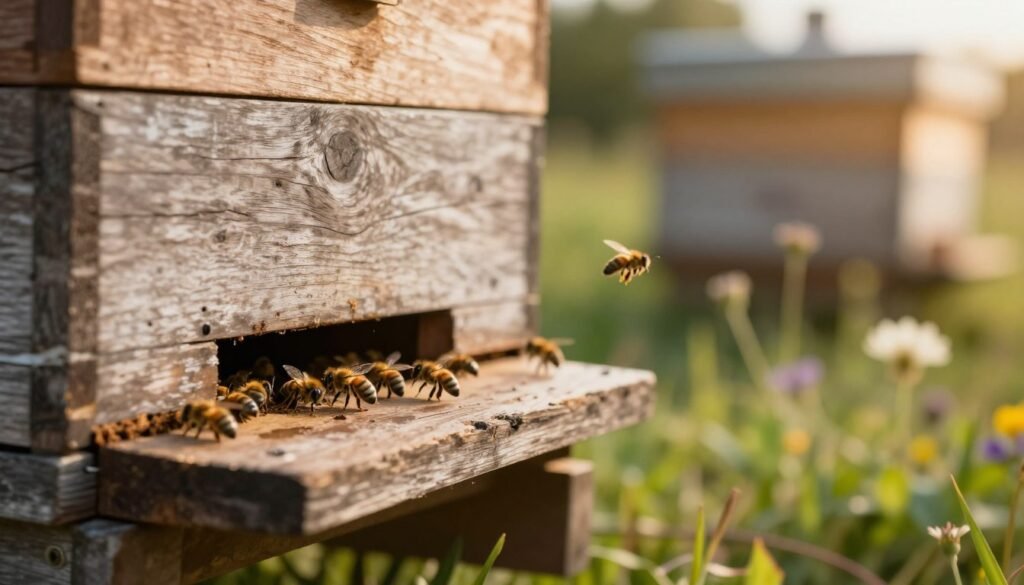
Entrance reducers are a standard tool for beekeepers. They let you control opening size and help guards defend stores. Many keep them in place year‑round to lower robbing risk during warm months.
If your bees are bearding and you want more airflow, weigh the benefit against the threat of intruders. A larger opening improves ventilation and space but can make a colony vulnerable when forage is low.
- Keep reducers when colonies are weak or during nectar dearth.
- Remove or widen only if the colony is strong and temperatures demand extra ventilation.
- Monitor activity after any change and be ready to restore a smaller entrance.
“A small entrance gives guards control; extra airflow is helpful only when the colony can defend its stores.”
For practical timing and step‑by‑step guidance on adjustments, see guidance on when to add or remove an entrance.
Monitoring Weather Patterns and Temperature Shifts
Watch daily highs and lows: quick drops or spikes often trigger visible changes at the entrance.

Regular weather checks help you predict when a colony will cluster. Internal temperatures that fall below about 95°F or rise above roughly 104°F can prompt bearding. Sudden swings force workers to work harder to keep brood safe.
Track local forecasts, humidity trends, and nightly lows. Use simple apps for alerts on cold snaps or heat waves. These signals let you adjust ventilation, shade, or feeding in time.
- Keep daily temperature logs to spot patterns.
- Watch humidity: high moisture plus heat drives more activity at the entrance.
- Be extra vigilant during seasonal transitions and evening cool‑downs.
“Anticipation beats reaction—prepare boxes for shifts in temperature and moisture.”
For seasonal preparation and winter readiness, review guidance on winter care: winterizing hives. Small steps now reduce stress on brood and improve colony resilience.
Conducting Regular Hive Inspections
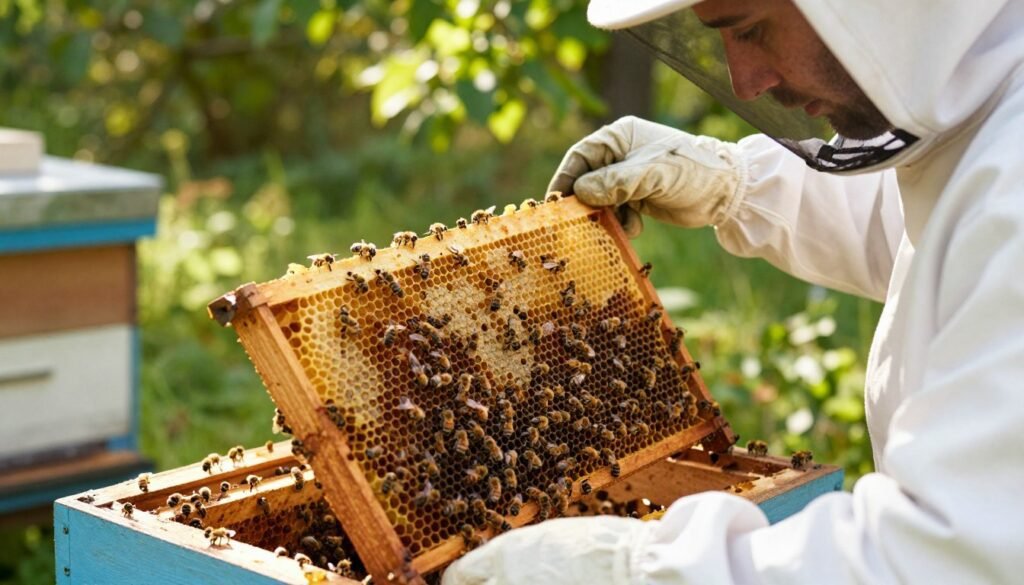
Routine checks are the simplest way to keep a strong colony healthy and prevent surprises. Conduct inspections every 7 to 10 days during active season to monitor population, stores, and brood patterns. Short, regular visits let you spot developing problems quickly.
Checking for Queen Cells
Look through the brood nest for queen cells whenever you open a box. Finding vertically hung, peanut‑shaped cells along frame bottoms or edges can indicate swarm intent rather than supersedure.
- Inspect on a set schedule to track changes over time and catch swarming early.
- Bearding may occur without swarm plans, but queen cells are a clear warning sign.
- Learn to tell swarm cells from supersedure so you can respond correctly.
- If you have questions, seek advice from experienced beekeepers or local clubs.
“Consistent inspections build confidence and let you act before a colony makes a costly decision.”
For more on why timely checks matter, review this short guide on inspection necessity. Staying proactive preserves honey stores and keeps swarming manageable.
Conclusion
Warm spells commonly produce front clustering as the colony balances internal heat and moisture. This visible bearding is usually a normal sign that workers are managing airflow and protecting brood. Watch activity, not panic.
Support your colony with shade, better ventilation, and added space before stress peaks. Regular checks reveal whether behavior reflects routine cooling or needs action. Keep notes on traffic, stores, and brood to guide choices for each hive.
Every apiary is unique. With steady observation and timely care you will help your colony thrive, enjoy a productive season, and feel confident managing bearding and other challenges. Thank you for your dedication to your bees and for steady stewardship of your hive.
FAQ
What does it mean when newly installed package bees are clustering outside the entrance?
Clustering at the entrance often indicates the colony is regulating temperature and airflow while settling. Young colonies may hang near the entry to cool the interior, balance humidity, or orient foragers. Watch daytime and evening patterns to tell if this is transient or a ventilation issue.
What is bearding and how can I tell if my colony is doing it?
Bearding describes a visible cluster of workers hanging near the entrance or on the front of the box. It’s usually a response to heat, high humidity, or poor internal airflow. If bees form a loose beard but return inside at dusk, that points to normal thermoregulation rather than alarm behavior.
Is bearding normal for a newly installed package?
Yes. New packages often show this behavior as they establish brood patterns and adjust nest temperature. Ensure adequate ventilation and monitor food stores and population; persistent clustering for days could signal overcrowding or stress.
Why do colonies cluster near the entrance instead of inside the hive?
Entrance clustering helps with cooling and ventilation. Workers create an external body mass to draw air through the brood nest and evaporate moisture from nectar, keeping brood temperature stable when internal air movement is limited.
How can I tell bearding from an imminent swarm?
Swarming signs include high numbers of bees leaving, queen cells, and a sudden drop in foraging. Bearding lacks mass exodus and usually resolves each evening. Regular inspections for queen cells and population changes help distinguish the two.
What are the clear signs of swarming I should watch for?
Look for many queen cups or sealed queen cells, a congested brood nest, reduced incoming foragers, and clusters forming away from the entrance on frames or nearby structures. These are stronger indicators of preparation to cast a swarm.
What is washboarding and how does it differ from normal clustering?
Washboarding shows rhythmic, repeated movements of workers along the comb surface, often during strong nectar flows or congestion. It’s more active and pattern-driven than passive bearding, and can precede swarming if combined with other signals.
How do temperature and humidity affect clustering behavior?
High daytime temperatures and humidity prompt workers to move outside to ventilate and evaporate excess moisture. Low airflow inside increases the need for external clustering. Proper shade and ventilation reduce stress and limit prolonged clustering.
Why might I see a cluster of bees at night?
Night clustering can happen when evening foraging ends and bees cool the nest or when a queen is performing late activity. Persistent nocturnal clustering may indicate heat retention problems or crowded conditions that need inspection.
How do evening foraging patterns influence bearding?
Foragers returning late can increase internal activity and heat, pushing workers outside to create space and improve airflow. If many foragers return laden, evaporation needs rise and external clustering becomes more likely until nightfall.
What factors determine how intense a cluster will be?
Intensity depends on colony population, brood size, available space, food stores, weather, and ventilation. Larger, crowded colonies with heavy nectar flows and hot, humid days will form larger, denser clusters than small, well-ventilated ones.
Can observing clustering help assess colony health?
Yes. Short-term clustering for thermoregulation is normal, but prolonged or erratic patterns may signal disease, queenlessness, or insufficient space. Combine observations with frame checks for brood pattern, stores, and queen presence.
How should I provide shade to help reduce exterior clustering?
Place hives where they get morning sun and afternoon shade or use shade cloth to lower peak midday temperatures. Avoid blocking airflow; shade should reduce heat without creating stagnant, humid conditions around the entrance.
What ventilation changes can I make to improve internal airflow?
Add screened bottom boards, install a top vent or use an eke with mesh, and keep entrances unobstructed. Proper top-to-bottom airflow removes heat and moisture and reduces the need for external clustering.
How do screened bottom boards help with ventilation?
Screened bottoms allow air to flow through the hive while providing a path for moisture escape. They can lower internal humidity and improve convective cooling, which reduces surface clustering and stress on the brood nest.
What are the benefits of a top entrance for airflow?
A top entrance creates a natural exhaust for warm, moist air. Combined with a lower entrance, it sets up a convection current that draws fresh air through the brood area, helping to stabilize nest temperature and reduce external clustering.
When should I add supers to reduce crowding and clustering?
Add a super when you see rapid honey influx, reduced space above the brood, or persistent clustering due to congestion. Giving bees room to store nectar and expand the nest relieves internal pressure and lowers swarming impulse.
How does a nectar dearth change clustering and activity?
During dearths, foraging drops and internal activity shifts. Bees may cluster more to conserve heat or reduce ventilation needs. Watch stores closely; provide supplemental feeding if frames show low honey reserves during prolonged dearths.
When is it appropriate to remove an entrance reducer?
Remove or widen reducers on hot, humid days or when colony population grows. Increased entrance size improves ventilation and traffic flow. Keep reducers in place during wet, cold weather or when robbing risk is high.
What weather patterns should prompt closer hive monitoring?
Monitor sustained heat waves, sudden temperature swings, and prolonged humidity. These conditions stress colonies and increase clustering. Check for ventilation needs, water sources, and signs of swarm preparation during such events.
How often should I inspect a new colony and what should I check?
Inspect every seven to ten days during buildup. Look for a laying queen, healthy brood pattern, adequate stores, and absence of many queen cells. Keep inspections brief and focused to avoid excessive disturbance.
What should I look for when checking for queen cells?
Inspect frame bottoms and edges for queen cups and sealed cells. Multiple large, well-made queen cells at the periphery of brood frames indicate swarm preparation. Remove or manage them only after confirming intent and assessing colony strength.