Choosing the right barrier can shape your honey harvest. A queen excluder is a simple selective barrier that keeps the larger queen bee out of the honey super. Workers are smaller and slip through the holes, leaving the comb in the super free of brood and larvae.
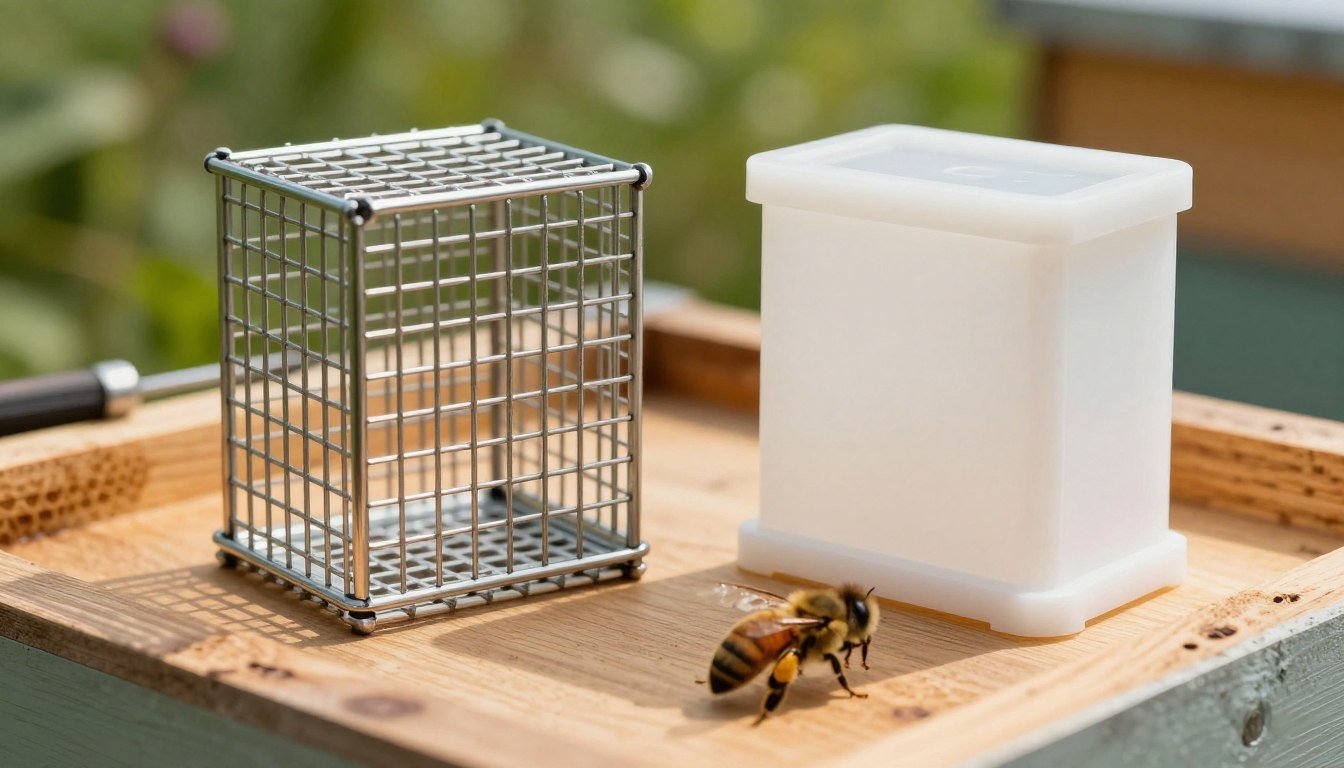
Foxhound Bee Company carries metal, plastic, and wood frame excluders to fit different hives. Over the years, many beekeepers found that using an excluder helps maintain clean honey and speeds up inspections. Cleaning, durability, and how the tool sits on frames matter when you decide which one to use.
Some users report plastic units crack or warp after a couple of years and can snag wax during inspections. Stainless and framed metal options are praised for easier cleaning and longer life, though they add a little weight. For practical experiences and community debate, see a forum discussion on why some advise ditching cheaper plastic pieces and switching to metal alternatives at this user thread, and learn ways to reduce plastic use in apiaries at Beekeepers Realm.
Key Takeaways
- Excluders keep honey supers brood-free, protecting honey quality and saving time.
- Workers pass through holes; the larger queen cannot, which controls space and production.
- Plastic options cost less up front but may warp or crack after a few years.
- Metal, especially stainless or wood-framed types, often clean faster and last longer.
- Choose the tool that fits your hive, frames, and long-term beekeeping goals.
Understanding the Role of Queen Excluders
A simple barrier with measured gaps prevents the laying female from entering honey storage. Typical spacing is about 4.1 to 4.4 millimeters, which lets workers pass but holds back the larger laying bee.
Installed between the brood box and the honey super, this tool keeps egg-laying confined to the lower chamber. That separation helps keep comb in the supers free of brood and wax, making honey easier to harvest.
Note: young virgin females can sometimes squeeze through until mating is complete. For that reason, careful monitoring after placement matters.
- Selective barrier: the grid or wire stops the laying female while allowing workers access.
- Simplified inspections: you spend less time searching frames for the laying bee.
- Cleaner honey: supers stay brood-free, reducing wax and brood in honey comb.
For guidance on choosing the right panel for your hives, see this concise guide on how to choose the best queen excluder for your.
Metal Queen Excluder vs Plastic Queen Excluder: A Direct Comparison
A direct side-by-side look helps beekeepers decide which build suits their long-term apiary plans.
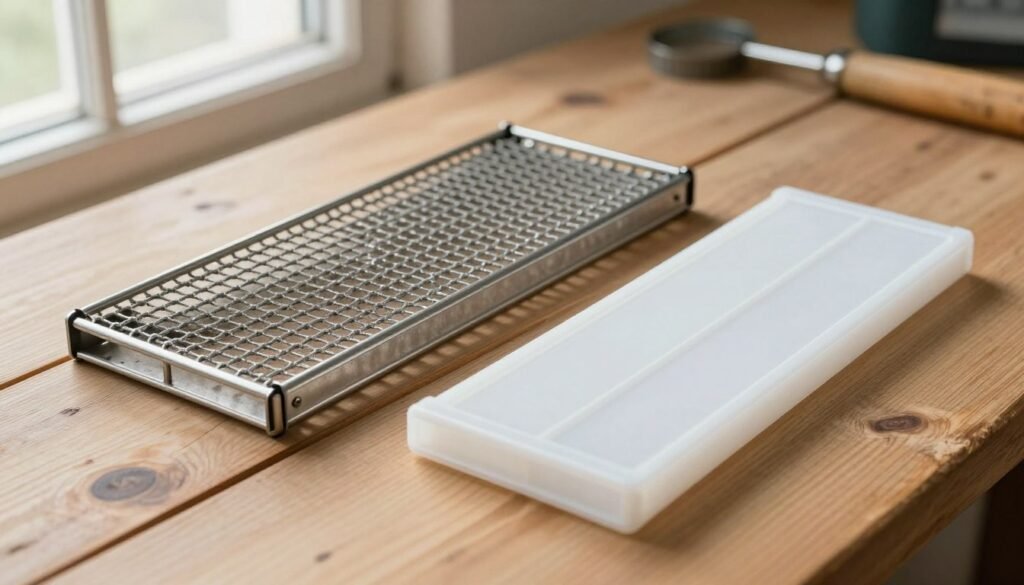
The Case for Metal
Durability and stability are the main draws. Framed wire or stainless styles rarely sag and resist sun damage.
They often clean easier because larger slots shed wax and propolis. Wood-framed metal panels also offer a tidy fit on frames and add a classic look to a hive.
The Case for Plastic
Affordability and flexibility make plastic attractive to new beekeepers. Many units trim to fit odd box sizes and weigh less during inspections.
Drawbacks include potential warping and brittleness over years of sun and cold. That can let bees slip under the edges or create cracks that allow brood into the honey super.
Tip: Match your choice to how much time you want to spend on maintenance and long-term equipment costs. For a handy starter tool, see this short guide to the best catcher for beginners: best queen catcher tool.
Evaluating the Durability and Longevity of Materials
Longevity matters in beekeeping; a sturdy barrier saves time and replacement costs.
Experienced users report clear differences in service life. JeffH has used galvanized wire units for 30 years with minimal issues. Others note that plastic excluders can become brittle and crack after about two years.
Routine work affects lifespan. A hive tool can damage thin parts during inspections. Plastic ones often crack when pried, while metal panels resist chips and breakage.
| Material | Typical Lifespan | Resistance to Damage | Maintenance |
|---|---|---|---|
| Stainless wire | 10+ years | High | Wipe and scrape |
| Galvanized wire | 20–30 years | High | Occasional cleaning |
| Plastic units | 1–3 years | Low (warp/crack) | Replace when damaged |
Key point: keeping the grid intact prevents the laying female from entering the honey and protects brood placement. For more on long-lasting options, read the advantages of using metal queen excluders.
Impact on Hive Management and Bee Health
How a barrier sits in the hive affects both honey yield and colony behavior. Proper use keeps the laying female from entering the honey super, which preserves clean comb and speeds up harvests.
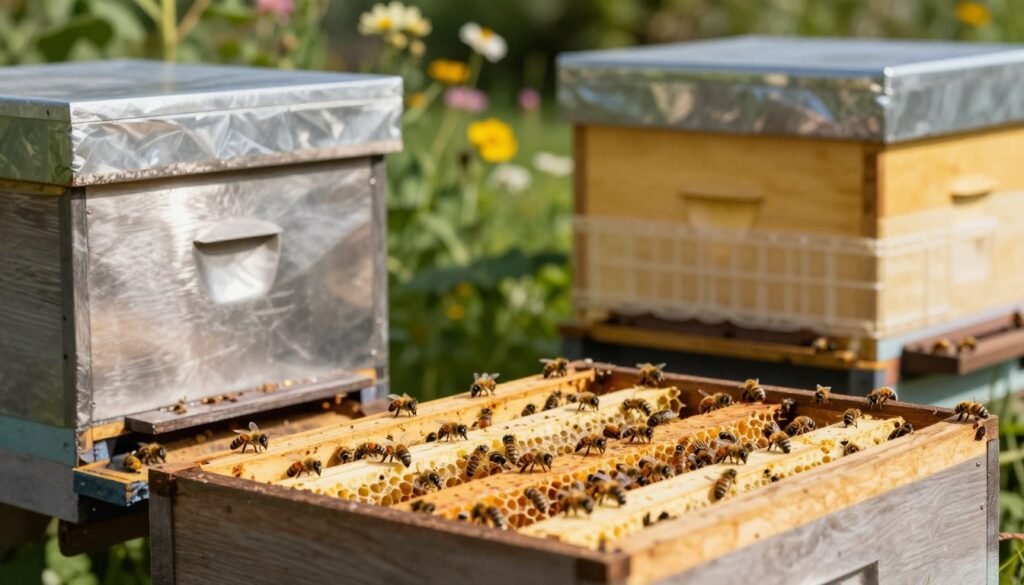
Preventing Brood in Honey Supers
Keeping brood out of the super ensures comb stays free of larvae and excess wax. This makes extraction easier and keeps honey purer.
Managing Hive Population
Strong colonies are best for using a barrier. Adding one to a weak hive can impede foraging and stress the colony.
An upper entrance helps bees bypass the grid during heavy flows and reduces congestion at the bottom entrance.
Risks of Improper Spacing
Wrong spacing can slow worker movement and reduce honey production. It rarely causes direct injury, but it can frustrate nurse bees and lower efficiency.
- Tip: Restricting the laying female to the brood box lets the beekeeper focus on honey production rather than searching for her.
- Practice: Placing a frame of brood in the super can encourage nurse bees to move up and store honey.
For practical guidance on material choice and recommendations for foundation to boost production, see this note on why these panels are used and a concise review of best foundation options at best foundation for honey production.
Cleaning and Maintenance Requirements
Removing built-up propolis and burr comb prevents blockages that slow hive traffic. Regular care keeps honey flowing and inspections short. It also protects comb and reduces bee stress.
Removing Propolis and Burr Comb
Start with a simple scrape. A standard hive tool clears most sticky spots on framed grids with larger slots, so maintenance is fast.
Tip: small molded panels with many tiny holes may need each opening cleaned by hand. That process takes more time during busy inspections.
For stubborn wax, experienced keepers sometimes use a heat gun to soften buildup before scraping. Keep heat low to avoid warping edges and risking damage.
- Use a hive tool or a dedicated scraper for propolis and burr comb removal.
- Clean metal-style panels quickly because larger holes shed wax faster than the small ones on some plastic ones.
- Inspect and clear the grid regularly so bees can move freely between boxes and the honey stays clean.
- If you handle heavy propolis often, consider the best hive tool for propolis-heavy colonies to speed work and reduce wear.
Practical Tips for Proper Installation
Correct placement during a strong nectar flow helps the colony move stores into the super efficiently.
Place the queen excluder flat directly above the top brood box and below the first honey super. A tight seal prevents the laying bee from finding gaps and keeps brood out of the super.
During heavy flows, add a frame of drawn comb in the first super. That encourages workers to move up and start storing honey quickly.
Consider an upper entrance when traffic rises. It lets drones and foragers exit the super more easily and reduces congestion at the bottom entrance.
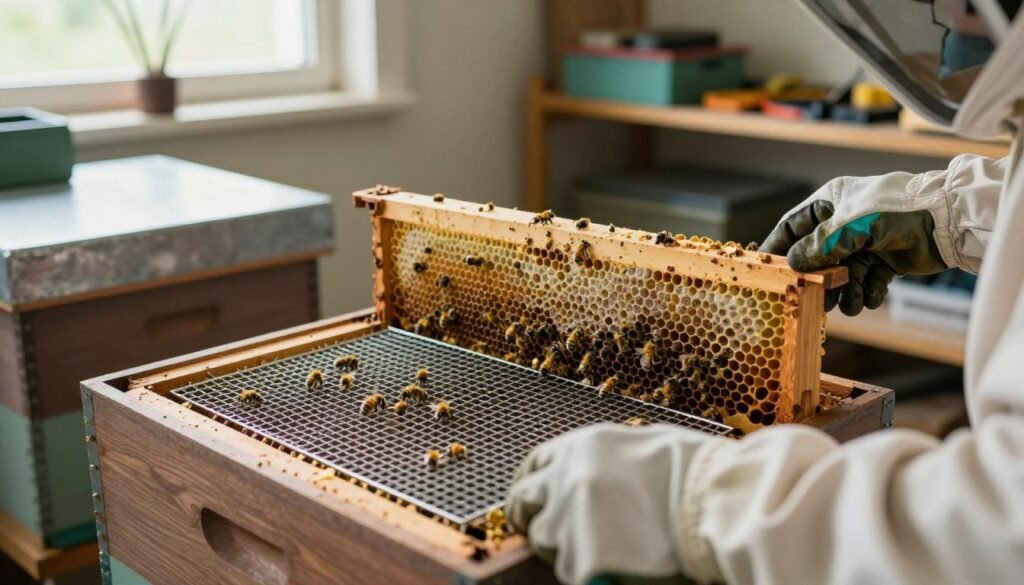
- Fit: ensure the panel sits flush on the box to avoid slips.
- Material: a wire or wood-framed unit gives a stable fit that resists warping.
- Check: inspect during the first days after installation for any queen access.
| Action | Why it matters | Quick check |
|---|---|---|
| Place flat between brood and super | Prevents brood in honey and keeps space organized | Run finger around edge for gaps |
| Add drawn comb in super | Encourages bees to store honey upward | Watch for worker activity on drawn frame |
| Provide upper entrance | Reduces congestion and aids drone exit | Observe traffic flow during nectar peak |
Final Verdict on Choosing Your Equipment
A solid, well-fitted panel can save hours during inspections and protect honey quality.
Choosing between a metal or a plastic option depends on budget and how much upkeep you want. Durable equipment costs more up front but cuts replacement time and protects your honey during harvests.
For beekeepers, a properly sized queen excluder that fits the box and super without gaps is essential for colony health. Good wood-framed or wire panels clean easily and resist warping.
Pick the ones that match your hive, prioritize bee welfare, and you will see smoother inspections and better honey production all season.