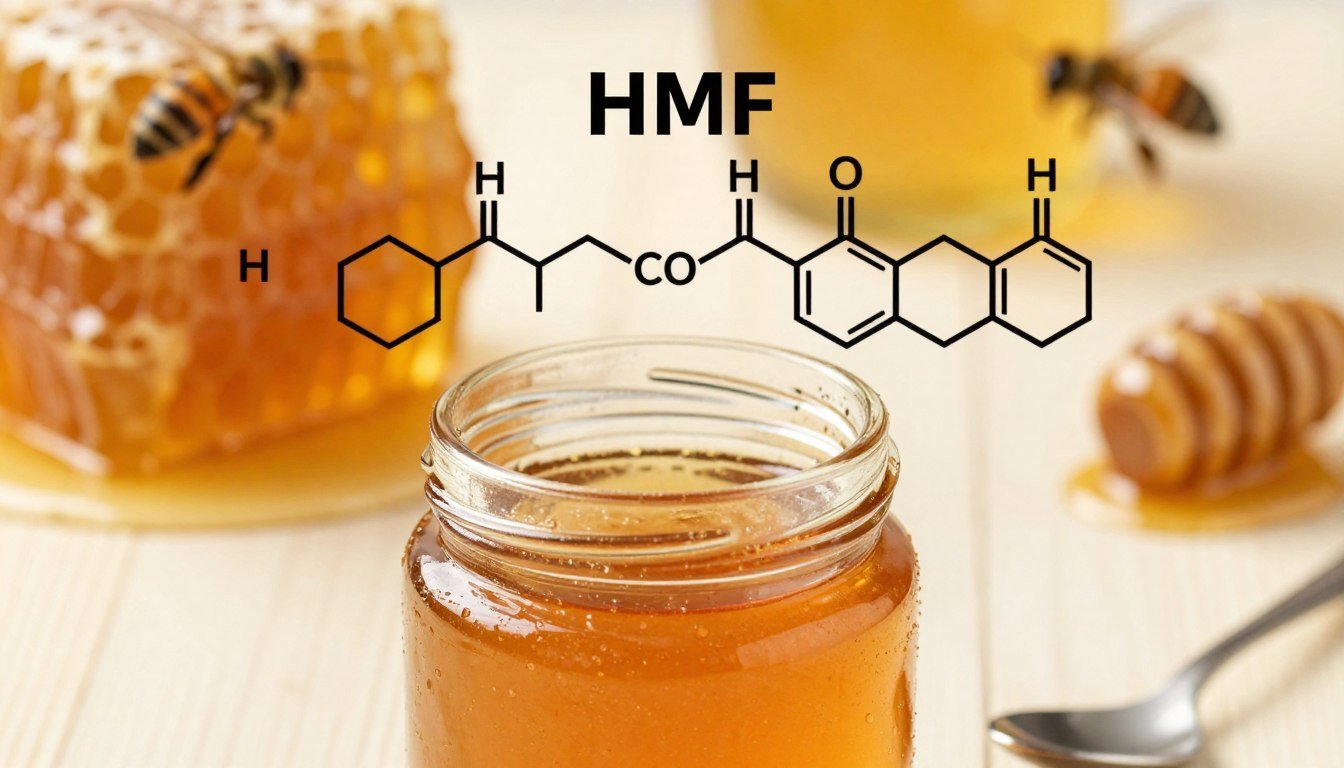
Hydroxymethylfurfural is an organic compound that forms when sugars break down under heat or acidic conditions. It is essentially absent from fresh foods but builds up over time in sugar-rich, acidic environments.
For beekeepers and producers, tracking this compound is a vital quality control step. High concentrations can signal excessive processing, long storage, or overheating during production.
The widely used 40 mg/kg limit is a regulatory quality benchmark rather than a direct human safety threshold. This level helps distinguish fresh, minimally treated products from those that are old or over-processed.
We will cover how fructose degradation creates this compound, how temperature and time influence results, and which laboratory methods detect concentration. Practical tips will help protect natural enzymatic activity and maintain product integrity from hive to jar. Learn more about related research and real-world guidance at this detailed guide.
Key Takeaways
- Hydroxymethylfurfural forms when sugar-rich foods face heat, time, or acidic conditions.
- Monitoring levels is a key indicator of product quality and proper storage.
- The 40 mg/kg limit helps identify over-processed or aged products.
- High concentrations can harm bee health and reflect poor handling.
- Temperature control and gentle processing preserve natural activity and quality.
Understanding HMF in Honey Explained Simply
A simple lab test can reveal a jar’s history by measuring how much sugar breakdown product it contains. This marker acts as a freshness gauge that helps distinguish raw, living jars from highly processed commercial products.
Fresh samples usually show very low readings—often under 5 mg/kg—reflecting minimal heat exposure and intact enzymes. Low values are typical for raw, minimally processed honey that keeps its natural aroma and nutritional traits.
Higher levels point to overheating or prolonged storage. That tells producers and consumers that enzymatic activity may be reduced or lost. For beekeepers, this analysis verifies harvest integrity and guides processing choices.
Why it matters:
- It signals quality at a glance and supports transparent labeling.
- It reveals storage history and whether warm conditions accelerated sugar degradation.
- Interpreting these results helps preserve flavor, enzymes, and market value.
The Science Behind HMF Formation
Fructose and acid act together to drive the chemical changes that create this sugar breakdown product.
The role of fructose and acid
Fructose is less stable than glucose and becomes the main precursor under acidic conditions. Low pH accelerates dehydration reactions that convert reducing sugars into furfural derivatives.
The Maillard reaction and caramelization
The Maillard reaction and caramelization are the primary pathways for this formation during heating. Both routes change color and flavor while producing measurable concentrations of the compound.
Key lab facts:
- Molar mass: 126.111 g/mol; melting point ~30–34°C.
- First reported in 1875 as an intermediate from sugar and acid.
- Temperature rises sharply increase formation rates; every 10°C speeds the process.
- Recent work shows water microdroplets at the air-water interface can form the compound without catalysts.

| Factor | Effect on formation | Practical note |
|---|---|---|
| Fructose level | High levels increase rate | Monitor sugar composition during production |
| pH / Acid | Lower pH speeds conversion | Avoid prolonged acidic exposure |
| Temperature | Higher temps raise concentrations | Keep storage cool to preserve quality |
| Water interface | Microdroplets can catalyze formation | Minimize agitation and foaming |
Why HMF Serves as a Quality Indicator
Producers rely on this compound as a measurable record of processing and storage history. It is a standard biomarker used across the food industry to flag excessive heat treatment or prolonged storage.
For beekeepers, tracking this value helps protect delicate enzymes like invertase and diastase. High readings often signal that those beneficial enzymes and aromas were lost during harsh processing.
Regulatory bodies use this marker to separate raw, artisanal jars from highly processed commercial products. That makes it a practical control metric for quality assurance.
- Why it works: It archives thermal and storage events as a single numeric result.
- Long-term tracking: Monitoring levels over years helps optimize storage and reduce degradation.
- Analytical support: Routine analysis allows beekeepers to set internal standards and prevent quality loss.
| Method | What it detects | Use |
|---|---|---|
| Spectrophotometry | Concentration shifts | Quick field checks |
| HPLC | Precise quantification | Regulatory testing |
| Colorimetric | Routine screening | Production control |
Floral origin can set different baselines, so consider how source affects pH and natural background when you review results. See how floral source affects pH for context.
Regulatory Standards and Legal Limits
Regulatory frameworks set clear numeric caps to protect consumers and preserve product quality across markets. These caps guide testing, trade, and labeling so buyers know what to expect from pack to plate.
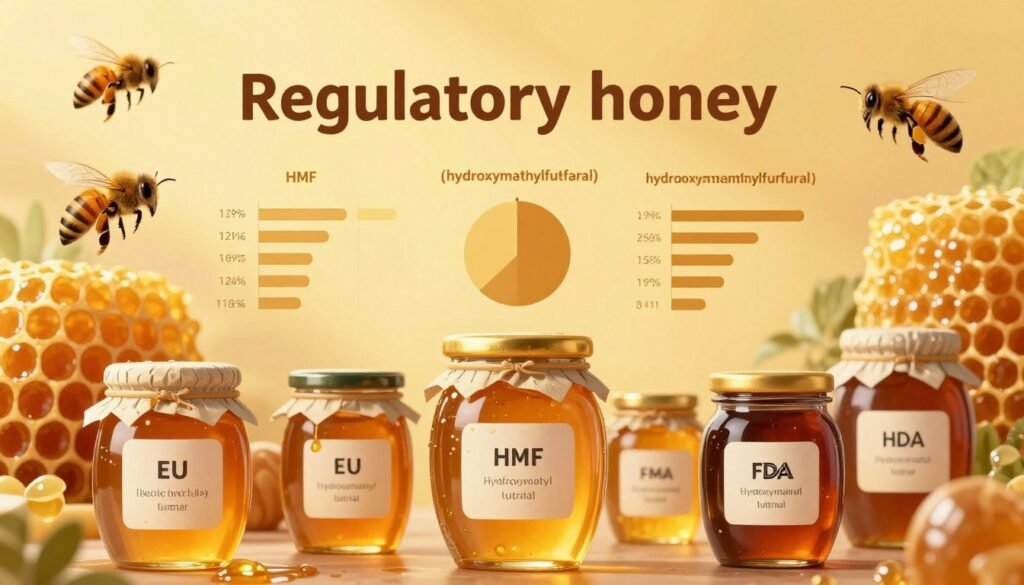
International rules, led by the Codex Alimentarius, establish a common baseline. For most honey sold as food, the accepted limit for hmf content is 40 mg/kg. This level aims to stop the sale of jars that show signs of overheating or long-term degradation.
Tropical Honey Exceptions
Tropical honeys face different environmental pressures. Warm climates accelerate formation, so an elevated legal limit of 80 mg/kg applies to these honeys. Regulators set this higher ceiling to reflect natural ambient temperatures rather than poor handling.
What producers must do: perform routine analysis, document processing steps, and ensure exported products meet destination rules. Many artisanal brands aim for much lower hmf levels to signal freshness and superior quality. Staying well below the legal limit helps build trust and opens access to strict markets.
For regulatory details and trade guidance, refer to the official legislation and standards.
The Impact of Heat and Storage Time
Temperature exposure during processing and storage is the key factor that dictates degradation rates. Heat speeds chemical reactions that raise measurable markers over time.
Foundational research from White et al. (1964) shows how dramatic the effect can be.
“Heating at 50°C for 10 days or 70°C for 10 hours can generate about 30 mg/kg of HMF.”
As a rule of thumb, the rate of formation increases roughly fivefold for every 10°C rise. That means short, high-temperature events can outpace slow, long-term changes.
- Proper storage keeps levels low; room temperature storage still produces gradual increases over years.
- Processing such as pasteurization must be tuned to avoid crossing the 40 mg/kg limit that marks reduced quality.
- Controlling temperature during extraction and bottling greatly reduces final concentration and preserves quality.
| Condition | Typical effect | Practical step |
|---|---|---|
| 50°C, 10 days | ~30 mg/kg | Avoid sustained heating |
| 70°C, 10 hours | ~30 mg/kg | Limit exposure time |
| Cool storage, years | Slow accumulation | Store under 20°C |
For production teams, routine analysis of content guides safe treatment choices. For packaging and labeling guidance, see how to package and label your.
Potential Health Considerations for Humans
Scientific reviews indicate that the amounts present in common foods pose minimal direct toxic risk to people.
Extensive studies have looked for carcinogenic or genotoxic effects from dietary exposure and found no evidence of harm in humans.
In fact, research shows this compound can act as an antioxidant and may offer cell protection against low-oxygen stress in some models.
The human body metabolizes the compound efficiently. A major metabolite, 5-hydroxymethyl-2-furoic acid, is formed and then excreted in urine without known adverse outcomes.

Regulatory limits for this marker are set to indicate product quality and freshness, not because normal dietary concentrations present a safety risk.
| Topic | What the science shows | Practical note |
|---|---|---|
| Human carcinogenicity | No evidence from dietary exposure | Consumers need not fear typical levels |
| Biological activity | Antioxidant and cytoprotective effects reported | May contribute modest health benefits |
| Metabolism & excretion | Converted to 5‑hydroxymethyl‑2‑furoic acid and eliminated | Efficient clearance in healthy adults |
For beekeepers and sellers, the key message is quality and freshness. Focus consumer communication on enzyme activity, flavor, and storage rather than toxicity concerns.
For deeper technical detail, consult the aging and heat treatment review available as an aging and heat treatment review.
Why HMF Matters for Honey Bee Health
Bees exposed to degraded syrup can show clear physiological stress tied to storage and heating. This section looks at toxicity, larval outcomes, and dysentery-like signs that beekeepers should watch for.
Toxicity and Larval Development
Research offers mixed but useful results. Krainer et al. (2016) found larvae and pupae tolerated very high concentrations—up to 750 mg/kg—without raised mortality.
That resilience differs for adults. Young workers, especially during their first week, show greater sensitivity to toxic feed components and can fail to thrive.
Dysentery Symptoms
Gregorc et al. (2020) linked high concentrations to increased apoptosis in gut tissues. That cellular damage often shows as dysentery-like symptoms at the colony level.
Loss of midgut function reduces nutrient absorption and can speed colony decline over months or years if poor feed quality persists.
Practical notes for beekeepers:
- Prioritize low‑heat, fresh syrup for winter stores.
- Have suspect feed tested with proper hydroxymethylfurfural analysis or use guides to test honey purity.
- Monitor adult behavior and hive cleanliness for early signs of dysentery.
| Effect | Typical trigger | Action |
|---|---|---|
| Gut apoptosis | High concentrations | Replace feed |
| Dysentery | Prolonged exposure | Inspect and treat |
| Larval tolerance | Short exposure | Monitor brood |
Managing HMF Levels in Bee Feed
Controlling feed composition and preparation is the best defense against unwanted sugar breakdown during storage. Beekeepers should pick feed products with low initial concentration to avoid starting with high baseline levels.
High-fructose corn syrup often contains 30–100 mg/kg before storage. That makes HFCS a risky feed choice for winter stores. Choose alternatives with lower fructose content when possible.
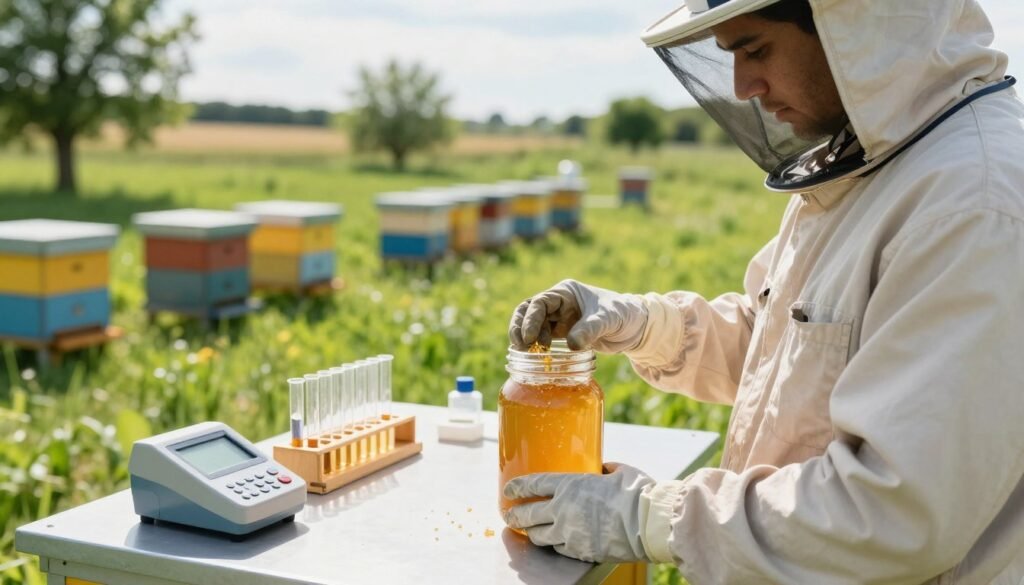
Mix thin (1:1) sugar syrups using cold water and avoid boiling. Heat accelerates formation and raises levels quickly.
“Neutralizing acidic syrups with soda ash or potash can slow chemical formation and protect bee health.”
- Preparation: Use cold water, 1:1 ratio, no prolonged boiling.
- Control: Store feed cool and sealed to limit formation over time.
- Treatment: Neutralize strongly acidic solutions with a mild base if testing shows low pH.
Regular testing helps track results and confirm quality. Prioritize products labeled with production conditions and lab results when buying feed.
| Issue | Typical trigger | Practical solution |
|---|---|---|
| High starting content | Using HFCS | Choose low-fructose syrups or dilute and test before storage |
| Rapid formation | Boiling or high heat | Mix with cold water; avoid heating |
| Acidic feed | Low pH syrups | Neutralize with soda ash or potash; retest pH and levels |
Best Practices for Storing Your Honey
A cool, stable storeroom is the single most effective defense against the slow formation of sugar breakdown markers. Keep jars away from direct sunlight and warm areas to limit concentration increases over time.
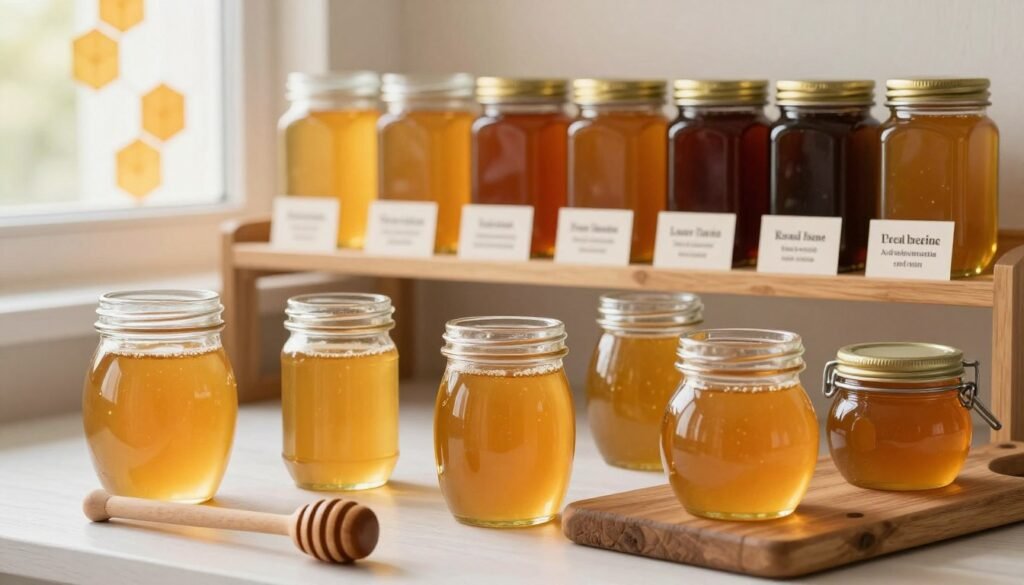
Gentle processing helps, too. When making creamed honey, warm only to about 33°C overnight. That gentle heat avoids spiking hmf levels while allowing controlled crystallization.
Use airtight containers to cut moisture uptake and temperature swings. Even at room temperature, products will degrade; minimizing storage time preserves enzymes and flavor.
- Store cool and constant to slow formation of degradation markers.
- Use sealed jars and avoid repeated warming or refrigeration cycles.
- Label and rotate stock so older batches are sold or used first.
For beekeepers: track hmf content seasonally and keep records of storage conditions. Consistent practices maintain product quality and protect your brand reputation.
| Risk | Practical step | Expected result |
|---|---|---|
| Warm storage | Move to cool room (≤20°C) | Slower concentration rise |
| Moisture exposure | Use airtight jars | Preserve enzymes and flavor |
| Poor rotation | First‑in, first‑out labeling | Lower average hmf levels |
Advanced Methods for Detecting HMF
Modern laboratory tools are the only reliable way to document sugar‑breakdown markers for quality control. Producers and beekeepers who must meet strict export or retail standards rely on validated analysis to prove product integrity.

Laboratory Analysis Techniques
Reversed‑phase high‑performance liquid chromatography (HPLC) is the gold standard. It offers the best sensitivity and specificity for measuring concentration and yields results that regulators accept.
Spectrophotometric methods, such as the White method, remain common for routine checks. They are faster and cheaper, but they can misread samples when other colored compounds are present.
High‑end mass spectrometry, such as MALDI‑TOF, delivers exceptional sensitivity and can detect trace concentration changes. Cost and access typically restrict its use to specialized labs or research studies.
| Method | Strength | Typical use |
|---|---|---|
| HPLC | Accurate, regulator‑accepted | Official analysis and export testing |
| Spectrophotometry | Fast, low cost | Field screening and production checks |
| MALDI‑TOF MS | Very sensitive | Research and forensic labs |
Understand that rapid test kits are useful for spot checks but cannot replace validated laboratory methods when limits and traceability matter. Using proper analysis supports compliance with the Codex Alimentarius and allows confident labeling of premium products.
Practical note: set a testing plan that balances cost, frequency, and the level of documentation your buyers expect. Clear results help control temperature, storage time, and production choices to preserve product quality over years.
Final Thoughts on Honey Quality and Integrity
Maintaining product integrity requires understanding how HMF reflects the handling and history of your jar. Keep processing gentle and storage cool to preserve enzymes and natural benefits.
Follow standards such as the Codex Alimentarius to meet market expectations and protect consumers. Regular testing and clear results support traceability and build trust.
For practical guidance on regulatory context see this quality standard overview. For moisture and curing tips that protect quality, consult humidity and curing advice.
Consistent quality control is the solution that preserves health benefits, limits negative effects, and delivers the best finished product to customers and bees alike.
FAQ
What is hydroxymethylfurfural and why does it form in honey?
Hydroxymethylfurfural, often abbreviated as HMF, is a compound that forms when sugars like fructose break down under heat and acidic conditions. It appears during thermal processing, long storage, and certain chemical reactions such as the Maillard reaction. Producers and analysts track its concentration because it signals processing or aging rather than being a natural, fresh-product marker.
How do fructose and acidity influence HMF production?
Fructose is more prone to dehydration reactions that lead to HMF than glucose. Acidic environments accelerate this dehydration. When honey has high fructose levels and a lower pH, HMF forms faster, especially if temperature or storage time increases.
What role does the Maillard reaction play in HMF formation?
The Maillard reaction—between reducing sugars and amino acids—produces flavor and color changes and can generate intermediate compounds that favor HMF formation. Heat and time speed up these reactions, so processed or overheated products often show higher HMF concentrations.
Why is HMF used as a quality indicator for honey?
HMF level reflects thermal exposure and aging, helping labs and regulators distinguish fresh, minimally processed honey from heated or old batches. Low concentration typically indicates good handling, while elevated values suggest overheating, prolonged storage, or adulteration with invert syrups.
What regulatory limits exist for HMF in honey?
Codex Alimentarius and many national standards set legal limits for HMF to protect quality. The general limit is often 40 mg/kg for temperate honeys, while tropical honeys may have higher allowances due to climate-related formation. Check local food authorities for specific numeric limits and enforcement practices.
Are there exceptions for tropical honeys regarding HMF limits?
Yes. Because high ambient temperatures accelerate HMF production, regulatory frameworks sometimes permit higher limits for honeys produced in tropical regions. Authorities like Codex and some national agencies provide guidelines and separate thresholds for those cases.
How does heating and storage time affect HMF content?
Elevated temperatures and extended storage increase HMF formation. Short, moderate heating (for bottling or pasteurization) can raise levels, and prolonged storage—even at moderate temperatures—will continue to build HMF. Cool, dark storage slows the process substantially.
Does HMF pose health risks to humans at levels found in honey?
Current evidence indicates that typical HMF concentrations in commercially accepted honey present minimal direct risk to consumers. Some studies explore potential toxic or carcinogenic effects at very high exposures in lab settings, but regulatory limits are designed to keep everyday intake well below those levels.
Can elevated HMF affect bee health and brood development?
High HMF in feed can harm bee larvae and adult insects. Tests and field studies show that elevated concentrations may impair larval development and reduce colony vigor when bees consume poor-quality or overheated syrup used as feed.
What toxicity signs should be watched for in colonies fed high‑HMF syrup?
Colonies fed degraded feeds can show symptoms like reduced larval survival, sluggish worker behavior, and increased mortality. Dysentery-like symptoms—loose feces around the hive entrance—may also appear if bees consume compromised carbohydrate sources.
How can beekeepers manage HMF levels when preparing feed?
Use fresh, quality sugars or approved commercial feed syrups; avoid overheating when dissolving sugar; cool solutions quickly; and store feed in cool, shaded conditions. Regularly test stored syrups and replace any suspect batches to protect colony health.
What are best practices for storing finished honey to limit HMF rise?
Store jars in cool, dark places away from direct sunlight. Keep lids tight to limit moisture uptake, and avoid long-term storage at warm room temperatures. Refrigeration is unnecessary and can crystalize product; aim for stable, moderate cool conditions instead.
Which laboratory methods detect and measure HMF accurately?
Standard techniques include spectrophotometric assays (White method) and chromatographic approaches like high-performance liquid chromatography (HPLC). Certified labs use validated protocols to report concentrations in mg/kg with traceable controls and calibration standards.
How often should producers test for HMF to ensure quality?
Testing frequency depends on production scale and risk factors: after heat treatments, before bulk shipments, and periodically during extended storage. Many commercial operations test batches or storage lots quarterly or per production cycle to maintain compliance and traceability.
Can processing steps reduce HMF once it has formed?
HMF is stable once formed; removal is difficult without altering product quality. Preventive measures—controlled heating, rapid cooling, low-moisture handling, and proper storage—are far more effective than attempting to lower concentrations after formation.