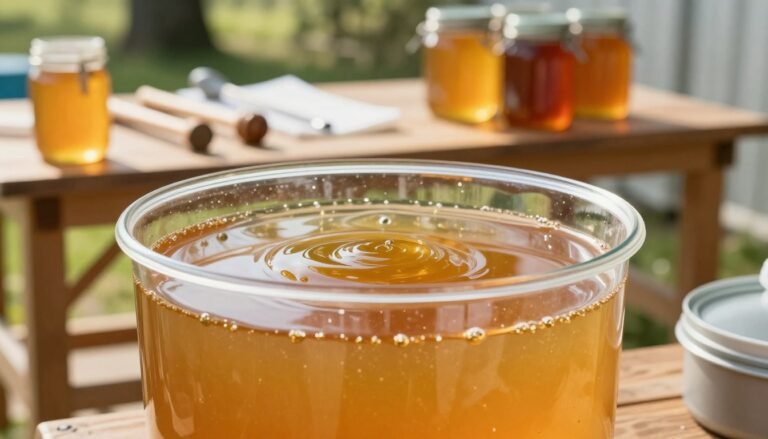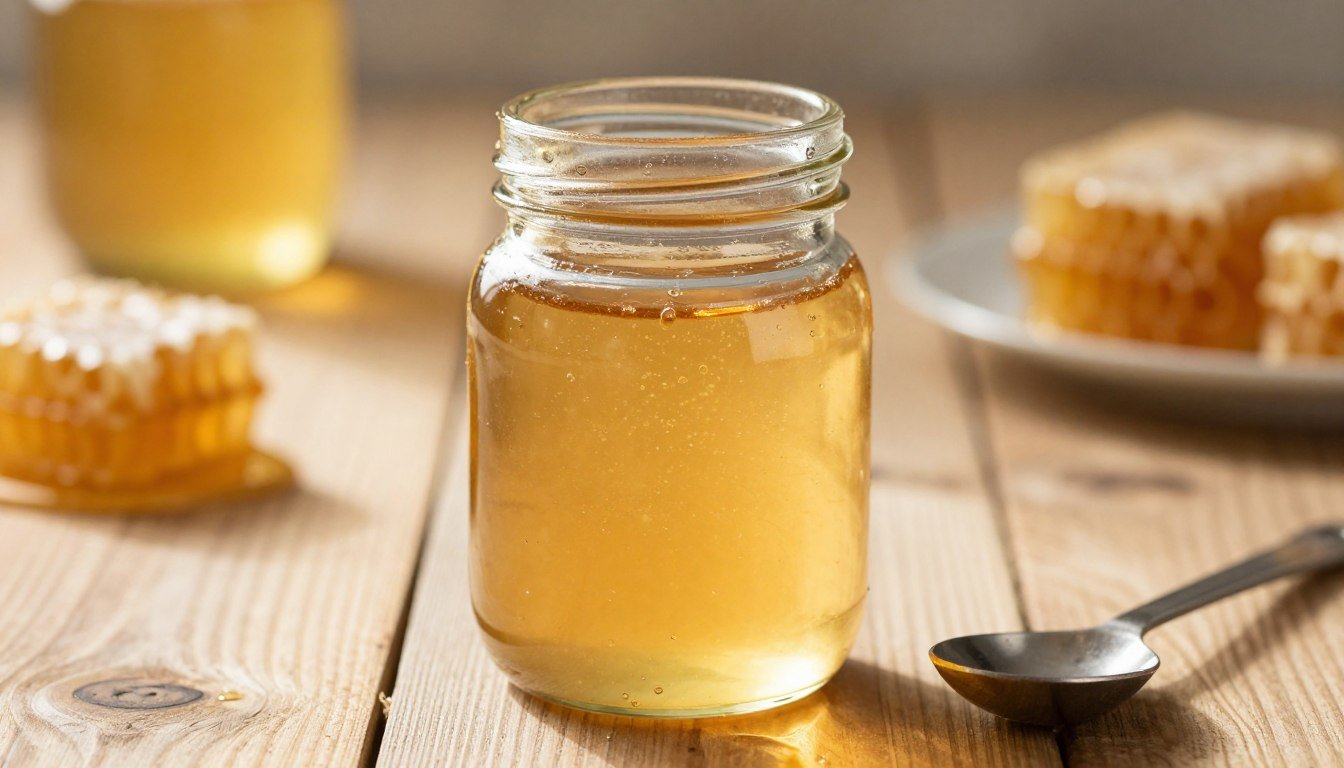
Proper headspace sets the stage for safe, shelf-stable jars. It helps the lid form a reliable vacuum and preserves taste and quality.
The headspace is the empty gap between the top of the honey and the rim of the jar before sealing. Measuring this gap in standard canning jars is simple by viewing the side markings. A correct clearance lets the seal firm up and keeps contaminants out.
Producers who control this step protect product quality and reduce returns. Follow professional steps and consult resources like the USDA canning guide and practical long-term storage tips to refine your process.
Key Takeaways
- Consistent headspace helps the lid seal properly and preserves quality.
- Measure the gap in standard jars by eye or with jar markings.
- Wipe rims and use tight-fitting lids to prevent moisture and air entry.
- Inspect jars for chips and use sound containers to avoid seal failure.
- Refer to authoritative storage and canning sources to standardize your process.
Understanding the Importance of Headspace in Honey Production
Maintaining the correct air gap in a jar helps preserve the natural traits and shelf life of raw honey. Raw honey contains pollen grains that give each batch its floral flavor and nutritional properties. Keeping those grains intact depends on proper storage and a sealed container.
Honey’s antimicrobial properties protect product quality as long as no air or moisture enters the jar. Poor control of the space above the product can speed crystallization, especially in glass containers exposed to fluctuating heat.
Control the internal room and you stabilize sugar content and slow unwanted changes. This management also helps retain pollen content and the flavor your customers expect.
“Properly sealed jars keep pollen, taste, and natural properties intact for years when stored correctly.”
- Raw honey is rich in pollen grains that shape flavor and quality.
- Glass containers need careful storage to prevent crystallization from heat shifts.
- Preventing air and moisture entry preserves antimicrobial properties and product safety.
| Factor | Effect on Honey | Best Practice |
|---|---|---|
| Air pocket size | Can promote oxidation and moisture ingress | Maintain minimal, consistent space; use proper lids |
| Container material | Glass is inert but cools faster, risking crystals | Store in stable temperature and dark place |
| Pollen content | Adds flavor, may affect texture | Control filling level to preserve grains |
For practical storage tips and how jar size affects ingredient longevity, see this resource on storage size and headspace, and for packaging and labeling best practices consult packaging and labeling.
Essential Headspace Guidelines for Bottled Honey
A consistent gap at the top of each jar helps the lid seal and keeps the contents stable. Follow simple measuring steps and monitor expansion factors to protect quality and shelf life.
Measuring the Gap
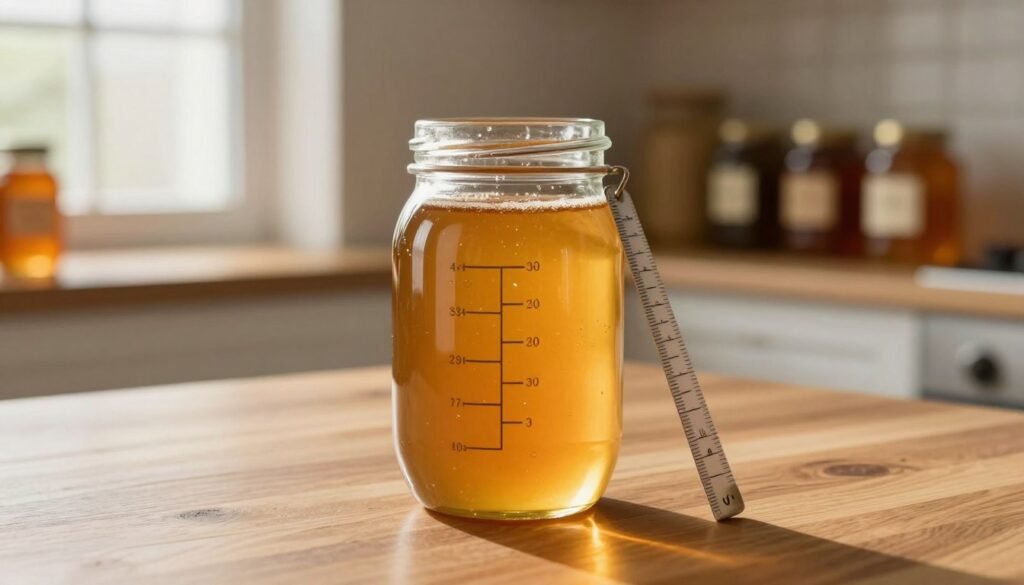
To check the fill level, look at the side of the jar. The 1/4 inch mark sits midway up the neck for small fills.
Make sure the honey liquid hits the correct level and that there are no visible bubbles along the side.
- Use 1/4 inch for jams; 1/2 inch for fruit fills; 1 inch when pressure processing low-acid foods.
- Remove trapped air before sealing; expanding air can break the vacuum and spoil the seal.
- Keep the rim clean; residue will prevent a proper seal and let moisture or water inside.
Factors Influencing Expansion
Temperature and moisture affect how content moves during processing. Longer processing time needs extra room to allow content to expand.
Control processing temperatures and moisture content to stop foods from bubbling up and ruining the lid seal.
| Factor | Effect | Best Practice |
|---|---|---|
| Processing time | Drives air out and creates vacuum | Follow time charts; leave extra space for long runs |
| Temperature | Causes expansion or contraction | Keep steady temperatures during and after processing |
| Moisture content | Can cause bubbling and seal failure | Adjust recipes and dry surfaces before sealing |
“The processing step is designed to drive air out of the space above the product, creating a vacuum that helps seal jars.”
To learn more about avoiding heat issues during extraction, see how to avoid overheating during extraction.
Best Practices for Maintaining Seal Integrity and Quality
A secure seal starts with steady temperatures and careful moisture control during processing.
Keep canning jars and product hot during filling and ensure your water bath canner holds a steady rolling boil. This helps drive air out of the jar neck and supports a strong vacuum when lids set.
After processing, let jars rest undisturbed: five minutes for water bath runs and ten minutes after pressure processing. These short waits let the lid settle and reduce the chance of siphoning or seal failure.
Managing Temperature and Moisture
Store finished jars in a cool, dry place at room temperature, away from direct heat and excess moisture. Wipe each jar rim clean before applying the lid to create an airtight contact surface.
During bottling, keep the liquid at a consistent temperature so moisture content does not fluctuate and stress the seal. Store the product in sealed glass or plastic containers, and keep jars in a dark place to protect food quality.
- Quick tips: Keep water boiling steadily while processing.
- Let jars rest the recommended minutes before removal.
- Wipe rims and avoid residues that invite moisture into the container.
“Consistent heat and dry storage are the simplest ways to preserve quality and prevent seal loss.”
| Action | Why it matters | Best practice |
|---|---|---|
| Maintain rolling boil | Drives air out of jars | Monitor canner; keep steady heat |
| Rest jars after processing | Lids set and vacuum forms | 5 minutes (water bath); 10 minutes (pressure) |
| Clean jar rims | Ensures airtight seal | Wipe with clean cloth before capping |
| Store at room temperature | Preserves quality and prevents condensation | Cool, dry, dark place away from direct heat |
For practical storage tips, see how to store honey best ways.
Troubleshooting Common Issues During the Bottling Process
A few simple checks at the filling line prevent many of the issues that arise after sealing jars.
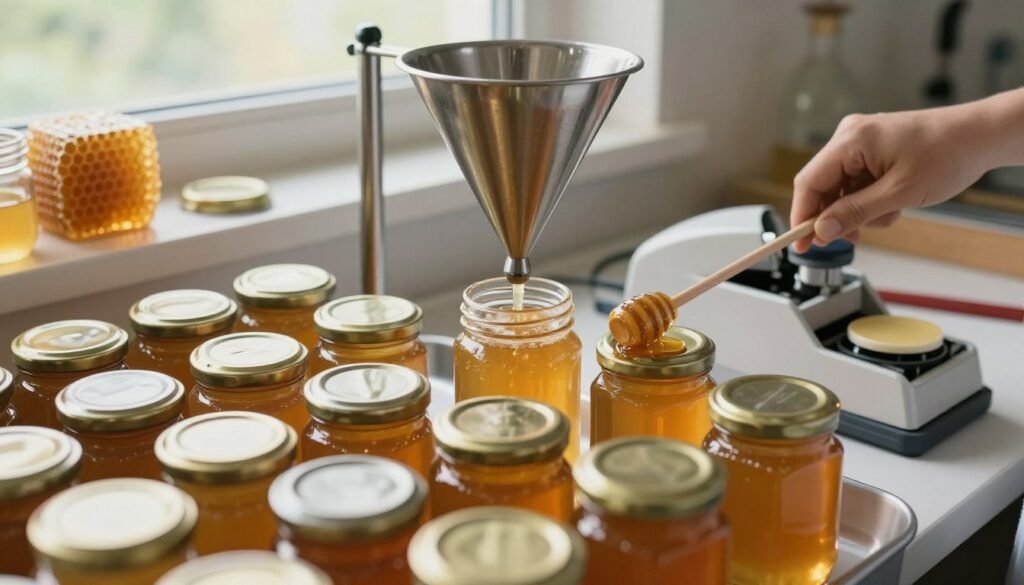
Addressing Siphoning
Siphoning happens when excess liquid is lost during cooling or handling. Keep processing at steady temperatures to reduce movement in the jar and limit liquid loss.
If more than half the product is gone, refrigerate the food and inspect lids and rims. For an overall view of equipment and steps, see this bottling process overview.
Preventing Crystallization
Crystals form when sugar molecules bind. To reverse crystallization, place the glass jar in a water bath heated to 95–110°F until the honey liquid clears.
Store jars in a cool room at room temperature and control moisture content to slow grain formation.
Handling Air Bubbles
Trapped bubbles can shift the headspace level and stress the seal. Make sure to remove air from the jar before capping.
Wipe rims, check lids, and confirm a tight vacuum to protect quality from moisture. Small adjustments on the line cut down on rework and protect product consistency.
“Address problems early — steady temperatures and clean rims keep jars sealed and contents stable.”
For small-producer equipment that helps reduce these issues, review options like a best bottling tank for small producers.
Conclusion
A reliable seal and steady processing are the last steps that protect product quality.
Manage fill levels, control temperature, and keep all surfaces clean to prevent crystallization, seal failure, and contamination. These practices preserve taste and extend shelf life.
Record moisture readings and batch details, use food‑grade equipment, and finish with precise fills and tamper-evident packaging. Maintaining these steps helps you deliver consistent, premium honey that customers trust.
Need help with legal setup and traceability? See a practical checklist to start selling legally and keep records that protect your brand and buyers.
FAQ
What is the appropriate headspace when filling glass jars with honey?
Leave a small gap of about 1/4 to 1/2 inch between the honey surface and the lid. This space accommodates expansion from temperature changes and prevents lid bulging. Use clean, food‑grade glass jars and check that the rim is free from residue before sealing to ensure a tight fit.
How does temperature affect honey after bottling?
Honey expands and becomes more fluid when warmed, and it contracts and thickens when cooled. Store jars at room temperature, ideally between 60–75°F, to minimize pressure changes. Avoid direct heat sources and rapid temperature swings during processing and storage.
How should I measure the gap accurately during filling?
Use a calibrated filler or a simple ruler to ensure consistent levels. Fill slowly to the target mark, wipe the inner rim to remove any drips, and then apply the lid. For small batches, use a dipstick or fill line inside the jar to guide the fill level.
What role does moisture content play in bottled honey stability?
Low moisture content (typically below 18%) reduces fermentation risk and helps maintain quality. Keep processing areas dry, avoid introducing water during transfer, and do not expose honey to humid conditions that can raise moisture and promote spoilage.
How can I prevent siphoning or leakage after sealing jars?
Ensure lids are screwed on evenly and seals are intact. Avoid overfilling and remove air bubbles before capping. If using vacuum or vacuum‑assisted systems, follow manufacturer settings to prevent excessive suction that can pull product past the seal.
What causes crystallization and how can I prevent it in stored jars?
Crystallization results from glucose forming crystals, influenced by pollen grains, moisture, and storage temperature. To slow crystallization, store jars at stable, moderate temperatures and use airtight containers. Warming gently in a water bath at 95–110°F for short periods can re-liquefy crystallized honey.
How should I handle air bubbles during filling to maintain quality?
Pour or pump slowly to reduce entrained air. Tap jars lightly on a flat surface to bring bubbles up, or let filled jars rest briefly before sealing. Avoid vigorous stirring that introduces new bubbles or foam.
Are plastic lids acceptable for long‑term honey storage?
Food‑grade plastic lids can be used, but glass jars with metal lids often provide more reliable long‑term seals. Ensure any plastic lids are BPA‑free and fit snugly. Inspect lids regularly for warping or cracks that could compromise the seal.
What should I do if a sealed jar shows signs of leakage or a loose lid?
Reinspect the jar for rim damage or contamination, clean and refill if needed, and replace the lid with a new one. Store suspicious jars separately and use them first. Regularly check stored inventory for seal integrity.
Can honey be hot‑filled, and how does heat affect the headspace requirement?
Hot‑filling reduces air and bacterial load but increases product expansion, so slightly more headspace may be needed. Allow jars to cool in a stable environment so internal pressure equalizes before applying final seals if you are using two‑step capping procedures.
How long should jars rest before final packaging to ensure seal quality?
Let filled jars rest at room temperature for at least 15–30 minutes to allow trapped air bubbles to rise and settle. For hot‑filled jars, longer cooling—up to several hours—helps stabilize internal pressure before applying permanent labels and packing.
Do pollen grains or solids affect filling and storage recommendations?
Yes. Pollen and fine particles can promote crystallization and may trap air. If clarity is desired, use gentle filtration during processing. Be mindful that filtration can remove beneficial pollen, so balance quality goals with product expectations.
What containers are best to preserve honey quality over time?
Glass jars are preferred for long‑term storage because they are impermeable and inert. Metal lids with an inner seal layer provide strong barriers. If plastic containers are used, choose high‑quality, food‑grade types and inspect them for odor absorption or deformation.
How can I minimize moisture uptake during processing and storage?
Work in a low‑humidity environment, avoid adding water or ice during processing, and keep containers sealed promptly. Store finished jars in a cool, dry area and use desiccant packs only for bulk storage where appropriate and safe.
Are there signs of poor seal integrity I should watch for after storage?
Look for bulging lids, leakage at the rim, off odors, unexpected fermentation, or visible mold. Any jar showing these signs should be isolated, inspected, and discarded if contamination is confirmed to protect consumer safety.