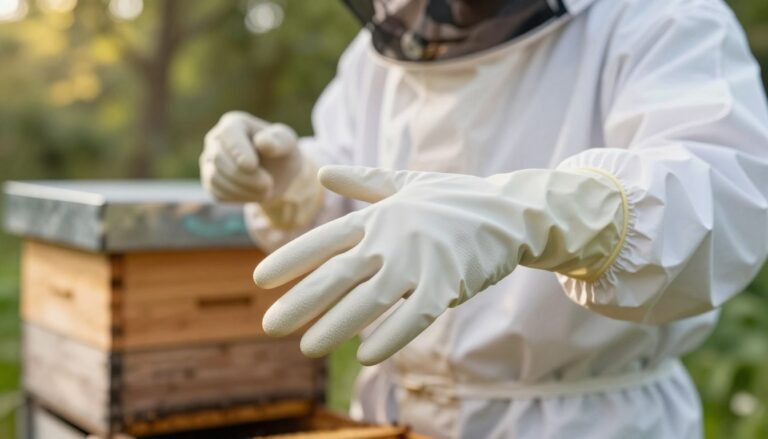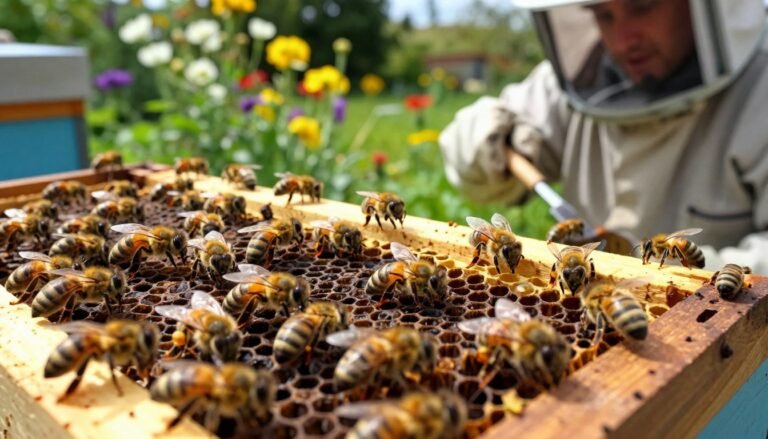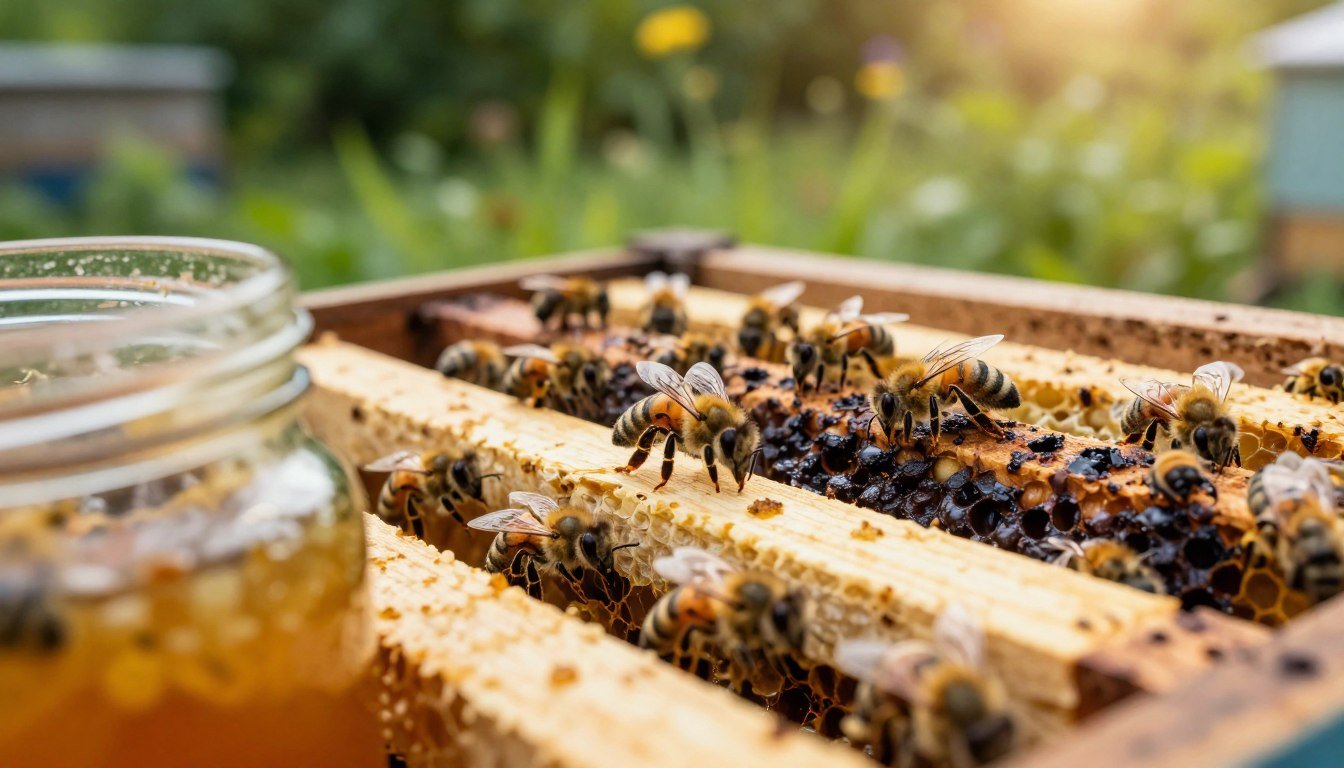
Quick recognition of the foulbrood smell description helps beekeepers act fast to protect their colonies.
Historic work by Gershom Franklin White, published for the USDA in 1920, shows this issue has challenged apiarists for generations.
Knowing how a troubled hive can present itself is a core skill for anyone managing bees today.
The odor often signals a serious brood infection before visible signs appear.
Identifying it early lets you intervene and limit damage to hive health and honey yield.
Stay alert to changes in hive scent and behavior.
For a focused reference on advanced cases and diagnostic cues, consult this resource on American foulbrood.
Key Takeaways
- Recognize odor as an early warning of brood disease.
- Historical records from 1920 highlight long-term risks to colonies.
- Early intervention preserves colony survival and honey production.
- Regular hive checks improve chances of catching problems promptly.
- Refer to trusted sources like American foulbrood guidance for advanced signs and management.
Understanding the Threat of American Foulbrood
Understanding how a persistent bacterial infection moves through hives is essential for every beekeeper.
American foulbrood is a highly contagious disease caused by Bacillus larvae spores that can wipe out a healthy colony if ignored.
Historically, inspectors sometimes used fire to destroy infected hives, frames, and equipment in a deep pit to stop spread. That harsh method reflected how resistant the spores are.
In the 1940s, antibiotics helped mask symptoms but did not remove spores from honey, comb, or tools. By 1950, beekeeping in the U.S. had shifted: two million farms kept bees then, totaling over six million colonies, and management moved toward larger operations in later years.
- Do regular inspection of hive and equipment; contaminated honey and shared tools move spores between colonies.
- Keep records on the name and origin of purchased colonies and frames to track risk.
- Learn practical treatment histories and modern options, including safe disposal and sterilization techniques like flame sterilizing tools.
For detailed diagnostic and management guidance, consult this overview on American and European foulbrood and best practices for tool sterilization at sterilize hive tools with flame.
Identifying the Foulbrood Smell Description and Visual Symptoms
A close frame inspection often reveals the earliest clues that a colony is fighting a severe brood infection.
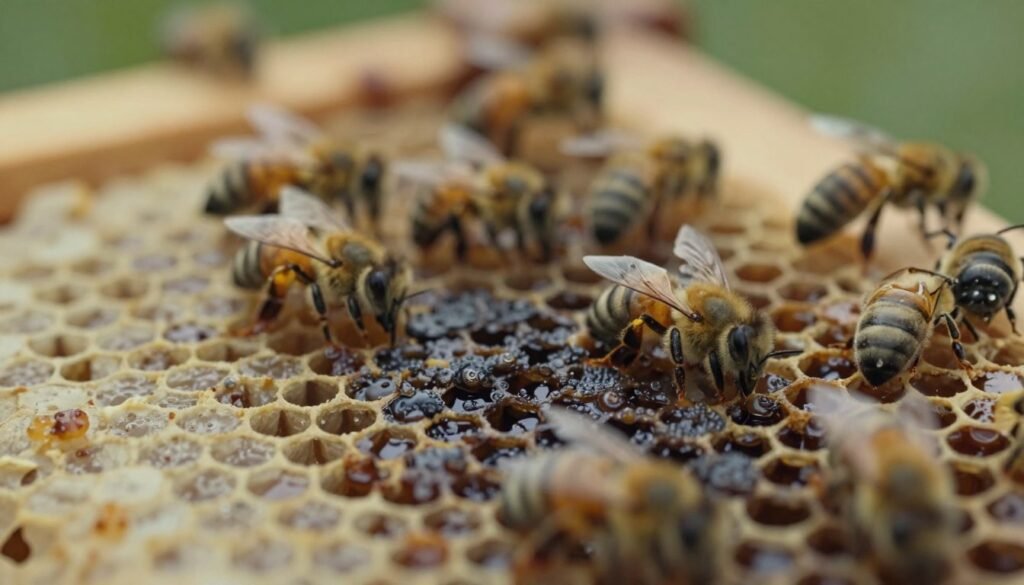
The role of larvae and brood matters most. Only about ten spores can infect a one-day-old larva, the most vulnerable stage. Infected bee larvae usually die after the cell is capped. They turn into a dark brown, semi-liquid mass that later hardens into a dry scale.
Watch the brood pattern. It becomes irregular and patchy as bees try to remove dead larvae. Frames may show sunken, greasy, or perforated cappings — classic signs of bacterial activity within developing brood cells.
The Role of Larvae and Brood
Inspect every cell on a frame because so few spores are needed to start an infection. Bees often chew through cappings to clean cells. That behavior leaves tell-tale gaps and damaged comb where larvae once lay.
Recognizing Sunken Cappings
Sunken or torn cappings and a patchy brood pattern are strong indicators. Affected cells eventually form a dark scale that sticks to comb. Early detection lets you act before the problem spreads across frames and bees.
For protocol and reporting guidance, consult official guidelines on American foulbrood, and read practical prevention tips at how to prevent chalkbrood.
Conducting Field Tests for Accurate Diagnosis
Quick field tests let a beekeeper separate routine brood issues from serious bacterial infection.
The ropy test is a simple in-hive check. Insert a clean match or stick into a suspect cell and slowly withdraw it. If the contents draw out into a 3–5 cm elastic thread, that result strongly suggests a bacterial infection.
The Ropy Test and Holst Milk Test
The Holst milk test uses a 1% skim milk solution. Enzymes from the bacteria break down protein and clear the milk. This gives a fast indicator of infection before lab results arrive.
- Perform tests in spring and autumn when colonies are active for reliable results.
- Inspect every frame carefully; early larvae infection may appear in just a few cells.
- Always clean equipment and honey-contact tools after testing to avoid spreading spores.
- Non-ropy results may indicate another disease—seek laboratory confirmation for final treatment choices.
| Test | What to look for | Action |
|---|---|---|
| Ropy test | 3–5 cm elastic thread from cell contents | Isolate hive; clean equipment; consider lab confirmation |
| Holst milk | Clearing of 1% skim milk from bacterial enzymes | Record result; protect honey and frames; consult treatment options |
| Routine inspection | Patchy brood, unusual larva loss, or single affected cells | Repeat tests; sample for lab; follow official guidance |
For official diagnostic and control guidance, consult the detailed american foulbrood disease guidance.
How the Disease Spreads Through Your Apiary
Spores travel with bees, tools, and honey, turning a single infection into a wider apiary problem.
Robbing and drifting are primary drivers of spread. When bees rob honey from a weakened hive, they bring afb spores back to their colony. Nurse bees then pass bacteria to young larvae while feeding them, and infection multiplies quickly in bee larvae.
Contaminated equipment worsens the risk. Moving frames or sharing honey between hives without strict sanitation spreads spores through the apiary.
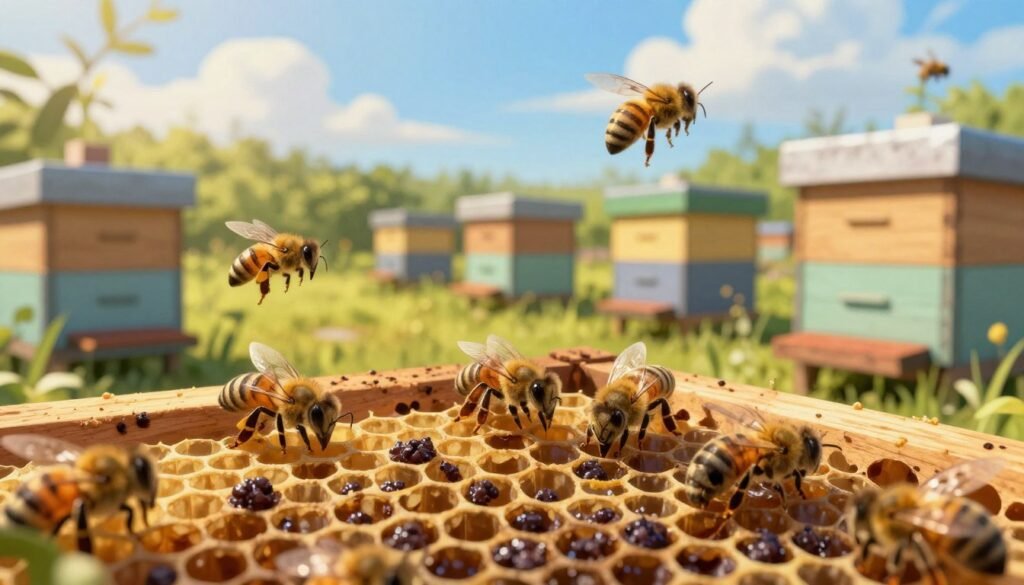
“Because AFB spores can survive for over 50 years, any infected equipment or hive components must be destroyed by fire to prevent future outbreaks.”
Historic outbreaks show the stakes. An April 2009 incident in South Africa killed about 40% of bees in one region, proving how quickly colonies and local agriculture can suffer.
- Monitor honey movement and avoid sharing frames.
- Isolate suspect hives immediately and protect healthy colonies.
- Use strict sanitation protocols for tools and honey containers.
| Source of Spread | How It Moves | Control Action |
|---|---|---|
| Robbing bees | Carry spores in honey to healthy hives | Reduce robbing; remove weak hives; feed minimally |
| Contaminated equipment | Frames, extractors, and tools retain spores | Sterilize or destroy by fire; follow cleaning guides like bleach solution for beekeeping equipment |
| Nurse bee transmission | Feeding spreads bacteria to larvae | Rapid detection and removal of infected brood; lab confirmation |
Differentiating Foulbrood from Other Brood Diseases
Not all brood problems require the same response; clear diagnosis guides correct action.
European foulbrood is caused by Melissococcus plutonius and does not form long-lived spores. That makes it easier to manage. Young, unsealed larvae are typically affected. Antibiotics can help in some cases, and requeening often breaks the cycle.
European Foulbrood Characteristics
Look for scattered, sick larvae and irregular brood patterns. A positive ropy test is unlikely. Managing queens and hive nutrition can resolve many outbreaks.
Sacbrood Virus Indicators
Sacbrood shows larvae with raised heads and a curved, banana-like shape in the cell. This virus does not respond to antibiotics and needs different handling.
- European cases: younger larvae, no ropy thread, treatable with management or antibiotics.
- American cases: spore-forming, needs strict controls and possible destruction of equipment.
- Sacbrood: banana-shaped dead larvae, viral, not bacterial.
“Field tests guide action, but laboratory confirmation provides the official disease name.”
| Condition | Key sign | Usual action |
|---|---|---|
| European foulbrood | Scattered sick, unsealed larvae | Requeen, improve nutrition, consider antibiotics |
| American foulbrood | Spore-forming, ropy test positive | Isolate; follow state protocols; possible destruction |
| Sacbrood virus | Banana-shaped dead larvae | Supportive care; no antibiotics; monitor colonies |
For further diagnostic guidance and reporting, see the state resource on foulbrood diseases and research on breeding for hygienic behavior at predisposition to hygienic behavior.
Best Management Practices for Colony Health
Good apiary practice begins with clear boundaries: separate units prevent the interchange of honey, frames, and equipment between different apiaries and cut common routes of spore movement.
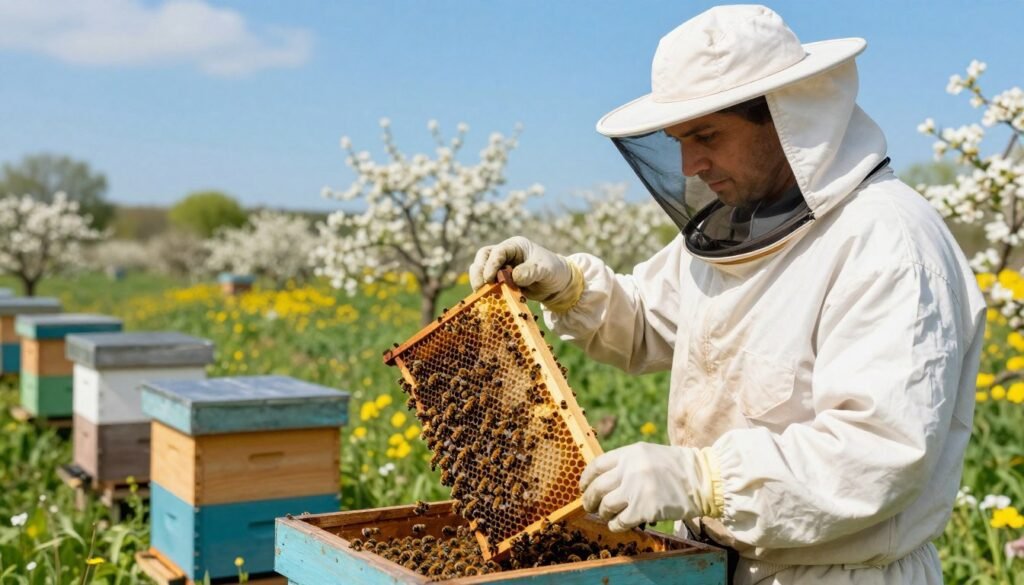
Do regular inspection of frames every spring and autumn. Early checks catch irregular brood, damaged cappings, and suspect larvae before wider spread occurs.
If american foulbrood is confirmed, the recommended control is to kill the colony and burn all hive components in a deep pit to destroy lingering afb spores. Never feed bees honey or pollen from unknown sources; this often introduces spores into healthy colonies.
- Barrier management: dedicate equipment and tools to defined units to limit cross-contamination.
- Frame rotation: replace old brood frames every 3–4 years to reduce bacterial reservoirs.
- Sanitation: clean or destroy contaminated equipment and follow protocols in official guides like disease management and guidelines.
| Practice | Purpose | Action |
|---|---|---|
| Dedicated equipment | Limit spread of spores | Assign tools/frames by unit; avoid sharing |
| Regular inspection | Early detection of larval or brood issues | Check in spring/autumn; sample suspicious cells |
| Post-loss cleaning | Prepare replacement frames and plastic foundation | Follow cleaning guides like how to clean plastic foundation |
“Maintain strict handling rules — good procedure saves time and protects nearby colonies.”
Conclusion
Early detection saves colonies: spot the first symptoms and act without delay. Quick checks limit the spread and protect nearby bees.
Beekeepers practicing consistent beekeeping routines give their honey bee colonies the best chance to thrive. Use barrier systems, routine inspections, and strict tool control to cut cross-contamination between units.
Proper sanitation and swift control stop a single infected frame from causing death across an apiary. For reliable guidance and reporting steps, consult a focused resource on recognising and treating this deadly bee for local information and next steps.