In 2018, a New York apple orchard did something that made international news among fruit growers: it let a fleet of small drones distribute pollen over its trees instead of relying solely on rented honey bee colonies. That project, run by a company called Dropcopter at Beak & Skiff Apple Orchards, is a real, well-documented example of a genuinely new category of apiary-adjacent technology — but it’s also a useful case study in how far this technology has and hasn’t actually come since then. This article separates what drones are actually doing in commercial pollination and orchard management today from what’s still confined to a research lab.
This is a different topic from using a small personal drone to visually scout your own hive entrances before an inspection, which is about a hobbyist checking flight activity from outside the box. This article is about drones operating at orchard and farm scale — pollination delivery, bloom mapping, and the agricultural systems built around that work.
Key Takeaways
- Dropcopter, a real U.S. company, has run documented autonomous pollen-distribution flights over apple and almond orchards since 2018, working with growers as a supplement to — not a replacement for — rented honey bee colonies.
- Orchard bloom mapping using drone-captured imagery and AI image processing is a more mature, more widely used application than pollination delivery itself, and is used to time thinning and pollination decisions.
- Fully autonomous robotic pollination — precision robotic arms identifying and touching individual flowers — remains largely a research-stage technology, documented in peer-reviewed robotics papers, not a commercial product growers can buy today.
- Drone pollination has not been shown to replace honey bees at commercial scale; it’s discussed and used as a supplemental tool for specific windows (poor bee-flying weather, low bee density, self-incompatible varieties needing more cross-pollination).
- Any commercial drone operation over U.S. farmland is regulated under FAA Part 107, a real, current requirement independent of what the drone is doing.
Table of Contents
- What’s Actually Deployed: Pollen-Distribution Drones
- Bloom Mapping: The More Mature Application
- Still Research-Stage: Robotic Flower-Level Pollination
- Why This Doesn’t Replace Bees
- The Regulatory Reality
- Cost and Adoption Reality
- Why This Matters to a Beekeeper, Not Just a Grower
- Frequently Asked Questions
What’s Actually Deployed: Pollen-Distribution Drones
Dropcopter’s approach doesn’t try to mimic a bee visiting individual flowers. Instead, its drones fly programmed, GPS-guided flight paths above an orchard canopy during bloom, releasing a fine pollen mixture that drifts down onto flowers below — closer to how wind pollination works than insect pollination. The company’s publicly documented projects include autonomous apple pollination trials at Beak & Skiff Apple Orchards in New York (2018) and almond pollination flights in California, both covered at the time by agricultural trade press. Growers using this approach have reported it as most useful during stretches of cool, wet, or windy weather when honey bees fly poorly or not at all — conditions that can otherwise cost an entire bloom window if it coincides with peak flowering.
“Growers using drone-augmented pollination in trials reported meaningful yield increases over several seasons of testing” — a pattern that shows up consistently enough across published trial coverage of orchard drone pollination to be treated as a genuine, if still supplemental, tool rather than a novelty.
Bloom Mapping: The More Mature Application
Separate from pollen delivery, using drones to photograph an orchard’s canopy and process the images with computer vision to count and map flower clusters is a more established practice, with a real body of peer-reviewed agricultural research behind it. Multi-year RGB image datasets collected specifically for flowering-intensity monitoring in apple orchards, gathered via unmanned aerial vehicles, have been published for other researchers to build on — the kind of standardized data collection that signals a technique has moved past a one-off demonstration. Growers use the resulting bloom maps to decide where and when manual or chemical thinning is needed and to time pollination activity — whether that’s placing rented hives or scheduling a pollen-distribution flight — to when it will do the most good.
Still Research-Stage: Robotic Flower-Level Pollination
A more ambitious idea — a robot that identifies individual flowers and touches or pollinates them directly, mimicking what an insect actually does — remains firmly in the research phase. Published robotics work, including a six-armed precision pollination platform described in recent engineering literature and ongoing research into robotic pollinators for greenhouse settings, demonstrates the concept working in controlled trials, but none of this is a commercial product a grower or beekeeper can currently purchase and deploy at scale. It’s worth knowing this distinction exists, because coverage of “robot bees” in general media often blurs a working lab prototype with a market-ready tool, and the gap between the two is still large.
Why This Doesn’t Replace Bees
Nothing in current drone pollination research or deployment claims to replace managed honey bee colonies at commercial scale, and it’s worth being direct about why: a single colony makes tens of thousands of individual flower visits a day at essentially no marginal cost once it’s placed, while drone flights require fuel or battery, a licensed operator, programmed flight paths, and enough pollen product to distribute — a fundamentally different cost structure. Every documented use case treats drone pollination as filling a specific gap (bad flying weather, insufficient bee density, varieties that benefit from extra cross-pollination) rather than as a wholesale substitute, and growers who’ve adopted it still contract bee colonies for the bulk of their pollination needs.
The Regulatory Reality
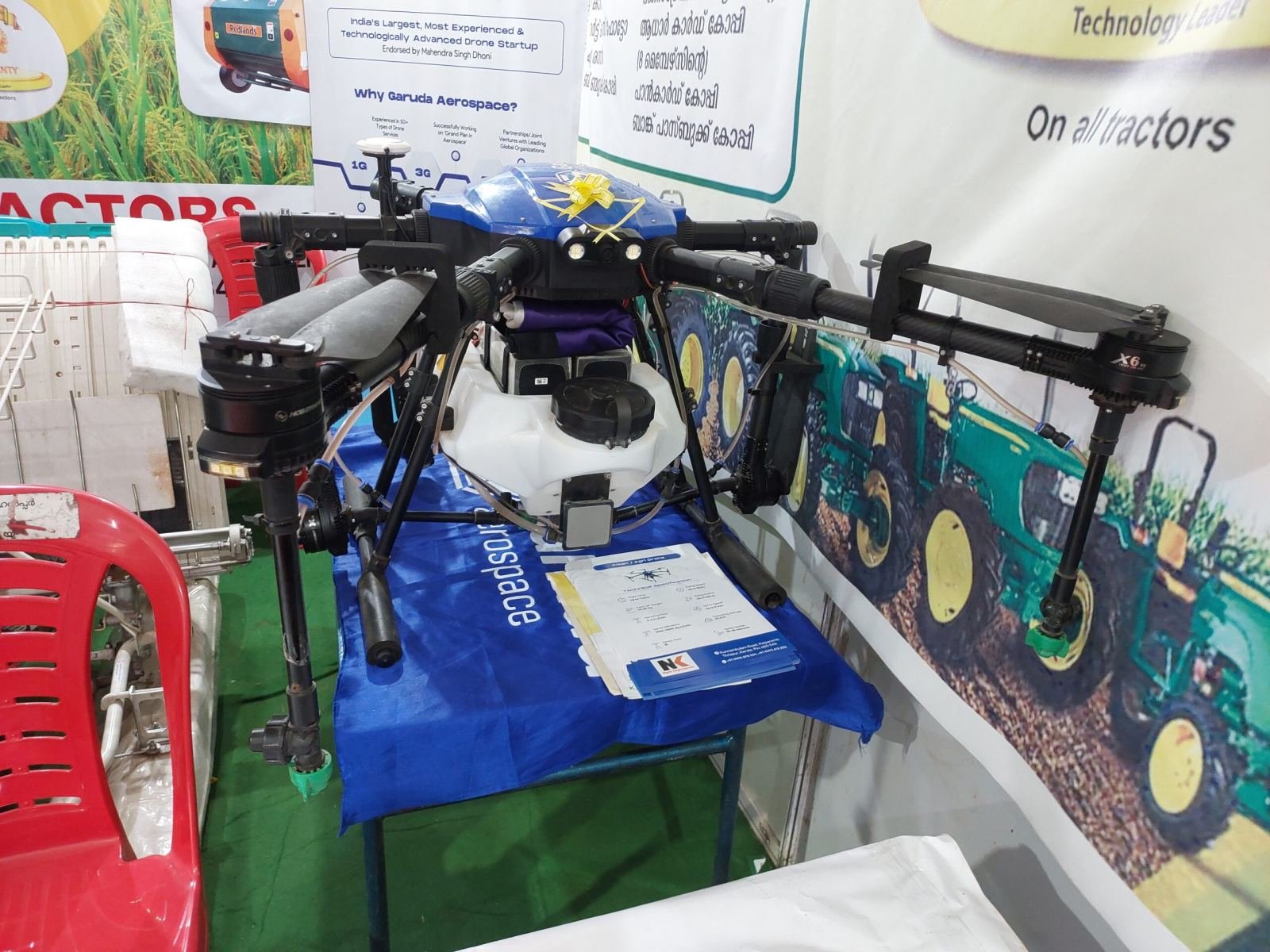
Any drone flown for a commercial agricultural purpose in the United States — pollination flights, bloom-mapping surveys, or crop monitoring — falls under the FAA’s Part 107 small unmanned aircraft rules, which require a Remote Pilot Certificate, operating altitude and airspace restrictions, and registration of the aircraft. This applies regardless of what specific task the drone is performing, and it’s a real, current, and non-negotiable requirement for any grower or beekeeper considering this technology for anything beyond personal, recreational hive scouting.
Footage from the “Drone & Sundry” channel of Dropcopter’s autonomous pollen-distribution drone operating over an apple orchard — one of the earliest documented commercial trials of this technology, and a useful visual reference for how different this is from a bee visiting individual blossoms.
Cost and Adoption Reality
Drone pollination and bloom-mapping services are typically sold to growers on a per-acre, per-season contract basis through the operating company rather than as consumer hardware a beekeeper or orchardist buys outright — closer in structure to hiring a crop-dusting service than to purchasing a drone off the shelf. That structure matters for expectations: adoption remains genuinely limited to growers who’ve specifically contracted with a provider like Dropcopter for a given season, not a widespread, self-serve technology yet available to any orchard. Multi-year published bloom-mapping datasets suggest the imaging and analysis side of this technology is maturing faster than the pollen-delivery side, which still depends on weather-dependent flight windows and remains the more experimental of the two applications in terms of how many growers have actually adopted it repeatedly across seasons.
Why This Matters to a Beekeeper, Not Just a Grower
For a commercial beekeeper who places colonies on pollination contracts, drone pollen distribution is a development worth tracking rather than a threat to react to — it’s currently deployed as a supplement during specific weather windows, not as competition for standard pollination contracts. For a hobbyist or sideliner, the more immediately useful drone application remains the visual-scouting use case covered in this site’s guide to hive inspection drones, which is a genuinely different, much lower-cost technology already accessible today.
Frequently Asked Questions
Are drones actually replacing honey bees for pollination?
No — every documented commercial and research use treats drone pollination as a supplemental tool for specific conditions, such as poor bee-flying weather, not as a replacement for managed colonies, which remain the primary pollination method at commercial scale.
Is robotic flower-by-flower pollination available to buy?
Not currently — that specific approach is documented in robotics research papers and lab or greenhouse trials, but there is no commercially available product performing individual-flower robotic pollination at farm scale as of this writing.
Do I need a special license to fly a drone over my orchard or apiary for work purposes?
Yes, if it’s for a commercial purpose — U.S. federal rules under FAA Part 107 require a Remote Pilot Certificate and registered aircraft for commercial drone operations, including agricultural pollination or mapping flights; purely personal, recreational use has separate and generally lighter requirements.
What’s the actual difference between this and a hive inspection drone?
Scale and purpose — a hive inspection drone is a small personal aircraft used to visually check entrance activity on your own hives before opening them, while orchard pollination and bloom-mapping drones operate across whole fields as part of commercial crop management.