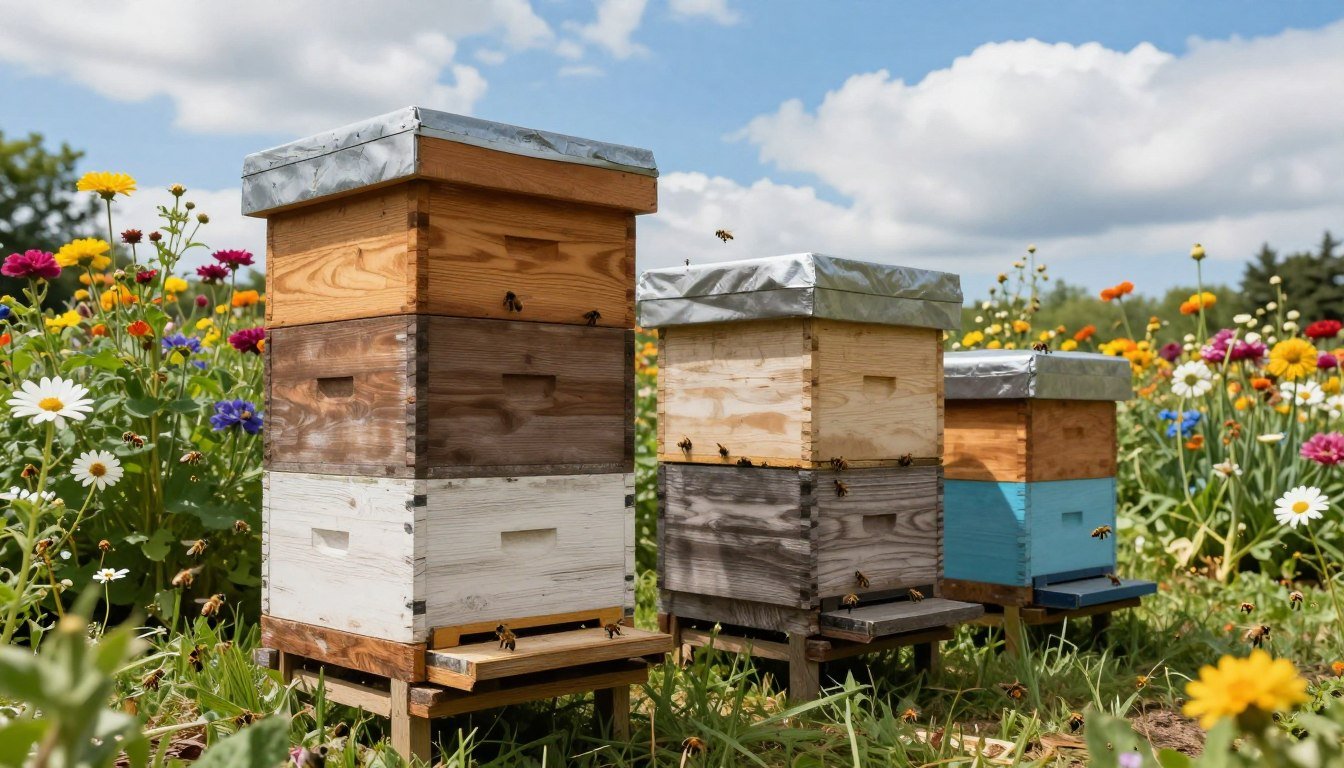
Choosing the right hive layout shapes colony health and seasonal success. This introduction compares “double-deep vs single-brood hives for pollination work” and explains how beekeepers can pick a setup that fits local nectar flows and winter risks.
Dr. Mark Goodwin noted historical shifts in New Zealand that show small changes in box arrangement can alter honey yields and swarm tendencies. We outline structural differences between larger and smaller brood nests, and how each affects brood expansion and swarm prevention.
Practical issues matter. Heavy, deep boxes increase physical demands for hobbyists, while a single brood box often needs timely feeding during nectar dearths. Many start with one box and add another later; see a community strategy on a strategy for one brood box that highlights flexible approaches.
The article also considers commercial angles, such as options for renting bees for services in the U.S and how brood space affects seasonal management choices.
Key Takeaways
- Match box size to local nectar flow to reduce feeding needs.
- Start simple: one brood box can work, but adding a second adds flexibility.
- Deeper boxes raise labor demands; plan handling and safety.
- Brood space influences swarm risk and honey storage capacity.
- Use community and commercial resources to guide seasonal choices.
Understanding Hive Configurations for Pollination
Box configuration directly influences egg-laying patterns, stores, and colony size. The brood box is the hive foundation and houses the queen and her eggs through the active season.
Dr. Mark Goodwin observed that before 2006 every hive in New Zealand used a two-box brood nest to simplify management and growth.
“Historically, beekeepers favored two brood boxes for flexibility during long nectar flows.”
A single brood box often sits at the bottom and is separated from honey supers by a screen. Successful wintering depends on leaving enough honey and pollen within the brood boxes so the colony can survive lean months.
- Role: Brood boxes hold eggs, brood, and the queen.
- Placement: Consider local area nectar flow and whether bees must sustain a large population all season.
- Stores: Ensure honey and pollen are available in the brood area before winter.
| Feature | Single Bottom Box | Two Brood Boxes |
|---|---|---|
| Queen management | Easier visual access | More space, needs monitoring |
| Winter stores | Concentrated in one place | Spread across brood boxes |
| Best use | Short flows, small apiaries | Long flows, commercial beekeeping |
For detailed colony dynamics and practical tips, see this colony buildup guidance.
The Case for Single-Brood Hive Management
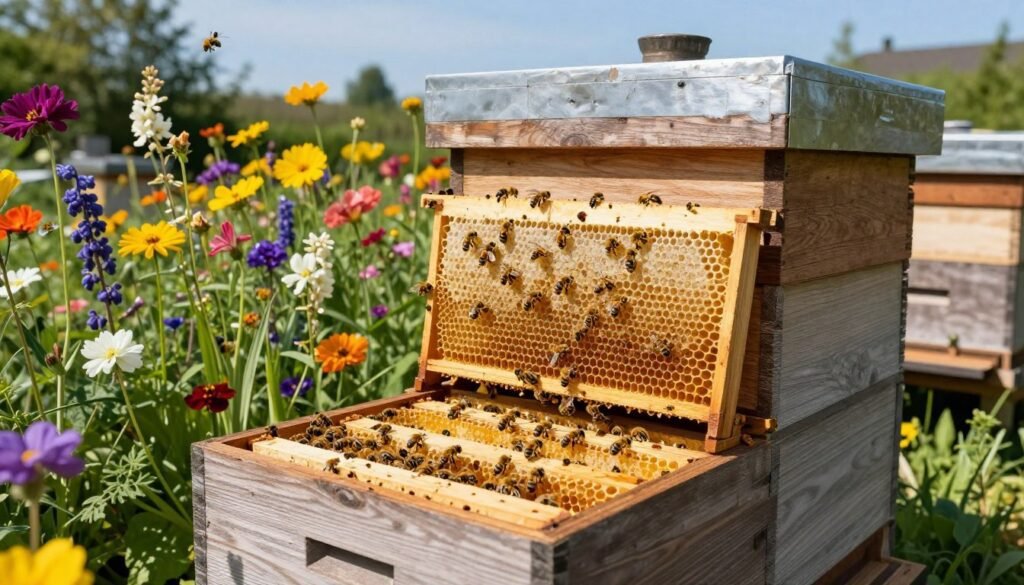
Many backyard beekeepers favor a single brood box to simplify routine handling. This layout reduces lifting and speeds inspections. It also concentrates the queen and brood in one bottom unit, making visual checks quicker.
Efficiency in Inspections
Finding the queen is faster when the nest is limited to one box. Beekeepers spend less time moving frames and can complete checks in fewer minutes.
One deep frame holds roughly 7,000 cells, giving the queen room to lay while leaving space for stores. In spring, adding a honey super above a queen excluder gives extra storage without crowding the brood nest.
Mite Control Advantages
Treatments concentrate better in one box, so miticide dosages and application time are often lower per colony. Focused treatment helps track results and reduces chemical use.
This management style also helps control population growth and can limit defensive behavior that appears in crowded colonies.
| Benefit | Single Brood Box | Notes |
|---|---|---|
| Inspection time | Short | Queen found quickly; fewer frame moves |
| Mite treatment | Targeted | Lower dosage, easier monitoring |
| Spring expansion | Super placement | Honey super above excluder adds storage |
For practical winter survival tips and management details, see overwintering in a single deep box.
Benefits of Double-Deep Hives for Colony Growth
Providing a second brood box often unlocks stronger colony growth and higher spring population peaks. Extra room lets the queen lay across more frames, which speeds buildup and reduces brood congestion.
In heavy nectar flows, two brood boxes allow a larger population of bees to collect honey and store pollen without crowding the nest. That expanded population can boost overall production and seasonal stability.
Dawn_SD and other U.S. beekeepers report better winter stores when colonies have two boxes to concentrate honey and pollen where the cluster can access them.
Managing two boxes also makes feeding simpler. You can provide larger volumes of sugar syrup at once, which is less disruptive than frequent small feedings and helps colonies prepare for dearths.
Note the trade-off: the deeps are heavier and require more lifting. Yet they cut inspection frequency because the queen has room to expand, and research links double-brood systems to higher honey yields when handled well.
For techniques to increase population before adding boxes, see boost colony population naturally.
Comparing Double-Deep vs Single-Brood Hives for Pollination Work
Testing different brood configurations shows how colony size and honey stores change in your area. Valli’s comparison between 8-frame and 10-frame Langstroth setups highlights big differences in available cells and potential population growth.
An 8-frame double-brood arrangement can produce roughly 98,240 cells, far more than a single box layout. That extra frame area gives the queen more room to lay and can boost spring buildup and overall yield.
Some people prefer the single brood box for its ease of handling. It cuts inspection time and reduces heavy lifting. Other people choose stacked brood boxes to manage many colonies and increase honey output.
Consider effort and goals: moving deeps is physically demanding, so small operations may favor a single brood box. Commercial beekeepers often accept the weight trade-off to gain more frames and space.
Try both on a few colonies to see which suits your flow, climate, and management style. For detailed guidance on evaluating colonies for service and capacity, consult this evaluation resource.
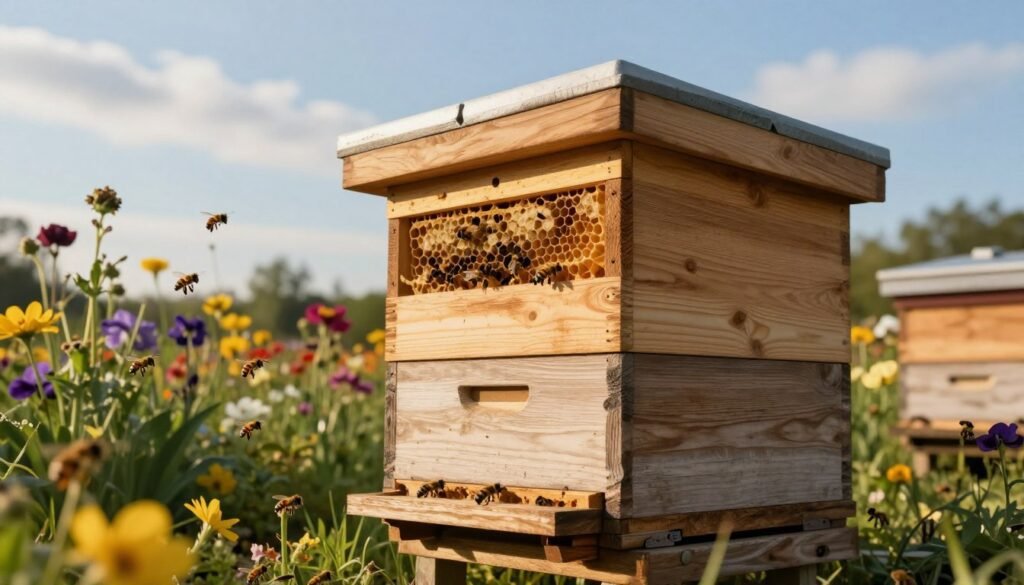
Impact of Climate and Nectar Flow on Hive Selection
Local weather and nectar timing should drive your brood box choice. Cold winters demand more stores and room for the cluster. Mild, steady climates often let beekeepers keep a single brood setup with less intervention.
Adapting to Seasonal Dearth
Plan for dearths early. In temperate U.S. zones, add a second box or a super ahead of a dry spell so honey and pollen stay accessible to the queen and brood.
In subtropical regions, one box can suffice because nectar flow stays consistent. Coastal sites facing wind and cold need insulated nests and more honey close to the cluster.
“Let the climate tell you when to add room; timing is the difference between loss and survival.”
Practical tip: watch frames and stores each spring. Add space before crowding appears. Proper nest management with deeps, frames, and supers helps colonies ride out weather swings and seasonal shortages.
Managing Physical Demands and Equipment Costs
Physical limits shape practical choices more than theory when managing brood space.
James Elam notes a full deep brood box can weigh up to 80 lbs. That load deters many hobbyists and raises safety concerns during inspections.
Choosing a single box reduces lifting and lowers setup costs. Fewer frames and fewer boxes mean less upfront spending. Transporting lighter units is also simpler when moving colonies between sites.
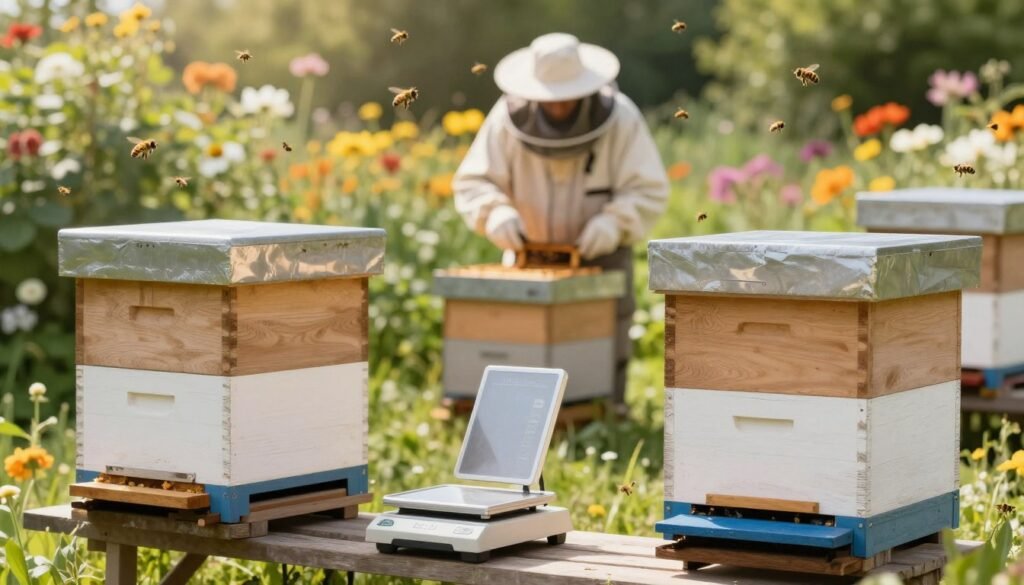
Balance is key. Extra deeps increase colony size and honey stores but add labor. Good equipment maintenance extends lifespan and keeps replacement costs down.
For seasonal checklists and tips on spring handling, consult this spring management guide. For humid-area gear advice, see these beekeeping tips for humid climates.
| Factor | Single box | Two deeps |
|---|---|---|
| Upfront cost | Lower | Higher |
| Weight per lift | Light | Heavy (up to 80 lbs) |
| Inspection ease | Faster | Slower, more effort |
Strategies for Successful Brood Nest Expansion
A steady rise in brood area signals when to prepare extra space above the colony. Monitor frames weekly in spring and early summer to spot growth before congestion begins.
Timing the Addition of Boxes
Add a second box when the first box is about 75–80% full of brood and stores. This threshold helps avoid crowding and keeps the queen laying at peak rates.
Note: a queen can lay roughly 1,500 eggs per day and each deep frame holds about 7,000 cells total. Use those figures to estimate when extra room is needed.
Moving Brood Frames
Move healthy brood frames upward into the new box to encourage the queen to follow and expand her laying area. Space frames evenly to give the colony room to draw comb and store honey.
Preventing Swarm Sequences
Prevent swarming by adding honey supers early and ensuring adequate space for movement and stores. Feed light syrup if comb needs drawing, but avoid sudden crowding near the brood nest.
| Action | Trigger | Result |
|---|---|---|
| Add second box | 75–80% full | More room for queen; reduced swarm risk |
| Move brood frames | New top box in place | Queen expands laying area |
| Add supers early | Strong population, heavy flow | Storage space; less nesting congestion |
Best Practices for Seasonal Hive Adjustments
Adjusting box layout through the year gives colonies the best chance to thrive in changing weather.
Reduce to a single brood box before cold snaps to keep the cluster warmer and cut energy loss. Consolidate honey and brood so the queen and bees can move without long treks between frames.
Inspect your hive every few weeks in spring and late summer. Check brood patterns, queen presence, and stores. Add a super or a second box during heavy flow, then plan to consolidate toward winter.
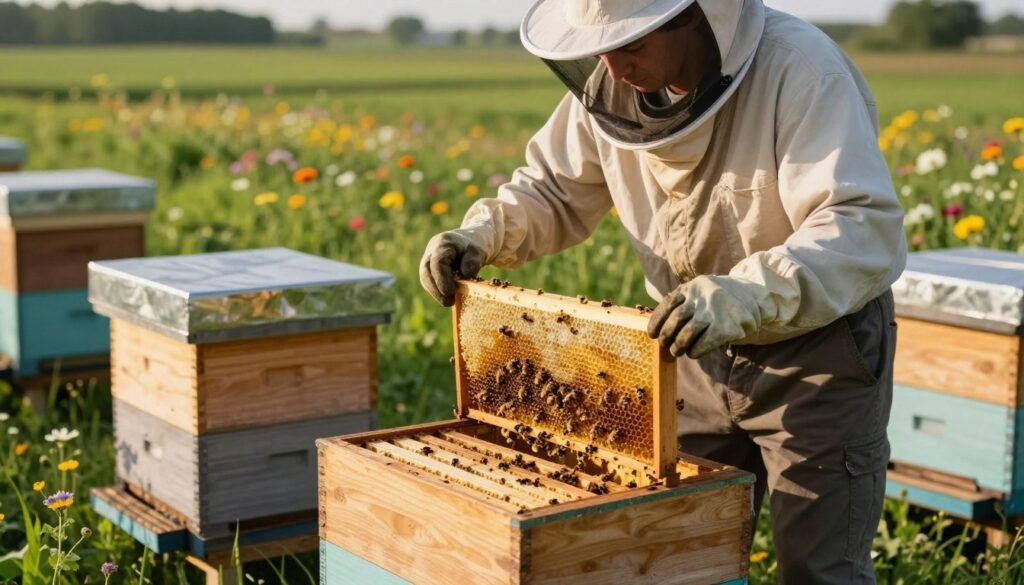
Keep careful records of dates, frames moved, and population changes. Logs help you decide when to add boxes or remove supers the next year.
| Action | Trigger | Result |
|---|---|---|
| Reduce to single brood box | Late fall; low flow | Warmer cluster; less energy use |
| Add super or double brood | Peak nectar flow | More storage; larger population |
| Weekly checks | Spring and late summer | Early detection of queen issues or swarm signals |
For deeper guidance on seasonal buildup see colony buildup guidance, and learn to spot swarm cues with this swarm signals guide.
Conclusion
Deciding between compact and expanded nest layouts starts with your landscape and daily handling limits. ,
Match goals to capabilities. Consider climate, lifting ability, and seasonal objectives when choosing a configuration. Monitor brood patterns and stores often, and keep the queen’s health as a top priority to improve survival through cold months.
Try different setups on a few colonies to see what fits your apiary. For practical winter tips, consult this winterizing guide. Small experiments and careful records will reveal the approach that meets your production and safety goals.
FAQ
What is the main difference between using a double deep brood nest and a single brood box when moving colonies to pollinate crops?
A double deep setup gives the colony more brood space and stores in one stack, so population can build faster during a strong nectar flow. A single brood box simplifies inspections and reduces the time spent handling frames. Operators choose based on labor, target crop bloom length, and desired colony strength at pollination start.
How does hive configuration affect inspection speed and labor during pollination season?
A single box reduces lifting and frame checks, letting beekeepers complete inspections quickly. Two deep boxes require more handling and increase physical demand. Faster inspections help meet tight pollination schedules and lower worker fatigue.
Does one configuration offer better varroa mite control than the other?
Single-box management can improve treatment consistency because the brood nest is consolidated, making brood breaks and targeted treatments easier. With two deep boxes, mites can redistribute between boxes, requiring more careful monitoring and sometimes separate treatments.
Which option leads to larger colonies by the time of a crop’s bloom period?
A stacked brood nest typically supports larger populations if the queen is laying strongly and forage or feeding is sufficient. Additional brood frames allow more simultaneous pupation and faster adult emergence, which helps meet high pollination strength requirements.
How do regional climate and nectar flow influence the choice of brood box configuration?
In short, hot, or dearth-prone regions, fewer boxes make temperature and food management simpler. In temperate areas with long spring flows, extra brood space helps absorb abundant nectar and boost population. Match configuration to local forage patterns and seasonal weather.
What are best practices for adding boxes or expanding the brood nest during the season?
Add boxes just ahead of sustained nectar flow and after confirming the queen is laying on most frames. Stagger additions to maintain a contiguous brood area. Avoid adding too early or too late, which can cause robbing or chilling of brood.
Can moving brood frames between boxes help prevent swarming during peak buildup?
Yes. Rearranging frames to create a balanced brood nest—moving capped brood away from congestion points and inserting fresh foundation—reduces queen congestion signals. Regular space management and timely queen splits also lower swarm risk.
How should beekeepers handle feeding and stores management with different brood box setups?
In single boxes, feed placement and emergency syrup are simple and close to the brood. With two boxes, ensure both contain adequate stores or move frames so brood has nearby food. Monitor honey super placement to avoid unwanted brood expansion into supers.
What physical equipment and cost differences should commercial operators expect?
Double-stack colonies need more heavy boxes, frames, and foundation, increasing purchase and transport costs. Single-box fleets reduce material and handling expenses but may require more frequent management or supplemental feeding to reach required strength.
Are there recommended strategies for adapting hives to a seasonal dearth before pollination contracts?
Consolidate brood into fewer frames, reduce entrance size, and provide supplemental feed to maintain stores. Consider temporary insulation or ventilation adjustments based on temperature. Aim for steady, continuous brood rearing without overextending limited stores.
How does brood nest arrangement affect honey production and placement of supers during a nectar flow?
A well-organized brood nest keeps honey production focused in supers above the brood. If brood spreads upward into honey supers, remove or rearrange frames to preserve extractor-quality comb. Properly timed supering avoids brood in honey storage frames.
What timing should be used when preparing colonies for short, intensive pollination contracts?
Build colonies several weeks before bloom, ensuring abundant nurse bees and young brood. Use queen-right colonies with strong laying patterns. If time is limited, prioritize adult population through splits or by moving nurse-rich frames into the target box.