Many beekeepers ask whether wet weather changes the accuracy of their diagnostic checks for parasitic threats in hives. This short guide looks at how environmental conditions can shape monitoring results and what to watch before you test.
Weather can change bee activity, hive humidity, and how treatments release their active compounds. Those shifts may alter the number of parasites you detect during a sugar roll, alcohol wash, or sticky board check.
We cover practical steps to improve sampling reliability, including timing checks around breaks in precipitation and noting temperature ranges that influence treatments. For real-world discussion on treatment timing and wet weather, see this forum post on Formic Pro handling during wet periods: Formic Pro in wet weather.
For guidance on how humidity and temperature affect treatment choice and delivery, review a comparison of Formic Pro and oxalic acid vaporization: treatment options and weather.
Key Takeaways
- Weather can change bee behavior and sampling accuracy; note conditions before testing.
- Use consistent, proven sampling methods like sugar or alcohol washes for reliable trends.
- Record temperature and humidity with each check to better interpret results.
- Schedule treatments and tests when the hive is active but not during extreme wet or hot spells.
- Consult peer reports and product guidance for treatment timing in damp conditions.
Understanding the Relationship Between Weather and Varroa Mites
Temperature and season drive colony dynamics, altering where mites hide and when to monitor.
Winter bees are built for longevity. They develop larger fat bodies and higher vitellogenin levels to survive 4–6 months instead of a few weeks.
Mites threaten brood and adults year-round. Their impact is most serious when they infest bees destined to become winter bees in late summer and early fall.
“Timing treatment so winter-bound bees emerge healthy is crucial for colony survival.”
- The biology of winter bees differs from summer bees; longevity demands better internal reserves.
- Mite populations can explode during summer, so steady monitoring prevents a fall crash.
- Temperature and seasonal timing shape effective treatment windows and management choices.
Track simple metrics: record temperature, note brood patterns, and log mite counts at each check. Use that record to decide when a treatment is needed before winter production begins.
For test results and treatment timing in late summer, see this practical review of late-summer varroa treatments.
Does Rain Affect Varroa Mite Counts During Testing
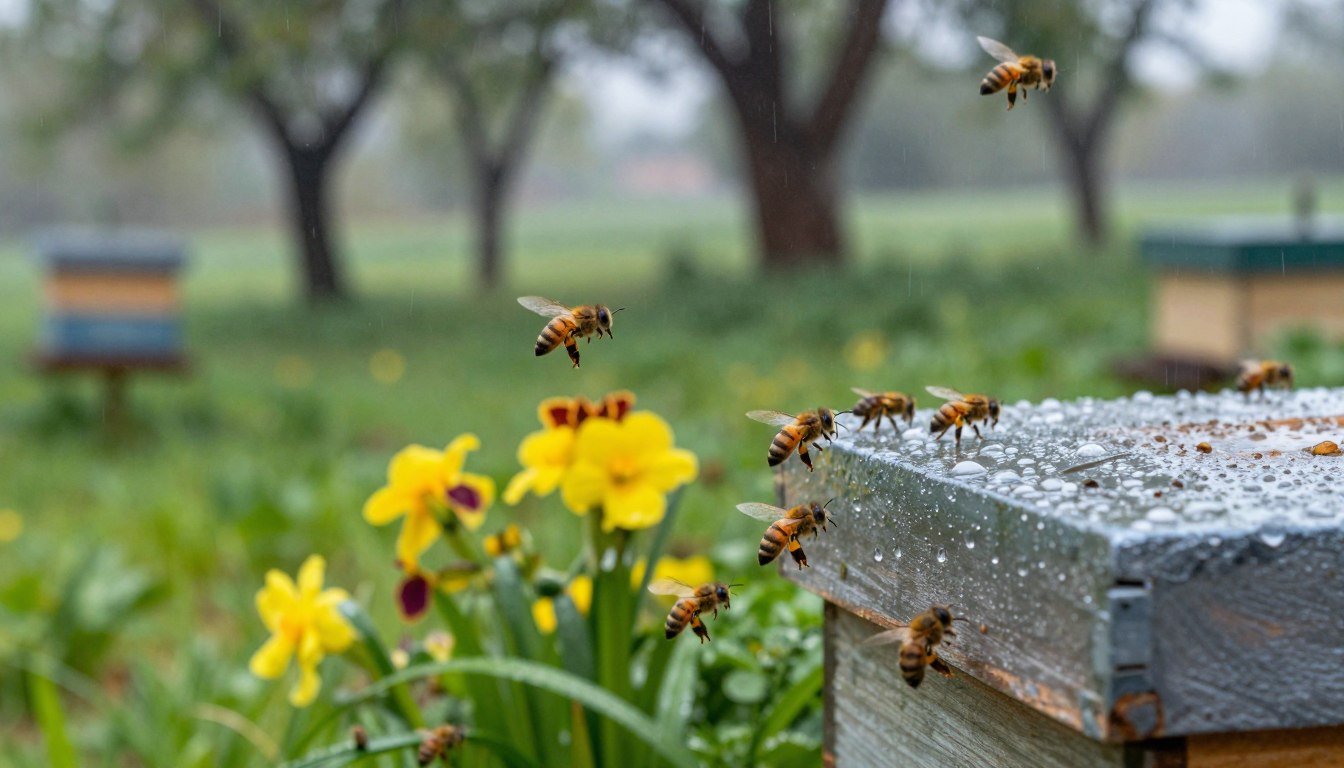
Wet weather can change hive activity and make sampling less representative unless you adjust timing and method.
Sampling during wet conditions
Heavy moisture rarely changes actual infestation numbers overnight. However, it shifts where worker bees gather. That makes it hard to collect a representative sample from the brood nest.
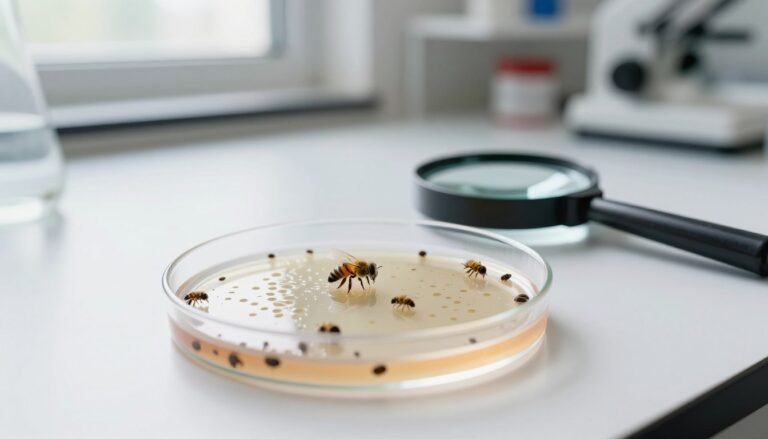
Use an alcohol wash when you need the most reliable data — it is about 15–20% more accurate than a sugar roll. Aim for roughly 300 bees from the brood nest to produce statistically valid results.

Foragers stay out of the hive during wet spells, so mid-morning to early-afternoon sampling raises the share of nurse bees in your cup. These workers often carry higher parasite loads, giving clearer readings.
“If conditions prevent a proper sample, wait for clearer weather so treatment choices rest on solid data.”
- Avoid sampling in heavy precipitation; altered bee distribution can skew your monitoring results.
- Log each check in a simple database to track trends over season and guide treatment timing.
- For step-by-step wash technique, see this how to do an alcohol wash.
- Refer to the EasyCheck monitoring guide for sampling standards and interpretation.
Best Practices for Accurate Mite Monitoring
A standardized protocol for sampling is the single best way to trust your hive records over a season.
Use the alcohol wash as your baseline. It gives a direct percentage of infestation and is the gold standard for professional beekeeping.
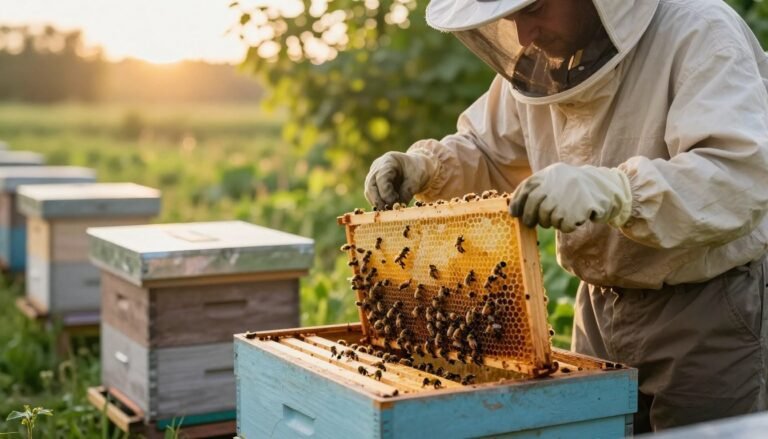
Collect about 300 bees from the center of the brood nest for each sample. That sample size delivers statistically reliable readings and reduces variance between hives.
Keep technique consistent. Use the same cup, timing, and handling each time so trends in mite levels are meaningful. Log the date, temperature, and hive ID with every result.
- Treat when readings hit ~2% in spring and summer, and at ~1% in late summer/fall.
- Standardize your wash method to limit human error and compare results across hives.
- Accurate monitoring prevents blind treatment and protects winter bees from high infestation.
“Accurate monitoring is the foundation of effective varroa control.”
For help interpreting percentages, see this guide on reading an alcohol wash. A steady management schedule lets you decide the right treatment at the right time.
Seasonal Timing for Effective Hive Management
Targeted action in late summer reduces viral risks and protects the bees that will carry the colony through winter.
Late summer preparation
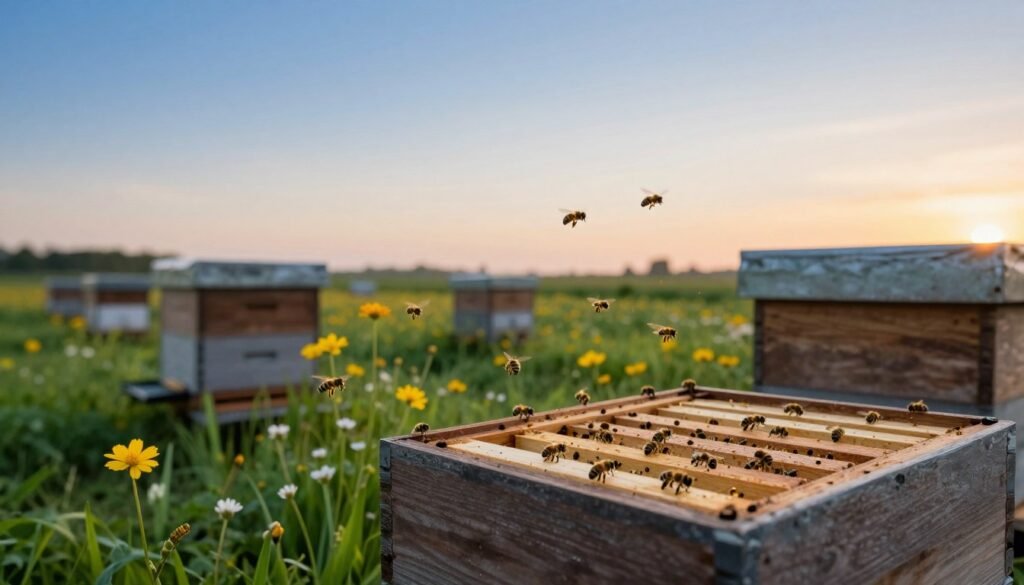
August–September is critical. Winter bee production begins then, so low parasite levels matter for healthy development.
Aim to treat before winter brood emerges. Use a reliable test and plan treatment within that window.
Northern climate considerations
In zones 3–5, treat in August through early September. That timing helps protect larvae and developing bodies destined for winter survival.
Southern climate challenges
Zones 8–9 may need treatment into October. Extended breeding seasons let mites persist longer, so monitor and follow up as needed.
- Thresholds: Keep infestation near 1% in late summer to limit viral harm.
- Monitoring: Check every 2–3 weeks during the active season.
- Support: Provide pollen substitute and syrup when forage is poor to build strong winter bees.
“Time treatments so winter-bound workers emerge healthy; that single choice improves colony survival.”
Evaluating Varroa Mite Treatment Options
Selecting the right treatment starts with the basics: temperature, presence of honey supers, and how much brood the colony holds.
Randy Oliver’s 2015 experiment compared five approaches, including thymol and formic applications, and showed that method and timing change both efficacy and colony health.
Formic acid (MAQS) penetrates sealed brood cells and can be used with supers on. That makes it a strong choice when brood is abundant and you need brood penetration.
Oxalic acid vaporization kills phoretic mites on adult bees but will not reach mites hidden in capped brood. Use it when brood is minimal for best results.
“Match a product to what it actually controls, and plan application around the colony’s cycle.”
- Consider temperature and season before choosing a treatment method.
- Rotate treatments to reduce resistance in mite populations.
- Always confirm success: check results 2–4 weeks after treatment with a reliable wash or monitoring method.
For practical follow-up, review guidance on post-treatment checks and long-term strategies in stress testing treatment regimes.
Impact of Temperature and Humidity on Treatment Efficacy
Treatment performance often hinges on a narrow band of temperature and humidity inside the hive.
Thymol-based products need consistent warmth. Apply only when daytime highs stay above 60°F so vapors distribute without flashing off.
Oxalic acid vaporization is safest at temperatures above 45°F and when humidity sits below 70%. Wet air can cause crystals to clump and reduce effectiveness.
Vaporization and humidity thresholds
High late-summer heat can make thymol evaporate too fast. This risks stressing bees and harming developing brood.
“Match the treatment window to local weather so your application helps bees more than it harms them.”
- Monitor internal hive temperature before treatment.
- Avoid thymol when nights cool below 60°F or when hot spells push daytime highs very high.
- Check humidity; if it exceeds 70%, postpone oxalic vaporization.
- Adjust treatment timing by season and local climate to protect brood and ensure product action.
| Product | Optimal Temp | Humidity | Notes |
|---|---|---|---|
| Thymol (Apiguard) | > 60°F | Any, avoid extremes | Even vaporization needed; avoid flash-off in heat |
| Oxalic acid vapor | > 45°F | Best when brood is low; avoid high humidity | |
| Essential oils | Moderate (seasonal) | Avoid high humidity | Can stress colonies in hot summer; use cautiously |
For natural option timing and climate-specific tips, see natural remedies for varroa mites.
Verifying Results After Your Treatment Period
After treatment ends, a deliberate wait before testing gives a clearer picture of program success.
Timing matters. Wait 2–4 weeks from treatment completion before running an alcohol wash. That period lets capped brood emerge and dying parasites clear from adult bees.
Use a consistent method and sample about 300 bees from the brood area. Aim for post-treatment mite levels at or below 1%, which equals three or fewer mites per sample of 300 bees.
If your post-treatment results remain above that threshold, plan a follow-up treatment before the winter cluster forms. Prompt action reduces the chance of late-season rebounds that harm winter bees.
“Verifying results is the critical step that confirms treatment efficacy and protects colonies into fall and winter.”
- Wait 2–4 weeks after treatment ends for accurate post-treatment data.
- Use the alcohol wash as your standard for comparison.
- Target ≤1% infestation or ≤3 mites per 300-bee sample.
- Retreat if needed to protect brood and ensure winter survival.
| Check | When | Target | Action if High |
|---|---|---|---|
| Post-treatment wash | 2–4 days after emergence window (2–4 weeks) | ≤1% (≤3/300) | Schedule follow-up treatment |
| Record keeping | Each test date | Compare pre/post-treatment | Adjust management and timing |
| Follow-up check | 2–3 weeks after retreatment | Return to target | Consider alternate method or rotation |
For lab-grade protocols and sampling guidance, refer to varroa mite testing for methods and interpretation.
Protecting Your Colony Through the Winter Months
A single, well-timed late-fall treatment can be the difference between a thriving apiary in spring and an empty hive.
Targeting phoretic mites when brood is minimal is central to winter health. Late fall or early winter oxalic acid vaporization reaches mites on adult bees and avoids the protection given by sealed brood.
Winter bees must live 4–6 months. Bees that were parasitized as larvae often show reduced fat bodies and have shorter lifespans. That loss of vigor can collapse colonies by February.
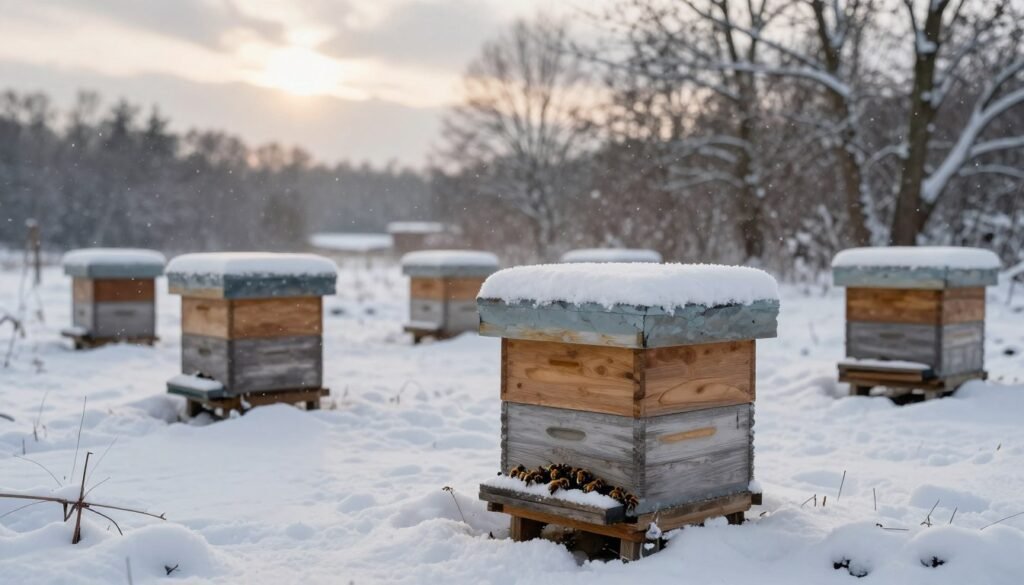
“Reduce mite pressure before the cluster forms to preserve bodies, development, and long-term survival.”
- Protect winter bees: plan a late fall treatment to lower mites before the cluster tightens.
- Monitor: check hives for signs of stress and confirm treatment efficacy after the period you choose.
- Year-round management: consistent action across the season gives the best chance for spring success.
| Action | When | Goal |
|---|---|---|
| Oxalic vaporization | Late fall / early winter (brood low) | Reduce phoretic mites for winter survival |
| Inspection and records | Before cluster forms | Verify colony health and plan treatment |
| Follow-up check | 2–4 weeks after treatment | Confirm efficacy; retreat if needed |
For timing guidance and best practices on fall management, see timing critical for fall varroa management.
Conclusion
, Good monitoring habits give you the evidence to choose the right treatment at the right time.
Keep tests consistent and use an accurate alcohol wash as your baseline. Record the date, temperature, and sample so your hive results tell a clear story.
Follow seasonal thresholds—about 2% in spring and 1% in late summer—to guide action. Verify your results 2–4 weeks after any treatment so colonies enter winter with low levels of mites and healthy brood.
Adopt simple, data-led routines in beekeeping. For practical sampling advances and rapid wash methods, see the smokin’ hot mite wash update.