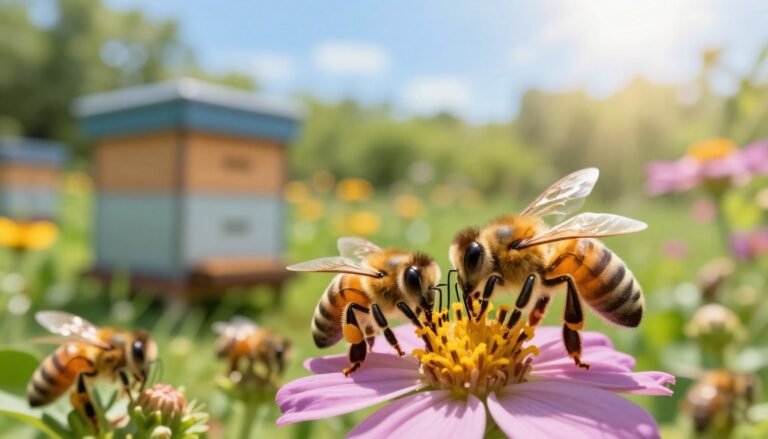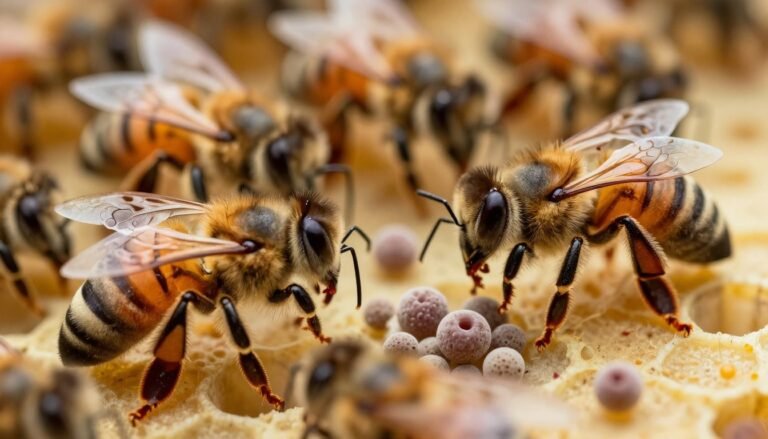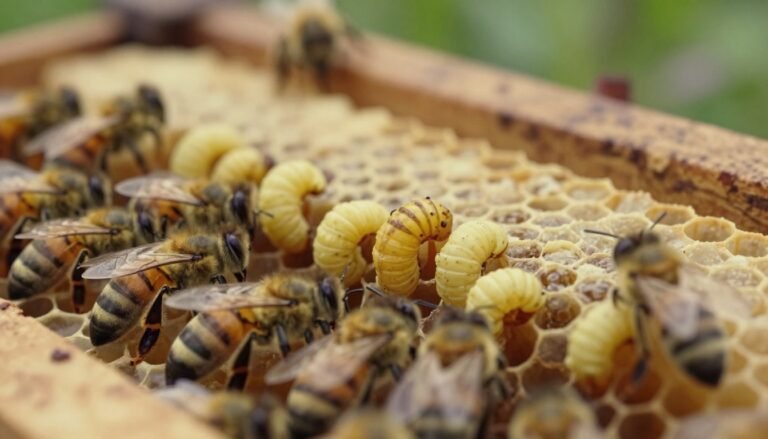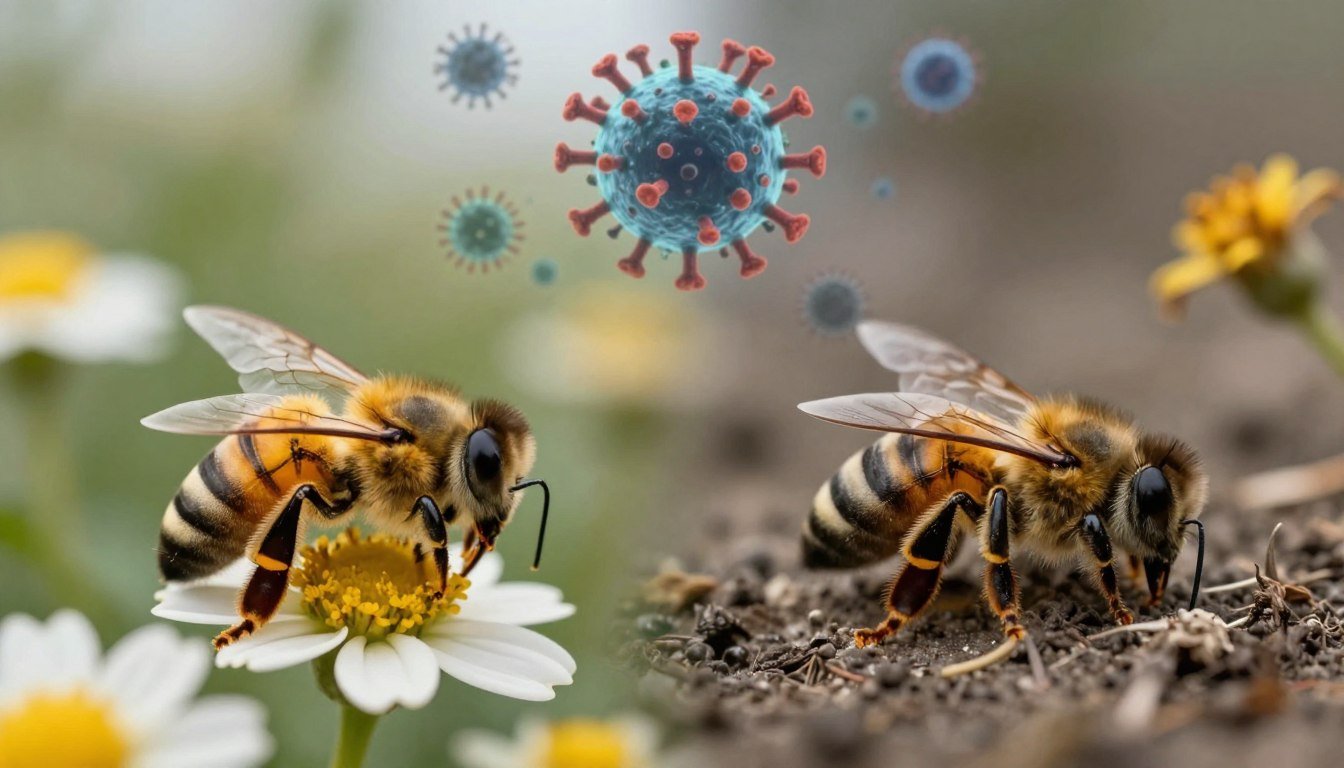
This article examines how viral infection and chemical exposure produce different signs in honey bees and colonies. Entomologists and beekeepers need clear ways to tell whether declining workers or piles of dead insects reflect a biological threat or a toxic event.
Research shows that global insect declines result from many interacting pressures: pathogens, habitat loss, and pollution. No single stressor explains current trends; instead, combined factors alter body condition and behavior in Apis mellifera.
Using sources indexed on Google Scholar and guidance such as the national fact sheet, this article lays out practical signs to help managers decide whether symptoms stem from a virus or from chemical exposure.
Key Takeaways
- Viral infection and toxic exposure produce distinct external signs and colony patterns.
- Examining the number and location of dead bees helps narrow the cause.
- Apis mellifera serves as a key model for studying interactive stressors.
- Google Scholar remains essential for gathering current scientific evidence.
- Effective control depends on accurate diagnosis and tailored management actions.
Understanding the Threat to Honey Bee Health
Pollination and soil formation are vital services that insects provide, and losses in these functions have wide economic and ecological consequences. Honey bee health sits at the intersection of habitat change, chemical exposure, and disease pressures.
The prophylactic use of non‑specific pesticides to protect crops often harms non‑target insects, including honey bee workers and foragers. Sublethal exposure can slow colony growth and reduce reproductive output over time.
Eusocial species such as Apis mellifera act as superorganisms. Individual workers perform tasks like brood care and foraging that support the entire colony.
Evaluating threat requires life‑history thinking: stress that seems small for one insect can scale up and weaken the whole hive. Research on Google Scholar highlights how habitat fragmentation and pollution together degrade the stability of honey bee colonies.
- Holistic approaches that monitor workers, brood, and foragers best protect bee colonies.
- Many articles on Google Scholar link prophylactic chemical use to reduced colony vitality.
- Long‑term studies show that minimizing exposure preserves pollination services and honey production.
Defining Chronic Bee Paralysis Virus
Reports from apiaries and research labs document a progressive paralysis disorder that darkens and leaves workers hairless before adult mortality rises. This named pathogen is a notable threat to western honey bees and often triggers visible changes in worker behavior and colony performance.
Viral transmission routes
Viral transmission routes
The agent spreads via direct contact among workers, contaminated hive surfaces, and oral routes during trophallaxis. Varroa destructor has greatly accelerated spread by carrying and injecting the agent between hosts.
Movement of infected adults between colonies and drifting foragers also moves the pathogen across apiaries. Good apiary hygiene and monitoring of mite loads are central to reducing these transmission pathways.
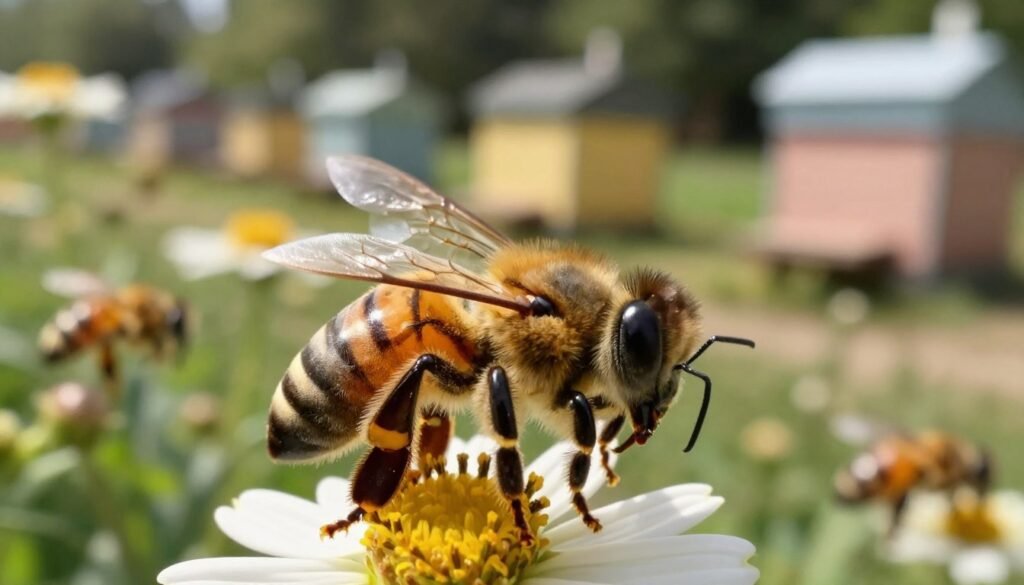
Clinical manifestations
Typical signs include trembling, inability to fly, and progressive darkening of the body. Affected workers often lose thoracic hair and appear lethargic, which reduces foraging and lowers colony strength.
Research on Google Scholar documents links between the acute form, a positive-sense single-stranded RNA agent, and severe outbreaks in Apis mellifera when Varroa levels are high. Careful counting of symptomatic workers helps guide control and treatment decisions.
For practical guidance on mite control methods that reduce transmission risk, see a comparative treatment review at treatment options for mite management.
The Role of Pesticides in Colony Decline
Systemic insecticides commonly enter plant tissues and appear in nectar and pollen, so foragers pick up residues and bring them into the hive.
Neonicotinoid seed coatings take up only a small portion of the active ingredient, yet field studies show long environmental persistence. Thiamethoxam’s DT50 ranges from 7 to 92 days. Clothianidin, its metabolite, can persist from 13.3 to over 300 days.
Chronic exposure at 1 to >100 ppb is plausible in arable soils. These low doses produce subtle, lasting effects on physiology, learning, and foraging. Over time, residues accumulate in honey and stored pollen, stressing the hive.
“Many articles on Google Scholar report that systemic residues can reduce foraging efficiency and weaken immune responses in social colonies.”
Key pathways and outcomes:
| Pathway | Typical persistence (DT50) | Observed effects on colonies |
|---|---|---|
| Thiamethoxam (seed coat) | 7–92 days | Impaired foraging, reduced learning |
| Clothianidin (metabolite) | 13.3–305.4 days | Residue accumulation in honey, immune suppression |
| Soil and plant uptake | Seasonal carryover | Chronic low-dose exposure to foragers |
Many researchers and beekeepers consult Google Scholar for evidence and best practices. For a technical overview useful to managers, see the Bee Health CSR report.
Chronic Bee Paralysis Virus vs Pesticide Poisoning: Key Differences
Distinguishing infectious paralysis from chemical exposure requires careful, timed observation of colony behavior and mortality patterns.
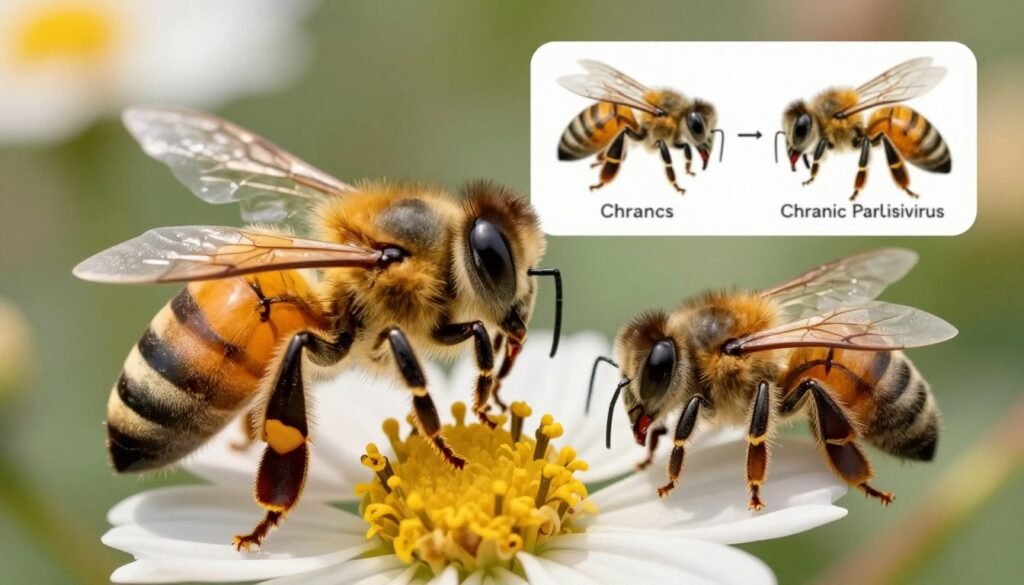
Quick clinical signs help. Infections often produce trembling, rapid onset of paralysis, and workers that cannot fly. Chemical exposure may cause impaired locomotion too, but it more commonly gives a sudden surge of dead and dying insects at the hive front.
Sublethal effects from neonicotinoids include changed activity, reduced fertility, and slowed colony growth. These effects accumulate in honey and stored pollen and erode resilience over weeks.
- Check the location and number of dead workers: front-of-hive mass kills point toward a toxic event.
- Progressive paralysis across frames suggests an infectious agent and may link to mites and deformed wing virus in Apis mellifera.
- When signs overlap, laboratory analysis of sampled workers is often required for a clear diagnosis.
Consult recent studies on Google Scholar and practical guides such as a varroa management plan to guide control and reduce interacting stressors.
Identifying Symptoms of Viral Paralysis
Field observations often reveal distinct movement and color changes long before lab tests confirm infection.
Look for trembling and poor flight ability. Affected workers show shaky motions and fail to take off. Many become lethargic and cluster near frames or at the hive entrance.
Note hair loss and darkening of the body. In affected honey bees the thorax and abdomen lose hairs and the cuticle may appear darker. Articles on Google Scholar describe these signs as common in overt infections of Apis mellifera.
Count symptomatic individuals. Overt infections often produce a high number of affected workers. Documenting the number helps assess severity and decide if laboratory analysis is needed.
At the colony level, expect fewer foragers and reduced brood. These effects lower honey stores and weaken the queen’s support. Use Google Scholar to find field protocols for sampling and early control steps.
“Early visual screening speeds response and protects nearby colonies.”
- Record trembling, flight failure, hair loss, and dark bodies.
- Track the number of symptomatic workers over several days.
- Compare signs with lab results and sources on Google Scholar before acting.
Recognizing Signs of Pesticide Exposure
A sudden drop in foraging and odd movements in workers often signal recent contact with agricultural chemicals. Quick on‑site checks let managers tell if the problem is toxic exposure or another stressor.
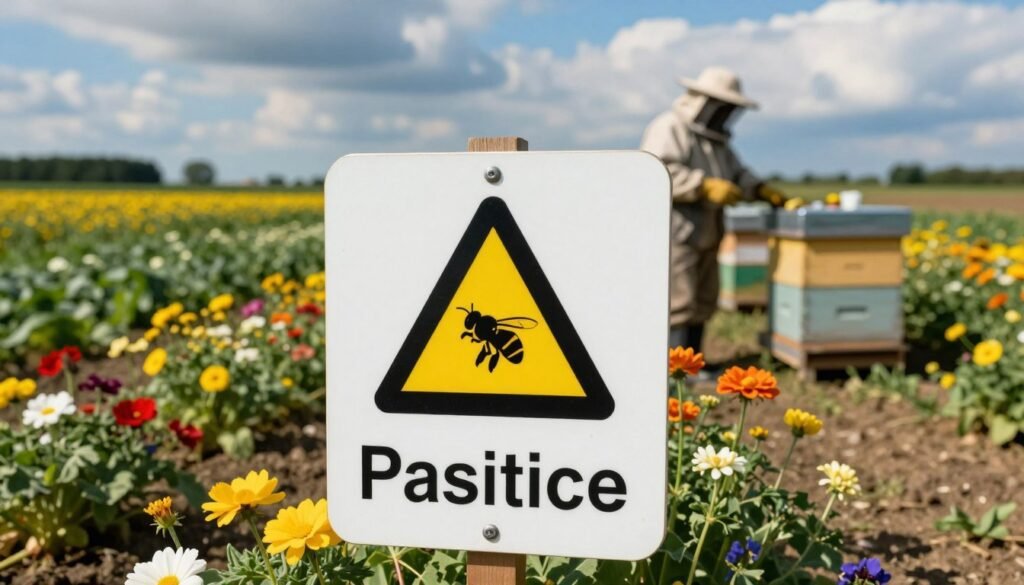
Behavioral changes
Observe the entrance for reduced flight activity and fewer returning foragers. Forager disorientation, spinning or righting failure is common after contact.
Increased defensiveness and stupefaction appear in many affected hives. These signs show up rapidly after exposure and can spread among workers.
Physical indicators
Look for regurgitation of stomach contents and tongue extension in dying individuals. Stunned workers may be found lying on their backs or unable to grip frames.
Note heavy contamination of honey stores or wax. Testing guidance on Google Scholar helps identify residues in product samples.
Brood development issues
Poor brood pattern, abnormal queen laying, and dead newly emerged workers point to persistent contamination. Dead brood in cells often signals a lingering, systemic effect.
“Documenting early signs allows rapid response and reduces spread to nearby colonies.”
| Sign | Timing | What to check |
|---|---|---|
| Forager loss | Hours–days | Entrance counts; note reduced honey collection |
| Stupefaction/spinning | Immediate | Collect affected workers for lab testing |
| Poor brood pattern | Days–weeks | Inspect combs, count dead brood and newly emerged workers |
Action tip: Use Google Scholar to find local studies on residue levels and documented effects in Apis mellifera. Share findings with state agencies to trace sources and protect nearby honey and colonies.
The Impact of Systemic Pesticides on Foraging Bees
Residues that translocate through a treated plant can appear in nectar, pollen, and guttation water used by foragers. Foraging workers pick up contaminated resources and bring them into the hive, creating low‑level, repeated exposure for the whole colony.
Foraging bees face highest risk when applications occur during bloom. Treatments applied to flowering crops and nearby weeds make nectar and pollen unsafe. Off‑target movement can contaminate wildflowers and water sources used by honey bees and other pollinators.
The EPA uses a tiered risk assessment to evaluate nectar and pollen contamination and the potential effects on honey and colony health. Managers consult Google Scholar to find field studies and residue data that inform local decisions.
- Research on Google Scholar shows Apis mellifera often carries residues from treated fields into hives.
- Changes in forager return rates or altered worker behavior can signal exposure before large losses occur.
- Clear communication with growers and timed applications reduce risk to colonies and improve pollinator protection.
“Monitoring forager activity gives beekeepers actionable clues about environmental risk.”
How Environmental Stressors Influence Viral Titres
Environmental stressors can shift pathogen dynamics inside hives, raising the risk of high viral loads among workers.
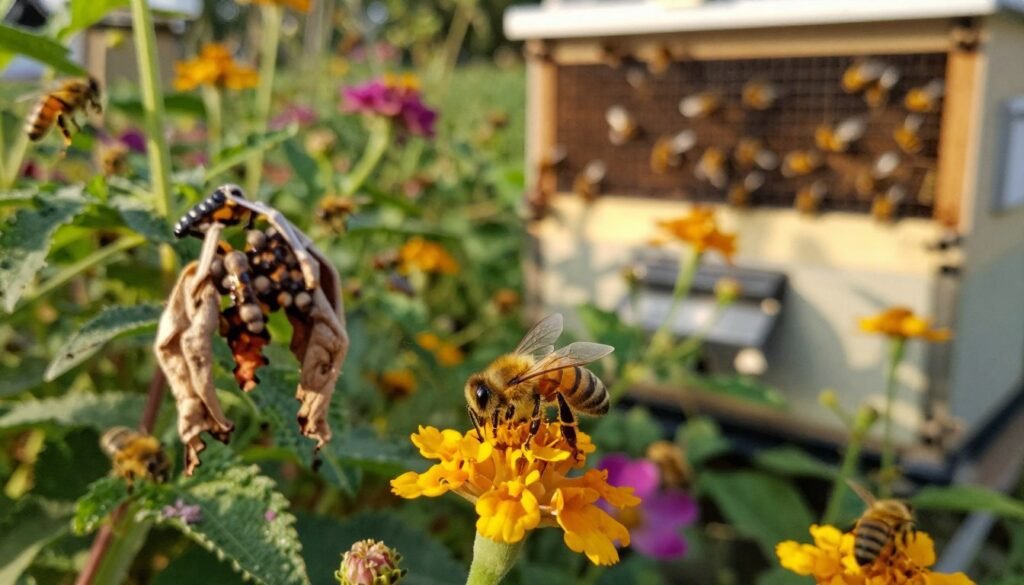
Sublethal exposure to certain agrochemicals reduces immunocompetence in Apis mellifera. Studies show thiamethoxam and clothianidin affect antimicrobial peptides and cellular defenses, making workers more prone to infection.
Field and lab work — including trials with 30 ppb thiamethoxam — found higher genomic copies of targeted agents in exposed individuals. Lowered immune response in both workers and the queen can let titres rise quickly under stress.
“Monitoring viral copies in workers is a practical indicator of colony health under environmental pressure.”
| Stressor | Immune effect | Observed change in titres |
|---|---|---|
| Thiamethoxam (sublethal) | Reduced antimicrobial peptides | Marked increase in genomic copies |
| Clothianidin | Impaired cellular immunity | Moderate to high titre rise |
| Poor nutrition / stress | Lowered systemic resistance | Variable, often higher titres |
Practical note: Use Google Scholar to locate studies and an immune modulation review for methods to monitor immune response and titres. Early detection supports targeted control and healthier honey production.
Analyzing the Synergistic Effect of Combined Stressors
Multiple stressors acting together often change colony outcomes in ways that single-factor tests cannot predict.
Key experimental findings show that co-exposure to a chemical and a virus can produce non-linear outcomes. High thiamethoxam doses (5.0 ng/bee/day) caused a synergistic rise in mortality. At lower doses (2.5 ng/bee/day) mortality did not increase, yet viral loads were higher in naturally dead workers.
Why this matters: interactions can be dose-dependent. Individual workers may show additive effects, while colony-size trends become antagonistic. That means hive decline can accelerate even when lab tests suggest modest risk.
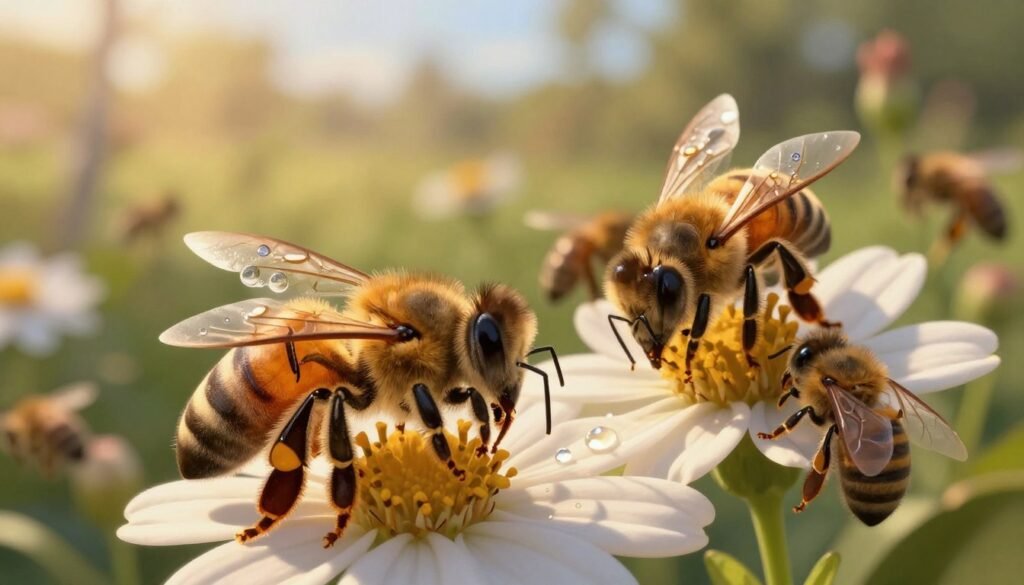
- Analyzing combined stressors is vital to explain declines in honey bee colonies.
- Research on Google Scholar links higher infection loads and reduced numbers of healthy workers in Apis mellifera.
- Controlling exposure to chemicals helps protect workers, brood, and the queen from amplified effects.
“Understanding interactions guides practical control and reduces unexpected collapse.”
For dose-response details see a relevant dose-dependent study and an immune effects overview on Google Scholar.
The Role of Varroa Destructor in Virus Transmission
Varroa destructor functions as a biological amplifier that raises both the prevalence and the titres of pathogens affecting Apis mellifera. The mite’s feeding creates direct routes for viral transfer and shortens the time between exposure and symptomatic infection.
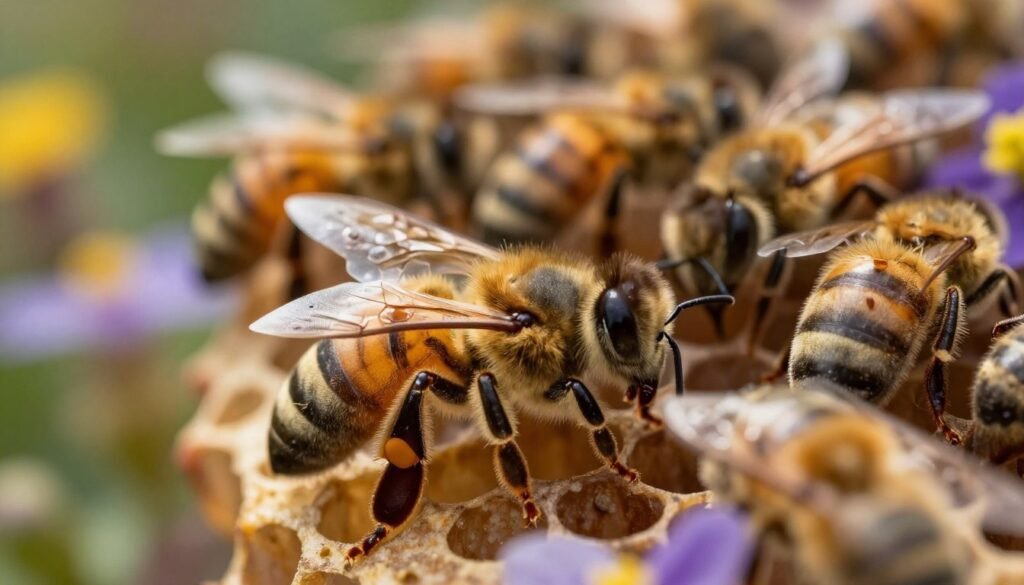
Research on Google Scholar shows that deformed wing and acute bee paralysis agents moved from occasional to common threats after mite invasion. These pathogens now act as multi-host agents across managed and wild populations.
The presence of varroa destructor strongly predicts higher numbers of infected workers and more rapid spread through colonies. Brood and the queen face greater risk when mite loads climb, and clinical symptoms appear faster.
“Managing mite levels remains the most effective way to curb viral amplification in hives.”
- Several articles on Google Scholar link mite control to reduced deformed wing titres and lower infection rates.
- Practical control of varroa reduces the number of infected bees and protects brood and the queen.
Diagnostic Approaches for Bee Mortality
Accurate diagnosis blends careful field notes with laboratory tests. Start by recording what you see at the hive entrance and inside frames. Clear notes make lab results meaningful and speed appropriate control steps.
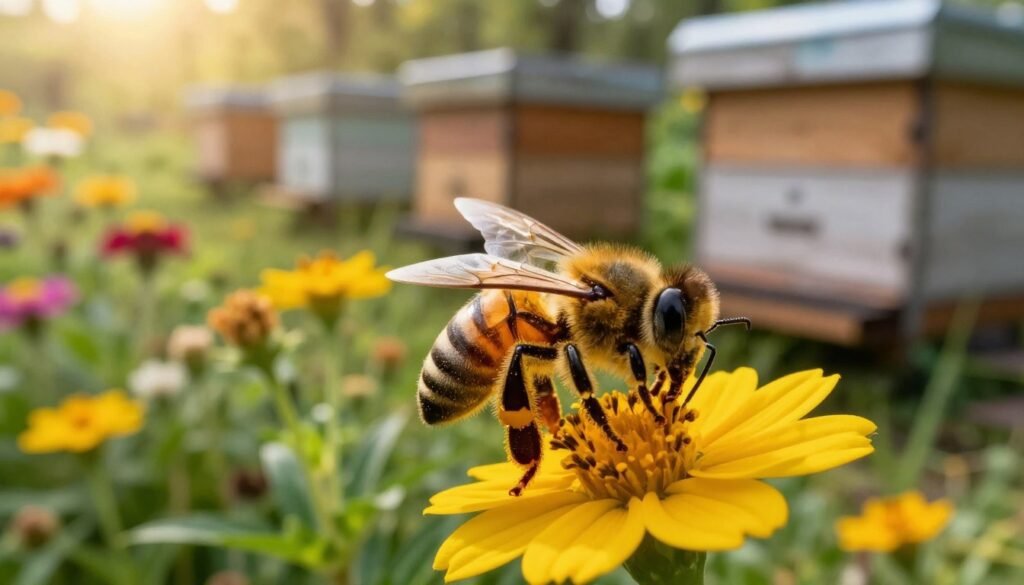
Laboratory analysis
When large numbers of honey bees die, send samples to an accredited lab for residue and pathogen testing. Labs can measure pesticide residues in pollen, nectar, wax comb, and in whole workers.
Diagnostic assays also detect viral and other infection markers in apis mellifera. Results help managers decide whether to focus on chemical sources, mite control, or other interventions.
“Laboratory confirmation clarifies cause and guides effective response.”
Field observation techniques
Careful on‑site checks remain essential. Count the number of dead workers at the hive front, note abnormal behavior, and inspect brood and the queen for signs of distress.
Document prevailing wind, nearby crops, and recent applications. In the United States, state agriculture departments in Oregon, Washington, and Idaho investigate suspected incidents and can advise next steps.
Combine field records with lab data to protect honey bee health and to reduce repeat losses in colonies.
Best Practices for Minimizing Pesticide Exposure
Plan spray timing and tactics with growers so foragers and colonies face minimal contact during bloom.

Avoid sprays during bloom when possible. If treatment must occur, apply before bloom or late in the day when workers are less active.
Choose products that are not labeled “Toxic” or “Highly Toxic” to pollinators. Mow blooming weeds such as mustard, clover, or dandelion before spraying to lower attraction.
- Use coarser droplets or drift‑reducing agents to limit spray drift onto flowering areas.
- Apply in the evening to reduce the immediate effect on foragers and returning workers.
- Discuss timing and product choice with local growers to reduce risky interaction near hives.
| Practice | Why it helps | What to monitor |
|---|---|---|
| Avoid bloom applications | Reduces direct exposure of foragers | Forager counts; number returning per hour |
| Evening sprays | Lowers active contact with workers | Entrance activity next morning; symptoms in worker body |
| Mow floral weeds | Removes alternate nectar sources | Nearby floral cover; brood and queen health |
| Drift reduction | Protects adjacent flowering habitats | Residue checks in stores; condition of colonies |
Practical note: Use research and outreach resources, and consult guides such as the extension review at integrated spray timing guidance to refine control plans and protect colony health.
“Good communication with growers is the most effective tool to prevent unintended exposure.”
Communicating with Local Beekeepers and Growers
A short phone call or email 48 hours before spraying gives beekeepers time to protect their colonies and plan actions.

Notify early. Timely notice lets a keeper choose to cover, move, or leave hives depending on product risk and weather conditions. This simple step limits unintended harm to workers, the queen, and brood.
Coordinate on timing. Avoid applications when foragers are most active. Good interaction reduces the number of adverse incidents and the chance of infection spreading after stress.
“Cooperation and clear records make incident follow-up faster and more effective.”
- Contact beekeepers at least 48 hours before treatments.
- Share field maps and expected application day and time.
- Ask state agriculture for guidance and reporting procedures.
| Action | Who | Timing |
|---|---|---|
| Advance notice | Grower | ≥48 hours |
| Hive protection (cover/move) | Beekeeper | Before application |
| Report suspected incidents | Both parties / State ag | Within 24 hours |
For practical guidelines on documenting symptoms and response, see symptoms and colony management. For advice on reducing viral risk during management, read preventing paralysis.
Regulatory Resources for Reporting Bee Kills
Clear documentation and quick contact with state pesticide divisions help protect nearby colonies and preserve evidence.

Oregon, Washington, and Idaho maintain procedures for investigating suspected incidents. Do not disturb hives or the site until a state representative has finished collecting information.
When you report, provide photos, video, and detailed notes on the number of dead insects, visible symptoms, and recent on‑site conditions. Record the day, weather, nearby applications, and any changes in brood or queen behavior.
The EPA uses multiple reports from beekeepers to detect patterns tied to specific chemicals. Manufacturers must also report adverse effects to the agency, so timely filings support enforcement and follow‑up.
Use regulatory help to protect colonies and guide control actions. Search national reporting resources and incident protocols such as the USDA overview and a practical national reporting resource. For broader prevention context see a colony collapse prevention overview.
“Documenting conditions and keeping clear records makes investigations faster and more effective.”
- Preserve evidence: photos, videos, and intact samples aid lab work.
- Report promptly: contact state pesticide or agriculture divisions the same day you find a large loss.
- Track details: note worker body condition, brood status, and any signs of infection or interaction with chemicals.
Long-Term Strategies for Colony Resilience
Adaptive colony care focuses on stores, brood quality, and the number of healthy workers to improve survival and winter honey production.
If a hive loses many foragers but still has ample brood and stores, the colony can often recover without invasive measures. Moving colonies to a pesticide-free foraging area speeds recovery after an exposure and reduces ongoing risk to the body and behavior of workers.
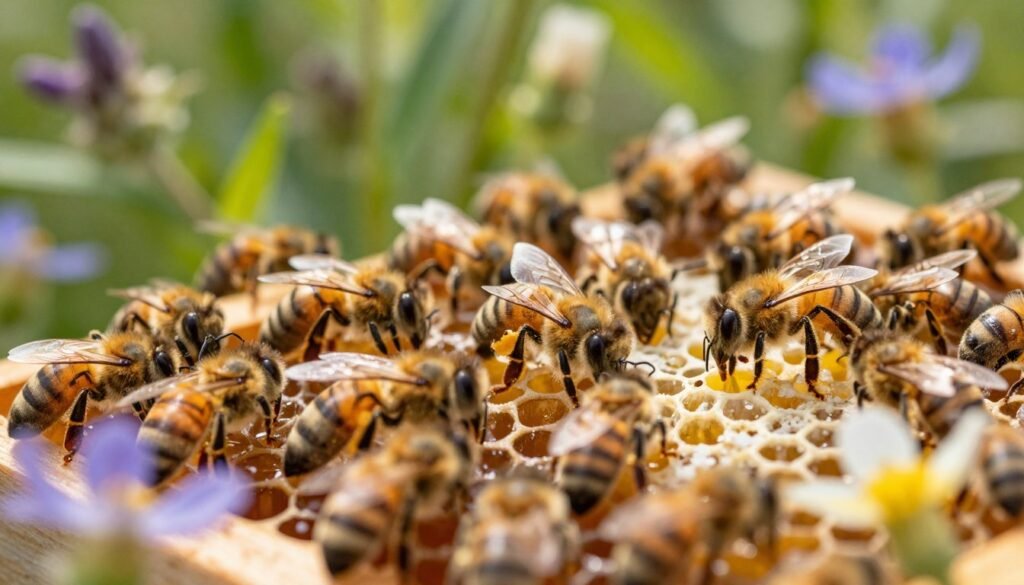
Practical steps include replacing brood comb every 3–5 years to limit residue buildup, feeding sugar syrup and pollen substitute when natural forage is scarce, and combining weak bee colonies before winter to bolster numbers and protect the queen.
Management interaction matters: timed feeding, regular comb replacement, and site moves together reduce the cumulative effect of stressors. Track symptoms and the number of healthy bees during each inspection day to guide decisions.
“Long-term resilience depends on consistent, simple practices that protect brood and stores.”
For operational tips on scheduling and hive care, see time management for multi-hive apiaries at time management for multi-hive apiaries, which helps maintain healthy honey bee colonies year round.
Conclusion
Simple, repeatable steps—inspect, document, sample, and inform—improve outcomes for struggling hives.
Protecting honey colonies depends on knowing how infection and chemical exposure look in the field. Watch for signs of a bee paralysis virus and for rapid mass mortality that points to external contamination.
Communicate early with growers, use accredited labs for diagnosis, and report incidents to state authorities. These actions help preserve the queen and the workforce that sustain the hive.
Long‑term resilience requires practical care: scheduled comb replacement, good nutrition, and routine mite control. Taken together, these steps reduce risk and keep colonies productive into the next season.
FAQ
What are the main differences between chronic paralysis infection and pesticide exposure in honey colonies?
The two causes produce distinct patterns. Viral infections spread through contact and varroa mite vectors and often cause trembling, hair loss, and flightless workers. Chemical exposure typically triggers sudden disorientation, convulsions, loss of navigational ability, and mass forager die-off near treated fields. Diagnostics combine clinical signs with laboratory testing to confirm the cause.
How do pathogens move within a hive and between apiaries?
Transmission occurs via direct contact among workers, contaminated food and comb, shared foraging sites, and transport of infected material. Varroa destructor accelerates spread by feeding on brood and adults. Human activities, such as moving colonies or equipment, also transfer infectious agents and contaminated pollen or nectar.
What clinical signs should be monitored for viral paralysis in workers?
Look for trembling, inability to fly, dark greasy-looking bodies, and hair loss on the abdomen. Affected workers often cluster outside the hive or lie immobile near the entrance. Queens can show reduced egg laying when infection becomes widespread.
Which behavioral changes indicate pesticide exposure?
Affected foragers may become disoriented, fail to return, fly in circles, or fall onto vegetation. Inside hives, workers can show reduced brood care, altered feeding, and sudden mass mortality. Symptoms often follow nearby crop spraying or seed treatment application.
What physical indicators inside the colony point to chemical damage?
You may find large numbers of dead or paralyzed workers at the hive entrance, contaminated brood food, brood mortality without characteristic deformities, and weakened colony activity. Residue testing of honey, pollen, and wax helps confirm exposure.
How do systemic pesticides affect foraging bees?
Systemic compounds present in nectar and pollen impair navigation, learning, and memory, reducing successful foraging trips. Chronic low-dose exposure lowers forager lifespan, disrupts communication, and can reduce colony nutrition over time.
Can environmental stress raise viral levels in colonies?
Yes. Nutritional deficits, weather extremes, and chemical stressors suppress immune responses and allow viral replication to increase. Elevated viral loads often coincide with poor winter survival and higher overt infection rates in spring.
What is the synergistic effect of combined stressors on honey health?
When mites, pathogens, poor nutrition, and pesticides act together, they produce greater harm than each factor alone. For example, varroa feeding plus neonicotinoid exposure can intensify viral replication and reduce worker immunity, accelerating colony decline.
How does Varroa destructor contribute to transmission and severity of infections?
Varroa acts as both a mechanical and biological vector. It introduces single-stranded RNA pathogens directly into bee hemolymph while weakening hosts through feeding. Effective mite control reduces both infection rates and severity of clinical outbreaks.
What diagnostic methods distinguish disease from chemical exposure?
Field observation notes symptom patterns and timing relative to sprays. Laboratory options include PCR for pathogen detection and residue analysis for specific agrochemicals in hive matrices. Combining both approaches yields the most reliable diagnosis.
What field techniques help document suspected kills for regulators?
Record date, time, weather, crop practices, and visible signs. Photograph affected bees, collect samples of dead workers, brood, pollen, and nectar in clean containers, and note nearby treated fields or recent applications. Submit samples to an approved lab and report findings to state pesticide agencies.
What management steps minimize chemical exposure to colonies?
Position hives away from treated fields, communicate spray schedules with growers, avoid placing nucs near flowering crops during application, and provide alternative forage buffers. Use labeled pesticide practices and follow integrated pest management to reduce off-target impacts.
How should beekeepers and growers coordinate to protect pollinators?
Establish open communication about treatment timing, choose less toxic products when possible, adopt spot treatments, and schedule sprays when bees are least active. Local extension services and state apiarists can facilitate best-practice agreements.
Where can I report suspected mass kills or get regulatory guidance?
Contact your state pesticide regulatory office, the Environmental Protection Agency incident portal, or the local extension service. Many states have specific forms and phone lines for pollinator incidents; timely reporting helps investigators trace causes.
What long-term practices support colony resilience against pathogens and chemicals?
Maintain strong nutrition through forage diversity, manage varroa with evidence-based treatments, rotate apiary sites to reduce exposure, and engage in habitat restoration for pollinator-friendly plants. Regular monitoring and integrated management lower cumulative stressors.