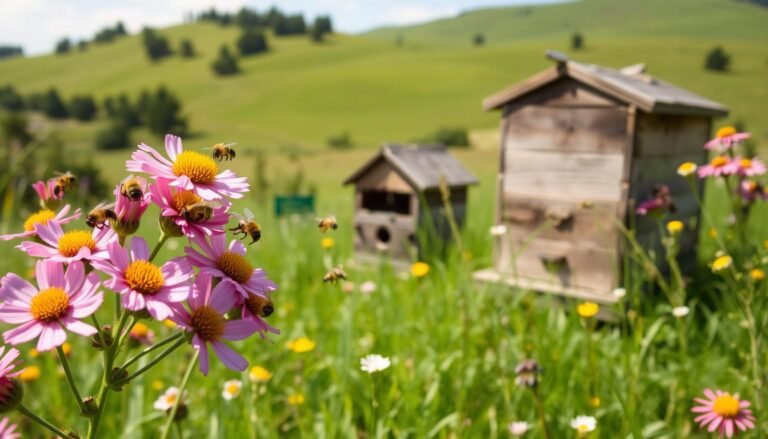
Honeybee Conservation: How to Help Pollinators Thrive
Discover the ultimate guide to Honeybee conservation. Learn effective strategies to protect pollinators and promote a healthy ecosystem.

Honeybees and wild pollinators face documented pressures: pesticides, habitat loss and fragmentation, disease spillover and a changing climate. The articles here cover colony loss surveys and colony collapse, how pesticides affect bees and how registries such as DriftWatch and BeeCheck help avoid spray kills, and the wild species conservation lists actually track, such as the rusty patched bumble bee and Franklin’s bumblebee.
The section also covers practical sustainability for beekeepers: low-impact and zero-waste apiary practices, siting hives with the local ecosystem in mind, and new pollinator habitat on solar farms, golf courses, cemeteries and urban corridors.
Start here:
Discover the ultimate guide to Honeybee conservation. Learn effective strategies to protect pollinators and promote a healthy ecosystem.
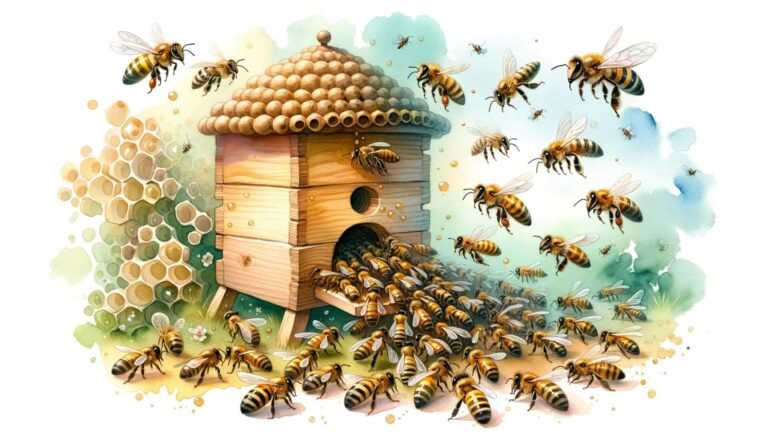
Do honey bees really compete with native bees and other pollinators? Here's what the research actually shows about competition, coexistence, and forage.

Honey production is often talked about as a purely agricultural activity, but it is genuinely inseparable from the broader ecosystem a colony forages in – biodiversity, pollination, and climate all…

A single honeybee colony can forage across several square miles, but that range doesn’t mean managed honeybees automatically help every native pollinator nearby – in areas with limited forage, dense…

Is beekeeping sustainable? Yes at the right hive density and with colonies kept alive. What the research shows on U.S. colony losses, wild bee competition, disease spillover and hive density.

Neonicotinoid pesticides can measurably impair a honeybee’s navigation and foraging ability at concentrations far below what would kill her outright – a sublethal effect that’s proven harder for regulators to…