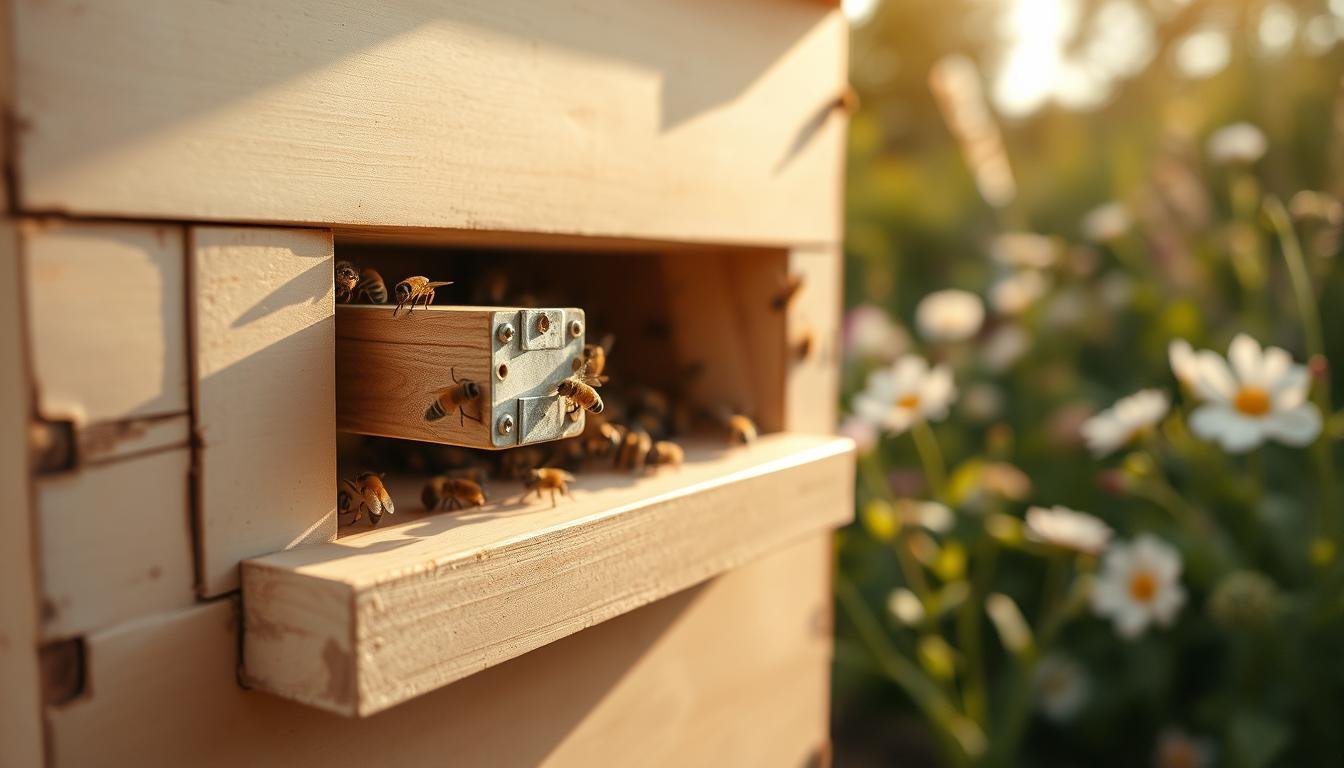
Protecting the hive entrance keeps a colony safe through cold months. Proper entrance protection prevents rodents from entering and damaging frames and comb. A durable entrance reducer or metal screen preserves airflow while blocking pests.
Mann Lake offers a 3.2-ounce stainless steel option that fits standard 10-frame setups. Many beekeepers prefer stainless steel designs because they resist weather better than plastic. A well-installed reducer lets bees exit and defend the bee hive without letting in unwanted visitors.
Choosing the right reducer requires checking frame metal compatibility and fit. For a quick starter solution, see a full entrance reducer included in common kits at starter kit resources. For a ready-made screened option, consider the Langstroth-specific product available at Langstroth Hive Mouse Guard.
Key Takeaways
- Entrance protection is essential for winter hive health.
- Stainless steel reducers offer superior durability outdoors.
- Proper fit to the frame ensures bee access and rodent exclusion.
- Install reducers in fall before cold clusters form.
- Entrance reducers also help manage airflow and robbing risk.
Why Your Apiary Needs Protection Against Rodents
Winter drives rodents to seek warm cavities, and a hive can look like an inviting home for them.
Mice and other small pests will chew and burrow into comb. They quickly destroy a single frame, eat honey stores, and stress the colony. One rodent inside a hive can trigger worker bees to abandon brood or fight through the winter.
Rodents are persistent. They exploit any gap at the entrance and force their way into protected spaces. To keep rodents out, install a secure metal barrier that preserves airflow while blocking access.
Key reasons to protect your apiary:
- Prevent comb damage and lost honey reserves.
- Reduce stress on bees so colonies stay healthy.
- Protect investment with durable steel or metal solutions.
- Maintain normal clustering behavior and brood development.
Professional keepers treat entrance protection as routine before the first frost. For a practical overview and considerations, see this guide on beehive mouse guards — the pros and.
Evaluating Materials for the Best Mouse Guard for Langstroth Hives
Choosing the right material matters when you want a lasting entrance barrier that still lets bees come and go. Start by weighing durability, weather resistance, and how the piece affects normal colony traffic.
Stainless Steel Durability
Stainless steel holds up in wet, humid, and cold conditions. The Mann Lake 3.2-ounce stainless steel option resists rust and bending over time.
The BeeCastle stainless steel model uses precision-drilled round holes that block mice while still allowing bees to pass. Metal construction often prevents chewing that can ruin a frame and the honey stores.
Plastic Options and Limitations
Plastic entrance reducers are lightweight and an easy install choice. They are simple to fit and remove in spring or fall.
Over time, plastic may warp, crack, or become brittle with repeated temperature swings. For long-term protection of frames and colony health, metal choices usually win out.
| Material | Durability | Bee Access | Installation |
|---|---|---|---|
| Stainless Steel (Mann Lake/BeeCastle) | High — rust and chew resistant | Holes allow normal traffic | Cut-to-fit or ready size; many report easy install |
| 10 Frame Metal Entrance Reducer | High — can be trimmed to fit | Still allowing bees to enter freely | Permanent, simple trim and fit |
| Plastic Reducer | Moderate — may warp over time | Good short-term access | Very easy install, seasonal use |
When comparing products, factor in frame metal compatibility and whether a single piece can be trimmed to your hive entrance dimensions. For a practical product overview and buying tips, see our mouse guard guide.
Understanding Hive Compatibility and Sizing Requirements
Sizing an entrance reducer starts with knowing whether your equipment uses eight or ten frames. Measure the hive entrance before purchase so the piece fits snugly and leaves no gaps where pests can enter.
Key sizing notes: 31.5 cm reducers suit many 8-frame setups while 37.5 cm versions fit common 10-frame boxes. The 6Pcs Large Bee Hive Entrance Reducer is made to fit 14-inch openings and matches many standard 8-frame hives.
Choose an adjustable reducer when you want to control traffic and ventilation. That flexibility helps you tune entrance size as the colony changes through the season.
Tip: stainless steel guards need precise measurement, especially with a different hive configuration. A proper fit prevents mice from finding gaps and keeps the colony secure in winter.
Consistent sizing across an apiary simplifies management and reduces the chance of accidental entry points. Always verify compatibility with your frame metal and entrance design before installing a reducer.
Installation Techniques for a Secure Fit
Start by measuring the hive entrance and the bottom board rails. Accurate dimensions help you trim a metal piece to a snug fit and avoid gaps where pests can squeeze through.
Prepare the site by clearing the entrance and placing the reducer in position. Check how the piece aligns with the wood frame and rails before fastening.
Tools and Hardware Considerations
Use a drill to make pilot holes. This prevents splitting and makes an easy install. Choose stainless steel screws to resist rust and hold the guard through wind and snow.
- Screws: stainless steel, short enough to avoid hitting frames.
- Trim: cut the metal around the bottom board rails where needed for a perfect fit.
- Quick removal: select a product design that lets you remove guards during active beekeeping.
| Tool | Purpose | Tip |
|---|---|---|
| Drill | Pilot holes | Use low torque to protect wood |
| Tin snips | Trim metal | File sharp edges after cutting |
| Stainless screws | Secure guard | Drive flush to prevent bee snagging |
After installation, confirm the entrance size still lets bees pass without crowding at the hive entrance. A secure fit keeps mice and other pests out and protects the frame and colony through cold months.
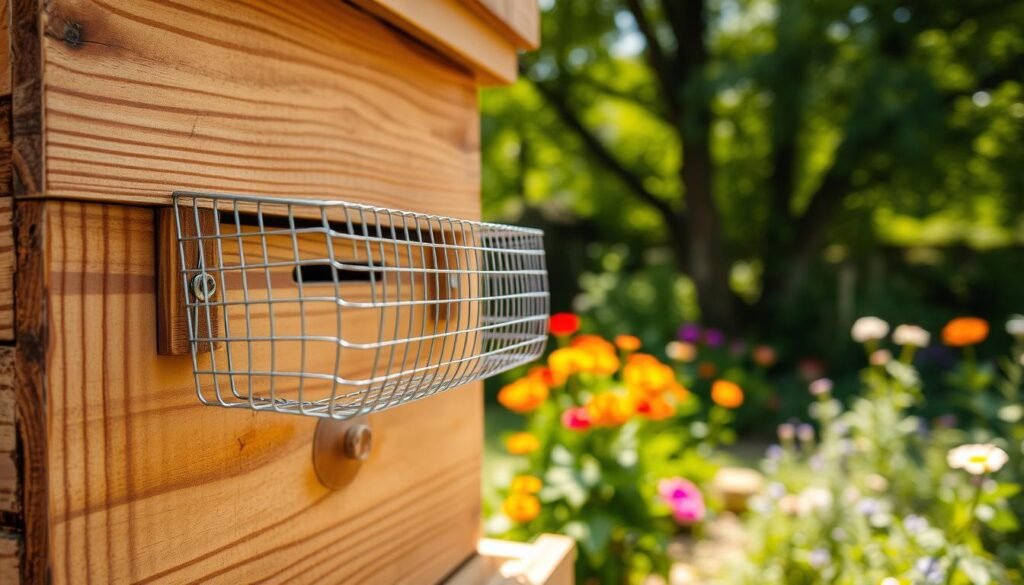
Want a quick how-to? See our short guide on how to use a mouse guard for step-by-step tips.
Balancing Airflow and Pest Prevention
Good ventilation and pest exclusion share one simple goal: a stable colony environment.
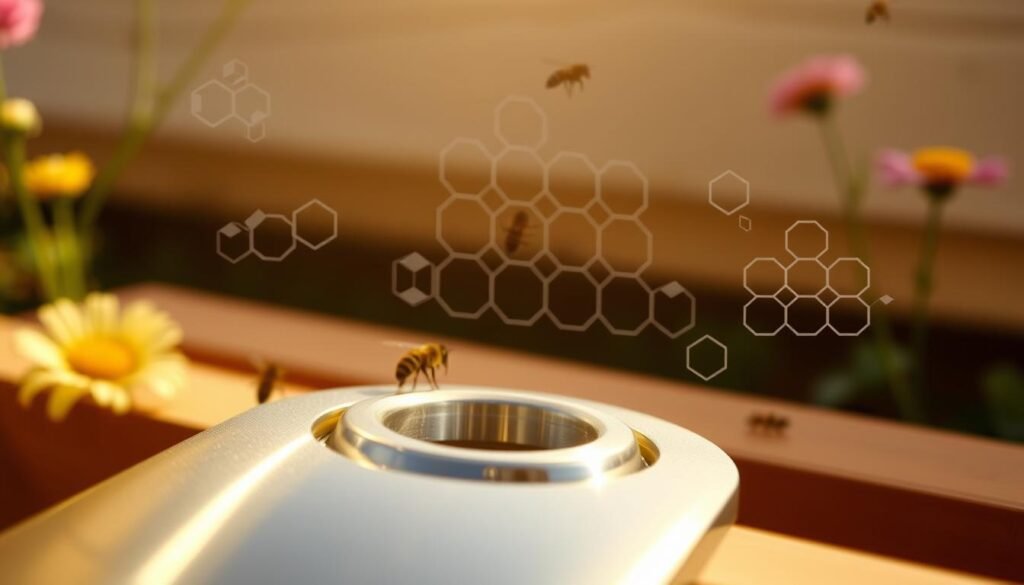
Precision-drilled stainless steel guards let air move while stopping rodents. The drilled holes match bee size and block larger pests without cutting airflow.
Proper ventilation reduces moisture build-up in the hive. Too-tight reducers trap damp air and can chill brood or rot comb. Keep the entrance sized so bees can circulate heat and dry the box.
Watch for debris. Snow, leaves, and propolis can clog a guard. Professionals inspect the hive entrance during cold months and clear blockages to keep bees healthy.
Choose a metal design that still allows worker traffic but prevents mice from entering frames and eating stores. A functional reducer supports wintering by securing the hive and preserving internal airflow.
| Factor | Why it matters | Practical tip |
|---|---|---|
| Hole size | Controls airflow and blocks larger pests | Match holes to worker bee width |
| Material | Durability and resistance to weather | Use stainless steel to avoid rust and chewing |
| Maintenance | Prevents clogging and moisture buildup | Check entrance monthly in winter |
Seasonal Maintenance and Inspection Routines
Keep a simple monthly schedule to catch wear and tear before it threatens the colony. Short checks help protect frames and maintain a clear hive entrance.
Monthly Integrity Checks
Inspect the guard attachment and the board beneath the entrance. Look for chewing, loose screws, or warping of the metal construction.
The LEIFIDE model (39 x 6.5 cm) slides open for quick cleaning and makes checks easier. Verify the entrance size has not been changed by pests trying to widen gaps.

Preparing for Winter
Before cold weather, confirm the reducer is firmly fitted to the wood frame and bottom board. Replace any damaged piece immediately to protect honey stores and brood.
- Check fit and frame metal contact each visit.
- Clear debris from the bottom board and entrance.
- Prefer stainless steel or steel designs when long-term protection matters.
| Check | Why | Action |
|---|---|---|
| Attachment | Prevents gaps | Retighten screws; ensure easy install access |
| Metal condition | Stops chewing and rust | Replace bent or corroded pieces |
| Entrance size | Maintains airflow and defense | Adjust reducer to proper opening |
Regular maintenance saves time and reduces pest risk. For equipment planning and part choices, see a practical guide on choosing beekeeping equipment.
Natural Alternatives for Rodent Deterrence
A scent-based strategy can add a quiet layer of protection around each hive without touching the comb.
Many keepers use BOZFLY peppermint oil balls near the hive entrance to discourage mice and other pests. These scent repellents are safe around children and pets when placed outside the bee home.
Place all repellents outside the hive so honey and frames stay free of contamination. Peppermint works because rodents avoid strong smells, but it does not block access by itself.
Use natural repellents together with a metal or steel entrance reducer or a physical mouse guard to protect frames and the colony. This multi-layered approach helps keep rodents away while preserving airflow and bee activity.
For product ideas and discussions about scent-based tactics alongside physical guards, see this post on beehive mouse guards and an overview of common hive types.
| Method | Primary Benefit | Notes |
|---|---|---|
| Peppermint oil balls (BOZFLY) | Non-toxic scent deterrent | Place outside; replace as scent fades |
| Natural repellents | Safe for families and pets | Use near entrance, not inside frames |
| Metal/steel reducer | Physical barrier at hive entrance | Prevents entry; maintains airflow |
| Combined approach | Layered protection | Peppermint + reducer reduces pest visits most |
Final Thoughts on Protecting Your Bee Colony
A snug metal plate at the hive mouth can be the difference between a healthy winter and lost stores.
Protecting your colony with a reliable mouse guard and regular checks keeps frames intact and helps your bees thrive. Choosing a durable stainless steel design gives long-term resistance to chewing and weather.
Proper installation and monthly inspection preserve the entrance fit and reduce visits by mice and other pests. A well-fitted guard also helps regulate airflow so the colony stays stable through cold snaps.
For practical pros and cons on options and maintenance, see beehive mouse guards. Keep long-term care in mind to protect frames, stores, and the future of your apiary.