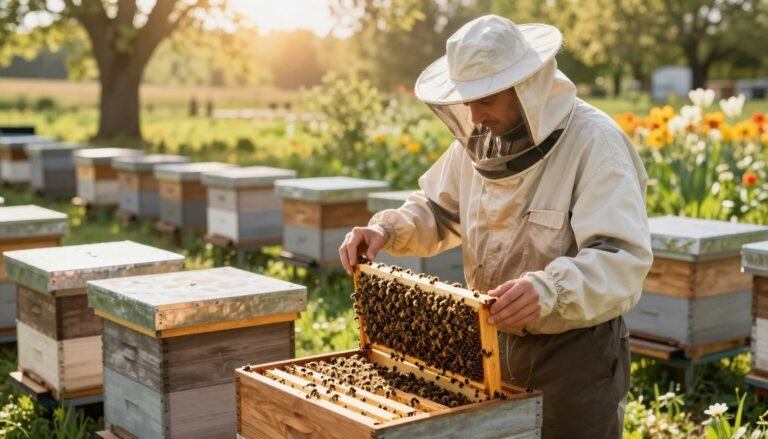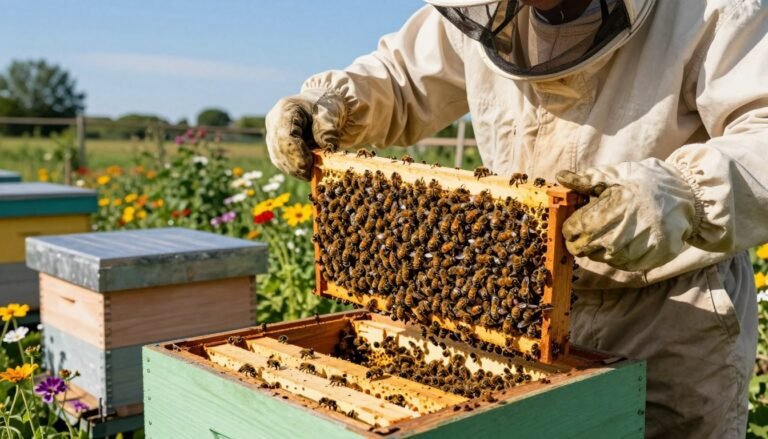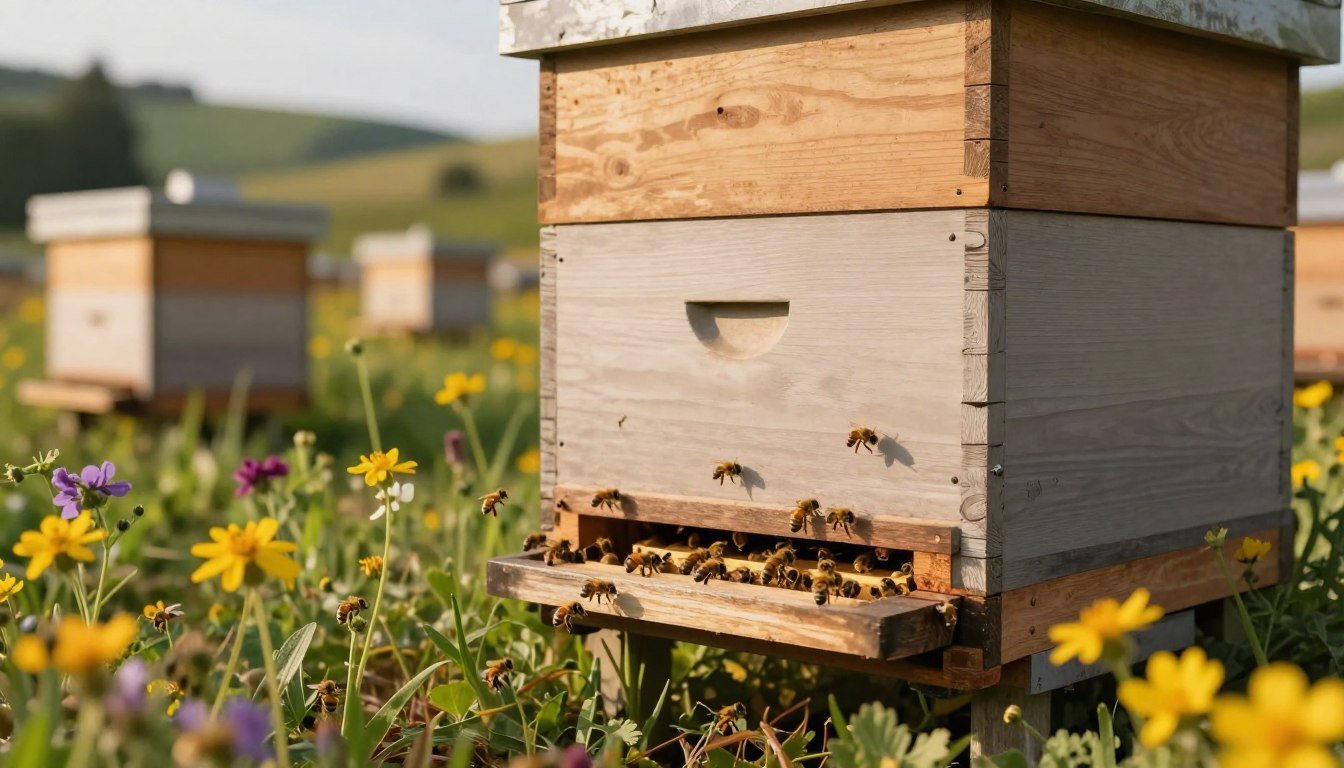
Foxhound Bee Company recommends mastering hive division as a core beekeeper skill. Splitting helps manage populations, curb swarming, and expand an apiary with purpose.
A nucleus colony typically holds five frames with a queen, brood, honey, and pollen. This compact box offers a strong starting point for growth when conditions are right.
Many beekeepers wonder if a first-year nuc is ready for division. The key is whether the original colony is robust and well provisioned before attempting a split.
Think of splitting like taking a plant cutting: prepare equipment, understand colony behavior as one unit, and time the move during active spring. With care, a well-planned split raises new queens and keeps the hive healthy.
Key Takeaways
- Splitting controls swarming and supports apiary growth.
- Typical nucs contain five frames with queen and brood.
- Only divide when the original colony is strong and provisioned.
- Preparation of gear and timing in spring are essential.
- Learning the process helps raise new queens and manage bees effectively.
Understanding the Basics of Hive Division
Strategic division of frames and bees from a productive box prevents swarms and strengthens apiary balance. Splitting is a practical technique to reduce overcrowding and the natural urge to swarm.
Well-managed division also supports colony health. Removing and redistributing frames lowers varroa pressure across the apiary over time.
Creating new nucs expands capacity for honey production. With proper resources, both the original and new hive focus on foraging and storage rather than preparing to leave.
“Splitting a strong colony gives beekeepers an opportunity to manage population, reduce mite loads, and increase productive hives.”
The process requires selecting frames with healthy brood, open cells, and stores. Transfer those frames into a prepared box, ensure a source for a queen or queen cells, and monitor acceptance closely.
| Purpose | Action | Outcome |
|---|---|---|
| Prevent swarming | Remove crowded frames to new equipment | Reduced drift and lower swarming impulse |
| Reduce mites | Divide brood and adult population | Lower varroa buildup across colonies |
| Expand apiary | Create independent boxes with frames and bees | More hives for honey and breeding |
| Promote production | Provide space and resources to each unit | Higher honey yields per colony |
- Choose frames with mixed brood and stores.
- Ensure presence of queen or viable queen cells.
- Place new box near the parent colony for initial orientation.
Can You Split a First-Year Nuc Successfully
If bees are plentiful and honey reserves are steady, a division can succeed early.
Success depends on colony strength and available stores. Before any split, ensure the parent hive has enough workers to tend brood and gather food for both units.
Foxhound Bee Company recommends a common size of five frames for new nucs. This gives the new box mixed brood, stores, and adult bees for growth.
Beginner-friendly methods avoid finding the queen. Use frames with emerging brood and let the group raise queen cells or accept an introduced queen.
- Confirm adequate pollen and honey before dividing.
- Provide at least five frames to the new unit.
- Watch for queen acceptance and steady foraging activity.
| Factor | Check | Action |
|---|---|---|
| Population | Plenty of adult bees | Leave enough in parent hive |
| Brood & frames | Mixed brood and stores | Move five frames to new nucs |
| Queen status | Queen present or cells | Let colony raise or introduce queen |
Evaluating Colony Strength Before Dividing
Before dividing, inspect the colony to confirm it holds enough workers and stores to thrive.
Start with brood patterns. Look for tight, consistent brood on the frames. Healthy brood shows an even mix of eggs, larvae, and sealed brood. That pattern signals a productive queen and adequate resources.
Assessing Brood Patterns
Spot-check several frames across the brood nest. Avoid frames with scattered or spotty brood. A solid pattern means the colony has the workforce to rear more bees after the split.
Checking Queen Health
Confirm the queen is laying well. A failing queen produces irregular brood and triggers emergency behavior.
“A strong laying queen is the foundation of successful division.”
Inspect for queen cells and swarm cells on lower frames. Their presence often signals that the colony plans to divide itself. If many swarm cells exist, delay actions or follow guidance on prevention.
- Verify adult bee numbers; heavy foraging and bearding are warning signs of swarm impulse.
- Replace a weak queen before moving bees to give the new box a healthy start.
- Use resources like the best practices for hive division and detailed guides on splitting hives for step-by-step checks.
Identifying the Ideal Time for Spring Splits
Ideal split timing aligns with rising temperatures and steady nectar flow in spring. Late March through May is the typical window when brood production accelerates and workers are plentiful.
Temperatures above 60°F support robust foraging and reduce stress on both the parent and new box. Avoid early attempts if cold snaps are likely.
Splitting too soon risks weakening both colonies because stores and adult bees may be insufficient to rear brood and sustain foragers.

Mid-season divisions in June or July work in many regions when summer flows and strong adult populations exist. Plan so the new colony has enough frames and stores to build through fall.
Aligning any split with the local nectar flow gives the best chance for the new colony to establish fast. For regional timing guidance, refer to this spring splits timing guide and choose transport-ready boxes from this best nuc box guide.
“Timing is as important as technique; well-timed divisions give both colonies the resources to thrive.”
| Timing Window | Temperature | Recommended Action |
|---|---|---|
| Late March–May | >60°F | Perform splits during nectar flow; move frames with mixed brood and stores |
| June–July | Warm, stable | Use mid-season splits only if adult population is high and stores sufficient |
| February–March (risk period) | Variable | Avoid if cold snaps possible; delay until sustained warm weather |
Recognizing Signs That Your Hive Is Ready
Noticing extra traffic at the entrance and crowded frames is a strong signal to act.
Overcrowding on the brood nest often shows as bees bearding on warm afternoons. This behavior points to pressure inside the box and a rising swarm impulse.
Swarm cells on lower frames are a clear, late-stage sign the colony is preparing to leave. If many swarm cells exist, intervention should have happened earlier.
“Detect early signs and prevent swarming before colonies commit to queen rearing.”
Regular inspections of frames for queen cells and new brood help catch issues sooner. A large spring population of workers makes the hive a prime candidate for division to manage growth.
- Overcrowding: Look for bearding and packed frames.
- Swarm cells: Presence means the hive is close to swarming.
- Queen cells: Inspect frames frequently to find them early.
- Population: Strong spring bees suggest proactive action.
| Sign | What to look for | Recommended action |
|---|---|---|
| Bearding | Clusters of bees outside entrance on warm days | Inspect frames; consider dividing before swarm cells appear |
| Swarm cells | Multiple cells on frame edges or bottom | Treat as late warning; consider emergency split or requeening |
| High population | Many foragers and crowded brood nest | Plan split to form new nucs and relieve pressure |
Impact of Weather Conditions on Success
Weather patterns dictate whether a planned hive split will thrive or falter. Cold air and wet days stress brood and reduce foraging. That limits the workforce needed to settle two units.
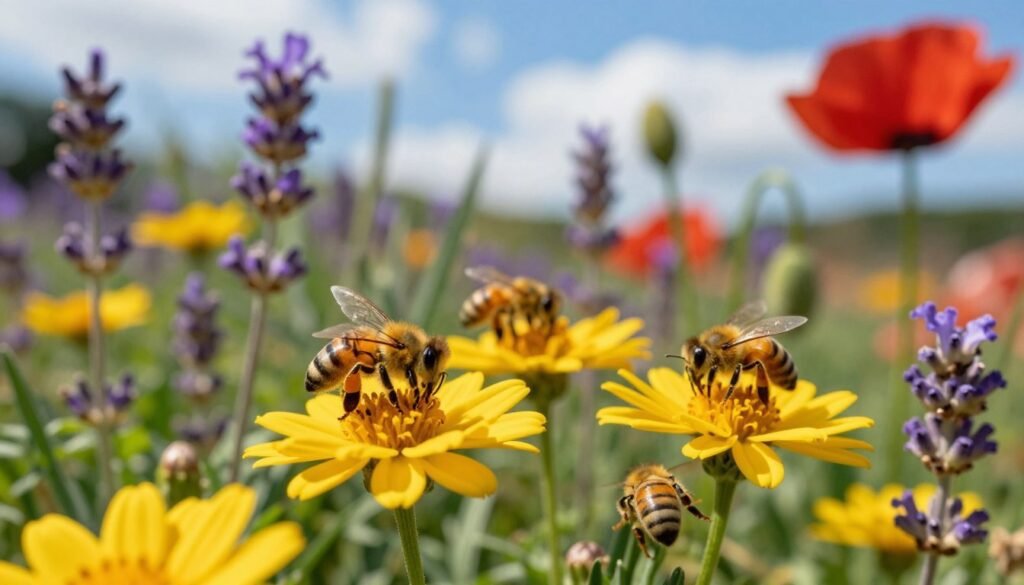
Avoid dividing before a forecasted cold snap. Low temperatures make it hard for a queen to keep brood warm. Young cells risk chilling and failing to develop.
Warm, calm afternoons give the best chance for both the parent colony and the new box to orient and recover. In the United States, plan divisions around local nectar flows and steady warming trends.
“Favorable weather is a key factor in ensuring both parent and new hives thrive.”
| Condition | Risk | Recommended Action |
|---|---|---|
| Cold snap | Chilled brood; reduced foraging | Delay split; wait for sustained warmth |
| Steady warmth | Good orientation; active foragers | Proceed with planned division |
| Rainy/windy | Low flight activity; stress | Postpone until calm weather |
Monitor forecasts and local conditions. Proper planning keeps bees healthy and reduces losses. For tips on strengthening colonies before a move, see methods to boost colony population naturally.
Essential Equipment for Your Apiary Expansion
Start with a proper box that protects brood and provides room for growth. Use a pro-nuc or a five-frame wooden unit with top and bottom for quick placement on the yard.
Frames with drawn comb give the new colony an early advantage. When drawn comb is unavailable, install high-quality foundation to encourage steady building.
Bring extra frames to refill gaps in the parent hive after removing the split. That action keeps the hive balanced and reduces drifting.
Include feeders for both units to supply stores during the adjustment. A queen excluder helps create a queenless unit when locating the queen proves difficult.
- Sturdy nuc box or five-frame box for the new unit.
- Drawn comb or quality foundation frames.
- Extra frames to replace removed brood frames.
- Feeders for both parent and new colony.
- Queen excluder to simplify queen management and cells handling.
“Right gear reduces stress for the colony and speeds establishment.”
Selecting the Right Location for New Colonies
Placement of a new colony affects how many foragers remain in the new hive. Most beekeepers set the box beside the parent colony. That approach makes handling and monitoring simple.
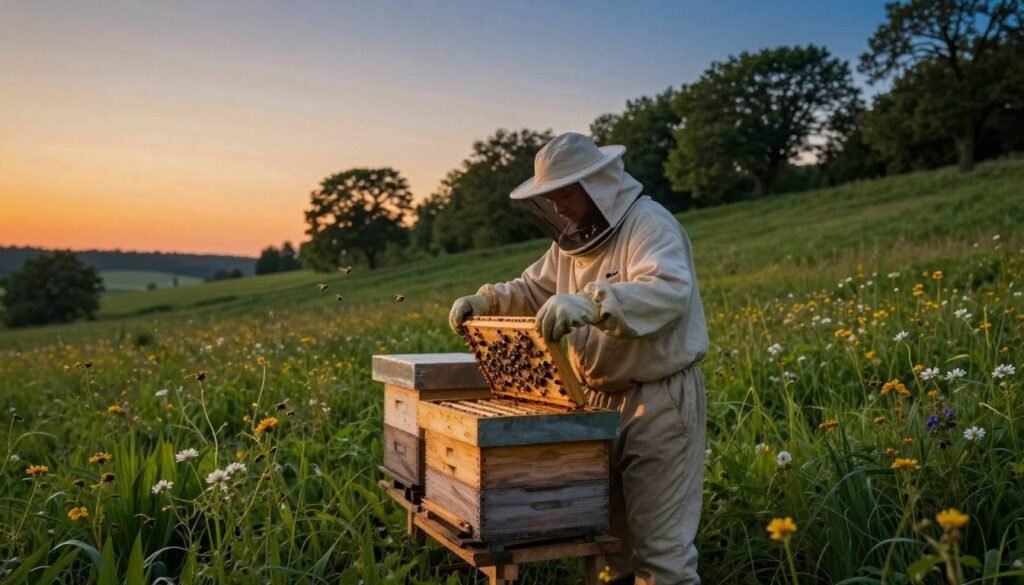
If the split stays in the same yard, expect some bees to fly back original to their previous home. Plan for that by adding extra workers to the new colony or giving it more frames and stores.
Moving the colony several miles away prevents foragers from returning. That method is the most reliable way to retain the workforce, but requires a second apiary or temporary staging area.
“Moving a split several miles away is the most effective way to prevent the loss of foragers.”
Practical tips:
- Keep the box close for easy checks if monitoring queen acceptance and brood progress.
- Add extra bees and frames when leaving the unit in the same yard to offset returns.
- Move the new colony away for at least two weeks to reorient foragers when possible.
For disease checks before moving colonies, see this guide on inspecting purchased nucs for disease risk. Proper placement and inspection protect both the parent colony and the new hive.
Preparing the Queenless Colony
Prepare the queenless unit by gathering frames that balance young brood, stores, and nurse activity.
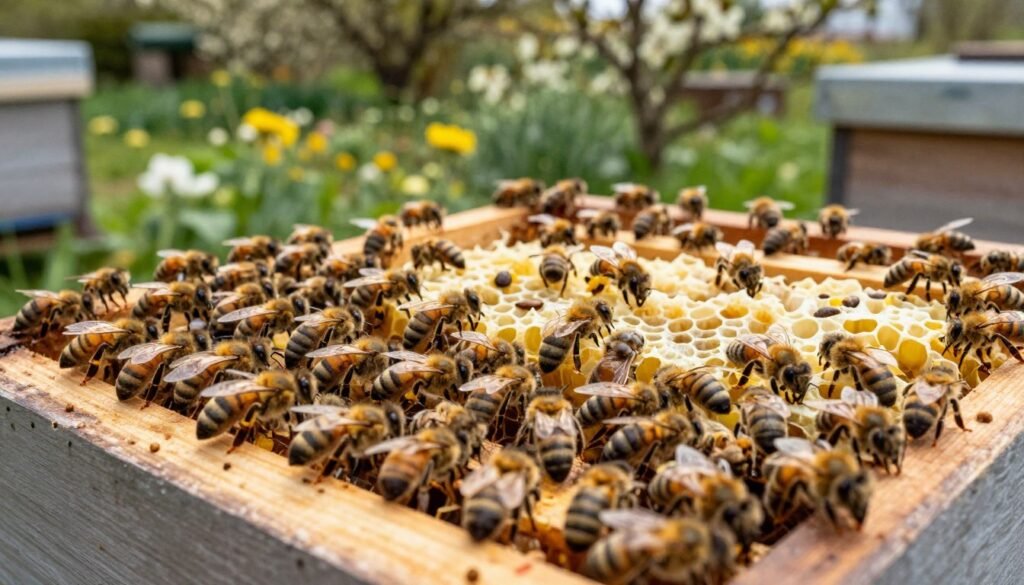
The queenless colony needs minimum bees, brood, honey, and pollen to defend and grow. For a five-frame nuc, use 2–3 frames of uncapped brood, 1–2 frames of pollen or honey, and one frame of drawn comb.
Include capped brood to supply emerging workers. Nurse bees feed uncapped brood and keep capped brood warm. Shake frames covered with nurse bees to move them into the new box.
- Choose mixed brood frames to attract nurse bees and sustain brood rearing.
- Use a nuc box for easier defense and monitoring in the new colony.
- Consider a queen excluder to consolidate uncapped brood above the queen and draw nurse activity upward.
“A balanced set of brood frames and stores gives nurse bees the best chance to raise healthy queens and stabilize the hive.”
| Item | Recommended amount | Purpose |
|---|---|---|
| Uncapped brood | 2–3 frames | Attracts nurse bees; future workers |
| Pollen/honey | 1–2 frames | Food for brood rearing and defense |
| Drawn comb | 1 frame | Immediate space for storage and brood |
| Capped brood | Include mixed cells | Ensures steady emergence of workers |
Methods for Splitting Beehives
Practical options for forming new units range from hands-off approaches to introducing a purchased queen.
Walk-away splits let the original queen move into the new box while the original hive is left queenless to rear a new queen from existing brood. This method is low effort and works well during strong spring flows.
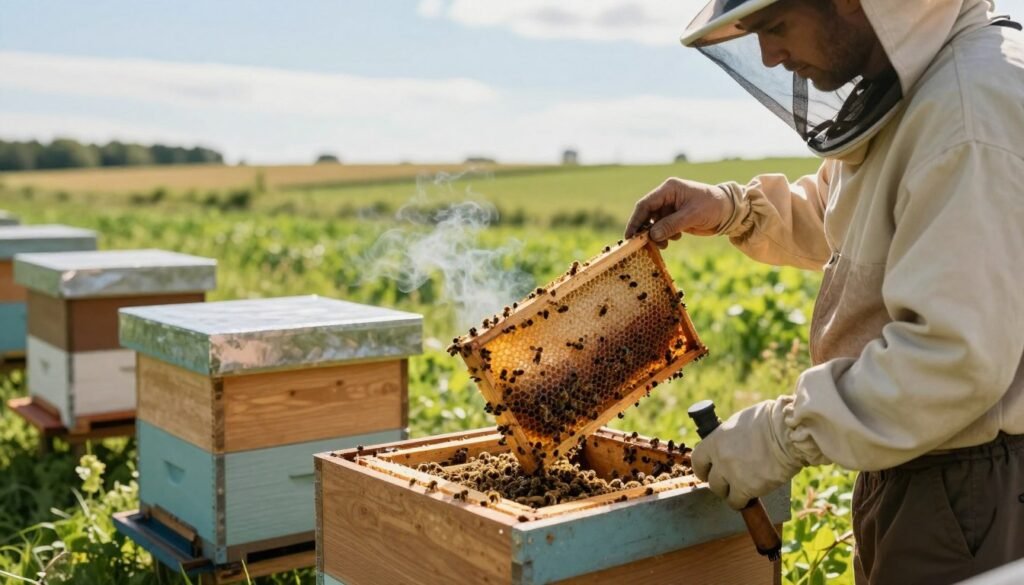
Using queen cells speeds requeening. Move healthy queen cells from a queenright colony into the prepared nuc box to shorten downtime for brood care and laying. Handle cells gently and place them on stable frames.
Purchasing a mated queen is the fastest way to ensure a laying adult in the new colony. Introducing a new queen reduces uncertainty and can improve genetic diversity across the apiary.
“Select the method that matches skill level, timing, and apiary goals.”
- Ensure a queenless unit and a separate queenright colony before any action.
- Provide mixed brood frames, drawn comb, and adequate stores in the brood box.
- Monitor acceptance and be prepared to reintroduce or find queen stock if needed.
| Method | Pros | Cons |
|---|---|---|
| Walk-away | Low labor, natural queen rearing | Longer queenless period in original hive |
| Use queen cells | Faster requeening, uses existing stock | Risk of cell damage; timing critical |
| Buy mated queen | Quick, reliable laying queen | Cost; need careful introduction |
Implementing the Walk Away Split Technique
The walk away method separates a strong hive by moving the top brood box to form a new colony.
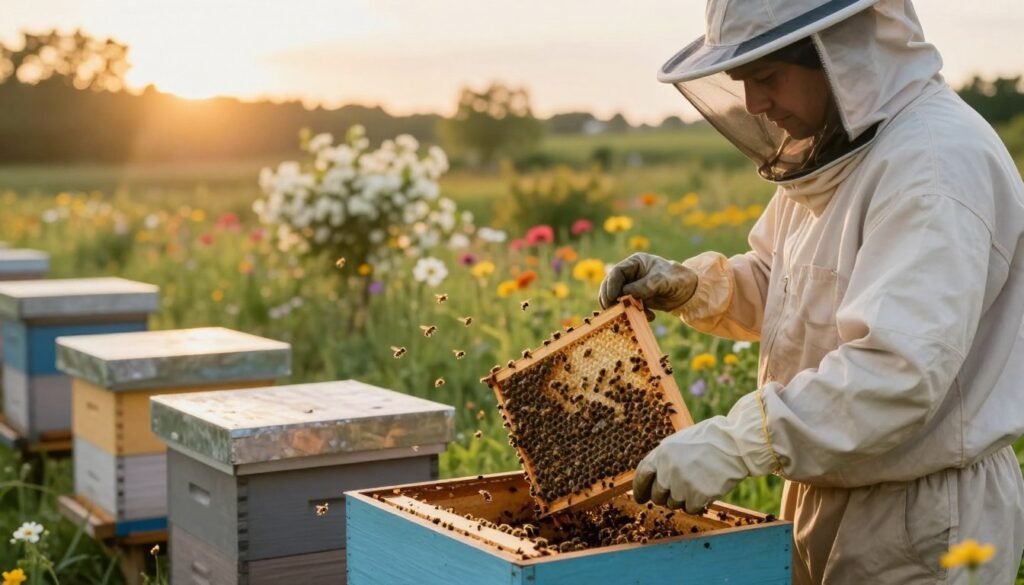
This approach requires no need to find queen during the operation. Remove the top brood box, complete with mixed brood and drawn comb, then put nuc near the parent or move it away to retain foragers.
One half of the colony will raise its own queen from eggs and young larvae, while the original hive keeps the existing queen. Ensure both units contain eggs and small larva so nurses can make queen cells.
Best practice: use strong colonies with two brood boxes and at least five frames of mixed brood in the top box. Shake nurse bees into the new box so brood care continues without delay.
“A properly prepared walk away split lets bees follow natural processes and reduces stress for the beekeeper.”
| Step | Action | Goal |
|---|---|---|
| Prepare gear | Have an empty five-frame box, drawn comb, and extra frames | Create a stable brood box for the new colony |
| Move top box | Lift top brood box with mixed brood and place on fresh bottom | Form separate unit that will raise queen cells |
| Ensure brood mix | Confirm presence of eggs and young larvae in both boxes | Allow bees to make queen from scratch |
| Positioning | Put new box near original or relocate several miles | Control forager drift and colony retention |
Foxhound Bee Company recommends checking both units weekly for queen cells and early laying. For guidance on recognizing swarm preparations, refer to this short guide on how to tell if your hive is preparing to.
Utilizing Queen Cells for Rapid Requeening
When a colony builds queen cells, those frames become an asset for forming ready-made new queens. This approach turns swarm preparation into a practical resource for the apiary.
Move whole frames that hold queen cells into the queenless box. Transporting the entire frame protects delicate cells and reduces the risk of damage during transfer.
Multiple splits are possible as long as enough frames with queen cells and adult bees exist. A strong parent colony with several cells allows beekeepers to create several independent units quickly.
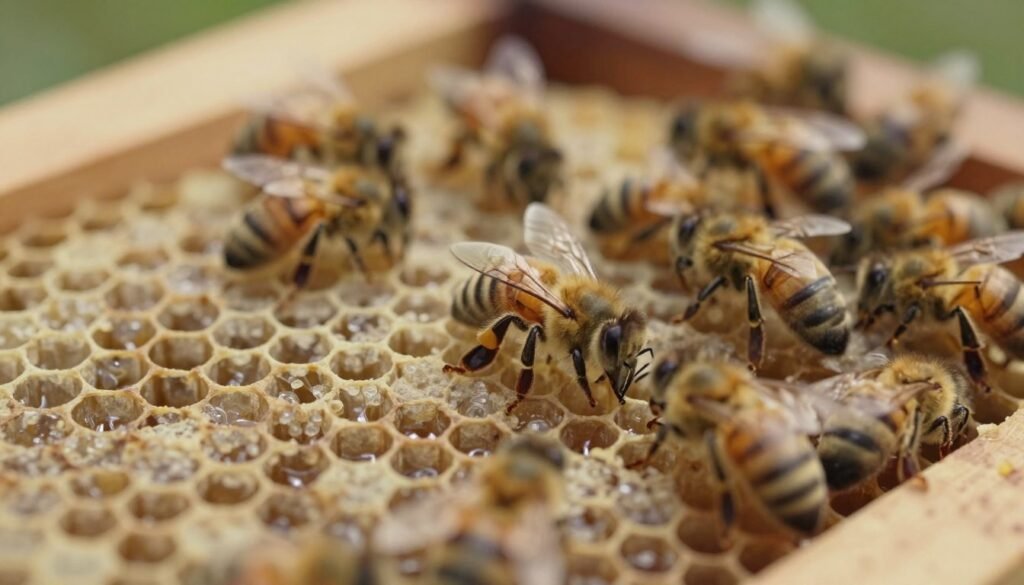
Using queen cells saves time. New colonies receive a near-immediate new queen that will emerge and begin laying faster than waiting from egg stage. This reduces the queenless window and helps both units stabilize.
“Make lemonade from swarm prep: move the cell-bearing frame and let the new queen emerge in place.”
- Protect cells by moving the entire frame into the prepared box.
- Use this method to prevent swarming by dividing colonies already building cells.
- Purchase of queen cells is rare; most beekeepers use on-site stock.
- For community discussion on propagating nucs from queen cells, see propagating nucs from queen cells.
Introducing a Mated Queen to Your Split
Adding a proven, mated queen is the quickest route to a productive new colony.
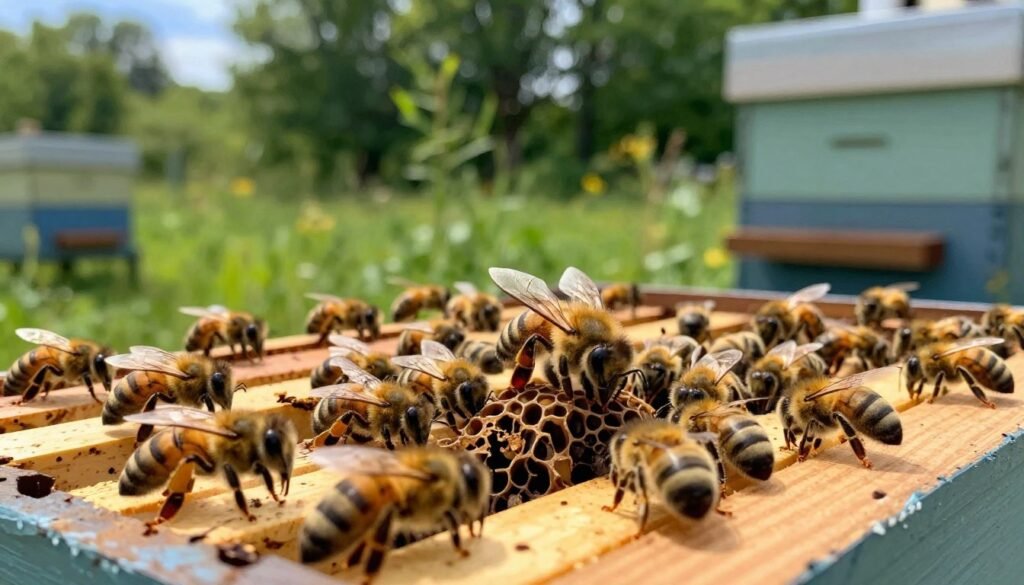
Most beekeepers receive the queen in a small queen cage. The cage protects her during transport and lets workers inspect her slowly.
Introduce the caged queen into the queenless box following standard procedures to raise acceptance rates. Leave the candy plug intact for 2–4 days so workers adjust to her scent before release.
Benefits: the new queen will usually start laying within a week. That rapid start reduces brood gaps and helps the hive focus on growth rather than rearing queens.
“A mated queen gives immediate laying capacity and shortens the colony’s recovery period.”
- Introducing a mated queen is the most reliable way to secure early laying in the new box.
- Banks that supply queens, including Foxhound Bee Company, improve genetics by sourcing queens from varied regions.
- Marking the queen speeds identification as she begins to start laying, though marking is optional.
- Follow careful introduction steps to increase acceptance and reduce stress on the bees.
| Step | Timing | Purpose |
|---|---|---|
| Place caged queen | Day 0 | Allow workers to inspect without harm |
| Leave candy plug | 48–96 hours | Slow release; increases acceptance |
| Check for laying | 5–7 days | Confirm new queen started brood |
| Marking (optional) | After acceptance | Easier spotting during inspections |
For step-by-step guidance on introducing a mated queen, consult this short guide on how to introduce a mated queen. Proper technique improves acceptance and helps the new hive establish quickly.
Managing Forager Drift Between Hives
Expect a portion of foragers to head back original within 48–72 hours when the new box remains beside its parent.
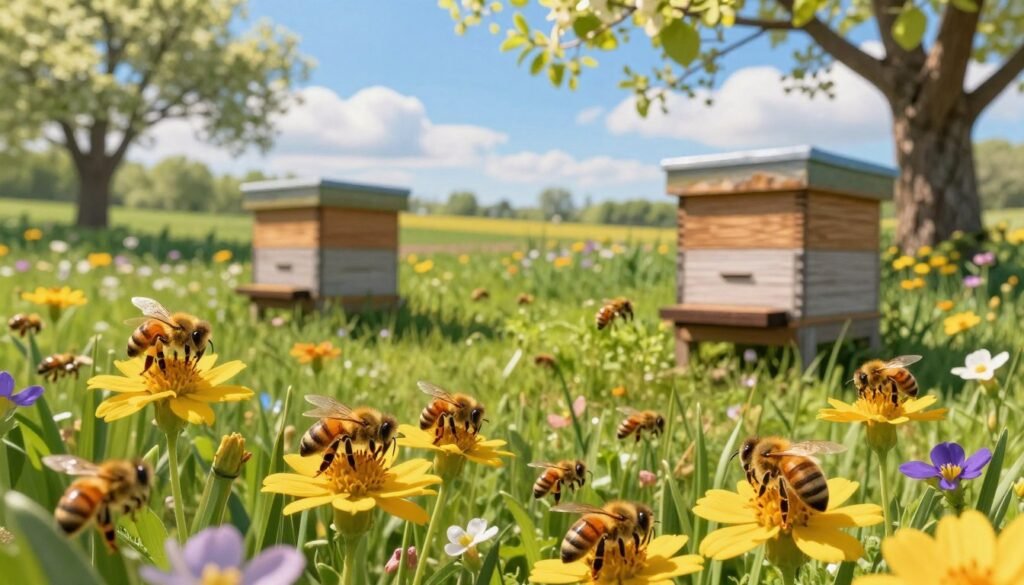
Forager drift is normal. When nucs stay in the same yard, familiar bees often return to the original hive. That loss is predictable and solvable.
Plan the split size so both the parent colony and the new unit keep enough workers. Add extra bees and extra frames to the new box to offset expected returns.
- Add more foragers than needed to the new colony to cover losses.
- Move the unit several miles away for two weeks to prevent returns when possible.
- Watch entrances of both hives daily to spot imbalance early.
- Use mixed brood and cells in the new unit to attract nurse activity and steady growth.
“Adding surplus bees at formation helps both colonies stabilize without heavy intervention.”
Monitor queen activity and brood development in each hive. Timely checks let the beekeeper restore balance before either colony weakens.
Post Split Care and Monitoring
The initial week after forming a new colony is the most critical window for confirming queen acceptance and stabilizing resources.
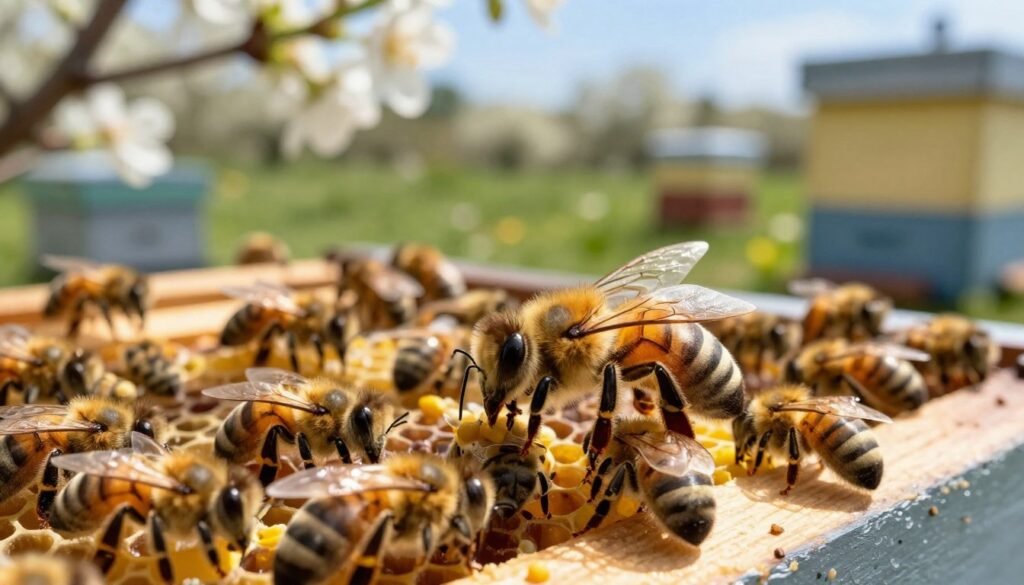
Monitoring Queen Acceptance
Check the box daily for calm behavior and for signs that the queen has been accepted. Look for workers around the cage or open movement near frames.
Confirming capped brood within two weeks shows the queen has begun to start laying. If aggression or unrest appears, investigate for missing or injured queen, and consult records on original hive placement.
“Monitor closely for the first seven days to catch issues while they are fixable.”
Supplemental Feeding Strategies
Provide sugar syrup and pollen substitute when stores are low. Feeding supports nurse activity so brood develops and the colony gains strength.
Keep inspections brief and avoid disturbance on cold nights. Cold snaps reduce thermoregulation ability and stress young brood.
- Feed lightly until natural nectar returns.
- Add drawn frames if stores are short.
- Record observations on colony strength and milestones like when the queen will start laying.
Conclusion
Thoughtful timing, balanced frames, and steady monitoring lead to healthy hive growth. Proper preparation protects brood and helps the queen establish laying quickly in the new box.
Whether using a walk-away method or introducing a mated queen, select the method that matches skill level and seasonal conditions. Give both colony and new unit enough bees, stores, and protection during the first weeks.
Good records, proper gear, and routine checks reduce swarm pressure and improve long-term productivity. With the right approach, beekeepers expand the apiary and enjoy more resilient colonies season after season.
FAQ
Can a beekeeper split a first-year nucleus colony?
Yes. A beekeeper may divide a young nucleus by transferring drawn comb, brood frames, and nurse bees to form a new nucleus box. Success depends on queen status, colony strength, and timing. Ensure the original hive retains enough brood and stores to remain viable.
What are the basic steps for dividing a hive?
Start by assessing brood frames, locating the queen or queen cells, and moving selected frames into a separate box. Provide ventilation, a clean entrance, and resources like pollen and syrup. Label boxes and monitor both colonies closely for acceptance and brood development.
Is splitting a first-year nucleus likely to succeed?
Success rates vary. A strong young colony with drawn comb and healthy brood can produce a new laying queen or accept a mated queen. Weak colonies or those with spotty brood patterns risk failure. Assess resources and weather before dividing.
How should colony strength be evaluated before creating a split?
Count brood frames, check for capped brood, and note adult bee population on frames. Look for drawn comb and ample pollen and honey stores. A solid pattern of eggs, larvae, and capped brood indicates a robust colony that can spare frames for a split.
What brood pattern signs predict a healthy queen?
A compact, uniform brood pattern with few empty cells means the queen lays consistently. Presence of all brood stages—eggs, open larvae, and capped brood—shows ongoing laying. Irregular patches or spotty areas suggest queen or disease issues.
How do beekeepers check queen health before dividing?
Inspect for a marked or visibly active queen, observe her laying behavior, and confirm presence of emerging brood. Note physical deformities or reduced laying rate. If unsure, consider leaving queenright frames intact or introducing a queen cell.
When is the ideal spring time for creating splits?
Choose mid to late spring when nectar flow and pollen are available and colony growth is rapid. Warm daytime temperatures and good forage reduce stress on new colonies. Avoid early cold snaps or late-season dearths that hamper queen mating and brood rearing.
What hive signals indicate readiness for division?
Signs include rapid population growth, multiple frames of brood, drawn comb, and presence of swarm cells or queen cups. If bees show congestion or frequent scouting, the colony may be primed to produce new queens and accept a split.
How does weather affect split success?
Cold, wet, or windy conditions reduce mating flight success and foraging, increasing stress on queenless groups. Warm, calm weather with abundant forage improves mating and rearing. Monitor forecasts and postpone splits during poor conditions.
What essential gear supports apiary expansion?
Stock extra nuc boxes or full brood boxes, frames with drawn comb, entrance reducers, feeders, and protective equipment. Queen cages or mailing cages help introduce mated queens. Keep tools sterile and ready for inspections and emergency interventions.
How should new colony locations be selected?
Place colonies near abundant forage, water, and sunlight while avoiding heavy pesticide exposure. Space hives to reduce drift and aggression. Vary orientation and position for new colonies to help returning foragers learn local landmarks.
What steps prepare a queenless colony before transferring frames?
Remove a healthy mix of brood and nurse bees, leaving adequate stores behind. If creating a queenless box, include young larvae for queen cell development or plan to introduce a mated queen. Provide supplemental feeding if nectar is scarce.
What methods are commonly used for hive divisions?
Popular approaches include walk-away splits, artificial splits using a mated queen, and making nucleus colonies from selected frames. Choose based on queen availability, time, and desired outcome—rapid requeening or natural queen rearing.
How is the walk-away split technique implemented?
Move frames with brood, nurse bees, and stores into a separate box and leave both groups to rear queens naturally. Restrict or alter entrances to reduce drift. This low-intervention method relies on workers to raise new queens from young larvae.
How can queen cells speed requeening for a new colony?
Queen cells containing larvae can be transferred to a queenless nucleus to produce a new queen quickly. Protect cells during transfer and provide stable conditions. Note that emergence and mating still require favorable weather and drone availability.
What is the best practice for introducing a mated queen to a split?
Use a queen cage with candy plug or a release mechanism to reduce aggression. Place the cage among frames with open brood and nurse bees, then monitor for acceptance over several days. Keep disturbance minimal and ensure adequate food.
How do beekeepers manage forager drift after making splits?
Reduce drift by changing hive entrances, shifting the new box a short distance, and orienting entrances differently. Provide distinct landmarks and avoid placing colonies too close. Robbing screens and entrance reducers help during vulnerable periods.
What post-division care ensures establishment and growth?
Monitor for queen acceptance, check brood development, and look for signs of disease. Provide supplemental feeding when nectar is limited and replace or add drawn comb to support brood rearing. Inspect weekly until the new queen starts laying.
How is queen acceptance monitored after introduction?
Watch for lack of aggression, presence of the caged queen after several days, and later, eggs and larvae signaling laying. Absence of fresh eggs after two weeks suggests mating failure or rejection; consider reintroducing a queen or using queen cells.
What supplemental feeding strategies support new colonies?
Offer sugar syrup in spring for brood rearing and protein patties or pollen substitute when natural pollen is scarce. Use internal or external feeders to avoid robbing. Adjust feeding volume based on colony buildup and forage availability.