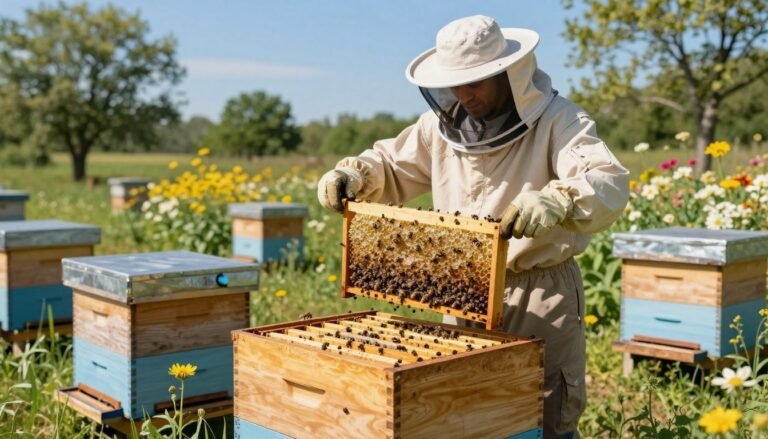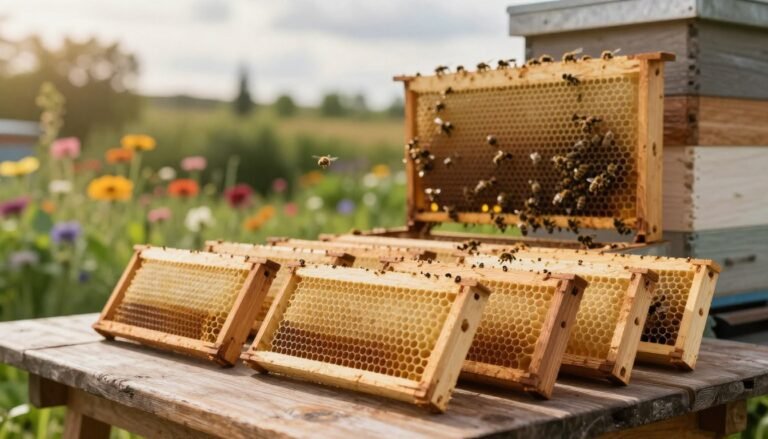
Modern apiary managers can gain an edge by learning about the dark residue left after rendering comb. This byproduct often contains trapped wax, pollen bits, and other debris. Handling that material wisely reduces waste and adds practical value during seasonal harvests.
This guide outlines the chemical makeup of the residue, safe processing steps, and creative uses. You will find clear advice on melting, filtering, and separating wax and water. Practical tips include using pantyhose filtration, dedicated pots for melting, and safe reheating practices.
Whether hobbyist or pro, applying these methods improves hive efficiency and resource management. For a detailed how-to on rendering comb and handling leftovers, see rendering beeswax. Embrace these steps and make more of every frame during beekeeping cycles.
Key Takeaways
- Residue from comb holds recoverable wax and useful material.
- Simple filtration and low-heat melting yield pure beeswax.
- Use dedicated tools and avoid cooking cookware for safety.
- Processed leftovers can serve as starters or briquettes.
- Applying these methods boosts efficiency in beekeeping.
Understanding Slumgum: What It Is and How to Use It
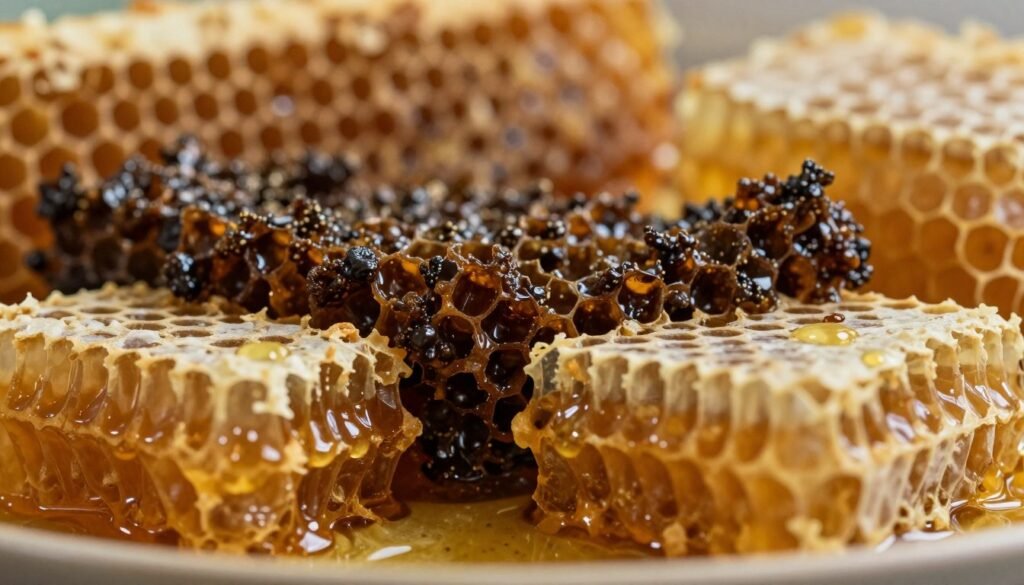
After uncapping and melting wax, many find a heavy, useful sludge hiding in the strainer. This dark byproduct forms during honey harvest and comb rendering.
Composition: It contains larval cocoons, propolis, pollen bits, and other hive debris trapped during filtering. The mass keeps a faint hive scent and still holds flammable wax residues.
Practical value: Beekeepers often save this material as a fire starter for the smoker tool. It lights easily and helps calm bees during inspections. You can also mix small amounts into garden soil or layer it in old boxes to attract a swarm.
Handle the substance with simple tools like a fork, dedicated pot, and a fine strainer during uncapping. Treating the residue as a resource reduces waste and adds useful supplies for home apiary work.
For an expanded list of applications and tips, see this guide on slumgum uses.
The Origins and Composition of Hive Residue
During the rendering process, melted wax separates from heavier solids. The pure wax rises and flows through a strainer while denser particles collect below. This step is central to reclaiming wax from old frames and protecting hive supplies.
The Rendering Process
Simple workflow: heat old comb gently, skim floating wax, then let the remaining mass settle. Use a fine strainer for clean honey and wax recovery. Because the residue sinks, sieves and a strainer make separation an easy use task.
Physical Components
The byproduct contains larval cocoons, sticky propolis, pollen, mites, and fragments from brood frames. You may also find small bee parts and excrement from developing larvae.
- Heavier material collects at the bottom of the pot.
- Propolis binds particles, producing a tough, dark cake.
- Knowing this composition helps maintain equipment and improve wax quality.
Tip: Save this residue for smoker fuel or garden soil amendments, or learn more about practical handling at slumgum guide.
Practical Applications for Your Apiary and Home
Leftover material from old comb can be an asset when managed properly. Below are three clear, low-effort ways to convert this byproduct into useful supplies for the hive and household.
Attracting Honey Bee Swarms
Aroma matters: Residue holds strong pheromones from propolis and old comb. Place small amounts inside bait boxes or swarm traps to signal scout honey bees that a site is established.
Utilizing as a Firestarter
The mix contains beeswax traces and dry organic matter. This makes a reliable, slow-burning fire starter for wood stoves or campfires.
Soil Enrichment and Gardening
When added sparingly to garden soil, the organic bits break down and release nutrients. Use near flower beds that support pollinators and plants that benefit from richer soil.
| Application | Benefit | Quick Tip |
|---|---|---|
| Swarm traps | Attracts scout bees with hive scent | Place inside bait hive for best results |
| Firestarter | Easy ignition, long burn | Dry thoroughly and store in cardboard boxes |
| Soil amendment | Adds organic matter and nutrients | Mix with compost and spread thinly |
For more on practical handling and supplies, see a detailed guide to slumgum uses and broader beekeeping benefits.
Conclusion: Maximizing the Value of Your Byproducts
Smart repurposing converts dark rendering residue into practical supplies for the hive. Small investments in processing yield usable material for smoker fuel, swarm bait, and garden amendment.
HONESTBEE offers machinery and pro equipment that streamline wax rendering while cutting waste. Producers, from home operators to commercial farms, gain efficiency and higher honey yield by adopting these methods.
Learn practical swarm lure guidance at swarm lure techniques and follow safe cleanup steps with helpful bee rescue tips. Regular practice ensures frames, comb, and supplies remain productive across each harvest.
FAQ
Can leftover comb residue be saved after uncapping and extraction?
Yes. Collect sticky residues and crushed comb in a screened container after extraction. Let wax and honey separate naturally; strain out debris and dry the remaining material for later processing or use as a smoker fuel or fire starter.
How do I render residue into usable wax or fuel?
Break the material into small pieces and use a double boiler or slow cooker to melt wax gently. Pour the melted mixture through a fine strainer or cheesecloth to remove dirt, pollen, and bits of old frame wood. Collect the liquid wax and cool it in molds; the drier solids can serve as a long-burning starter in smokers or campfires.
Is residue safe to use around my garden and soil?
Yes, when properly processed. Crushed comb and residual pollen add organic matter and trace nutrients to soil. Bury small amounts or mix into compost to avoid attracting pests. Avoid large, untreated deposits near stored food or living areas.
Can the byproduct attract swarms or benefit swarm traps?
Absolutely. Dried residue retains hive scent and can lure honey bees into bait hives and swarm traps. Place a small amount in the trap’s interior or on a lure strip to increase chances of occupancy during swarm season.
What’s the best way to use residue in a hive smoker?
Use small, dry chunks for steady, cool smoke. Pack loosely in the smoker bellows chamber to allow airflow. This gives a slow, fragrant burn that calms bees without producing harsh, acrid smoke.
Are there commercial opportunities for collected hive residue?
Yes. Refined beeswax commands good prices from candle makers, cosmetic formulators, and artisans. Processed solids can be sold as eco-friendly kindling or boosted compost material to nurseries and garden centers.
How should I store collected frames and residue between inspections?
Keep materials in a dry, ventilated space away from strong odors and pests. Use sealed plastic bins or metal containers for processed wax. Label boxes of old frames and comb clearly, and inspect regularly for wax moths or mold.
Do I need special tools to separate wax from debris?
No specialized equipment is required. A double boiler, slow cooker, fine mesh strainer, cheesecloth, and a collection tray suffice for small-scale processing. Commercial operations may invest in rendering kettles and centrifuges for efficiency.
Will using residue affect honey flavor or hive health?
When handled correctly, residue use does not harm honey flavor or colony health. Remove any rotted material and sanitize tools between hives to prevent disease transfer. Use smoke and bait practices responsibly to avoid undue stress on colonies.