
Published March 31, 2026
Marking queen bees helps beekeepers track age and performance during hive checks. This simple step saves time and aids in planning for swarms and requeening.
Using the right pen and cage matters. A POSCA 5M works well because its ink is non-toxic and the tip fits the thorax area. A small plastic marking cage keeps the queen safe while you apply a tiny dot of paint.
Find the queen on a frame by moving slowly and watching wings and movement. Handle the bee with a steady hand and follow each step to avoid disturbing brood or other hive tasks.
Record the color and year. An international color code helps manage age and the number of queens over the years. Proper tools and care keep colonies healthy and inspections efficient.
Key Takeaways
- Marking improves tracking of queen bees and hive history.
- POSCA 5M and a marking cage are reliable, safe tools.
- Work slowly on frames to avoid disturbing brood.
- Use a color code to note queen age and year.
- Good records help prevent swarms and plan requeening.
Understanding the Importance of Marking Queens
A clearly identified queen lets a beekeeper judge hive health at a glance. When you use queen marking, you speed up inspections and reduce disturbance to the bees.
Tracking age and performance matters. A marked queen reveals if a hive replaced its leader after swarming, supercedure, or sudden loss. This helps plan requeening and manage productivity.
Experienced beekeepers rely on this simple technique to tell an original queen from a newly emerged one. That clarity cuts down on invasive checks and gives quick assurance that the queen hive is queen-right.
- Identify the queen quickly among thousands of worker bees.
- Monitor laying patterns and longevity to protect colony health.
- Save time during routine inspections and reduce stress on the apiary.
For practical guidance on methods and tools, see a detailed how-to on queen marking techniques and recommended equipment like the best queen marking tube.
Benefits of Marking Queens for Retail Sale Colonies
Spotting a painted queen quickly cuts inspection time and keeps the hive calm.
Tracking Queen Age
Standard color codes let a beekeeper record a queen’s birth year at a glance. This makes it easier to plan requeening and monitor performance. If an unpainted queen appears where a marked queen lived, it signals a recent swarm or supercedure event.
Improving Inspection Efficiency
A marked queen is far easier to find among thousands of bees. That visual cue reduces the time spent searching and lowers stress on the hive. Faster checks mean the beekeeper can confirm a queen-right condition without inspecting every frame for eggs.
“A clear visual mark saves time and protects colony health during busy seasons.”
- Better records on age and origin add value to customer purchases via clear labeling and trust.
- Quick identification helps manage swarms and streamline routine tasks across many hives.
| Benefit | How it Helps | Result |
|---|---|---|
| Age tracking | Standard color code shows year | Planned requeening, accurate records |
| Faster inspections | Visual cue reduces search time | Less hive disturbance, saved time |
| Swarm detection | Unmarked queen indicates replacement | Immediate management action |

For practical tools and technique guides see a detailed how-to on queen marking techniques and tips on choosing the best marking pen.
Essential Tools for the Marking Process
Start with a solid marking cage and a trusted pen to ensure a clean, lasting color dot on the queen.
Choose durable equipment. Many beekeepers prefer a metal push-in cage because its weight and strength make handling easier than cheap plastic versions.
Use a POSCA 5M paint pen. Its non-toxic, water-based ink gives a clear dot on the thorax and dries without smearing.
Test the pen on paper first to confirm smooth flow. A trial stroke prevents blobbing when you mark queen bees.
- Keep the cage clean to avoid contaminating the bee.
- Match the paint color to the international year code.
- Have spare pens and a backup cage on hand during inspections.
| Tool | Why it matters | Tip |
|---|---|---|
| Metal push-in cage | Durable and easy to grip | Preferred over plastic for frequent use |
| POSCA 5M pen | Non-toxic, water-based ink | Test before use to prevent blots |
| Spare pens & wipes | Maintain flow and cleanliness | Replace pens yearly or when ink gaps appear |
For step-by-step technique and tool lists, see this queen marking guide.
Preparing Your Apiary and Equipment
Choose a mild, clear day to work; calm weather makes the hive easier to open and the queen easier to find.
Create a calm environment. Avoid inspections during heavy rain, cold snaps, or peak forage times. A settled colony reduces defensive behavior and speeds checks.
Practical steps before you open the hive
- Check that the marking cage, pen, and spare tools are clean and within reach.
- Test the paint pen on paper so you have a steady flow and avoid blobs on the thorax.
- Plan to use minimal smoke so the queen does not hide deep in the nest.
- Set a clear workspace and steady your hand to prevent accidents during the process.
Being prepared saves time and stress. A focused approach helps you inspect frames quickly and return the hive to normal conditions.
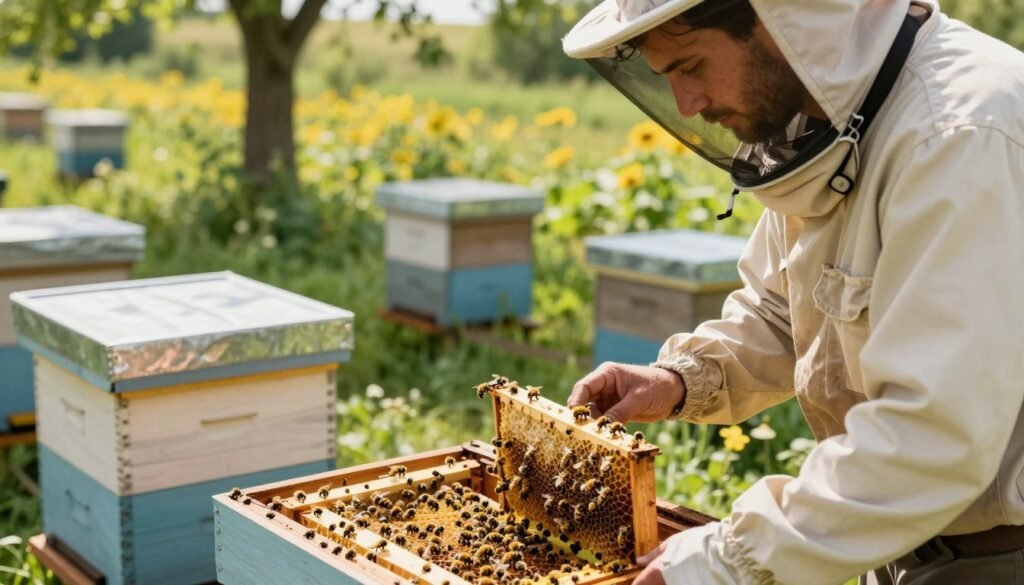
For detailed technique and tool choices, review a practical queen marking techniques guide and a list of high-precision tools to streamline the job.
Selecting the Correct Color Code
A correct color choice tells you a queen’s year at a single glance.
The international color code is simple: White = years ending in 1 or 6; Yellow = 2 or 7; Red = 3 or 8; Green = 4 or 9; Blue = 0 or 5.
Use the color that matches the current year when you apply the paint dot to the thorax. This makes the queen’s year quickly readable during inspections and helps beekeepers track longevity and performance.
Why it matters: A visible color number shows if a new, unmarked queen has replaced the original. That quick check can alert you to supercedure or a recent swarm event without a full frame-by-frame search.
- Follow the five-year rotation; it suits normal queen lifespans.
- Use quality pens that lay a small, neat dot and dry fast.
- If you label queens for customers, follow the same color code to keep records consistent.
“Standardized color codes create clear, trustworthy records across apiaries.”
For step-by-step technique and standards consult this queen marking guide.
Step by Step Guide to Finding and Capturing the Queen
Start your search at the center frames where most eggs and young brood concentrate.
Move slowly and inspect each frame’s center area. Look for eggs and larvae; these signs narrow where the queen spends her time.
Locating the Brood Nest
Scan frames in order. Remove one frame at a time and check the pattern of eggs. A regular pattern means the queen was recently on that frame.
Using a Marking Cage
When you spot the queen, position a marking cage to isolate her gently against the screen. This gives you a clear view of the thorax and keeps her secure while you prepare the pen.
Handling the Queen Gently
Handle the queen by her wings to avoid pressure on the abdomen or thorax. A soft foam plunger on a cage protects her if you use a plunger-type tube.
Take your time. A steady hand and calm approach reduce the chance of escape or injury and keep the hive calm.
| Step | Action | Why it matters |
|---|---|---|
| Locate brood nest | Check central frames for eggs and larvae | Narrow search area to where queen is likely laying |
| Isolate queen | Use a marking cage to hold her against the screen | Clear view of thorax and safer handling |
| Lift safely | Grip by wings; avoid body pressure | Prevents injury and preserves laying ability |
| Prepare tools | Have pen, spare pens, and soft foam ready | Speeds the process and prevents smudges |
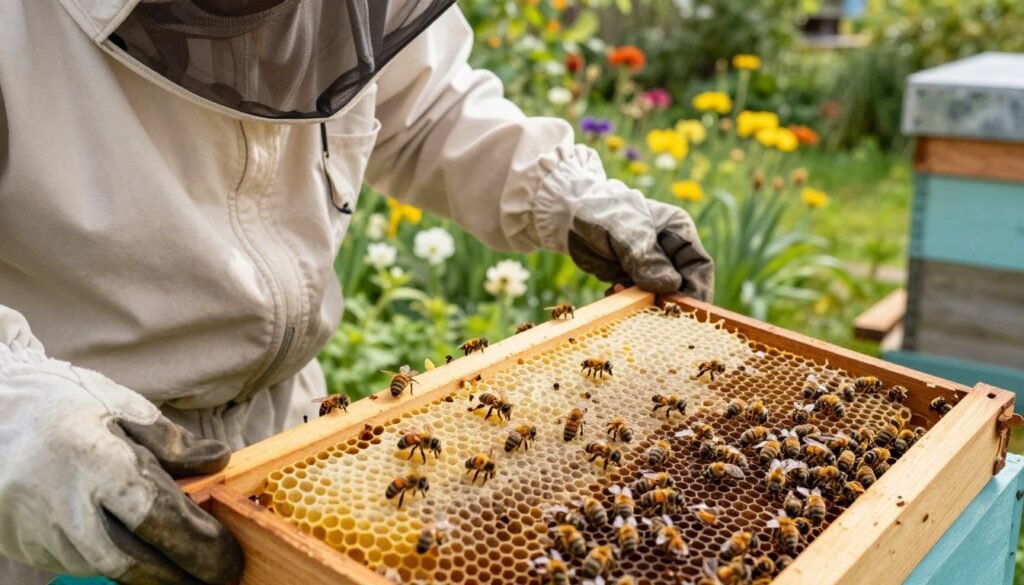
Applying the Mark Safely
Work methodically: isolate the queen, position the cage, then apply a tiny paint dot to the top center of the thorax.
Use a light touch. Hold the queen with minimal pressure so you do not compress the abdomen. Keep the pen steady and touch only the top center of the thorax to avoid wings and antennae.
Use a non-toxic marking pen and lay a small dot. Avoid paint on the eyes, legs, or wings to prevent rejection by the hive and harm to her movement.
After applying the dot, keep the queen in the cage for several minutes to let the paint dry. This waiting time stops the paint from spreading or being cleaned off by attendant bees.
- Placement: top center of thorax only.
- Tool: non-toxic paint pen; test pens on paper first.
- Hold: minimal pressure, steady hand.
- Drying: wait a few minutes before release.
- Record: double-check color and year to keep accurate records.
“A neat, small dot placed carefully on the thorax keeps the queen productive and easy to identify.”
Common Mistakes to Avoid During the Process
Small errors during the dot application can harm a queen and upset the hive.
Too much paint is the top cause of problems. A large blob may spread to the wings or legs and limit movement. Test pens on paper first to confirm flow and avoid a messy dot.
Never squeeze the bee hard. Excessive pressure can damage the thorax or abdomen and end her laying ability.
Preventing Paint Spread
Isolate the queen securely in a cage before applying a tiny dot to the thorax. Hold steady and touch only the top center of the thorax.
- Avoid the head, eyes, and antennae—paint here can be fatal.
- Do not mark during extreme weather or when the hive is stressed; rejection can follow.
- If you cannot find the queen quickly, pause and try later rather than rushing.
“A careful, tested stroke saves time and protects the hive.”
| Mistake | Why it matters | Quick fix |
|---|---|---|
| Too much paint | Spreads to wings/legs, restricts movement | Test pen; apply a tiny dot; wipe excess |
| Excessive pressure | Injures thorax/abdomen, reduces laying | Grip by wings lightly; use soft plunger |
| Poor timing | Stress leads to rejection | Work on calm days; avoid nectar dearths |
| Wrong color | Confuses year tracking | Check international color code before marking |
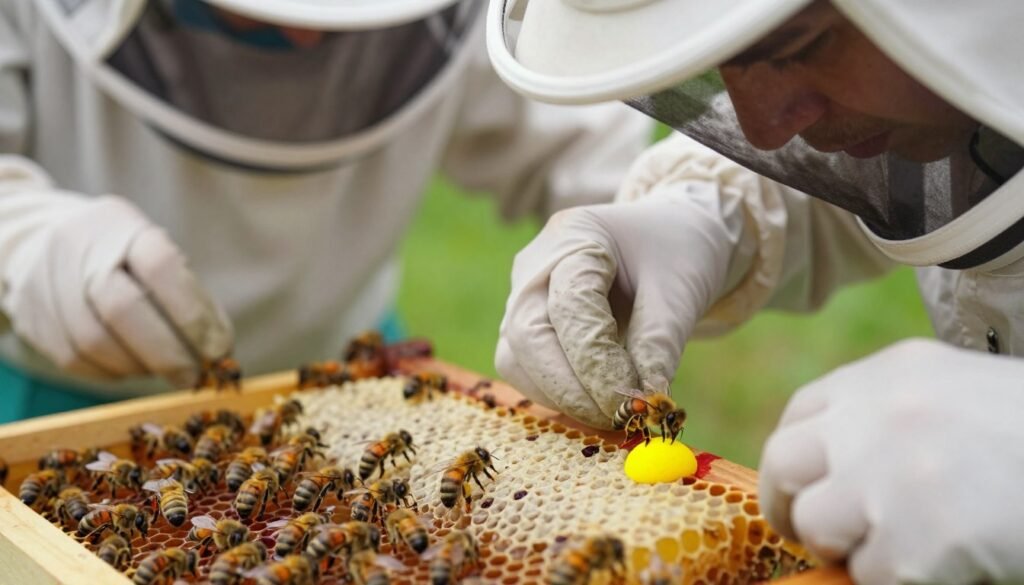
For a full how-to and tool list see how and why to mark your queen.
Conclusion
A clear, consistent routine makes identifying and tracking your queen simple and dependable. Follow a steady process to reduce stress during inspections and keep brood patterns intact.
Use the correct tools and color code. When you mark queen stock, a neat dot and accurate records mean a marked queen and reliable age data. Beekeepers who mark queen bees find checks faster and decisions easier.
Handle the bee with care; avoid pressure near the wings and keep the dot small. With practice, the task becomes routine and boosts overall beekeeping success across years.
FAQ
What is the safest method to mark a queen bee without harming her?
Use a purpose-made bee marking pen or a small brush with fast-drying, non-toxic paint. First, calm the hive and locate the queen on a frame near the brood. Hold her gently in a marking cage or between your thumb and forefinger on the thorax (taking care not to damage the wings) and apply a small dot of paint. Allow the dot to dry before releasing her back into the hive. Keep handling time short to reduce stress and pressure on the queen.
How do I find the queen quickly during an inspection?
Search the brood nest where eggs and young larvae are present; the queen usually stays near the center. Work frames one at a time, holding them at the top bar and looking along the face for a longer, slimmer abdomen. Using a clear marking cage, smoker, and steady hand improves your chances. Experienced beekeepers also watch worker behavior—retinues often gather around the queen, making her easier to spot.
Which color should I use to indicate the queen’s year of origin?
Follow the international color code for identifying queen age: white (or gray) for years ending in 1 or 6, yellow for 2 or 7, red for 3 or 8, green for 4 or 9, and blue for 5 or 0. Choosing the correct color helps with tracking queen age and performance over time and is widely used by commercial beekeepers and hobbyists alike.
Can I use a regular hobby paint or permanent marker to mark a queen?
No. Use paints and pens specifically designed for bees that are non-toxic and quick-drying. Regular permanent markers and craft paints can contain solvents harmful to the queen and workers. Brands like Uni Posca and Osto make suitable options, but always verify the product is labeled safe for bees.
How long should I hold the queen during the marking process?
Keep handling under a minute whenever possible. Prolonged restraint increases stress and can affect her ability to lay eggs. Prepare tools and paint beforehand, work calmly, apply a small dot on the thorax, let it dry for a few seconds, then return her to the frame.
What steps reduce the chance of paint spreading to other bees?
Use a small, controlled dot and fast-drying paint. Hold the queen in a marking cage or use a tiny brush so only a minimal amount touches her. Avoid painting in crowded conditions; removing surrounding bees or isolating the queen on the frame before application helps prevent transfer.
Is it better to mark the queen in a cage outside the hive or directly on the frame?
Marking on the frame is faster and less disruptive when you can locate the queen easily. A marking cage offers better control for novices or nervous queens and reduces risk of losing her while painting. Choose the method that suits your skill level and the colony’s behavior.
How often should I re-mark or update the queen’s mark?
Re-mark only when the original mark fades or you need to change the color to reflect a new year code. A well-applied mark can last years, but wear from grooming and hive activity may require touch-ups during routine inspections.
What are common mistakes to avoid when marking a queen?
Avoid excessive paint, which can smother the queen or transfer to workers. Don’t handle the queen roughly or leave her out too long. Using unsuitable paints or pens and skipping a calm, prepared workspace are frequent errors. Also, avoid applying paint to the abdomen, legs, or wings—target the thorax for best results.
How does marking a queen help with hive management and record keeping?
A visible mark makes it easier to track age, monitor brood patterns, and spot replacement needs. It speeds inspections, reduces time spent searching, and supports decisions about queen replacement, breeding, or selling. Clear records tied to the color and date improve long-term colony performance monitoring.
Will marking the queen affect her ability to lay eggs or the workers’ acceptance?
Proper marking does not harm fertility or cause rejection when done correctly. Use a small dot of approved paint on the thorax and minimize handling time. Worker bees typically accept a marked queen quickly, and marking can actually aid inspections without affecting egg-laying.
What tools should I bring when preparing to mark a queen in the apiary?
Bring a marking pen or fast-drying paint, a marking cage, a hive tool, a smoker, protective gloves, and clean frames or a flat surface to work on. Also carry spare pens and a small brush. Preparing a calm environment and placing frames on a table or hive top makes the process smoother.
Are there special techniques for marking queens in packaged bees or during shipping?
For queens in cages or during shipment, mark before placing her in the package if possible. If marking after arrival, open the package carefully, use a small marking cage, and work in a calm spot. Ensure the paint is completely dry before sealing or returning the queen to worker attendants to avoid smearing.
How can I teach new beekeepers to mark queens safely?
Start with demonstrations on a dummy or with a queenless frame, then supervise hands-on practice using a marking cage. Emphasize gentle handling, quick application, and selecting the thorax for the dot. Encourage practice locating the brood nest and reading basic behavior before attempting to hold a live queen.