Efficient hive handling transforms large-scale beekeeping. This short guide introduces a standardized approach to moving and staging hives that helps protect colonies and boost honey yields. It targets migratory operations across the United States that need reliable, repeatable processes.
We outline steps to shift from manual lifts to mechanized systems that move thousands of colonies. By adopting consistent hive arrangements and compatible pallets and forklifts, beekeepers cut loading time and reduce stress on bees.
Proper planning and modern equipment improve safety and make it easier to meet tight agricultural contracts. This introduction frames the benefits of a methodical approach and points to practical details like weight limits, equipment choice, and loading procedures.
For operational specifics on forklifts and yard practices, see our detailed guide on forklift operations for commercial moves.
Key Takeaways
- Standardized hive arrangements speed loading and protect colonies.
- Mechanized lifts reduce labor and increase operational safety.
- Weight limits and equipment choice affect pallet selection and fleet planning.
- Consistent procedures help meet contract schedules and boost honey output.
- Inspect and maintain pallets and machinery to avoid drops and delays.
The Evolution of Palletized Beekeeping
By the mid-1900s, beekeepers began to move entire stacks of hives on wooden platforms to chase seasonal blooms. This change helped migratory operators cover longer distances and access richer floral sources.
Before that era, teams lifted boxes one at a time. Manual loading was slow and hard work, especially when managing many colonies. Injuries, lost time, and stressed bees were common.
The mid-century design let workers stack multiple beehives safely. That method optimized truck deck space and cut loading time. It also made it easier to position each colony where it could thrive and produce more honey.
Today, the industry relies on these standardized practices to move hives quickly between regions. The evolution of this design changed how the sector meets tight seasonal windows and large logistic demands.
- Faster transit of multiple hives
- Lower labor hours and less colony stress
- Improved yield by placing bee colonies at peak flows
For additional context on income and operational choices, see a practical guide to beekeeping as a side income.
Operational Benefits for Commercial Beekeepers
Efficient movement and staging of hives shorten transit time and protect colony strength during key nectar windows.
Improved Honey Production
Larger, well-placed colonies yield more honey. Historical data shows a single large colony can out-produce smaller split colonies, which supports using methods that keep colonies robust. Quick relocation to active farms lets bee groups access blooms at their peak, boosting honey production each day of the flow.
Enhanced Bee Health
Reducing handling and travel stress helps bees recover faster and maintain foraging. When hives remain near high-quality forage, colony health improves and inspections become more effective, even during tight weather windows in summer.
| Benefit | Operational Effect | Impact on Colony |
|---|---|---|
| Faster relocation | Less labor and quicker placement at farms | Higher daily honey collection |
| Reduced handling | Lower physical stress during moves | Stronger, healthier bees |
| Consolidated monitoring | Easier health checks despite limited time | Better disease and queen management |
For practical guidance on large-scale practices and resources, consult this resource on commercial beekeeping operations.
Essential Equipment for Pollination Pallet Setup for Commercial Beekeepers
Durable gear and smart ergonomics make daily hive work faster and safer on large operations.
High-quality metal platforms such as the HiveIQ unit are built to endure heavy use and rough weather. Their integrated retractable legs lift the hive entrance to 12 inches (300mm). This elevation reduces repetitive bending and speeds inspections.
Proper design keeps brood boxes and honey supers secure during transit. Using corrosion-resistant materials helps protect colonies from pests and environmental wear. Modular products let a beekeeper mix new gear with industry-standard rigs without costly retrofits.
- Ergonomics: Elevated entrances cut fatigue and lower injury risk.
- Durability: Metal frames resist corrosion and extend product life.
- Modularity: Components snap together for fast assembly and maintenance.
| Item | Feature | Benefit | Recommended Use |
|---|---|---|---|
| HiveIQ metal platform | Retractable legs, 12 in (300mm) entrance | Faster checks, less bending | Field placement and staging |
| Corrosion-resistant fasteners | Stainless steel bolts and clips | Longer life, pest resistance | All outdoor hive assemblies |
| Modular stacking frames | Standardized locking points | Secure transit of boxes and supers | Transport and storage |
| Rapid-assembly tools | Torque-limited drivers, clamps | Quicker repairs and builds | Field maintenance and production ramps |
To evaluate smaller tools and accessories that help manage bee colonies, see this guide to the best pollen trap.
Standardized Configuration and Logistics
A consistent hive arrangement turns scattered boxes into predictable, load-ready blocks. This approach saves time and reduces damage to colonies during transit.
The Four-Hive Clustering Method
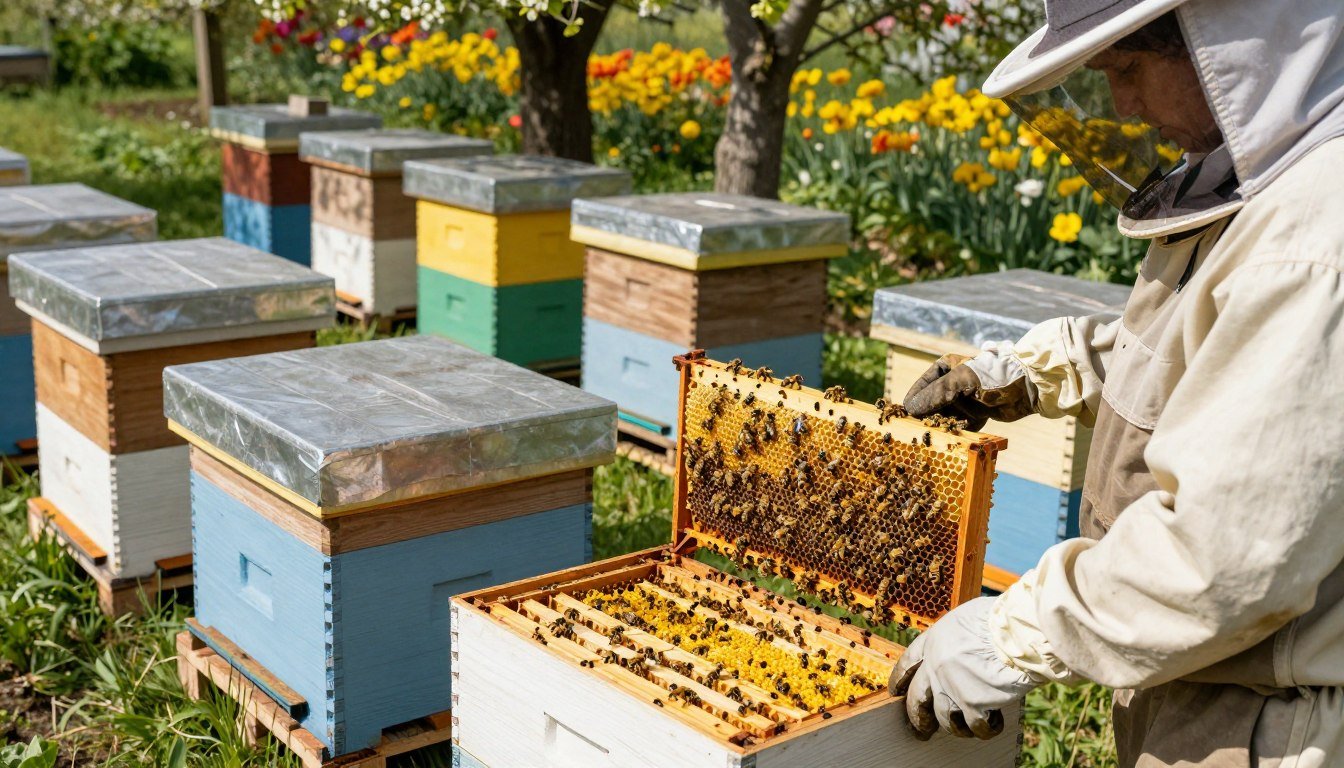
The four-hive cluster creates a stable, square footprint that stacks evenly on a truck deck. Teams can secure a rigid block that limits vibration and protects the bee population during highway travel.
Forklift Integration
Integrating forklifts with standardized blocks speeds loading and cuts labor. Mechanized lifts let crews load more hives per day and reduce handling stress on bees and workers.
Maximizing Truck Deck Space
Optimized stacking fits more colonies per trip, which helps meet large contracts and lowers per-hive transit cost. Site access matters: place apiaries where trucks can pull close for fast loading and unloading.
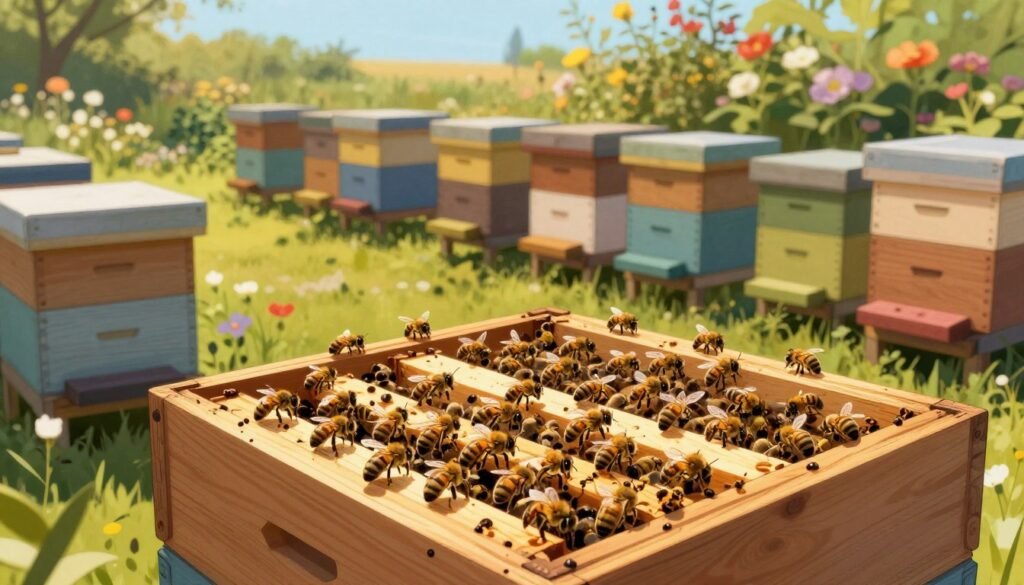
Standard design ensures compatibility with farm equipment and extraction facilities. For deeper detail on standardized configurations, review standardized beekeeping pallet configurations at standardized beekeeping pallet configurations.
Managing Trade-offs in Industrial Apiaries
Scaling up an apiary forces teams to choose between mechanized throughput and hands-on hive attention. Good management keeps productivity high while protecting colony health.
Balancing Accessibility with Mechanization
Speed reduces labor and meets contracts, but it can limit direct access to individual hives. When hives are clustered, reaching a single colony may mean working at awkward angles.
- Mechanization saves time and lowers injury risk when moving heavy honey supers (~60 pounds each).
- Routine checks must still confirm queen performance; two queens with removable excluders can each lay 1,500–2,000 eggs daily to boost production.
- Standardized equipment and consistent design reduce unexpected handling and preserve bee health year-round.
| Trade-off | Impact | Management Tip |
|---|---|---|
| Access vs. speed | Harder inspections | Schedule targeted manual checks |
| Lift weight | Physical strain in summer | Use lift aids and rotate tasks |
| Stacking order | Potential stress on colony | Follow standardized stacking practices |
Good planning and maintained equipment let a beekeeper balance efficiency with careful care. That balance is key to long-term success in this industry.
Conclusion
Standardized hive blocks and rugged gear let operators move large numbers of hives quickly while keeping bees healthy.
Today, palletized beekeeping is the norm for many commercial beekeepers. The approach boosts honey production and cuts physical labor by using consistent design and modular products.
Modern pallets and tools secure colonies during long hauls and simplify handling. Investing in quality products pays off in faster operations and steadier production.
For practical steps on arranging and scaling an apiary, review our apiary setup guide at apiary setup guide.
FAQ
What is a pollination pallet setup and why do large-scale operations use it?
A pollination pallet setup groups multiple hives onto a transportable platform so beekeepers can move dozens of colonies quickly between farms. This method speeds loading and unloading, reduces handling stress on bees, and supports contractual crop services. Many operators report lower labor costs and faster turnarounds when moving hives for almond, berry, or orchard work.
How does the four-hive clustering method work?
The four-hive clustering method arranges four standard Langstroth or Wisconsin-style boxes in a compact square on a single frame. This improves stability during transport, allows consistent ventilation, and fits into standardized shipping racks. It also helps uniform feeding and disease checks during routine inspections.
What equipment is essential to implement palletized hives safely?
Key items include reinforced wooden or steel platforms, hive straps, entrance reducers, breathable covers, skid runners, and compatible forklift tines or pallet collars. Protective gear, queen excluders, and monitoring tools like brood boxes and mite test kits remain important to maintain colony health while using mechanized handling.
How do pallet systems impact honey production and colony health?
Properly managed systems can maintain or even improve nectar foraging and honey flow by minimizing disturbance during moves. Reduced manual handling lowers queen loss and brood damage. However, timing moves to bloom windows and ensuring adequate forage and water at destination sites are critical to avoid stress that could reduce yields.
Can my existing truck fleet handle palletized hives?
Most medium and heavy-duty flatbeds can be retrofitted with secure tie-down points and racks to accept pallet clusters. Forklift access and deck dimensions determine how many units you can carry. Work with a fleet manager to plan load patterns, weight distribution, and legal permits for road transport in your region.
What are the common trade-offs when mechanizing hive handling?
Mechanization speeds operations and lowers labor needs, but it can reduce direct hive inspections and tactile checks that catch early disease signs. You must balance efficiency with scheduled colony health audits, mite monitoring, and targeted treatments to prevent losses.
How do weather and location affect pallet placements on farms?
Place pallets on level, well-drained ground away from pesticide spray zones, flood risks, and excessive shade. Windbreaks and morning sun exposure help bees orient and forage. Check regional weather forecasts and irrigation schedules before committing pallets to a site.
Are there standardized dimensions or design specs to follow?
While no single standard governs every operation, common practices include using platforms sized to fit four hive boxes per cluster, consistent entrance orientation, and integrated forklift channels. Adopting uniform dimensions across your fleet simplifies logistics, stacking, and maintenance.
What labor changes should operations expect after adopting pallet systems?
Expect a shift from manual hive lifting to equipment operation and pallet maintenance. Training on safe forklift use, strap tensioning, and rapid inspection routines will be necessary. Overall labor hours per move typically decline, but skilled hive health technicians remain essential.
How do palletized systems affect contractual pollination and service offerings?
Systems increase reliability and predictability for farm clients, allowing beekeepers to meet contract timelines and scale capacity. They enable tighter scheduling across crops and reduce delays that can jeopardize bloom windows, strengthening service reputation and revenue potential.