Assessing risk is a key skill for any beekeeper guarding a healthy hive. A single contaminated frame can bring spores into a colony and destroy an entire apiary. American Foulbrood spores stay viable for decades and resist freezing or bleaching, so caution matters.
Practical biosecurity means inspecting boxes, wood parts, and the bottom board for signs of disease or pests. Use a hive tool and a careful eye at the entrance and brood area. Prioritize safe equipment handling over saving foundation if hazards appear.
Some damaged comb can be salvaged after proper treatment, while other pieces must be discarded to protect surrounding hives. For real-world guidance on assessing drawn comb and decisions about salvage, see this discussion on drawn comb reuse.
Key Takeaways
- AFB spores can persist for decades; discard suspect material.
- Inspect hive parts, brood, and entrance for disease signs before reuse.
- Prioritize biosecurity over saving foundation or cutting costs.
- Use the hive tool and proper cleaning to reduce pesticide and spore spread.
- When in doubt, replace contaminated wood, frames, or boxes to protect colonies.
The Value of Drawn Comb in Beekeeping
Drawn comb delivers immediate benefits, sparing colonies the huge energy drain of new wax production. Bees must eat large amounts of honey or nectar before they can secrete wax. Supplying comb saves that effort and lets workers focus on brood and stores.
Energy Costs for Bees
Wax is expensive for a hive. Producing a small amount requires many pounds of honey. Providing clean frames with comb reduces the colony’s workload and improves survival during lean periods.
Accelerating Colony Growth
In commercial beekeeping across the United States, drawn comb helps colonies expand fast and boosts seasonal honey harvests.
- Queen readiness: A ready frame allows immediate laying and steady brood development.
- Equipment choices: Plastic foundation in a box can stretch equipment lifespan and cut maintenance time.
- Hive health: Bees use propolis to seal wood gaps, and the bottom board and entrance are key spots for monitoring colonies.
Understanding When Not to Reuse Pollen Frames
A careful inspection will tell whether old comb is an asset or a hazard for your hive. If American Foulbrood is even suspected, discard old frames at once. AFB spores survive for decades and resist common cleaning methods.
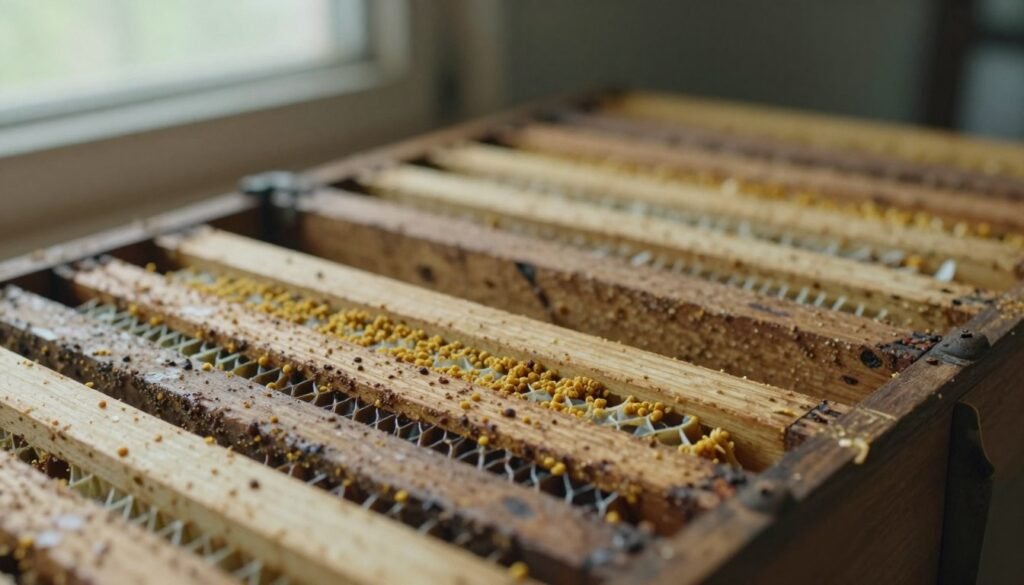
Look closely at every cell. Healthy brood cappings are uniform. Irregular brood or sunken cells can signal serious disease. Check the bottom board, entrance, and the top bar for signs of beetle slime or wax moth damage.
Cleaning badly damaged equipment takes far more effort than replacing wood or foundation. Brittle boxes or cracked frames let pests and disease spread across colonies.
- Discard suspect wood or comb to protect honey stores and nearby hives.
- Keep equipment organized and use a hive tool for careful inspection.
- When repair is reasonable, follow best practices shown in this repair damaged hive boxes guide.
The Role of Pollen in Colony Development
Stored bee bread inside comb cells fuels larval growth and keeps a colony strong through lean periods. The honey bee depends on this protein source for brood rearing and worker development. Research from the University of Florida highlights hive-stored supplies as vital and worth preserving.
Keep comb clean and free from contaminants so bees can safely store essential food. Check each frame and the surrounding wood for wax moth damage, signs of disease, or chemical residue before moving equipment between boxes.
Good foundation and quality wax encourage orderly storage of honey and bee bread. A strong colony will tap stored supplies during early spring and recover faster after poor foraging spells.
- Monitor the amount of bee bread in your hive regularly.
- Inspect cells and use a hive tool for careful checks.
- Decide on old frames based on condition and contamination risk.
Assessing Frames for Disease Risks
Assessing risk, Inspecting comb cell by cell gives the clearest signal of whether equipment is safe for your hive.
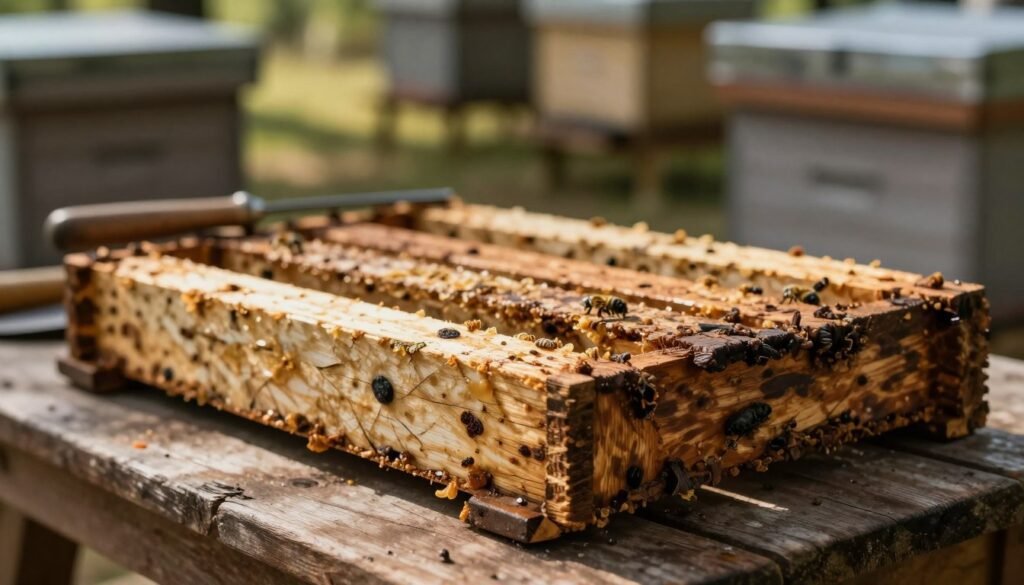
Recognizing brood cappings starts with the capping surface. Sunken or perforated cappings are classic signs of American Foulbrood in a hive.
Use your hive tool to pry gently and check cells. If you find foul odor or abnormal larvae, mark the box and isolate that colony immediately.
Professional beekeepers destroy any frame showing disease to stop pathogen spread. Dark, brittle wax may hold pesticide residue and harm bees and brood.
- Rotate out old frames that look suspicious or damaged.
- Inspect plastic foundation carefully; it cleans easier than wood but still hides risks.
- Keep equipment dry and organized; propolis buildup can mask problems over time.
Consult local extension services if you suspect disease for confirmation and legal guidance.
Identifying Signs of Pest Infestation
Routine checks protect stored equipment and keep clean comb available for active colonies. Inspect every box and frame in storage. Small signs can point at larger infestation risks.
Wax Moth Damage
Wax moths can rapidly destroy stored frames. Look for webbing, silk cocoons, and shredded wax that hides brood cells.
Heavy damage often ruins wood and foundation. In severe cases, burning the frame stops the spread and protects other hives.
Small Hive Beetle Slime
Small hive beetle slime looks like darkened, fermented honey and signals serious compromise.
Discard any frame with slime; the contamination makes honey and comb unusable for bees. Keep storage dry and well ventilated to reduce risk.
- Inspect boxes regularly and use proper tools for checks.
- Clean storage areas and seal gaps that attract moths or beetles.
- If you need tips on getting bees to clean old comb, see this encourage bees to clean old comb.
| Sign | Cause | Action |
|---|---|---|
| Silk webbing | Wax moths | Burn or discard heavy damage |
| Dark slime | Small hive beetle | Discard frame and clean box |
| Shredded wax | Moths or larvae | Isolate storage and inspect all equipment |
Evaluating the Structural Integrity of Old Comb
Inspect each comb cell for sagging, tears, or separated wax that may fail under a heavy load. Old frames with drooping or broken comb give poor support for brood and honey and should be pulled from active boxes promptly.
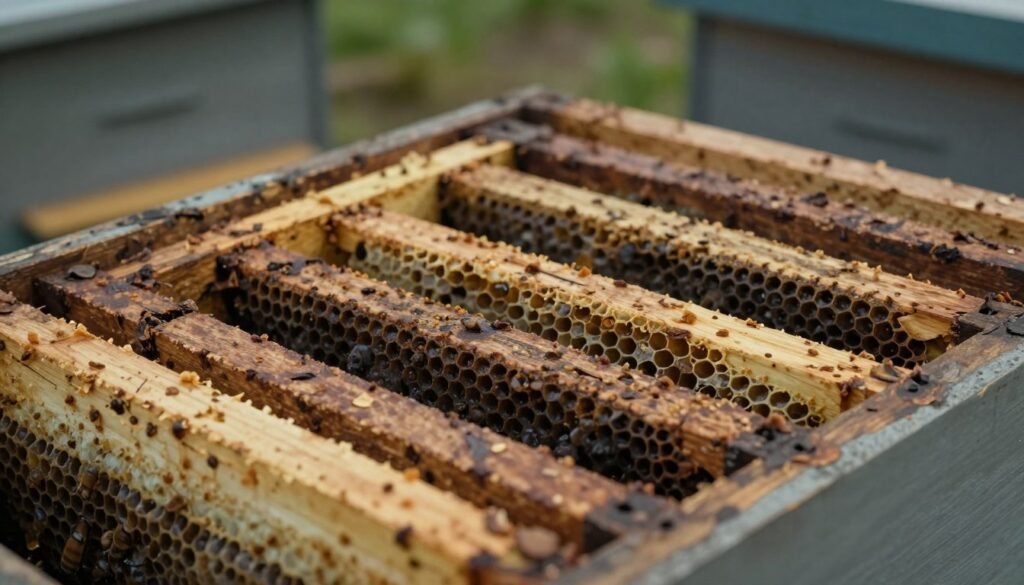
Check wood and foundation at the same time. Warped top bars, loose foundation, or cracked box joints let pests and moisture harm a hive. Replace any equipment that shows movement or weakness.
- Look for blowouts—areas where brittle wax separates from the frame and collapses under weight.
- Rotate old frames on a plan so every colony gets fresh comb over time.
- Use quality foundation or plastic foundation where durability matters and comb straightness is critical.
Maintaining neat boxes and solid frames keeps colonies healthy. By replacing damaged comb, you let bees build fresh wax that supports brood and stores for the season.
Why American Foulbrood Requires Immediate Destruction
American Foulbrood can render a box and its contents useless within days. The disease leaves hardy spores that survive for decades in old frames and wood. This makes partial cleaning a dangerous gamble for any beekeeper.
Do not attempt to salvage an infected frame. Wax comb, wooden parts, and any foundation can hide spores. Even plastic foundation can carry contamination if debris or propolis clings to it.
Responsible biosecurity means burning the entire box and its contents. Destroying infected equipment stops spore spread and protects other hives and your honey production. Always contact your local apiary inspector for guidance and legal requirements.
- AFB spores survive extreme conditions and resist simple cleaning.
- Sacrificing equipment protects the colony and neighboring apiaries.
- Maintain strict equipment controls and label or isolate suspect gear immediately.
| Risk | Why | Action |
|---|---|---|
| Contaminated frames | AFB spores lodged in wax and wood | Burn and record loss |
| Box and equipment | Propolis and debris hide bacteria | Destroy or replace |
| Nearby hives | Spores spread via bees and tools | Quarantine apiary and call inspector |
Quote: “Destroy infected material; cleaning cannot guarantee spore removal.”
The Science Behind Stored Bee Bread
Within each comb cell, bees transform raw pollen into a stable, nutrient-dense food called bee bread. This preserved store feeds larvae and supports the entire colony through lean periods.
Research supports long-term stability. Studies such as PMC4285803 show hive-stored bee bread keeps key proteins and vitamins over extended time. That makes a clean frame of comb a real asset for spring build-up.
Good beekeeping values these reserves. A frame with quality bee bread gives a new colony a head start. The wax comb acts as a sealed container, guarded by propolis and packed tightly by the honey bee.
- Keep equipment clean so stored food stays free from contaminants.
- Check foundation and wood for damage before moving material between hives.
- Use preserved frames strategically to support growth and brood rearing.
For practical preservation methods and freezing guidance, review long-term storage tips at long-term preservation techniques.
Preparing Frames for Safe Reintroduction
Prepare each old frame with a clear routine so you lower disease risk and help the hive accept the comb quickly.
Start by scraping excess propolis and debris from every frame. Use a hive tool to clean wood parts and remove stuck wax bits that could harbor pathogens.
If foundation looks tired, apply a thin coat of fresh, melted wax. A light layer encourages bees to finish cells and speeds acceptance. High-quality foundation helps build uniform comb and improves later honey storage.
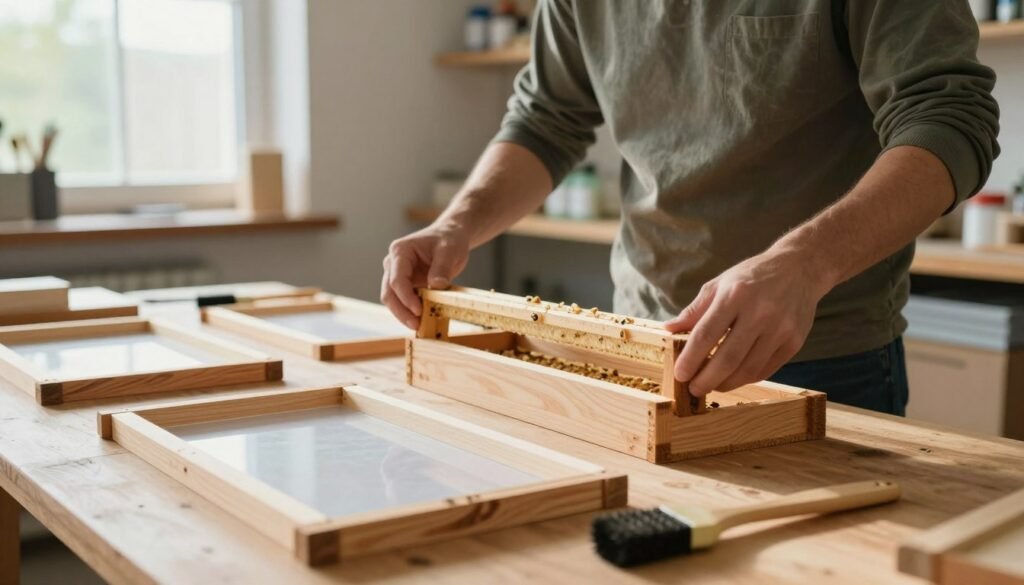
Inspect each frame for damage or disease before you place it back into a hive. Replace any warped top bars or broken wires. Good equipment care gives bees a safe start and extends frame life.
- Keep a checklist and clean area for tools.
- Store clean, dry old frames in a pest-proof spot; see how to store frames properly.
- Adopt a routine that includes inspection, scraping, fresh wax, and organized storage.
Freezing Techniques for Pest Control
Freezing is a proven method to kill wax moth eggs and larvae and protect valuable comb.
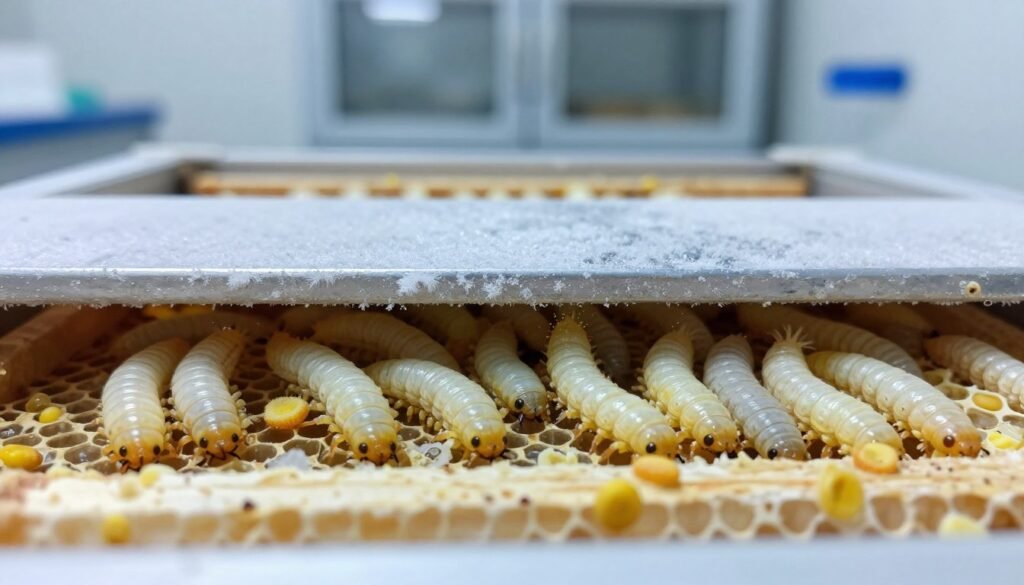
Place each frame in a sealed plastic bag before freezing. Keep them in a deep freezer for 48–72 hours. This range ensures hidden eggs and larvae are destroyed without melting wax or harming foundation.
After removal, use a hive tool to scrape away dead debris and propolis. Clean wood parts and inspect comb cells before returning any equipment to the hive.
- Effectiveness: Freezing controls wax moths and other storage pests while preserving wax and honey stores.
- Protocol: Seal frames, freeze 48–72 hours, thaw fully, then clean and inspect.
- Benefit: Proper freezing keeps drawn comb intact and extends the life of foundation and equipment.
| Step | Action | Result |
|---|---|---|
| Bagging | Seal frames in plastic | Prevents condensation and contamination |
| Freezing | 48–72 hours at deep-freeze temps | Kills eggs and larvae without damaging wax |
| Cleaning | Scrape with hive tool after thaw | Removes debris; ready for hive use |
Maintain a strict freezing routine for stored equipment and consult experts if heavy infestation appears. For detailed pest control steps, see stop wax moth infestations.
Cleaning Woodenware and Removing Debris
A steady cleaning routine keeps woodenware strong and helps bees focus on brood and honey production.
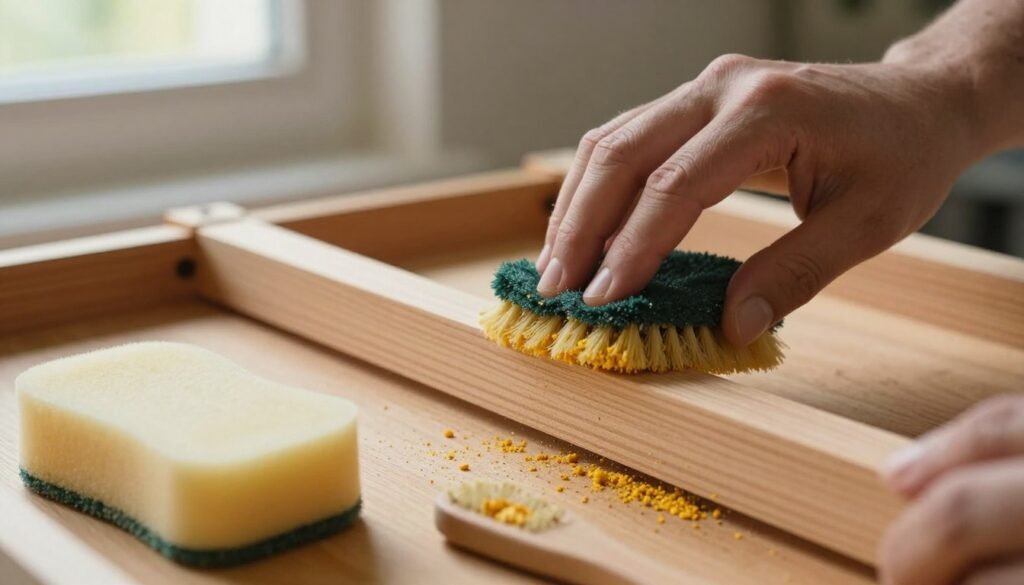
Use a hive tool to scrape the bottom board and the wooden parts of each frame. Remove burr comb, wax flakes, and propolis so the colony has clear walkways and storage space.
Keep checks brief and regular. Clear debris after inspections and store cleaned pieces in a dry, sealed area. This prevents wax moths and beetles from finding shelter in old comb or foundation.
- Bottom board care: Clean waste and dead bees to keep ventilation steady and reduce disease cues.
- Tool kit: Carry a hive tool, brush, and a spare frame for quick swaps during field work.
- Bees clean: Give the colony a chance to finish light repairs; tidy comb encourages bees clean behavior and faster acceptance of reused comb.
Good beekeeping means consistent upkeep. A clean box and properly tended frame lower pest risk and help bees store honey safely.
“Routine scraping and smart storage protect equipment and support stronger colonies.”
For practical cleaning supplies and methods, see this guide on what to clean hives with.
Applying Fresh Wax to Foundation
A thin wax layer gives the colony a familiar scent and encourages immediate work on a new frame.
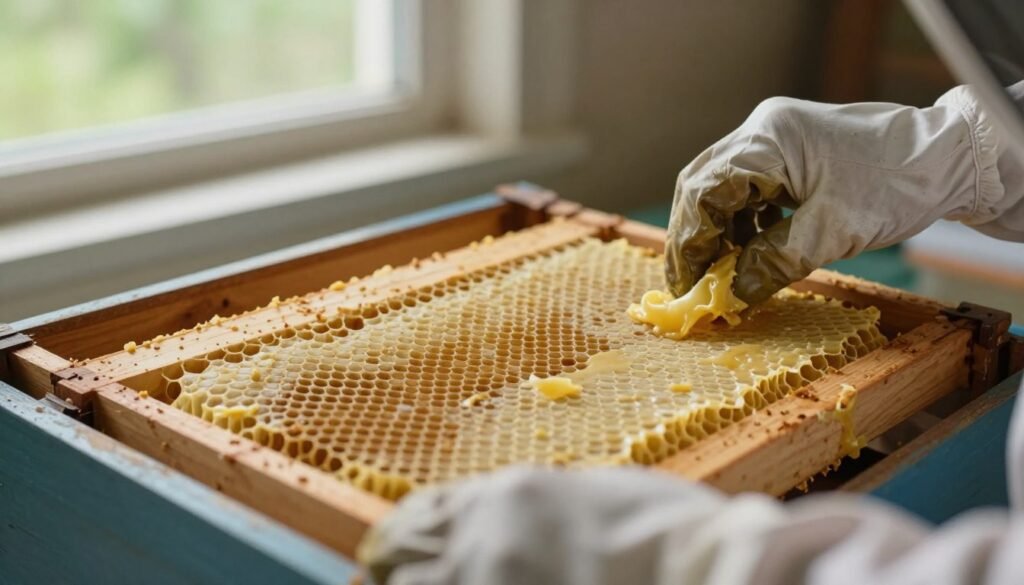
Apply a light coat of clean, filtered wax across the plastic foundation. Use a foam brush for an even film. This simple step makes comb construction faster and reduces the time the hive needs to draw new cells.
Place the prepared frame in a strong colony that needs storage or brood space. The scent and texture prompt bees to inspect and finish cells quickly. Clean wax helps avoid contaminants that could harm brood or honey.
Keep high-quality wax on hand and refresh tired foundation during spring buildup. Consistent coating improves equipment acceptance and supports efficient beekeeping practices.
- Use a foam brush for even coverage.
- Work with active colonies for best results.
- Store wax clean and pest-free.
For practical application tips and safety, read the best method for applying wax, and review beehive frame types to match foundation and frame style.
Managing Your Apiary Equipment Inventory
A simple tagging system cuts time during inspections and helps you rotate old comb out on schedule. Mark each box and frame so you can track age, condition, and last use. This practice keeps usable wax and foundation ready for peak honey flow.
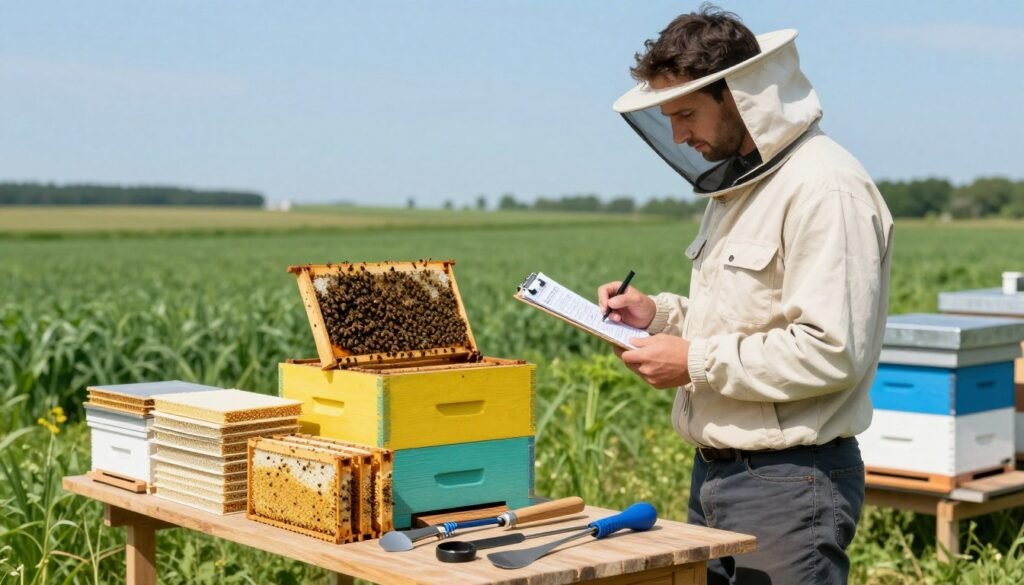
Use a hive tool and a durable tag or marker on wood parts. Record each change in a log for every hive. Rotate old frames hive by hive so brittle comb never stays in active colonies too long.
- Keep an equipment log with dates, repairs, and condition ratings.
- Store clean comb and foundation in sealed, ventilated space to deter wax moths.
- Carry spare frame and a hive tool during inspections for quick swaps.
- Replace worn wood or damaged frames promptly to protect bees and honey stores.
Stay organized: a small inventory system saves time and reduces pest risk. Regular checks let you plan purchases, extend equipment life, and keep every hive supplied with safe, ready comb.
Balancing Biosecurity with Resource Efficiency
A practical plan that protects colonies while stretching supplies is central to good apiary management.
Weigh risk against cost on every decision about used comb and wood. A single contaminated frame can endanger an entire hive, so protect colony health first.
Save material only when inspection shows clean comb and solid structure. Reuse healthy wax where safe, and replace any piece that smells off or shows disease signs.
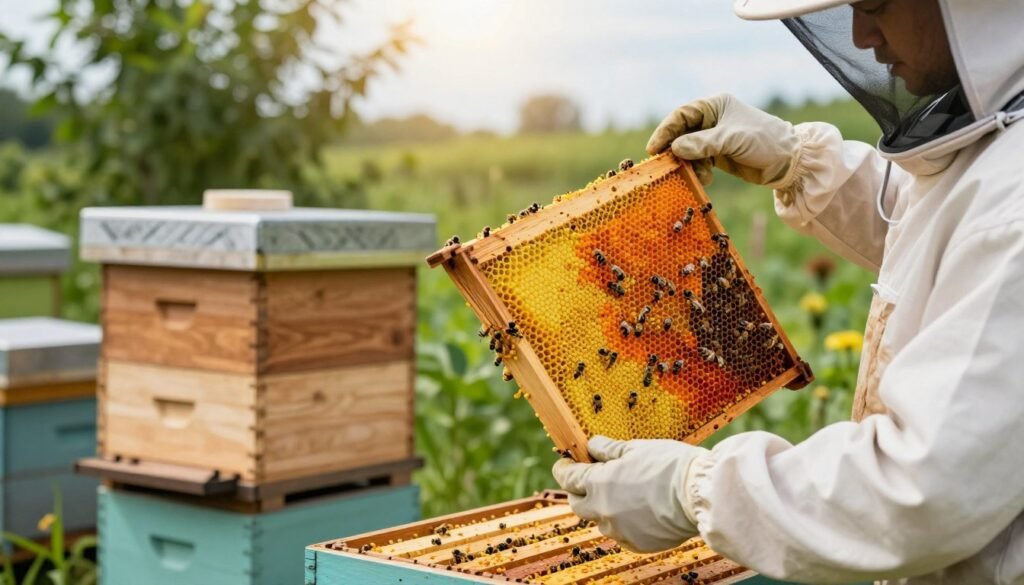
Professional beekeepers accept small purchases for long-term gain. Spending on a new foundation or a fresh frame protects honey production and keeps bees strong.
- Keep a clear log and mark gear by age and condition.
- Apply strict checks before moving comb between hives.
- Use guidance from the honey bee producer guide for biosecurity steps.
Small choices add up. By reusing only clean equipment and following best practices, you build a sustainable apiary that maximizes honey yield while minimizing disease risk. For practical supply reductions and greener gear ideas, see how to reduce plastic use in.
Rule of thumb: protect the hive first; save comb only when safety is certain.
Professional Equipment Solutions for Commercial Apiaries
Commercial apiaries depend on reliable suppliers for bulk replacement gear that keeps operations safe and efficient. HONESTBEE provides wholesale-focused solutions for large operations. Their stock includes replacement frames and foundation designed for strict biosecurity.
High-volume beekeeping needs steady access to quality frame and comb supplies. Buying in bulk reduces downtime and ensures the hive has ready parts during peak flows.
Professional wax and hardened foundation arrive ready for immediate use. That helps colonies focus on brood and honey production rather than rebuilding comb.
“Partnering with a trusted supplier reduces risk and keeps the apiary running at peak capacity.”
- Biosecurity: certified replacement parts lower contamination risk.
- Efficiency: bulk orders simplify inventory and cut field delays.
- Quality: supplier-grade comb and foundation fit modern, high-production hives.
| Need | Benefit | Result |
|---|---|---|
| Bulk frames | Fast swaps during inspections | Less brood interruption |
| Clean foundation | Uniform comb build | Higher honey yields |
| Ready wax comb | Immediate stores for bees | Faster colony growth |
Conclusion
,Consistent inspection and tidy storage make the difference between loss and a strong season for any hive. Keep checks brief and regular so bees stay healthy and honey production stays steady.
Inspect old frames carefully for signs of disease, pests, or damaged wax. A clean comb and solid foundation are worth saving. Replace warped wood or a broken frame without delay.
Good inventory habits let you rotate comb and plan purchases. Organized boxes and a clear log cut risk and save time during peak work. Use these steps to protect your apiary and enjoy a productive beekeeping year.
FAQ
When should drawn comb be replaced rather than kept?
Replace comb that shows disease symptoms, heavy brood-capping holes, severe wax moth tunneling, or structural collapse. Also retire comb older than three to five years in high-production operations to reduce build-up of pathogens and pesticide residues. Regular inspection of brood cappings and cell walls helps decide when removal protects colony health and honey quality.
How does drawn comb save colony energy?
Bees conserve time and calories when they inherit finished comb. Building fresh wax demands large amounts of nectar or sugar syrup; providing drawn comb lets workers focus on brood care, forage, and honey storage. This accelerates spring build-up and improves survival during dearths.
Can stored bee bread spread disease if reused?
Yes. Old bee bread can harbor spores, fungal growth, or pesticide residues. If frames show mold, foul odor, or unusual staining, remove them. For safe reuse, sanitize frames and consider replacing cells used by brood from suspicious colonies.
What signs indicate wax moth infestation?
Look for webbing across comb, tunnels full of frass (dark pellet-like material), and shredded comb. Larval galleries may collapse frames. Active infestations require immediate frame cleaning, freezing, or disposal to prevent spread to other hives.
How does small hive beetle slime appear on comb?
Infected combs may show brownish, fermented, sticky areas where larvae have fed. Honey can become discolored and runny. If slime appears, remove affected comb and clean equipment thoroughly; controlling beetle populations in the apiary reduces recurrence.
What should I look for when assessing brood cappings for disease?
Healthy brood cappings are convex and uniform. Sunken, perforated, or discolored cappings, foul odors, or patchy brood patterns suggest bacterial infections such as American foulbrood. Suspect frames should be isolated and tested before reuse.
Is freezing effective for killing wax moth larvae and beetle eggs?
Freezing works well for 48–72 hours at 0°F (-18°C) to eliminate wax moth larvae and other pests in comb. Use sturdy containers and allow frames to return to ambient temperature before returning to the hive to avoid condensation and additional damage.
How should woodenware be cleaned before reusing old comb or frames?
Scrape off propolis, wax residues, and visible debris. Solarize or flame-sterilize super boxes and bottom boards as appropriate, then scrub and dry thoroughly. For high-risk disease exposure, follow state regulations for decontamination or destruction of woodenware.
When is burning frames required for American foulbrood?
With confirmed American foulbrood, most beekeeping authorities require destruction of contaminated comb and infected equipment. Burn or otherwise permanently destroy frames and boxed comb that test positive to prevent spore spread, then disinfect remaining equipment per guidelines.
How can I safely add fresh wax foundation to used frames?
Remove old comb remnants and inspect the frame. Attach clean foundation using wired or snap methods from reliable manufacturers such as Mann Lake or Brushy Mountain. Ensure the foundation is sterile and properly centered so bees can draw uniform cells.
What records should I keep about frame age and usage?
Track frame installation dates, source colonies, and any disease incidents. Simple tags or a digital spreadsheet help rotate older combs out of service, monitor residue risks, and manage colony health across your apiary efficiently.
How do I balance biosecurity with resource efficiency in a small apiary?
Prioritize disease screening and retire high-risk combs while salvaging low-risk drawn comb after disinfection. Use foundation and plastic frames for easy cleaning where practical. Regular inspections and an aggressive pest management plan lower long-term costs and protect stocks.
What professional tools help commercial operations manage old comb safely?
Commercial apiaries often use power washers for woodenware, industrial freezers for bulk decontamination, heated wax melters, and licensed incinerators for infected material. Working with suppliers like Mann Lake or Dadant provides durable equipment designed for heavy use and sanitation.